Last modified: 3 October 2026
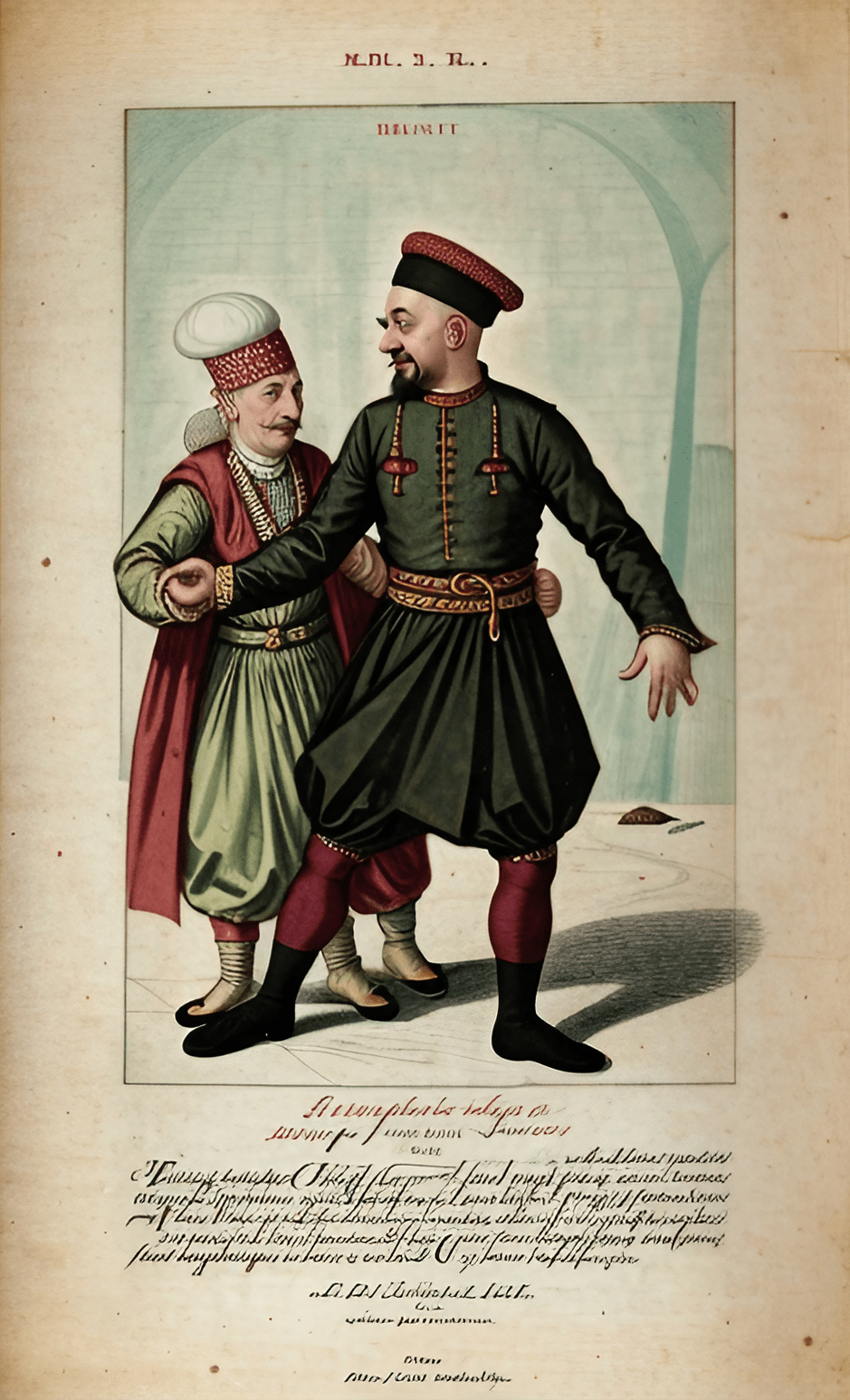
"Two venerably bearded Turks in the full costume of the East".
How are these chaps (or rather ones looking much like them) connected to Wandsworth Common? Answer at the foot of the page.
Let's start with a story about New Year's resolutions . . .
A man in a railway carriage coming up to Town confides to his fellow commuters that he has a "terrible awe-inspiring resolve" to commit a "fearful outrage". He wants to kidnap the director of the railway company (the London, Brighton and South Coast line) and then to subject him to "long, lingering, terrible torture".
And the nature of the torture?
"I'm going to . . . make him travel third class on the 8.45. And he will have to get in at Wandsworth Common!"
Yes, it's pretty frivolous stuff, but reading between the lines you can learn quite a lot about the concerns and life-experiences of (middle-class male) suburban Londoners at this time.
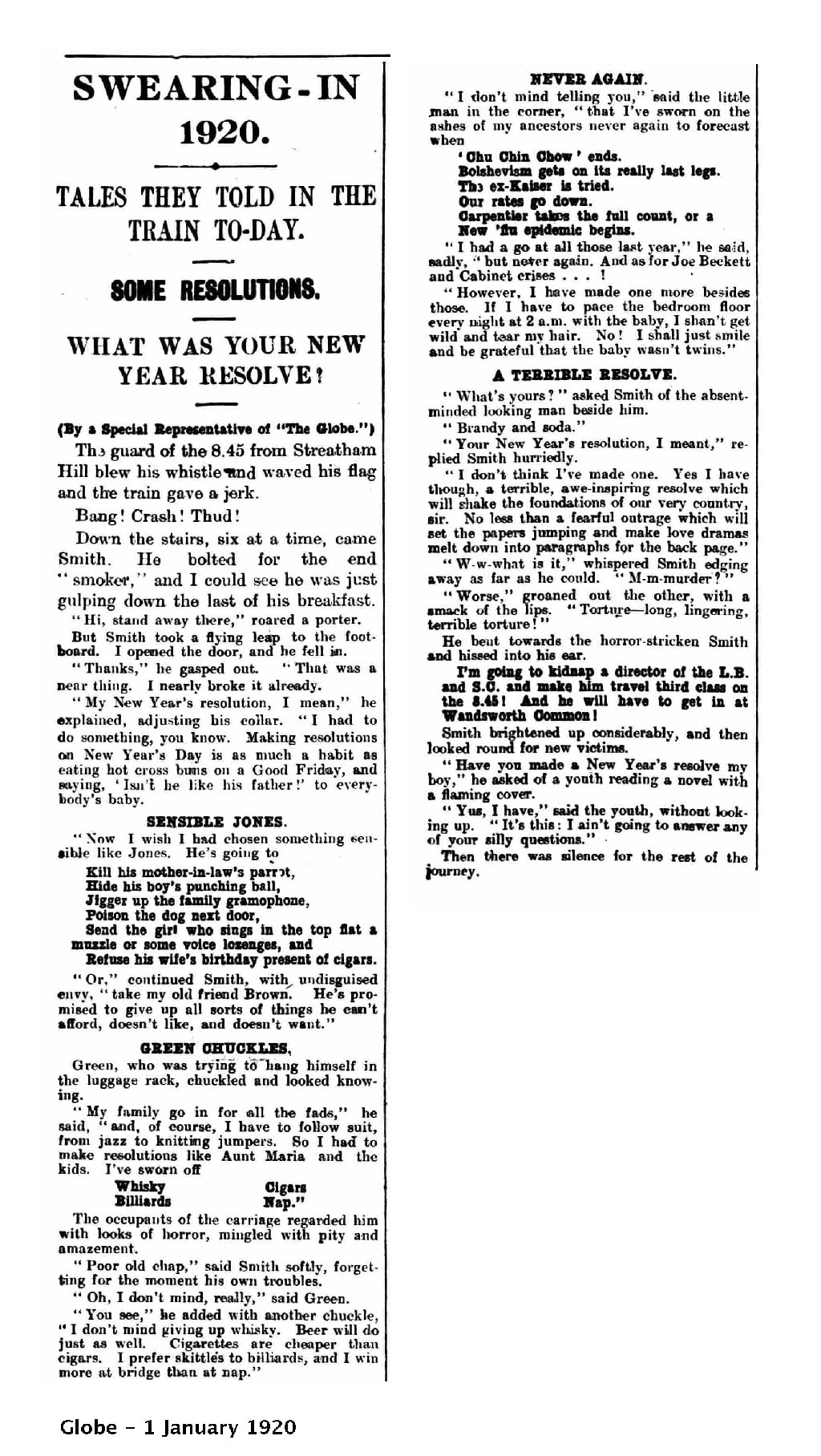
SWEARING-IN 1920
TALES THEY TOLD IN THE TRAIN TO-DAY
SOME RESOLUTIONS
WHAT WAS YOUR NEW YEAR RESOLVE?
(By a Special Representative of "The Globe.")
The guard of the 8.45 from Streatham Hill blew his whistle and waved his flag and the train gave a jerk.
Bang! Crash! Thud!
Down the stairs, six a time, came Smith. He bolted for the end "smoker," and I could see he was just gulping down the last of his breakfast.
"Hi, stand away there," roared a porter.
But Smith took a flying leap to the footboard. I opened the door, and he fell in.
"Thanks," he gasped out. "That was a near thing. I nearly broke it already.
"My New Year's resolution, I mean," he explained, adjusting his collar. "I had to do something, you know. Making resolutions on New Year's Day is as much a habit as eating hot cross buns on a Good Friday, and saying, 'Isn't he like his father!' to everybody's baby.
SENSIBLE JONES
Now wish I had chosen something sensible like Jones. He's going to
Kill his mother-in-law's parrot,
Hide his boy's punching ball,
Jigger up the family gramophone,
Poison the dog next door,
Send the girl who sings in the top flat a muzzle or some voice lozenges, and
Return his wife's birthday present of cigars."Or," continued Smith, with, undisguised envy, take my old friend Brown. He's promised to give up all sorts of things he can't afford, doesn't like, and doesn't want."
GREEN CHUCKLES
Green, who was trying to hang himself in the luggage rack, chuckled and looked knowing.
"My family go in for all the fads," he said, and, of course, I have to follow suit, from jazz to knitting jumpers. So I had to make resolutions like Aunt Maria and the kids. I've sworn off
Whisky Cigars
Billiards Nap."The occupants of the carriage regarded him with looks of horror, mingled with pity and amazement.
"Poor old chap," said Smith softly, forgetting for the moment his own troubles.
"Oh, I don't mind, really," said Green.
"You see," he added with another chuckle, I don't mind giving up whisky. Beer will do just well. Cigarettes are cheaper than cigars. I prefer skittles to billiards, and I win more at bridge than at nap."
NEVER AGAIN
"I don't mind telling you," said the little man in the corner, that I've sworn on the ashes of my ancestors never again to forecast when
'Chu Chin Chow' ends,
Bolshevism gets on its really last legs,
The ex-Kaiser is tried,
Our rates go down,
Carpentier takes the full count, or a
New 'flu epidemic begins."I had a go at all those last year," he said, sadly, but never again. And as for Joe Beckett and Cabinet crises . . . !
"However, I have made one more besides those. If I have to pace the bedroom floor every night at 2 a.m. with the baby, I shan't get wild and tear my hair. No! I shall just smile and be grateful that the baby wasn't twins."
A TERRIBLE RESOLVE
"What's yours ? asked Smith of the absent-minded looking man beside him.
"Brandy and soda."
"Your New Year's resolution, I meant," replied Smith hurriedly.
"I don't think I've made one. Yes I have though, a terrible awe-inspiring resolve which will shake the foundations of our very country, sir. No less than a fearful outrage which will set the papers jumping and make love dramas melt down into paragraphs for the back page."
"W-w-what is it," whispered Smith edging away as far as he could. "M-m-murder?
"Worse," groaned out the other, with a smack of the lips. "Torture — long, lingering, terrible torture!"
He bent towards the horror-stricken Smith and hissed into his ear.
"I'm going to kidnap the director of the L.B. and S.C. and make him travel third class on the 8.45.
And he will have to get in at Wandsworth Common!"
Smith brightened up considerably, and then looked round for new victims.
"Have you made a New Year's resolve my boy," he asked of a youth reading a novel with flaming cover.
"Yus, I have," said the youth, without looking up. It's this. "I ain't going to answer any of your silly questions."
Then there was silence for the rest of the journey.
[BNA: Link.]
By the way, it's the first of January, but clearly the men are travelling to work. I really hadn't remembered that it wasn't until 1974 that New Year's Day became a bank holiday.
One of my favourite postcards of Wandsworth Common Station . .
Can we date it?
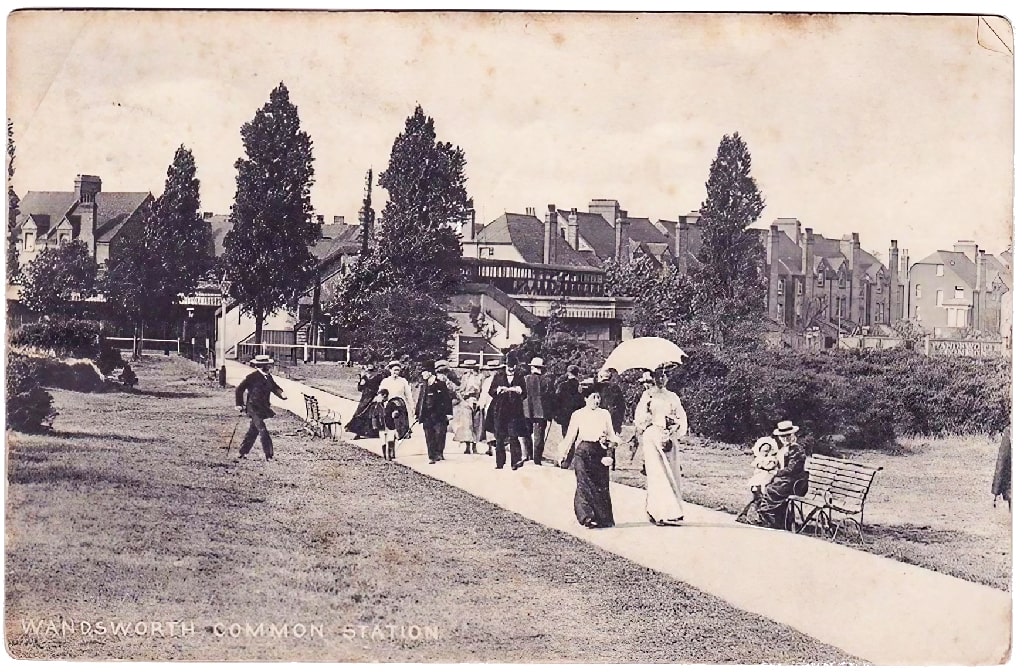
Wandsworth Common Station, early C20 — notice there is no ticket office on the Common side.
I wondered when the ticket office was built, and went looking for an answer.
According to the Northern Daily Mail (Hartlepool) (18 April 1908), "The booking office of Wandsworth Common Station was destroyed by fire last night. It was built last year." This implies 1907.
Here's an image of another fire at the station a few years earlier, but this one seems to have involved the wooden bridge over the tracks.
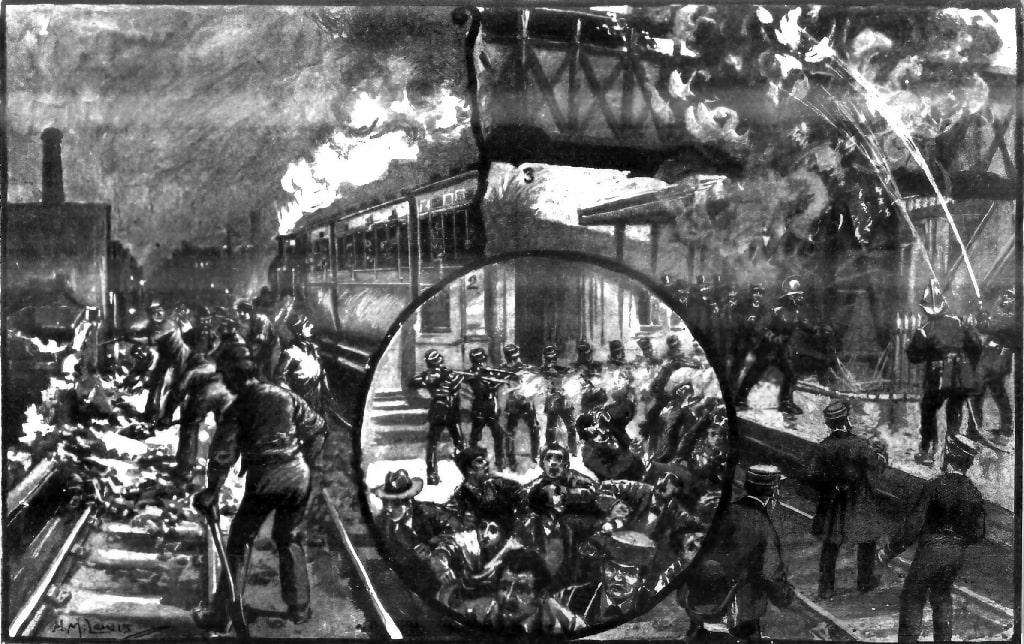
[BNA: Penny Illustrated Paper, 7 March 1903.]
When I first saw this image, I assumed it was only about Wandsworth Common Station. (Even I, who thinks that the sun, moon and stars revolve around Wandsworth Common, was surprised that so much national attention should be drawn to a fairly parochial incident.)
But then I looked more closely and noticed something very odd in the circle in the centre of the picture.
Take a closer look.
A row of soldiers firing rifles. Shooting commuters? At Wandsworth Common station?
It turned out that the image is a composite of not one but three stories, entitled "SOME INCIDENTS OF THE WEEK":
1. Collapse of a wall near Walworth Road Station.
2. Spanish Guards Fire on a Disorderly Crowd during the Carnival Festivities at Vigo. Several Persons were Killed or Wounded.
3. Burning of Railway Bridge at Wandsworth Common Station.
An odd juxtaposition.
As for the date of the postcard, some time around 1905?
While we're talking railways . . .
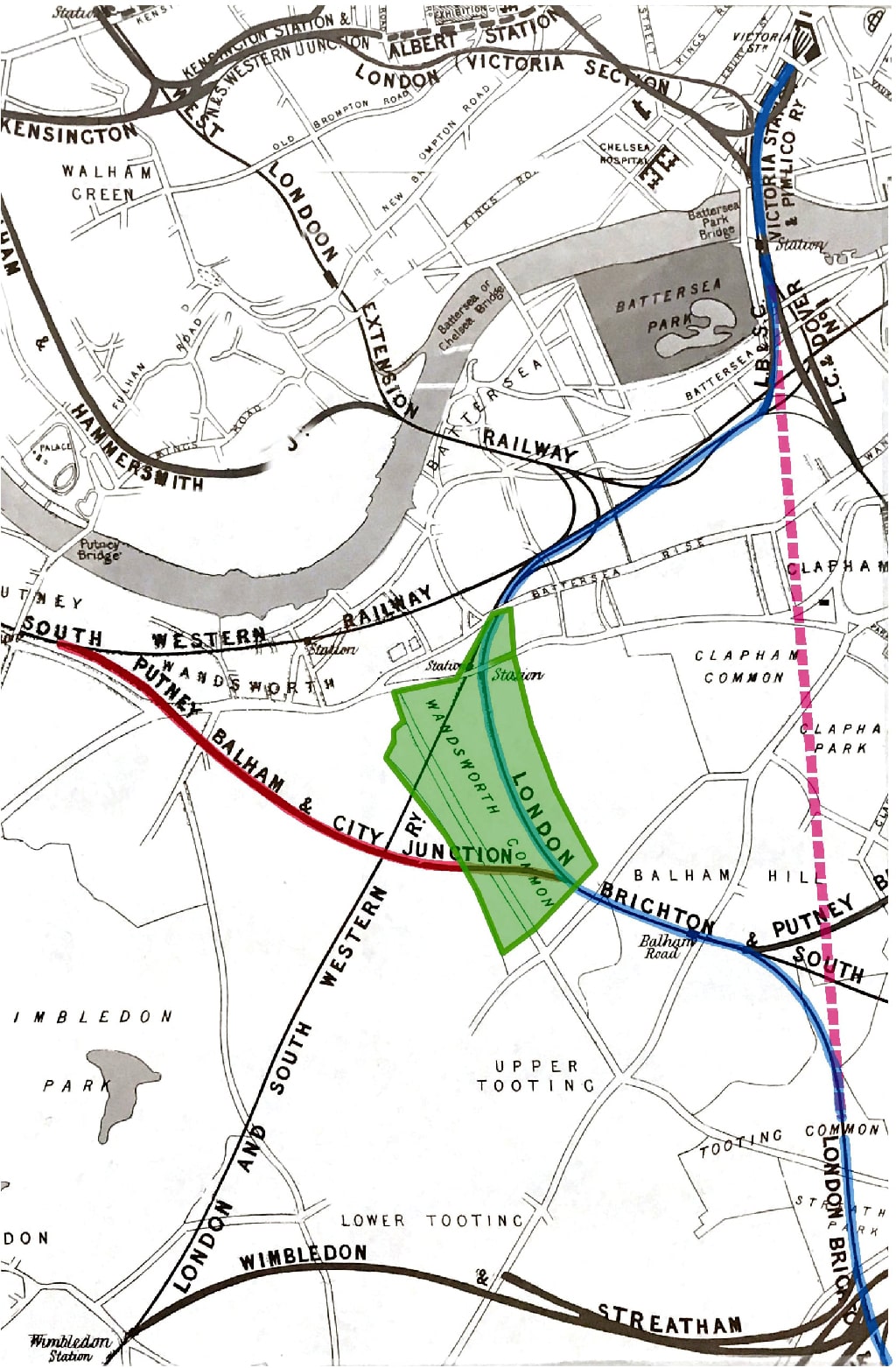
Proposed new railway lines, 1863 (thick), existing routes (thin). I have aded some colour for clarity. Notice in particular the Putney, Balham and City Junction line (red). This would have gouged yet another great canyon across Wandsworth Common.
[I've also added a pink broken line to show the direct route the Brighton line might have taken from Brighton to Victoria had the people of Clapham been less insistent that it didn't come anywhere near their Common — which meant of course that our Common was transected instead.]

The course of the Putney, Balham and City Junction line crossing Wandsworth Common superimposed on a modern map.
The new line was intended to veer off at what would later (1869) be Wandsworth Common Station, then pass in a cutting under Trinity Road (more or less where Routh Road crosses now), loop just south of the prison, traverse St Ann's Hill, span Garratt Lane at the end of Allfarthing Lane, then straddle the Wandle and what is now King George's Park (on a viaduct).
[Keith Bailey tells me that the detailed plans for the Putney, Balham etc are at the House of Lords Record Office HL/PO/PB/3/plan 1862/B27.
"The Putney, Balham & City Junction appears on London Topographical Society 116 (1973) which shows schemes submitted in 1863. It would have used the Chatham & Dover line to reach Blackfriars & Holborn (and thence north). Had they all come to fruition, the scope for housebuilding would have been rather curtailed! The urge to link Putney & environs to the City was finally solved by the Waterloo & City tube.""
Thanks, Keith! ]
The Putney, Balham and City Junction line was not the only extra line proposed to cross the Common. How about this one, about which I know very little (including, frustratingly, the date and source of the map!):
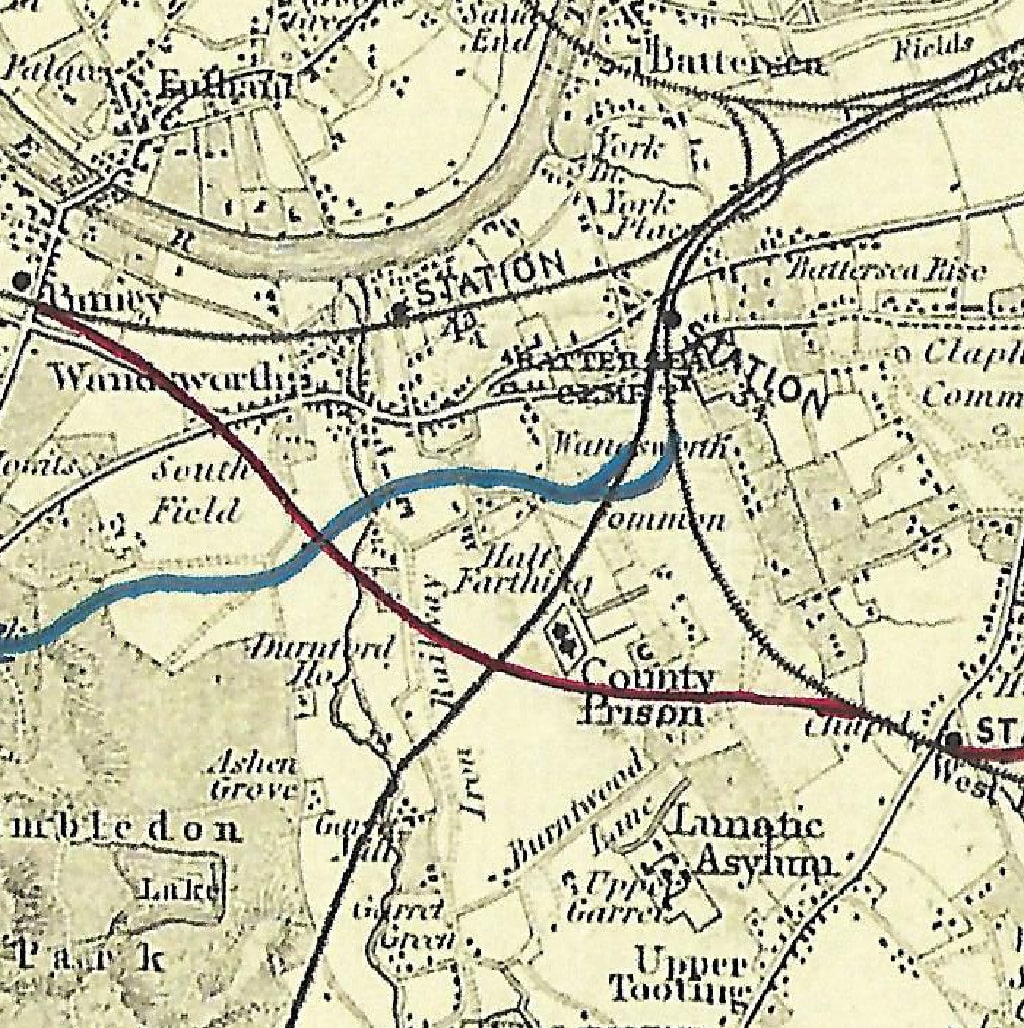
Branches are shown to/from both the Southampton and the Brighton lines, which is strange because of course they were owned by different companies at this time. (And collaboration was very unusual.) The line would have crossed Wimbledon Common and Coombe Hill, presumably on its way to Kingston.
This next article may be related, but possibly refers to yet another line, since Putney and Barnes lie in a different direction.
The London and South-Western Railway propose to construct a railway about quarter of a mile long, to commence by a junction with the main line just westward of the Royal Freemasons' School, Wandsworth Common, and terminating at a junction with the Richmond Railway at Clapham Junction station.
It will pass under a public footpath leading to Plough-lane, and under Wandsworth-road, at a depth of sixteen feet two inches below the roadway.
The scheme includes the widening on both sides of the railway the north side from Barnes station to Clapham Junction, and on the south from Barnes station to within a distance of about five hundred feet west of Putney station.
The widening on the south side will continued from a point about five hundred feet east of Putney station to near the crossing at York-road by Wandsworth station.
The proposed railway and widenings will cross over the Board's main low level sewer in Wandsworth-lane, and again at York-road, Wandsworth; the Putney boundary sewer, near Oxford-road, Putney; and many local sewers.
The Wandsworth District Board will oppose this bill, with the view of obtaining the insertion of certain clauses, which they consider to important in the interests of the inhabitants.
[BNA: Link.]
More information, anyone? Any maps?
Laughter in court — the defendant, who had killed a duck with a catapult, was "only in pursuit of game" . . .
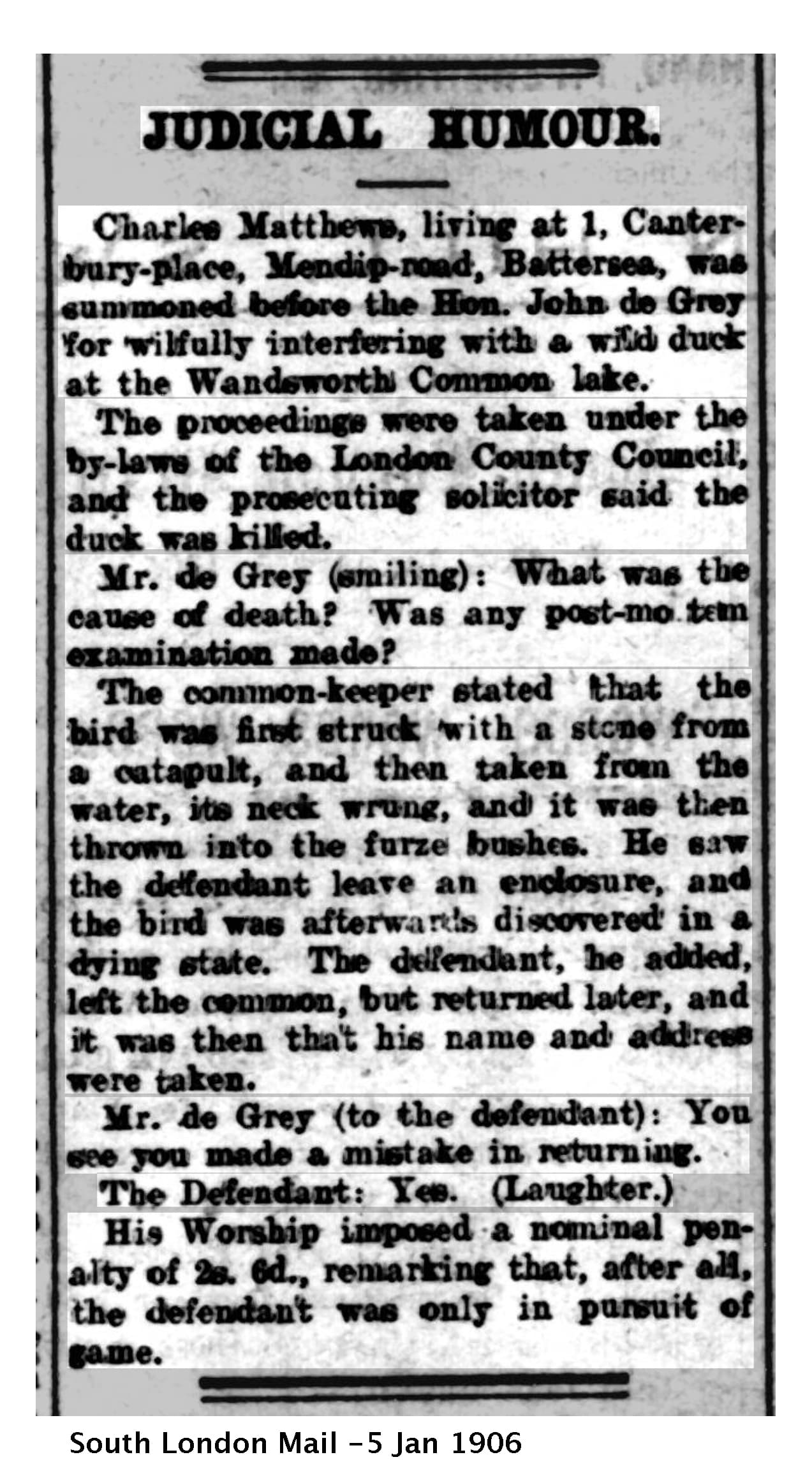
JUDICIAL HUMOUR.
Charles Matthews, living at 1, Canterbury-place, Mendip-road, Battersea, was summoned before the Hon. John de Grey "or wilfully interfering with a duck at the Wandsworth, Common lake.
The proceedings were taken under the by-laws of the Landon County Council, the prosecuting solicitor said the duck was killed.
Mr. de Grey (smiling): What the cause of death? Was any post-mortem examination made?
the Common-keeper stated at the bird first struck with a stone from a catapult, and then taken from the water, its neck rung, and it was then thrown into the furze bushes.
He saw the defendant leave an enclosure, and the bird was afterwards discovered in a dying state. The defendant, he added, left the Common, but returned later, and it was then that his name and address were taken.
Mr. de Grey (to the defendant): You see you made a mistake in returning.
The Defendant: Yes.
(Laughter.)
His Worship imposed a nominal penalty of 2s. 6d., remarking that, after all, the defendant was only in pursuit of game.
[BNA: Link.]
The Revd Craig's "Brobdignagian cigar" —isn't that brilliant description — recollected in 1868
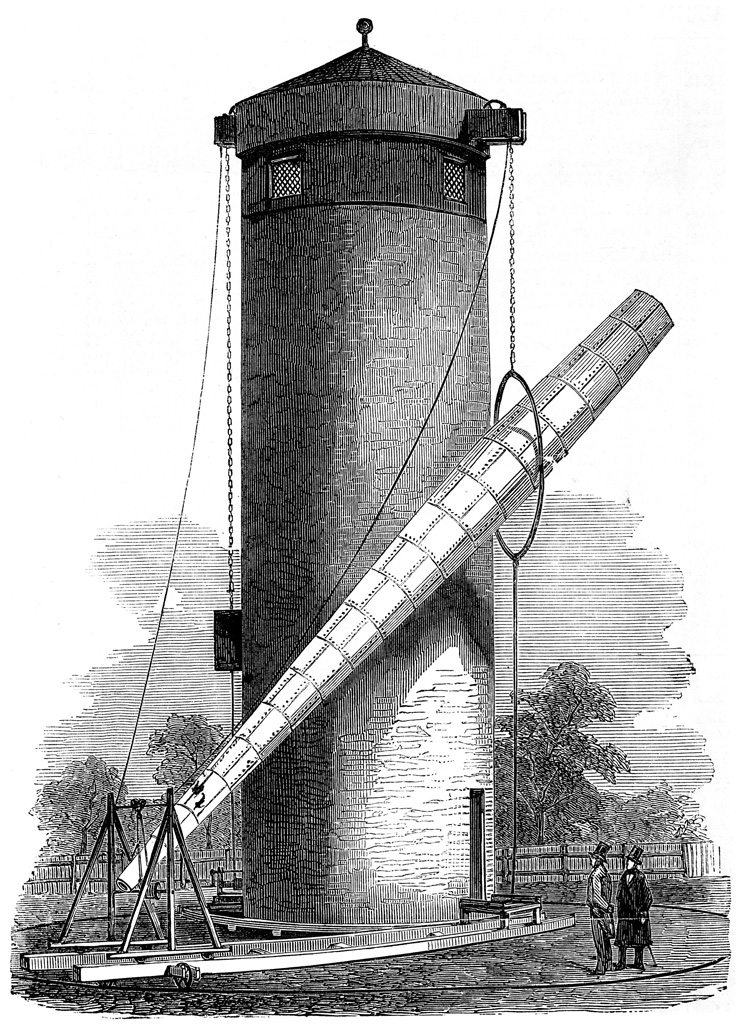
The Craig telescope, the world's largest, on Wandsworth Common, as shown in the Newcastle Journal, 30 January 1868. The telescope had been demolished more than a decade earlier.
Mr Craig had manufactured a refracting telescope with an object glass twenty inches in diameter; it was erected on Wandsworth Common, in a tube resembling a Brobdignagian cigar, but so imperfect was its achromatism and aplanatism that it has long been laid aside as practically useless.
etc etc
[BNA: Link]
"Practically useless", perhaps, but it did boast of one major achievement — establishing the existence of a third ring around Saturn:
The Craig Telescope
This giant refractor lately erected on Wandsworth Common, of two feet aperture and eighty feet focal length, has been brought to bear up in the planet Saturn on the first favourable evening after its erection.
The instant result has been to set the question at rest for ever amongst astronomers as to the satellite having a third ring. This Telescope has brought out this third ring beautifully. It is of a bright slate colour . . .
In fine weather the wonders of the heavenly bodies are exhibited by this eighty feet refractor, in a way that the eye of man has never heretofore been permitted to see them.
[BNA: Link]
I love this evocation of the Craig telescope at work on Wandsworth Common. Can the night sky really ever have been so awesome? Image from Greg Smye-Rumsby's wonderful website: www.craig-telescope.co.uk:

"the wonders of the heavenly bodies are exhibited . . . in a way that the eye of man has never heretofore been permitted to see""
[Hmm, I've included the web address but I'm currently (December 2024) having difficulties accessing the site. With luck, by the time you read this things will have been fixed and you'll be luckier.]
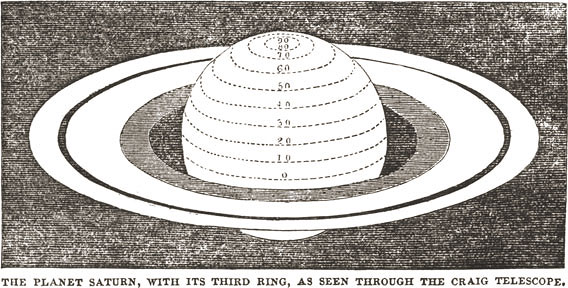
"The Planet Saturn, with its third ring, as seen through the Craig Telescope." Really? How did Saturn actually appear to viewers? I couldn't have looked like this!
[Source: Craig-Telescope.co.uk: Observations at the telescope.]
But there were innumerable problems with the telescope itself including too cumbersome to track stars across the night sky, and poor optics), and also its location on Wandsworth Common — too close to the light pollution caused by London's rapid expansion.
It was in effect a grandiose folly, and within a few years it was demolished and sold off as scrap . . .
Learn more about the Craig Telescope by watching this recent video of Greg Smye-Rumsby's talk to the Friends of Wandsworth Common:
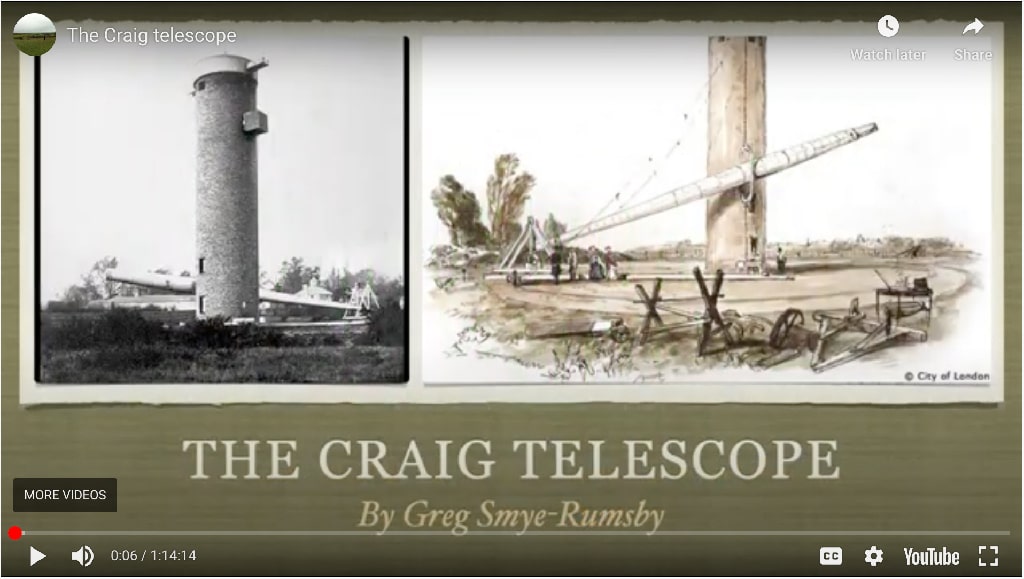
THE CRAIG TELESCOPE
24 October 2024 — The story of an iconic building that lives on in name only - by Greg Smye-Rumsby
Around the time of the Great Exhibition, in 1852, a futuristic telescope was built on a corner of Wandsworth Common in an area now called the "Scope". "We now have a much better understanding of this strange and cumbersome instrument and why it never fulfilled its promise, despite employing the minds of some of the greatest engineers of the day", according to Greg Smye-Rumsby — specialist planetarium presenter for the Royal Observatory, Greenwich who has made this subject his own.
[Friends of Wandsworth Common: Videos.]
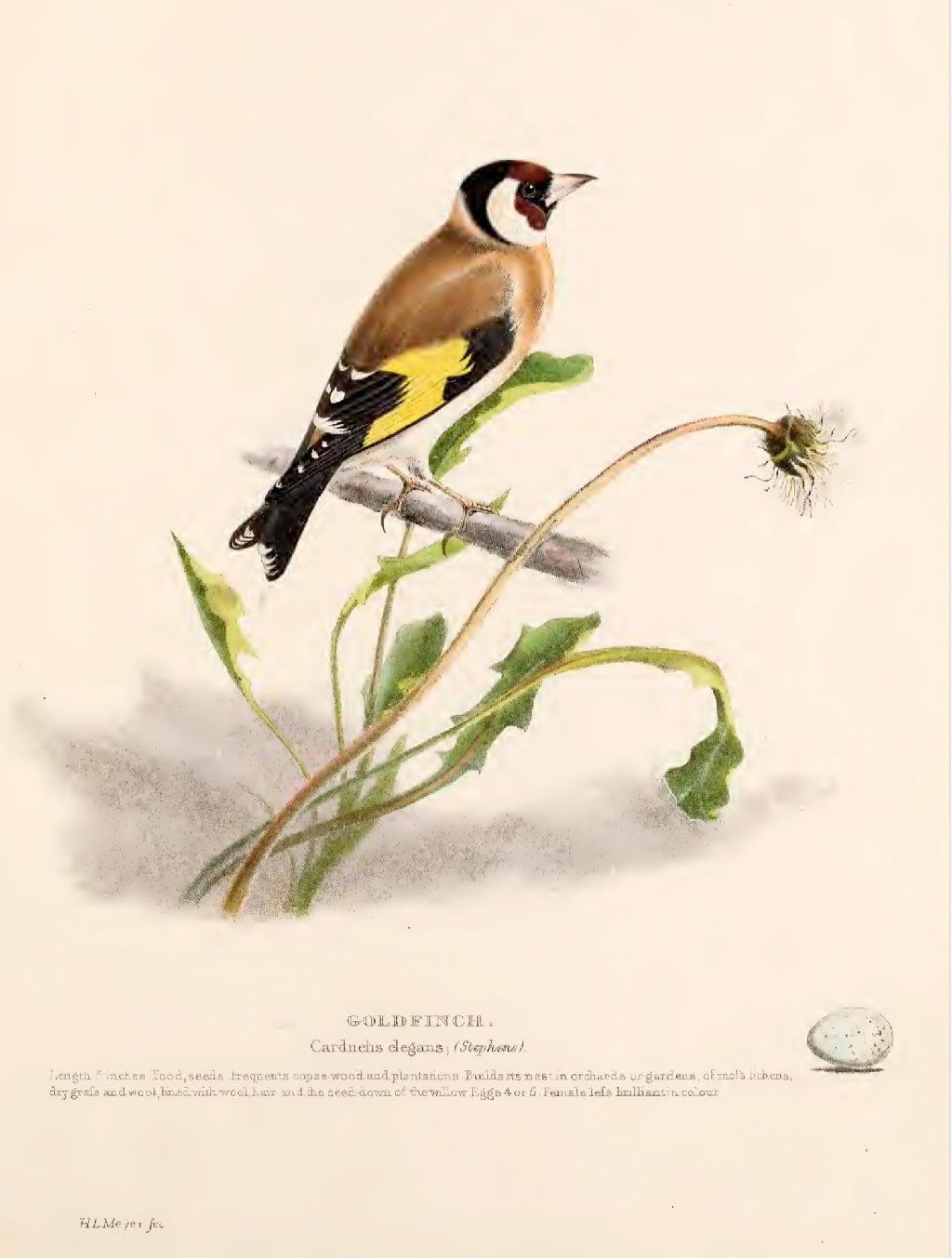
Engraving of the Goldfinch by local artist Henry Meyer
BIRD SINGING
The final handicap for the season 1881, for a handsome lamp, presented by the proprietor of the Carpenter's Arms, Chatham road, Wandsworth Common; thirteen pair of goldfinch mules put up.
F. Rush's bird won with 3 score 8.
A linnet handicap is now coming on, for two handsome prizes. Other races to follow.
H. Collins is open to sing any goldfinch mule (gaslight), once in the mouth, for £1. H.C. will be in waiting at the above house on Saturday, January 14, from seven to nine.
[Largely irrelevant, but here's a terrific short exposition of the symbolism of the Goldfinch in art, from the Fitzwilliam Museum, Cambridge.
Chatham Road was once abundantly supplied with public houses. Here are some of them:
— Eagle, 104 Chatham Road, Miss Young
— Gardeners Arms, 109 & 111 Chatham Road, Miss Arlott
— Bolingbroke Arms, 17 Chatham Road, Briggs
— Carpenters Arms, 39 Chatham Road, Barrow
Today, only The Eagle remains (of course the road itself is only half as long — it once stretched all the way to Bolingbroke Grove, on the edge of the Common).
Some questions:
"Mules" must be cocks/male birds, but what do "Once in the mouth" and "Gaslight" mean?
How were singing contests scored, and who judged?
Incidentally, a search for more information about The Eagle found this interesting note from the publican, David Law:
I'm the current Publican for the above site and have been so since 1996. I am currently researching the building for possible planning and historical protections. So far I have discovered that it was originally one of five pubs on this road and started life as a beer house.
I have yet to find out its original build date although from other building info I suspect it was 1863, being substantially rebuilt in 1890 by the Holloway Bros, to designs by Karslake & Mortimer Architects. The Holloway Bros also built Albert Bridge on the Thames and the most recent remodelling of the Bank of England."
[LondonWiki: LondonPubs: The Eagle, 104 Chatham Road, SW11 6HG.]
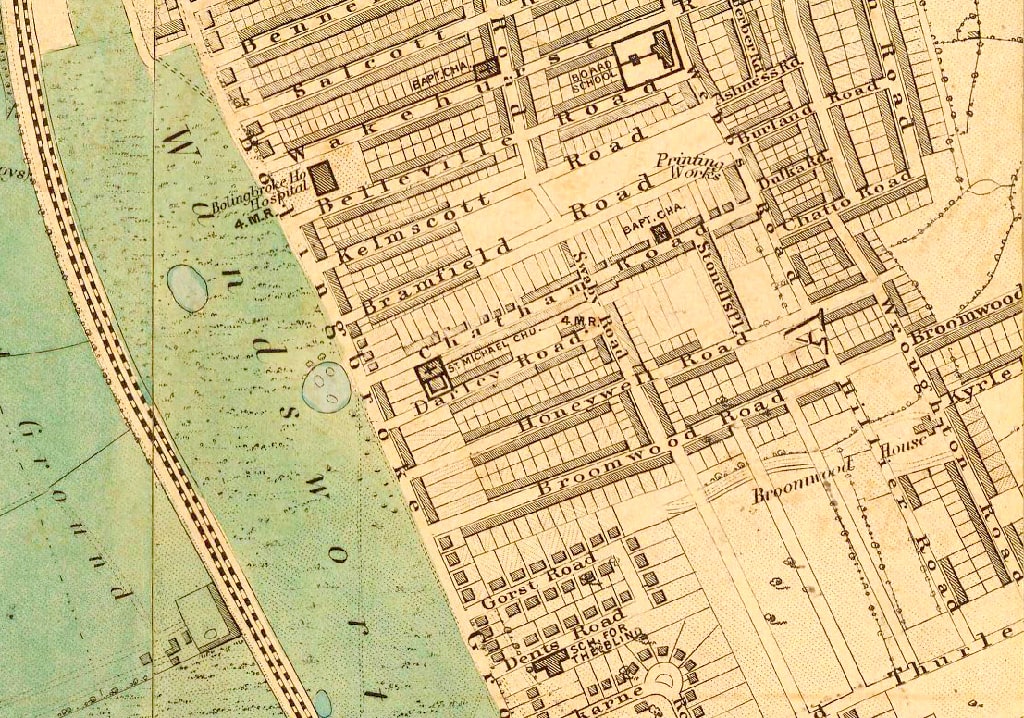
Stanford, 1896. The Eagle, on Chatham Road, is more or less opposite what was then a Baptist Chapel. The chapel was demolished and the Gardener's Arms built on the site. Why so many pubs?
Even this small fragment of a map should provide hours of fun. Notice, for example, how Northcote Road has yet to run through to Broomwood Road - to be joined up with "Swaby Road". Belleville School is shown, but not Honeywell. Historic England states that it was built in 1891 to a design by T.J. Bailey. So why does it not appear on this map?
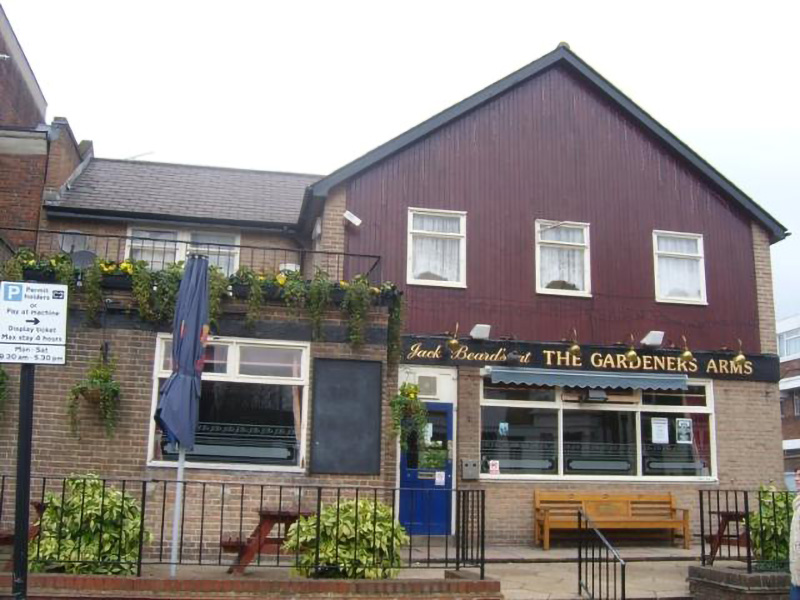
The Gardener's Arms, opposite the Eagle.
My old friend Alan Turk recollects we drank there in the 1960s, early on in our drinking careers - it must have been early, he writes, because "it was a Watney's pub! I remember paying 2 shillings for a pint of Red Barrel and thinking 'That's a bit steep!'". Soon after, partly thanks to the rise of CAMRA (the Campaign for Real Ale) we changed to favouring Young's local brews as opposed to Watney's industrial product. (However, for a revisionist count of Watney's, see e.g. Watneys: The Worst?
A block of flats now stands on the site. ClosedPubs.co.uk says last orders were called at the Gardener's Arms in February 2011 and the pub was demolished in July 2011.
Two "professional" ratcatchers to the London County Council were appointed yesterday — one for Battersea Park at a fee of £5.15s per annum, and the other for Clapham and Wandsworth Common at £5.5s.
[BNA: Link.]
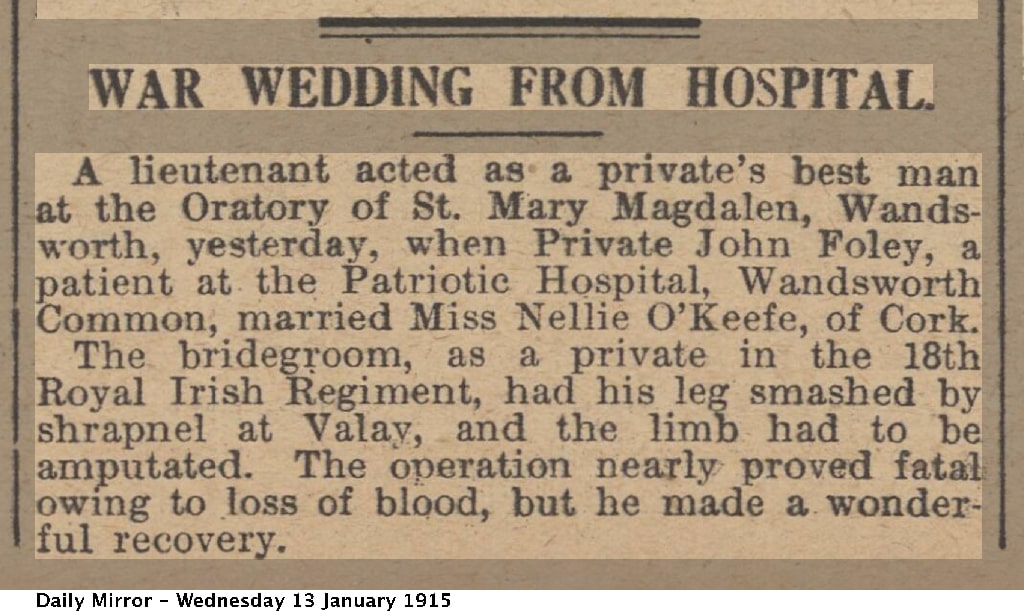
WAR WEDDING FROM HOSPITAL
A lieutenant acted as a private's best man at the Oratory of St. Mary Magdalen, Wandsworth, yesterday, when Private John Foley, a patient at the Patriotic Hospital, Wandsworth Common, married Miss Nellie O'Keefe, of Cork.
The bridegroom, as a private in the 18th Royal Irish Regiment, had his leg smashed by shrapnel at Valay, and the limb had to be amputated. The operation nearly proved fatal owing to loss of blood, but he made a wonderful recovery.
[BNA: Link.]
Some other newspapers added snippets of information:
WOUNDED SOLDIER'S ROMANCE
Wounded and removed to the Patriotic Hospital, Wandsworth Common, Private Foley, of the 18th Royal Irish Regiment, was married St. Mary Magdalene, Wandsworth, Tuesday Miss Nellie O'Keefe.
For some time the soldier's life was in danger. His left leg was amputated, and owing to loss of blood his condition became precarious. But slowly he recovered, and then decided to marry without delay the young lady whom he had been engaged before war broke out.
Miss O'Keefe entered the church on the arm of Colonel Bruce Porter, the officer commanding at the hospital, and she was attended by the matron, Miss Holden, as bridesmaid. The wedding breakfast was given the hospital by the officers, and later the other wounded men attended reception.
Lady Constance Butler sent bunch of shamrock from Kilkenny, and the wedding cake was present from the Honourable Winifred Douglas-Pennant.
[BNA: Link.]
The England & Wales, Civil Registration Marriage Index, 1837-1915, confirms that John Foley and Nellie O'Keefe married in Wandsworth in the January Quarter of 1915.
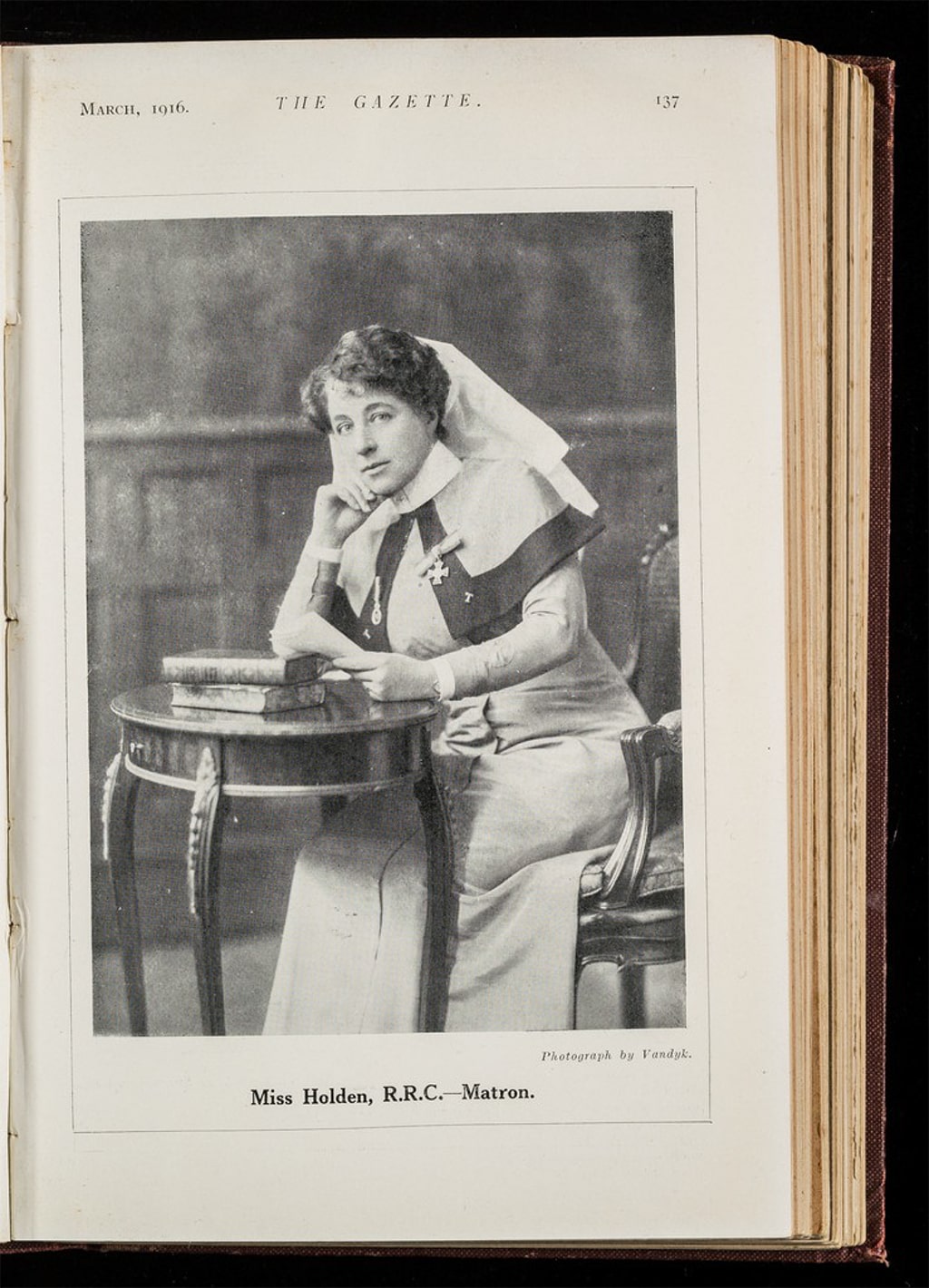
Photoraph of Edith Holden, Matron, 3rd London General Hospital, Gazette, March 1916.
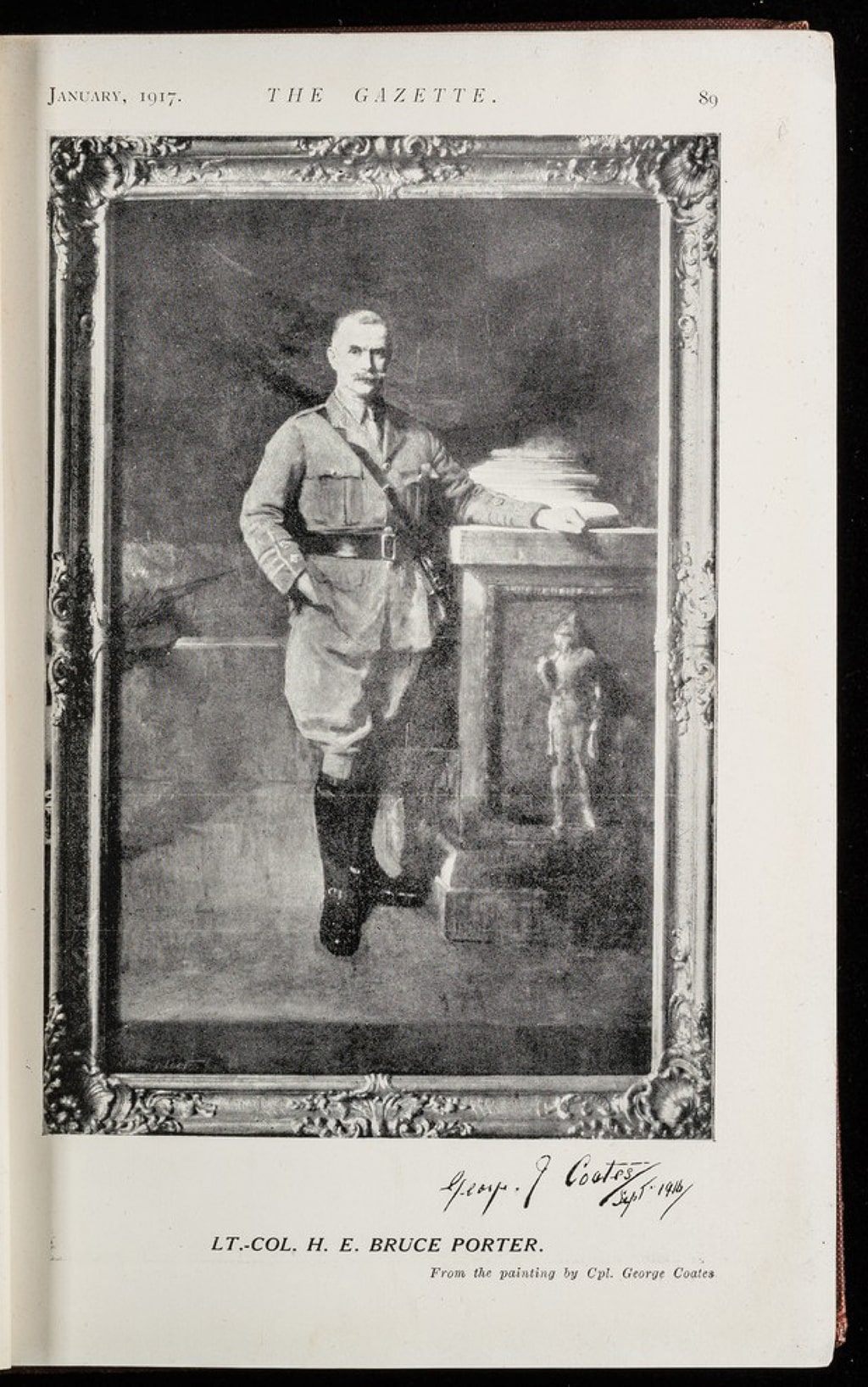
Full-length portrait of Lt-Col. H.E. Bruce Porter by George Coates, Gazette, January 1916.
Searchlight and Gun Stations for sale, Wandsworth Common . . .

Ministry of Munitions.
By direction of the Disposal Board.
Huts and Building Materials Section.
Sale by Auction of
Hutments and Contents,
at Bolingbroke Grove and Spencer ParkSearchlight and Gun Stations,
Wandsworth Common.
On Friday, January 23rd, at 12 o'clock and 2 o'clock respectively.
Including:
Stoves, Shelving, Benches, "Colinda" Range,
Farm Boilers, Baths.
1200 ft. Corrugated Iron Fencing,
3 Canvas Hut Tents . . .[BNA: Link.]
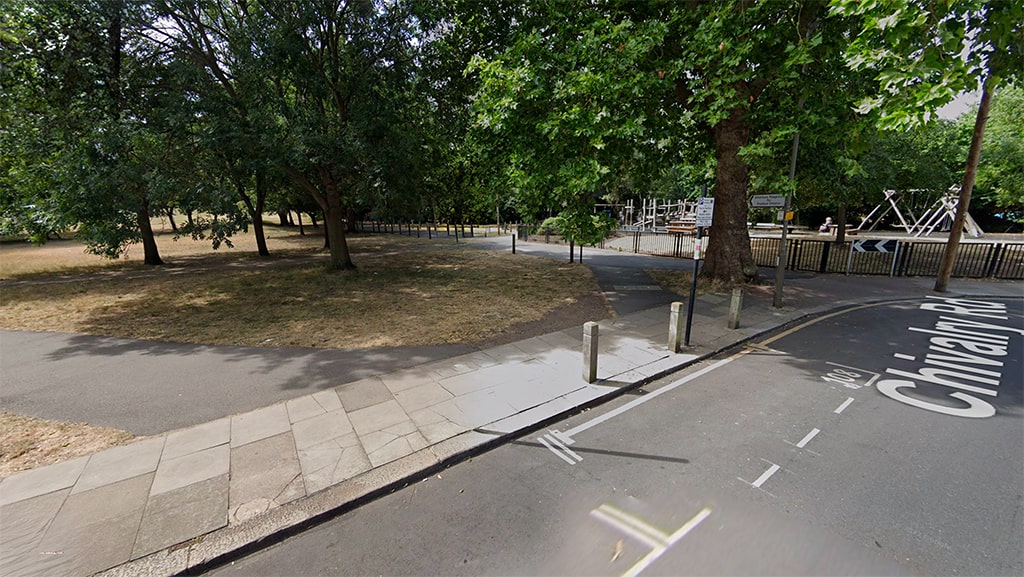
The playground area near Chivalry Road — where the searchlights and anti-Zeppelin gun were sited during World War One.
Mud, mud, glorious mud . . .
HARLEQUINS v. BLACKHEATH
MUD SPOILS THE MATCH
Rarely is a game contested under such adverse conditions as that witnessed at Wandsworth Common between these leading clubs on Saturday. For the best part of the week Harlequins' ground had been under water, and although by means of pumping, etc., an effort had been made to get the pitch in something like order was still in a very sloppy state, pools of water were to be seen in places.
Strange to say, the players seemed to have a particular affinity for the worst spots, for the majority of the game was contested where the mud was thickest, with a result which can be well imagined, and which, whilst disconcerting to the players, provided plenty of amusement for the three or four thousand spectators.
Some of the men were quite unrecognisable before the game was any minutes old, and both they and the ball were subjected to frequeat scrapings for the purpose of removing superfluous "upper crust". But still, despite all tbeee drawbacks, the game was a keen one, and although naturally confined largely to the forwards an interesting one to watch. . . .
As it was, the game ended in a pointless draw, which was undoubtedly the most satisfactory ending to the struggle in the mire.
[BNA: Link.]
Incidentally, I am GREATLY enjoying Sport and the British, Clare Balding's "30-part series charting how sport has shaped the British and how Britain has shaped sport" (BBC Sounds). Highly recommended, even if (like me) you're not much interested on sport.
As you must have gathered by now, I strongly believe the current shape, nature and layout of Wandsworth Common has been largely determined by the history of sport played on its denuded, smoothed, levelled, drained surfaces - see e.g. videos of a couple of talks I gave for the Friends of Wandsworth Common a few years ago.
PROPOSED ERECTION OF AN IRON CHURCH AT WANDSWORTH
On the recommendation of the building act committee, it was resolved that the application of the Rev. J.E. Clarke for the approval by the board of a plan for the construction of a temporary iron church in Darley-road, Bolingbroke Grove, Wandsworth Common, be granted.
[Source: Link.]
This "iron-church" (or "tin-tabernacle") is the future St Michael's, opposite the Three-Island Pond. The incomparable John Erskine Clarke had already used a prefabricated iron church to establish St Luke's on Ramsden Road. The impressive brickwork was erected around the iron structure, which was removed from within on completion — services were scarcely interrupted.
"Switch off that LIGHT! ", 1940
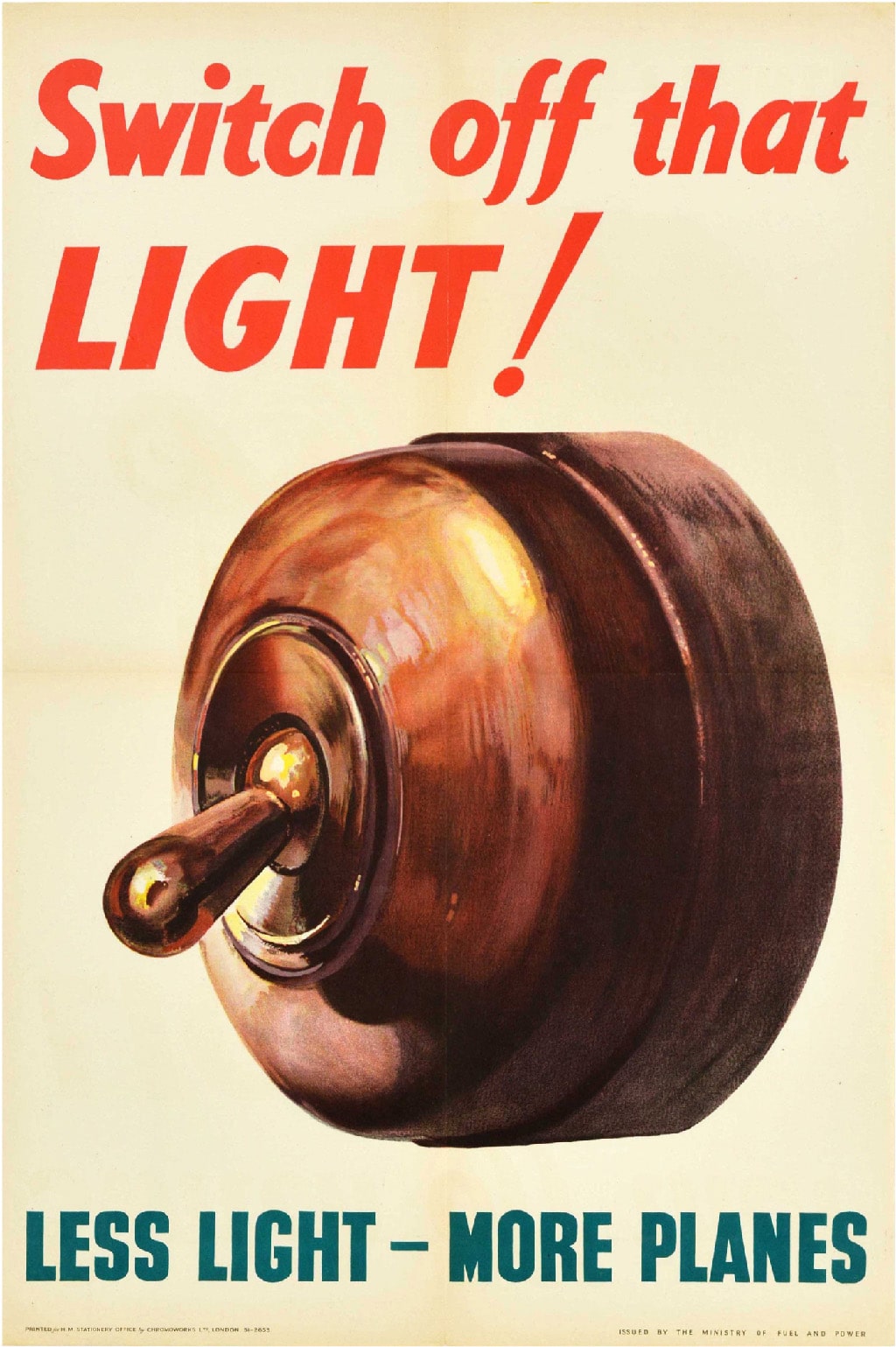
"Switch off that LIGHT! Less Light — More Planes"
Unscreened Lights
Lewis Fisher, Stormont-road, Battersea, was fined 2s. 6d. at the South-Western Police Court for allowing an unscreened light at his flat at 6.30 p.m. It was stated that the light was showing from a top-floor window. Defendant said. "I have just taken over the house, and have not had time to put up the black-out yet" Defendant added that he was out of work.
Mrs. Lilian Langridge, North-side, Wandsworth Common, was fined 10s.. for a similar offence at her flat at 9.p.m.
P.C. Willis stated that a light was showing from a third-floor window. It came from a candle on a dressing-table in front of the window. Defendant said, "I took the curtains down to wash them, and forgot to put them up. Will it go against me? I have three sons in the Army."
[BNA: Link.]
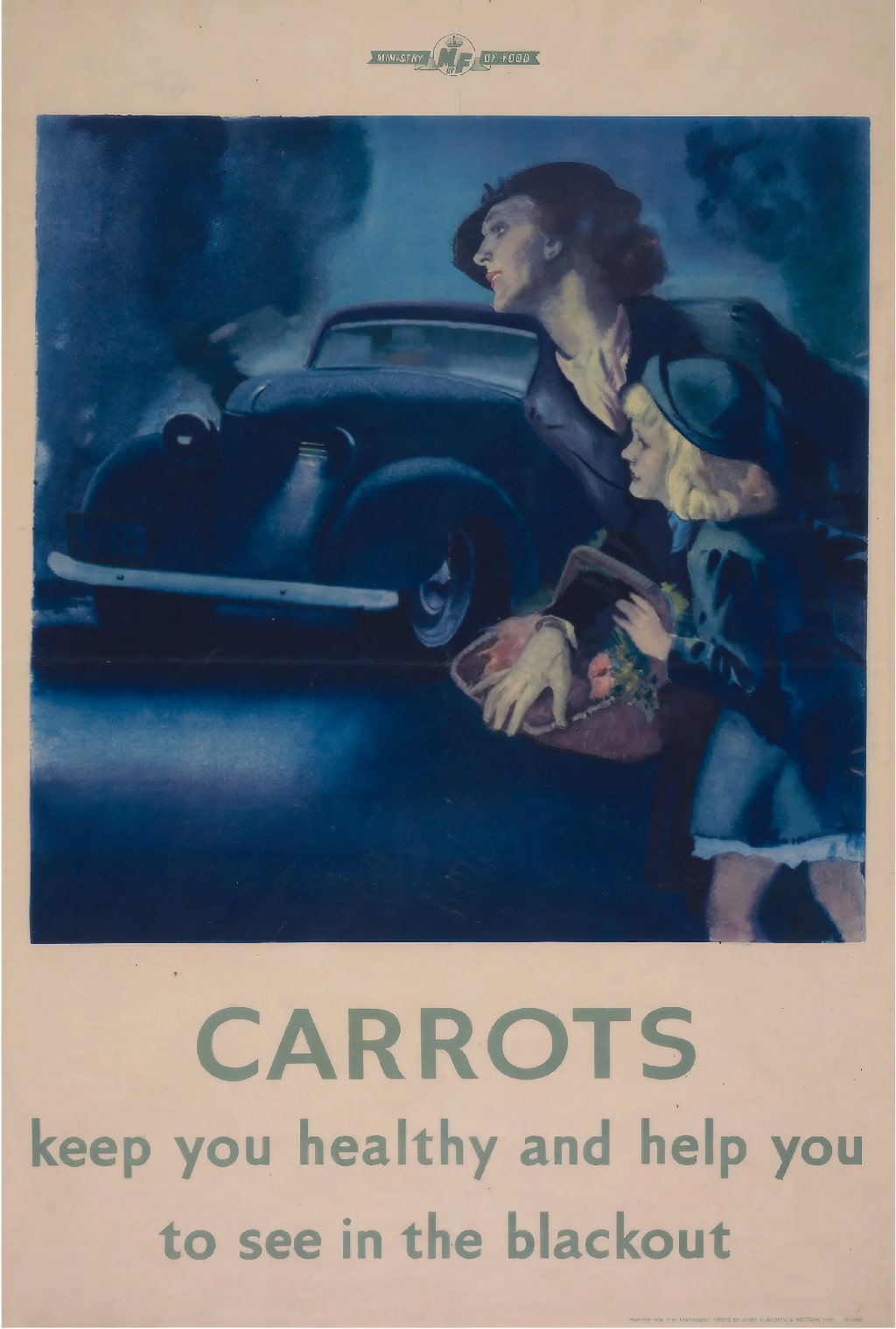
"CARROTS keep you healthy and help you to see in the blackout"
Here's an odd story. Perhaps you can make more sense of it than I can. But it's interesting, even if you can't .
It involves a Wandsworth Common "college-man" at the University of Cambridge who may not be entirely the gentleman he purports to be, and two "venerably bearded Turks in the full costume of the East".
Two fashionably dressed Turkish men, c.1820. Such a wonderful print I couldn't stop myself using it, but not necessarily anything like the two men in our own story. (For one thing, they're not fully bearded.)
POLICE. BOW STREET.
A pair of venerably-bearded Turks, in the full costume of the East, appeared before the sitting Magistrate, a few days ago, attended by one of the porters belonging to the Home Secretary of State's Office, who informed his Worship, that Mr. Hobhouse had desired they should be conducted before him, they having some complaint to make against a member of the University of Cambridge.
Neither of the Asiatics could speak a syllable of English, but they were accompanied by a man who offered himself as their interpreter, and who also called himself a Turk though he was an exact personification of an English stage-coachman a sturdy, curly headed, red-faced, knowing-looking fellow; in top-boots, bird's-eye fogle, and poodle benjamin.
[According to the indispensable (Green's Dictionary of Slang):
"bird's-eye fogle" — a silk handkerchief with a birds-eye pattern. Perhaps significantly, fogles were used as a prizefighter's colours.
"poodle benjamin"? Unknown, but a "benjamin" is a coat or waistcoat.]
To this man one of the strangers talked for nearly a quarter of an hour, with astonishing volubility, and most redundant gesticulations; and, having concluded, the man delivered the following narrative partly in English, partly in French, partly in Turkish, and partly in a dialect of his own, composed of all the others:
The Turks, in the course of their travels, had sojourned some days at Cambridge; and whilst there had sold about ten pounds worth of their merchandize to a "college man," (a collegian — one Mr.__________, of Wandsworth Common, as appeared from an address written on a slip of paper which they produced). The "college-man" did not pay them for the merchandize at the time of their bargain; but promised to be ready with the money on a future day.
When the day arrived, however, he was "gone somewhere away," and they could not find him. Some days more elapsed before he made himself visible; and then another day of payment was appointed; but when the day came he was gone away again.
In short, as the interpreter said, he was "always far off, round about in the countries sometimes here, and sometimes there, sometimes every where, and sometimes nowhere at all."
In all these eccentricities the poor Turks endeavoured to keep up with him; and urged the chace so warmly that, it would appear, he began at length to grow confoundedly tired of it; and, hopeless of exhausting their patience by this kind of wild-goose chase, he hit upon the following queer contrivance to rid himself of their troublesome presence:
Having apologised for the delay that had occurred, he appointed to meet them on the following morning at a certain public-house, about five miles from Cambridge, on the road to London.
The Turks were exact in keeping their appointment, and they had not waited long before the "college-man" made his appearance. He was accompanied by a young woman; and he proposed to the Turks that they should escort this young woman to town for him; that they should take great care of the young woman, as she was very dear to him, and wait altogether at the White Horse Cellar, Piccadilly, till he joined them; that he would follow them in a day or two at farthest, and immediately on his arrival in town he would give them a cheque upon his banker for the original debt, and the travelling expenses altogether!
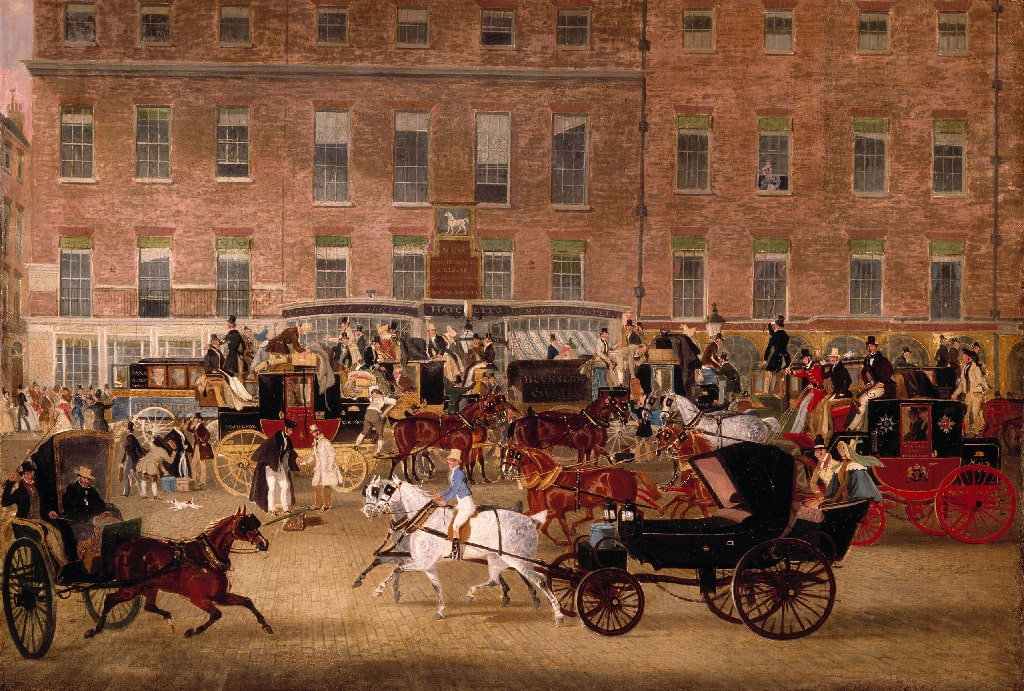
White Horse Cellar, Piccadilly, by James Pollard, unknown date. One of the best-known coaching inns.
This would have been a comical proposition to have made to an Englishman, but it answered very well with the poor Turks' they readily agreed to it; not doubting but he would keep his word when they had a Lady in pawn who was so "dear" to him and they took their departure for the Metropolis by the first coach that passed; the "college-man" taking a tender farewell of the Lady, and the simple Mussulmans escorting her along the road with as much care as though they had been conducting some fair Circassian to the Seraglio of the Grand Seignior.
They arrived at the White Horse Cellar in due course, and waited day after day for the arrival of the "college-man;" but to their astonishment he never came, and their patience and faith evaporating together, they at length sought redress from the laws.
The Magistrate (G.R. Minshull Esq.) said it appeared that the collegian, by this unprincipled trick, had killed two birds with one stone" he had disburthened himself of his creditor and his mistress at once.
The stratagem, he said, was the more unprincipled, inasmuch as it was played off upon foreigners, who were utterly ignorant of the customs of the country, but still he was afraid it did not come within his jurisdiction.
After some further conversation, his Worship having learned that the young woman was still under the protection of the Turks, he desired that she might be brought before him: and the Turks, with their interpreter, left the Office for the purpose of fetching her; but they did not return in the course of the day.
[BNA: Link]
And there, alas, the story ends.
Or does it?
SO many more stories still to tell. But that's all for now, folks.
Send me an email if you enjoyed this post / want to comment on something you've seen on the site / would like to know more — or just want to be kept in touch.
If you would like to receive notifications of new Chronicles, let me know . . .
Philip Boys ("History Boys")
January 2025
— Friends of Wandsworth Common
— Wandsworth Historical Society
