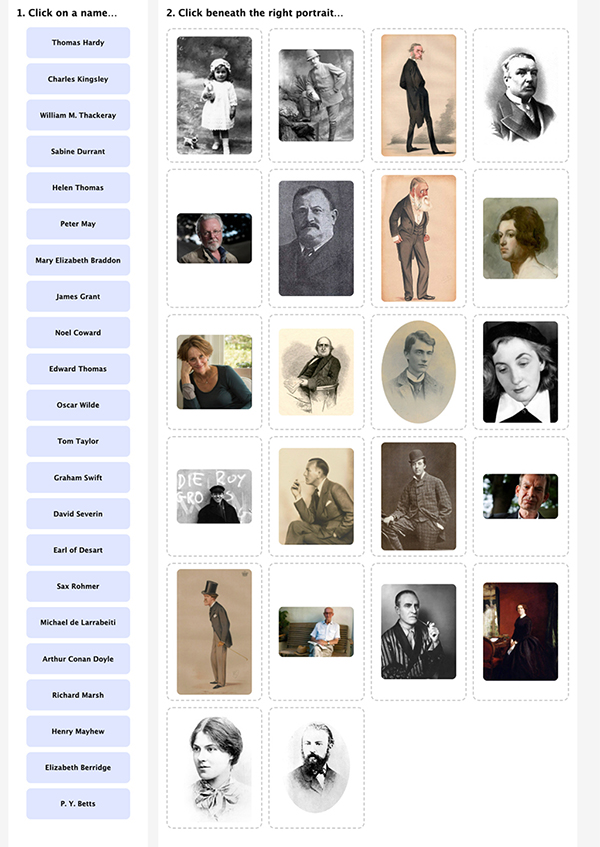
I write "fiendishly difficult" not because the questions are really hard (though some probably are), but because of how hard learning how to code an online quiz turned out to be! I'm still not sure whether it will all work, so do tell me how you find things.
Connect the author with their portrait . . .
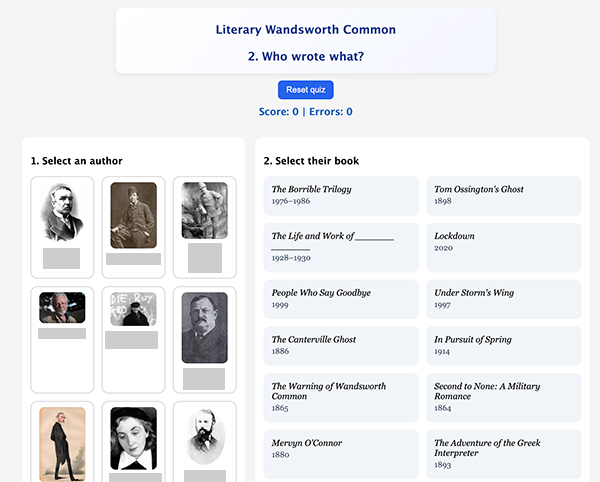
Connect the author with the work (novel, short story, poem, play) in which they wrote about Wandsworth Common . . .
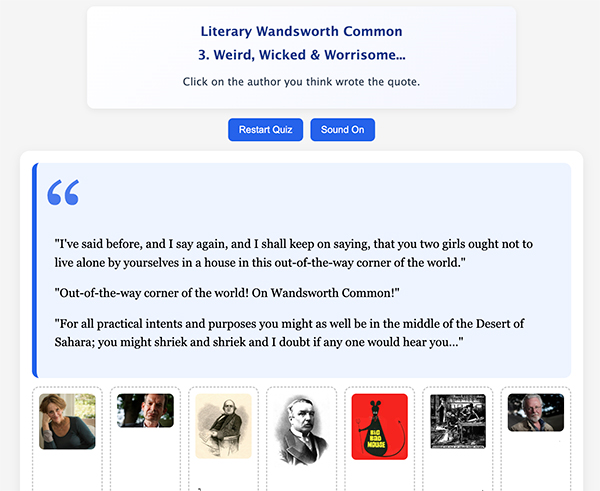
Identify the authors who set their shady scenes on Wandsworth Common . . .
I hope to add a fourth quiz, about nature on the Common, fairly soon.
The quizzes are probably best attempted on a wide screen, such as a computer or tablet held horizontally (because there are so many photos to fit in). I might try to work out how to adapt the quizzes for a phone, but that will have to wait until after the Falcon Brook talks. (On which, more below.)
Wednesday 15 February at the usual time and place (6:30 for 7)
This will be the second outing for the talk, the first of which was on Tuesday 27th January 2026.
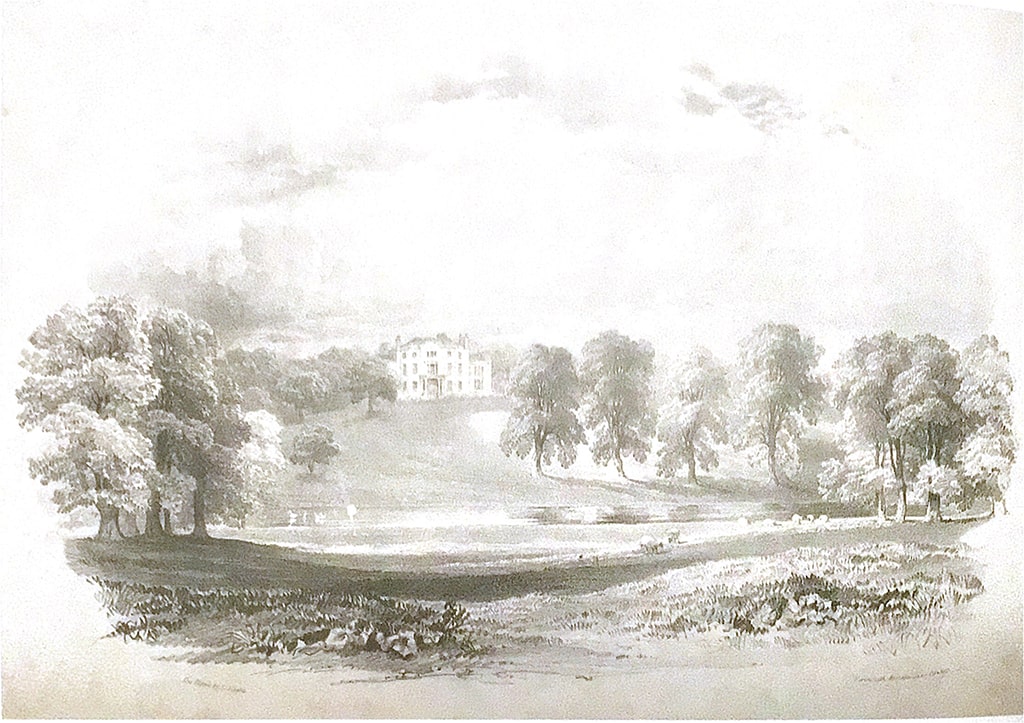
View by Louis Haghe of Bolingbroke House, on the edge of the Common, seen from across the Falcon Brook. Unknown date but presumably midC19. (London Archive)
Wednesday 15 February at the usual time and place (6:30 for 7, The NatureScope)
This will be the second outing for the talk, the first of which was on Tuesday 27th January.
Naturescope (off Dorlcote Rd), Wandsworth Common, SW18 3RT.
The Falcon Brook — our very own hidden river. It flows from far away Tooting and Knight's Hill through Balham and Battersea, collecting all the rain falling on Wandsworth Common and the houses and streets "twixt the commons", before running beneath Northcote Road, St John's Road and Falcon Road and debouching into the Thames as Battersea Creek.
We'll be looking at some of the extraordinary things that have happened along its course.
In the late eighteenth century, the Falcon Brook's beauty was prized, and the "Five Houses" and William Wilberforce's "Broomfield House" (later called Broomwood House) were built on its banks, with extensive gardens. Ornamental lakes were created at intervals for swimming, fishing and boating.
But by the middle of the nineteenth century the Brook had become "the York Sewer"). It was then progressively buried deep underground in a large pipe, typically with roads on top. In places, you can still hear its flow — a plea to be released?
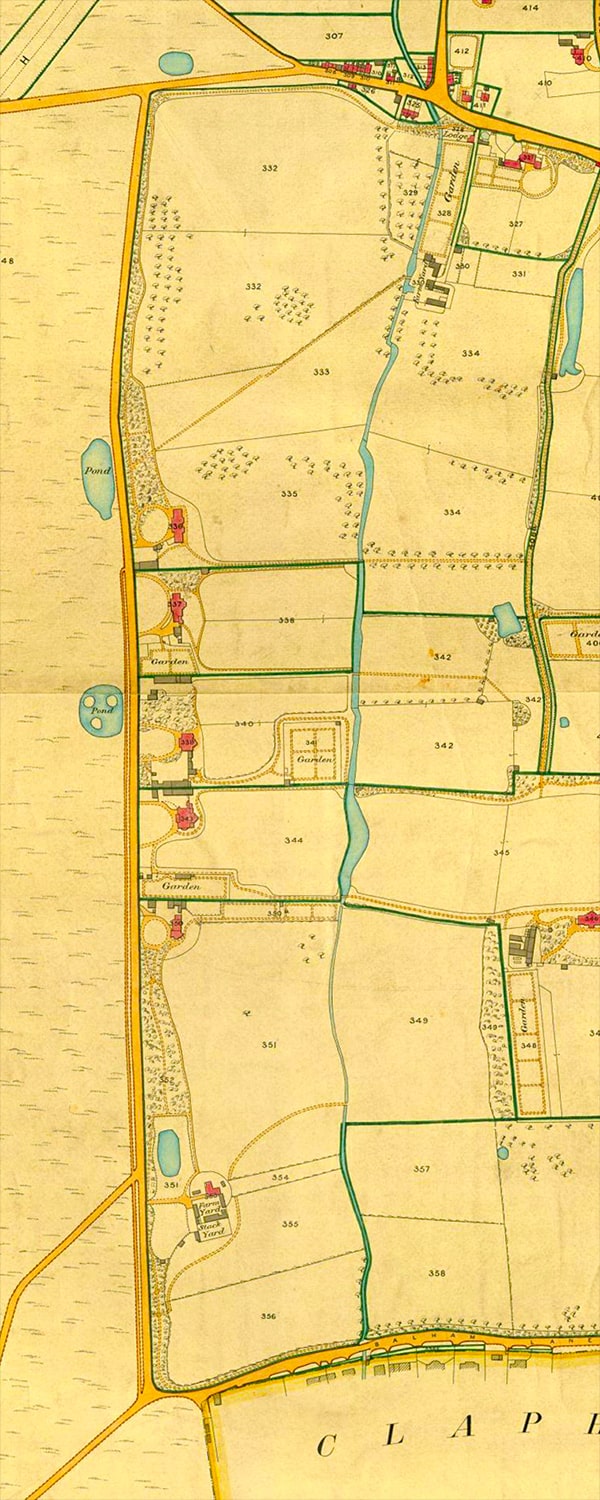
The Falcon Brook, with pools, shown on the Tithe Map of Battersea c.1841. This is the stretch between Nightingale Lane at the bottom and today's Battersea Rise at the top. Bolingbroke Grove is on the left, parallel to the Brook.
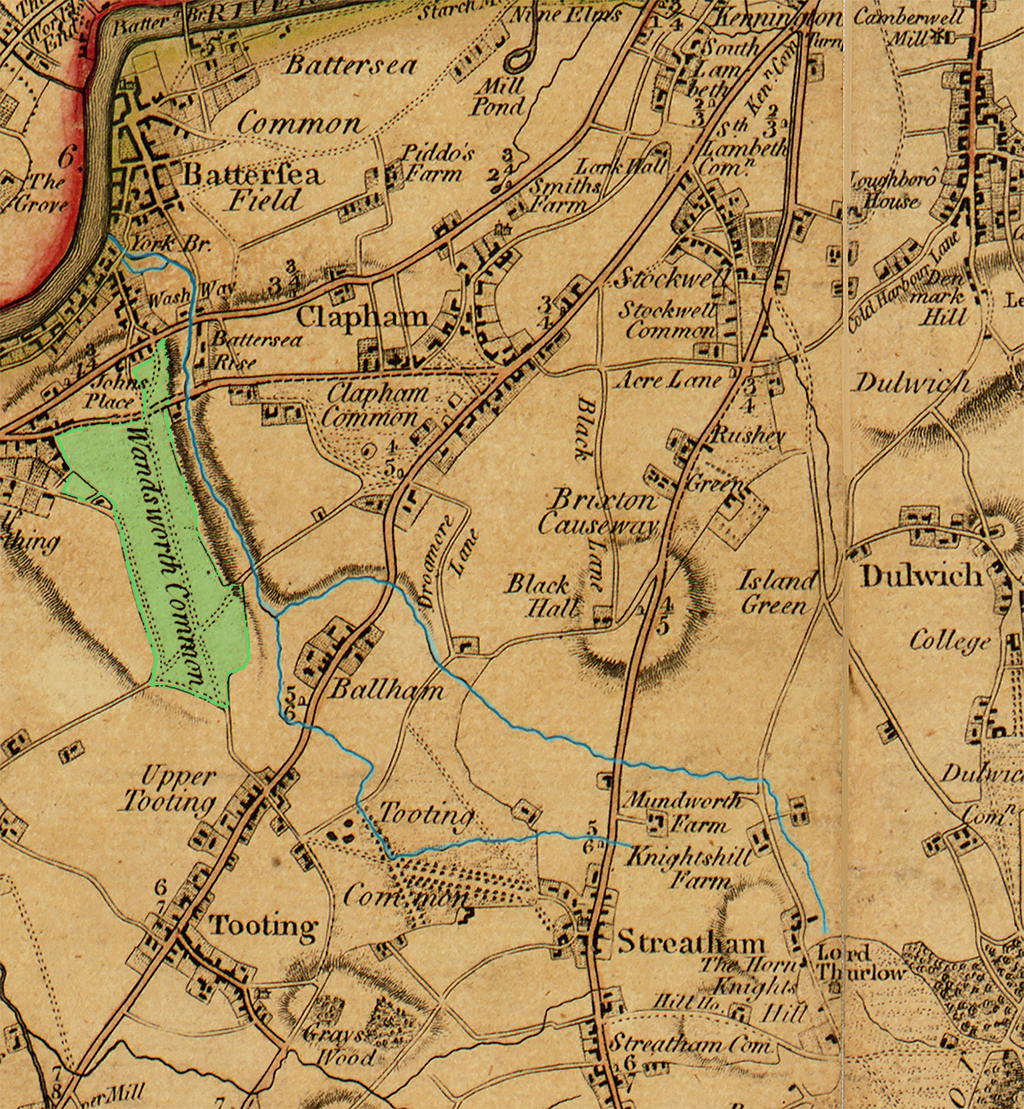
The twin tributaries of the Falcon Brook shown on William Faden's "The country twenty-five miles round London: planned from a scale of one mile to an inch", 1790.
The Jan 27th talk was sold out, so another date has been arranged for Wednesday 15 February at the usual time and place (6:30 for 7, NatureScope).
If you'd like to attend, please let Stephen Midlane, Chair of the Friends' Heritage Group, know.

John Crossland's video of the January 27th talk — thanks, John!
Feel free to forward a link to this page . . .
Send me an email if you enjoyed this post / want to comment on something you've seen on the site / would like to know more — or just want to keep in touch.
Philip Boys ("History Boys")
January/February 2026