
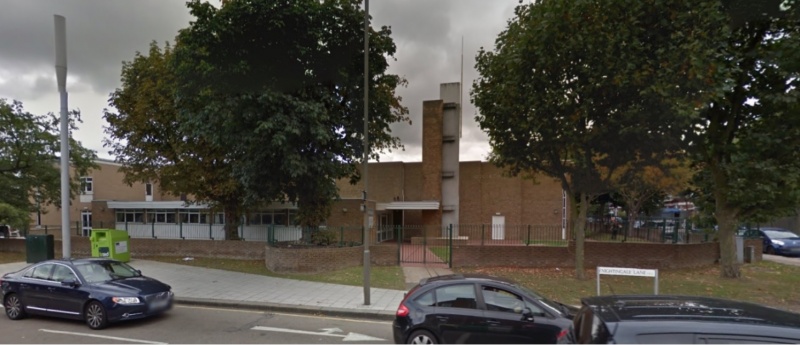
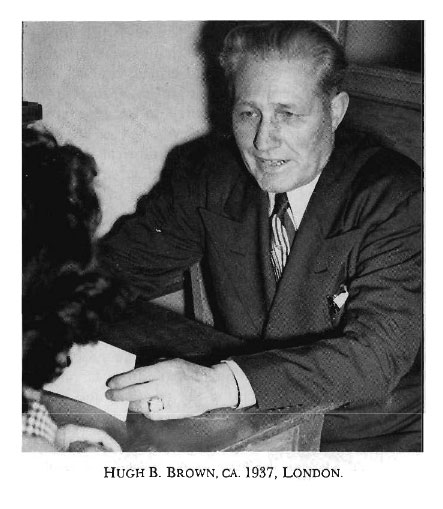
It was built in the late 1970s on the site of a large house, "Ravenslea", that had been bought for the Mormons in 1935 by Hugh Brown, President of the English Mission. Brown came to England after failing to secure promotion in Salt Lake City.
[https://gallifreybase.com/w/index.php/File:WandsworthTemple.jpg]
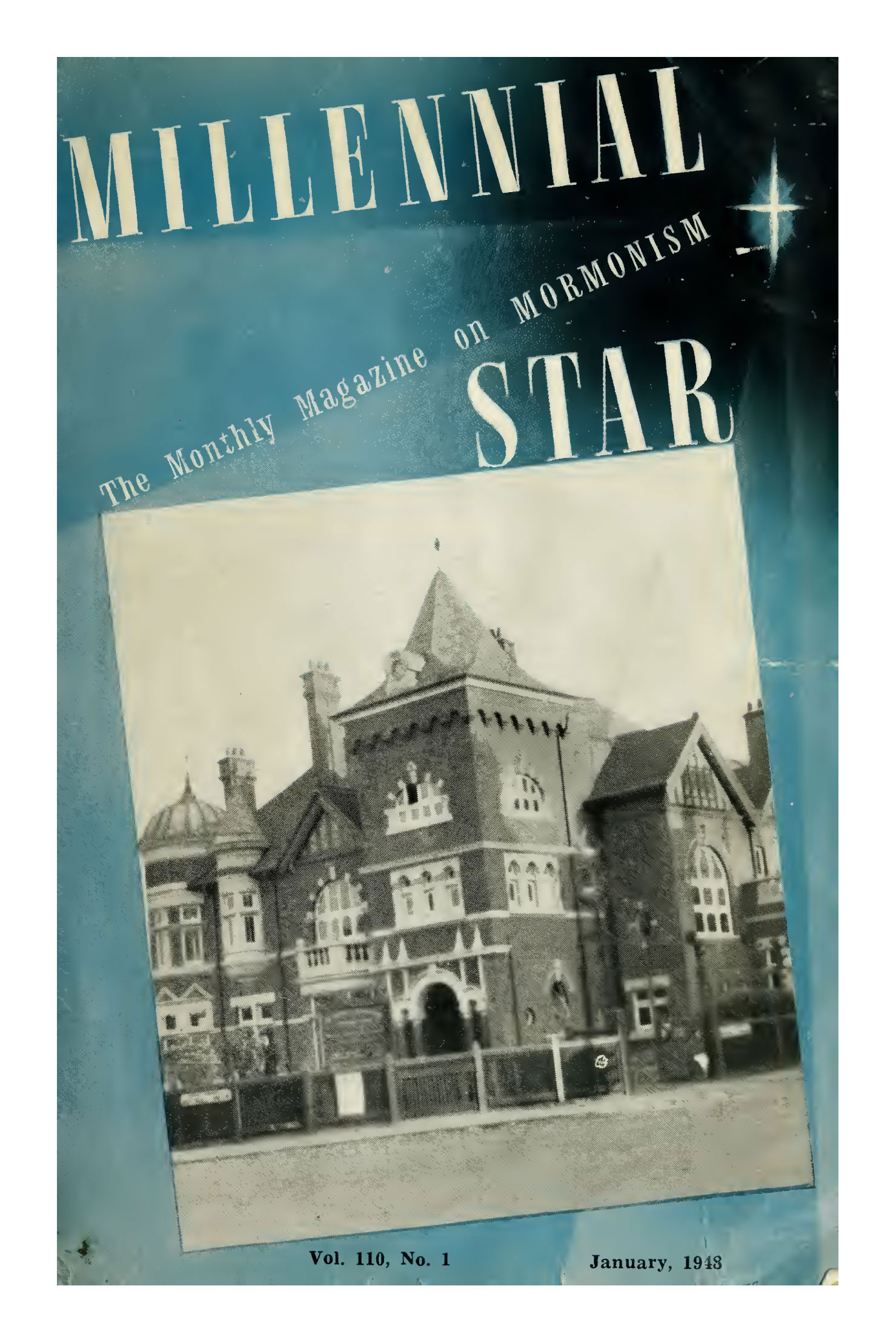
"Ravenslea" - Home of British Mission Headquarters
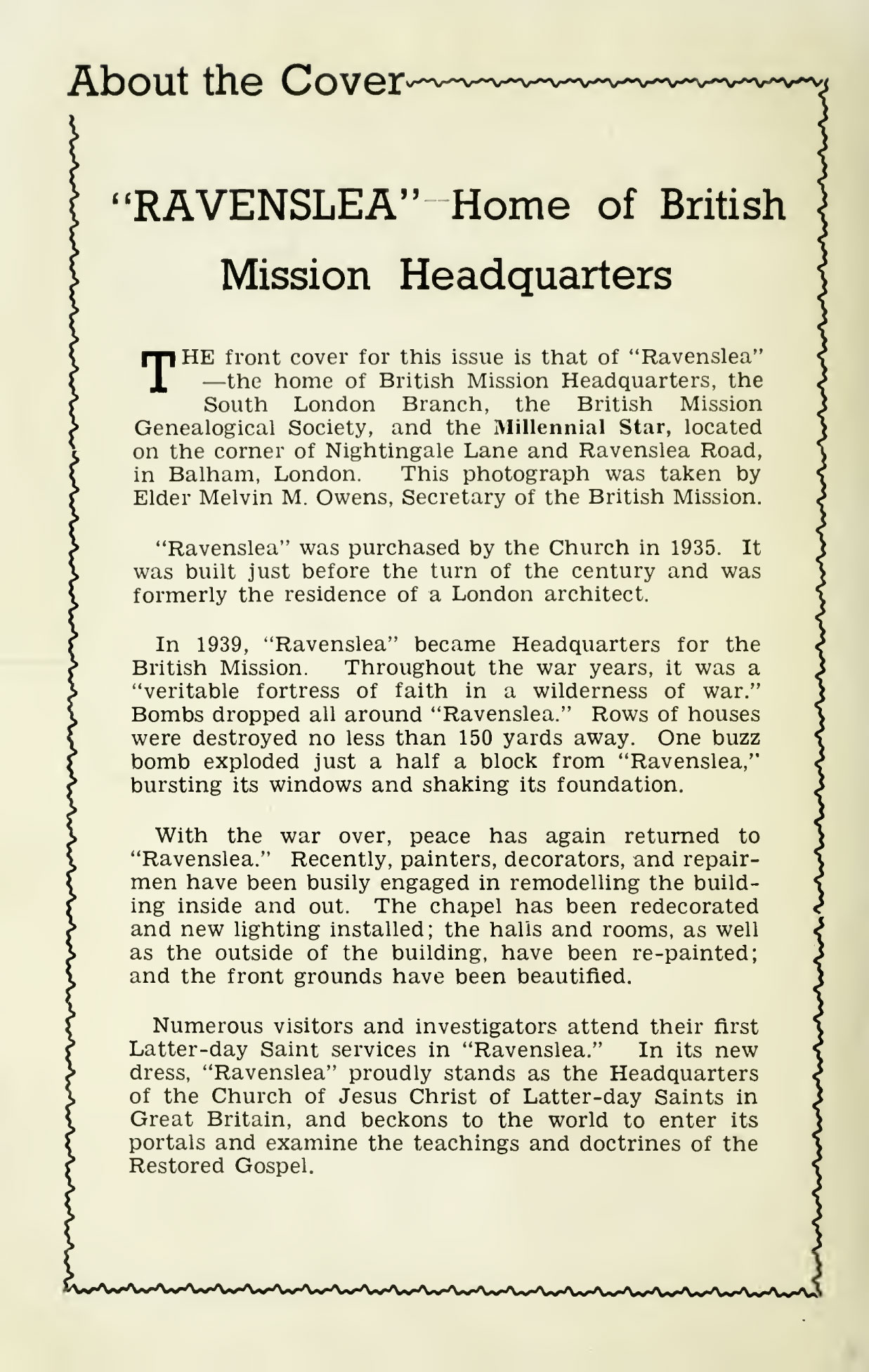
THE front cover for this issue is that of "Ravenslea" - the home of British Mission Headquarters, the South London Branch, the British Mission Genealogical Society, and the Millennial Star, located on the corner of Nightingale Lane and Ravenslea Road, in Balham, London. This photograph was taken by Elder Melvin M. Owens, Secretary of the British Mission.
"Ravenslea" was purchased by the Church in 1935. It was built just before the turn of the century and was formerly the residence of a London architect.
In 1939, "Ravenslea" became Headquarters for the British Mission. Throughout the war years, it was a "veritable fortress of faith in a wilderness of war." Bombs dropped all around "Ravenslea." Rows of houses were destroyed no less than 150 yards away. One buzz bomb exploded just a half a block from "Ravenslea," bursting its windows and shaking its foundation.
With the war over, peace has again returned to "Ravenslea." Recently, painters, decorators, and repair- men have been busily engaged in remodelling the build- ing inside and out. The chapel has been redecorated and new lighting installed; the halls and rooms, as well as the outside of the building, have been re-painted; and the front grounds have been beautified.
Numerous visitors and investigators attend their first Latter-day Saint services in "Ravenslea." In its new dress, "Ravenslea" proudly stands as the Headquarters of the Church of Jesus Christ of Latter-day Saints in Great Britain, and beckons to the world to enter its portals and examine the teachings and doctrines of the Restored Gospel.
[Source: Archive.org: Millennial Star, Jan 1948.]
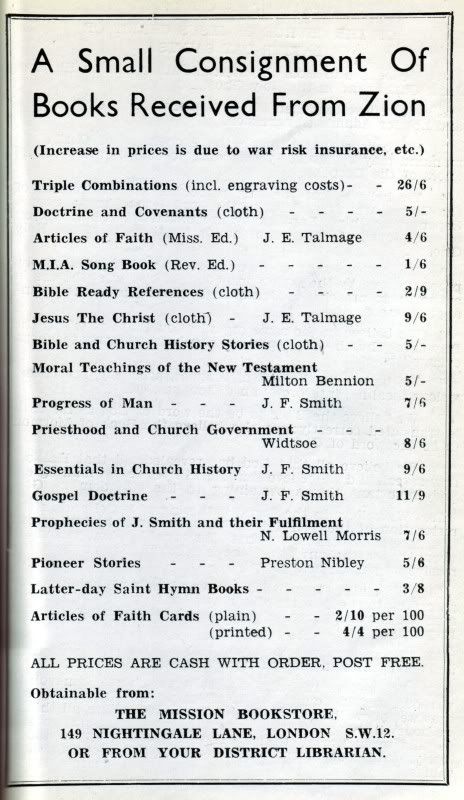
"War conditions affected even the materials available to the British Mission, but the Millennial Star announced the availability of a "small consignment of books received from Zion."
[Photo source http://www.keepapitchinin.org/2008/11/14/the-way-we-were-july-1942/]
The Way We Were: July 1942:
The Millennial Star continued its weekly publication schedule in Britain despite wartime conditions. The magazine during that period carried little but reprints from Utah journals, plus mundane minutes of local conferences, with a few notes on branch and mission activities. Still, it was a regular, cheerful messenger to the Saints in Britain, and elsewhere. The issue for July 9 carried the sad note that an earlier copy mailed to member A.A. Butler in Malaya had been returned, marked "Addressee Reported Missing."
Brother Butler has been in the Far East almost from the commencement of the war and wrote regularly to the Headquarters of the Church in London and to his many friends until Singapore fell. He must have been taken prisoner with many thousands of our British soldiers there.
In his letter dated January 12th, 1942, he wrote: "It is some time since I saw any of you - almost two years. Since that time I have gone through some very strange experiences, but I have always known that the prayers of the Saints have been with me. It has been a great comfort to have this assurance. Now that the war has come to this part of the world, I shall need those prayers more than ever before.
"I have experienced many thrills in my life, but I am quite convinced that one of my greatest is yet to come. My belief is that it will be when I return to London - to Ravenslea - and meet all the Saints again, and sing from the stand to all of you again. it was always such a pleasure to do this, for I knew how greatly you all appreciated my effort."
We cherish the hope and fervently pray that our Brother is well and will soon return home to us.
[Source: Ardis E. Parshall, The Way We Were: July 1942, November 14, 2008 (http://www.keepapitchinin.org/2008/11/14/the-way-we-were-july-1942/).]
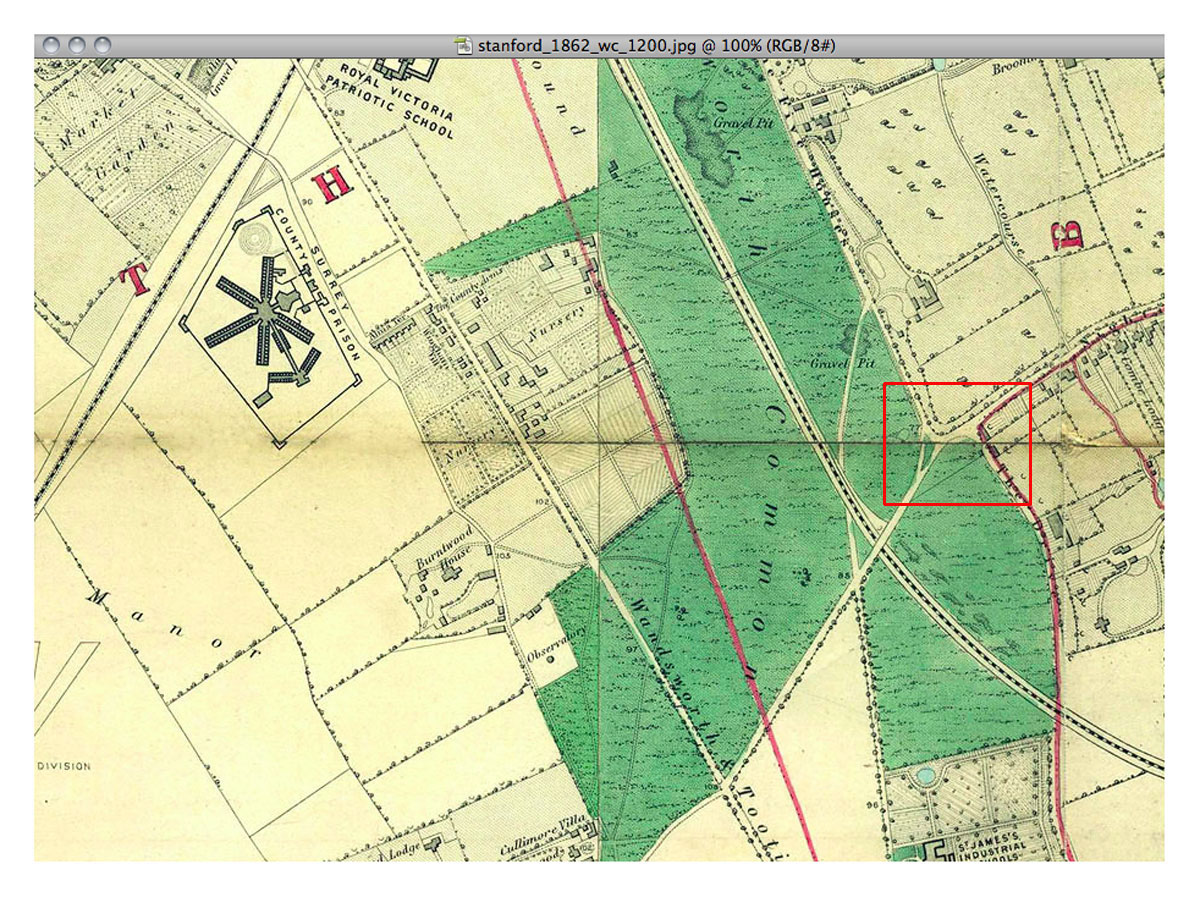
This is where Ravenslea will be built c.1900. Notice there is no Wandsworth Common railway station, or Ravenslea Rd. At this time the Common north/east of the railway line and Nightingale Lane is larger than the area south/west, between the line and St James's Drive. Only the latter remains part of the Common today.
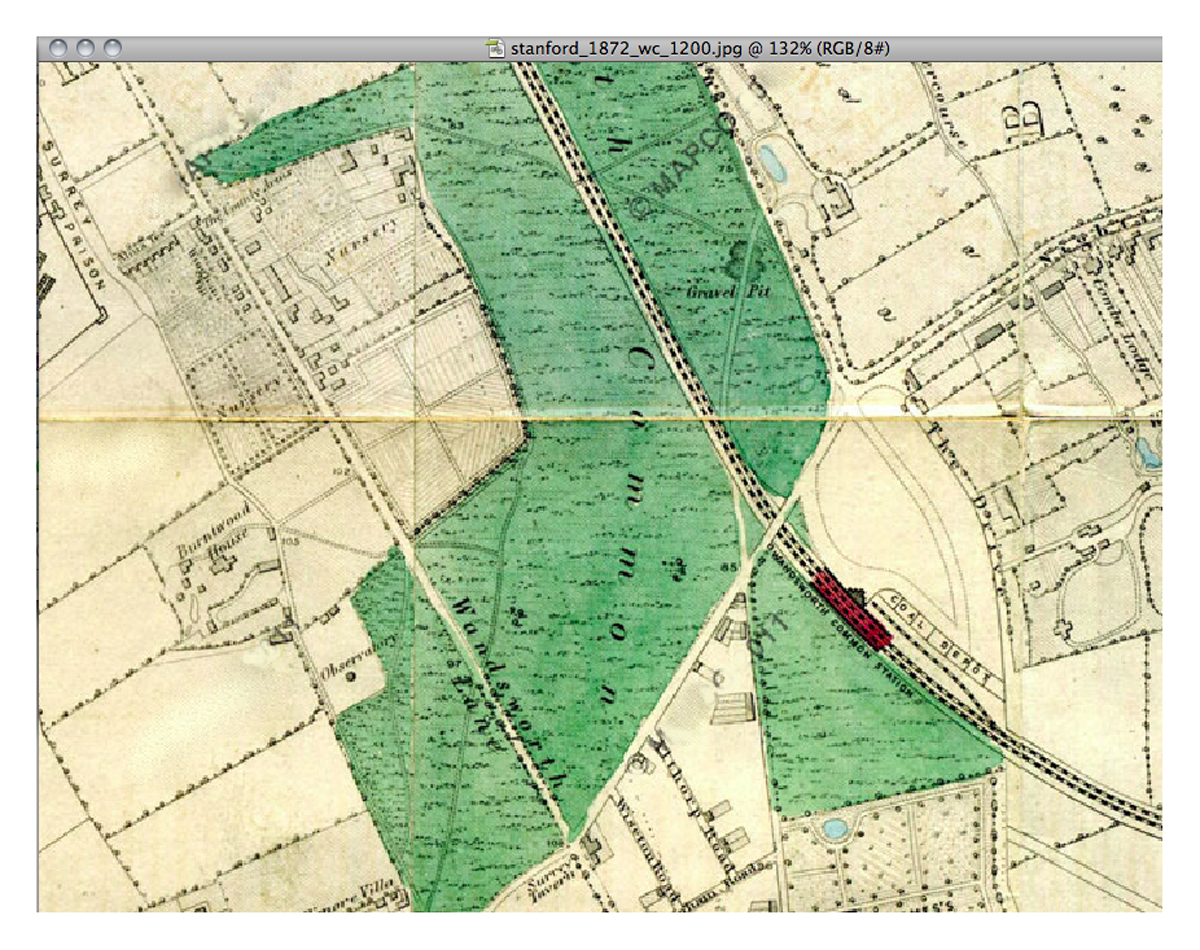
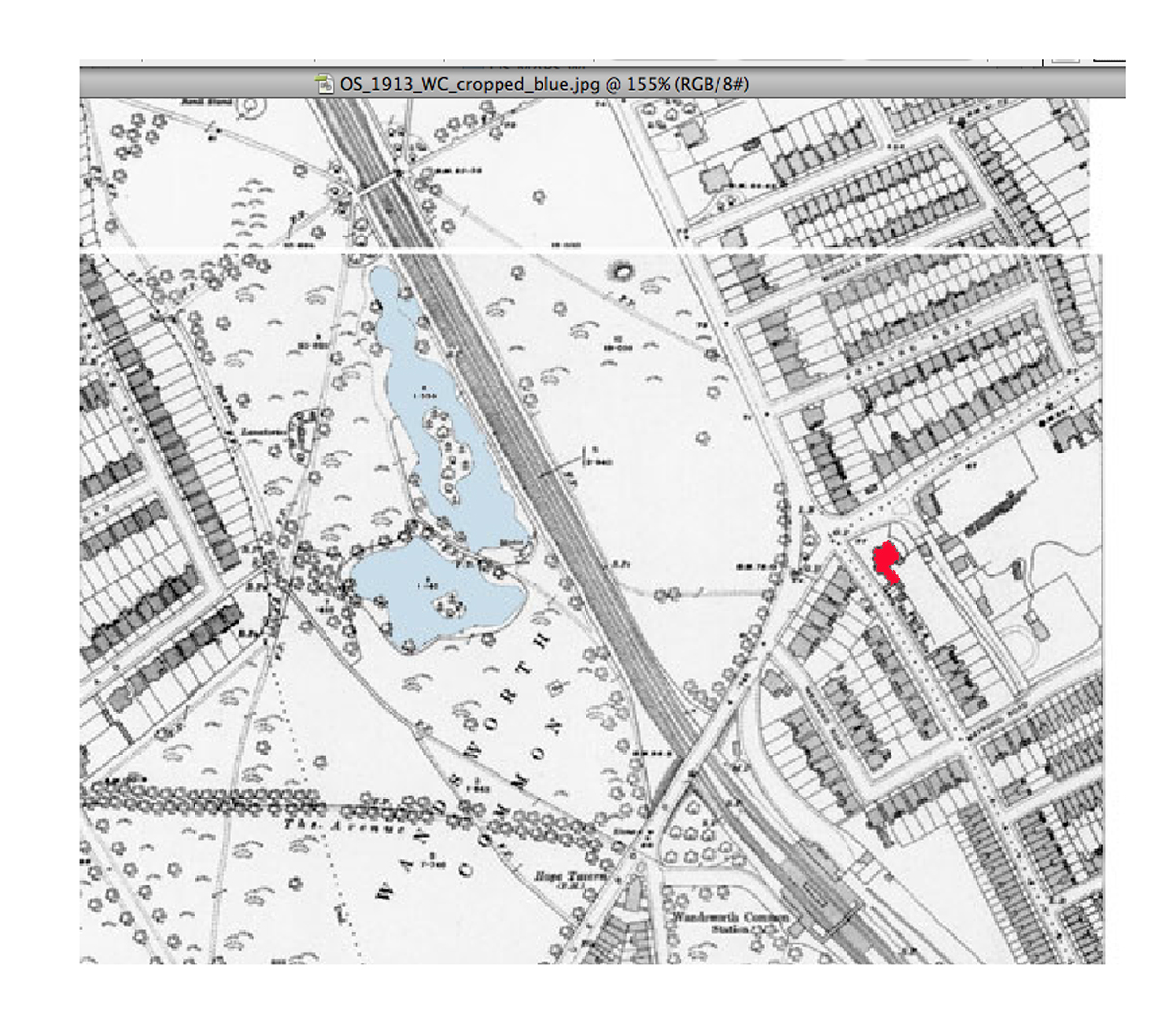
The station is now in place, with a large coal depot and branch line. Only a tiny fragment of green Common remains. Having bought even more of Wandsworth Common than it needs for its line and station, the railway company is now selling off surplus land to builders. It is not being returned to the Common.
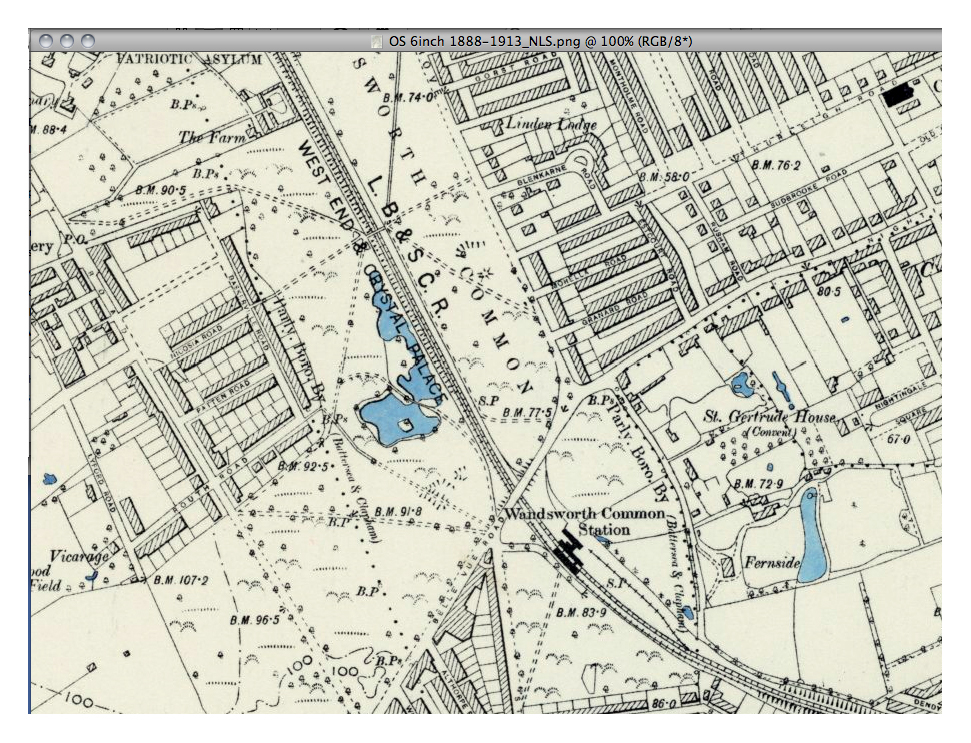
As above. Notice nearby "Fernside".
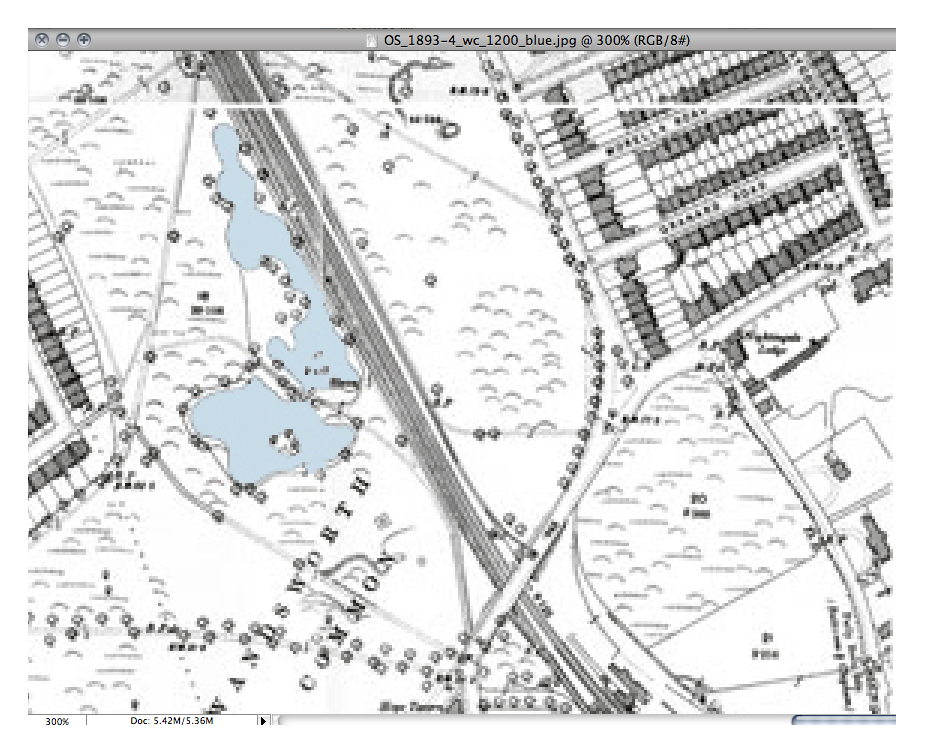
Ditto. Notice nearby "Nightingale Lodge"
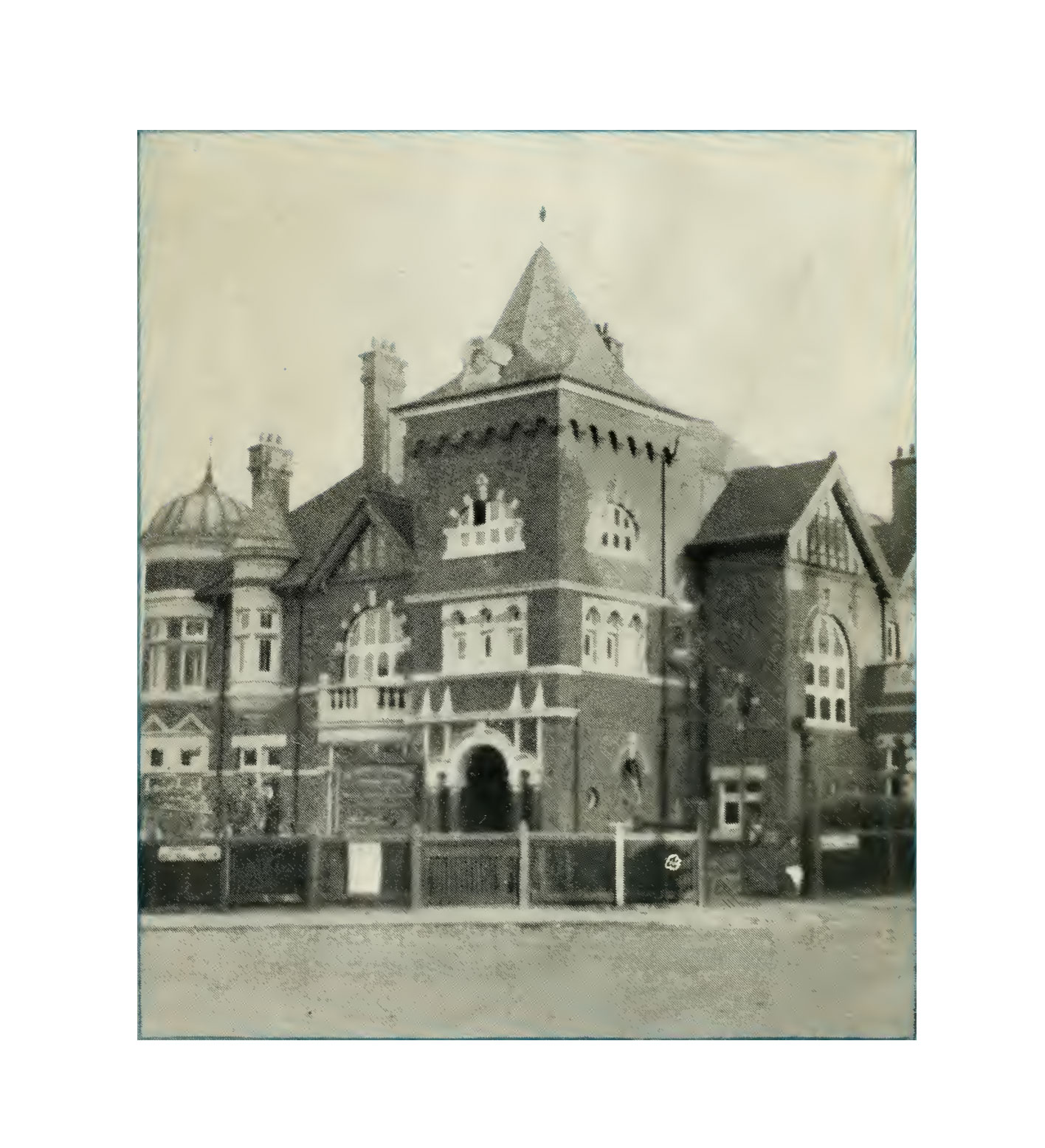
Ravenslea is described as the former home of "an architect" [I wonder who this was?]. The relevant issue of the Millennial Star can be seen here, and downloaded either from that source here.
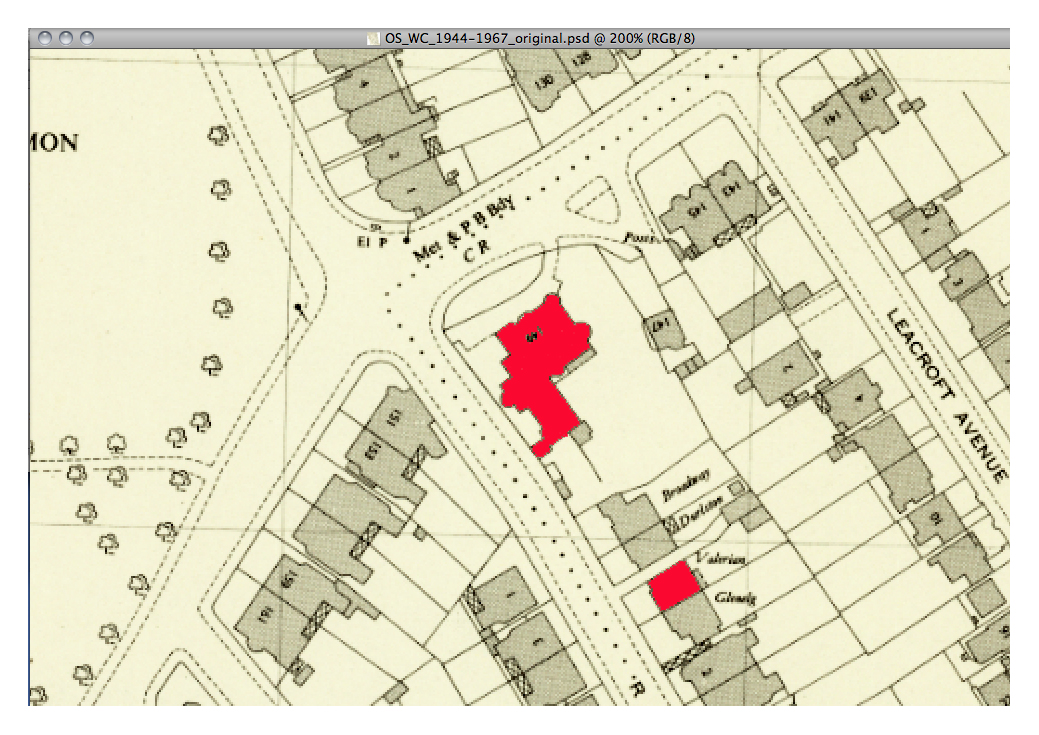
Ravenslea was bought in 1935 as the "Headquarters of the Church of Jesus Christ of Latterday Saints in Great Britain", to be "the home of the British Mission Headquarters, the South London Branch, the British Mission Genealogical Society, and the Millennial Star". Senior members and their families were housed in nearby "Valerian" a couple of doors along the recently created Ravenslea Rd.
Hugh Brown's family and Ravenslea, 1945:
After Germany surrendered on 8 May 1945, Hugh returned to London to serve out the last year of his mission presidency. He purchased a home for the church, "Ravenslea," at 149 Nightingale Lane.
Because [p.461] Ravenslea was a large house, it was possible to combine the mission offices, the family residence, and a chapel under the same roof. The ballroom was often used for dances and other social events.
In September Zina, eighteen-year-old Margaret, and sixteen-year-old Carol joined Hugh. They made the flight in a Sikorsky Flying boat equipped with pull-down bunks and felt fortunate to have sleeping accommodations for the uncomfortable journey. Charles was married and living in Queens, New York.
When they arrived at Ravenslea, Carol remembered staring at the huge front door, a massive ten-inch slab of solid wood that was actually bowed inward. A few months earlier a buzz bomb had exploded in the yard behind Ravenslea. The resulting implosion had sucked the front door inward, permanently warping it.
The family "camped" in Ravenslea for a few weeks; then to Zina's relief, the church in October purchased Valerian, a house one-half block around the corner on Ravenslea Road, as the mission president's residence. Accommodations were cozier, for which the family was particularly grateful during the chilly English winter - the country was still suffering severe fuel shortages. Hugh's office remained in Ravenslea, but Valerian gave the family more privacy.
Carol was a day student at Queens Gate School for Girls, "a rather swanky finishing school, affording cultural opportunities not included in the schools at home," according to Zina.44
"And quite practical, too," Carol affirmed. She studied the history of art, the history of music, banking, English literature, and voice. She also absorbed protocol and table manners, although the British style of eating with the fork in the left hand and the knife in the right was initially disconcerting. The girls ate their meals in the Primrose Room under the vigilant eye of the headmistress. No one could begin until she gave the signal by picking up her fork. Because no one was allowed to leave the table until everyone was finished, Carol found herself the target of all eyes at the end of every meal, because "it took me so long to eat, shifting my fork from hand to hand."
[Source: Martha Sonntag Bradley and Mary Brown Firmage Woodward, Four Zinas: A Story of Mothers and Daughters on the Mormon Frontier, chapter 17..]
Emphasising its modernist design.
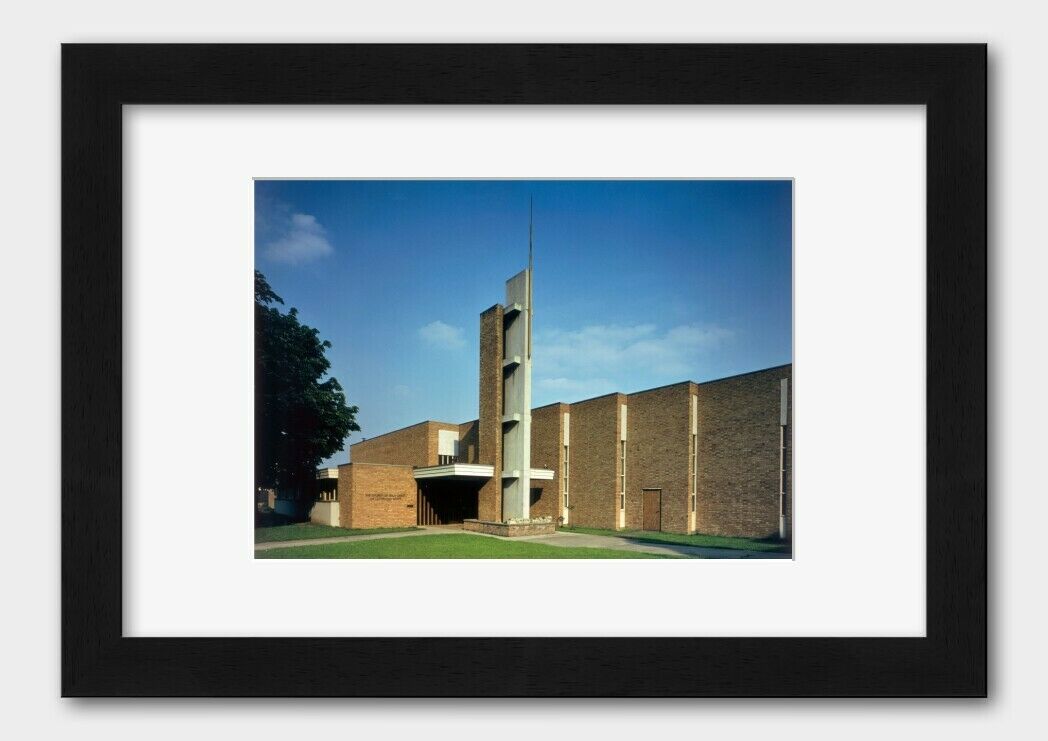
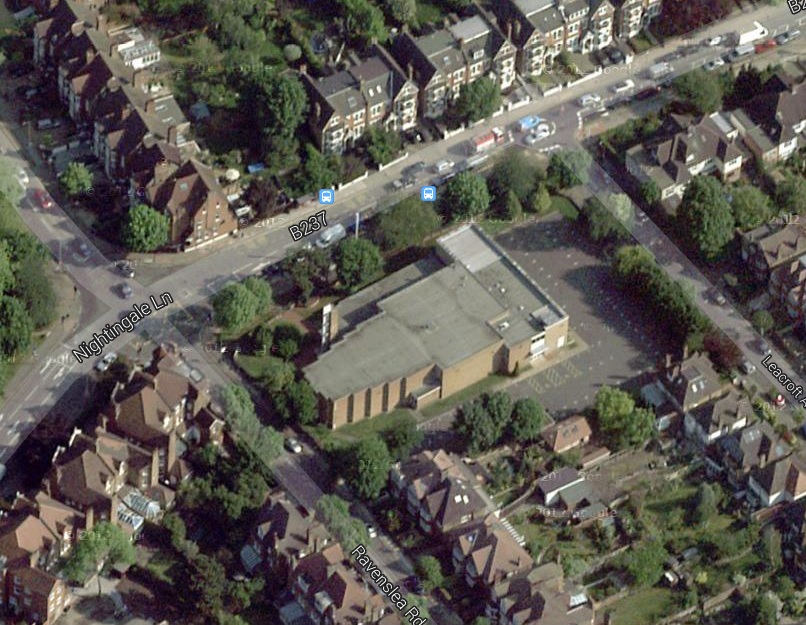
[https://gallifreybase.com/w/images/6/6a/LSDWandsworth.jpg]
[https://gallifreybase.com/w/index.php/File:WandsworthTemple.jpg]
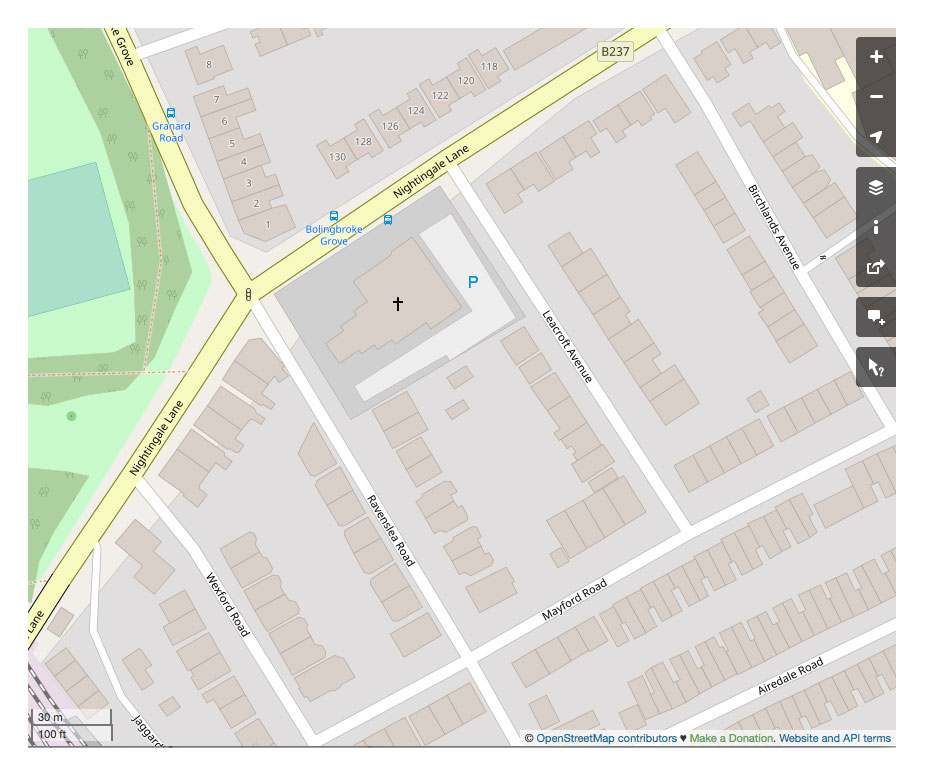
The plot on which the temple is built, which includes a substantial car park, runs between Leacock Rd and Ravenslea Road. It is rather larger than the old Ravenslea plot. Comparing this map with earlier maps shows that several more houses must have been acquired and destroyed.]
Comment by Anne (UK), in Millennial Star, June 24, 2012:
I'm really late to this one, but my tummy did a little flip when I saw the address: 149 Nightingale Lane. For years this was a big old Victorian house called "Ravenslea" which served as Mission HQ for the Church, especially prominent during the war years. I remember the old house well as I walked past it twice a week as a pre-schooler en route to visit my aunt. By the late 60's the house was demolished (there's a Millennial Star edition devoted to the history of building, so loved was it) and the Wandsworth Chapel was built, which was where I was baptised as a teenager in 1977, met Alison who served her mission there a few years later, and married there in '86.
Following the establishment of the LDS Church in the United States in 1830, the United Kingdom became the first nation to receive LDS missionaries in 1837 as two LDS apostles were among the first seven missionaries to arrive in England in July of that year. The first convert baptisms occurred at the end of the month. Over a thousand converts joined the Church within the first few years of proselytism in the United Kingdom.[6] The oldest continuously operating LDS congregation is located in Preston, England and has functioned since 1837.[7] The first convert baptisms occurred in Scotland near Glasgow in 1840.[8]
Nearly half of the population of Utah in 1870 were British immigrants as a result of LDS missionary success in the British isles in the nineteenth century. Approximately 100,000 converts joined the Church in the British Isles and emigrated to Utah before 1900.[9]
During the first half of the twentieth century membership growth was slow, emigration of converts to the United States continued, and church membership was less than 10,000 until the 1960s.
[Source: LDS analysis of UK, including a short history of the LDS Church in Britain.
In July 1983 two missing episodes of The Daleks' Master Plan were supposedly found in the basement of what may or may not have been a converted Mormon church that may or may not have been in Wandsworth, and which could have been but probably wasn't a building that had previously been owned by the BBC.
Or something to that effect.
It's well worth having a look at this: The Mormon Master Plan Mystery.
— Wandsworth Family History Centre
— Facebook: Wandsworth Stake Family History Centre News.