Wandsworth Common
GUS ELEN
"If it wasn't for the 'ouses in between..."
GUS ELEN
"If it wasn't for the 'ouses in between..."
[Integrate with VIEWS]
"If it wasn't for the 'ouses in between..."
- "If it wasn't for the 'ouses in between..."
If you don't know this song, give it a listen or a read. It was made famous about 1899 by the great music hall performer Gus Elen. Here's a recording (and here are the words.
Word by Edgar Bateman, music by George Le Brunn, sun by Gus Elen [date - 1899?]
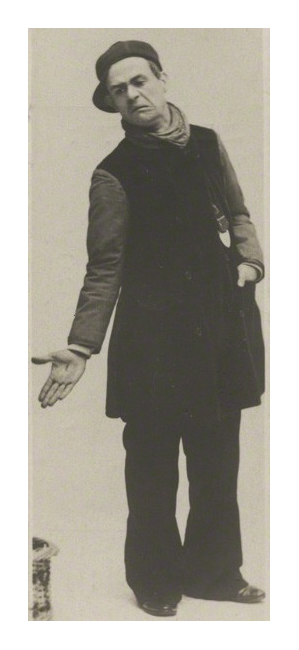
Gus Elen was singing about the East End (and largely for East End audiences - listen to the accent he adopts - but he was born in Pimlico, is known to have performed in Battersea, and lived much of his life between the Commons (on Thurleigh Avenue) - there's a blue plaque memorialising this.
And from this house he could seen, Wandsworth Common (even with the houses i between, that were being built at an astonishing rate when he was living there.)
Wikipedia: Gus Elen.
George Le Brunn, born Brighton, died in Brixton and as buried at Lambeth Cemetery, Tooting [near the Wandle].
The great comic actor Dan Leno, who lived in Brixton [dates], is also buried at Lambeth Cemetery, Tooting. https://en.wikipedia.org/wiki/Dan_Leno. His cricket team used to play at what is now called "Trinity Fields".
https://en.wikipedia.org/wiki/George_Le_Brunn
http://www.victorianweb.org/mt/musichall/2.html
Click on arrow to hear the song performed by Derek B. Scott, Professor of Critical Musicology, University of Leeds, to his own piano accompaniment c. 1985.
"If It Wasn't for the 'Ouses in Between" (1894) is one of the best-known songs of Gus Elen (1862-1940), whose critical reception in the 1890s emphasized how truthfully he represented the Cockney on the music-hall stage. He worked hard at polishing his routine, however, and carefully timed his gestures. His grim demeanour added to the fun of songs like this, in which he lists the delights of his humble abode and its surrounding scenery in an increasingly crowded London. - Derek B. Scott
Bibliography
Scott, Derek B. The Singing Bourgeois: Songs of the Victorian Drawing Room and Parlour. 2nd ed. Aldershot, Hampshire; Burlington, VT: Ashgate, 2001.
Scott, Derek B. Sounds of the Metropolis: The 19th-Century Popular Music Revolution in London, New York, Paris, and Vienna. New York: Oxford University Press, 2008.
BATEMAN, H.M. (1887-1970)
Blue Plaque commemorating cartoonist and illustrationist H. M. Bateman at 40 Nightingale Lane, Clapham, London SW12 8TF, London Borough of Wandsworth. [dates? overlap with Gus Elen?]
Well worth a read/listen...
[https://monologues.co.uk/musichall/Songs-I/If-It-Wasnt-For-The-Houses.htm]
If you saw my little backyard
What a pretty spot you'd cry
It's a picture on a sunny summer day
Wiv the turnip tops and cabbages
Wot people doesn't buy
I makes it on a Sunday look all gay
The neighbours' finks I grows 'em
And you'd fancy you're in Kent
Or at Epsom if you gaze into the mews
Its a wonder that the landlord
Doesn't want to raise the rent
Because we've got such nobby, distant views.
Chorus
Oh it really is a werry pretty garden
And Chingford to the Eastward could be seen
Wiv a ladder and some glasses
You could see the 'Ackney Marshes
If it wasn't for the 'ouses in between.
We're as countrified as can be
Wiv a clothes-prop for a tree
The tub-stool makes a rustic little style
Ev'ry time the blooming clock strikes
There's a cuckoo sings to me
And I've painted up "To Leather Lane a mile"
Wiv tomatoes and wiv radishes wot 'adn't any sale
The backyard looks a perffick mass o' bloom
And I've made a little beehive
Wiv some beetles in a pail
And a pitchfork with the handle of a broom.
Chorus
Oh it really is a werry pretty garden
And Rye 'ouse from the Cockcroft could be seen
Where the chickweed man undresses
To bathe 'mong the water cresses
If it wasn't for the 'ouses in between.
There's the bunny shares 'is egg-box
With the cross-eyed cock and hen
Though they 'as got the pip and him the morf
In a dog's 'ouse on the line-post
There was pigeons nine or ten
Till someone took a brick and knocked it off
The dust cart though it seldom comes
Is just like 'arvest 'ome
And we mean to rig a dairy up somehow
Put the donkey in the wash-house
Wiv some imitation 'orns
For we're teaching him to moo just like a cow.
Chorus
Oh it really is a werry pretty garden
And 'Endon to the westward could be seen
And by clinging to the chimbley
You could see across to Wembley
If it wasn't for the 'ouses in between.
Though the gas-works isn't wilets
They improve the rural scene
For mountains they would very nicely pass
There's the mushrooms in the dust hole
With the cowcumbers so green
It only wants a bit of 'ot 'ouse glass
I wear this milkman's nightshirt
And I sits outside all day
Like the plough-boy cove
What's mizzled o'er the Lea
And when I go indoors at night
They dunno what I say
Cause my language gets as yokel as can be.
Chorus
Oh it really is a werry pretty garden
And soap-works from the 'ouse-tops could be seen
If I got a rope and pulley
I'd enjoy the breeze more fully
If it wasn't for the 'ouses in between.
Sung by Gus Elen (1862-1940)
Written and composed by Edgar Bateman & George Le Brunn
Performances online
Gus Elen:
http://composersforum.ning.com/video/if-it-wasn-t-for-the-ouses-in-between-1
Modern version by Derek Scott, Professor of Musicology, on VictorianWeb site:
http://www.victorianweb.org/mt/musichall/2.html
Modern version in a club:
https://www.youtube.com/watch?v=wRicquC-Utg
Philip Paine, "Music Hall and Variety Artistes Commemorative Plaques":
I then travelled a short distance to Clapham South underground station and after a short walk to a most desirable area where very expensive three-floor detached houses seemed the norm, found my third plaque, at 3 Thurleigh Avenue, which had been unveiled in 1979. It is a detached house now called Edith Villa and it was once home to Gus Elen (1862-1940).
Right - 3 Thurleigh Avenue, Clapham, the house where Gus Elen lived until about 1940 - Courtesy Ian Graham.
The plaque was unveiled by the Greater London Council and merely states "Gus Elen Music Hall Comedian lived here".
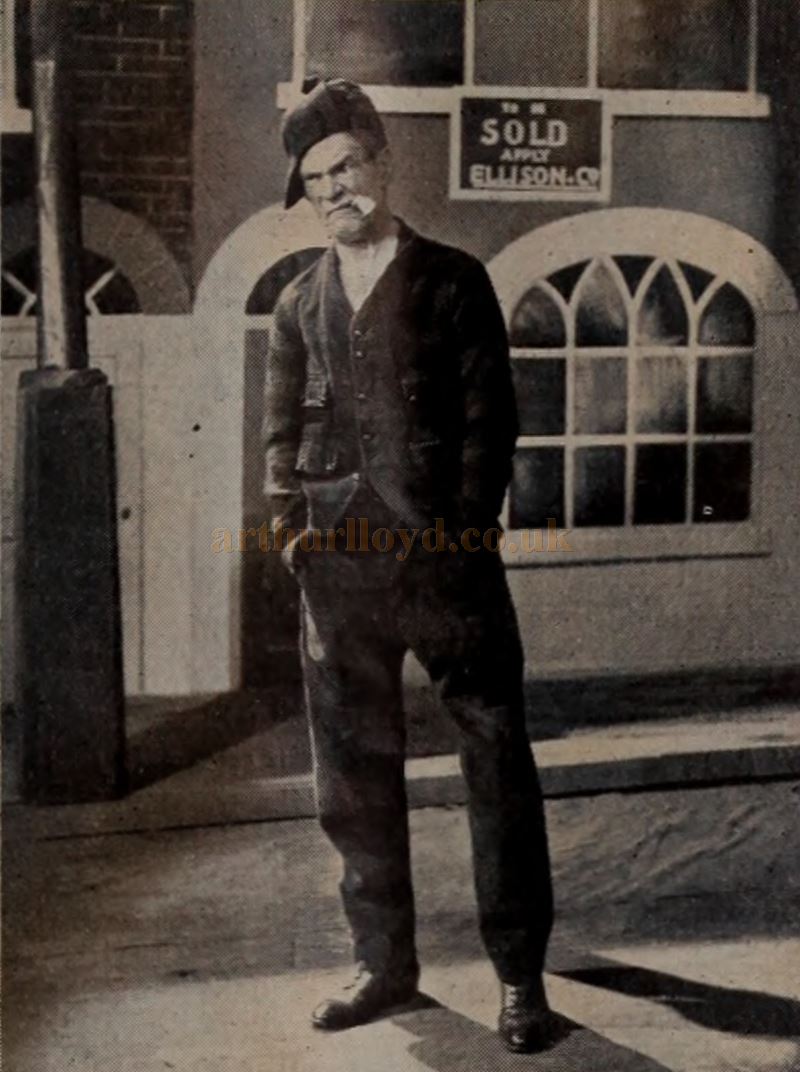
He began as a busker, and later found work in a minstrel troupe. His solo success began with coster songs sung in 1891 at the Middlesex Music Hall. He was often dressed in the clothes of a poor East End costermonger, coming himself from a similar background. I hope that the following short interview, given after he had become famous (taken from in Vaudeville, Old and New: An Encyclopaedia of Variety Performers in America) will be of interest:-
Above - Gus Elen, the popular character comedian - From the Bioscope, 7th October 1931.
Gus Elen - 3 Thurleigh Avenue, Clapham.
"Years before I entered the ranks of music hall performers proper, I used to contribute to the programmes of the weekly sing songs held at such places as 'Poppy Lords' in Lisson Grove; the 'Magpie and Stump', Battersea; or the 'George Street Recital Hall'. At the last named hall, the salaries ranged from a shilling to three and sixpence a night with a cup of coffee and a bun thrown in by way of refreshment. In those days I often filled in a season on the 'waxeys' (on the seaside) at Margate and Ramsgate in a Negro minstrel troupe."
Above quote is from 'In Vaudeville, Old and New: An Encyclopaedia of Variety Performers in America.'
Left - Gus Elen - 3 Thurleigh Avenue, Clapham.
Gus Elen is buried in Streatham Park Cemetery [Rowan Road, Streatham Vale] in London.
[Source: Link]