The parish and its bounds
[342]Is a Village five miles from Westminster Bridge in the road to Kingston, and has its name from being seated on the river Wandle, which rises at Croydon and after passing through Beddington, Carshalton, Mitcham, and Merton, crosses the Town here, under a Bridge built at the expence of Queen Elizabeth, between the 18th and 29th July 1602, and falls into the Thames. It is bounded on the East by Battersea; on the West by Putney and Wimbledon; on the North by the river Thames; and on the South by Streatham and Tooting. The soil is chiefly a sandy loam on a bed of gravel. There are three common fields, viz. Bridge Field, North Field, and South Field; and three Commons, viz. East Common and West Common, and Garrett Green. The whole quantity of land, on an admeasurement, was found to be 2415 acres 1 rood 13 perches; of which there are in Bridge Field 65 acres, North Field 136 acres, South Field 273 acres, Inclosures 1658 acres 3 roods 27 perches, West Common, generally known by the name of Putney Heath, 72 acres, East Common 194 acres, Garrett Green 10 acres, Lower Do. 4 acres, Roads 2 acres 1 rood 36 perches. About 206 acres are occupied by buildings, gardens, and pleasure ground. When Mr. Lysons wrote, in 1792, there were of these 218 acres occupied by market gardeners, now 100 only. 20 acres are planted with rose trees for the distillery of Mr. Rigge a perfumer. The meadow and grass land exceeds the arable considerably, by about 300 acres. About 500 acres are in Lord Spencer’s park, of which 100 are arable.
In 1782 the late Earl Spencer obtained the consent of the Parish to his inclosing 92 acres 2 roods 30 perches of the West Common, to add to his Park, he paying 50l. a year, which is laudably employed by the Parish in assisting indigent persons, not in aid of the poor-rates. About the same time Sir William Fordyce had leave to inclose about 23 acres of the same Common, for the purpose of building a house, paying to the Parish 20l. a year. He first built the wings, and afterwards the centre, in the pediment of which was a bird taking wing, under which was inscribed Labere cum pennis. The late Mr. Porter (lord of the manor of Alfarthing) inclosed a considerable part of the East Common, claiming it as his separate property.
On the West side of the Parish, adjoining on one side to Earl Spencer’s Park, is a capital mansion house, originally built by Lady Rivers, purchased by the late John Anthony Rucker Esq. a Hamburgh merchant, who much improved it and enlarged the grounds. He died in 1804 at the age of 85, and is buried at Wimbledon. He left this house to his nephew Daniel Henry Rucker Esq. the present owner, who resides in it (1812).
Behind the Church is part of a very considerable old mansion, said to have been the residence of Jane Shore. It belongs to Earl Spencer. Part has been pulled down; part was used as an armoury for the Wandsworth volunteers; and parts are inhabited by poor people.
Trades and manufactures
Mr. Aubrey mentions a manufacture of brass plates for frying-pans, kettles, and other culinary vessels, which was established by some Dutchmen, who kept it as a mystery; the houses were called the Frying-pan Houses, and are now used by Messrs. Gatey and Sons for preparing iron-liquids and sowers for the use of the calico-printers.
On the revocation of the Edict of Nantes, many of the Protestants who fled from the persecution of Lewis XIV. settled here. Their descendants have so Anglicised their names, that the memory of their extraction is almost lost, though a few still remain. Amongst other manufactures they brought that of hats; a business which was lately carried on by Mr. Chatting, a grandson of one of them.
Mr. John Spence carried on a very considerable trade in dyeing scarlet cloth for the East India Company, near the Bridge. He retired about 1764, and was succeeded by Mr. Barchard, who now continues it. Mr. Williamson is also a cloth-dyer. The callico-printing is conducted by Mr. Gardiner, and in the minute fancy way by Mr. Barker and Messrs. More and Co. There are manufactures for bolting-cloths; printing kerseymeres; making vinegar; that for whitening and pressing stuffs and making white lead has been discontinued. Mr. Shepley’s oil mill is now carried on by Mr. Atkinson; and there is a large distillery by the water-side, belonging to Messrs. Leader, Atlee, and Langdale.
[343]In 1799 a scheme was formed for making a Canal from the Thames at Wandsworth to Croydon; but on a survey made by Mr. Jessop, he reported to a meeting held 12 Dec. that water could not be supplied without injuring the numerous Mills and valuable Manufactures on the Wandle; it was therefore suggested that an Iron Railway, as used in several parts of Derbyshire &c. would answer the purpose of a communication, without any damage to the Mills and Manufactures, and would be advantageous to them; that the expence of a Canal would be 50,000l. of a Railway only 24,000l. It was therefore resolved that a Committee should be appointed to go with the engineer, solicitor, and surveyor, to take a view of Iron Railways in counties where they have been used, and report to a meeting on 19 June 1800. A report of the Committee was made, that they had visited several places in Derbyshire, and that the plan was advisable; it was therefore resolved, at a meeting in July, to carrying it into execution; and that a capital stock of 30,000l. should be raised in shares of 100l. each. An Act was accordingly applied for and obtained in 1800, and the plan was carried into execution. In one of his reports, Mr. Jessop mentioned the probability of this, if effected, leading to a further extension on a similar plan; and it did take place accordingly, by carrying it on from Croydon to Merstham, which part was opened in 1805, as stated in Vol. II. p. 253.
The Railway was made by contract: for forming and gravelling the road … feet wide, completely ready to receive the iron, 4s. 10d. for every lineal yard forward; for the stone and iron, including labour, plugs, and spikes, 1l. 8s. 8d. per lineal yard forward. The length of the road is about eight miles.
The spirit and loyalty of the inhabitants of this place were manifested in the Rebellion in 1745, when they formed and trained a body of Volunteers, of whom Mr. Nightingale Draper was the commander.
In the critical time of the French Revolution (1794), they again took up arms, and formed a corps of about 250 men, who continued their exercise with the greatest regularity, attending on all occassions when called for, till the year 1810, when it was discontinued. Lord Midleton subscribed liberally on their first formation, and had presented them with two field pieces.
Garrett and its mock election
The Hamlet of Garrett is in the road from Wandsworth to Tooting. About two centuries ago it appears to have been a single house called The Garrett. In it was the mansion house of the Brodrick family, pulled down about 50 years ago; the ground is left to a market gardener. Part of the garden wall remains. Garrett now contains about 50 houses, amongst which are some considerable manufactures. This used to be for many years the scene of a mock election and much indecency on the meeting of every new Parliament, when several characters in low life appeared as candidates, being furnished with fine clothes and gay equipages by the publicans, who made a good harvest. The last of these, known by the name of Sir Harry Dimsdale, was a deformed dwarf, little better than an ideot, who used to cry muffins in the streets about St. Ann’s Soho, and died about 1809. It has been dropped at the two last general elections; but the memory of it will be preserved by Mr. Foote’s diverting comedy of “The Mayor of Garrett.” There are three prints displaying the proceedings on occasion of this election.
The Archbishop of York has land in this parish, which was purchased, with land in Battersea, by Lawrence Booth Archbishop in 1476, and given by him to that See, as has been more fully stated in Battersea, p. 333.
Edward IV. granted some houses in this Parish to his aunt Ann Duchess of Buckingham, late wife of Walter Blount Lord Mountjoy, as mentioned in Battersea.
Henry Smith, “Dog Smith”
[344]This Parish gave birth, and has afforded a burial place, to a gentleman whose benefactions have, perhaps, exceeded Mr. Colston’s, mentioned in Mortlake — Mr. Henry Smith. His charitable donations are so many, so widely diffused, applied to so many purposes, and gladden the hearts of so many persons in very different stations of life, that it is natural to enquire who it was that bestowed such large benefactions; how he became possessed of his wealth; what were his habits of life, and how he guarded the future distribution of such large property. We are now at too great a distance from the time in which he lived to get at all those circumstances which might have been learned with ease had curiosity been awakened at an earlier period; but if we cannot recover every thing, we may at least collect and transmit to posterity more than has been generally known.
The Editor has had the satisfaction to act for many years under the direction of the very honourable Gentlemen in whom this trust has been reposed, and is enabled to state the following particulars:
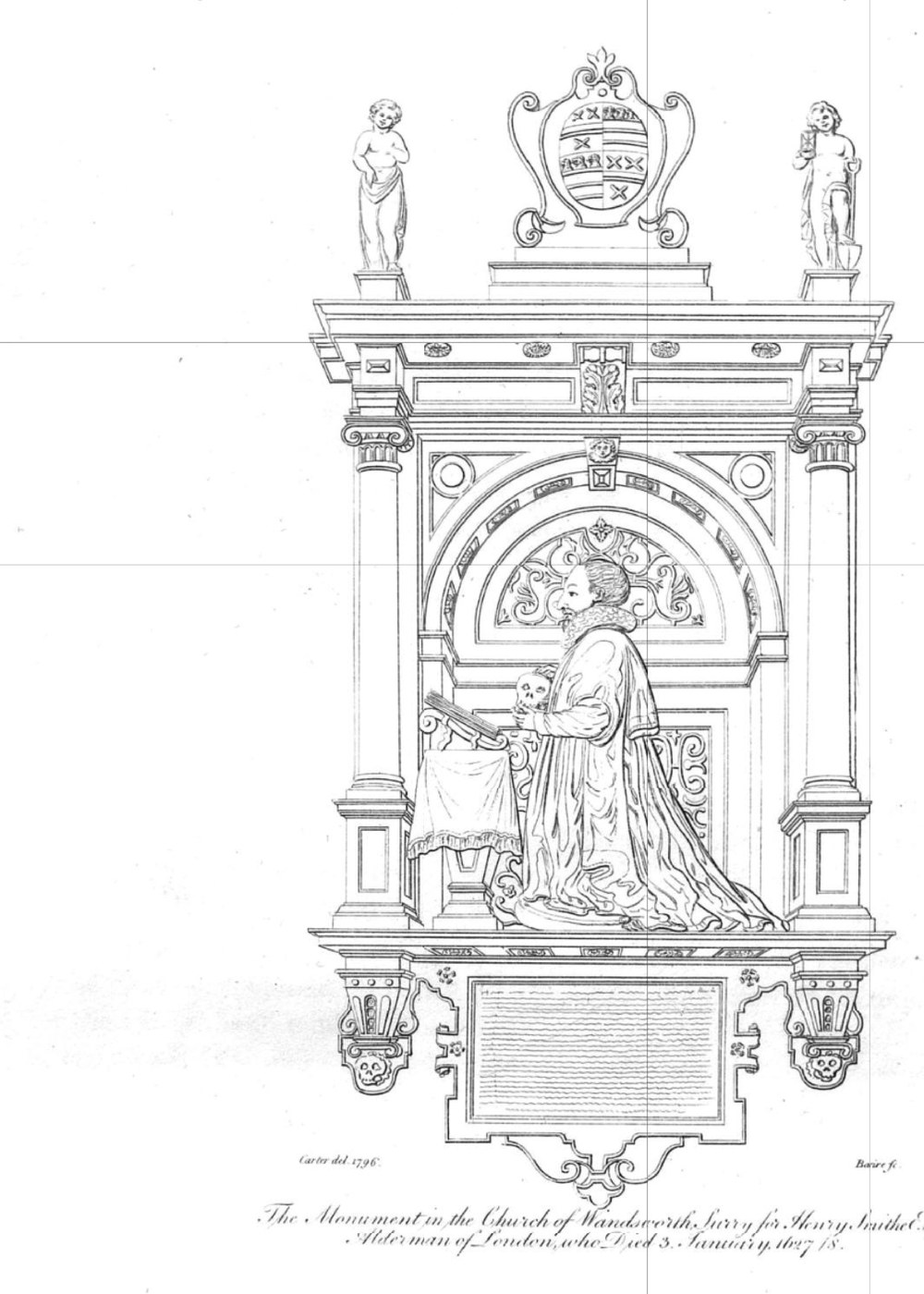
From his Monument in Wandsworth Church it appears that he was born in Wandsworth about the year 1548; that he was an Alderman of London; and that he died 30 Jan. 1627, being then near 79 years of age.
From its being stated that he was born here, it might be supposed that he was of a family of that name who possessed the Manor of Dunsford in this Parish; but the Manor did not come into their hands till about 1569, which was some years after his birth, and continued with them in the male line till 1664, which was long after his death; and as he, in his Will, speaks of no other relations than sisters’ children, and intimates that they were poor, it is more than probable that he was not connected with that family.
On the 9th of February 1608, he was elected Alderman of the Ward of Farringdon Without in the room of Henry Vylett, and in the Corporation Books he is described as Citizen and Salter; the books, however, of that Company having been burnt in 1666, no information can be got from thence.
It is understood that he was by trade a silversmith; and the place of his residence may be considered as some confirmation of it: it is known that he lived in Silver Street, Cheapside; and the house and buildings erected on the site of his house, burnt in the great fire 1666, were occupied by a refiner till about 20 years ago (1811).
This trade, at all times profitable, will account for his acquisition of wealth much better than the idle story of his going about as a beggar, followed by a dog, a story which, however absurd, has generally prevailed; and in many of the Parishes which partake of his bounty, he is to this day spoken of by the appellation of Dog Smith. The relators add, that he was whipped through some Parish, and that he left nothing to it on that account: whenever they have attempted to fix on a particular Parish, they have been contradicted by the plain fact, that the one so named does receive his money. In truth, the allotments to the Parishes were made by his Trustees after his decease, and the only three omitted in the whole county are very small obscure villages, in which no beggar was ever likely to have asked for assistance, and in which, if he had, there is no probability that an officer could have been found to execute such a process, viz. Tattesfield near Godstone, Chilworth or St. Martha on the Hill, and Wanborough (scarce a Parish) near Guildford. The story probably originates in that of the Lambeth Pedlar, who preceded Mr. Smith, and gave an acre of land to that Parish, and whose figure, followed by a dog, is still preserved in a window of Lambeth Church, as will be more particularly mentioned in describing that Parish.
Mr. Smith was possessed of very considerable property in land and money; and having lost his wife, by whom he had no child, he determined to dispose of his wealth to charitable uses.
It is stated in his Epitaph, that in his life-time he gave to the towns of Croydon, Kingston on Thames, Guildford, Farnham, Godalming, and Dorking, 1000l. each. In 1620 he executed deeds vesting his real and personal estates in Trustees, reserving to himself 500l. per annum for his life, and a power of appointing the rents and profits to charitable uses. By another deed, he declared that the rents and profits should be employed by his Trustees, or any seven or more of them, their heirs or assigns, to such charitable uses as they or any seven or more of them, their heirs or assigns, should appoint.
[345]The disposition of the property was confirmed by a decree of the Court of Chancery 20 June 1625, by which the Trustees were in part exchanged: Mr. Smith was to have the use of his house in Silver Street for his life; to receive the rents and profits of his land and money for his life, and dispose of it for his own maintenance, and such charitable uses and otherwise for the benefit and relief of his own kindred, as he should think fit; and after his decease to charitable uses, purchasing impropriations for the maintenance of learned godly preachers, and such other charitable uses as he should by his will or deed appoint; and for want of such appointment, as his Trustees should appoint. In January following, he executed a deed directing the income of his estates and money to be applied to the relief of aged poor or infirm people; married persons having more children than their labour can maintain; poor orphans; such poor as keep themselves and families to labour, and put forth their children to be apprentices at the age of 15; to provide a stock always in readiness to such persons to work as are able. And not to any given to excessive drinking; whoremongers; common swearers; pilferers, or otherwise notoriously scandalous; or who have been incorrigible or disobedient servants; vagrants, such as have no constant dwelling, or receive inmates; or have not inhabited the parish five years before the distribution; or being able refuse to work. The Churchwardens and Overseers were to dispose of the monies, and to meet once in every month on the Sabbath-day, after Evening service, to consider which of the poor had most need of relief, and between Easter and Whitsunday, after Evening service, to make up a book of receipts and payments to be read in church on the next Sunday, and be signed by the Churchwardens and Overseers, and fixed to the wall of the Church, and remain 14 days.
On the 24th April following (1627) he made his Will, and thereby, amongst other things, gave 1000l. to be laid out in land for relief and ransom of poor men, being slaves under Turkish pirates; 1000l. to be so laid out for the use and relief of the poorest of his kindred; 500l. to buy land for relief of the poor of Wandsworth; 1000l. for Reigate in like manner; 10,000l. to buy impropriations for relief and maintenance of godly preachers, and the better furtherance of knowledge and religion; 1000l. to buy land for Richmond; 100l. to be lent to poor persons in parcels of 20l. at a time.
He died on the 30th of January then next (1627-8) and was buried the 7th of February following at Wandsworth, in the chancel of the Church, which he had desired because it was the place of his nativity. The funeral was worshipfully solemnized, as appears by the certificate in the College of Arms.
The times immediately succeeding the Reformation were perhaps peculiarly adapted to encourage charitable donations. That motive which had induced our ancestors to endow monasteries, however mistaken in its application, had its origin in the most respectable and the most amiable feelings of the human mind; it arose from a deep sense of Religion, so far as knowledge then went, and from benevolence to the poor. The revenues of the religious houses were not given merely for the sustenance of monks; they were intended also for the support of the poor, and much of them was really applied to that purpose. There were no poor-rates till after the suppression of those houses.
The original idea was strong in the minds of those who lived at the time of the Reformation; it was enforced by seeing the distress of the poor from the want of their usual assistance; and perhaps some scruples of conscience might arise as to the appropriation of the whole of the monastic estates to private use. Perhaps it was thought that the dedication of part to the founding of schools, &c. would be a composition for retaining the rest. The infancy of manu-[346]factures gave employment to comparatively few hands, and there was, in fact, more real distress from want of employment than has been generally known in later times. Similar circumstances have concurred with the good feelings which certainly did influence Mr. Smith, in producing similar effects on many opulent Citizens of London, and elsewhere, at that period, of which numerous instances will be found in the course of this work, and of none more strongly marked than in the case before us.
Other estates were purchased, and applied to the relief of poor Clergymen. Other estates were purchased, and, with those of which Mr. Smith died seised, were allotted by the Trustees in 1641 amongst a great number of parishes in different counties, but chiefly in Surrey, where the three very small parishes before-mentioned were by some means omitted; viz. Tattesfield near Croydon, Chilworth or St. Martha on the Hill, and Wanborough near Guildford.
The Trust has been renewed from time to time, under the direction of the Lord High Chancellor and the Archbishop of Canterbury; and the following Estates, now vested in the Trustees, are divided amongst the several Parishes here named:
Smith’s Charity: the allotments
Henry Smith’s Trustees divided the income of his charity, in shares great and small, among dozens of parishes across Surrey and neighbouring counties — a system that, enlarged many times over, still funds the charity known today as the Henry Smith Charity. Manning & Bray set out every allotment then current. They are reproduced here in full, grouped exactly as in the original, under the estate whose rents funded each group.
Alfriston & Mayfield, in Sussex
Divided amongst the poorer Clergy who have not an Income of £100 a Year.
Bexhill, in Sussex — a Fee-Farm Rent
Payable out of an Estate of the Duke of Dorset’s in this Parish, and divided amongst the following Parishes, all in Surrey, whose original Allotments were thus:
Addington £1 0 0
Beddington £2 0 0
Bermondsey £20 0 0
Carshalton £2 0 0
Caterham £3 0 0
Chaldon £1 0 0
Chelsham £2 0 0
Clapham £2 0 0
Limpsfield £2 0 0
Merton £1 0 0
Mitcham £4 0 0
Morden £1 0 0
St. George Southwark £20 0 0
St. Olave ditto £30 0 0
St. Saviour ditto £28 0 0
Sanderstead £1 0 0
Sutton £2 0 0
Titsey £2 0 0
Tooting £2 0 0
Warlingham £2 0 0
Woldingham £1 0 0
Woodmanstern £1 0 0
Eastbrooke, or Southwick, in Sussex — a Farm-House and Land
The original Allotments were as follow, but have been very considerably increased:
Bisley £2 0 0
Byfleet £3 0 0
Chobham £10 0 0
Long Ditton £4 0 0
Thames Ditton £4 0 0
Egham £10 0 0
Esher £4 0 0
Pirford £3 0 0
Stoke Dabernon £2 0 0
Thorpe £4 0 0
Weybridge £4 0 0
Iwood, in Sussex — a Farm-House and Land
The original Allotments, now considerably increased, were:
Bookham, Great £10 0 0
Bookham, Little £5 0 0
Chertsey £25 0 0
Cobham £12 0 0
Effingham £4 0 0
Leatherhead £8 0 0
Moulsey, East £2 0 0
Moulsey, West £2 0 0
Petersham £4 0 0
Walton on Thames £8 0 0
Also the Manor and Rectorial Tithes of Longney in Gloucestershire, with a Messuage and Farm thereto; and the Manor and Farm of Longstock in Hants. The original Allotments in Surrey were these, but all have been considerably increased: Dorking £10 0 0 — Haslemere £17 0 0.
Lands in Kent, Oxfordshire, and Essex
A Farm and Lands in Sevenoaks, Chidingstone, Penshurst, and Leigh, in Kent; a Farm and Lands called Clayhall with two Cottages in Reigate in Surrey; a Fee-Farm Rent issuing out of the Manor and Hundred of Heddington, with the Hundred of Bullington in Oxfordshire; a Fee-Farm Rent out of the Manor of Mount Bures in Essex; and a Fee-Farm Rent issuing out of a Farm and Lands of Lord Amherst at Horley in Surrey. The original Allotments, now considerably increased, were:
Barnes £3 0 0
Battersea £4 0 0
Camberwell £4 0 0
Lambeth £10 0 0
Mortlake £3 0 0
Newington £10 0 0
Putney £6 0 0
Richmond £40 0 0
Rotherhithe £10 0 0
St. Thomas Southwark £4 0 0
Streatham £3 0 0
Wimbledon £3 0 0
Silver Street, London, and Stoughton, in Leicestershire
A house on the site of that occupied by the Donor, applied towards the Expences of the Trust; and Stoughton in Leicestershire, a Messuage, Farm, and Lands. The original Allotments in Surrey were these, but all have been considerably increased: Reigate £20 0 0 — Wandsworth £20 0 0.
Tellescomb, in Sussex — a Messuage, Farm, and Lands
The original Allotments in Surrey were these, but all have been considerably increased: Chobham £5 0 0 — Richmond £10 0 0.
Warbleton, in Sussex
The Manor of Warbleton; several Messuages, Farms, and Lands; and divers Lands which had been inclosed from the Waste of the Manor, but have been recovered. The original Allotments, all in Surrey, as follow:
Albury £6 0 0
Alfold £5 0 0
Ash £6 0 0
Bramley £6 0 0
Capell £4 0 0
Chiddingfold £5 0 0
Clandon, East £3 0 0
Clandon, West £5 0 0
Compton £2 0 0
Cranley £8 0 0
Dunsford £6 0 0
Elsted £2 0 0
Farley £1 0 0
Frensham £6 0 0
Frimley £2 0 0
Hambledon £1 10 0
Hascomb £3 0 0
Haslemere £3 0 0
Horsell £2 0 0
Horsley, East £2 0 0
Horsley, West £2 0 0
Maldon £1 10 0
Merrow £3 0 0
Ockham £2 0 0
Pepperharrow £1 0 0
Pirbright £2 0 0
Puttenham £2 0 0
Seale £3 0 0
Send and Ripley £8 0 0
Shalford £6 0 0
Stoke next Guildford £12 0 0
Thursley £4 0 0
Windlesham £8 0 0
Wisley £1 0 0
Witley £4 0 0
Woking £10 0 0
Wonersh £8 0 0
Worplesdon £4 0 0
Further allotments out of the same fund, outside Surrey:
Wingfield, Berks £13 0 0
Chester-le-Street, Durham £5 0 0
Gateshead, Durham £5 0 0
Cold Heseldon, Durham £10 0 0
Lumley, Durham £15 0 0
Andover, Hants £10 0 0
St. Giles Cripplegate, London £20 0 0
St. Botolph Aldgate, London £20 0 0
St. Sepulchre, London £20 0 0
East Dereham, Norfolk …
Worth and Balcomb, in Sussex
Several Messuages, Cottages, Farms, and Lands. The original Allotments, all in Surrey, as follow:
Abinger £8 0 0
Ashted £4 0 0
Bansted £3 0 0
Betchworth £10 0 0
Blechingley £8 0 0
Buckland £2 0 0
Burstow £4 0 0
Charlewood £5 0 0
Cheam £4 0 0
Chipsted £2 0 0
Chisington £2 0 0
Coulsdon £1 0 0
Crowhurst £2 0 0
Epsom £7 0 0
Ewell £10 0 0
Ewhurst £6 0 0
Gatton £2 0 0
Godstone £5 0 0
Headley £4 0 0
Horley £5 0 0
Horne £5 0 0
Leigh £4 0 0
Lingfield £10 0 0
Merstham £3 0 0
Mickleham £4 0 0
Newdigate £5 0 0
Nutfield £4 0 0
Ockley £6 0 0
Oxted £4 0 0
Shire £10 0 0
Tandridge £4 0 0
Walton on the Hill £2 0 0
Wotton £5 0 0
Domesday: the land of William Fitz Anculf
[348]Domesday. — Tab. XI.
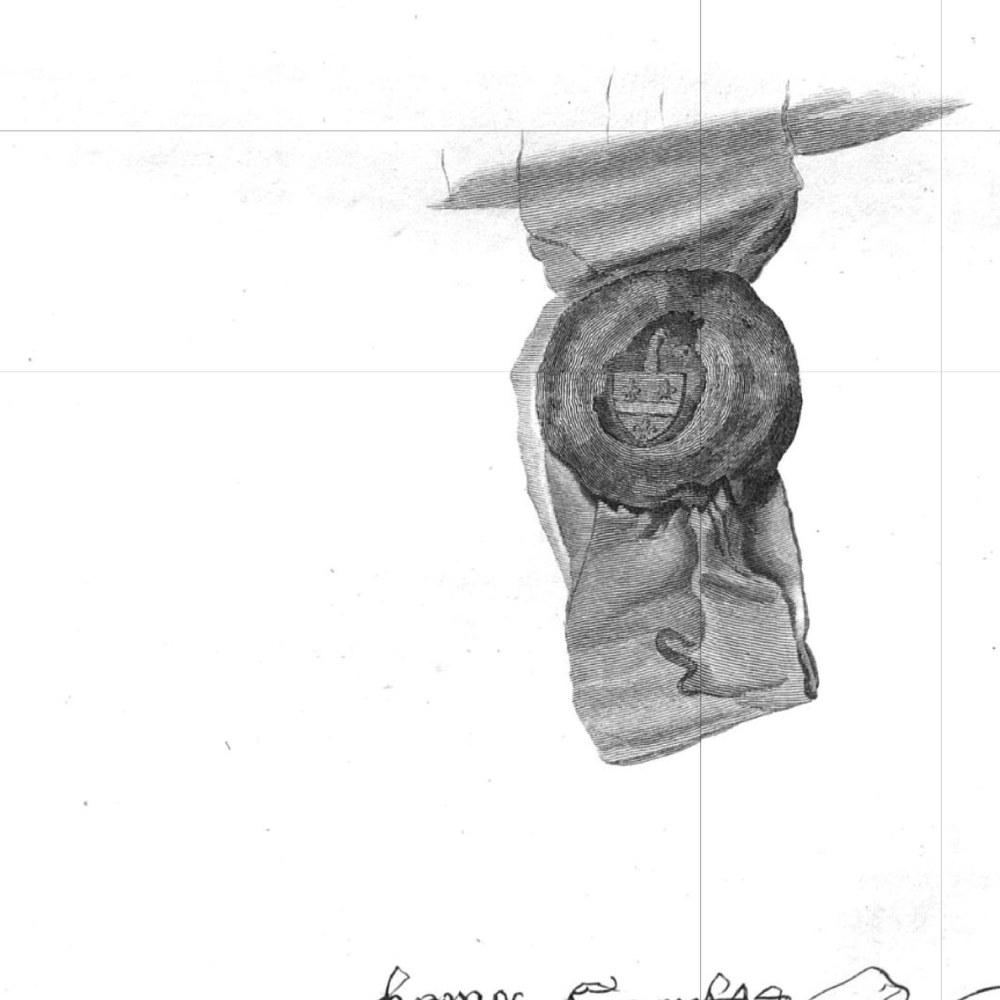
The Land of William Fitz Anculf in Brixistan Hundred. He holds Wendelesorde. Six Socmen held it of King Edward, and could go where they would. There were 2 Halls. Then and now it is taxed for 12 Hides [1200 acres]. The Arable Land consists of 4 Carrucates, which Hanculf had after he received the Shrievalty; but the Men of the Hundred say that they had not seen the Seal or Livery. Ansfrid [was taxed for] 5 Hides, now for 1 Hide. Heldred 3 Hides, now for nothing. Vluuard’s [was taxed for] 3 Hides. Walter, vinitor, 1 Hide, never paid geld. In the lands of these men are 2 Carrucates and a half in Demesne, and 5 Villans and 22 Bordars, with 2 Carrucates and 22 Acres of Meadow. The whole Manor in the time of King Edward was worth 110 shillings [330l.], and afterwards 50 shillings [150l.]; now, 8l. in the whole [480l.]
The manors of the parish
[349]The Manors in this Parish are,
Battersey and Wandsworth, and Down, belonging to Earl Spencer.
Dunsford, belonging to the Viscount Midleton.
Alfarthing, to the late Walsh Porter Esq. now to the Rev. Mr. White.
1. The Manor of Battersea and Wandsworth
That part of Wandsworth which we see had been in the hands of William Fitz Anculf without any authority from the King was probably seized by him, for he granted it to the Abbey of Westminster. As it has been consolidated with Battersea from the time of the Dissolution, the latter taking the lead in the style of the Manor, the subsequent account has been given under that Parish. In Pope Nicholas’s Valuation in 1291 the Abbat of Westminster’s Estate in Wandsworth was taxed at 17l.
The Manor of Down, or Downe-Buys
Was probably one of those parcels which in Domesday, as above quoted, are said to be held by Ansfrid and others. The Testa de Nevil says, that in the time of Henry III. or John, Robert de la Dune held one third of a knight’s fee in Wendelesworth of the Abbat of Westminster. In 39 Edward III. 1266, William Lord Furnivall was found to have died seised of the Manor of Batrichsey. In the next year Richard Rook had licence, on a writ of ad quod damnum, to convey to the Abbat and Convent of Westminster a messuage, 4 cottages, 2 tofts, 176 acres of land, 22 of meadow, 5 of pasture, 4 of wood, 1 rood of moor, 38 shillings rent, 2 cocks and 2 hens in Wandlesworth and Batrichesey (14 acres and half of the land, 1 toft, 4 acres and three quarters of the meadow, and 1 acre and half of the pasture, being in Batrichesey), held of the Abbat as of the Manor of Batrichesey by the service of 19s. 3d. and 10½d. respectively, and suit of court. In 51 Edward III. 1378, Thomas Pernell or Peverel, chaplain, had licence to grant to that Abbey the Manor of Doune (except 1 toft, 6 acres of land and 1d. rent in the same), the said Manor being held immediately of them by knight’s service; saving that the Prior of Merton and his predecessors have received and ought to receive of a piece of land in Dounescroft 20 pence a year. And the said Abbat and Convent held further the said Manor of the King in frank-almoign. The value was 4l. In 3 Richard II. 1380, Richard Stoke and Thomas Aston conveyed to the Abbey of Westminster the Manor of Batrichesey; and in 7 of that reign, 1384, Thomasin late wife of William Lord Furnivall, daughter and heir of Dagworth of Dagworth in Suffolk, released to Thomas Aston and others all her right in the Vills of Batrichesey, Wandlesworth, and Heyford. It is probable that these several Records all relate to the Manor of Down; for we know that the Abbey of Westminster was possessed of the Manor of Battersey long before the 39th of Edward III.
After the Dissolution it remained in the Crown till Queen Elizabeth in her 33d year, in consideration of 191l. granted it to William Cammock Esq. who in the next year conveyed it to Sir William Cecil; the daughters and coheirs of his grandson Edward Viscount Wimbledon (see Wimbledon, p. 269) sold it to Thomas Hewitt Esq. of whom or his heir it was purchased …
The Manor of Dunsford, or Dunsforth
[350]Belonged to Merton Abbey. After the Dissolution it was granted by Henry VIII. to Charles Brandon Duke of Suffolk, and was by him sold for 403l. 6s. 8d. to Thomas Lord Cromwell. On his attainder it came again into the hands of King Henry. In 6 Elizabeth, 1564, the Queen granted it to Robert Lord Dudley, afterwards Earl of Leicester; and it was sold by him to Sir William Cecil (afterwards Lord Burleigh), who in the next year conveyed it to John Swift Esq. and Margaret his wife. Swift aliened it to Thomas Smith Esq. who held his first court 11 Elizabeth 1569. In 1575 Mr. Smith, then of Mitcham, died seised thereof, leaving George his son and heir aged 14. George died in 1639, leaving Thomas his son and heir, who held his first court in that year, and dying in 1657 or 1658 was succeeded by his son George, who in 1664 sold it to Sir Alan Brodrick. From this gentleman it has descended to George Viscount Midleton in Ireland and Baron Brodrick of Pepperharrow in this County, as stated under Pepperharrow, vol. II. p. 33.
The Manor of Alfarthing, Halverthing, or Halverthing Finches, and Barking Fee
Mr. Lysons conjectures that this may be the estate which in Domesday is mentioned as belonging to the Abbat of Wandregesili, an Alien Priory, and that it might be seized by the Crown on that account.
John de Molyns, Lord Molyns (of whom see in Ash, p. 71), had a Grant of Free Warren in all his Demesne Lands in Halverthing and Wandsworth. His estate was seized by King Edward III. but afterwards restored to him, and passed by marriage of Eleanor daughter of William his great grandson to Robert Hungerford 19 Henry VI. 1441.
This seems to be the estate sold by Lord Dacre to Sir Reginald Bray. 10 July 17 Henry VII. 1502, Thomas Frenys Knt. Lord Dacre conveyed to Sir Reynold Bray Knt. and Chancellor of the King’s Duchy of Lancaster, the Manor of Wannesworth and all his lands and tenements in Wannesworth, Battersey, Puttenheth, Wymbledon, and other towns adjoining, in the Shere of Surrey, for the consideration of 426l. 13s. 4d. He covenanted to make on this side the 17th of the same month a sufficient estate in fee simple to John Kingsmill, Edmund Dudley, Richard Hungerford, and John Atwell, to the use of Sir Reynold and his heirs. Lord Dacre covenanted that he had power to sell.
Sir Reynold Bray died in the next year, and devised many manors and lands in Surrey and other counties to his nephew Edmund son of his younger brother John (see vol. I. p. 514); but Lord Sandys, who married Margery sole daughter and heir of John Bray elder brother of Sir Reginald (for he had two brothers named John), disputing the Will, it was determined by the King and the Lords of the Council that they should part the estate between them.
In consequence of this, Lord Sandys and his wife obtained possession of this manor; but another claimant started up in the person of the Abbat of Westminster. The dispute was referred to John Fitz-James Knt. Chief Justice of our Lord the King of Pleas, before his Highness to be holden, and Anthony Fitzherbert Knt. one of the King’s Justices of the Common Bench. The Arbitration Bond, dated 20 June 29 Henry VIII. 1538, signed by the Abbat, is now in the Chapter-House at Westminster. It appears that Lord Sandys succeeded [351]here also, for there is in the same place a Letter of Attorney, dated 25 May 30 Henry VIII.
How it came afterwards into the King’s possession we do not find; but Henry VIII. annexed it to the Honour of Hampton Court. That King, in his 25th year, 1534, granted it to Thomas Lord Cromwell for a term of 60 years, and after his attainder to Robert Draper, Page of the Jewel Office, who died in 15…, leaving two sons, Henry and Matthew, and … daughters, Elizabeth and … Matthew died 21 July 1577, without issue, as appears by his monument in Camberwell Church; Elizabeth, one of his sisters, married in 1550 John Bowyer Esq. then of Lincoln’s Inn. From the Bowyer Papers (communicated by the late Joseph Windham Esq. who inherited their estate) Mr. Lysons has given a curious account of the wedding cloaths, which were purchased by the intended husband, and cost 13l. 11s. 4d. and the wedding ring weighed two angels and a ducate. One of the gowns is called the Venyce Gown, two others the Dutch Gowns, whether from the manufacture or the fashion of those countries does not appear. John Bowyer died in 1570, having had eight sons and three daughters by his wife Elizabeth, who survived him and married William Foster Esq. and died in 1605. Sir Edmund Bowyer held his Court 21 James I. By what means it reverted to the Crown has not been found; but King James settled it on his son Charles on his becoming Prince of Wales.
Charles on becoming King demised it in 1625, for 99 years, to Sir Henry Hobart and others. From them it is probable that Sir Thomas Dawes (see Putney, p. 290) had a lease, as he held a Court 28 October 20 Charles I. 1644; but Endymion Porter, Gentleman of the Bedchamber and one of the favourite attendants of that King, took a lease of 31 years, to commence in 1646, and afterwards procured the remainder of the first term. In 1629 the fee simple was granted to Thomas Porter Esq. From him it descended to John Porter Esq. who married Catharine daughter of Lieutenant-general Sutton, and died 22 March 1764, aged 67, leaving one son and five daughters; one of these daughters married Pierce Walsh Esq. an Irish gentleman, and to their son Mr. Porter left his estate on his taking the name of Porter. He died in 1809, and was succeeded by his son Walsh Porter Esq. who enfranchised many of the copyhold estates held of the manor, and in 1811 sold the manor to the Rev. Mr. White.
The Manor-house stands on the rising ground between Garrett Lane and Wandsworth Common, and appears to be of some antiquity. It has been for a considerable time used by Mr. Wilkinson as a school, and has been lately purchased by him with about four acres of land.
The rectory and advowson
The Rectory
[351]After the Dissolution it was annexed to the Honour of Hampton Court. About 200 acres which had been Abbey land pay for Great Tithes 1-30th only instead of 1-10th.
Queen Mary granted the Advowson of the Vicarage, amongst other things, to John White Bishop of Winchester, by Patent dated 13 November 5 and 6 Philip and Mary, which was only four days before her death, and the Bishop got nothing by it, for Queen Elizabeth appears to have kept them all in her possession. In her 23d year she granted the Rectory with the Advowson of the Vicarage to Edward Downing and Peter Ashton. Robert Knaresborough presented to the Vicarage in 1585. Susanna (daughter of Thomas Hayward, Yeoman of the Guard to Henry VIII. and Edward VI.) widow of John Powell (who died in 1611, as appears by his monument) was possessed of the Rectory, and dying in 1630 charged it by her Will, dated in 1627, with several donations to the poor of this parish (for which see her Monumental Inscription No 5, p. 354); subject to which she gave it to Sibel …
[352]… Term 9 Charles I. and declared the uses to them for their lives, and as they should jointly appoint, and in default, as the survivor shall appoint. She survived her husband, and 17 July 20 Charles I. declared the uses of the Fine to be to herself for life, remainder to her daughter Dorcas Chason and her children. 23 May 24 Charles I. by Bargain and Sale inrolled in Chancery, William Wimondsoll and others, the trustees, with Dorcas Chason and her children, conveyed the Rectory and Advowson for 650l. to Thomas Andrew, whose family appears, from the Parish Books, to have resided in Wandsworth in 1606. Mr. Andrew left two daughters and coheirs, Mary wife of Mr. John Acworth, and Martha. The latter died in 1711 unmarried, and devised her estate to her sister, who thus became possessed of the entirety. Mrs. Acworth died in 1713. In 1731 John Acworth sold the Rectorial Tithes to the Trustees of Mr. Marshall’s Charity for augmenting Small Livings (of which see an account in the Parish of Christ Church), reserving the Advowson of the Vicarage, and the Rectorial Chancel. These Tithes in 1764 were let at 130l. a year; afterwards at 200l.
The Advowson
Went with the Rectory till the latter was sold to Mr. Marshall’s Trustees by Mr. Acworth in 1731, as above stated. Mr. Acworth died in 1744, leaving by Mary his wife two sons, John and Gabriel, and one daughter, Delicia. In 1746 John was blown up in the Dartmouth man of war, Gabriel becoming his heir. In 1768 Delicia died unmarried. In 1769 Gabriel died, and by his Will devised to his son Thomas, who died in 1783 in consequence of a fall, leaving three sisters his coheirs.
The church
The Benefice is a Vicarage in the Deanry of Southwark, valued in 20 Edward I. at 10 marcs, in the King’s Books 15l. 5s. 5d. It pays to the Bishop for Synodals 2s. 1d.; to the Archdeacon for Procurations 7s. 7½d.
The Church, which is dedicated to St. Mary (Salmon says, to All Saints) stands near the bridge over the Wandle, with a square Tower at the West end in which are six bells. This was built with bricks in 1630; before which time there was a leaded steeple. In 1780 the greater part of the Church was rebuilt, at an expence of 3500l., when the Chancel was so far incorporated with the Nave that it appears to be part of it, but the limits of each are defined, to adjust the interest in the pews and burial fees. It is handsomely pewed; and there are large galleries on the North, South, and West sides. The old Tower remains. The Church-yard is very small; but on the East hill is an additional Burying-ground, where many of the French Refugees are interred; and about the year 1808 an acre and half were purchased in Garrett Lane, and consecrated by Brownlow Bishop of Winchester.
The Appropriation was made by Richard Toclivius, Bishop of Winchester; and it was ordained by his successor Godfrey de Lucy (bishop from 1189 to 1204), that the Monks should receive an annual pension of six marcs out of the revenues of this Church, leaving the Vicar enough to support himself, and to pay the episcopal burthens. In 1249 William de Raleigh, Bishop of Winchester, made an Endowment, giving the Vicar the whole of the privy Tithes (in toto alteragio), and all the Offerings, and the yearly Rent of the Tenants of the said [353]Church, and the Tithe of the Meadow which lies on the East side of the Rivulet at Wandsworth, 1536. It appears by the Survey made by order of the Parliament on oath before the Commissioners at Streatham near Croydon in the County of Surrey, on the 16th day of August in the 27th year of the reign of King Henry the VIIIth, that the Particular and Bill delivered contained the following: the Vicarage-house, with a Garden and Church-yard; the Tithe of Grain, viz. Bread Corn, Fine Wheat, Barley, Oats; the Tithe of Mills, Wool, Lambs; Easter Offerings; Privy Tithes; Milk; Offerings at the four principal Feasts in the Year; Pigs and Geese, Eggs, Hemp, Flax; Offerings on the Day of Pentecost; Wood; the Tithe of Houses within the Parish at the Rate of Eight Pence in the Noble; Tithe of Wax and Honey, Apples and Pears; Willows, Hay.
In 1540 Griffith Clarke Vicar, with his Chaplain, Servant, and Frier Waire, were hanged and quartered at St. Thomas Watering in Camberwell, on the edge of Newington, probably for denying the King’s supremacy, though Stow, who mentions the fact, professes himself ignorant of the cause of their execution.
17 June 1646 the Committee for Plundered Ministers ordered 50l. a year for augmentation of this Vicarage out of the Manor of Walworth and Lambeth. In 1650 the Rectory was said to be 50l. 10s. 8d. clear; the Vicarage 40l.
Many of the French Refugees who fled from the persecution of Louis XIV. settled in this Parish, and had a chapel behind the houses which are opposite to the South side of the church. The service was performed in French in the memory of a person living in 1812; and the church not being sufficient to hold all the inhabitants, this has lately been fitted up, and is used by some of Mr. Rowland Hill’s Clergy, performing the service of the Church of England. The Quakers have a Meeting-house and a small Burial-ground. The house was rebuilt in 1787.
Monumental inscriptions
Mole sub hâc quaeris quis conditur, optime lector,
Cujus et qualis, quantus in orbe fuit.
A dextris muri, statuam tu cernere possis
Oranti similem, marmore de Pario;
Subter quam statuam cernatur tabula sculpta
Auratis verbis quae tibi cuncta notant.
Several others of this family are buried in the vault; Sir Alan Brodrick 1680; Alan Viscount Midleton 1747; George Viscount Midleton 1765.
Under a stone within this place,
Doth lie John Powell, who for the space
Of thirty yeres before his death
Did serve the Queene Elizabeth:
And to King James, of worthy fame,
For nine yeres more he did the same:
And when the yeres of seaventy-foure
Were now come to an end,
Into the hands of God above,
His soule he did commend.
This was desired to be recorded that God mighte be glorifyed, the memorial of the Just might be blessed, and ye Living stirred up to such like good works of perpetuity and compassion.
Mr. Aubrey gives the following, as added to the above, but it is not now there: “More — To this Church for the Communion Table two flaggon pots of silver, price xxl. and upwards — To release poor prisoners out of prison on the day of her burial xx pounds. — To the poore of the Parish of Putney, long before she deceased, xx pounds. — To the poore householders of Wandsworth, for many yeares before her death, towards payment of their rent per annum 5 pounds.”
Mr. Aubrey gives the two next as being in the Cemetery on the East Hill:
In this Cemetery there are the following:
Friends to his memory, who these lines shall read,
Who lov’d him living, and lament him dead;
No longer mourn him, but aspire to prove,
By imitation, not by tears, your love;
Stamp his example deeply on your mind,
To foes be gentle, and to friends be kind;
Be loyal to your King, your Country true,
Then all will justly say he lives in you.
On a small tablet in the Church: Part of this Church was rebuilt and beautified A.D. 1780. The Rev. Robert Holt Butcher, Vicar; Mr. James Oliver, Mr. Henry Gardiner, Churchwardens.
Strype, in his Continuation of Stow’s Survey, mentions inscriptions for Elizabeth Gale, widow, 1545; Richard Breame Gent. of the County of Suffolk, who died in 1610; and Thomas Tayer Esq. of Rants in Northamptonshire, who died in 1653, aged 101.
Registers, plague, and the rectors
The Churchwardens’ Accounts begin in 1590. In them is a charge for ringing the day that our King and the King of Denmark came through the town 12d.; 1619, when the Queen’s Matie dined in the town, 4s.; 1630, given by consent to a poor Minister who preached in our Church, 2s. 6d.
The Plague has been very fatal here, as appears by the Register:
| Year | Died | Year | Died |
|---|---|---|---|
| 1603 | 100 | 1665 | 245 |
| 1604 | 25 | 1666 | 99 |
| 1625 | 52 |
Mention is made of a few who died of the plague in 1636, 1641, 1643, 1644, 1645, 1647, and 1648. By the following entries in the Churchwarden’s Accounts, it seems that this distemper was very fatal in 1643: For burying divers persons who died of the plague, 14s. 4d.; strong waters for the sick at several times, 5s. 1d.; signing the assessment for the visited poor.
The earliest date in the Register is 1603.
Rectors
| Patrons | Incumbents | Institution |
|---|---|---|
| Abbat and Convent of Westminster | Walter at Hull | — |
| — | Richard Sutton | — |
| — | Ralph Caperon | — |
| — | Henry Idbury | — |
| — | William de Bukkeby, on exchange for Aldermary London | Non. Sept. 1370; died Vicar 1374 |
| — | John Spynk de Langham | 7 Dec. 1374 |
| — | Simon Barton | 18 Oct. 1377 |
| — | William Scot | 18 Sept. 1392 |
| — | Thomas Ymflete | 30 April 1396 |
| — | John Galeys | 1 Dec. 1401 |
| — | Henry Herde | was Vicar 6 June 1406 |
| — | John Grymesby | 2 Sept. 1409 |
| — | John Wryght | 2 Nov. 1409 |
| — | John Tye | 11 Nov. 1410 |
| Register 1415–1446 lost | ||
| — | Robert Fitzwilliam | died 1478 |
| — | John Jordan | 18 Sept. 1478 |
| Register 1492–1500 lost | ||
| — | John Albon | died 1501 |
| — | Robert Bond | 4 March 1501-2 |
| — | Griffith Clarke, was Vicar 8 July 1539, and hanged and quartered at St. Thomas Watering, with his Chaplain and servant and Friar Waire | — |
| — | John Knolls | resigned 1551 |
| King Edward VI. | George Sharpe | 23 May 1551 |
| On his own Petition | Thomas Acworth | 28 Jan. 1560 |
| Queen Elizabeth | John Edwyn | 3 Sept. 1561 |
| Robert Knarisborough | Jerom Shepherd, B.A. | 1 May 1585 |
| — | Robert Allen, M.A. | 16 Aug. 1596 |
| Anthony Sturtevant | William Leo, D.D. | 14 July 1631 |
| Register 1643–1664 lost | ||
| — | Alan Acworth | died 1674 |
| Thomas Andrews, Gent. | Nathaniel Resbury, M.A. | 23 Nov. 1674 |
| Thomas Andrew Esq. | Samuel Edgeley | 31 Jan. 1687-8 |
| Ann Jackson, widow of Henry Brown and Benjamin Sprint (hâc vice) | Thomas Crawley | 27 May 1736 |
| Elizabeth Palmer, widow, and Ann Hollister, widow | William Allison | 5 Nov. 1748 |
| Thomas Acworth, a minor, by Mrs. Acworth his mother; Abraham Acworth and Abraham Mills, Executors of Gabriel Acworth his father | Robert Holt Butcher | …… 1778 |
(Hoadly, the previous Vicar, died 3 Dec. 1777.)
Schools and the 1786 charities return
[358]The School of Industry at Wandsworth was established in 1800, and a School-house was erected in 1805 by subscriptions. In it are 40 girls, of whom 20 are completely cloathed; 10 others are partly cloathed, and the remaining 10 have only shoes and stockings. They are employed in knitting, spinning, and plain work, and receive a quarter of their earnings, which are about 65l. per annum. By the Report of 1808, 22 had been cloathed and sent to service; and 7 of these had received the rewards given for good behaviour and a continuance of upwards of two years in the same service. Out of the savings 200l. Stock has been purchased.
There are two Sunday Schools; about 60 in the boys’ school, and about 40 in the girls’.
In April 1812 “An Auxiliary National Society” was formed here on Dr. Bell’s Plan for the Education of the Children of the Poor, in correspondence with the noble and benevolent views of “The National Society.” The present School was held under a Lease from Lord Viscount Midleton at a rent of five shillings a year, for a term nearly expired. His Lordship readily agreed to extend the term to 99 years; and about 500l. was presently subscribed to enlarge and fit up the building.
| Name of the Person who gave the Charity, and how and when given | Whether in Land or Money, and for what Purpose given | In whom now vested | Amount, if in Money £ s. d. | Annual Produce £ s. d. |
|---|---|---|---|---|
| Mrs. Susanna Powell, by Will, uncertain when | Out of the Great Tithes — To 24 poor Widows a groat loaf one Sunday and 4d. in money the next, amounting annually to 20l. 16s. 0d.; and 2l. to bind a poor Boy apprentice | The Churchwardens | — | 22 16 0 |
| Henry Smith Esq. by Will, about 1626 | In Land — To cloathe poor Men and Women at Christmas | Ditto | — | 29 6 8 |
| Mrs. Catherine Paggen and Mrs. Catherine Morris, by Will, uncertain when | Interest of 100l. — To cloathe four poor Women at Christmas | Ditto | — | 5 0 0 |
| Uncertain by whom, how and when | In House and Land — To the use of the Poor | Ditto | — | 10 16 0 |
| Mr. Nicholas Tonnett, by Will, uncertain when | In Land — To feed and cloathe the Poor | Ditto | — | 19 16 8 |
| Sir Alan Brodrick, ditto, ditto | In Land — For medicines, bread, meat, and cloathing, for the use of the Poor | Ditto | — | 34 13 4 |
| Henry Smith Esq. and Mr. Blackwell, ditto, ditto | In money — For the use of the Poor | Ditto | 600 0 0 | 77 8 0 |
| Mrs. Susanna Powell, ditto, ditto | Interest of Money for a House pulled down at Westminster | Ditto | — | 0 10 0 |
| Mr. Haycock, ditto, ditto | … To the Poor for bread | — | — | 0 10 0 |
| Uncertain, ditto, ditto | Ditto | — | — | 0 10 0 |
| Mrs. Margaret Hudson, ditto, ditto | Interest of 200l. — To put a poor Boy of this Parish apprentice | In the present Minister as a Trustee | 200 0 0 | 10 0 0 |
| Total | 800 0 0 | 211 6 8 | ||
R. H. Butcher, Vicar. — Humphrey Webb, Thos. Woodward, Churchwardens.
This imperfect Account is considerably illustrated by the following, which has been lately painted in the Pannels of the Gallery:
A Messuage and several Pieces of Land situated in this Parish, now producing 9l. 6s. per annum. A Parcel of Ozier Ground situated in this Parish, now producing 10l. A Messuage and several Pieces of Land, now producing 12l. per annum. In the year 1625 Elizabeth Tyroe gave the sum of 50l. Susannah Powell, by her Will dated 10th December 1627, bequeathed the sum of 22l. 16s. per annum, payable out of the Parsonage of this Parish. Henry Smith Esq. by his Will dated 24th April 1627, bequeathed the sum of 500l. which purchased Five-sixths of the Carshalton Estate, now producing 131l. 5s. per annum. The said Henry Smith’s Trustees have allotted to this Parish a proportion of the Stoughton Estate in Leicestershire, now producing 40l. per annum to this Parish.
Elizabeth Blackwell, widow, bequeathed 100l. which (with other Monies) purchased One-sixth of the Carshalton Estate, now producing 26l. 5s. per annum. Nicholas Tonnett Esq. in the year 1680 gave the sum of 200l. which purchased One-third of the Wilsden Estate, now producing 54l. per annum. Sir Allen Brodrick Knt. in the years 1679 and 1680 gave Two-thirds of the Wilsden Estate, now producing 54l. per annum. Mr. William Ford, by his Will dated 17th November 1631, bequeathed the sum of 100l. which is invested in Trustees names in the Three per Cent. Consols. producing 4l. 8s. 6d. per annum. Mrs. Margaret Hodshon, by her Will dated July 1778, bequeathed the sum of 200l. to apprentice annually one boy, invested in the Three per Cents. Reduced, producing 9l. 10s. 2d. per annum.