

Largely taken from Chronicles September 2023:
— Zeppelin Raid, 1916 . . .
— Harry Fullwood, Balloon View of the 3rd London General Hospital, 1915 (video) . . .
See also:
— Rawlinson: Defence of London
Before I started working on this month's Chronicles I knew next to nothing about the aerial bombardment of London by Zeppelins. It's been a revelation. We're all aware of the WWII Blitz (September 1940—May 1941), but there was an earlier Blitz too, during the First World War. Nineteen great guns were installed in a defensive ring around London — one was on Wandsworth Common. (I'm still trying to work out exactly where — perhaps you know?).
[Colonel Alfred Rawlinson's map of London Anti-Aircraft Defences 1917-18 shows 19 Gun stations, 36 Searchlights, and 38 Observation posts. There appears to have been a searchlight very close to the Wandsworth gun, perhaps within a few hundred yards, and an observation post near Clapham Common station. Intriguingly, the major AA centre is shown as "PUTNEY" (in u.c. letters) — this is unique. Were its sight-lines so much superior to anywhere else?]
We have a number of eyewitness accounts from local people, which I'll publish eventually. But for the moment, I'll start with a remarkable painting, by Harry Fullwood, reproduced in the 3rd London General Hospital's monthly magazine, The Gazette.
Zeppelin raid, 2 September 1916

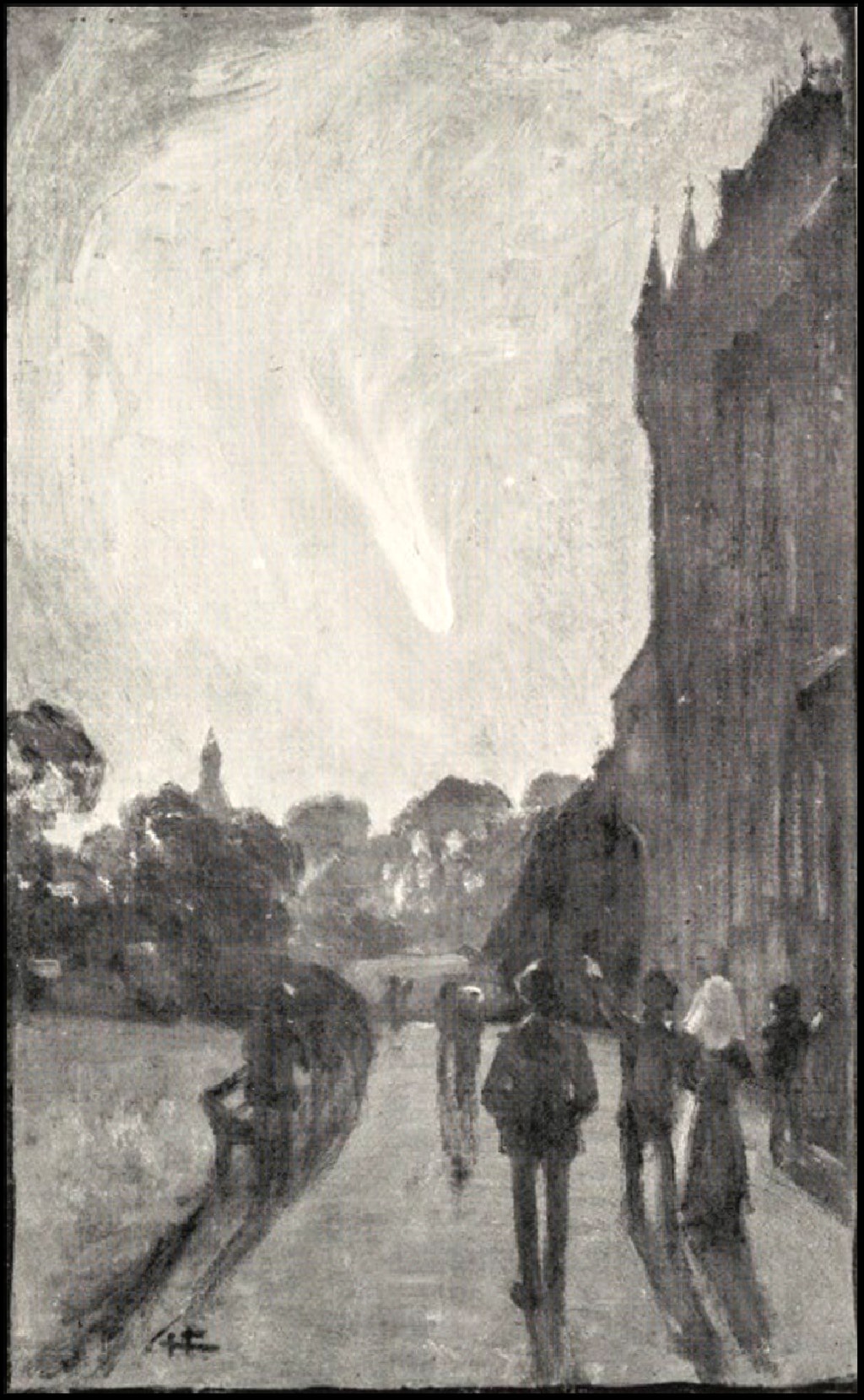

Here is an eye-witness account by Edith Holden, Matron of the 3rd London General Hospital, as recorded in The Gazette:
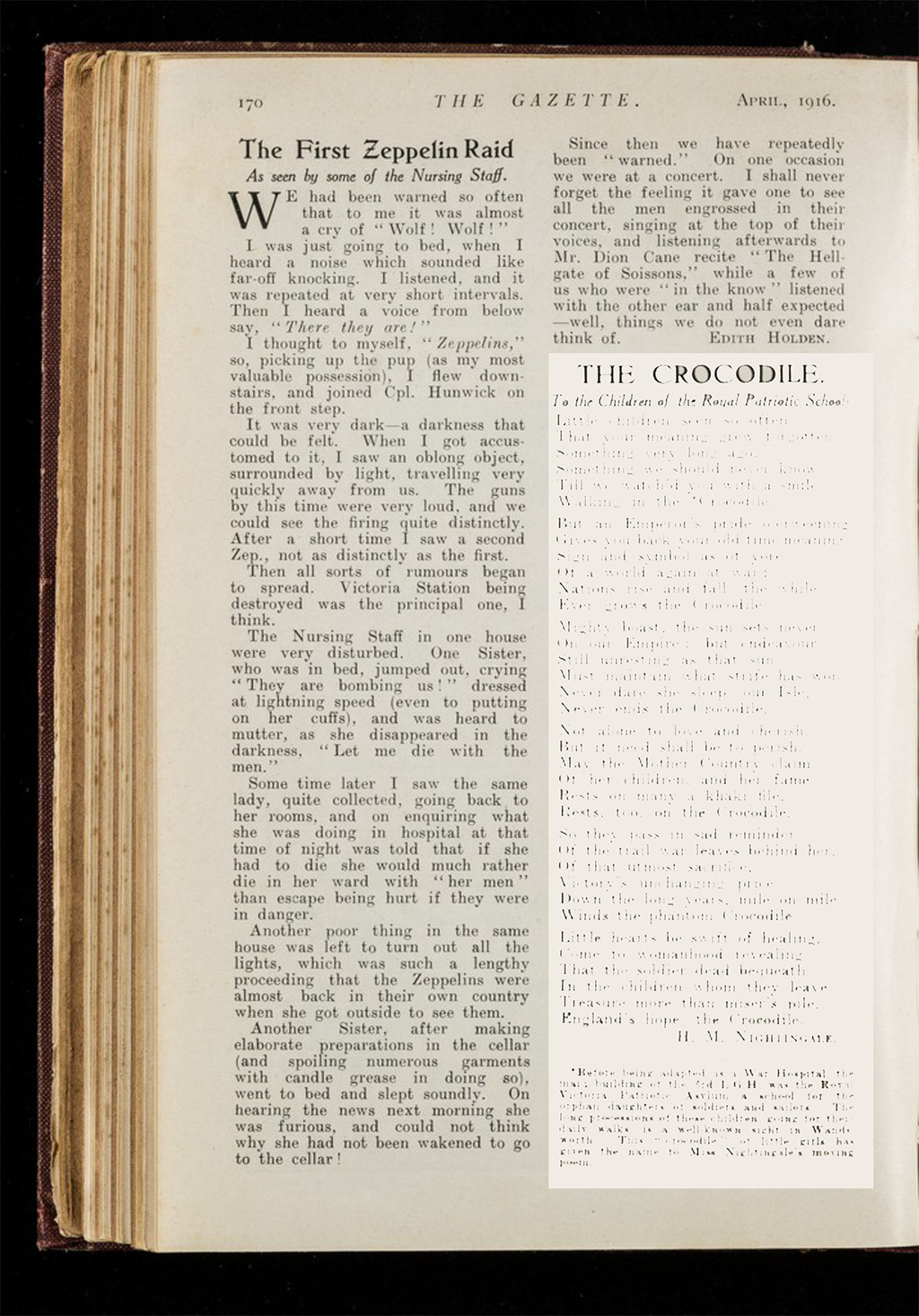
The First Zeppelin Raid
As seen by some of the Nursing Staff
We had been warned so often that to me it was almost a cry of "Wolf! Wolf!" I was just going to bed, when I heard a noise which sounded like far-off knocking. I listened, and it was repeated at very short intervals. Then I heard a voice from below say, "There they are!" I thought to myself "Zeppelins," so, picking up the pup (as my most valuable possession)*, I flew downstairs, and joined Cpl. Hunwick on the front step.
It was very dark — a darkness that could be felt. When I got accustomed to it, I saw an oblong object, surrounded by light, travelling very quickly away from us. The guns by this time were very loud, and we could see the firing quite distinctly. After a short time I saw a second Zep., not as distinctly as the first. Then all sorts of rumours began to spread. Victoria Station being destroyed was the principal one, I think.
The Nursing Staff in one house were very disturbed. One Sister, who was in bed, jumped out, crying "They are bombing us!" dressed at lightning speed (even to putting on her cuffs), and was heard to mutter, as she disappeared in the darkness, "Let me die with the men."
Some time later I saw the same lady, quite collected, going back to her rooms, and on enquiring what she was doing in hospital at that time of night was told that if she had to die she would much rather die in her ward with 'her men' than escape being hurt if they were in danger.
Another poor thing in the same house was left to turn out all the lights, which was such a lengthy proceeding that the Zeppelins were almost back in their own country when she got outside to see them.
Another Sister, after making elaborate preparations in the cellar (and spoiling numerous garments with candle grease in doing so), went to bed and slept soundly. On hearing the news next morning she was furious, and could not think why she had not been wakened to go to the cellar!
Since then we have repeatedly been "warned." I shall never forget the feeling it gave one to see all the men engrossed in their concert, singing at the top of their voices, and listening afterwards to Mr. Dion Cane recite 'The Hell-gate of Soissons,' while a few of us who were 'in the know' listened with the other ear and half expected — well, things we do not even dare think of.
EDITH HOLDEN
The first Zeppelin airship raids on London took place in May 1915. At first, little could be done to stop them, but by the middle of 1916 powerful searchlights and coastal and suburban batteries had been developed that helped turn the tide.
More powerful planes were developed that could reach the higher altitudes that Zeppelins flew at. These could fire both explosive bullets, to penetrate the hard outer skin, and incendiary bullets to set light to the highly explosive hydrogen gas within.
[Wrong. Not two different bullets, just one: "a highly sensitive bullet that would explode on making contact with an airship’s skin and create a fireball when the hydrogen inside the Zeppelin mixed in the correct proportion with the outside air." This was invented by a former Dulwich College boy (and scion of the Brock's Fireworks family). For details, see Frank Arthur Brock – Meet the Swashbuckling British Inventor Who Ended the German Zeppelin Menace, MHN, 18 September 2020.]

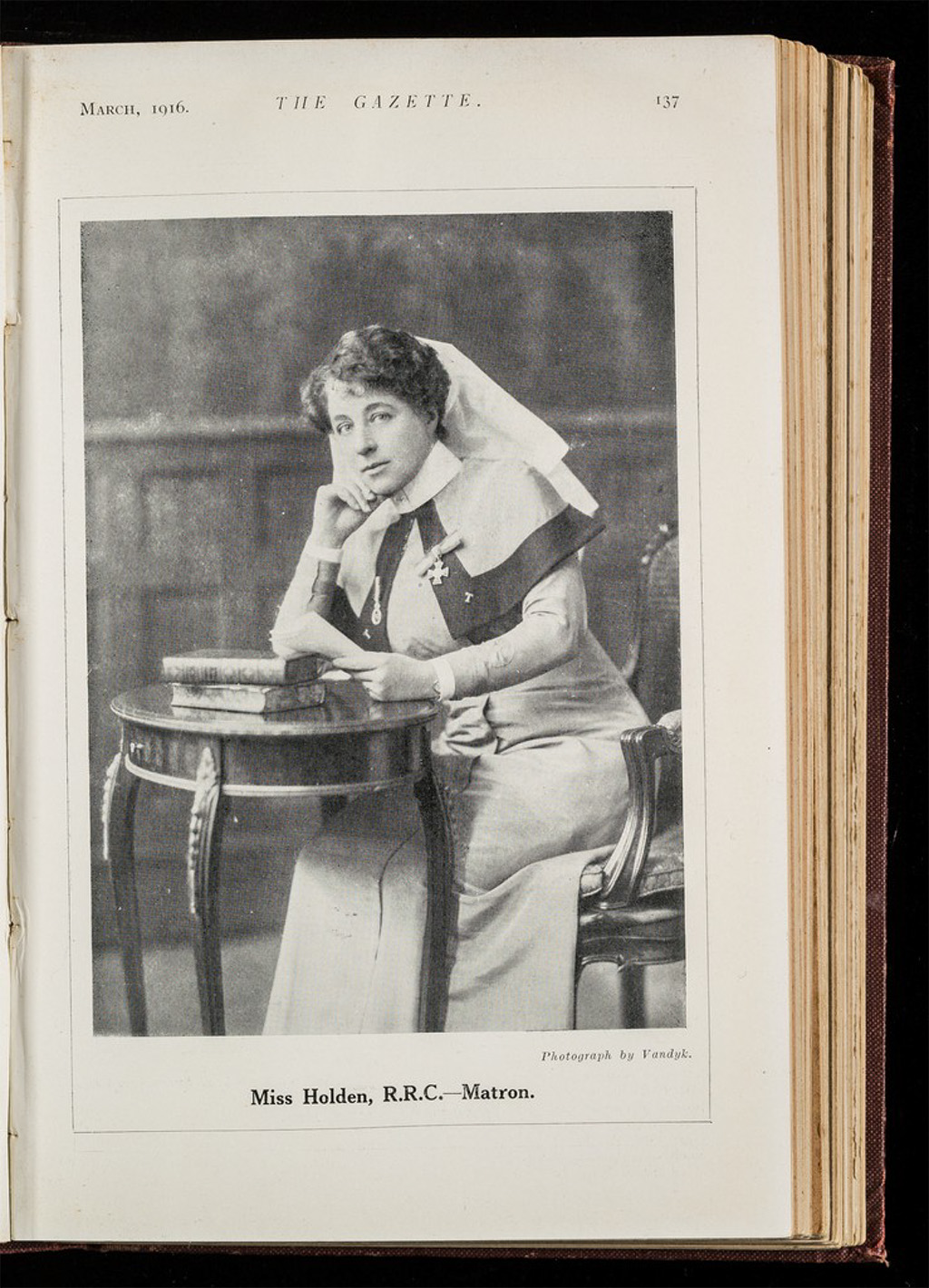
Matron Edith Holden's "most valuable possession" was her Pekingese pup — it accompanied her everywhere in her work. (It probably looked nothing like this.) For a while, I despaired of ever discovering its name, but now I know. Indeed, I have not only learnt its name, I have located some remarkable portraits, and even found a revealing interview he gave in 1916, which was reported at length in The Gazette. But for these, you'll have to wait.

There's a lot more to be said about how Zeppelin raids were experienced in Battersea and Wandsworth, including some remarkable eye-witness accounts. I hope to have the opportunity to do a talk or a video or similar sometime soon. Let me know if that's something you would be interested in.

[For vignettes of local life in WWI, see e.g. Wandsworth Heritage Service's fascinating series of posts, "Wandsworth 1914-1918: Commemorating the First World War as it happened in the borough of Wandsworth", which includes London’s Air Defences strike a blow — 2nd September 1916. and Zepp. Raid which Wrought Havoc in Streatham and Brixton’ — 23rd September 1916.]
[For a good general introduction, see e.g. German bombing of Britain, 1914–1918.]
You may have seen this little video before. (I made it a few years ago). But since it's by Harry Fullwood (whose image of the Zeppelin in flames I've posted above), here it is again:

Back to the top of this page . . .
