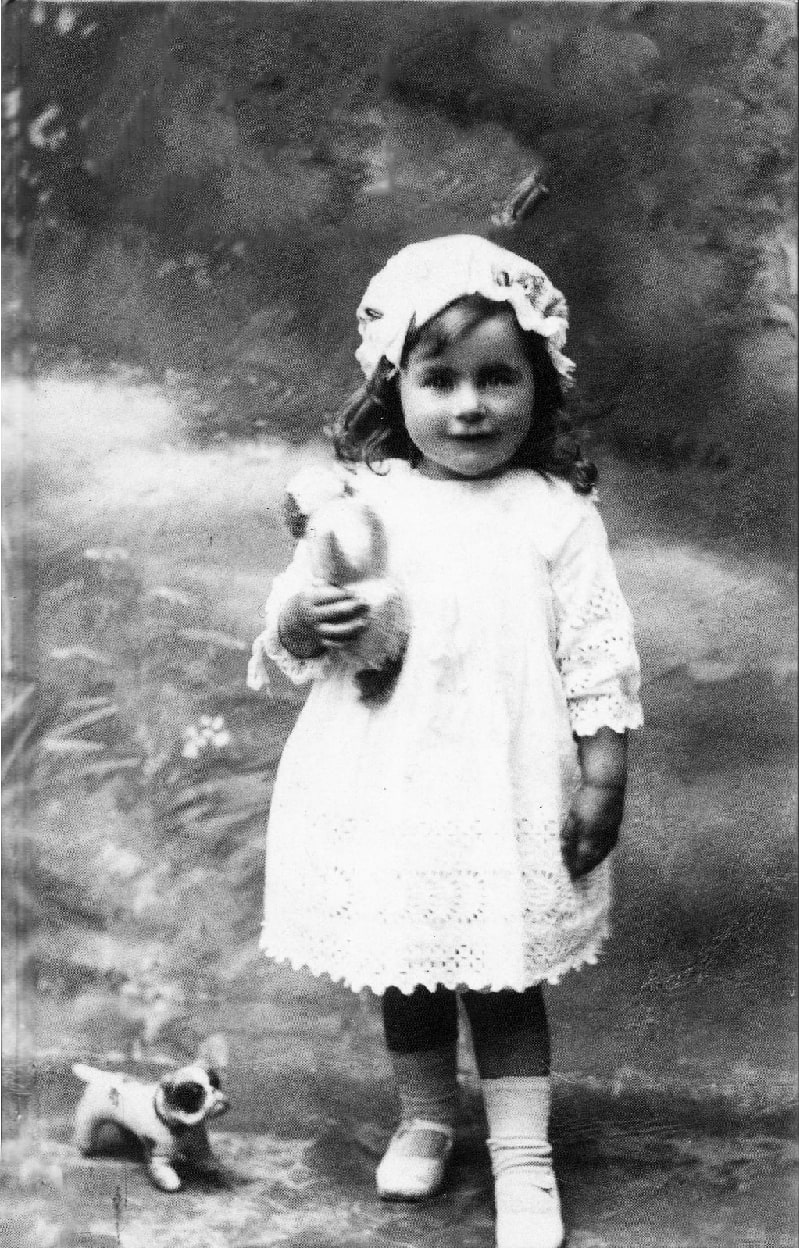
The Quest for PY Betts
Written and presented by Stephen Midlane and Sue Delafons
Part Two
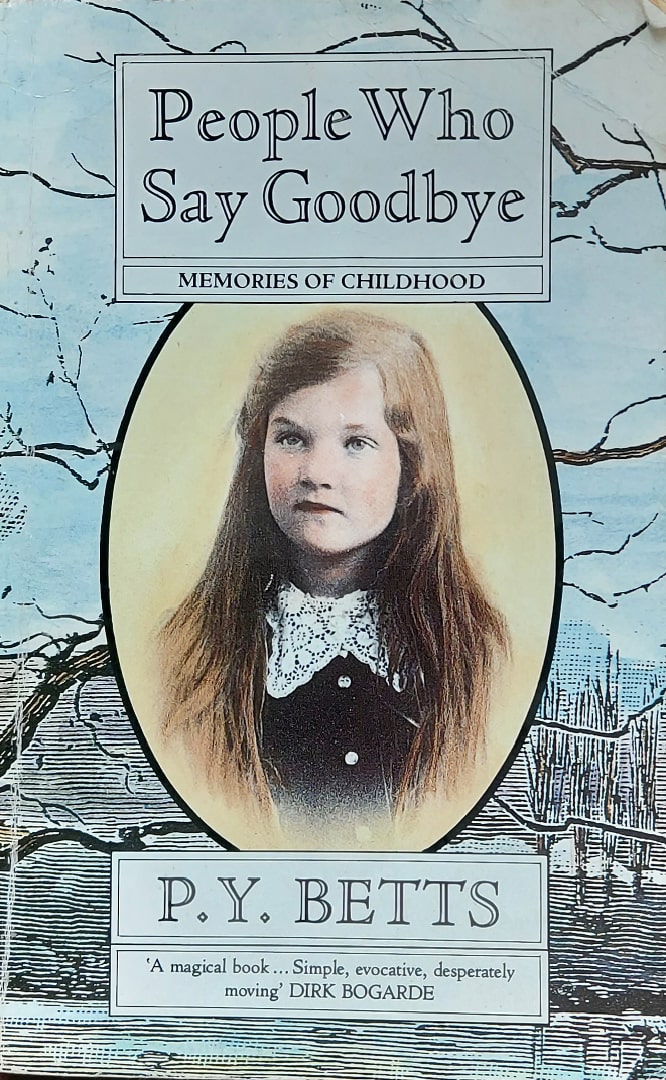
In 2023, and again in 2025, the Friends of Wandsworth Common heard a wonderful talk by Stephen Midlane and Sue Delafons on local author PY Betts, and her memoir People Who Say Goodbye. Published in 1989 (when "Betts" was around 80), this extraordinary work covers her memories of Wandsworth Common childhood during and shortly after the First World War.
I enjoyed these talks so much that I asked Stephen and Sue if I could adapt them as a kind of "guest post". The first part was published here earlier this month.
As we saw, the writer Christopher Hawtree had come across the enigmatic "P.Y. Betts" (who had successfully concealed her gender behind her initials) when he was researching a short-lived magazine, Night and Day, edited by Graham Greene. In the British Library, Christopher had unearthed her only novel, French Polish (1933). But who was she? What had happened to her? How could Christopher make contact?
Christopher wrote an article in the Observer about his initial findings, and (astonishingly) heard from someone in the House of Lords who had been at school with Betts — and knew where she lived . . .
Stephen:
So, let's return to "The Quest for PY Betts".
As Christopher Hawtree's research revealed, Betts progressed on to St Paul's Girls' School in the 1920s and then took up a career as a writer and travelled extensively through the 1930s.
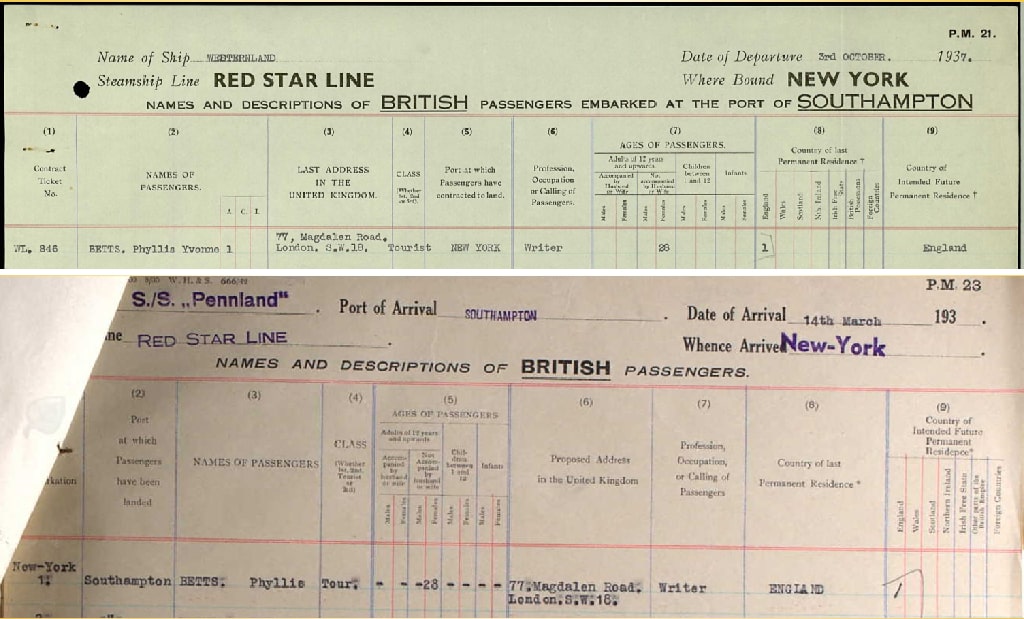
Here are some records of a transatlantic voyage she made to and from New York in 1937, when she would have been aged 28 and writing for the short-lived magazine Night and Day. You can see that she was referring to herself as a "writer" and that she was still living with her parents in Magdalen Road.
Sue:
She entered the Land Army during the Second World War and then settled in rural Wales.
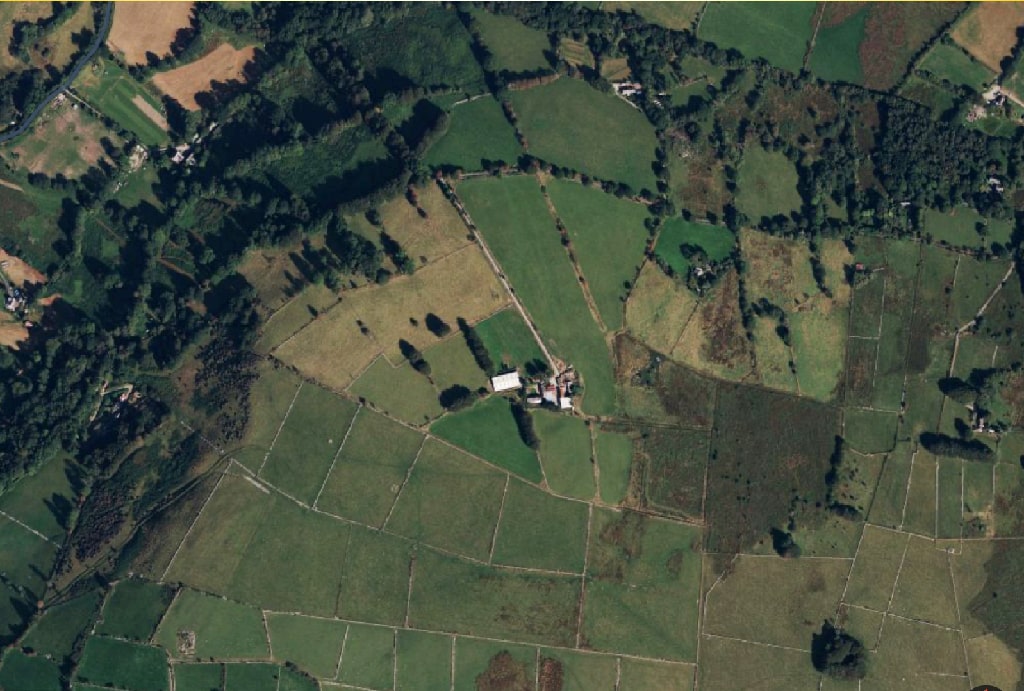
She gave her reasons for moving away from Wandsworth in a letter she later wrote some years later:' "I did not want to live like that, always short of space and time and breathing recycled air."
And in 1987, she was still there, in Wales . . .
Christopher Hawtree takes up the story:
A little later, Veronica Wadley of the Daily Telegraph readily agreed that I should travel to Wales for an interview. This was quite a journey, without signposts through narrow lanes with high hedges in a motor car at low gear; when I did see anybody and asked directions, there was astonishment that I was going to visit P.Y. Betts ("we've heard of her but never seen her!").
Eventually I got there, at one end of a long track where I was greeted by a goat of an uncertain disposition and, after a struggle between tyres and mud, parked beside a low, thick-walled cottage from which, followed by a cat and dog, Betts emerged with pails in hand to feed others of the various animals which lived upon her tranche of hillside.
There was something marvellously heartening about her conversation borne of long experience (and visits by the mobile library where she put in for so many new books); she was savvier about the world than those who are eternally, wirelessly connected. All of this I wrote up, and it appeared complete with a photograph of her beside one of those animals: a seemingly stray peacock.

Sue:
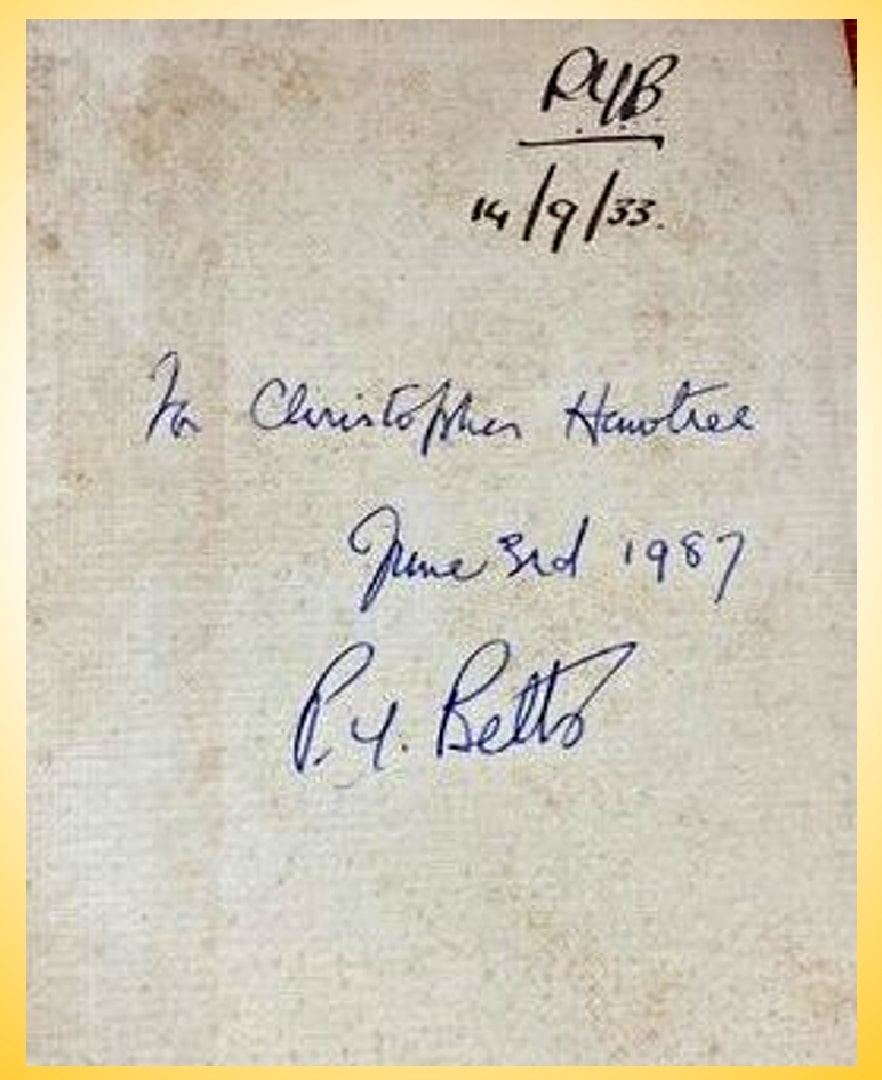
One token of Christopher's visit was a signed copy of French Polish that Betts gave him. You can see the dates, over 50 years apart.
Christopher:
One morning I received a telephone call.
A woman said, 'Mr. Hecht would like to speak with you'.
'All right', I replied, puzzled, curious.
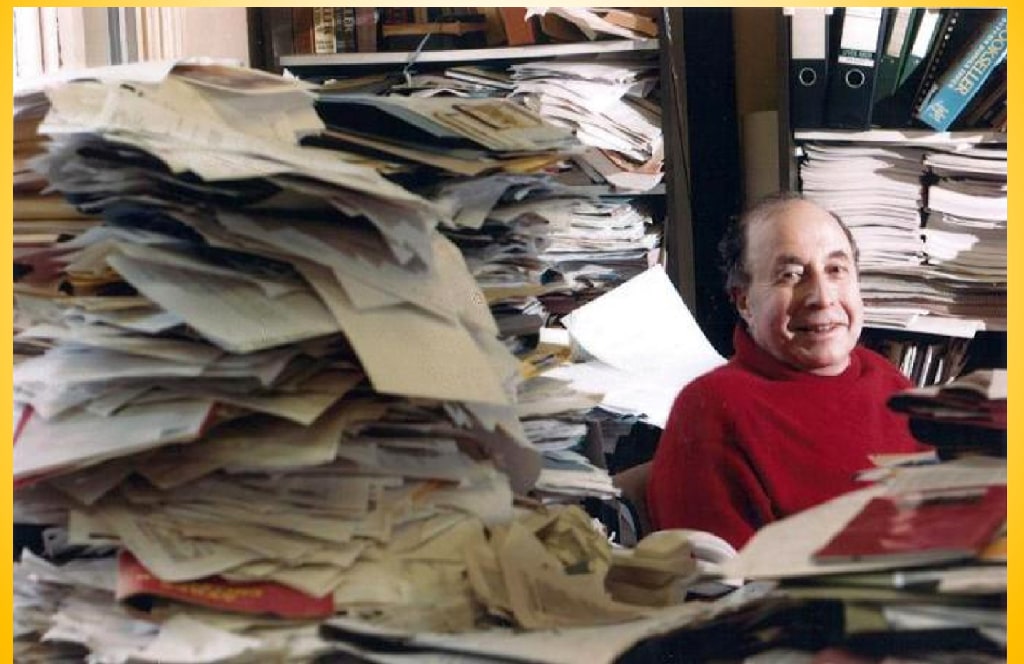
This turned out to be Ernest Hecht, the owner of independent publisher Souvenir Press, whose outwardly elegant office, chaotic within, was opposite the British Library on Great Russell Street. He had chanced to see the Telegraph piece — and wondered whether Betts would like to write a second book, one about the upbringing she had described to me.
This was an inspired notion, to which she readily agreed, and she wrote it — People Who Say Goodbye — through a Welsh winter.
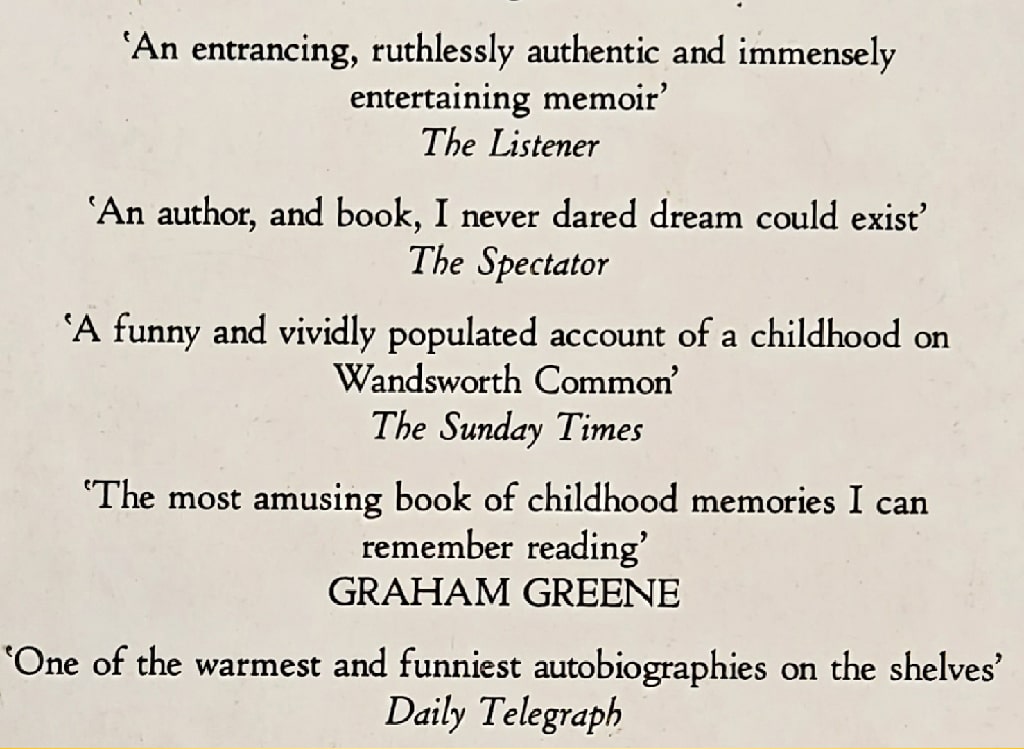
I asked Graham Greene if he would give a quote for the cover, which he happily did, and, one way and another, the book got about.
It was read in eight instalments on national radio, which, one Saturday, also sent an interviewer to her, while Dirk Bogarde, who had found it in a Chelsea bookshop, made it one of his books of the year.
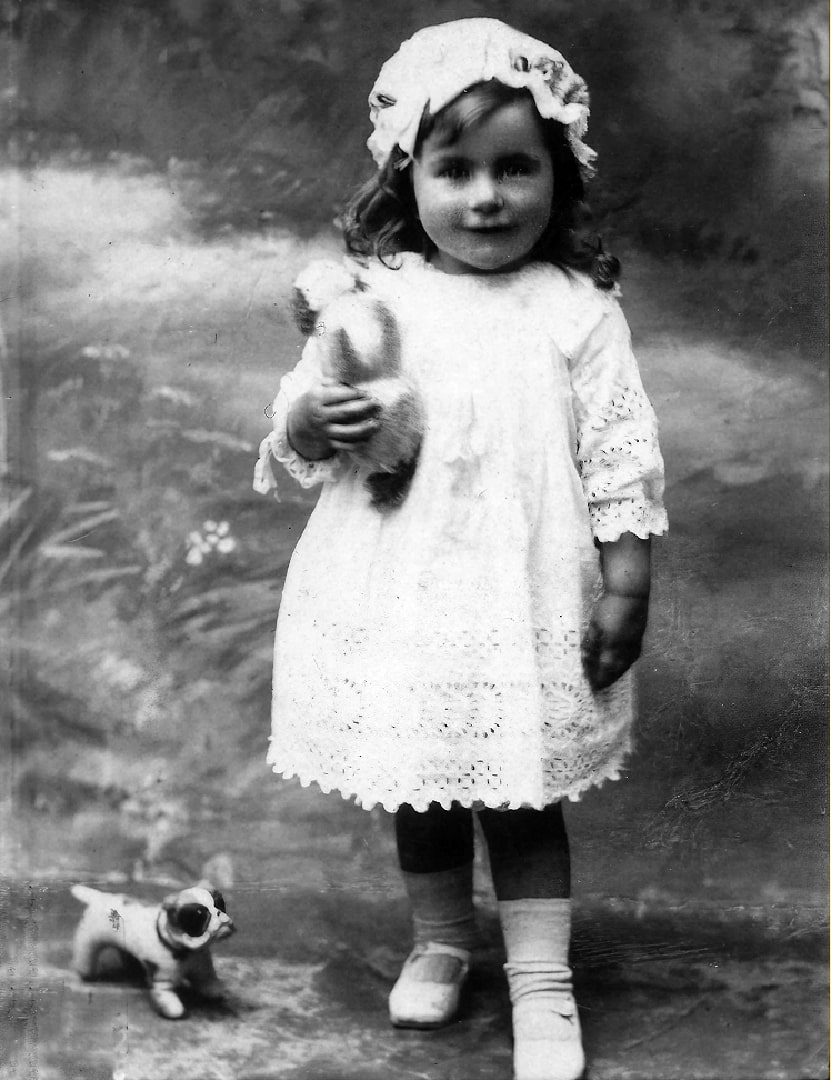
She died in her nineties, after a stroke which meant that — after living alone for so long — she had, ever pragmatic, to agree to a carer in that cottage where, as I found on another visit, there were now fewer animals, but her spirit was still vivid — as it remains, so wise, so funny, and this sequence of events always makes me thankful that I had made the initial foray to the Reading Room.
Sue:
And what of the title of Betts's memoir: People Who Say Goodbye?
Stephen:
Well, this is explained in the following passage, late in the book, when Betts is talking to Clement, who has been her piano tutor:
As usual, Clement was by himself at the piano. I told him I had passed the entrance exam and so should not be coming back for any more coaching. He doodled a bit on the piano, looking at me . . . .
[Clement] "Will you be coming back to see us?"
[Betts] "I shouldn't think so. In a way I should like to, but the way things are, I don't expect I shall."
"Why do you say that?"
"Because I've seen that people who come to say goodbye usually don't come back."
"When did you begin to notice this?"
"It came on gradually, from when I was about five, right up to now. It's true, you know."
"You were young to notice that is how things are."
"Fairly young, I suppose, yes."
"Do you remember the people who don't come back?"
"Yes. I remember them all."
"Will you remember me?"
"Of course I shall. If I live to be eighty I shall still remember you here playing the piano . . . playing the 'Dance of the Blessed Spirits'."
— "Dance of the Blessed Spirits", from Gluck Orfeo ed Euridice, played by Tarek Refaat.
Stephen:
And in her old age she did indeed remember Clement, and all the other people who passed, however briefly, through her young life.
And she preserved them forever in this wonderful book.
Thank you.
PB:
At this point, assuming this was the end of the evening's talk, the audience burst into wholehearted applause.
But, happily for us all, this was not the end . . .
The Quest for Christopher Hawtree
Sue:
We thought our quest for PY Betts was complete. But it led us to wonder what had happened to Christopher Hawtree.
And so another quest began.
I think we had somehow, rather by association, not really considered the possibility that Christopher Hawtree might himself be "still there" somewhere today — and so it proved to be. It was Stephen, who — quite late in the day — decided to extend the quest and gleefully reported: "He's alive! And living in Hove!"
This was wonderful news as I had recently moved from Wandsworth Common to Brighton. It turned out Christopher had previously been a local Councillor, and I eventually tracked him down via a visit to the Green Party HQ . . .

. . . serendipitously located next to the "Arka Original Funeral Parlour" (which seemed a nice Bettsian touch). And a couple of weeks ago, we met and spent a charming evening at . . .
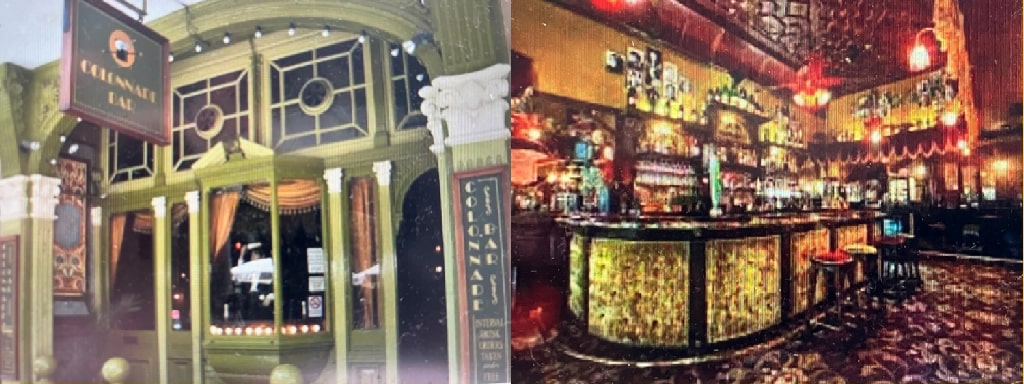
. . . The Colonnade bar outside Brighton's Theatre Royal, when he turned up with a photocopied manuscript of French Polish! He said he would like to attend our talk, and we are delighted to present as our finale . . . Mr Christopher Hawtree, to whom we are all beholden for this lovely book:
Chistopher Hawtree [for it is he]:
Thank you, Stephen and Sue, for organising this marvellously staged evening.
I'd just like to raise a glass to Betts and to Ernest Hecht who, in his own right, was an amazing man. He was an astonishing, independent publisher.
He did a lot for charities and published all sorts of strange books, including Chariots of the Gods and Arthur Hailey. And he stayed solvent in a very valuable premises opposite the British Museum. And it's thanks to him; he had the great idea of Betts writing this book.
I think it's still in print. It's gone through many paperbacks and different incarnations, and as Sue said it was read on the radio and Graham liked it very much. When he said, "The most amusing book of chilhood memories I can remember reading ", Betts wrote to me in one of her brilliant letters, "Well, at his age, he can't remember anything beyond last week", which was typical of her wit and her letters.
And I'm just amazed. I could easily have not gone to the British Library, and therefore not read her novel.
I wanted to track down everybody who appeared in Night and Day as much as I could. And it just goes to show how one little thing can lead to another and another and another. And here we are today. It's brought me full circle to Wandsworth Common.
Another part of the serendipity is that Night and Day magazine is remembered because it came to a rapid end after just six months. It was underfunded, but it's still popularly thought that it collapsed because 20th Century Fox sued it on behalf of the 9-year-old Shirley Temple, whom Graham Greene had reviewed in no uncertain terms — he had detailed the sexual subtext in her performance in Wee Willie Winkie (1937), directed by John Ford.

And, by great coincidence, at the same time as PY Betts's book appeared, there appeared the equally good volume of memoirs by Shirley Temple which she wrote herself called Child Star, in which she ended up agreeing with Graham's review of her film.

So at one extreme we have PY Betts, and on the other, that same autumn, Shirley Temple.
It's just astonishing to me that it keeps on going, this story. So, well done to both of you for organising this evening. It's just great that you have given this further fillip to the PY Betts's story and I think she'd be amazed. She was modest but also very savvy. She was nobody's fool, but in the best sense of the phrase.
Stephen:
When you finally got to meet her, what was she like?
Christopher:
It was wonderful. It's a cliche, but it's as though we'd known each other all the time. We just talked about not only the past which came up a bit in her speech — I didn't use a tape recorder or anything and, just as she went out with the pails to feed the animals, I scribbled down all the notes of what she'd said.
And she not only spoke about growing up in Wandsworth, which she records so well in the book, but she was very alert to what was going on in contemporary Wales — all these surviving hippies in the hills nearby who moved into caravans and carried on living in the spirit of the 60s.
Thank goodness for mobile libraries. The one at Lampeter was not far, that went all the way up all those lanes, as I did in my Citroen 2CV — and that was an ordeal. It somehow got around this long track and up the pathway, the long pathway to her cottage, where she only got electricity in 1970.
Stephen:
Sadly, People Who Say Goodbye is currently out of print, but second-hand copies can be bought online. It is also available through our local libraries' Libby app. (As a last resort, I have a spare copy which I would be prepared to lend. I can be contacted via history@wandsworthcommon.org.)
Here are a couple of reviews of the book online:
— Stuck In a Book: People Who Say Goodbye
— I Prefer Reading: People Who Say Goodbye, PY Betts
And don't forget the video of the original talk:
At this point, the talk really did come to an end.
My thanks to Stephen, Sue and Christopher for two wonderful evenings, and for agreeing to my adapting it as a Chronicle of Wandsworth Common.
SO many more stories still to tell. But that's all for now, folks.
Send me an email if you enjoyed this post / want to comment on something you've seen on the site / would like to know more — or just want to be kept in touch.
If you would like to receive notifications of new Chronicles, let me know . . .
Philip Boys ("History Boys")
September 2025
Some organisations you really must join:
— Friends of Wandsworth Common
— Wandsworth Historical Society