Home › Building histories › The Metamorphosis of Battersea › Chapter 1
Part I: Preparatory
Build 2 — 24 September 2026
– 1a. County and “London” Histories
– 1b. Parish and Suburban Histories
– 2a. General Thematic and Period Studies
– 2b. London Thematic and Period Studies
– 2c. Area Studies
– 3. Contemporary Sources – Fiction and Non-fiction
– II
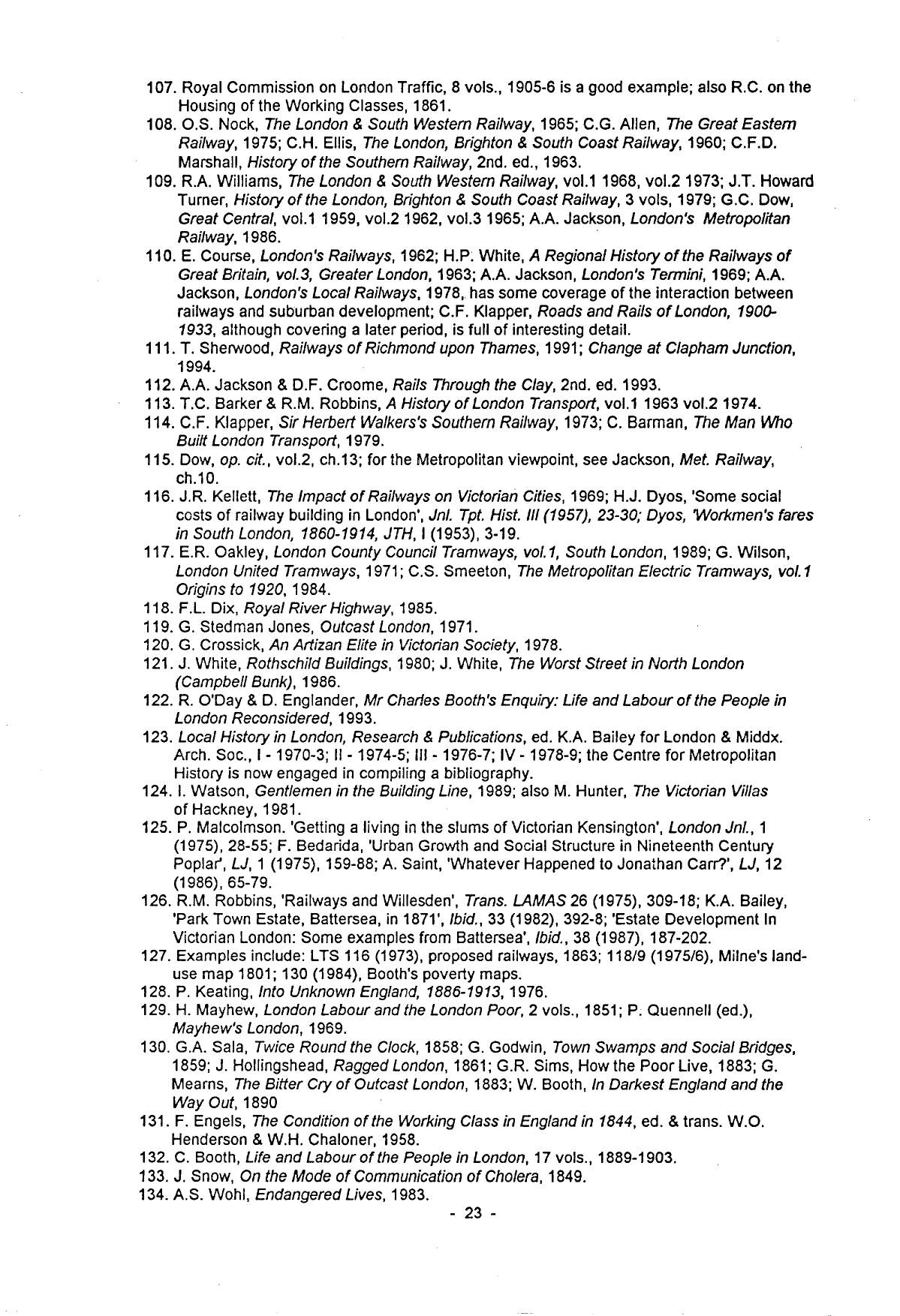
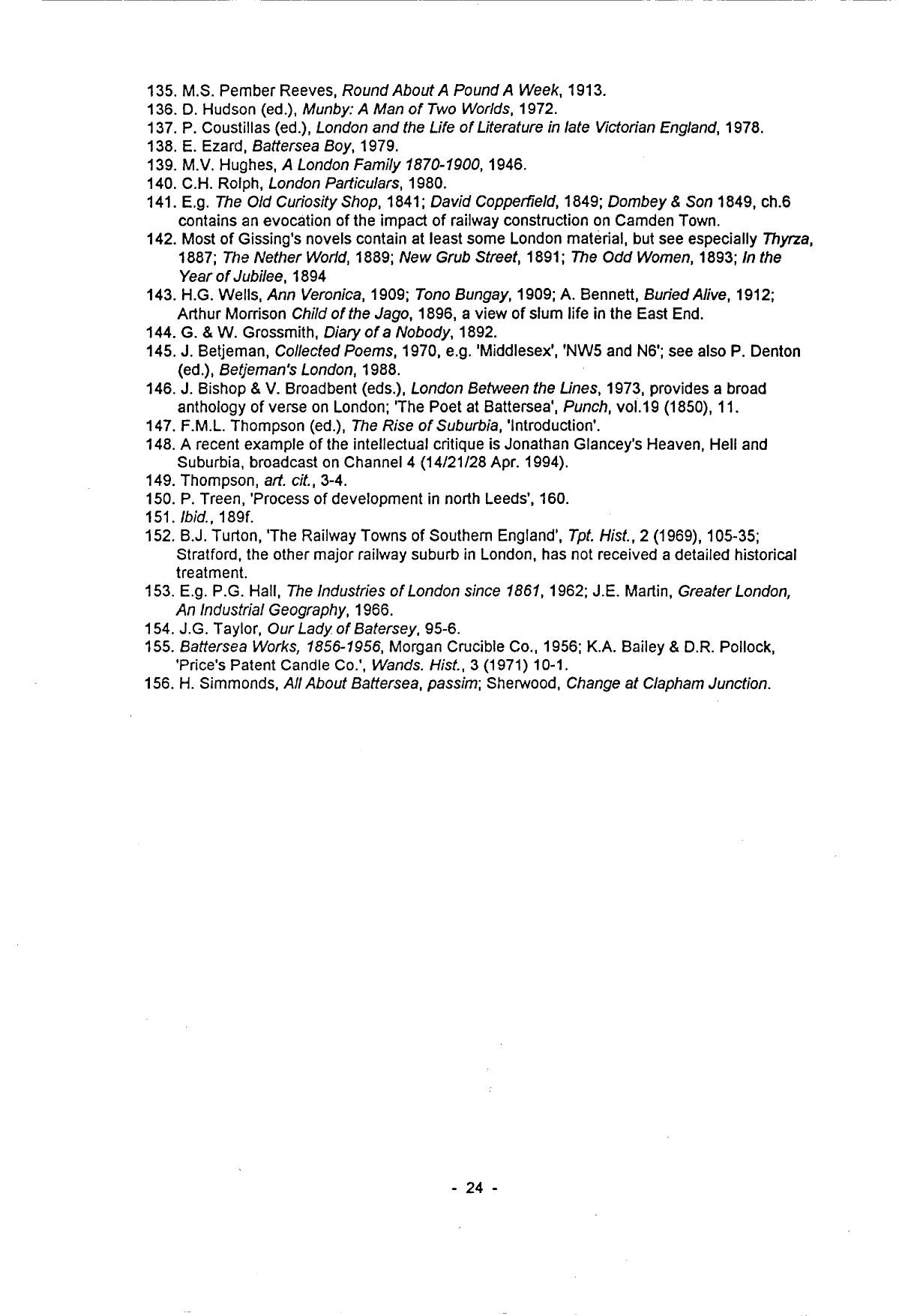
– References
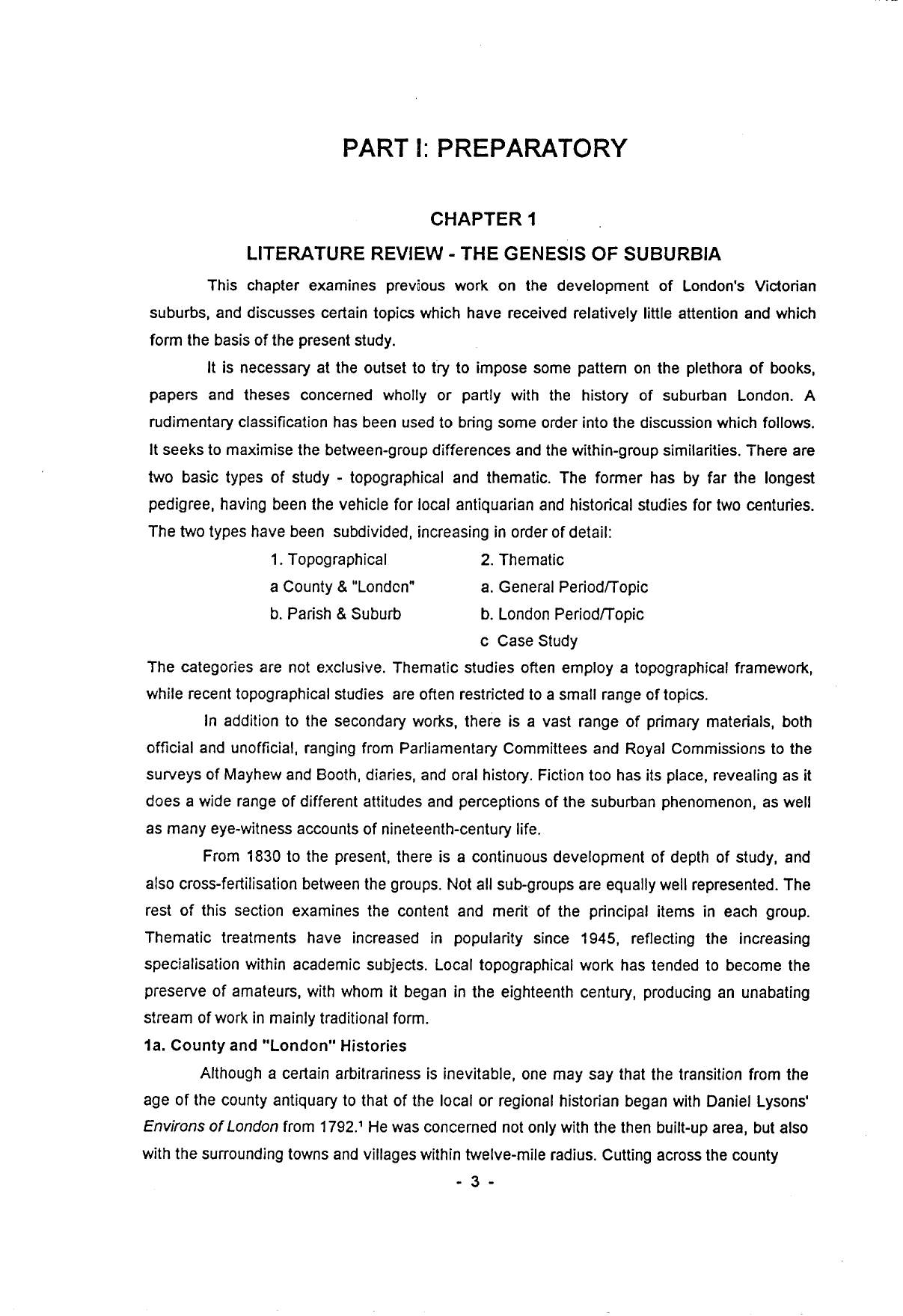
p. 3This chapter examines previous work on the development of London’s Victorian suburbs, and discusses certain topics which have received relatively little attention and which form the basis of the present study.
It is necessary at the outset to try to impose some pattern on the plethora of books, papers and theses concerned wholly or partly with the history of suburban London. A rudimentary classification has been used to bring some order into the discussion which follows. It seeks to maximise the between-group differences and the within-group similarities. There are two basic types of study – topographical and thematic. The former has by far the longest pedigree, having been the vehicle for local antiquarian and historical studies for two centuries. The two types have been subdivided, increasing in order of detail:
| 1. Topographical | 2. Thematic |
| a. County & “London” | a. General Period/Topic |
| b. Parish & Suburb | b. London Period/Topic |
| c. Case Study |
The categories are not exclusive. Thematic studies often employ a topographical framework, while recent topographical studies are often restricted to a small range of topics.
In addition to the secondary works, there is a vast range of primary materials, both official and unofficial, ranging from Parliamentary Committees and Royal Commissions to the surveys of Mayhew and Booth, diaries, and oral history. Fiction too has its place, revealing as it does a wide range of different attitudes and perceptions of the suburban phenomenon, as well as many eye-witness accounts of nineteenth-century life.
From 1830 to the present, there is a continuous development of depth of study, and also cross-fertilisation between the groups. Not all sub-groups are equally well represented. The rest of this section examines the content and merit of the principal items in each group. Thematic treatments have increased in popularity since 1945, reflecting the increasing specialisation within academic subjects. Local topographical work has tended to become the preserve of amateurs, with whom it began in the eighteenth century, producing an unabating stream of work in mainly traditional form.
Although a certain arbitrariness is inevitable, one may say that the transition from the age of the county antiquary to that of the local or regional historian began with Daniel Lysons’ Environs of London from 1792.1 He was concerned not only with the then built-up area, but also with the surrounding towns and villages within twelve-mile radius. Cutting across the county
p. 4framework, Lysons realised that the city and its environs must be treated as a whole historically. The position of London, where Surrey, Kent, Essex and Middlesex meet led county studies which focussed on more peripheral areas to do scant justice to the impact of London on its hinterland. Alas, Lysons did not set a trend, and single-county histories continued, indeed continue, to appear.
The V.C.H. is a good example of the difficulties facing a modern historian in treating suburban development within an essentially Anglo-Saxon administrative framework. A comparison of recent volumes for Middlesex, covering both inner and outer suburbs, with those of Surrey-in-London which appeared eighty years ago shows that this is not an impossible task, however. Modern parish studies contain 100,000 words or more, and stand in stark contrast to the few pages devoted almost exclusively to matters of the manor and the church which characterise earlier volumes. They have comprehensive accounts of principal estates and their development, but relatively little on the building process.2
Lysons not only established a first in topographical writing, but also used some techniques which have since become essential tools for understanding the growth of the city. For example, he sought to establish trends in population growth by analysing the annual average number of baptisms in three decades – the 1580s, 1680s and 1780s. This forms a basis for understanding suburban prehistory, showing for example that nearby Putney, similar in size to Battersea in 1801, had a very different pattern of growth in previous centuries. Lysons also had some full headcounts undertaken c.1790, which form an invaluable prelude to the Census, especially in parishes such as Battersea which were experiencing strong growth at the time. Lysons also comments on socio-economic developments, such as the impact of the building of Battersea Bridge in 1771. His interest in the contemporary scene was not shared by many of his peers or successors.
It is a reflection on the quality of Lysons’ work, and often on their own mediocrity, that many nineteenth century historians of London copy him, usually without acknowledgement. Unlike Lysons, they often bring their story to a close in c.1830, ignoring the railway age and suburban development, arguably the most dramatic changes which the region had ever seen.
Examples of traditional county histories of Surrey are Manning & Bray and Brayley.3 The former adds nothing of relevance to the present study beyond Lysons. Towards 1900, there is little change in the quality of this genre of history, exemplified by the work of Walford,4 although he did at least give some notice to the great ‘tangle’ of railways which had such a profound effect on Battersea after 1840.
The best late nineteenth century treatment in the traditional mould is by novelist Sir Walter Besant.5 Like Lysons, he considers Greater London as a whole. (The London County Council (1889), successor to the Metropolitan Board of Works (1855-88), finally recognised the need for local government to transcend Saxon shire boundaries. Even so, it excluded south-west Essex, and in other areas did not reach the edge of the then built-up area, a failing repeated in 1965 with the Greater London Council.) Besant’s account of South London in the 1890s, although not published for two decades, contains many invaluable pen-pictures of fin-de-siècle Battersea.6
p. 5The four volumes of the Victoria County History for Surrey were among the pioneering volumes,7 ignoring most aspects of nineteenth century history, although there is at least a list of schools created since 1870 by the School Board for London.8 Topics such as the building of suburban housing and the provision of infrastructure for the expanding city are virtually absent. The history of Battersea occupies only nine pages, even the many Victorian churches receive only scanty architectural notices. Elsewhere, there is a brief treatment of some local industries.
The period 1919-39 was a fallow one for county histories, and interest in the processes of creating the Victorian suburb was scarcely evident. In view of the massive destruction of the built fabric of much of inner London, including Battersea, during the Blitz, this is especially unfortunate. Many streets have disappeared in their entirety leaving no written or photographic record. After the War, Williams’ South London in the ‘County Books’ series appeared in 1949, followed in 1953 by Michael Robbins’ Middlesex in Collins’ ‘New Survey of England’ series. Robbins, a noted transport historian, produced one of the best concise county histories, and did not disdain to write about the interwar developments which wrought such massive changes in Middlesex. A particularly interesting section discusses the perceived environment of suburbia and the aspirations of its inhabitants as reflected in local toponymy, not only the streets but the individual buildings within them.9 The naming of estates and streets and their perceptual ramifications in Victorian and later times is a sadly neglected subject. The photographs in this volume include not only mansions and churches, but also interwar speculators’ ‘Tudorbethan’ and Holden’s Underground stations on the new lines of the thirties which were such a critical element in encouraging the spread of bricks and mortar over the hitherto empty claylands of north Middlesex.10
Since 1970, there has been a plethora of general histories of London, few of which pay more than passing attention to suburban growth. Examples include works by Barker & Jackson and Hibbert.11 More useful is the interest in maps and related material, featured in another book by Barker & Jackson, covering the cartographic history of London from the mid-sixteenth century to the age of the satellite map.12 It includes examples of thematic maps which developed strongly during the Victorian era, and which form an important part of Charles Booth’s work. The Times Atlas of London covers the field with extended text and illustrations, including many aspects of Victorian suburban growth.13
The 1970s saw two series of volumes in the ‘General Thematic’ category. Based mainly on secondary sources, they naturally take their emphasis from the particular interests of their authors. Secker & Warburg’s ‘History of London’ contains two studies of the period 1714-1870. George Rudé covers the Georgian period (1714-1808), and is as concerned with popular politics as the processes of urban growth in the Georgian era.14 Francis Sheppard examines the first half of the Victorian period, and has much to say on local government developments, but less on the building of the city, despite his long period as Editor of the Survey of London.15 A third volume, covering 1870-1914, was to have been written by H.J. Dyos, but his untimely death prevented this.16 This is regrettable, since his all-embracing interest in the Victorian suburb would have produced an original synthesis.
The second series, published by Cassell, is more traditionally based in terms of period,
p. 6for example Elizabethan, Victorian, Regency London, and also adopts a more popular approach. Priscilla Metcalf’s study of the Victorian period,17 uses a conventional decade-by-decade treatment from 1837 to 1901. As an architectural historian, however, she gives some useful insights into the building of the city, and more on suburbia than would have been the case in an earlier work of this type.
There are, of course, many general works on London which do not have a topographical bias, but use the city as a vehicle for urban, social or economic historical studies. Examples include Seaman’s thematic study of the development of London as a world city, and contains useful surveys of transport, the life of the people and so on, providing a basic background for more detailed studies.18
One study often seen as belonging in a category by itself is Rasmussen’s London, The Unique City.19 This is an essentially iconographic view of London as it developed over the centuries, especially the Georgian and Victorian metropolis. It benefits from the outsider’s viewpoint – that of a Danish architect and town planner – showing how the English have translated their own idiosyncrasies into bricks and mortar and other elements of the landscape and townscape. His discussion of many seemingly trivial aspects of the English town house, for example the sash window, that well-known device for ensuring ventilation even when closed, provokes many questions about the symbolism of nineteenth-century suburbia. Many of these issues have scarcely been considered in any kind of detail since Rasmussen wrote sixty years ago.20
In recent years, television has provided the impetus for books amplifying that medium’s visual and oral bias. A good example is the four series The Making of Modern London, covering the period 1815-1985, with progressively more emphasis on oral history to supplement written and other sources.21 Also typical of the 1980s and 1990s is the use of historic photographs to illustrate the Victorian city, for example the volume by Stamp.22
This term is used here to describe those studies which treat all aspects of a local community throughout its history. These have generally been restricted to a single parish. They first appeared in the nineteenth century, and may be seen as a development from the county history. The principal feature of these local histories, and not only early examples, is their great, almost obsessive, concern with what may be called “personalities”, especially those in the upper echelons of local society. They tend to be anecdotal, derivative and antiquarian in content, and almost universally tend to ignore the tide of suburban building, and also the lives of the remaining 95% of the population. Because of the inexhaustible demand for such histories, only a small sample can be examined here, with special reference to what, if anything, they have to say about the processes of urban development.23
Some parish histories have become classics: for example, Feret’s Fulham, Blanch’s Camberwell and Bartlett’s Wimbledon.24 Their bulk and attention to detail would be out of the question today, although all are characterised by a dearth of contemporary detail. Blanch, for
p. 7example, devotes only four pages out of 480 to the growth of Victorian Camberwell, and another four to transport, in strong contrast to the great sections on parochial administration and Dulwich College.25
Although Battersea does not have a nineteenth-century history of this calibre, it is paradoxically better served by the work of Henry Simmonds, a local City Missionary.26 His book, while not attaining the level of Feret or Blanch, nevertheless contains invaluable material on topics such as the then brand-new horse trams, recent churches, and the Longhedge railway workshops.27 Ramsey’s work,28 is more traditional, based on that hardy perennial trio: church-manor-worthies. Green’s study is of this type, virtually ignoring the changes which affected Victorian Battersea.29 Although ostensibly a history of the parish church, Taylor’s study30 contains information on local industry and on the provision of district churches after 1830.
Many parish histories are now collaborative efforts by local societies, for example those of Hammersmith and Fulham.31 The former is based upon Faulkner’s history of 1839,32 updated to the mid-1960s in a basically traditional framework. Two of the nineteen chapters are on the manor, and three are devoted to church affairs. Among the few signs of a new approach are ‘Industry & Employment’ (5pp.); ‘Hammersmith since 1860’ (23pp.) and ‘Public Transport’ (13pp.). The second is, however, largely descriptive rather than analytical, and does not discuss the processes of building development. The Fulham history has the same Editor, but there are signs of a more modern approach to local history. Chap. 6 by David Reeder, discusses the growth of Fulham 1851-1901, including the covering of south Fulham with houses which make it a monument to the 1878-83 boom. Chap. 13 on the twentieth century is also rather better than its equivalent in the Hammersmith volume. Although the Census is used to illustrate specific points, there is no evidence of a systematic analysis of the Enumerators’ Returns. There are maps to help the non-local reader and a better bibliography, although textual references are minimal.
Since 1960, many commercial local histories have concerned themselves with a limited range of suburbs, mostly in inner London, which share some or all of the following characteristics: (i) surviving village enclaves (Hampstead, Dulwich); (ii) places favoured by situation, and/or by the rich and famous (Chelsea, Greenwich); (iii) places whose earlier decline has been overtaken by a tide of nouveau richesse (Islington, Kennington). The main motivation for this surge of what are often little better than illustrated reviews of the last two centuries seems to be the market of incomers in search of instant roots, rather than the interested aborigine. (There has been a parallel mushroom growth in books concerned with the “authentic” restoration of Victorian houses.) As such, this genre compares unfavourably even with the relatively undemanding criteria of Victorian local histories. There are three recent histories each of Islington, Chelsea and Kensington, and no less than six on various aspects of Hampstead.33
Charles Harris’ Islington, and the three Streets of Hampstead volumes have been taken at random. Harris is typically personality-centred, with three chapters on “characters” and “men of letters”, who also dominate the illustrations. There is, however, a good introduction to medieval and sixteenth-century Islington, and “Ponds and Fields” provides a basic appraisal of
p. 8the pre-urban landscape. Ch. 13 on music halls covers an important facet local history, albeit briefly. George Sims (Ch. 16) is of more than local interest, given his contributions to social reportage round the turn of the century.34 There is no consideration of the transformation of rural into suburban Islington, despite the fact that most readers will live in Georgian and Victorian terraces and squares.
The surveys of the streets of Hampstead and West Hampstead are good examples of how local groups, in this case the Camden History Society, can make a worthwhile contribution to urban history. They include details of the estates over which the streets were built, street-name origins (themselves an interesting by-line of social history), notable buildings and personalities. They are well illustrated and have maps, so that the explorer can use them both in the field and by the hearth. One cannot expect books of this sort to give detailed accounts of urbanisation (Hampstead is well served by F.M.L. Thompson’s study, see below), but they do examine the serried rows of villas around West End Lane, as well as the better-known village centre.
This emphasis on inner north London includes Gillian Tindall’s history of Kentish Town, which concentrates mainly on the period before major building began c.1850.35 An interesting departure from the norm was a ‘packet’ of reproduction documents and maps of Kentish Town, along with an historical commentary, again by the Camden History Society.36 Increasing demand for local history material from teachers led to Jack Whitehead’s book on the growth of Stoke Newington,37 covering all aspects from underlying geology to postwar municipal housing. It is especially strong on maps and illustrations of house types. It was followed by a similar study of St. Marylebone and Paddington.38 These studies make instructive contrasts with the relevant parish articles in the Middlesex V.C.H.
· · ·
As the nineteenth-century world city, London has naturally attracted the attention of academic historians. Crucial in this process has been the application of new techniques to both existing and new sources. Some of this “new” urban history has been published since 1965, although much remains in unpublished theses. By their nature, the latter tend to cover relatively restricted themes or periods, and this is reflected in the material in print. There are relatively few general studies of individual suburbs, even thirty years after the appearance of H.J. Dyos’ study of Camberwell, based on research carried out in the early 1950s.39 What distinguishes such studies from local histories is a concern with process, and with the period between 1840 and 1914. Sources which have been subjected to more rigorous analysis include the Census enumerators’ returns, now available from 1841 to 1891; the District Surveyors’ returns and the copious archive of the School Board for London. The sheer bulk of data makes computers and statistical techniques essential for processing and analysis, although this has not progressed as far as one might have expected twenty years ago.
Dyos’s pioneer work,40 has, despite its favourable reception, not been followed by equivalent studies of other suburbs in which the models of development he put forward could be tested and refined using a larger sample of building estates, builders and other sources. One notable exception has been the work of the Survey of London team since 1970, in which the
p. 9traditional emphasis of this series on purely architectural history has been broadened to cover social history and builders and developers. The four splendid volumes on the parish of Kensington took fifteen years to complete, and show just how far away we still are from a complete appreciation of the built form of Victorian London.41
Dyos set an agenda, subsequently developed at the Leicester conference in 1965,42 using sources both official and unofficial, such as those of builders and developers, house deeds, sale particulars, directories, and maps. The vital infrastructure of the suburb has also come to play an important part in this type of study. Housing after all is only one element in attracting new suburbans. The multifarious services required to sustain the residents – gas, water, sewerage, schools, churches, shops, public houses, music halls – and to enable them to get around the rapidly-expanding city for work and leisure – railways, omnibuses and trams – are an integral part of this new approach. No suburb can be a closed system, wholly providing for all its own needs without reference to the rest of the city, despite the contrary aspirations of many residents. The very word suburb carries with it notions of dependency, and there has always been a strong two-way flow of people, goods and services, and ideas between the two, from the medieval period to the present day.
Among the relevant theses are B. Taylor’s study of the development of Bromley, Beckenham and Penge (the last a detached part of Battersea until 1888).43 This covers all aspects of the growth of these towns and villages. R. Cox studied the development of the nearby town of Croydon from 1835-1940, using the Census to analyse migrant origins and social class, and featuring oral history to obtain information on the elusive builders of suburbia.44 More specialised are D.A. Reeder’s study of capital investment in the suburbs of west London,45 and J. Roebuck on local government in Lambeth, Battersea and Wandsworth.46
Although clerical-artisan suburbs like Camberwell have received scant attention, development in middle-class Hampstead has been studied,47 and there is a general overview of the growth of Victorian London by an ardent overseas admirer, D.J. Olsen,48 who examines themes such as the Victorian reaction to the Georgian legacy, and the increasing tendency both in the suburb and within the house towards segregation between classes and functions. Unfortunately, his work on the Chalcots estate of Eton College in Hampstead is as far as he goes in analysing the microtopography of London.49 His later work has been concerned with inter-city comparisons of the planned aspects of development across Europe.50 Concentration on the higher-status parts of Hampstead also characterises Thompson’s study, which fails to examine more typical developments in West Hampstead.
A volume edited by Thompson contains three short studies of suburban development in south-east and west London, as well as a thought-provoking introduction by the editor on attitudes to suburbia and its relatively indifferent fate at the hands of historians and geographers.51 Rawcliffe’s survey of the transformation of Bromley from market town to suburb concentrates on estate development and social structure, with apposite plans and views of villas. Carr compares the pre-1914 and inter-war phases in the development of Bexley, which produced a landscape of contrasts, in part reflecting the impact of the railway at different stages. Jahn covers a broad swathe of west London, from Chiswick to Brentford, Acton and
p. 10Ealing, examining development in relation to the building cycle and transport. The role of the Goldsmiths’ Company in Acton is a good example of the role of an institutional landowner in the many suburbs (cf. Eton College in Hampstead and the Bishop of Rochester in Bromley). Perhaps the most relevant study in this volume is that by Treen of the development of north Leeds,52 which despite the preponderance of freehold tenure, closely parallels Battersea in the smallness of many building estates and the protracted nature of the process. Treen also offers a framework for classifying the individuals involved in development, which will discussed below (Chapter 6).
Other studies of the Victorian suburb outside London have tended to concern themselves with middle-class, often exclusive, districts, which do not offer many useful parallels for the kind of place Battersea became.53
Few local historical and amenity societies show any signs of using the techniques of the “new” urban history. Not even the Census has been systematically analysed to show the social development of any area during the mid-Victorian years, although there have been one or two limited studies.54 The use of deeds, District Surveyors’ records and similar sources for the processes of development has not attracted the attention of such groups. In transport studies there is still an overwhelming concern with the operational and traction minutiæ of railways, trams and buses.
These include general surveys of cities, processes and periods, which, while not specifically about London, are nevertheless essential to a proper understanding of the form and function of the city. Important, even after twenty years, are the two volumes edited by Dyos and Wolff.55 They cover such diverse aspects of London history as street literature; vagrants and other travellers; photography; railways; slums and sanitation. In many ways they were an interim statement, summarising the first decade of the “new” urban history, and provoking thought on new lines of research for the specific suburb. The same is true of Asa Briggs’s masterly synopsis which defines the essential features of a range of cities as diverse as Leeds and Middlesbrough, Melbourne and London.56 The recent three-volume study of British social history naturally includes material on London, including a general overview by Patricia Garside.57 This is more concerned with demography and governance than with the processes which created the city.
The volume derived from the 1965 Leicester Conference still represents a valid prospectus for any study of the processes of suburban development. The chapters on “An Agenda for Urban Historians”; the analysis of Census data; “A Theatre of Suburbs”, and the “Town as Palimpsest” are those of most relevance to the present study.58 These papers were, of course, delivered at a formative stage of the development of urban studies, and the need for detailed local studies to fill in the skeleton of their framework and test their hypotheses remains undiminished a generation later. The sequel contains papers presented at another Leicester conference in 1980.59 Book Two examines the city as an economic and social entity, including a study of market forces and urban form by Rodger, concentrating on the Scottish experience.60
p. 11Daunton explores the relationship between housing types and the lives led by those who had to inhabit them.61 The progressive extension of public control over the urban system through legislation and its implementation provide interesting bases for comparison in more detailed studies. These themes are further developed in Daunton’s subsequent book.62
One fruitful field in urban studies has been the study of housing for the working classes, including the work of Chapman, Tarn, Wohl and Gauldie.63 They tend towards the lower end of the social spectrum: slum housing, Royal Commissions and model dwellings companies feature prominently. Cellar dwellings and back-to-backs are not, however, typical of London suburbs. Equally, the model blocks built by Peabody, Waterlow and the Metropolitan Board of Works after 1850 are atypical of the outer reaches of London, where the typical working-class dwelling was a four-six room two-storey terrace house renting at 6-10/- per week. Despite high densities, each house at least had a front area, a yard and some rudimentary sanitary arrangements.
Stefan Muthesius’ study of terraced housing is most relevant to Battersea,64 containing many useful insights into form and fabric, with special emphasis on plan evolution. The development of decoration is a central theme, as the plain late-Georgian brick box of the 1820s was transformed out of all recognition by the 1890s, although there was then a reversion to a less ornate facade as the influence of the Queen Anne and Arts & Crafts movements percolated down to the level of the speculative builder. Helen Long’s study of the Edwardian house takes the story down to 1914.65
Other writers have been concerned with the style of suburban housing. Barrett & Phillips examine both interior and exterior features and their evolution and significance.66 Quiney is concerned with the development of the small English house, and looks inter alia at the garden suburb, L.C.C. cottage estates and Georgian Islington.67 Barnard is concerned with decorative treatments, not merely on housing but on a range of public edifices, such as pubs and shops.68 Edwards looks design in suburbia from the Georgian period to the 1970s, and is one of the first to discuss the role of local authority housing which became so prominent after 1919.69 Cruickshank and Wyld survey the development of architecture and style in Georgian London.70 Although they may have affected to despise Georgian architecture, the Victorians perpetuated its use for small domestic buildings until at least 1870. One of the major innovations was the so-called “Queen Anne” or Domestic Revival style, which informed much of the work by the pioneering L.C.C. Architects from 1890, reviewed by Susan Beattie.71
The wider social and economic aspects of the history of housing in Britain are considered by Burnett and Powell.72 Burnett covers slums, housing the multitude and suburbia in Victorian times, municipal and speculative building since the Great War, much of it relating to London. Powell’s more generalised study of the economic history of the British building industry since 1815 also contains many London examples, providing data on prices and wages, and on the trend towards mass-production, although the latter had scarcely begun before 1914 in what remained essentially an industry of master craftsmen working by hand, albeit increasingly using mass-produced materials. Maiwald’s study of national building material and wage costs from 1845 provides useful comparative data for the trends observed in the
p. 12individual study.73 Sources for such development are by no means uniform in their availability. Their strengths and limitations have been discussed by several scholars, including deeds;74 building plans submitted to local authorities,75 and rate books.76 Directories are of limited use in studying the builders of suburbia, although they flesh out Census information on addresses.77
Public health has been a major subject of research, both the provision of adequate water and sewerage systems, and the fight against epidemic disease. The most comprehensive recent treatment is by Wohl, and forms a sequel to his earlier study of the slums of London.78
Historical geographers are also active in the study of Victorian towns and cities. The work of Robson and others in defining urban social areas, using statistical techniques to highlight socio-economic variations within towns on a more objective basis is representative.79 Dennis has examined the development of Huddersfield and other northern industrial towns,80 and Pooley and others have studied Liverpool, a city with substantial immigrant populations well before 1914.81 They have been concerned with the spatial aspects of social rather than physical development, although the work of Pritchard on the growth of Leicester examines the latter.82 Robson’s study of the diffusion of selected “inventions” through the urban hierarchy includes the Starr Bowkett Building Societies which feature in many bundles of house deeds.83 The Institute of British Geographers has published two collections of essays on the general area of urban history, including London’s milk supply, part of a much-neglected subject.84
David Englander’s study examines the all-important landlord-tenant relationship in Victorian and Edwardian times, at a time when private renting accounted for up to 90% of all housing.84a Rents and land values have been examined in a general paper and subsequent book by Offer.85 In the former he discusses Ricardo’s Paradox that as population and wealth increase, landlords appropriate an increasing share of wealth through rent. Offer suggests that repairs and depreciation account for about 33-40% of rent, the opportunity cost of refinancing another 25-35%, so that the pure rent residual is only 20-40% of the gross. His book provides much valuable data on property values derived from the records of the London Auction Mart.
Studies of individual architects and styles have proliferated since 1960, although they are generally of limited relevance to this study, where the buildings were neither designed by prominent members of the profession, nor in the stylistic vanguard. Examples include biographies of Norman Shaw, Lutyens and Burges,86 and surveys of Victorian and Edwardian architecture, with a more detailed treatment of the Queen Anne Revival.87
This label covers works concerned with a specific theme or period, in a London context. Pre-eminent early examples are studies by Summerson and George,88 a complementary pair, the former concerned with building history and the latter with social history. Summerson develops some of the themes explored by Rasmussen, and provides in a succinct review of the first generation of London’s mass suburbs. A seminal book on a subject which has all too often been cursorily dismissed or pejoratively handled by historians and sociologists alike is Alan Jackson’s study of semi-detached suburbia.89 He deploys a wide range of sources to produce a definitive view of the subject. The focus, apart from a glance at Edwardian
p. 13Golders Green and Ilford, is the physical explosion of London after 1919 and how the aspirations of the first generation of mass-homeowners were met in pebbledash and Tudorbethan by an army of spec. builders. Jackson develops from the tentative beginnings of Michael Robbins’ Middlesex to give substance to the suburbs whose onward march across the fields was only halted by the Green Belt and the onset of another war. This topic was eloquently surveyed by J.M. Richards in the late-1940s.90 His criticism of the planners who were attempting to force their perception of the ideal environment on a population happy with its Acacia Avenues, plaster ducks, Hoovers and gardens is both perceptive and accurate in relation to some of the horrors which came in the 1950s and 1960s. Unfortunately, this approach has never been applied to the Victorian suburbs.
Recent studies on building itself include one by Summerson,91 which examines both men and materials, although the myriad of small men who created the suburbs do not find a place. Subsequently, he provided an agenda for research into the wider London building world.92 Many of the lacunae he highlighted still await detailed treatment, although the study of building materials has advanced somewhat recently.93 Hermione Hobhouse’s study of Thomas Cubitt,94 throws light on the early Victorian period and the history of areas as diverse as Pimlico and Stoke Newington. Unfortunately, Cubitt was atypical of London builders in the nineteenth century. David Viles has studied the organisation of London building workers to the 1870s.95
Studies of the process of development at a local level have produced several examples for Battersea, including Metcalf’s study of Park Town, a failed grand design of the 1860s.96 The general background, Battersea New Town and the Carter estate have been investigated by the present writer.97 There are examples for other suburbs, including Bromley, Bexley, Hampstead and west London noted above. One study which seeks to cover both the evolution of the building industry from the haphazard craft arrangements of the eighteenth century to greater organisation in the nineteenth and the manifestation of this in a specific area is to be found in Clarke’s account of Somers Town, St. Pancras.98
Doyen in the field of architectural history is the Survey of London, although the depth of its treatment has meant that less than fifty volumes have appeared in almost a century.99 Apart from Lambeth and Kensington, however, it has been restricted to the inner London area, and has excluded the Victorian suburbs. Pevsner and his collaborators, Betjeman and numerous local publications, both official and unofficial have examined the subject of building in London.100 Guides to London buildings, seldom concern themselves with the terrace house and suburban villa.101 Public buildings feature prominently in the works of Stamp & Amery and Cunningham.102 The latter, like Girouard’s study of the Victorian pub,103 is on a national rather than metropolitan canvas. A perceptive study by Marshall & Willox surveys the suburban home from the building stage, through the interior to the garden, not forgetting that particularly Victorian concern, the servants.104
Transport is a theme which has attracted disproportionate attention. Fascination with movement in the expanding metropolis began with the Victorians themselves, although they largely ignored the distribution of goods and services. Ahrons, Sekon and Moore are good
p. 14examples,105 along with the official surveys of the London County Council in the 1890s, concerned as it was with the provision of good working-class housing and cheap fares to encourage the dispersal of population from the inner slums.106 Central government too visited the question of transport and housing on more than one occasion before 1914.107
In the present century, the railways have been a never-ending source of inspiration. Three main strands may be discerned within the vast corpus of railway literature: (i) company histories which touch peripherally on the London area: (ii) studies treating London as an entity, cutting across company boundaries, and (iii) biographies of some of the leading protagonists. The first are often biassed towards locomotive matters, use few primary sources and generally ignore the socio-economic impact of the railway. Examples include work by Nock, Allen, Hamilton Ellis and Dendy Marshall.108 More recent examples do pay more attention to the processes of creating and funding the railways, and their impact on commerce, for example studies by Williams, Howard Turner, Dow and Jackson.109 The work of White and Course, and Jackson’s study of the great termini may be taken as examples of the second.110 Local studies of the impact of railways on the suburbs have also appeared.111 More specialised is Jackson & Croome on that uniquely London phenomenon, the deep tube railway.112 The official history of London Transport and its predecessors by Barker and Robbins,113 naturally concentrates on that organisation, but covers all modes, and is good on the politicking which has always formed an important part of transport policy and history. Sir Herbert Walker of the Southern Railway and Frank Pick, the man responsible for the corporate image of London Transport are the most notable examples of the third genre.114 The men involved in the Great Central and Metropolitan Railways in the 1890s and 1900s are treated by Dow and Jackson from their respective viewpoints.115
Much less attention has been paid to the impact of the railway on the physical structure of the city and its social role as a mass carrier and destroyer of working-class housing. Kellett’s comparative study of the former, and some early work by Dyos on housing and workmen’s fares are rare exceptions.116 Even allowing for the scarcity of statistical information, pricing, demand and quality of service have scarcely been considered.
Since 1960 there have been several major studies of London’s vast tramway networks, including that of the L.C.C., which was used as an instrument of social policy, and the London United and Metropolitan Electric Tramway Cos., providers of an extensive system in Middlesex, north and west London, mostly well in advance of building.117 Construction and traction, fares and financial affairs, and the sometimes difficult relations between companies and local authorities are among the topics considered. With the exception of Barker & Robbins, most studies of buses are vehicle-oriented, unconcerned with social and economic impact. Equally, the history of the steamboat services which provided cheap transport from Thames-side suburbs to the City from the 1820s have not received the attention they deserve.118
Stedman Jones’ notable survey of “Outcast” London,119 deploys a mass of statistical information to analyse the problems of poverty in the metropolis and its effect, especially in the last quarter of the century. Crossick examined the role of the so-called “labour aristocracy” in
p. 15metropolitan Kent, an area is atypical of Victorian London, with its emphasis on large-scale, public sector employment.120 The volumes produced by the History Workshop have tended to be orientated towards slums in the East End and inner north London.121 The work of Charles Booth has recently been critically reviewed, revealing how his agenda and those of his collaborators influenced the published results.122
It is not proposed to discuss these in detail. Many studies in earlier sections are illustrated by local case studies or are part of multi-volume studies of London history. Many small-scale studies have been produced by local historical societies and, almost by definition, are ephemeral and difficult to obtain, although there were attempts in the 1970s to produce bibliographies of them.123 Even less accessible are the journals of such societies, although few are relevant to this study, for the Victorian suburb has not attracted much attention from the sixty-plus societies in Greater London. Much depends on the predilections of local researchers. Especially active are Wandsworth Historical Society, Hornsey Historical Society, Camden History Society, and Pinner Local History Society. The continuing failure to address the themes of suburban development is the more regrettable given the reservoir of manpower available for data extraction and processing in such societies, and also the spread of accessible computing power which facilitates analysis. Isobel Watson’s work on south Hackney is an unusual in-depth study of the suburban process.124
At a more academic level, the London Journal has contained many papers on suburbia over the years. For example, Patricia Malcolmson on the slums of Kensington; Bedarida on Poplar, and Saint on Jonathan Carr, the originator of Bedford Park.125 The London Topographical Record and the Transactions of the London & Middlesex Archaeological Society have also touched on suburban themes, for example the role of the railway in certain areas, and the development of Battersea.126 The work of the London Topographical Society in publishing maps and views of London is invaluable, although there has been a tendency to concentrate on the period 1600-1850, rather than the Victorian period.127
There is a vast corpus of Victorian literature touching on London. Two important varieties are the work of novelists and social explorers, an anthology of the latter was edited by Keating.128 The explorers of the submerged strata of Victorian London saw themselves as counterparts of those opening up Africa and other terræ incognitæ for “civilisation”. Phrases such as ‘into the abyss’ and ‘darkest England’ neatly characterise the approach of these intrepid explorers in Seven Dials and Bethnal Green, Soho and Bermondsey. The earliest exponents were often journalists or employed a journalistic approach: Henry Mayhew and Charles Dickens were pre-eminent before 1860. Their visits and interviews set the tone for many which followed, and revealed the true costs and horrors of London for many of its newly-arrived inhabitants. Mayhew displayed the almost obsessive concern with social statistics which typified many Victorians.129 Other writers in this genre, include Sala, Godwin, Hollingshead, Sims, Mearns
p. 16and General Booth.130 Their characteristic use of hyperbole was not only a feature of Victorian literary style, but also necessary in order to have any effect on complacent middle-class readers. This audience can have had little accurate perception of the true conditions inside the slums which they passed above in their trains and which hid behind the facades of the new shopping thoroughfares traversed by carriages and omnibuses – already a feature of the large English town when Engels wrote about Manchester in the 1840s.131
Surveys based on more rigorous statistical recording and analysis soon developed, notably Parliamentary enquiries into housing conditions, public health and working conditions. In London, it was a private individual, Charles Booth, who initiated the first comprehensive survey of poverty and social conditions. He produced the famous maps illustrating the social structure and analysed various features relating to the life of Londoners, one third of whom were shown to live in poverty.132 He comments on areas which had deteriorated into slums scarcely a generation after building, for example Carpenter Street in Battersea (see below). Booth was not the first in this field, however, as Dr. John Snow’s work in tracing the origins of the cholera outbreak in Soho in 1848 shows.133 Similarly, the work of Edwin Chadwick and other sanitary reformers depended on the amassing of data to provide a catalyst for the legislators.134 Mrs. Pember Reeves’ survey of thirty families in Edwardian Lambeth, based on household budgets and interviews, reveals how precarious existence was for millions of Londoners in the Imperial capital.135
Diaries throw valuable light on people, events and attitudes. Arthur Munby was an extraordinary man, even by the notorious double standards of the time.136 His secret marriage to his maid and his fetish for working girls contrasts with his society contacts. His comments on the changing face of London and its suburbs are those of subjects which struck an interested observer at the time. George Gissing’s diary, covering the period 1887-1902, has few observations on London.137 Autobiographies also contain relevant material. Battersea was the home of Edward Ezard before 1914, and he records many vignettes of the Nine Elms area.138 Mary Hughes’ trilogy takes us back to the middle-class suburbs of the last quarter of the century.139 C.H. Rolph writes of the life of a late-Edwardian policeman’s family in Fulham and elsewhere.140
In fiction, London appears in countless novels, poems and plays. Two authors in particular, however, capture the spirit of the city at key points. Dickens, whose novels reflect the Georgian city at the threshold of its great growth after 1860, a city of atmospheric fogs and criminal dens in the ancient rookeries, brought a journalistic eye to the subject.141 Gissing, born in Dickens’ heyday, is concerned with two principal themes in his novels:142 the relationships between the middle and lower classes, especially those who fail to escape from the necessity of earning a living through grinding hard work, and life in the poorer districts of the city, both in the centre and in the inner suburbs. After 1890, the suburb became a subject for authors as diverse as H.G. Wells, and Arnold Bennett.143 Both of these had the knack of depicting the life and mores of the middle class suburb. In a class by itself, however, is the Grossmiths’ Diary of a Nobody,144 a kindly lampoon of the Pooters and their pretensions, which must have been echoed in thousands of terraced “villas” across London, including many in parts of Battersea
p. 17and Camberwell.
London suburbia did not attract so much attention from poets, for the rural idyll retained its strong attraction throughout the century. Indeed, these localities had to await John Betjeman to find their recorder in verse.145 There are some earlier, mostly pre-Victorian examples, including a piece on Battersea in Punch.146
Coverage of London suburbs in drama is even more stylised and it is difficult to be certain to what extent the writer’s view is based on observation, or whether the action could have taken place anywhere.
The content and relevance of some previous studies have been discussed, and it remains to highlight some topics which have attracted relatively little attention despite their intrinsic interest. In many ways, there has been a failure to marry together the topographical and thematic strands sufficiently. General histories of London and individual suburbs have tended to remain unconcerned with the detail of process and form in their chosen area, whereas studies of specific themes have tended to eschew detailed topographical analysis.
The “topographical school” retains a traditional approach to suburban history. The “new” urban history has had little impact here. On the other hand, the objectives and methods of thematic studies have undergone significant changes since 1960, although estate development and the building world have not received much attention in areas where large landed estates do not predominate. Urban geography has tended to study selected topics within the context of specific nineteenth century towns and cities, for which more recent data are not available.
Thompson commented on the generally negative press which suburbs have received almost from their first major manifestation in the eighteenth century.147 The intellectual disdain of formless sprawl and the allegedly dreary lives of suburbans is a cliché, with the suburb representing the disadvantages of both town and country life.148 This is belied by the manifest popularity of the suburb as the home to millions, who trade off the cost and inconvenience of home:workplace segregation for the benefits of owning and managing their own space. In any case, Battersea clearly had a distinct existence in the eyes of its late-nineteenth century rulers, and by 1914 had a fine town hall, central library, polytechnic and theatre, as well as an electricity generating station and a reputation for radical politics.
The present study agrees with Dyos’s premiss that the building of the suburb and the life lived therein is far from dull, and adopts a combined topographical and thematic approach to examine a few of the thousands of fragments making up the mosaic of south London, each an identifiable entity created in an explicable, if often very complex and protracted way.149 The main concern is with the process of building Victorian Battersea, with a limited overview of local society as it developed from a village in 1801 to the equivalent of a large provincial city in 1901. This emphasis results from the availability of an extensive, but by no means unique, corpus of material on estate development, and to a lesser extent on the personalities involved in creating the suburb.150 The complete mosaic of building estates can be identified, and the
p. 18physical structures can in many cases be related to specific individuals and policies, and in turn to the kind of families which came to inhabit them and make use of the services provided. The Census presents snapshots of local society from 1841-1891, albeit at wide intervals in relation to essentially dynamic processes, which added more than 50,000 people in some decades.
It is this virtual completeness of coverage of building estates which represents a departure from most previous studies of suburban growth. A glance at the map of Camberwell at the back of Dyos’s volume shows that there is only patchy coverage of the northern third of the parish, which is precisely the kind of area most similar to north Battersea – socially mixed and with a strong industrial presence. Similarly, Thompson’s work on Hampstead does not cover all building estates, but concentrates on the major ones such as Eton College and Maryon Wilson. Except for a small area of eastern Brompton, the Survey of London’s Kensington volumes do cover all estates, but these number less than eighty for a parish with much more potential building ground than Battersea. Treen’s work on north Leeds presents the small mesh of developments, with many blocks of one acre or less, but it appears on closer inspection that many of these were the result of piecemeal sales of landed estates over several decades, rather than of the intensely fragmented landownership which characterised Battersea both before and during its transformation to a suburb.151
Battersea had one of the densest railway networks in London, and as may be contrasted with company towns such as Crewe, Swindon and Wolverton.152 A study in terms of the interaction between railways and other factors was considered, but rejected in view of the plethora of transport histories of London, even though most treat the subject in a vacuum, without consideration of the interrelationships with other aspects of the community. On balance, the study of the building world in Battersea appeared likely to be more instructive and productive. Not only is it a substantial subject in its own right, but also contributes to the study of the creation of Victorian London, adding another case study to the limited stock of precedents. Transport developments are examined in Part I, as an important part of the suburban infrastructure.
Another feature of nineteenth-century Battersea setting it apart from many of its contemporaries is its substantial heavy industrial base.153 As in neighbouring Lambeth and Wandsworth, a long river frontage enabled the cheap import of raw materials and outward shipment of finished products by ship and barge. From 1600 Battersea attracted many new industries: whitelead making, brewing, lime burning and sugar refining, at first concentrated in the north-east at the hitherto uninhabited Nine Elms.154 By 1840, much of the riverfront around the Village and York Place was also industrialised, land values as yet being unaffected by the demand for housing. Many firms moved to Battersea from congested locations closer to London, among them Price’s candles and Morgan’s crucibles.155 Public utilities were also attracted to Battersea, including a gasworks and a waterworks with its reservoirs drawing on the already-polluted river. Three major railway companies in the area built a complex of lines, works, sheds and freight facilities in and around Nine Elms and at Clapham Junction.156 Building itself was one of the largest local employers after 1850.
Industry attracted thousands of skilled, semi-skilled and unskilled workers and their
p. 19families to Battersea, moulding the character of the suburb as surely as clerks and shop assistants did in Camberwell and Holloway. In 1889, 28% of the population were artisans, and 20% were in semi-skilled and unskilled industrial occupations. Despite the prominence of railways, only 7% worked in transport (excluding those engaged in engineering and construction); the service sector accounted for 18%, and employers for little more than 1%.
The demand for labour created by often very large enterprises was a catalyst in the creation of building estates in Battersea from 1780. There are no known examples of company housing to compare with those associated with a dominant employer, such as Saltaire, Bourneville, Port Sunlight and the railway towns. Migrants to Battersea had to rely on the operation of a complex private enterprise housing market in order to get a roof over their heads at a price they could afford. Many of course worked locally and did not therefore require transport to take them to the city centre. The 1871 Census, for example, shows that the streets off Church Road were full of workers in the nearby plumbago crucible works, notably Morgan’s, and that the Plough Lane area was the home of many employees of Price’s. Manufacturing has not been treated in depth, except where it has strong links with building. The proper study of Battersea’s industrial history requires its own detailed analysis. Part I does, however, discuss the occupational structure and its relationship to local housing provision.
Although its transport and industrial history set Battersea apart from many nearby suburbs, it is nevertheless filled with the same sorts of houses, schools, churches and shops which produce a townscape which is recognisably Victorian London, distinct from almost all other large towns in Victorian Britain. That this was so suggests some kind of underlying rationale, not only a function of the building regulation, but perhaps partly unconscious, which drove the pattern of building in London as a whole. It will, of course, take many more case studies before that particular hypothesis can be tested fully.
Then there are questions raised by the buildings themselves. The attitudes and perceptions of landowners, developers, builders, buyers and tenants must all have played some part in the evolution of vernacular building styles, which in Battersea after 1840 owe little to developments in mainstream architecture, although all of the idioms of classical, gothic and revival styles are to be found sooner or later in varying combinations and degrees of debasement. The implications of suburban style will be considered in Part II, albeit in a very preliminary way.
· · ·
The principal concerns of this study may be summarised as follows:
Part I examines the history of Battersea to 1800; the infrastructure necessary for the
p. 20successful creation and functioning of the suburb; and the development of local society in the Victorian period. Part II is concerned with the actual building process, estate development from c.1780 to 1914, and with the men who laid out and built the suburb. Part III concludes the study with a series of case studies, mainly related to individuals who made a significant contribution to the creation of Battersea, but including New Town, the pioneer green-field development whose complex and protracted development, involving scores of men and women from all walks of life served as a template (but not a warning) to much of what followed.
Transcribed from the typescript of 1995 and checked line by line against the page images. Keith Bailey’s wording, spelling and punctuation are kept. Errors made by the scanning software have been corrected silently. The grey page numbers in the margin (e.g. p. 5) give the original page, and can be clicked to see an image of it. Note numbers link to the references and back.
The following obvious typing slips in the typescript have also been corrected: “There bulk” to “Their bulk” (p. 6); “acknowledge-ment” to “acknowledgement” (p. 4); “architectual” (p. 9); “attitdues” (p. 9); “complimentary pair” to “complementary pair” (p. 12); “althohgh” (p. 13); “proceses” (p. 14); “an more than one occasion” to “on more than one occasion” (p. 14); “predelictions”, “regretable” (p. 15); “Jonathon Carr” to “Jonathan Carr”, as in note 125 (p. 15); “Vcitorian” (p. 15); “late-Edwarian” (p. 16); “severla” (p. 18); “deailed” (p. 19); “idions” to “idioms” and “sooner or latter” to “sooner or later” (p. 19).
Keith Alan Bailey, The Metamorphosis of Battersea 1800–1914: A Building History, PhD thesis, The Open University, 1995. Digital edition published with the author’s permission; prepared by Philip Boys, 2026. Build 2 — 24 September 2026.