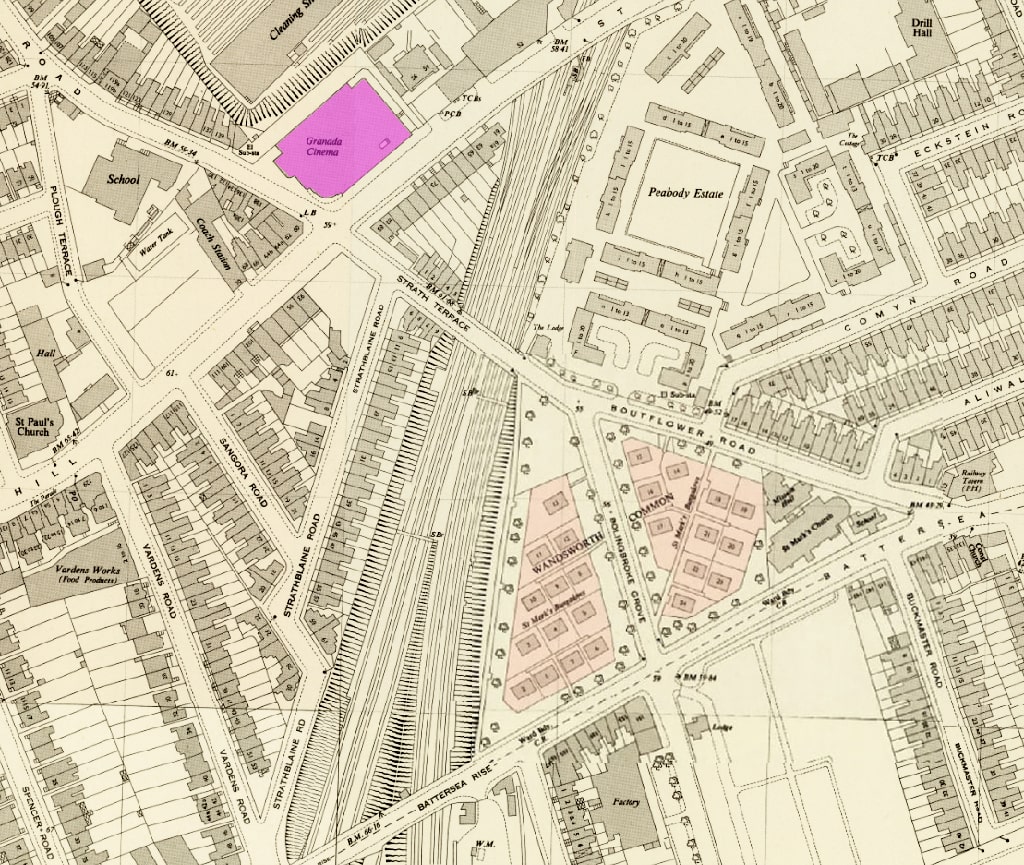
Wandsworth Common

1949

South Western Star (advertisement)

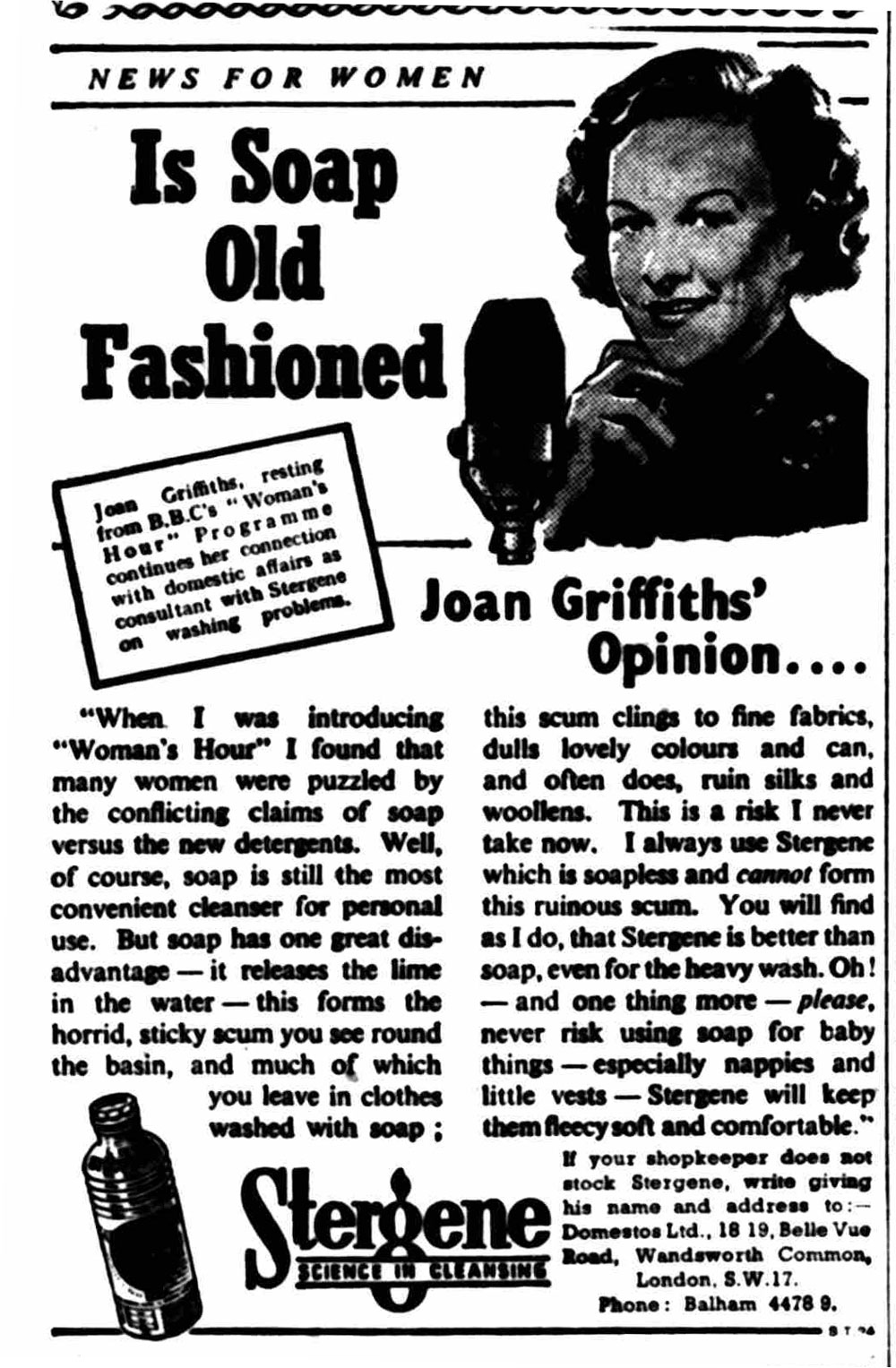
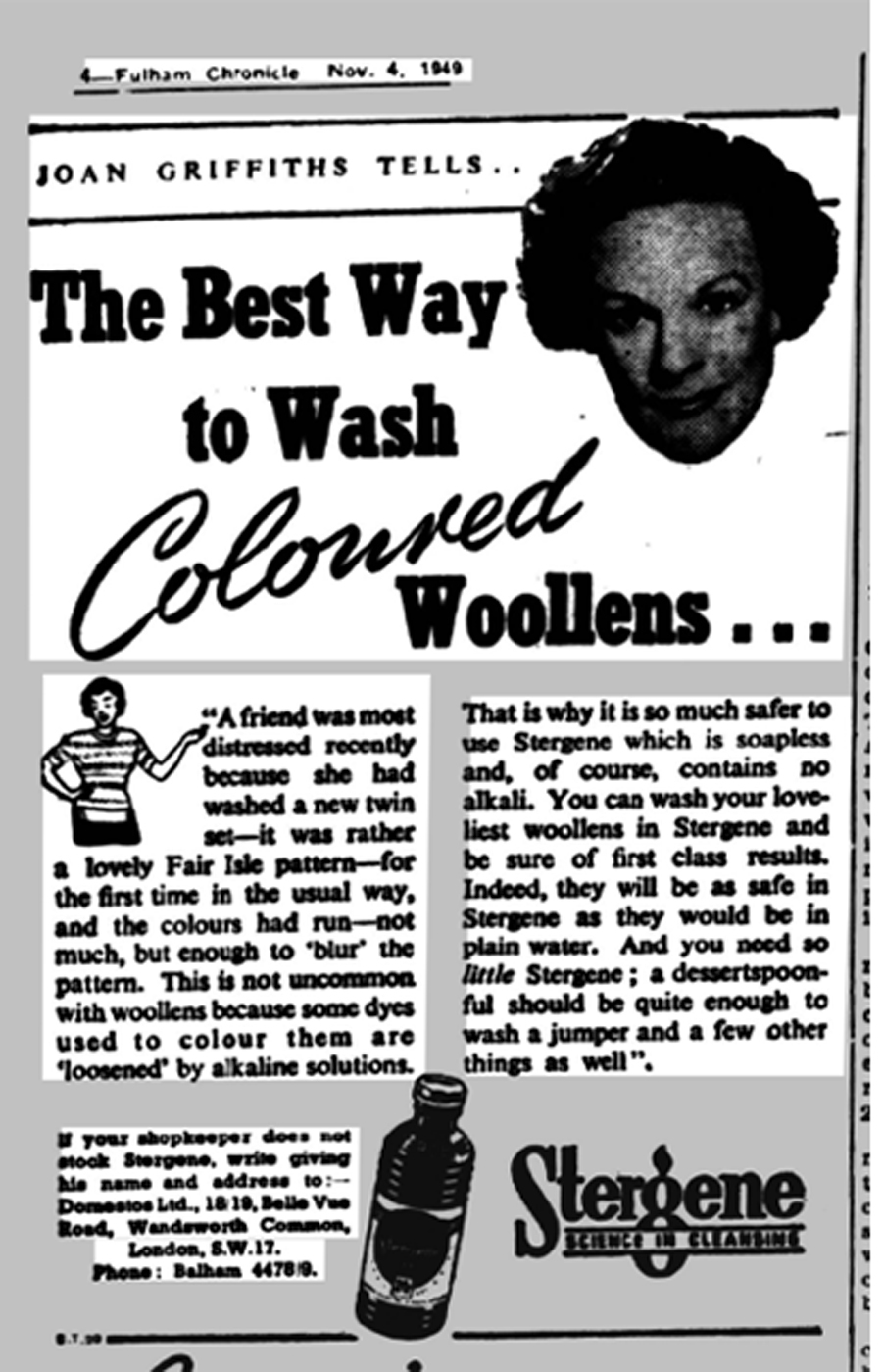
Stergene — science in cleaning, from Wandsworth Common
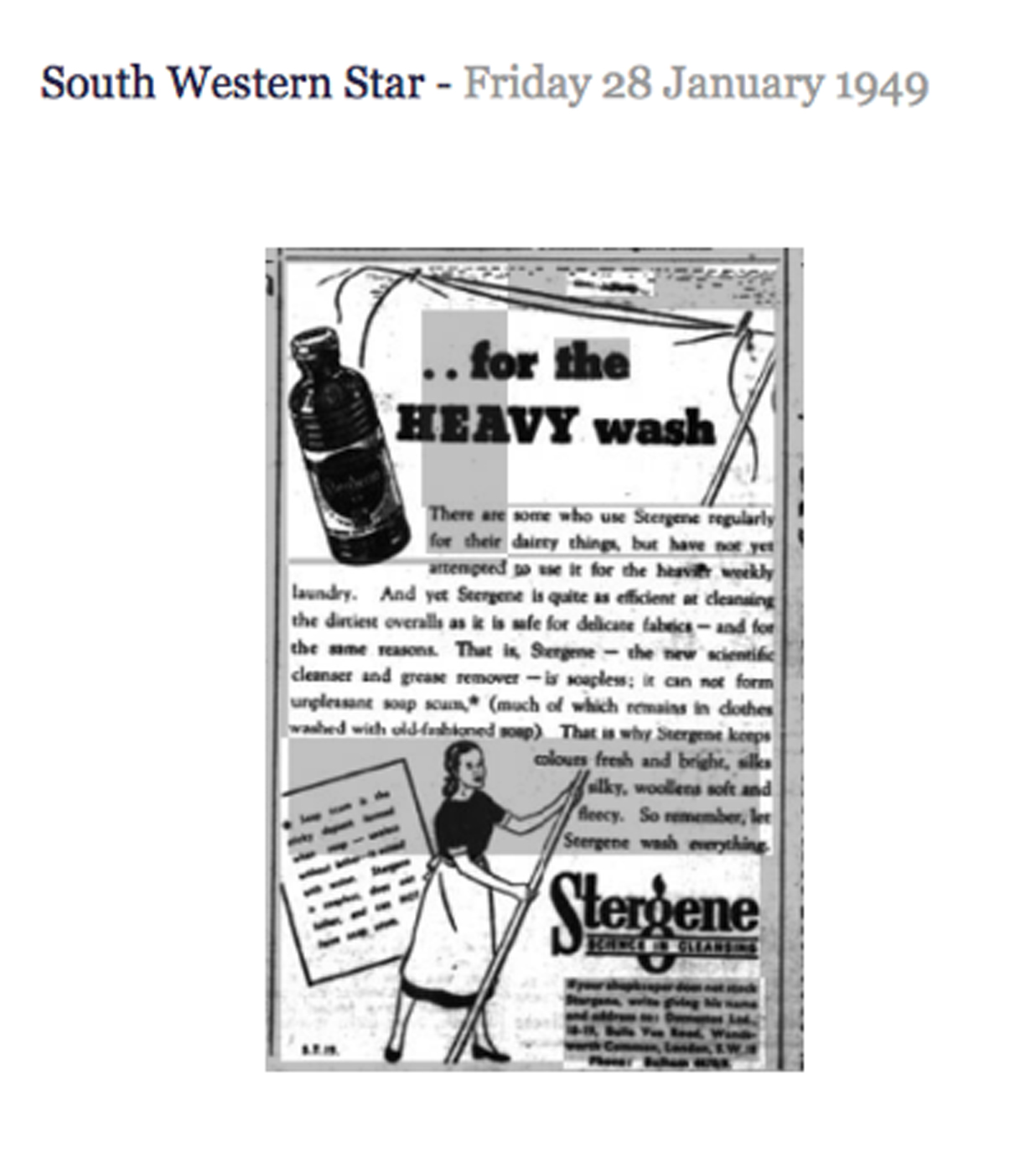
South Western Star, 28 January 1949: Stergene advertisement
South Western Star, Friday 28 January 1949

"…for the Heavy Wash. There are some who use Stergene regularly for their dainty things, but have not yet attempted to use it for the heavy weekly laundry. And yet Stergene is quite as efficient at cleansing the dirtiest overalls as it is safe for delicate fabrics — and for the same reason. That is, Stergene — the new scientific cleanser and grease remover — is soapless; it can not form unpleasant soap scum (much of which remains in clothes washed with old-fashioned soap). That is why Stergene keeps colours fresh and bright, silks silky, woollens soft and fleecy. So remember: Stergene washes everything."

[Stergene Ltd., whose address appears at the foot of the advertisement as Wandsworth Common, London (telephone: Balham), was the sister brand to Domestos — both products of the same company, which had offices at 18–18a Bellevue Road, Wandsworth Common, S.W.17.]
Richmond Herald

Roehampton housing debate — prefabs on Wandsworth Common mentioned

A public meeting at Roehampton Parish Hall debated the LCC's proposed housing scheme that would bring over 21,000 people into Putney and Roehampton. Among the criticisms of high-rise flats, Mr Harrison ventured that a reasonable number of flats combined with good permanent housing "might lead to the 'prefabs' disappearing from Wandsworth Common, Clapham Common and other places."

BNA link

South Western Star

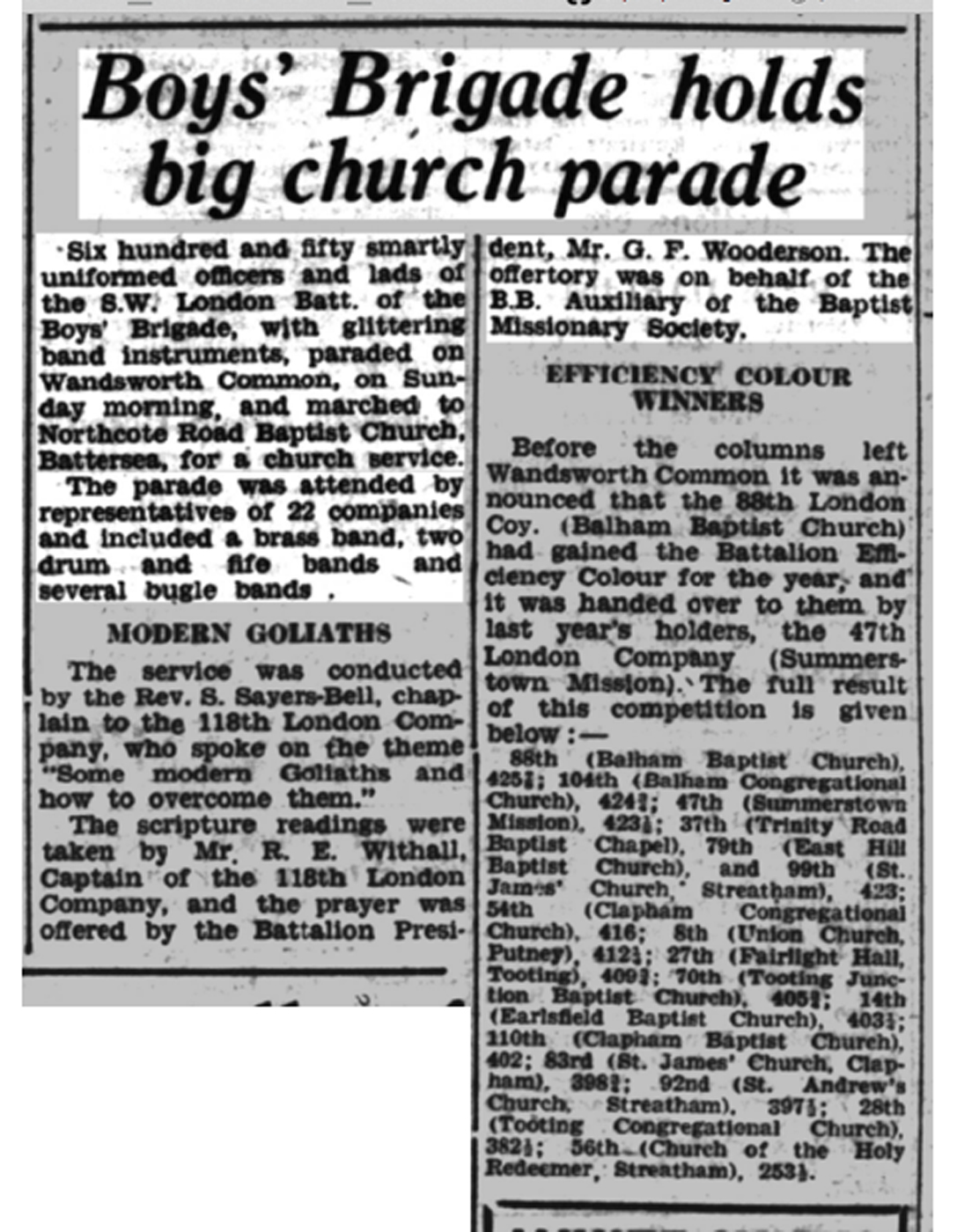
Boys' Brigade holds big church parade — Earlsfield and District

South Western Star, 29 April 1949: Boys' Brigade holds big church parade
South Western Star, Friday 29 April 1949

The Earlsfield and District Boys' Brigade held its annual church parade in the Wandsworth area. The report includes results from the Earlsfield Under section. Mr W. D. Woodman was among those named. The parade drew companies from churches across Wandsworth and Battersea.


Norwood News

The swans on the Common — a female mallard's family destroyed

Norwood News, 29 April 1949: The Swans on the Common
Norwood News, Friday 29 April 1949

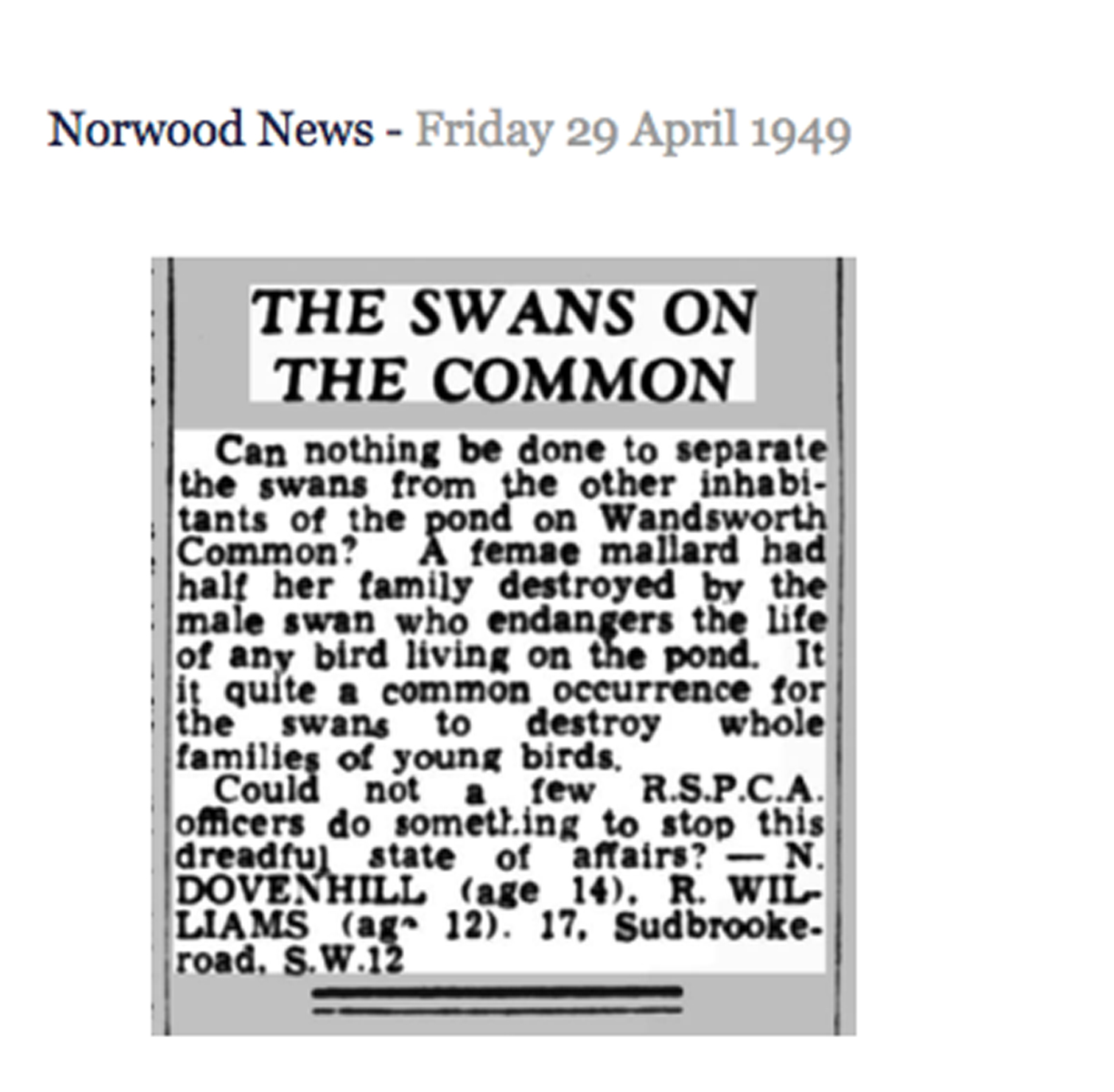
"Can nothing be done to separate the swans from the other inhabitants of the pond on Wandsworth Common? A female mallard had half her family destroyed by the male swan who endangers the life of any bird living on the pond. It is quite a common occurrence for the swans to destroy whole families of young birds. Could not a few R.S.P.C.A. officers do something to stop this dreadful state of affairs?" — N. Dovenhill (age 14), R. Williams (age 12), 17, Sudbrooke Road, S.W.12.

[The aggressive swan of Wandsworth Common's pond was clearly a long-running problem — see also the 1954 entry on "Bill the killer swan," who had apparently been terrorising the pond for twenty-five years.]


South Western Star

Constable hidden in bushes — bicycle thieves caught on the Common

South Western Star, 13 May 1949: Constable hidden in bushes
South Western Star, Friday 13 May 1949

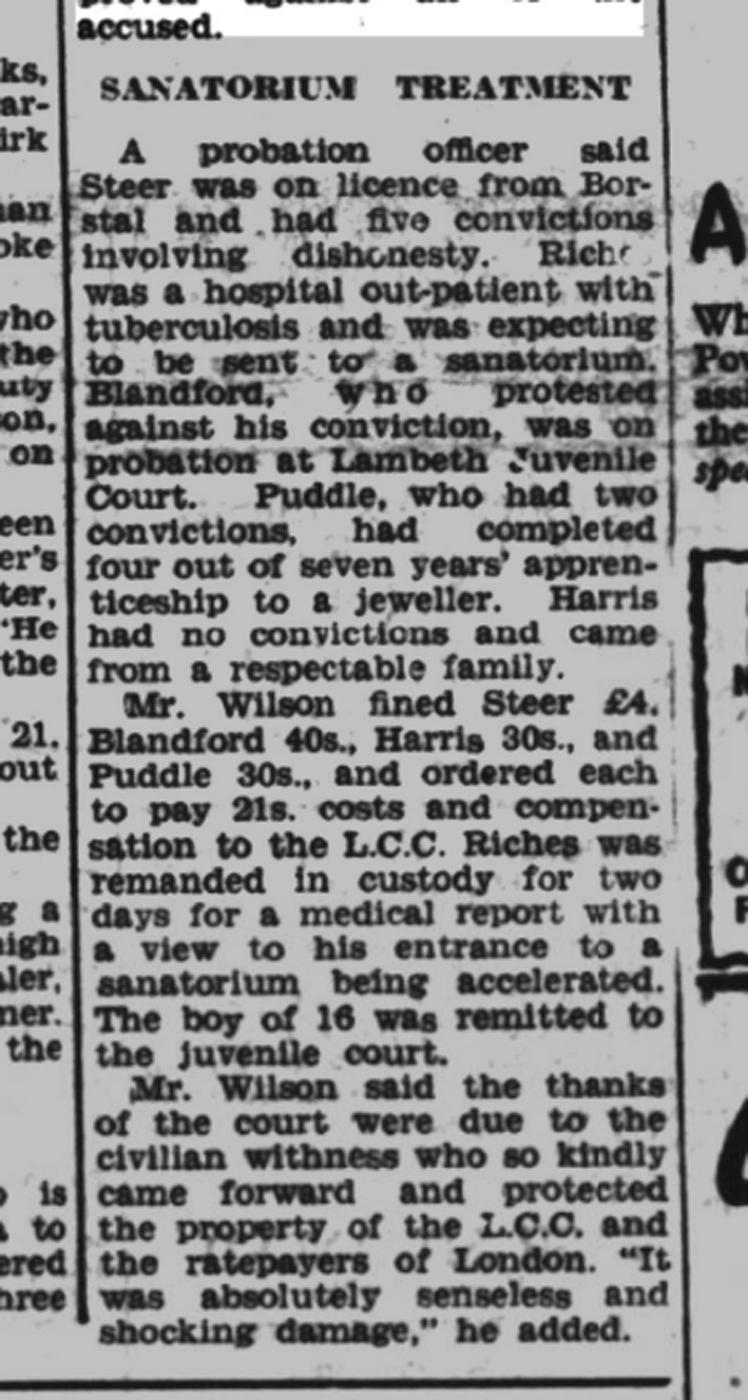
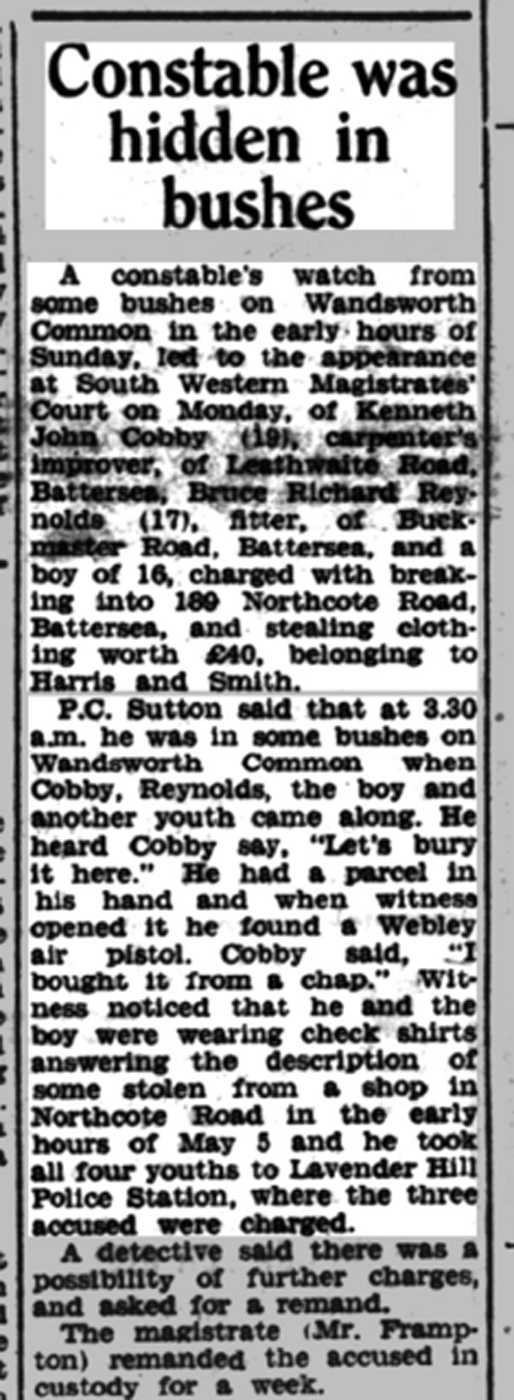
A constable, concealed in bushes on Wandsworth Common in the early hours of Sunday morning, apprehended a group of youths who came across the Common carrying stolen property. The accused — John Utting, Biter of Sheffield, and two others — were charged at Wandsworth Magistrates' Court with stealing from bicycles in Battersea. The civilian witness who came forward was praised by the magistrate. One of the accused was remanded in custody with a view to Borstal; a 16-year-old was remitted to the juvenile court.


South London Observer

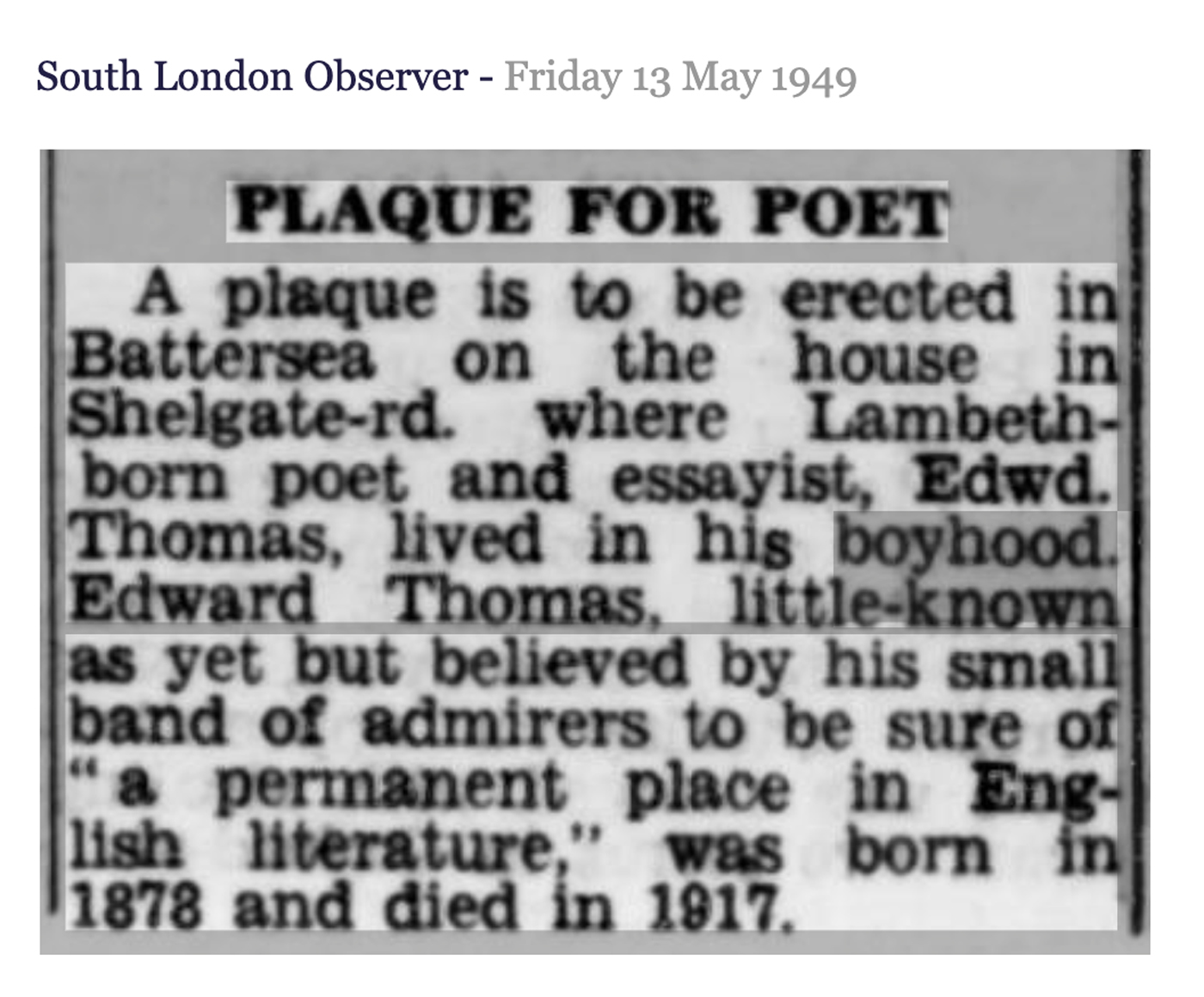
Plaque for poet — Edward Thomas lived in Battersea as a boy

South London Observer, 13 May 1949: Plaque for Poet
South London Observer, Friday 13 May 1949

"A plaque is to be erected in Battersea on the house in Shelgate-rd. where Lambeth-born poet and essayist, Edwd. Thomas, lived in his boyhood. Edward Thomas, little-known as yet but believed by his small band of admirers to be sure of 'a permanent place in English literature,' was born in 1878 and died in 1917."

[Edward Thomas — poet, nature writer, and close friend of Robert Frost — grew up in Battersea and later recalled walking on Wandsworth Common as a boy. He was killed at the Battle of Arras in April 1917. His reputation has grown enormously since 1949; he is now recognised as one of the finest English poets of the twentieth century. The plaque was on a house in Shelgate Road, close to the borders of Wandsworth Common.]


Streatham News

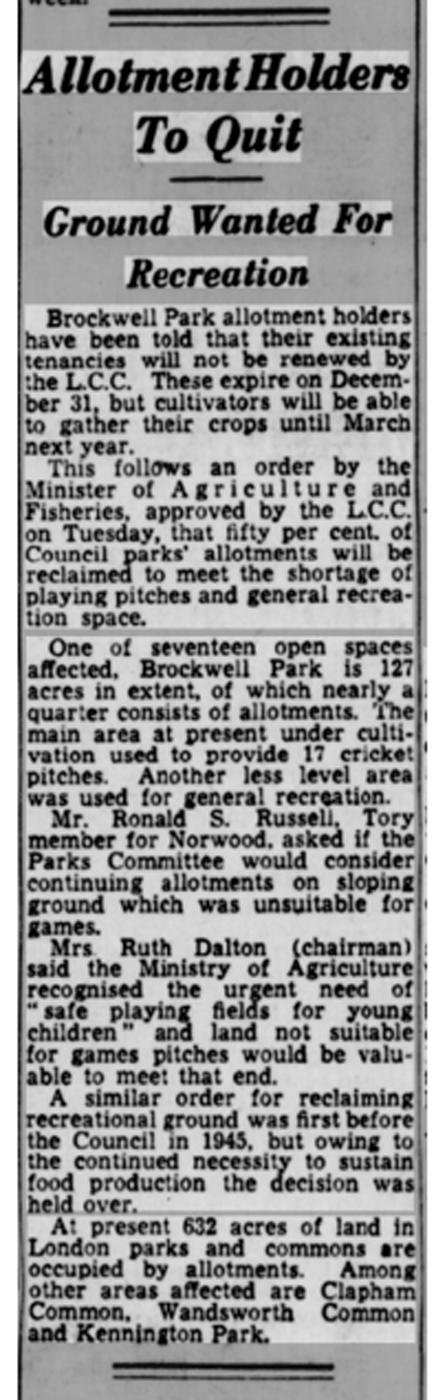
Allotment holders to quit — ground wanted for recreation

Streatham News, 1 July 1949: Allotment Holders To Quit
Streatham News, Friday 1 July 1949

Brockwell Park allotment holders had been told their allotments were required by the LCC, whose leases were expiring on 31 December. Following an order by the Ministry of Agriculture and Fisheries — approved by the LCC — an area of seventy open spaces totalling 61,380 acres across London was being returned from allotments to recreational use. Mrs Ruth Dalton chaired the committee discussion. Wandsworth Common and Kensington Park were among the sites named. The land had originally been given over to allotments under wartime Dig for Victory provisions.

[The Dig for Victory campaign (1939–45) had converted open spaces across London — including parts of Wandsworth Common — into allotments to boost food production. The post-war process of reclaiming these for sport and recreation was slow and contentious. See also the August 1949 and February 1949 entries.]


South Western Star

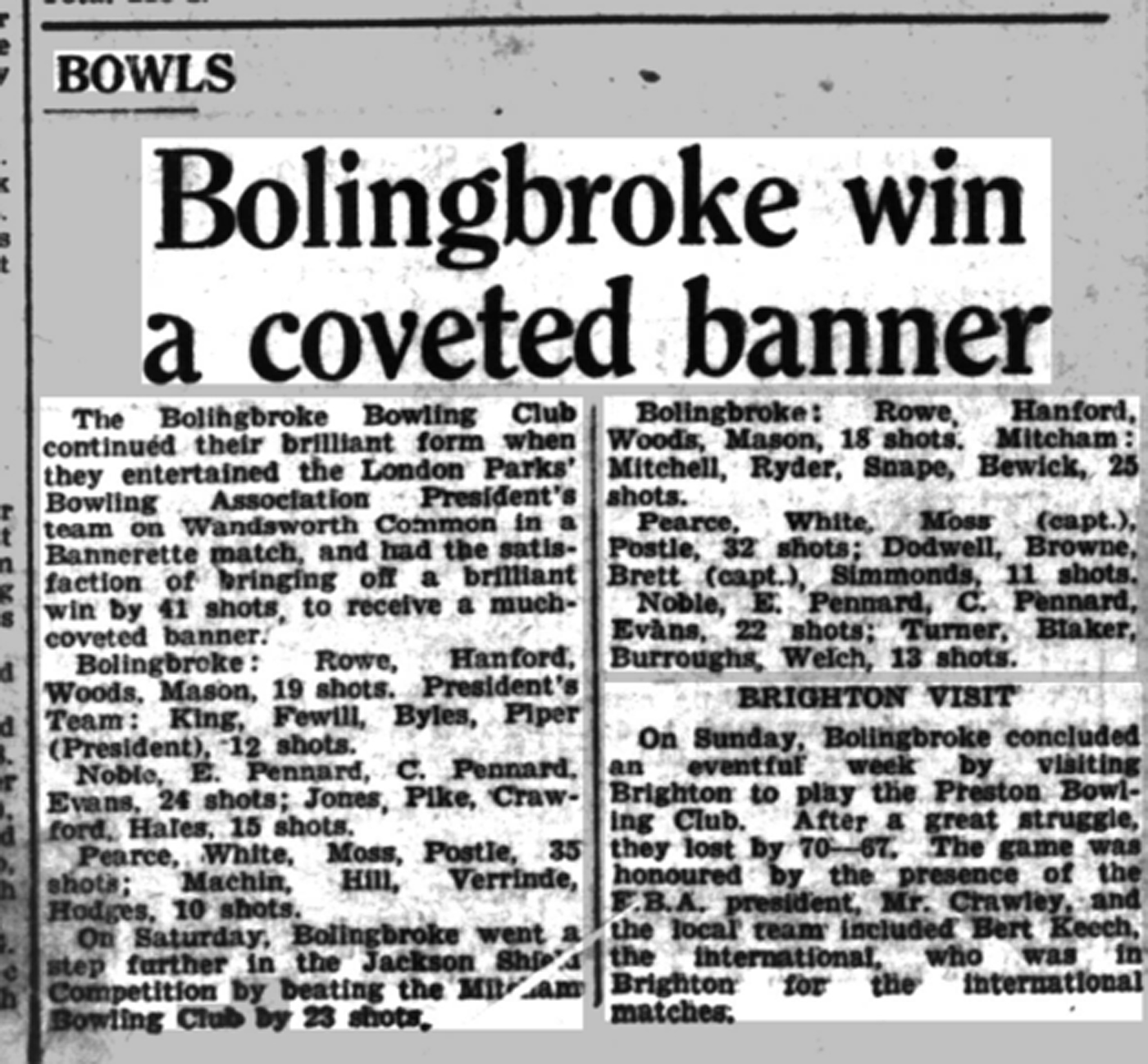
Bolingbroke win a coveted banner — South Western District bowls

South Western Star, 8 July 1949: Bolingbroke win a coveted banner
South Western Star, Friday 8 July 1949

Bolingbroke Bowling Club won the coveted banner of the South Western District bowls competition. The club, named for Bolingbroke Hospital on the edge of Wandsworth Common, was one of the leading bowls clubs in the area.


South Western Star

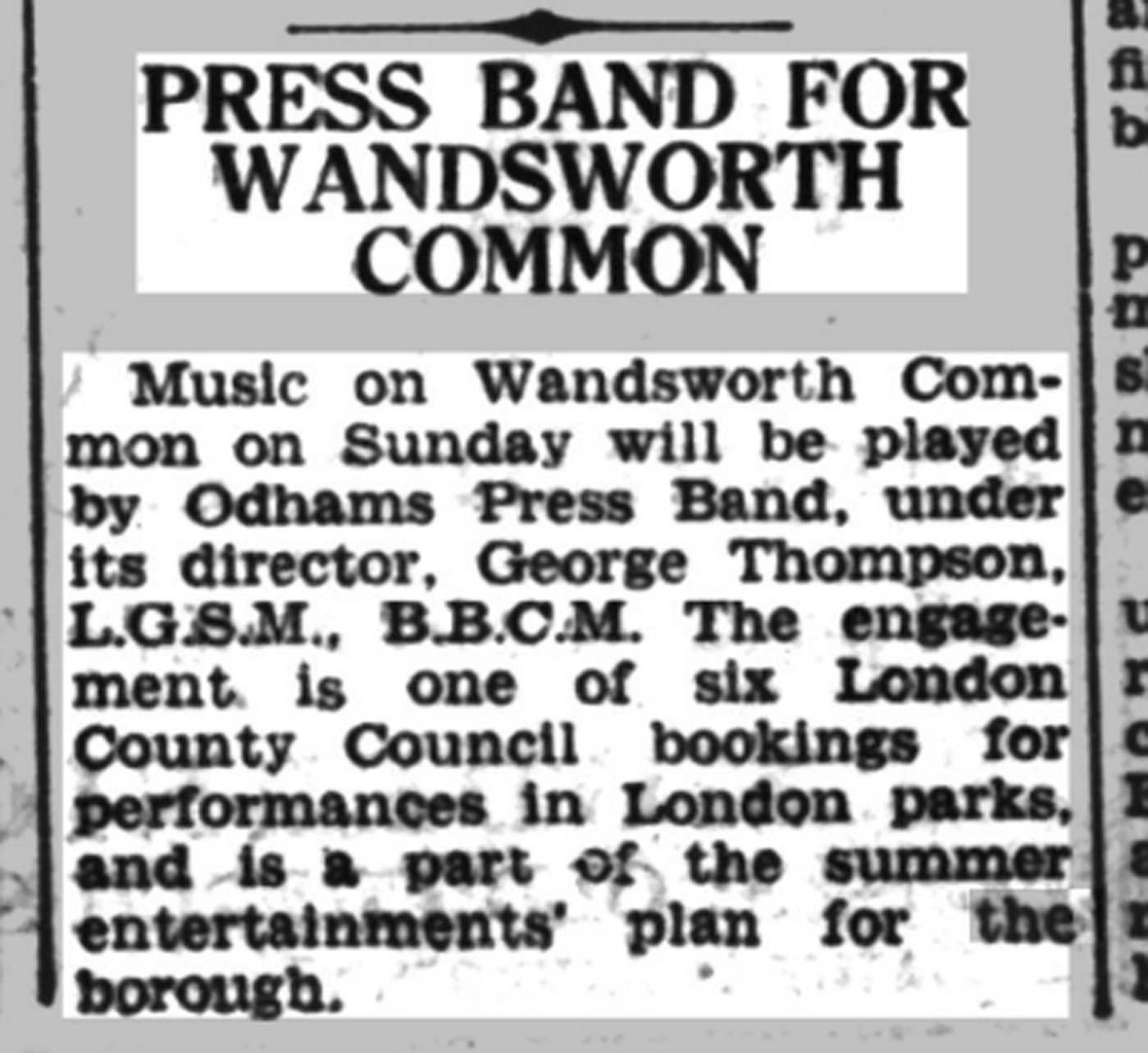
Press Band for Wandsworth Common — Odhams on Sunday

South Western Star, 22 July 1949: Press Band for Wandsworth Common
South Western Star, Friday 22 July 1949

"Music on Wandsworth Common on Sunday will be played by Odhams Press Band, under its director, George Thompson, L.G.S.M., B.B.C.M. The engagement is one of six London County Council bookings for performances in London parks, and is part of the summer entertainments' plan for the borough."

[Odhams Press, the large publishing house in Long Acre, Covent Garden, ran one of the finest works bands in London — a tradition of brass-band culture that flourished in major printing and publishing firms throughout the mid-twentieth century.]


Streatham News

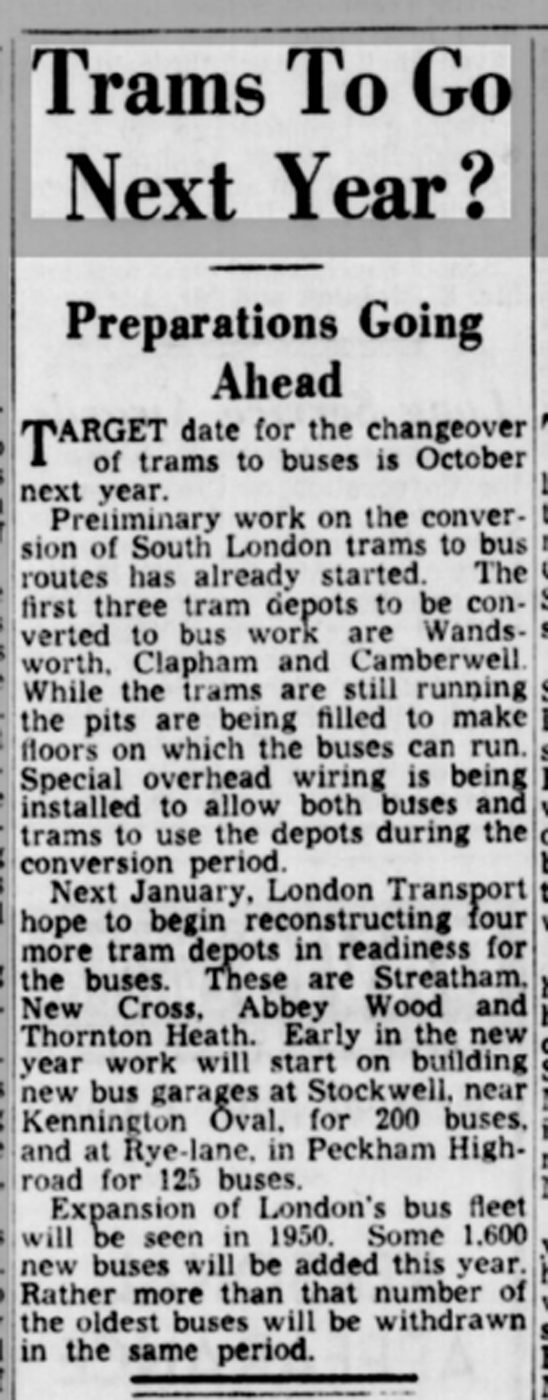
Trams to go next year — Wandsworth depot among the first to convert

Streatham News, 29 July 1949: Trams To Go Next Year?
Streatham News, Friday 29 July 1949

"Target date for the changeover of trams to buses is October next year. Preliminary work on the conversion of South London's tram routes has already started." The first three tram depots to be converted to bus work were Wandsworth, New Cross and Thornton Heath. New bus garages were planned at Stockwell and at Rye Lane, Peckham. Expansion of London Transport's bus fleet was already under way; the oldest buses would be withdrawn over the same period.

[The Wandsworth tram depot stood in Garratt Lane. The trams that ran along Trinity Road — the eastern boundary of Wandsworth Common — were among the last survivors of London's tram network, finally replaced by buses in 1950.]


South Western Star

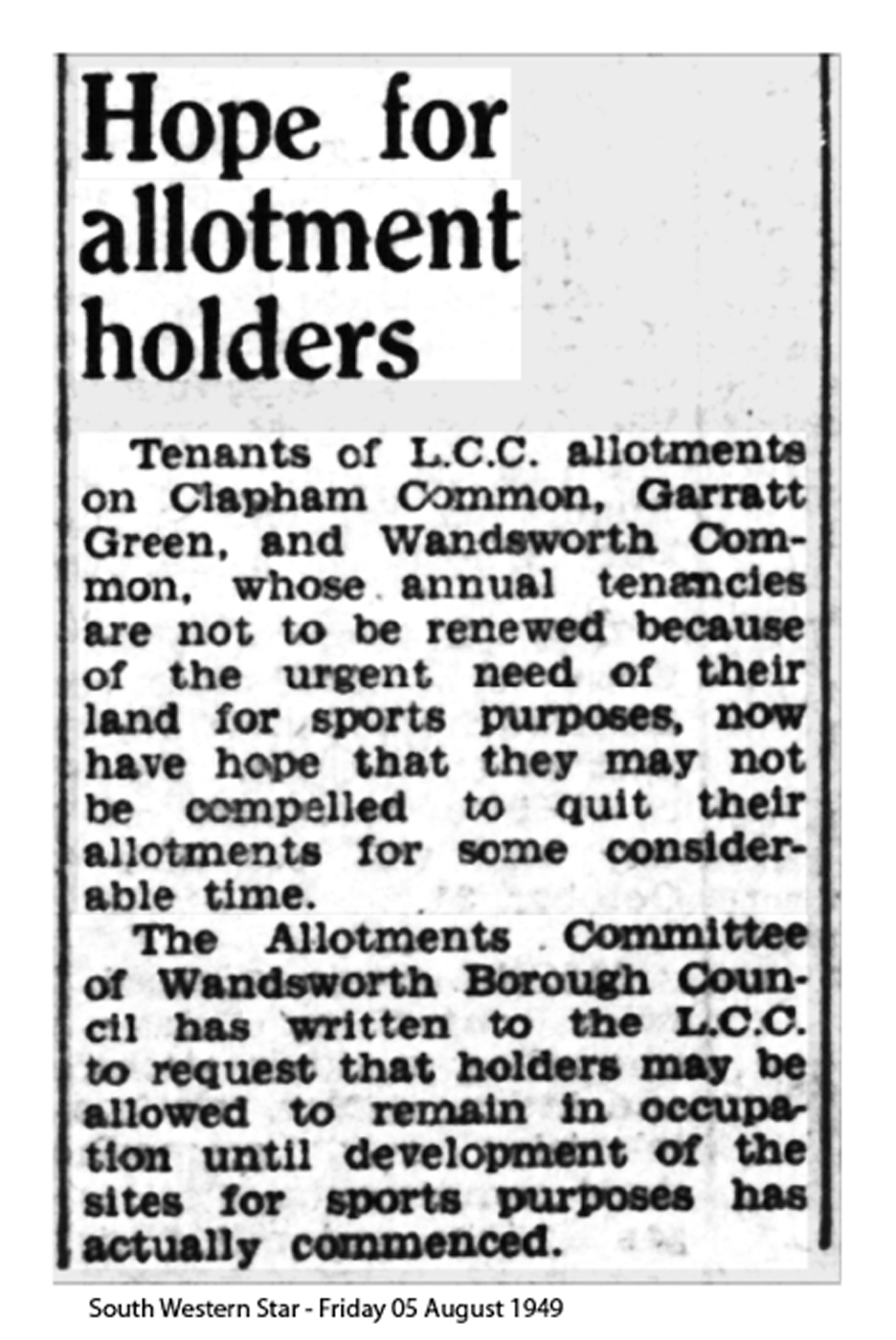
Hope for allotment holders — tenancies not to be renewed, but holders may stay on

South Western Star, 5 August 1949: Hope for allotment holders
South Western Star, Friday 5 August 1949

Tenants of LCC allotments on Clapham Common, Garratt Green, and Wandsworth Common, whose annual tenancies were not to be renewed because of the urgent need of their land for sports purposes, now had hope that they might not be compelled to quit for some considerable time. The Allotments Committee of Wandsworth Borough Council had written to the LCC to request that holders be allowed to remain in occupation until development of the sites for sports purposes had actually commenced.

BNA link

South Western Star

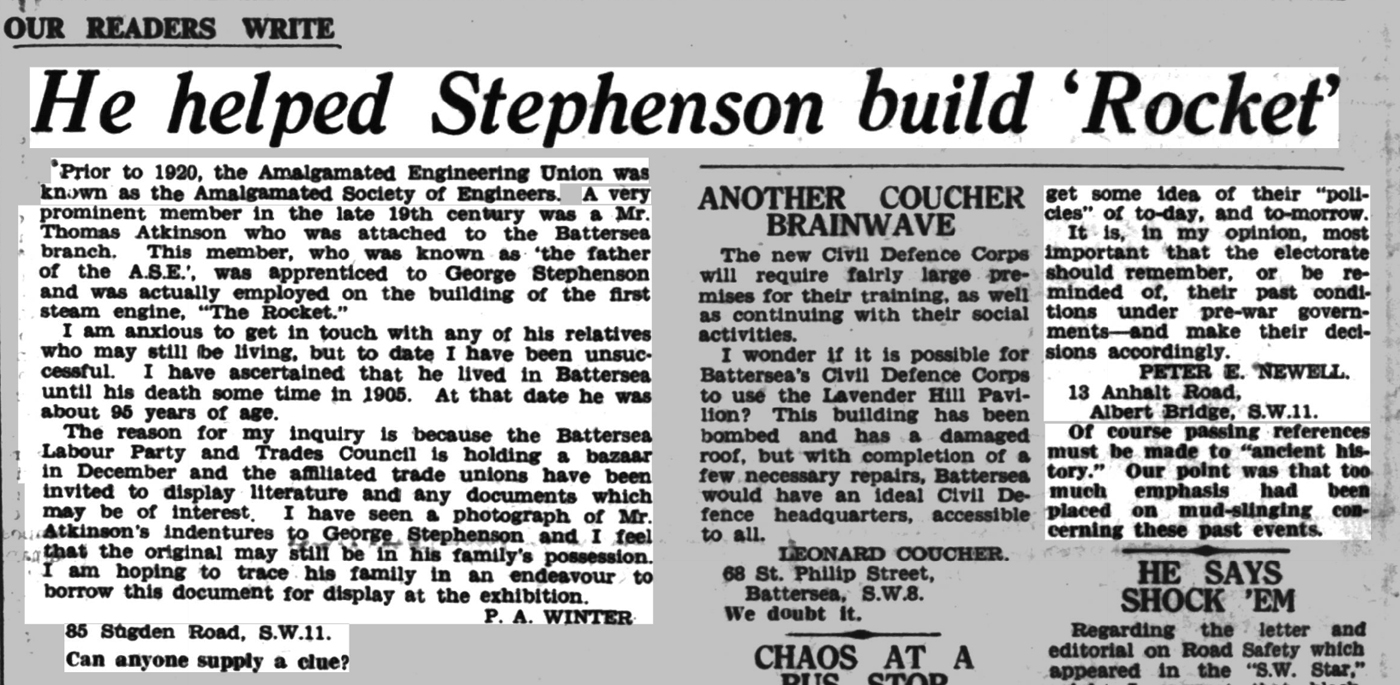
He helped Stephenson build the Rocket — a Battersea connection

South Western Star, 14 October 1949: He helped Stephenson build the Rocket
South Western Star, Friday 14 October 1949. "Our Readers Write."

A reader's letter from P. A. Winter of 85 Sugden Road, S.W.11. "Prior to 1920, the Amalgamated Engineering Union was known as the Amalgamated Society of Engineers. A very prominent member in the late 19th century was a Mr Thomas Atkinson who was attached to the Battersea branch. This member, who was known as 'the father of the A.S.E.,' was apprenticed to George Stephenson and was actually employed on the building of the first steam engine, 'The Rocket.'"

Mr Winter wrote that Atkinson had lived in Battersea until his death in about 1905, at the age of approximately 95. He was anxious to trace any surviving relatives because the Battersea Labour Party and Trades Council was holding a bazaar in December, and he hoped to borrow the original of Atkinson's indentures to George Stephenson — "I have seen a photograph of Mr Atkinson's indentures to George Stephenson and I feel that the original may still be in his family's possession" — for display at the exhibition. "Can anyone supply a clue?"


Daily Mirror

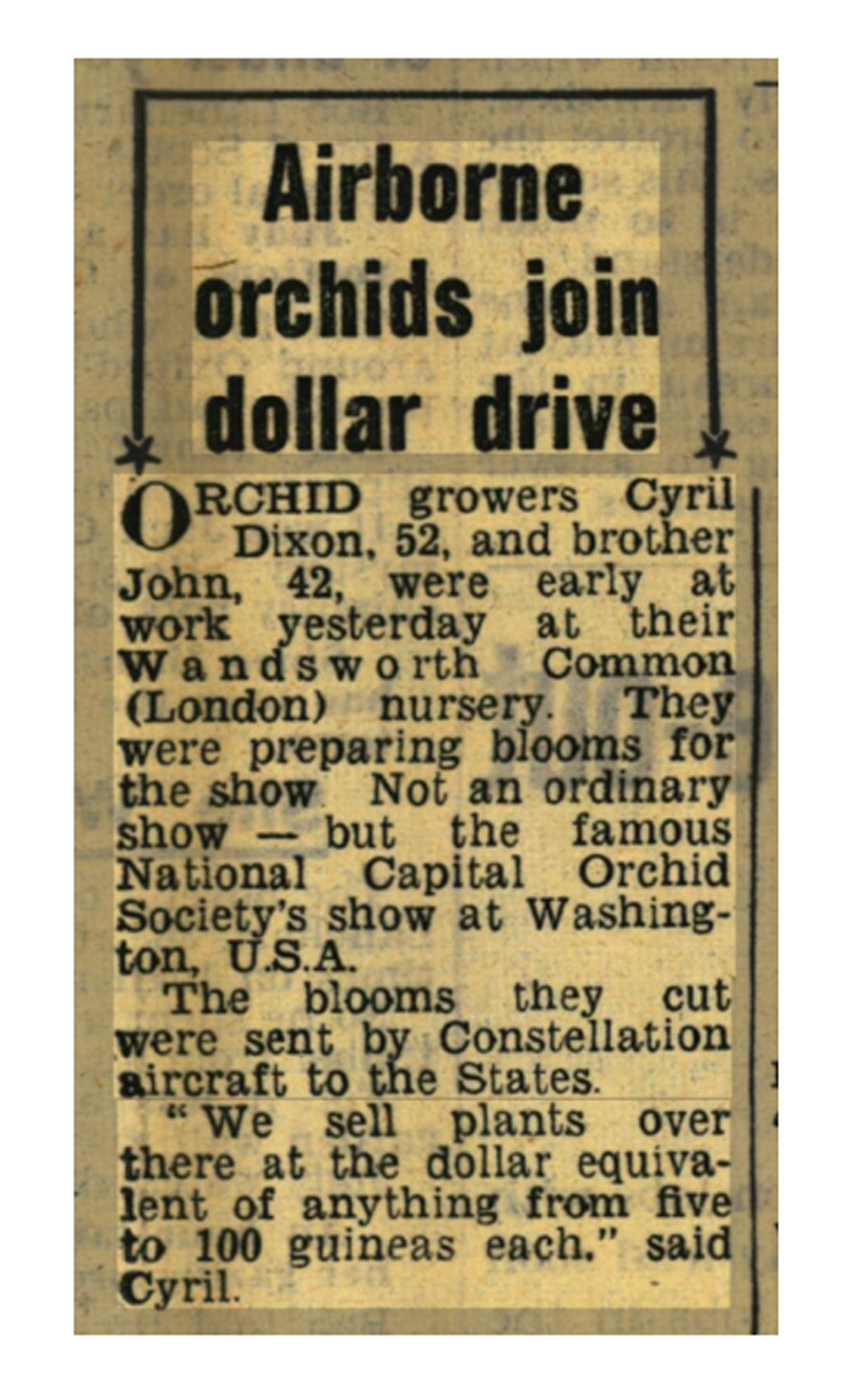
Airborne orchids join the dollar drive — a nursery on Wandsworth Common

Daily Mirror, 24 October 1949: Airborne orchids join dollar drive
Daily Mirror, Monday 24 October 1949

Orchid growers Cyril Dixon (52) and his brother John (42) were up early at their Wandsworth Common nursery, preparing blooms for an unusual destination — not an ordinary show, but the famous National Capital Orchid Society's show at Washington, U.S.A. The blooms were sent by Constellation aircraft to the States as part of Britain's dollar export drive. "We sell plants over there at the dollar equivalent of anything from five to 100 guineas each," said Cyril.

[An orchid nursery on Wandsworth Common, supplying the American market at up to 100 guineas a plant — a striking reminder of the variety of enterprises that once operated in and around the Common, and of the post-war effort to earn hard currency through exports.]


Daily Mirror

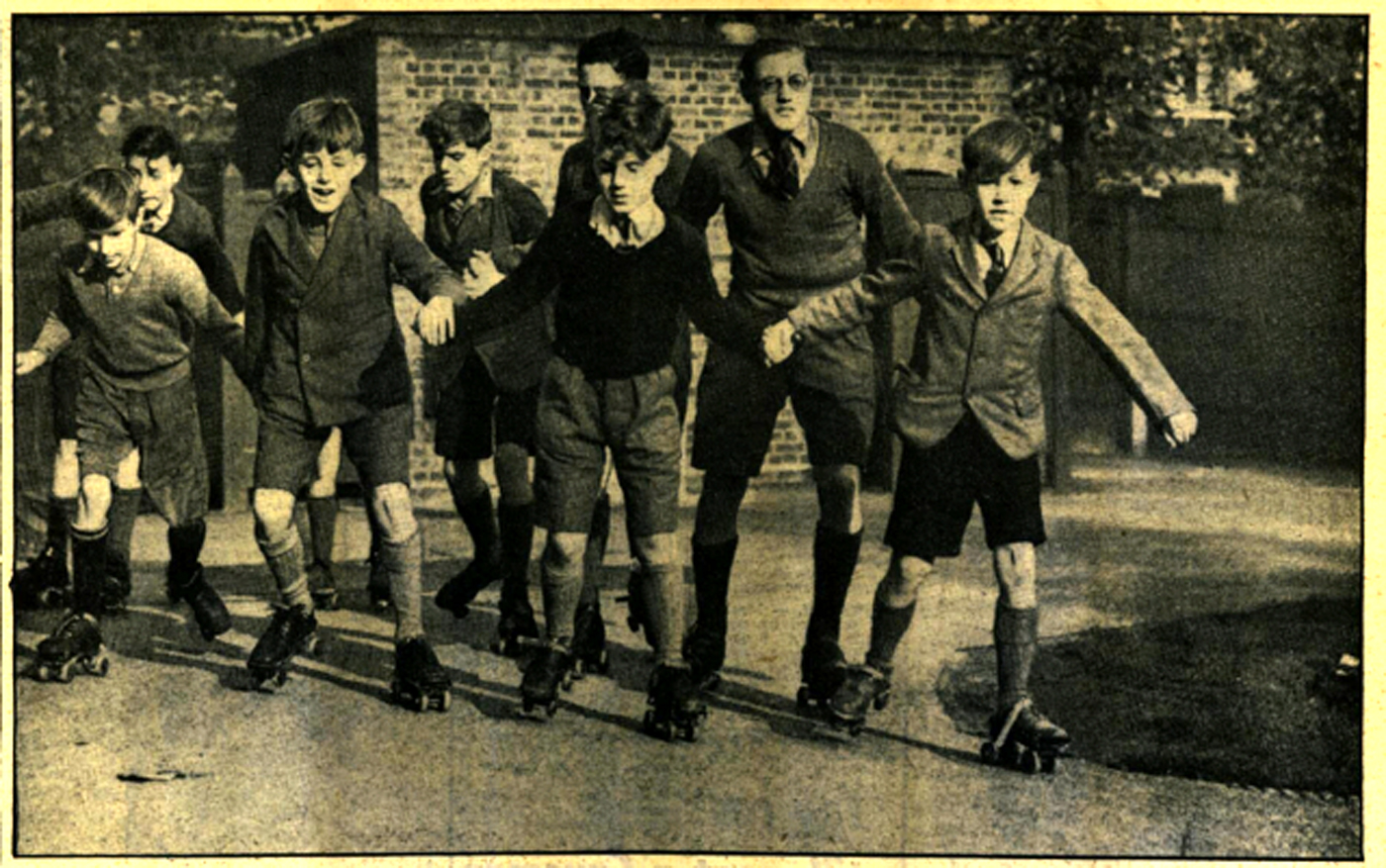
The blind, leading the blind — Linden Lodge school on Wandsworth Common

Daily Mirror, 4 November 1949: blind children roller-skating at Linden Lodge
Blind pupils roller-skating in the grounds of Linden Lodge school, Wandsworth Common. Daily Mirror, Friday 4 November 1949.

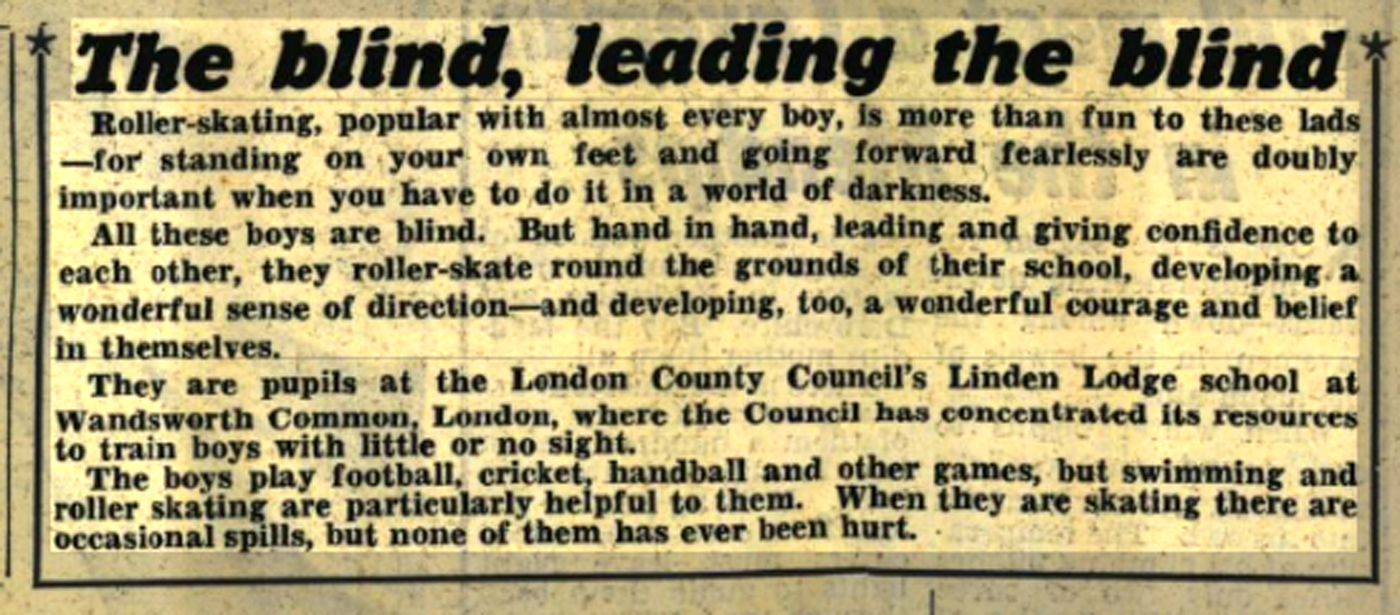
"Roller-skating, popular with almost every boy, is more than fun to these lads — for standing on your own two feet and going forward fearlessly are doubly important when you have to do it in a world of darkness. All these boys are blind. But hand in hand, leading and giving confidence to each other, they are skating round the grounds of their school, developing a wonderful sense of direction — and developing, too, a wonderful courage and belief in themselves.

They are pupils at the London County Council's Linden Lodge school at Wandsworth Common, where an excellent staff is employed to train boys with little or no sight. It is a day school. They play handball and other games, but swimming and roller-skating are particularly helpful to them. When they are skating there are occasional spills, but none of them has ever been hurt."

[Linden Lodge School for the Blind, near the Common on Princes Way, was founded in 1920 and remains open today. See also the 1955 entry on the school, which by that year had 107 pupils and had introduced "modified cricket" — played with a wicker ball containing a bell.]


South Western Star

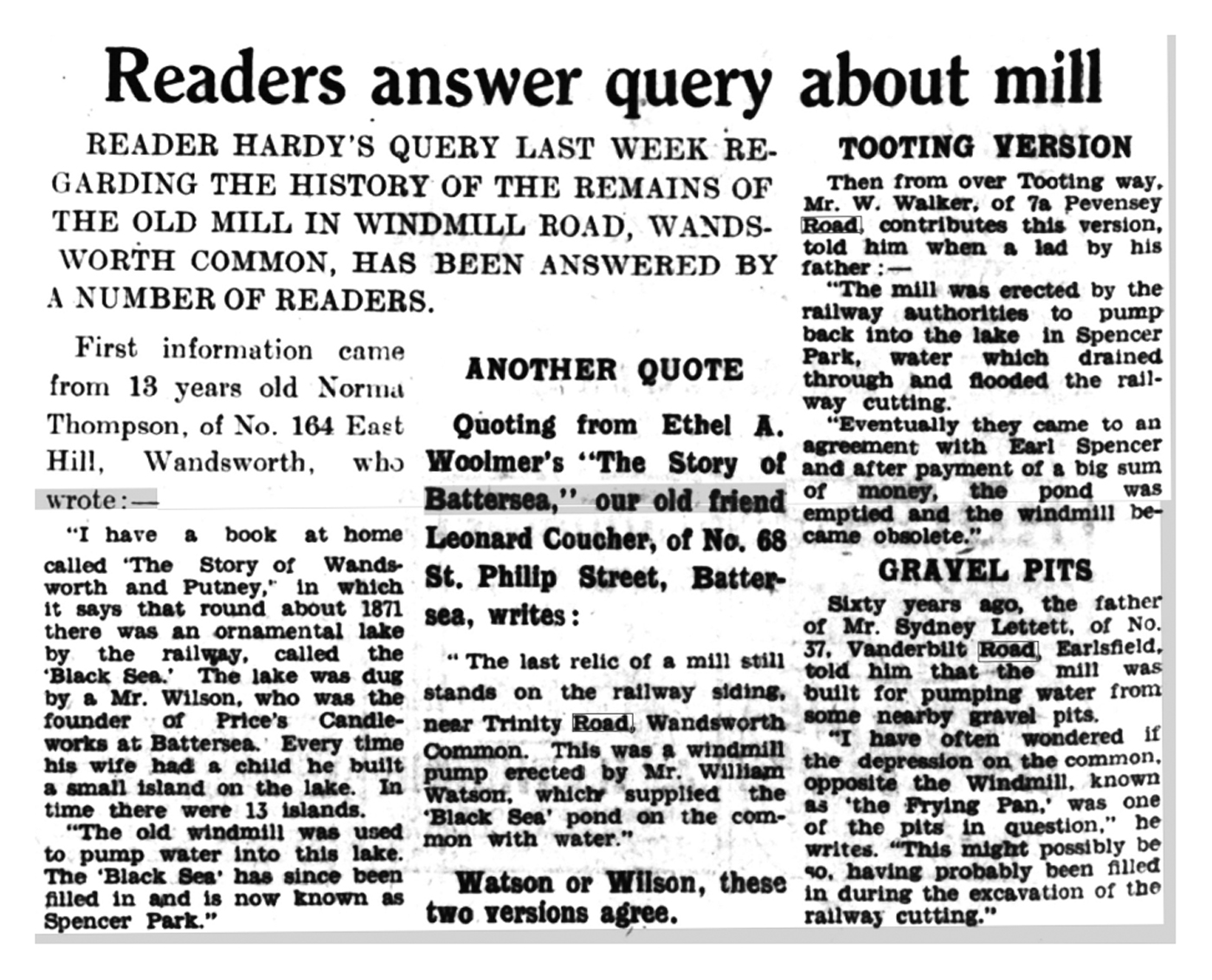
Readers answer the query about the old mill — the Black Sea, and the Frying Pan

South Western Star, 18 November 1949: Readers answer query about mill
South Western Star, Friday 18 November 1949

"Reader Hardy's query last week regarding the history of the remains of the old mill in Windmill Road, Wandsworth Common, has been answered by a number of readers." The first reply came from 13-year-old Norma Thompson of 164 East Hill, Wandsworth, who had a copy of The Story of Wandsworth and Putney: around 1871 there had been an ornamental lake by the railway, called "the Black Sea," with a small island built by Mr Wilson, the founder of Price's Candle-works at Battersea. "The old windmill was used to pump water into this lake. The 'Black Sea' has since been filled in and is now known as Spencer Park."

Another reader quoted Ethel A. Woolmer's The Story of Battersea: "The last relic of a mill still stands on the railway sidings, near Trinity Road, Wandsworth Common. This was a windmill pump erected by Mr William Watson, which supplied the 'Black Sea' pond on the common with water." A third correspondent, Mr W. Walker of 7a Peversey Road, offered a variation involving the railway authority pumping water back into the lake in Spencer Park. Mr S. Rooney of 37 Vanderbilt Road, Earlsfield, reported that his father (sixty years earlier) had been told the mill was built for pumping water from nearby gravel pits.

[The depression in the Common still known as "the Frying Pan" — opposite the site of the old windmill — is explained by one correspondent as the hollow left by the gravel workings. The Black Sea, once a picturesque ornamental lake, was filled in and is now the residential streets of Spencer Park, SW18.]


South Western Star

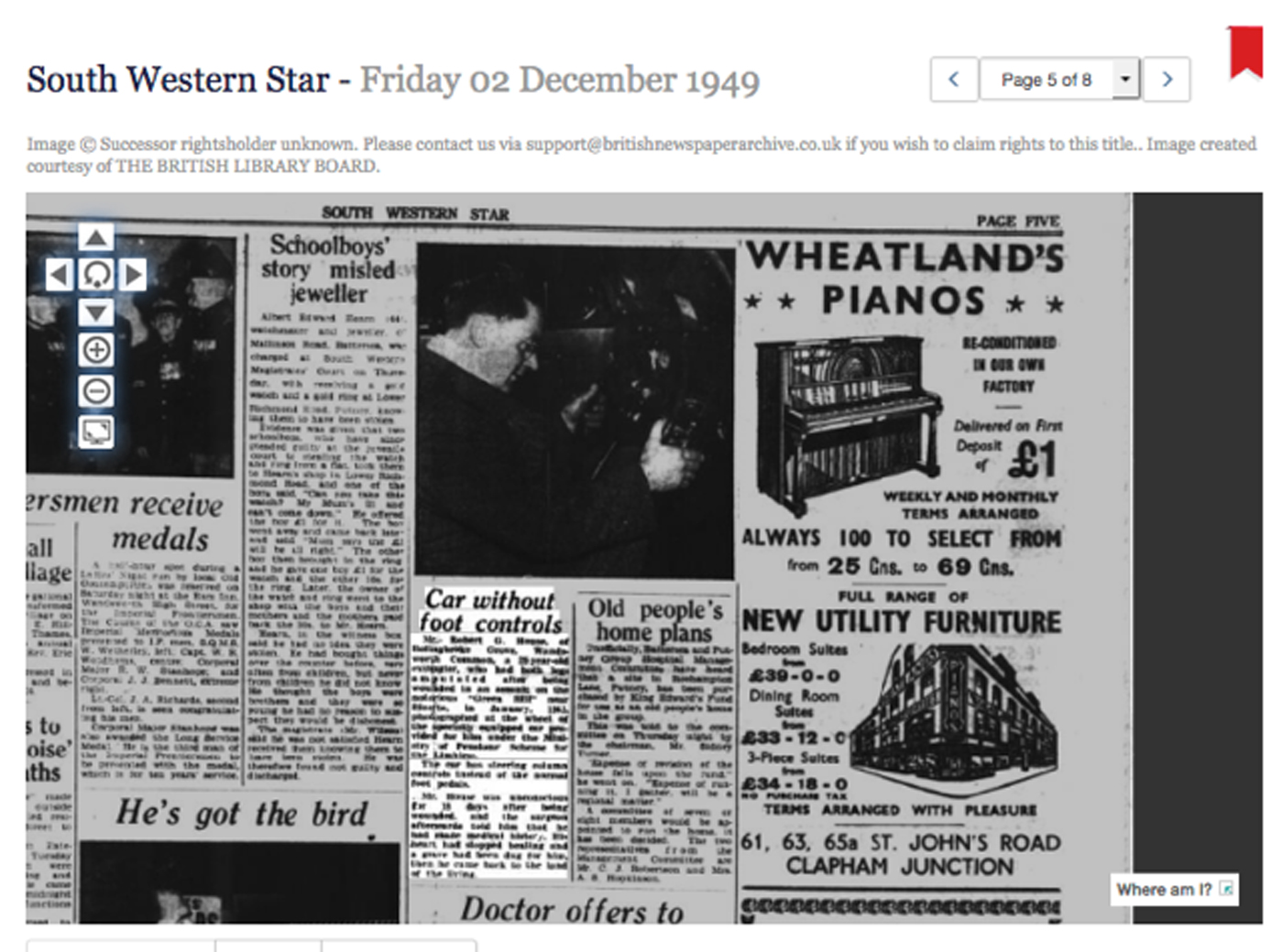
Car without foot controls — schoolboy's story misleads jeweller

South Western Star, 2 December 1949: page with Car without foot controls
South Western Star, Friday 2 December 1949 (page scan)

This page of the South Western Star carries several local items: a story about a car specially adapted to operate without foot controls (for a disabled driver in the Wandsworth area); a report of a schoolboy's account that misled a jeweller; and notes on plans for old people's homes in the borough.


Streatham News

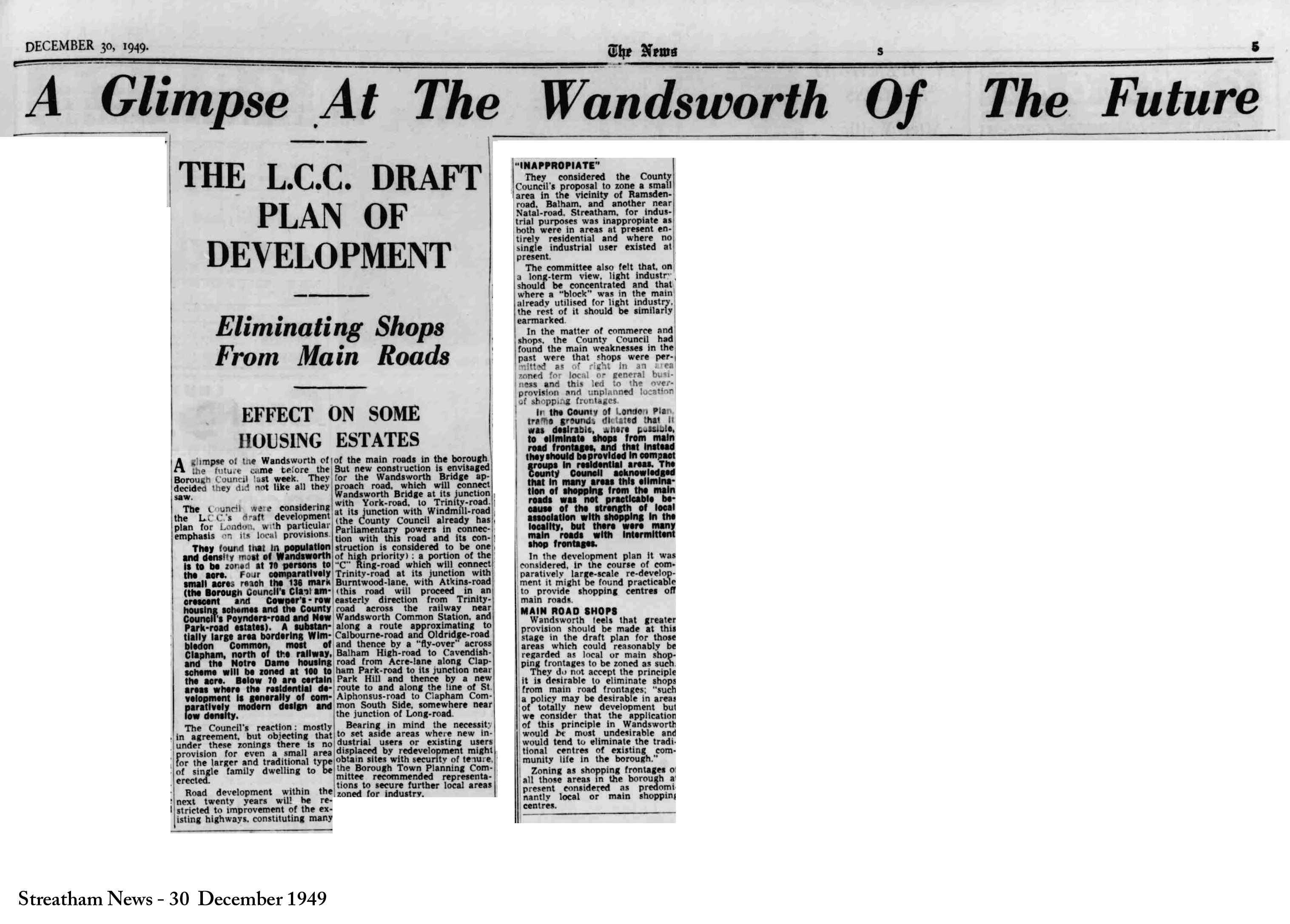
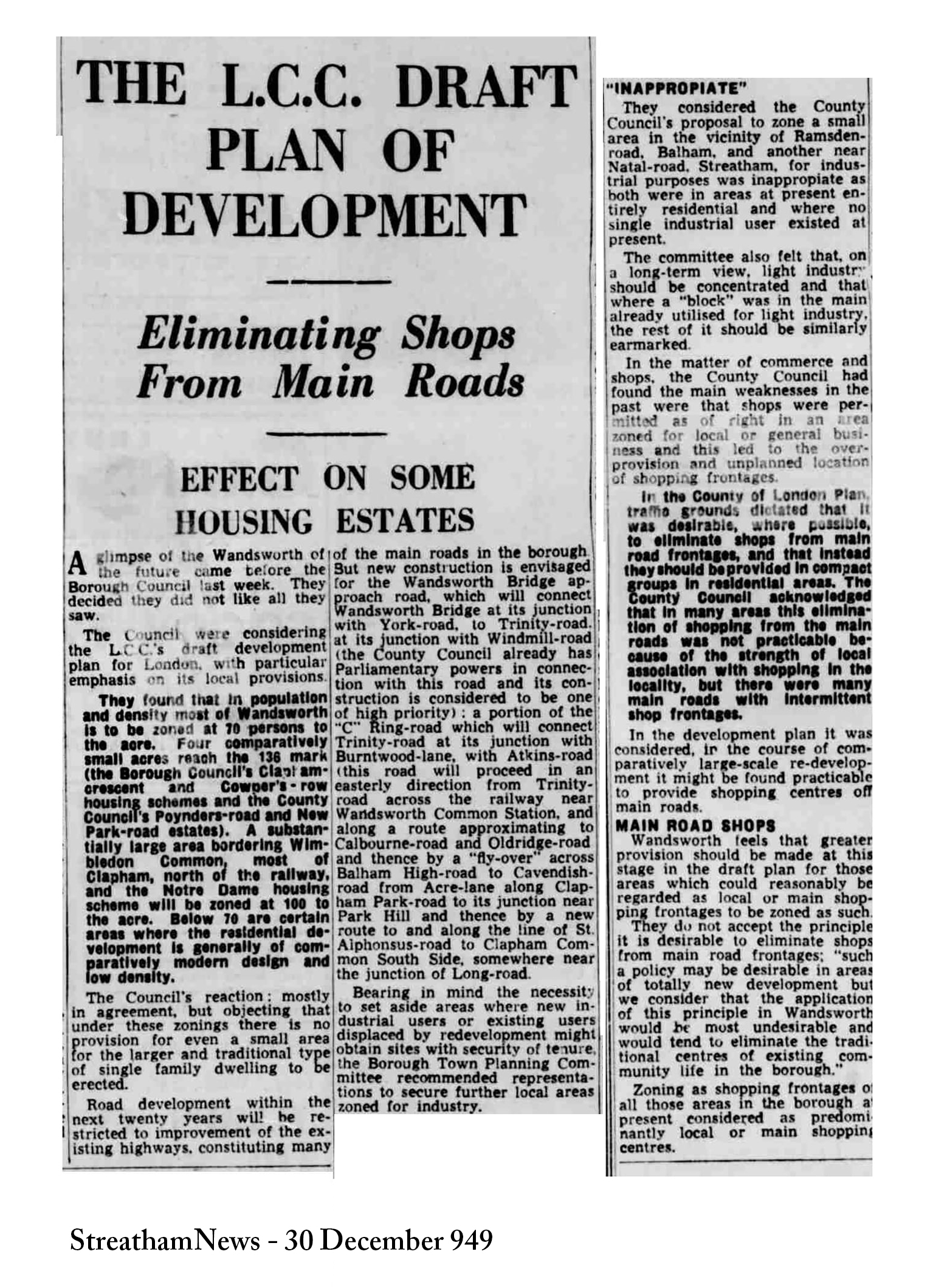
A glimpse of Wandsworth of the future — the LCC draft plan of development

Streatham News, 30 December 1949: A Glimpse At The Wandsworth Of The Future
Streatham News, Friday 30 December 1949

The LCC's Draft Plan of Development for Wandsworth proposed sweeping changes to the borough's layout. The headline theme was "Eliminating Shops From Main Roads": the plan envisaged replacing traditional shopping frontages along major roads with shops concentrated in crescents and purpose-built shopping blocks. Several new road routes were proposed, including one running eastward along Burntwood Lane from Trinity Road, and a new road linking Clapham Park Road to Christchurch Road. Housing estates along the main corridors were identified as high priority.

The plan was not without controversy. The County Council was criticised for proposing to zone a small area near Trinity Road for light industrial purposes, which was regarded as "inappropriate" by the committee. In the matter of commerce, the Council had found "a weakness in the provision of local or main shopping centres" throughout the borough.

[The LCC's 1949 draft plan was part of the great wave of postwar urban planning that sought to rationalise London's Victorian street pattern. Most of its more radical proposals — including the road schemes — were never built. Trinity Road and the streets around Wandsworth Common largely retain their Victorian form today.]


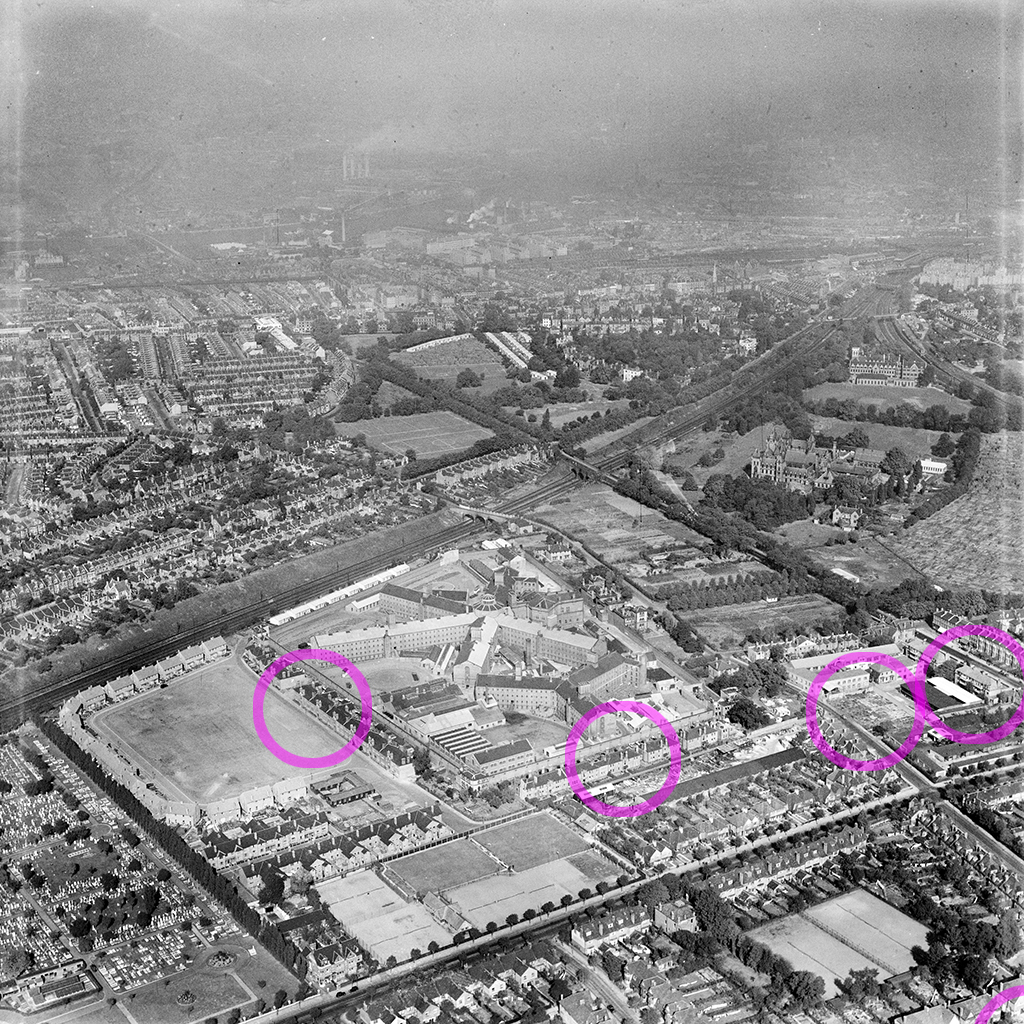
Aerial photograph (annotated)

Aerial view — Wandsworth and the surrounding streets

Aerial photograph of Wandsworth, c. 1949, with annotated circles marking locations
Aerial photograph of Wandsworth, c. 1949. Pink circles mark locations of personal significance. HM Prison Wandsworth — the great Victorian star-plan prison — occupies the centre of the frame; the Common lies beyond to the upper right.

An aerial view of Wandsworth taken in the late 1940s, looking northward. The large complex at the centre is HM Prison Wandsworth, completed in 1851 to a radial panopticon design. The streets of Wandsworth and Earlsfield extend in all directions; the railway lines are clearly visible. Pink circles have been added to mark addresses of personal significance. The Common lies to the upper right of the frame, with the Royal Victoria Patriotic Building visible beyond the rooftops.

Further images

The following images have not yet been transcribed or assigned to entries.

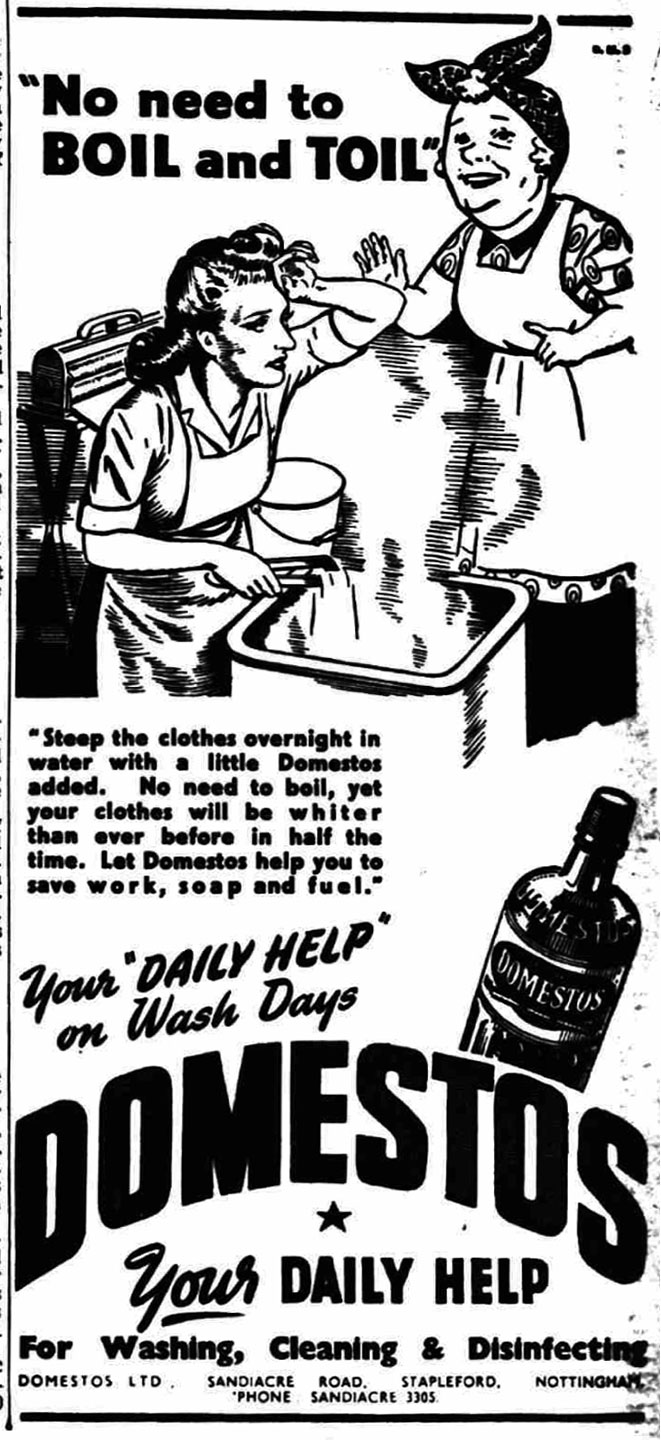
1949-01-08-domestos-NottinghamJournal.jpg
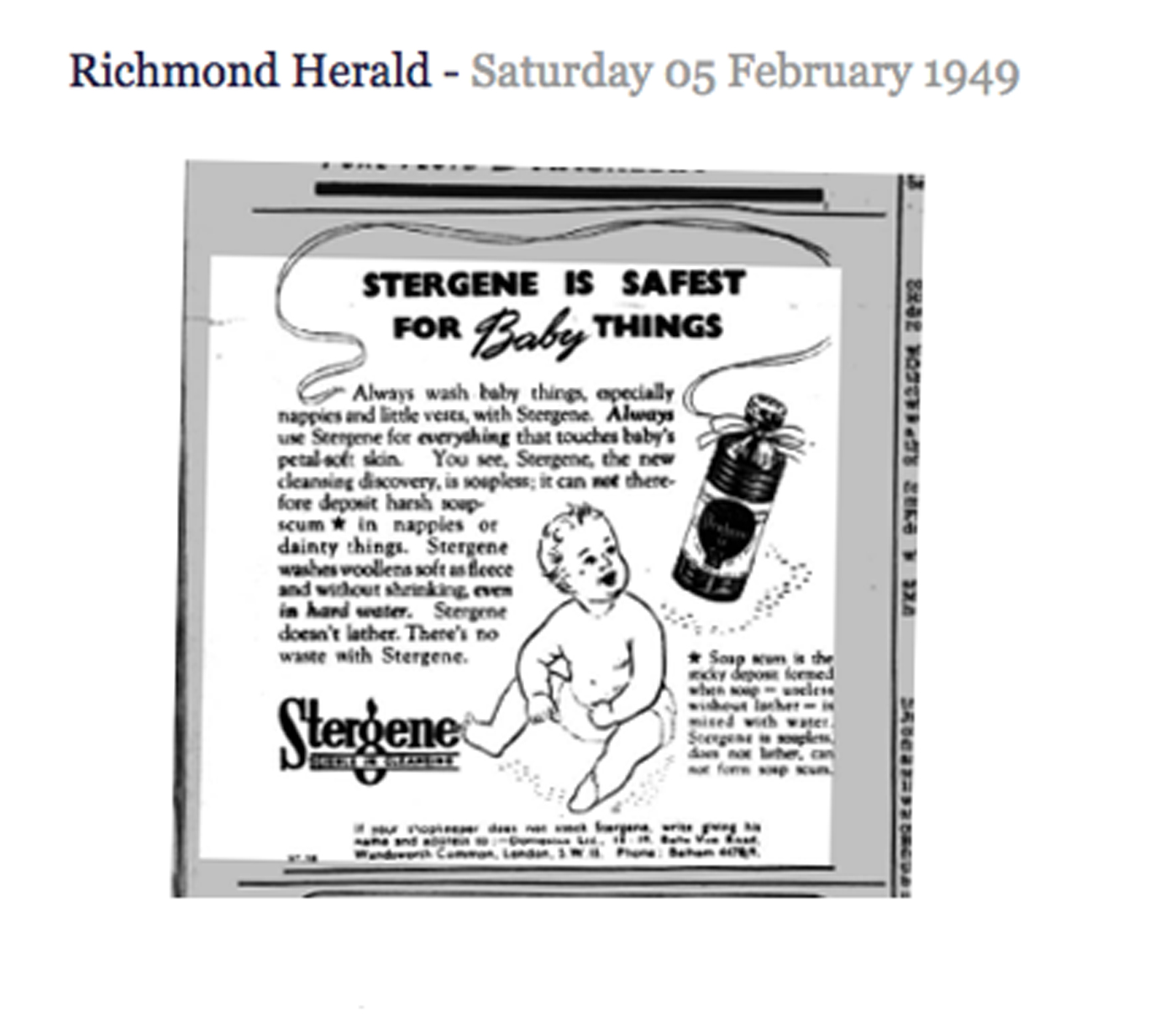
1949-02-05-stergene-for-babies-RichmondHerald.jpg
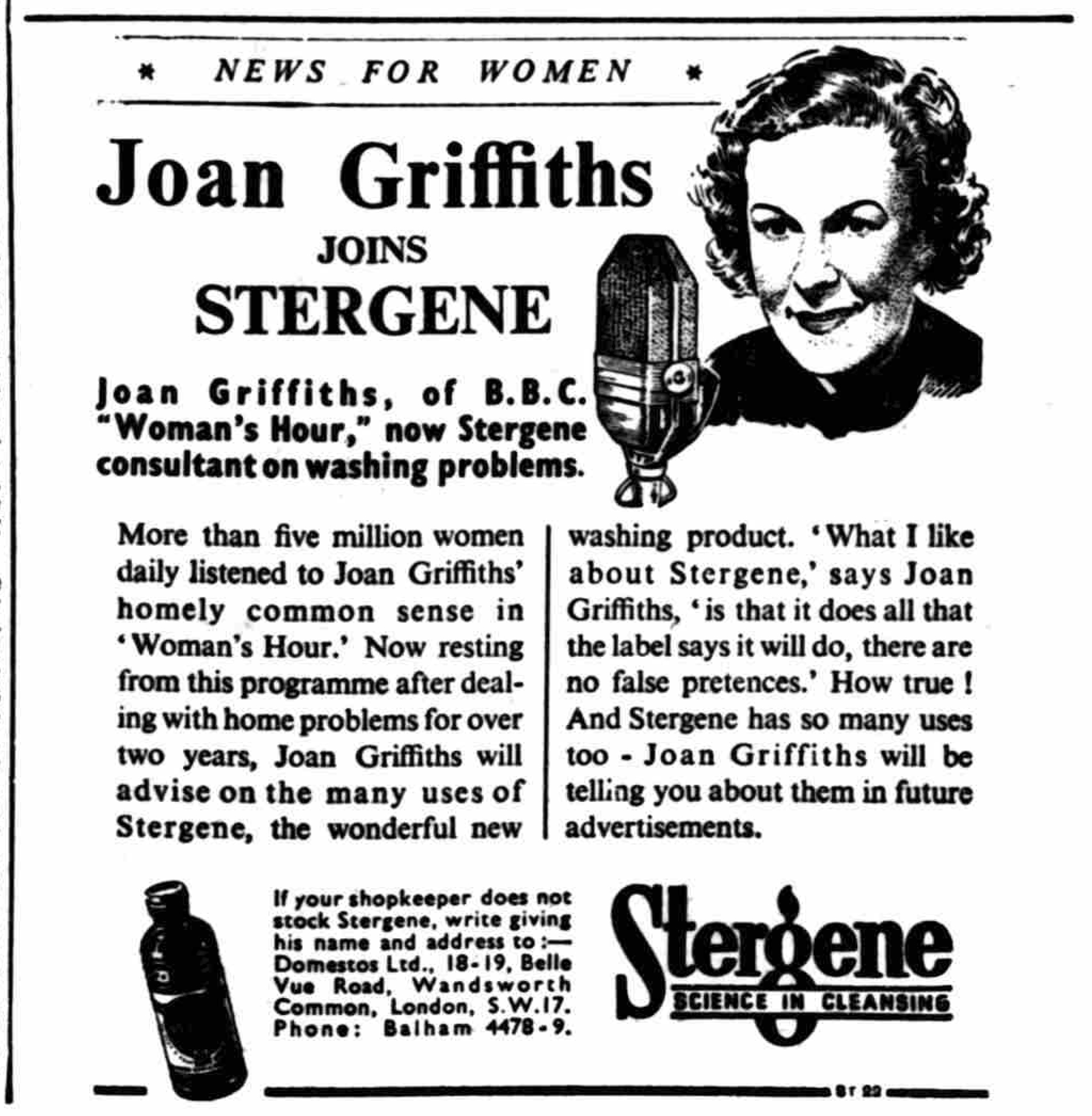
1949-04-09-joan-griffiths-joins-stergene-Herald.jpg
1949-07-01-is-soap-old-fashioned.jpg
1949-07-08-seat-SouthWesternStar.jpg
1949-11-04-stergene-FulhamChronicle.jpg
1949-11-04-blind-2-DailyMirror.jpg
1949-12-30-lcc-draft-development-plan-article-StreathamNews.jpg
1949-os-Prefabs-St-Marks-Granada-Peabody-tinted.jpg