Wandsworth Common

1950

Fulham Chronicle

Stergene — and Domestos, of Bellevue Road, Wandsworth Common

An advertisement for Stergene, a new soapless liquid cleanser, announced a tenfold increase in demand and a price reduction to 1s. 9d. per bottle. Readers were invited to write for further information to: "Domestos Limited, 18–18a, Bellevue Road, Wandsworth Common, London SW17. Phone: Balham 4478–9."

[Domestos — now a well-known bleach brand — had its early offices on Bellevue Road, the southern edge of the Common. The company was founded in 1929 by Wilfred Handley in Newcastle, who originally made it in his bathtub. By 1950 it had expanded to London offices here, before being acquired by Lever Brothers (later Unilever) in 1961.]
BNA link

Streatham News

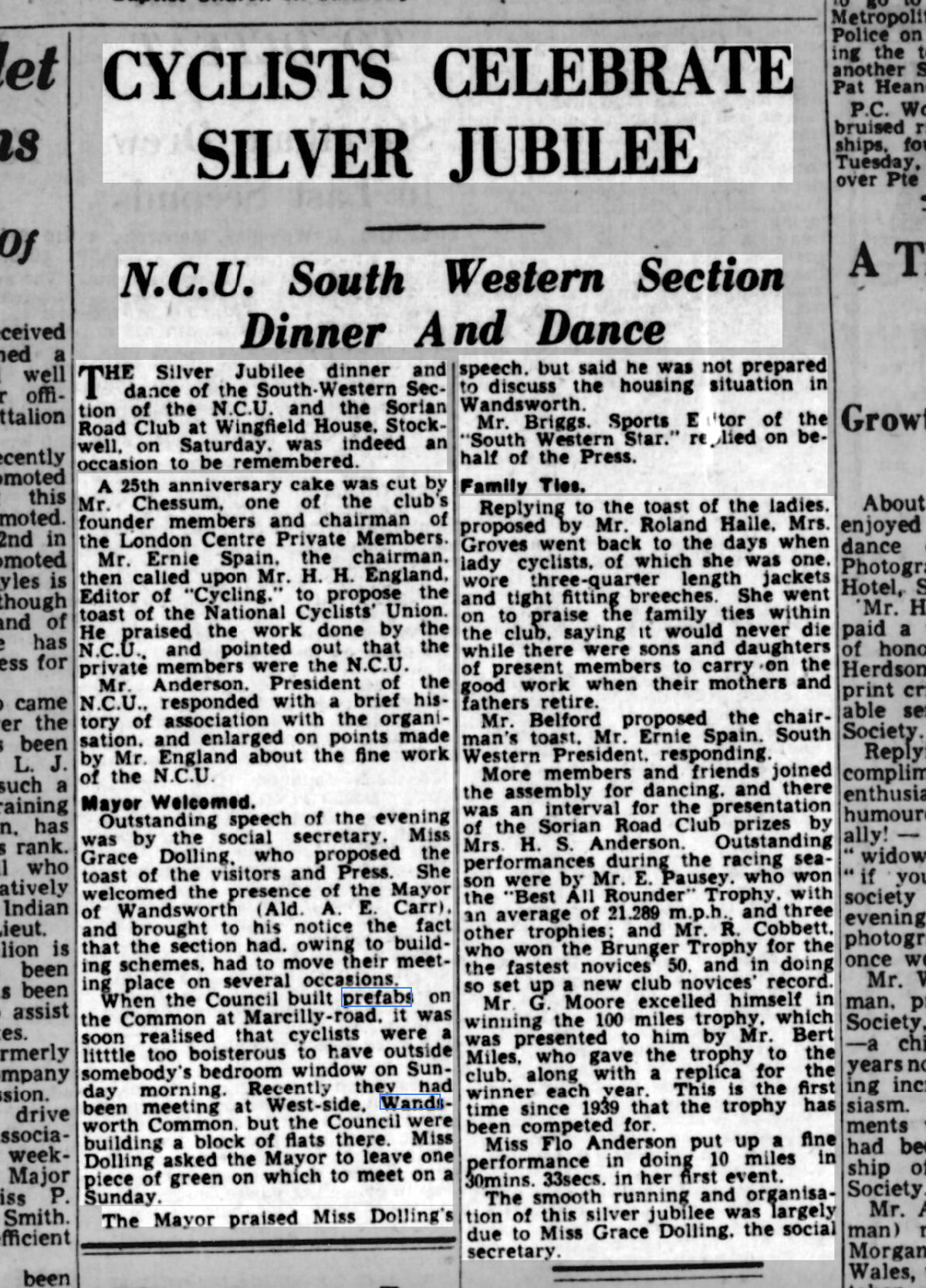
Cyclists celebrate silver jubilee — N.C.U. South Western Section dinner and dance

Streatham News, 3 February 1950: Cyclists Celebrate Silver Jubilee
Streatham News, Friday 3 February 1950

The Silver Jubilee dinner and dance of the South Western Section of the N.C.U. (National Cyclists' Union) and the Balham Bicycle Club Whippets was held on Saturday and was, the paper reported, an occasion to be remembered. A 25th anniversary cake was cut by C. Chisnall, one of the oldest members. Mr Briggs, Sports Editor of the South Western Star, was among the speakers. The Mayor of Wandsworth attended and was warmly welcomed.

The Mayor, in his speech, touched on the housing situation in Wandsworth — referring to the prefabs that had been built on the Common and elsewhere, and the Council's plans to replace them with a block of flats. He recalled with evident pleasure his own younger days of riding, including the three-quarter-length jacket and cycling knickerbockers of the period. He praised the family ties within the N.C.U. and called on present members to carry on the tradition when their fathers retired.

Miss Flo Anderson was commended for putting up a fine piece of ground on which members could meet on cold days.

[The National Cyclists' Union was the governing body of amateur cycling in Britain. The South Western Section, centred on Balham and Wandsworth, was one of its most active branches. The reference to prefabs on the Common — and the Mayor's plans to replace them — is an early indication of the clearance programme that would eventually be completed by the late 1950s.]


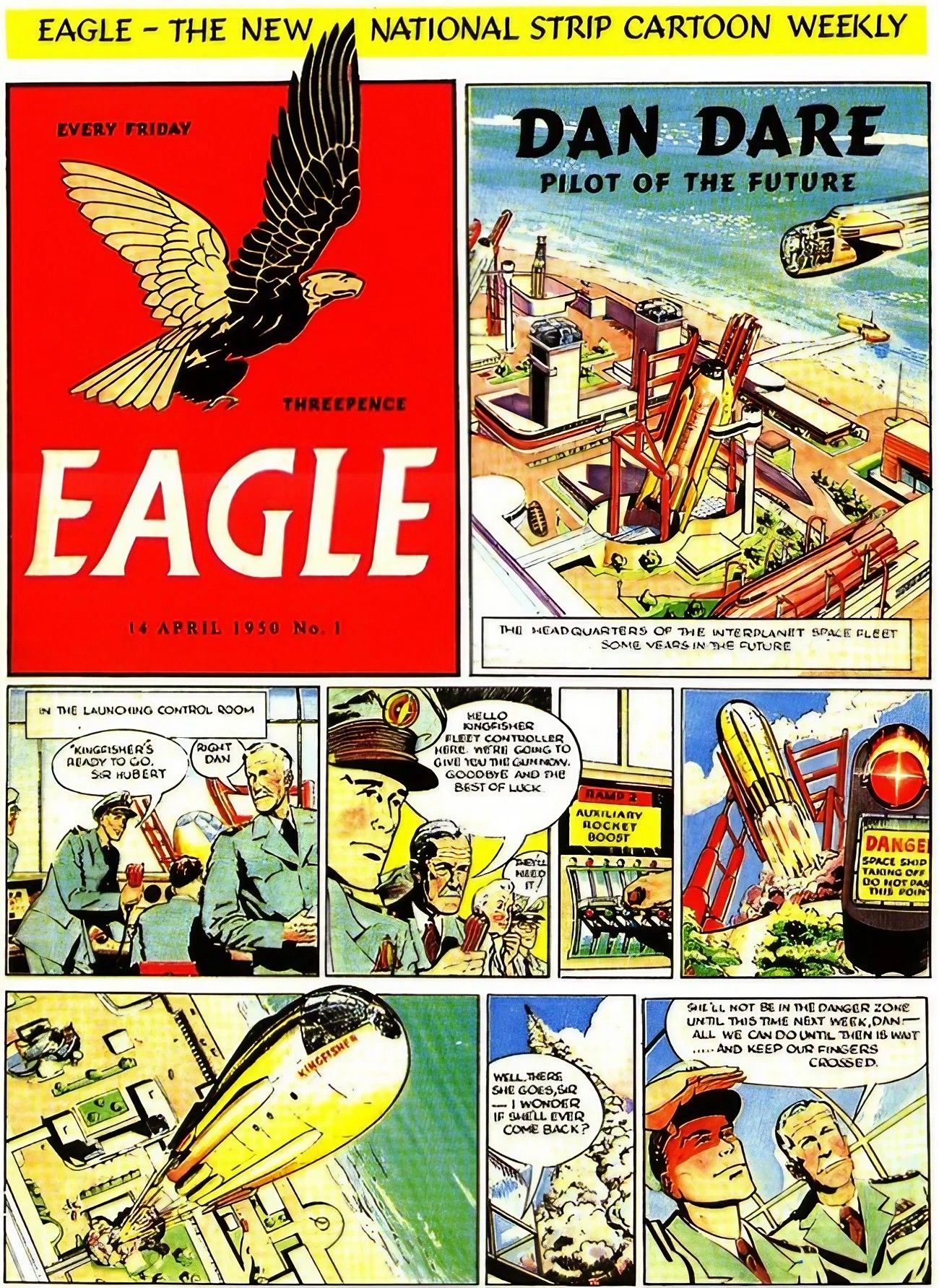
Eagle, No. 1

Eagle No. 1 — Dan Dare, Pilot of the Future

Eagle, No. 1, 14 April 1950: Dan Dare, Pilot of the Future
Eagle, No. 1, Friday 14 April 1950. Threepence. "The new national strip cartoon weekly."

The first issue of Eagle, "the new national strip cartoon weekly," appeared on Friday 14 April 1950, priced threepence. Its cover strip — Dan Dare, Pilot of the Future, drawn by Frank Hampson — showed the headquarters of the Interplanet Space Fleet, "some years in the future." Eagle was the brainchild of the Revd. Marcus Morris, a Church of England vicar who wanted to provide boys with a wholesome, well-illustrated alternative to the American horror comics then flooding the market. Published by Hulton Press, it would run for 991 issues until 1969 and become one of the defining cultural artefacts of postwar British childhood.

[For the boys and girls growing up around Wandsworth Common in the 1950s, Eagle was a fixture of Friday mornings — available from newsagents on Trinity Road, Bellevue Road, and Nightingale Lane. Dan Dare, the Mekon, and Digby were as familiar as any real neighbour.]