
Last modified: 3 October 2026
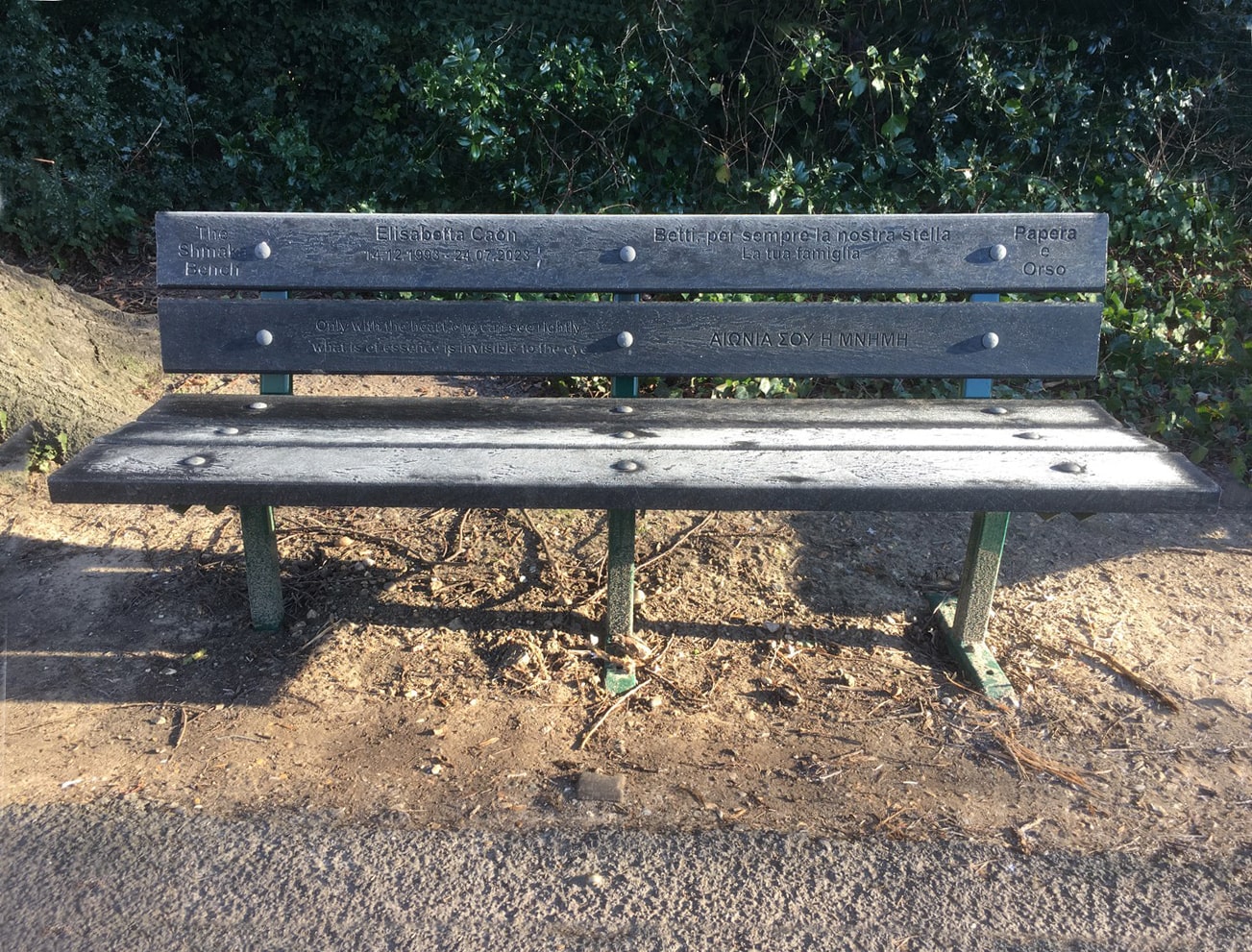
A couple of years ago, I was asked to research two benches recently placed on the railway side of the lake commemorating Benny, Bella, and Ruth Spanier.
Since then, another bench has appeared nearby, with inscriptions in English, Greek and Italian. It is dedicated to Elisabetta (or Elizabeth) Caon, a young medical researcher at University College London who died two years ago.
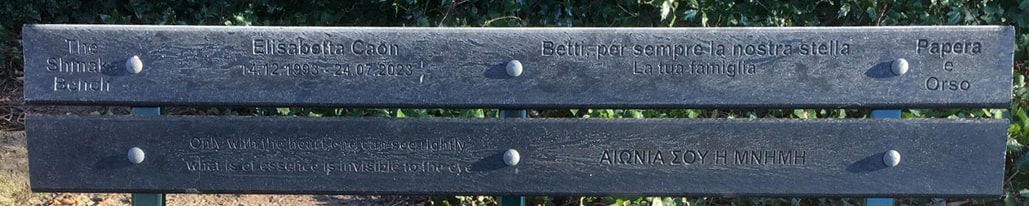
The Shmaka Bench
[I'm not sure of the meaning of "Shmaka" — can anyone help?]
Elisabeth Cain 14.12.1993—24-07-2023
Betti, per sempre la nostra stella [Betti, for ever our star]
La tua Famiglia [Your family]
Papera e Orso [Duck and Bear] [?]
Only with the heart we can see rightly
What is of essence is invisible
[Epigram from Antoine de Saint-Exupéry's novel The Little Prince.]
AIONIA SOY I MNHMH [Your memory is eternal — a reference to the Greek Orthodox funeral liturgy]
At the time of her death, Elisabetta/Elizabeth was a gifted researcher at University College London, where she had just completed a PhD. Two professors at UCL wrote:
Obituary for Elisabetta Caon.
It is with heavy hearts that we share the profoundly tragic news of the untimely passing of Dr Elisabetta Caon on July 24th, 2023.
In 2017, Elisabetta joined us at the Institute for Liver and Digestive Health, University College London, UK as a young and promising MSc student in Industrial Biotechnologies, from the University of Padua, Italy, to undertake an Erasmus Student Mobility Traineeship.
Elisabetta's dynamic nature were undeniable. This was further exemplified when she was awarded the prestigious Juan Rodés PhD Fellowship by the European Association for the Study of the Liver (EASL), a distinction that allowed her to extend her studies in our team.
Elisabetta's endeavours knew no bounds, as she presented her ground-breaking findings in esteemed international meetings including the International Liver Congress (ILC — EASL), the Liver Meeting (American Association for the Study of Liver Disease — AASLD), European Club for Liver Cell Biology (ECLCB), and the Tissue Engineering and Regenerative Medicine International Society World Congress (TERMIS).
On the 28th of June 2023, Elisabetta was awarded her PhD, Doctor in Philosophy. What began as a junior fellow blossomed into an independent investigator, ready to embrace her first post-doctoral role.
Elisabetta was a kind, bright and caring person, with a strong resilience and a great heart for all her colleagues and collaborators. Elisabetta will be greatly missed, a great loss to everybody who knew her, it was a privilege to work with Elisabetta. As we navigate this sad time, our thoughts and heartfelt sympathies extend to Elisabetta's family, her partner, and friends.
Professor Krista Rombouts Professor Massimo Pinzani
[UCL: Obituary: Elisabetta Caon.]
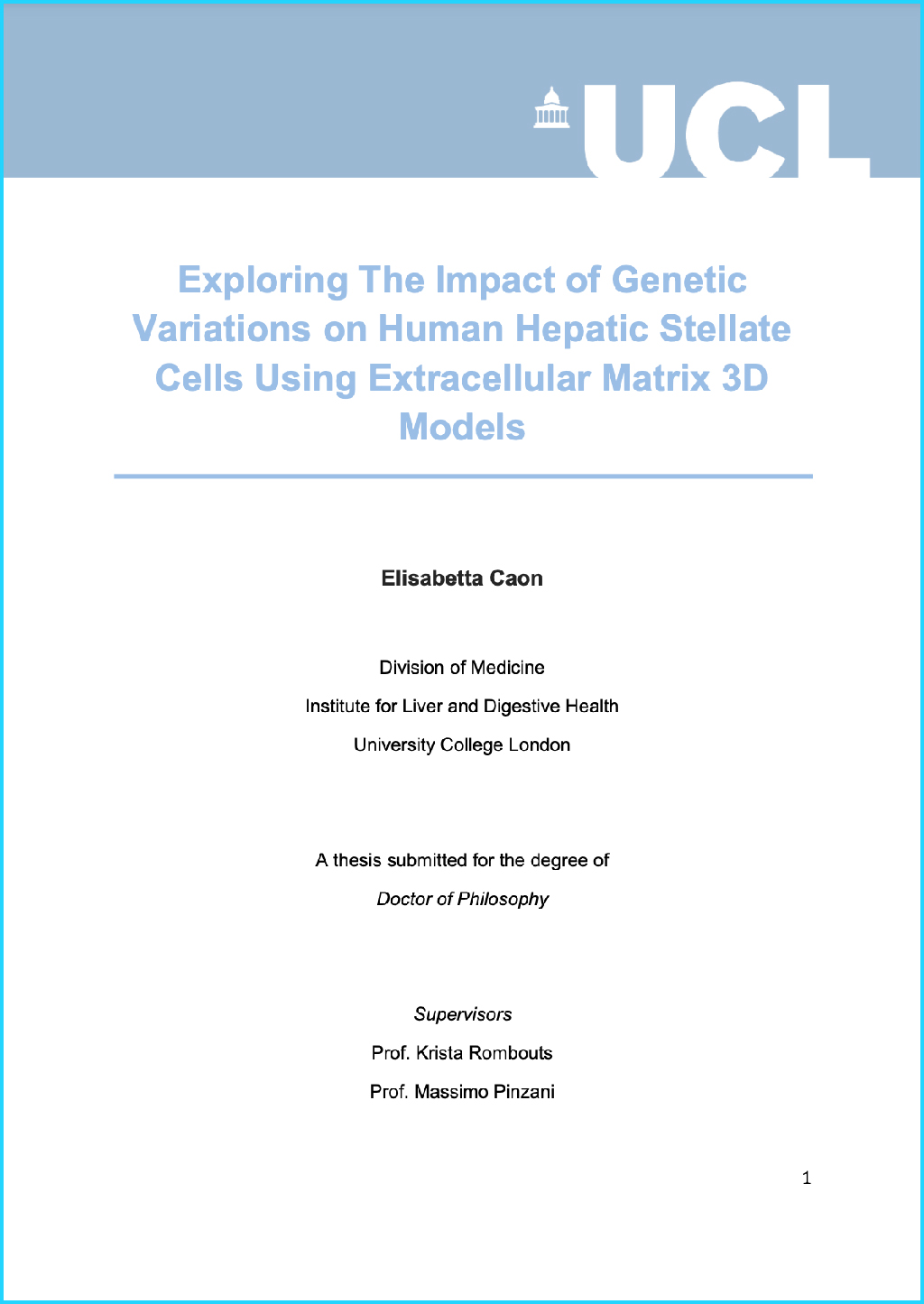
Elisabetta Caon's PhD Dissertation, Exploring the Impact of Genetic Variations of Human Hepatic Stellate Cells Using Extracellular Matrix 3D Models (2023), can be downloaded from UCL.
Elisabetta's death was reported in a number of European news media. She had been on a beach in Sparta with her Greek boyfriend, Yannis (if you know his surname, please let me know), when she suddenly fell ill:
She was quickly transported to the nearest hospital, where, however, the doctors could not help but confirm her death.
According to the medical reports, the girl did not suffer from any particular pathology and it seems that she died because of an ischemic cardiac arrest.
Who was Elisabetta Caon?
The young woman was a researcher originally from Resana, in the province of Treviso. Elisabetta Caon leaves her mother Rosetta Stocco, professor at the Itis Barsanti of Castelfranco, her father Franco Caon, surveyor at the Municipality of Castelfranco, and her brother Alberto.
Once informed of the tragic news, Elisabetta Caon’s family members immediately boarded the first available flight to Greece to be able to say a last goodbye to the girl, who had recently completed an important doctorate in London.
[Breaking Latest News: "Greece: 29-year-old girl who died of an illness" (July 29, 2023). This link was broken when I returned in June 2025.]
Elisabetta was also a talented classical guitarist, a founder member of the Sliwowitz Quartet:
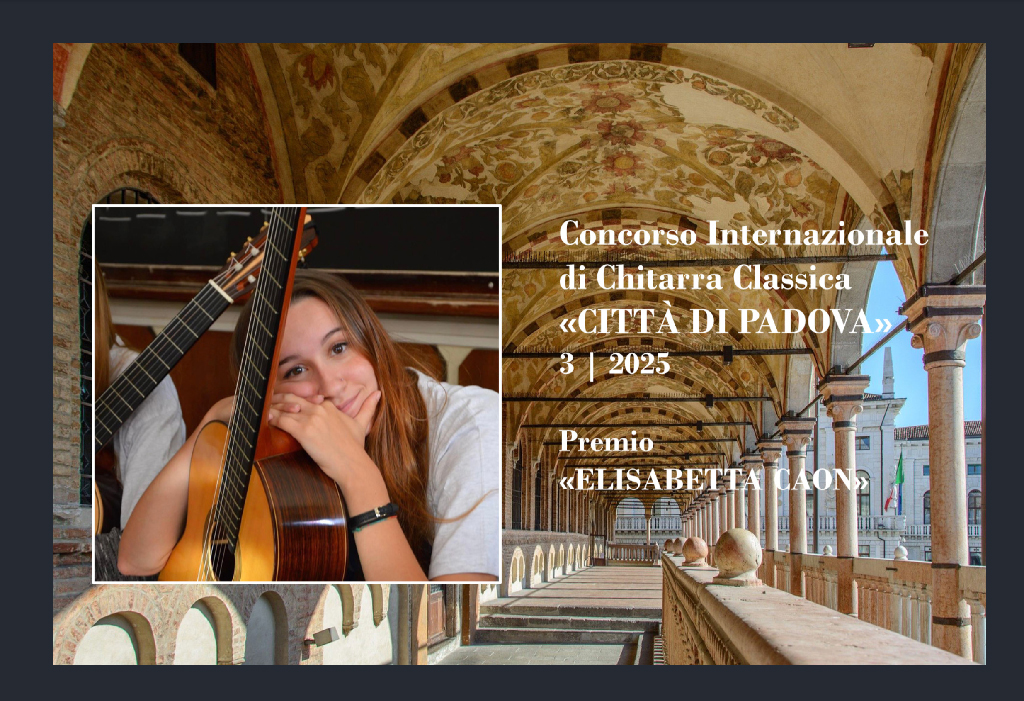
In April 2025 a special prize and concert were given to commemorate Elisabetta Caon at the 3rd International Guitar Competition and Festival, held in Padua.
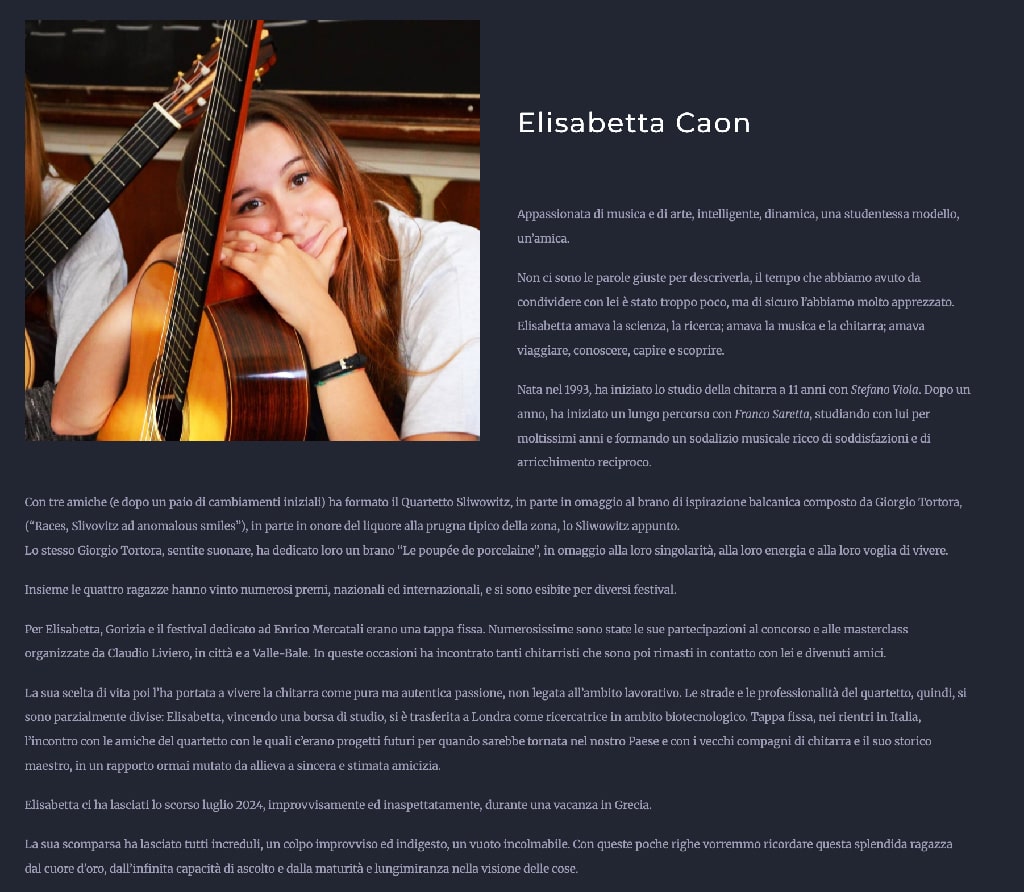
"Elisabetta Caon was passionate about music . . ."
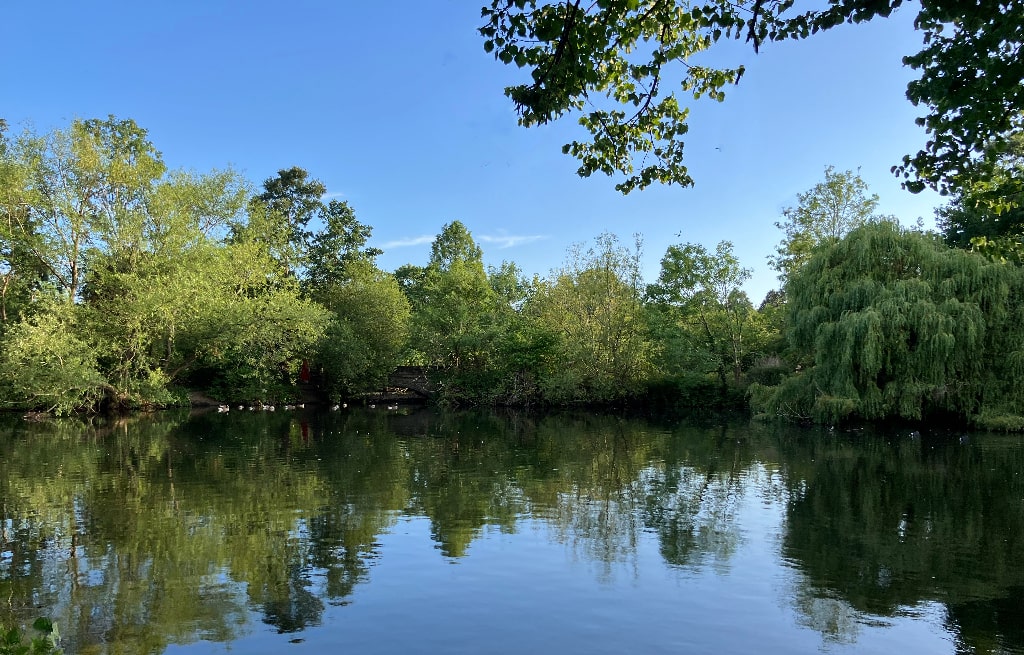
The view towards the bridge from Elisabetta's bench. (Photo: Philip Boys, 29 June 2025. Does anyone have a better one I could substitute?)
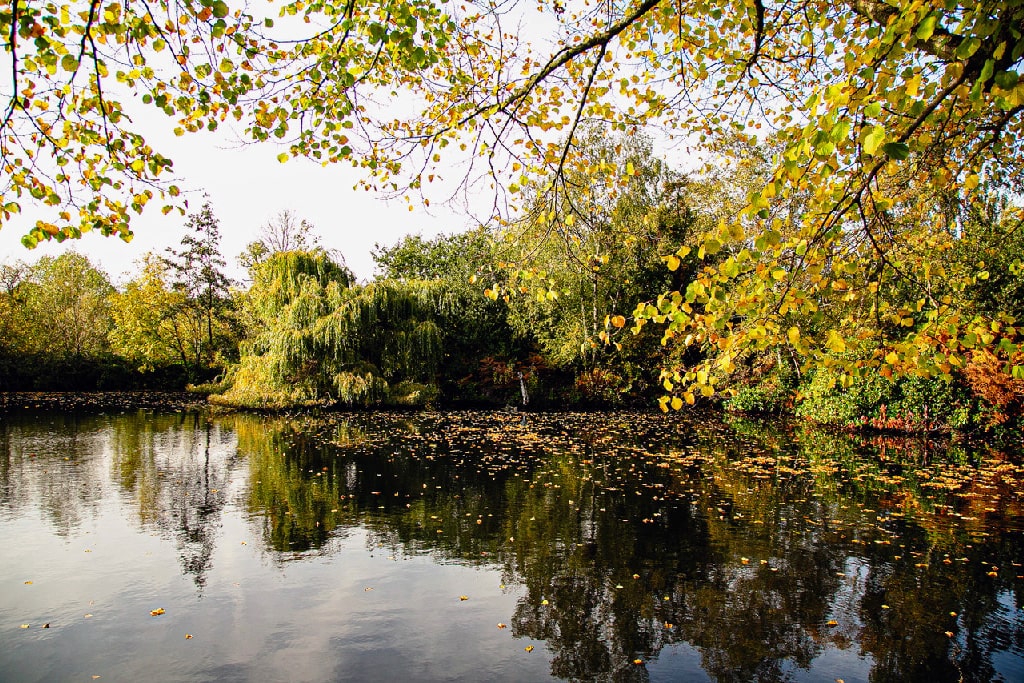
The view in early autumn, taken from the bench. (Lewis More O'Ferrall - thanks, Lewis!)
Benches such as Elisabetta's, and the Spaniers', are the result of almost unbearable grief, but also of great love. I am grateful to their families and friends for placing memorial seats that everyone can share in such a beautiful place by our lake.
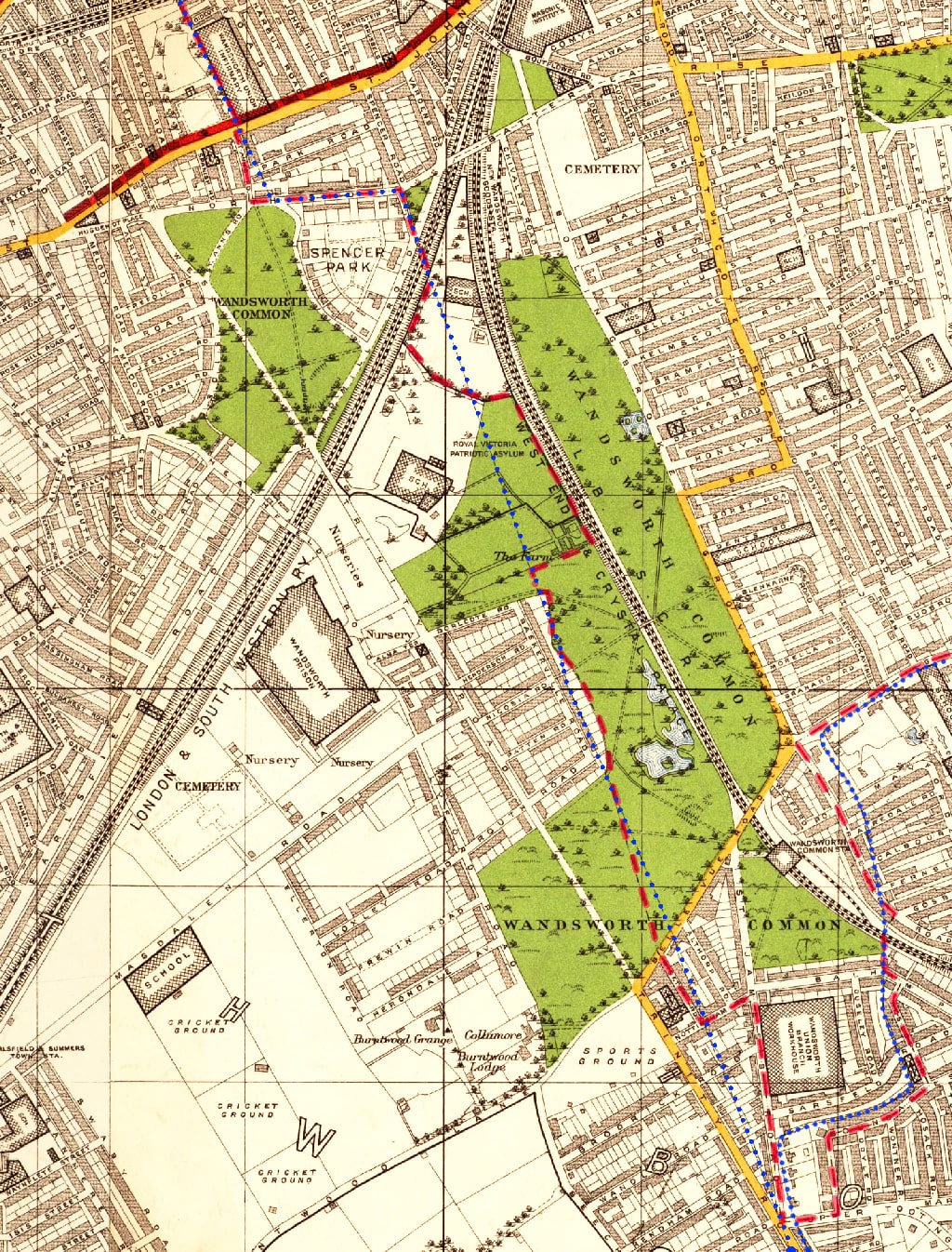
London County Council, 1913. The dotted blue line shows the old parish boundary — Battersea to the east, Wandsworth to the west. I have emphasised the revised boundary using a dashed red line.
[Notice that the northern lobe of the lake has no island at this time.]
The historic (probably Anglo-Saxon) boundary between Battersea and Wandsworth parishes was more or less straight across the Common [the blue dotted line]. Its southernmost point was near the junction of what we now call Trinity Road and St James's Drive.
Such a direct line made sense when there were few houses and roads, but things became more complicated administratively when parts of the Common were sold off to build orphanages, schools and terraced streets. The new boundary [red dashes], which zig-zags its way across the area, passes around rather than through the Patriotic School (so that it is entirely within Wandsworth) and Emanuel School (entirely within Battersea). It often divides a street left and right, but not generally houses and gardens. This came into play when the parish vestries ceased to be responsible for civil administration and new "Metropolitan Borough Councils" were formed in 1900.
[I'm not sure when exactly the boundary changes took place. Was it shortly after 1888, when the Battersea Vestry seceeded from the combined Wandsworth Vestry of 1855 (Battersea, Clapham, Putney, Streatham and is Knight's Hill exclave, Tooting Graveney, Wandsworth)? Or after the Local Government Act of 1894? Or when the Metropolitan Borough of Battersea was created in 1900?
(A quick check of OS maps shows that the old boundary was still in use in 1896.)
Wikipedia has a nice outline map of the Metropolitan Boroughs of the County of London that demonstrates the Battersea secession rather well.
And have the boundary lines continued to change? It would be good to check later boundaries.]
Look at the street signs on either side of Wiseton Road, off Bellevue.
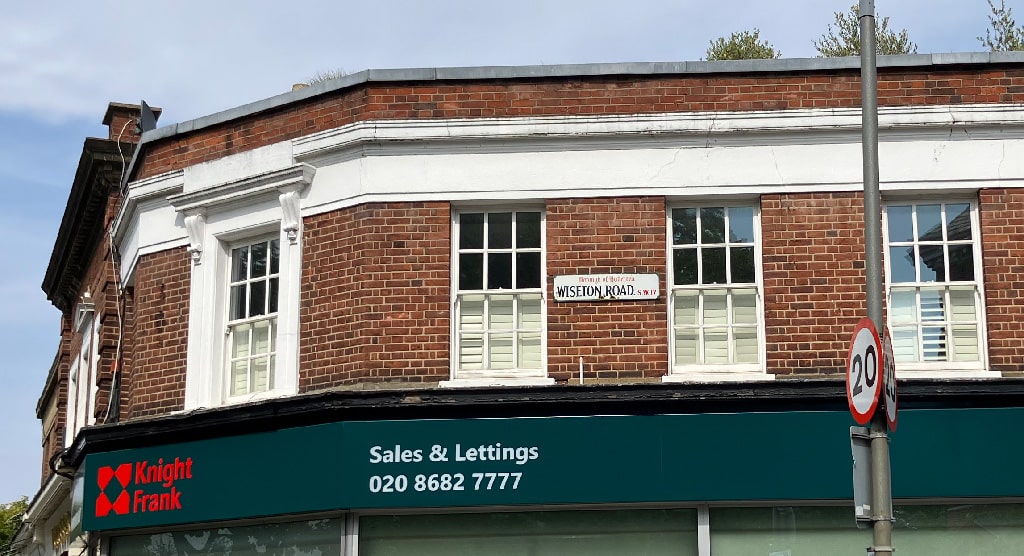
The south side of Wiseton Road: Battersea.
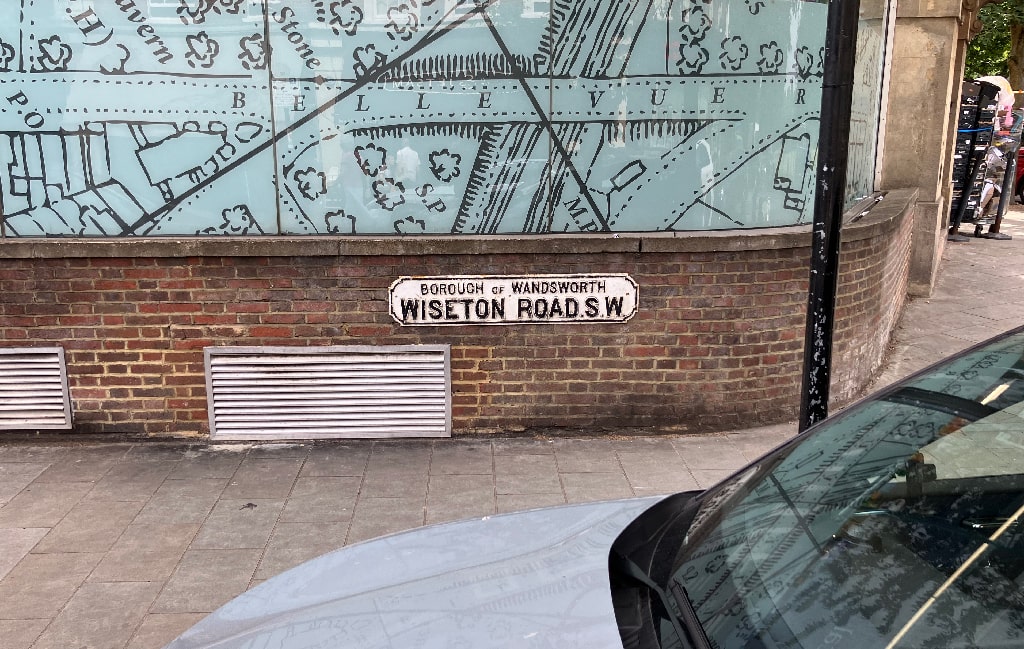
Turn and see the sign on the other side of the road: Wandsworth.
Before the Battersea-Wandsworth boundary was rationalised (if you can call it that), it passed through houses and gardens between Althorp and Wiseton Roads, heading for the "Boundary Oak" and the posts at the end of the Routh Road passage onto the Common.
[Boundary adjustments may have reduced confusion, for example by clarifying which Town Hall rates had to be paid, permissions sought, or grievances aired, but didn't please everyone. I'm sure I've got a note somewhere about the expostulations of householders who suddenly found themselves in — shock, horror — Battersea.]
"The Farm" (aka Neal's Farm) is clearly marked, with the original buildings, tracks and orchards, but now tinted green. This signals it is part of the Common (once again). This area was then called "the Extension" and had recently been purchased by the LCC to be added back to the Common. The war stopped much progress being made on converting the area into a sports field (particularly for cricket, bowls and tennis). But there appears to be a wall separating the RVPA from the Extension which had not, I think, existed previously. Was this the first thing to be done by the LCC before further work could start?
[I have distinct memory that the purchase of the Extension from the Patriotic Fund entailed the LCC agreeing to build, and pay for, a new dividing wall for the then-large sum of £83%0. I must check this.
Last month I included an item on the unveiling of a plaque commemorating MI5's London Reception Centre that operated at the Royal Victoria Patriotic School 1941-1945. You can read more about the event in June's Chronicles.
I am very grateful to Louisa Russell, Chair of the Secret WWII Learning Network, for providing a pdf of the information panel now displayed at Le Gothique.
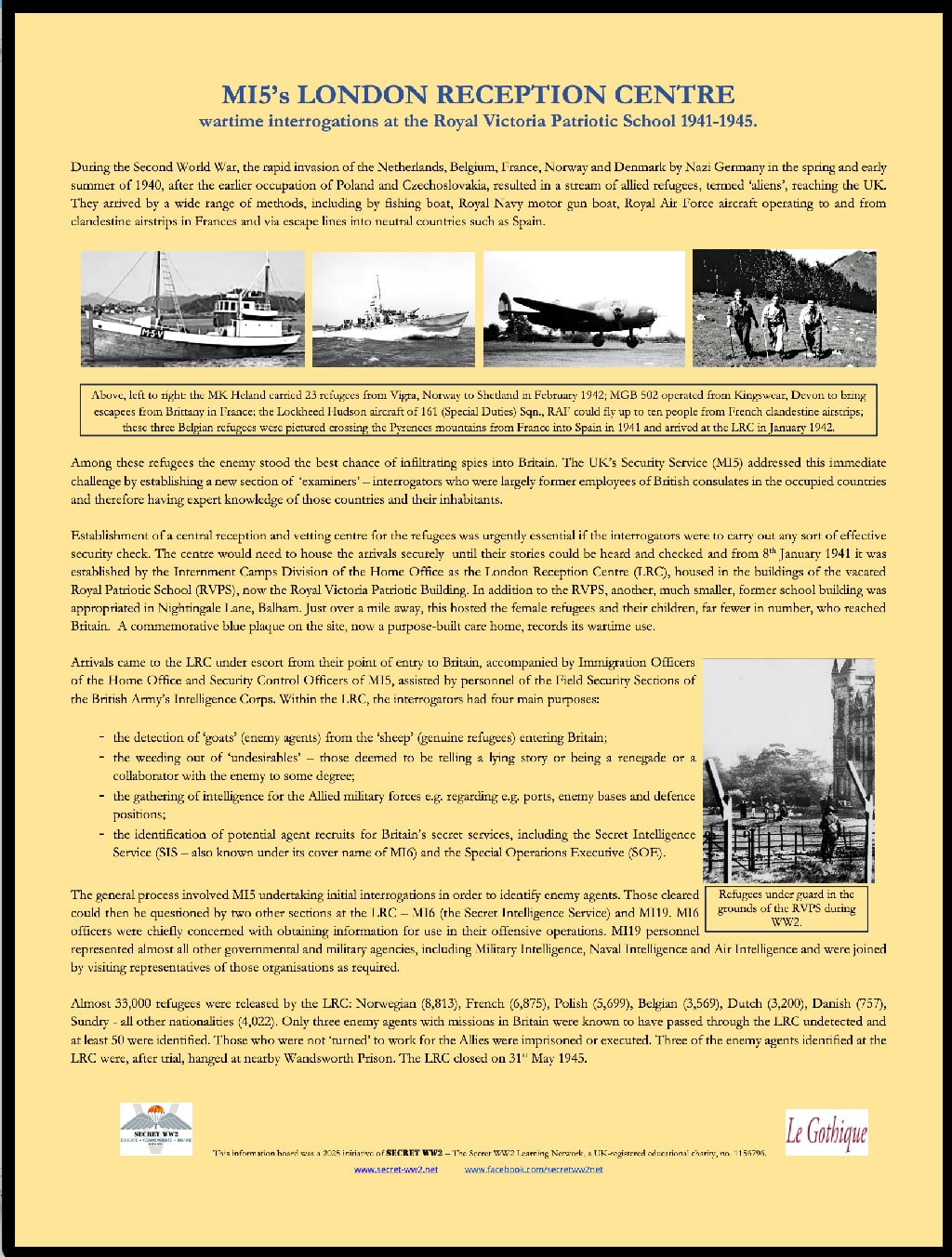
Information panel about the London Reception Centre in Le Gothique restaurant, RVPS.
Louisa also introduced me to local military historian Paul McCue, who has been most helpful in supplying me with information about Andree Borel — thanks, Louise and Paul!
Last month I wrote about the so-called "London Reception Centre" at the Royal Victoria Patriotic School during WWII, at which all male civilians arriving in Britain were interrogated — 34,000 of them.
But I would also like to mention the less-well-known 101 Nightingale Lane, close to the Nightingale pub. This was a large house with grounds (over which today's Oak Lodge School and a wing of Nightingale House have been built) to which women and children were sent.
Some years ago, I saw that Princess Anne had unveiled a plaque to three female members of the Special Operations Executive (SOE) who had been recruited or trained here, had travelled to France to work with the Resistance, and had subsequently been captured and executed.
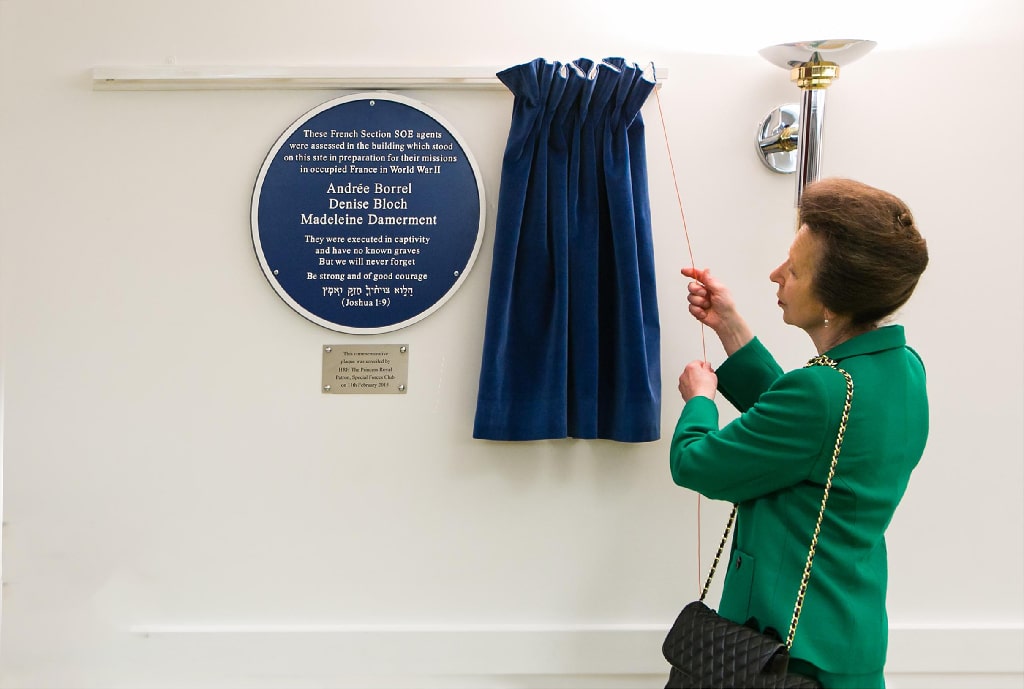
Wednesday 11 February 2015: Princess Anne unveils a plaque to commemorate the lives of three female secret service agents: Andrée Borrel, Denise Bloch and Madeleine Damerment.
At that time, I knew nothing about these brave women, but I've since started to learn more. I hope to write something more substantial in the near future, but today I'll just mention one, Andree Borel.
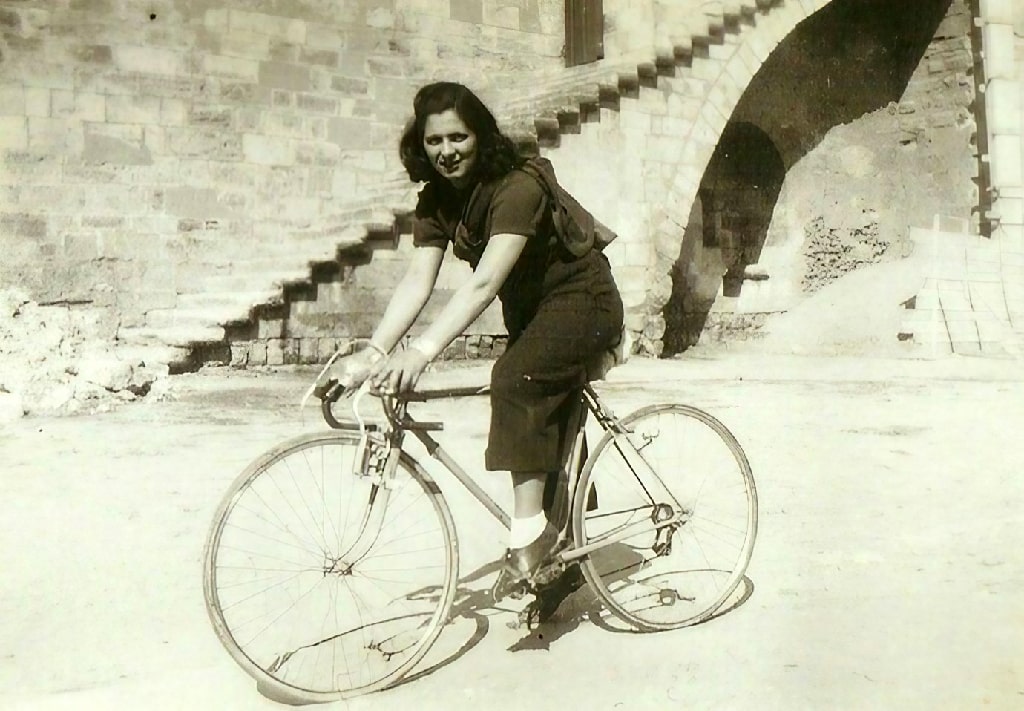
Andree Borel was a keen racing cyclist.
She and fellow-agent Lise de Baissac were the first women to be parachuted into France (in September 1942). She joined the Resistance in Paris, was arrested and interrogated by the Gestapo in June 1943, and executed at the Natzweiler-Struthof concentration camp on 6 July 1944. At the time of her death she was 26.
12 July 1880, staunch supporter of Wandsworth Common Tom Taylor (also known as an editor of Punch, and author of the play that Abraham Lincoln was watching on the night of his assassination) died suddenly at his home, Lavender Sweep, Battersea. He was buried in Brompton Cemetery three days later.
Tom Taylor has been mentioned quite frequently in earlier Chronicles (and I still intend to write about his poem "The Cry of the Commoners"). For more info., read Jeanne Rathbone's terrific article, "Tom Taylor 1817-1880, dramatist and editor of Punch" (19 October 2016).
Last year, I was present at a rather wonderful unveiling of a plaque commemorating author/playwright/editor Tom Taylor and the composer Laura Barker in Lavender Sweep, off Battersea Rise. The event was organised by Jeanne, and was a hoot.

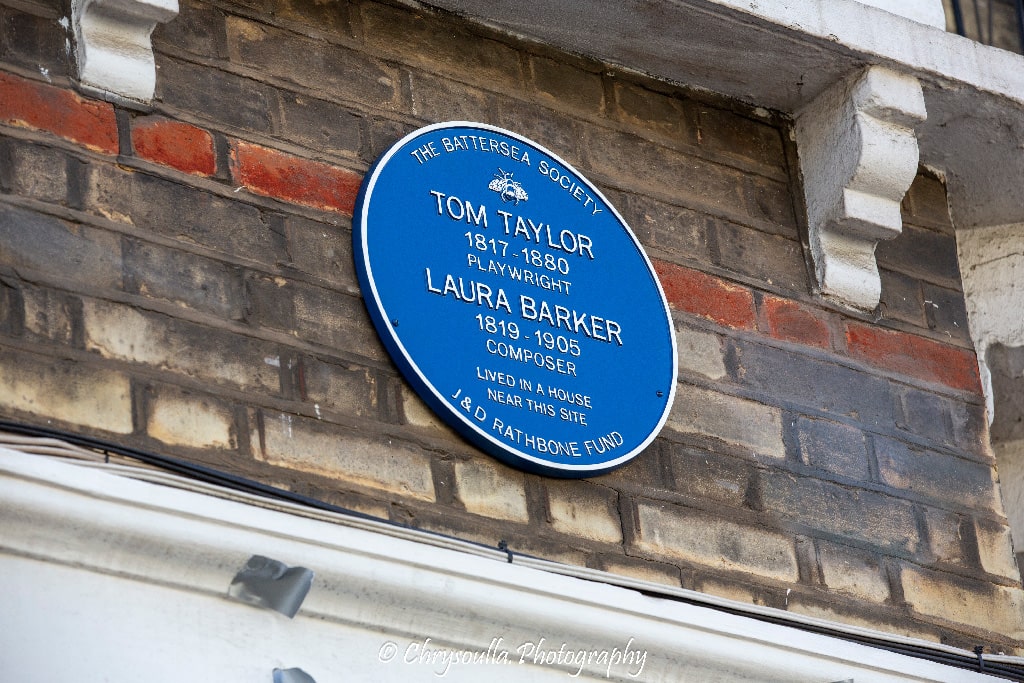
28 September 2024: Lord Fred Ponsonby and Alun Armstrong unveil the plaque to Tom Taylor and Laura Barker, 84 Lavender Sweep (Photos: Chrysoula Photography)
Here's a rather wonderful photo of Tom Taylor (seated, on the right) in a social milieu I imagine I preferred to all others, the theatre:
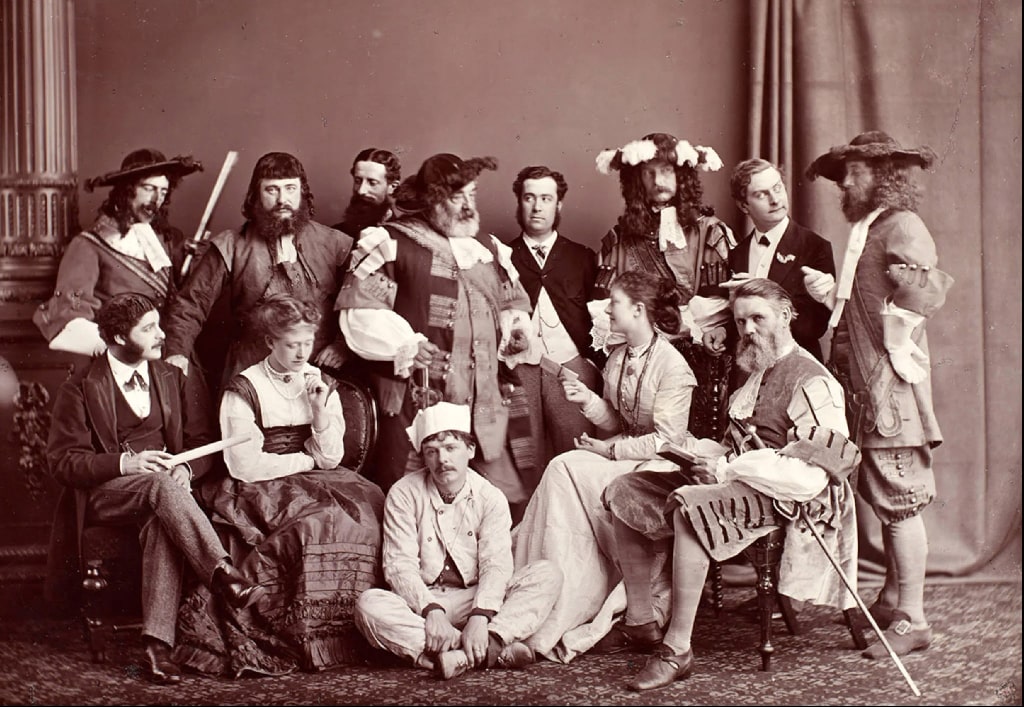
Tom Taylor and the Old Stagers — the Old Stagers are recognised as the oldest amateur dramatic society still performing.
Since I've just mentioned Jean Rathbone and plaques, here's the text of an email she sent recently with news of two local unveilings in July:
I am delighted to be MC-ing these two Battersea Society plaques unveiling events as part of the Wandsworth Heritage Festival which might be of interest if you are around.
The first on Friday 4th July at 2pm on BAC/Battersea Town Hall is to Jeanie Senior, first woman civil servant when appointed as Inspector of Workhouses by Sir James Stanfeld an enlightened Liberal in 1874 as President of the Local Government Board. (Shockingly, married women were not allowed to be executive civil servants until 1946.)
This plaque is sponsored by the FDA civil service trade union and speakers will include Penny East, CEO Fawcett Society; Fiona Ryland, Cabinet Office; Sybil Oldfield, her biographer; Tarek Iskander, BAC Director, and great nephew Arthur Hughes from the US.
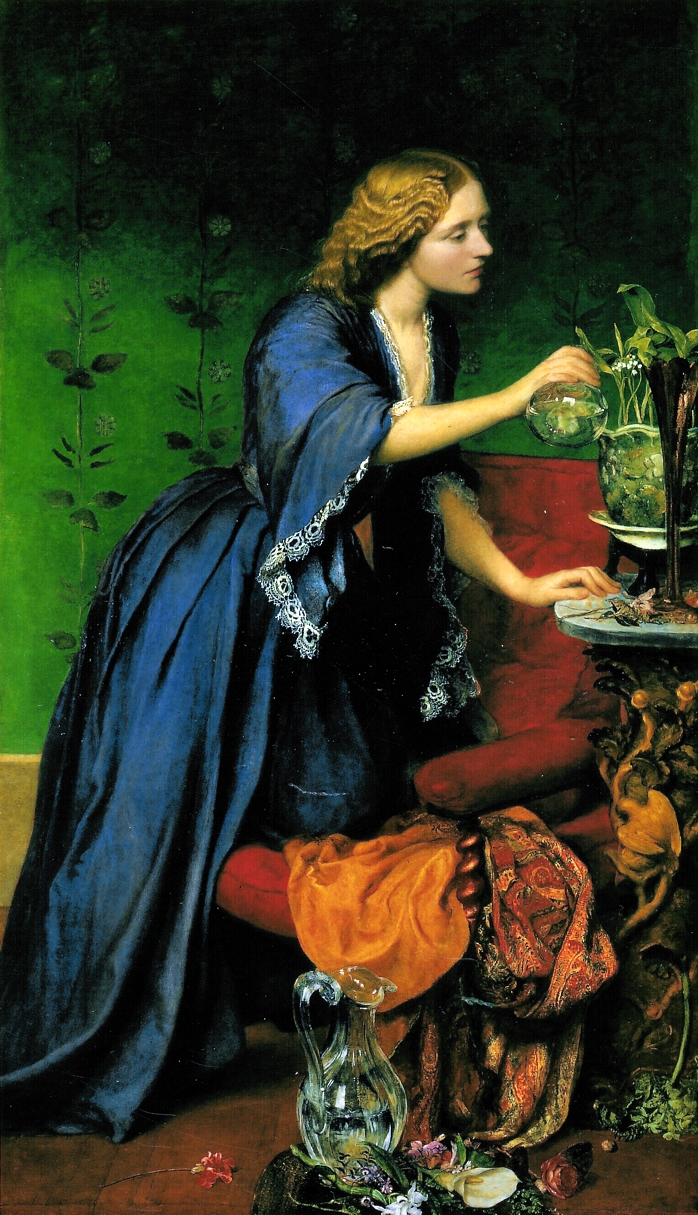
Jane ("Jeanie") Elizabeth Hughes (1828–1877), Mrs Nassau John Senior, by G.F. Watts, 1859. (ArtUK: National Trust: Wightwick Manor. Link.)
Jane Senior lived at Elm House on Lavender Hill, a villa in wooded grounds on the site of today's Battersea Arts Centre.
If you don't know about the incomparable Jeanie Senior, you really should. Jane "Jeanie" Elizabeth Hughes (also widely referred to as "Mrs Nassau John Senior") lived on Lavender Hill until her very premature death in 1877.
[There's so much to say about Jane ("Jeanie", pronounced "Janie") but perhaps not here and now. I strongly recommend Jeanne Rathbone's online article, "Jeanie Nassau Senior, first woman civil servant". (Don't let the phrase "the first woman civil servant" put you off, if indeed it does. She was, among other things, a pioneering social researcher who wrote a devastating report on the education (or rather lack of it) of pauper girls.)
There is also a Wikipedia article: Jane Senior, and a very readble book-length study by Sybil Oldfield: Jeanie, an 'Army of One': Mrs Nassau Senior, 1828–1877, the First Woman in Whitehall (Sussex Academic Press 2008). Barbara Hardy's review will convince you to learn more.
(Incidentally, Jeanie was the sister of Thomas Hughes, author of Tom Brown's Schooldays. Both he and her husband were active in the 1860s in defence of Wandsworth Common)
The second plaque unveiling is on Sunday 13th July at 2pm to Edith Lanchester, socialist feminist, and her daughter Elsa Lanchester, actor of stage, TV and film, at 27 Leathwaite Road SW11 1XG.
This plaque is funded by the O’Pray family. Speakers will include singer Dillie Keane, Charlotte Booker (star of She’s Alive), her biographer Mike Simpson, and Paul Nolan of The Lanchester Archive.
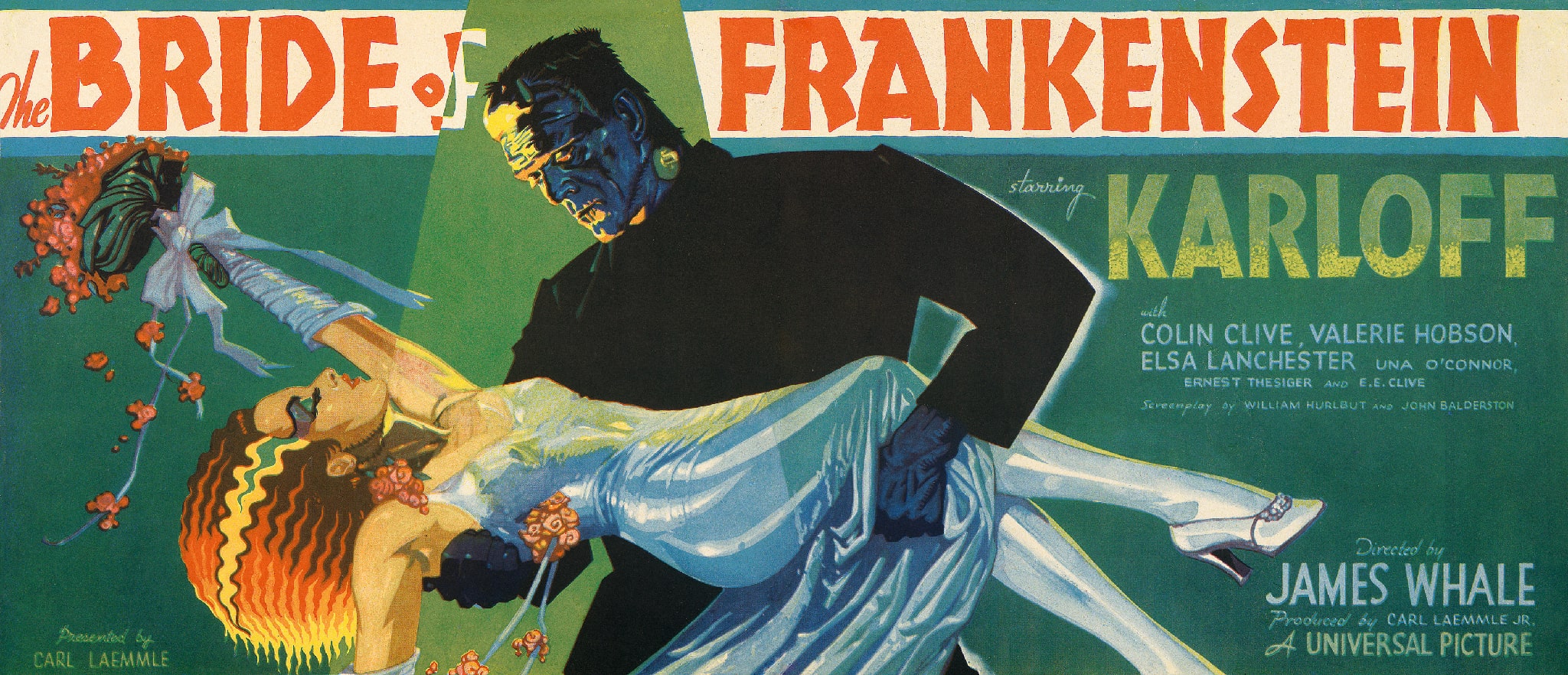
Elsa Lanchester, star of Bride of Frankenstein, with Boris Karloff as the Monster, directed by James Whale (1935). Elsa played both the bride and Mary Shelley, author of the original novel Frankenstein (1818).
Thanks, Jeanne!
Wonderful to see the new info. panels around the Common. They've been mooted for years (quite possibly for decades), but the first three are now with us. Expect more.
Many people contributed expertise, funds, and enthusiasm, but Anne Lambert's role was decisive — thanks, Anne!
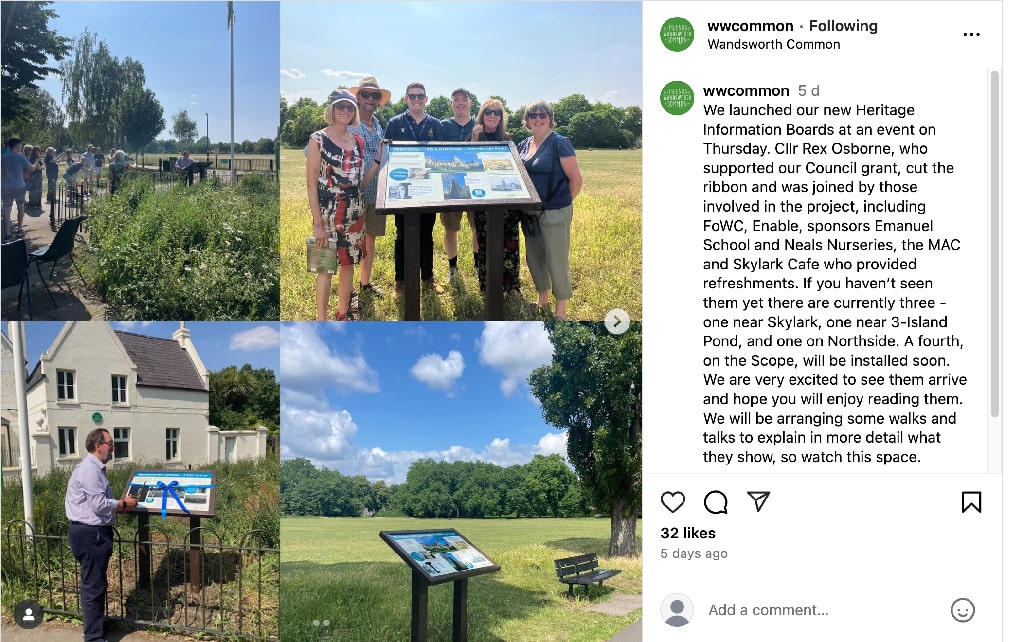
Instagram: Link.
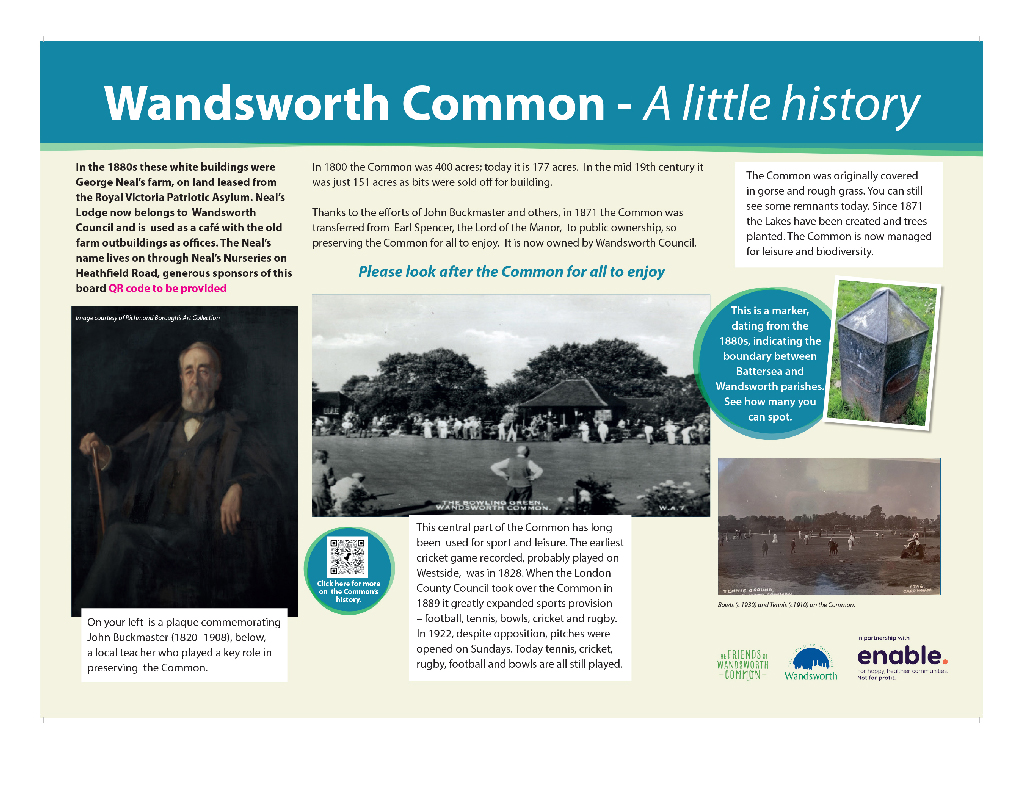
Board 2 — "A little history" — is sited near the Skylark cafe and the memorial plaque featuring John Buckmaster. Others are on Northside and Bolingbroke Fields. A fourth will shortly appear on the Scope.
See Friends of Wandsworth Common: Heritage Interpretation Boards Installed (15 June 2025).
It really hurts me to do this, but I've cut out from this month's Chronicles a longish piece about the life of Thomas Hardy in our area, including his terrifying pursuit down Brodrick Road of an organ-grinder, and garden parties at "Knapdale", Alexander Macmillan's home narby.
Still, I've written it now, so I'll send it out later this month (as July Chronicles Part II). But if you're excessively interested in Thomas Hardy, get in touch.
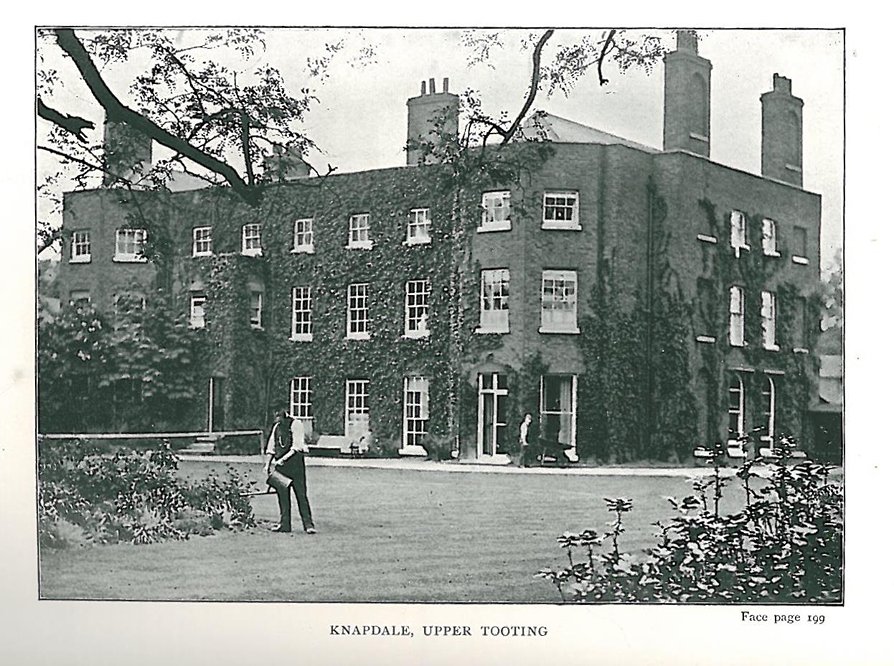
Knapdale, one of the largest houses in our area.
Absolutely everybody went to Alexander Macmillan's garden parties (which may explain why Thomas, who had ambitions to become a literary lion, moved to Trinity Road in the first place).
SO many more stories still to tell. But that's all for now, folks.
Send me an email if you enjoyed this post / want to comment on something you've seen on the site / would like to know more — or just want to be kept in touch.
If you would like to receive notifications of new Chronicles, let me know . . .
Philip Boys ("History Boys")
July 2025
— Friends of Wandsworth Common
— Wandsworth Historical Society
