Last modified: 3 October 2026
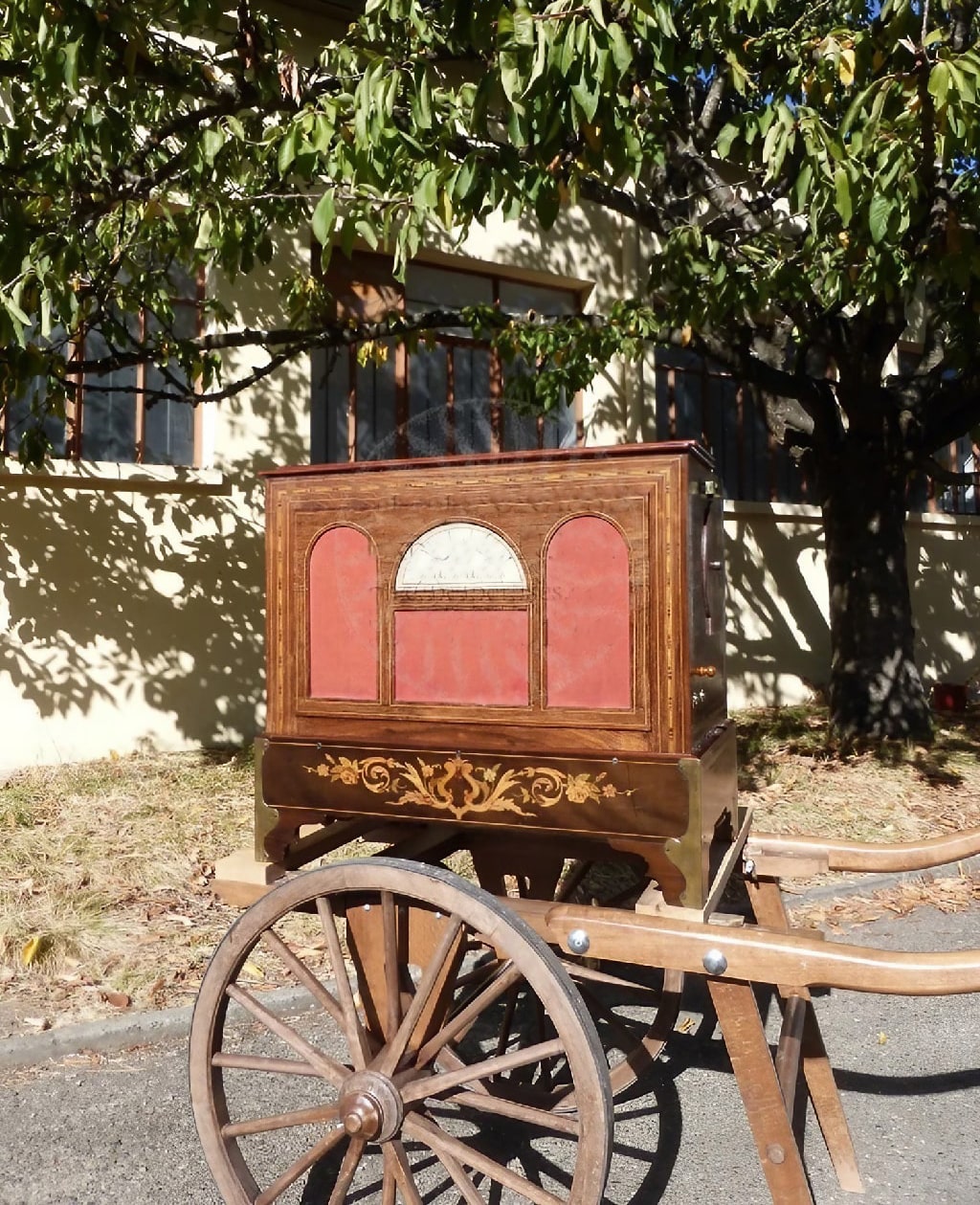
Is this the sort of "Harmoniflute" that so agitated Thomas Hardy?
I tell this month's story as much for what it says about the soundscape of our streets as the intrinsic fascination of the incident itself. It involves Thomas and his first wife, Emma Hardy (nee Gifford), who lived for three years (1878—1881) on the corner of Trinity Road and Brodrick Road.
In the summer of their first year here, Emma Hardy looks out of the back window and sees Thomas running down Brodrick Road. She is perplexed, mostly because he has fled the house without his hat.

Brodrick Road, off Trinity Road, the presumed route that (a hatless) Thomas Hardy sprinted down. The Hardys' house is now numbered 172 but at the time was usually referred to as 1 Arundel Terrace, or (rather unconvincingly) "The Larches".

Thomas Hardy, by Herbert Rose Barraud, 1889 (an older Hardy, since it was taken about a decade after the Hardys arrived). There are copies on Wikimedia and the NPG.
Here's how Hardy's second wife, Florence Emily Hardy (nee Dugdale) described the event her Life of Thomas Hardy (published by Macmillan, 1928-1930):

Mrs Hardy used to relate that during this summer, she could not tell exactly when, she looked out of a window at the back of the house, and saw her husband running without a hat down Brodrick Road, and disappearing round a corner into a by-street.
Before she had done wondering what could have happened, he returned, and all was explained.
While sitting in his writing-room he had heard a street barrel-organ of the kind that used to be called a 'harmoniflute', playing somewhere near at hand the very quadrille over which the jaunty young man who had reached the end of his time at Hicks's had spread such a bewitching halo more than twenty years earlier by describing the glories of dancing round to its beats on the Cremorne platform or at the Argyle Rooms, and which Hardy had never been able to identify.
He had thrown down his pen, and, as she had beheld, flown out and approached the organ-grinder with such speed that the latter, looking frightened, began to shuffle off. Hardy called out, 'What's the name of that tune?'
The grinder — a young foreigner, who could not speak English — exclaimed trembling as he stopped, 'Quad-ree-ya! quad-ree-ya!' and pointed to the index in front of the instrument.
Hardy looked: 'Quadrille' was the only word there. He had til then never heard it since his smart senior had whistled it; he never heard it again, and never ascertained its name.
It was possibly one of Jullien's — then gone out of vogue — set off rather by the youthful imagination of Hardy at sixteen than by any virtue in the music itself.
[
Quadrille — music to accompany a square dance, often based on popular tunes, operatic melodies etc.
There are some Jullien Quadrilles on YouTube.
Cremorne — presumably the Cremorne Gardens, just across Battersea bridge at Chelsea?.
Argyle Rooms — presumably those near Regent Street.]
The authorship of The Life of Thomas Hardy is complicated. Initially, it was published by Macmillan (on whom more below) over the name of Hardy's second wife, Florence Dugdale. At this time (1928-1930) it was presented as having been compiled by her, after Hardy's death, "largely from contemporary notes, letters, diaries and biographical memoranda as well as from oral information in conversation."
However, it later became apparent that Hardy himself had engaged in a literary deception — that it was he who had written The Life as his own autobiography, intending it to be as it were a posthumous "official biography" to be passed off by Florence as her own. As a result, later editions have generally been credited to them both.
To add to the confusion, more recently some scholars (notably Michael Millgate) have argued that Florence had in any case rewritten Thomas's work (in defiance of his wishes). However, all was not lost:
Through careful examination of pre-publication texts, Michael Millgate has retrieved the text as it stood at the time of Hardy's final revision. For the first time The Life and Work of Thomas Hardy can be read as a true work of autobiography — an addition to the Hardy canon. [Publisher's blurb, 1984.]
Whether this greatly affects the chapters on the Hardys' life on and around Wandsworth Common, I don't know. But I have just ordered Millgate's book, so we shall see.
This is a puzzle. Most references to "harmoniflutes" claim they are rough equivalents to harmonicas (mouth organs), or accordions. But this is a barrel-organ, and its young player is described as a "grinder", i.e. he turned a handle. Perhaps it looked something like this:
Expertises: Harmoniflute Barrel Organ.
July 8 or 9
With E. [Emma] to Mrs Macmillan's garden-party at Knapdale, near our house. A great many present.
Here's another July entry in the Hardy diary, in which Thomas and Emma attend a garden party at "Knapdale", ten minutes away down Trinity Road in the direction of Tooting Common. This had been the residence since 1863 of the publisher Alexander Macmillan.
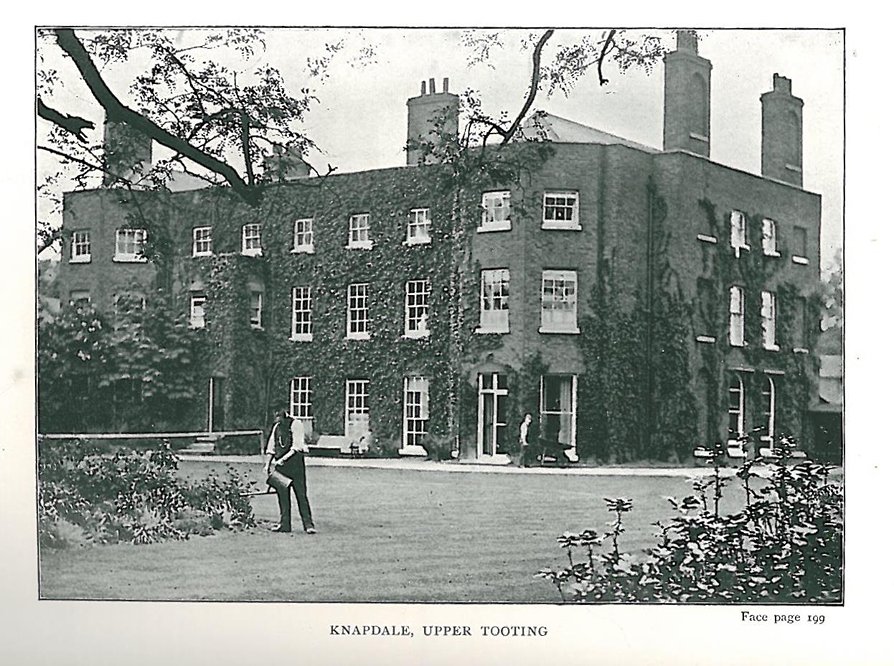
Knapdale: previously called "The Elms", but renamed in the 1870s after the Macmillans' ancestral home. ([It may also once have been called Broadwaters. See below.)
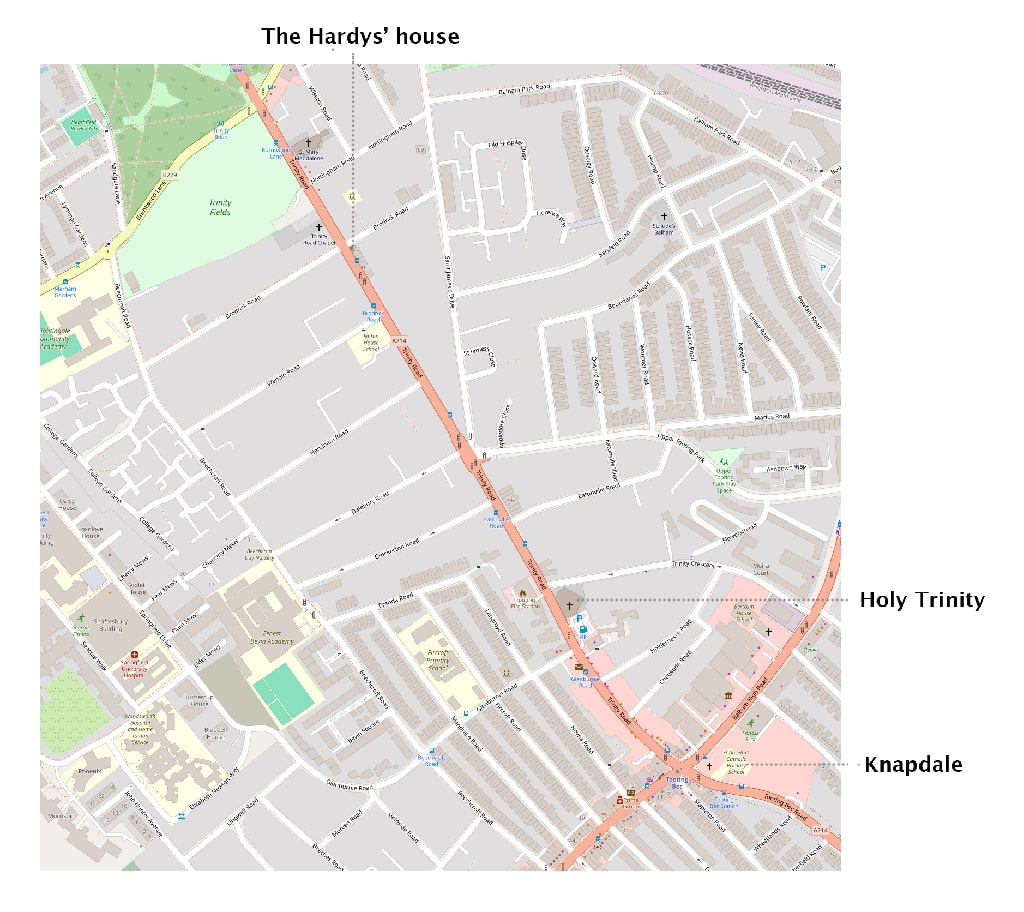
Knapdale, in relation to today's Tooting Bec junction.
Macmillan had several years earlier turned down Hardy's first novel, The Poor Man and the Lady (1867-1868; unpublished, manuscript lost), but had been encouraging. Persistence paid off, and Macmillan eventually published several of Hardy's mature works, including The Woodlanders (1887), Tess of the D'Urbervilles (1891) and Jude the Obscure (1895), as well as collections of poetry.]
Absolutely everybody went to Alexander Macmillan's parties (which may explain why Thomas had moved to Trinity Road in the first place).

Alexander Macmillan
Alexander Macmillan published, among many other soon-to-be-classics of children's literature, Thomas Hughes, Tom Brown's Schooldays (1857); Charles Kingsley's Water Babies (1863) and Westward Ho! (1855); Lewis Carroll, Alice in Wonderland (1865) and Alice Through the Looking Glass (1871), and Rudyard Kipling, Kim (1894). [See also this Macmillan Timeline.]
The entry in The Life continues:
Talked to Mr White of Harvard University, and Mr Henry Holt the New York publisher, who said that American spelling and idiom must prevail over the English, as it was sixty millions against thirty. I forgot for the moment to say that it did not follow, the usage set up by a few people of rank, education, and fashion being the deciding factor.
Also to John Morley, whom I had not seen since he read my first manuscript. He remembered it, and said in his level uninterested voice: 'Well, since we met, you have . . . ' &c, &c.
Also met a Mrs H., who pretended to be an admirer of my books, and apparently had never read one. She had with her an American lady, sallow, with black dancing eyes, dangling earrings, yellow costume, and gay laugh.
It was at this garden-party at Mrs Macmillan's that the thunder-storm came on which Hardy made use of in a similar scene in A Laodicean.
[For the thunderstorm during the garden party at Knapdale as depicted in A Laodicean, see chapters 15 and 16.
Also during the party, the unnamed "American lady, sallow, with black dancing eyes, dangling earrings, yellow costume, and gay laugh" appears as "Miss Deverell — a sallow lady with black twinkling eyes, yellow costume and gay laugh".

The cover illustration of a 1970s' Macmillan edition of A Laodicean, which Hardy wrote during his time living on Trinity Road.
I'd love to find a full-on Victoria book illustration showing the violence of the thunderstorm, but I can't. (I suspect the parasol in the recent Macmillan edition hints at the event.) This is the best I can do — a scene from the garden party inn which our hero and heroine have retired to a decorated and lit marquee, in which guests are dancing:

George du Maurier's (rather feeble) illustration for Harper's New Monthly Magazine (1880) showing the moment the hero (Somerset) and heroine (Paula) first touch hands. Illustration from Victorian Web
The thunder-storm showed no symptoms of abatement, and the music and dancing went on more merrily than ever.
"We cannot go in," said Somerset. "And we cannot shout for umbrellas. We will stay till it is over, will we not?"
"Yes," she said, "if you care to. Ah!"
"What is it?"
"Only a big drop came upon my head."
"Let us stand further in."
Her hand was hanging by her side, and Somerset"s was close by.
He took it, and she did not draw it away. Thus they stood a long while, the rain hissing down upon the grass-plot, and not a soul being visible outside the dancing-tent save themselves.
"May I call you Paula?" asked he.
There was no answer.
"May I?" he repeated.
"Yes, occasionally," she murmured.
"Dear Paula! — may I call you that?"
"O no — not yet."
"But you know I love you?"
"Yes," she whispered.
"And shall I love you always?"
"If you wish to."
"And will you love me?"
Paula did not reply.
"Will you, Paula?" he repeated.
"You may love me."
"But don't you love me in return?"
"I love you to love me."
"Won't you say anything more explicit?"
"I would rather not."
By the time of Hardy's visits, the Macmillans were well-established in the area. Alexander had moved here in 1863 with his wife Caroline, his brother’s widow Fanny, and their combined family of eight children. His aim was to be "in the country" yet close enough to a railway station (Balham) to whisk him to his offices in Covent Garden. The house and location must have suited because Alexander at first took a lease but later in the decade bought The Elms/Knapdale outright and lived here for more than twenty years.
[One of Fanny's children living at Knapdale was Maurice Crawford Macmillan (1853-1936), father of British Prime Minister Harold Macmillan. So here we have another PM with a local connection, joining William Pitt the Younger, David Lloyd George, and Clement Attlee.
By the way, Hardy was a guest at Harold Macmillan's wedding to Lady Dorothy Cavendish, the daughter of the 9th Duke of Devonshire, on 21 April 1920. ]
There's a vivid description of Knapdale in Sarah Harkness's fine Advocating for the Ignorant blog. I hope she won't mind if I quote her at length, since it's such a good account. I have interspersed her text with photographs of Knapdale in the Wandsworth Heritage Library. Their date is uncertain but probably taken after the Macmillans had left, since when it had become festooned with ivy.
If Tooting was to become an attractive alternative to living in central London, it needed decent transport links. Not everyone could have their own carriage! In the 1850s an omnibus service connected Upper Tooting and London six times daily — the bus was drawn by four horses and came from Carshalton via Mitcham and Lower Tooting, calling at the Wheatsheaf Inn [at today's "Tooting Bec"]. In 1861 the population of Tooting was just over a thousand, but over the next ten years it grew by some 40 per cent.
The major impetus to settlement had come with the opening of Balham Station in 1856 — on the West End of London and Crystal Palace Railway. This line terminated at Victoria, and its utility was crucial in persuading the overworked and highly stressed Alexander Macmillan, whose publishing business was relocating from Cambridge to Bedford Street in London’s Covent Garden, to move his whole family south as well.
The Elms was a large and comfortable house in its own grounds, described by Alexander’s son George as "old-fashioned but commodious." It took the form of an H-shaped, substantial three-storey gentleman’s residence constructed in brown London brick with an "in and out" carriageway from the main road.
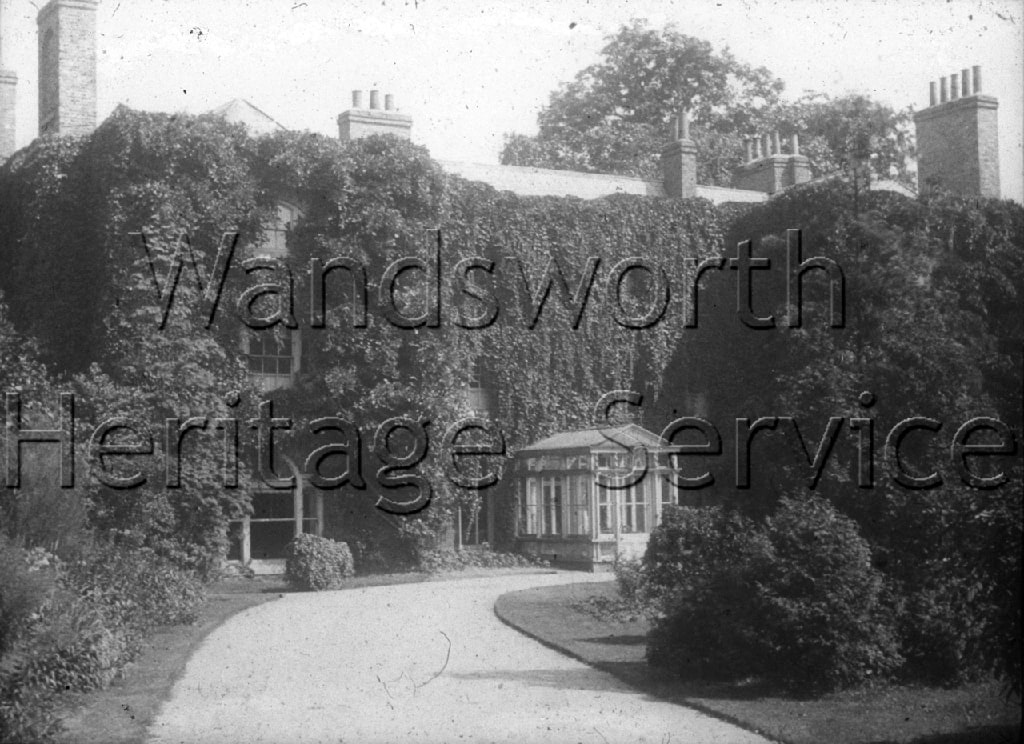
The brick of the house covered what in the eighteenth century was a timbered black and white house, with mahogany doors added, and delicately carved Adam-style mantelpieces in the reception rooms and the large bedroom. The attics were large and roomy. On the ground floor, beside Alexander’s library, there was a good-sized entrance hall with a broad staircase, and dining and drawing rooms. The nursery and night nursery were on the first floor corner facing the street, and the daughters of the house, as they grew up, were given the next two front bedrooms.
Alexander and his wife slept at the back overlooking the garden, and there was a gallery that ran from their room to the top of the staircase, along which the children built toy villages and roads on wet days.
Alexander described it as "a nice quaint old house, with a very pleasant garden so retired and countrified and yet so accessible." Though it was in a London suburb, yet there were "gypsies and tea on the Common when we first went there".
The move was a massive relief for the Macmillan family, not just for the simplification of Alexander’s business life, but in terms of the space it gave the children, who "tumbled about in the grass" all day long. He remarked that it was funny that they had moved to London to find themselves living in the countryside. "I never knew what the blessing of a country life was before."
The elm trees were a feature of the place; Macmillan wrote "I am getting to find them unendurable since they have given up the murderous habit of shying down big branches at people’s heads." There was also a mulberry tree, which Macmillan believed had been planted by the philosopher John Locke, on a visit to Lord King, his biographer, who had lived on the site. Unfortunately the tree blew down in 1886.
The house was highly convenient for Alexander, being only a fifteen-minute walk from Balham station and its trains to Victoria. It allowed Alexander to dispense family hospitality, home-cooked meals supervised and hosted by his wife and his sister-in-law, gardens to enjoy and the offer of a bed for the night.
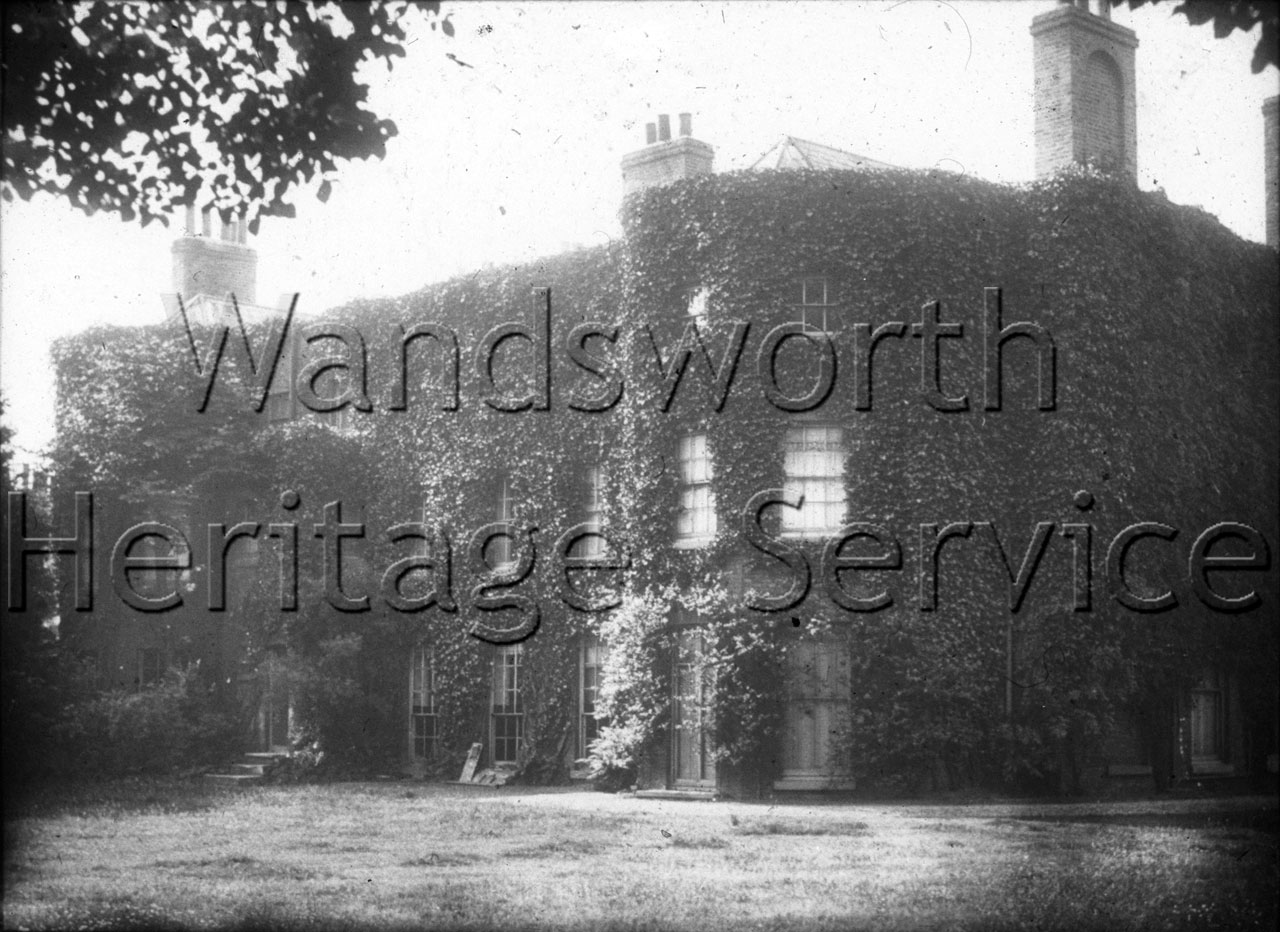
When Alexander had first opened London premises in Henrietta Street, he cultivated a circle of young and ambitious writers, painters, scientists and critics at Thursday evening gatherings of "talk and tipple" known as Tobacco Parliaments. Regular attendees included the Rossetti brothers, Thomas Hughes, Charles Kingsley, Thomas Huxley, FD Maurice and occasionally Alfred Lord Tennyson. These raucous evenings could now be replaced by open invitations to visit the publisher at his home.
Furthermore, his monthly periodical, Macmillan’s Magazine, was already showcasing female talent; now he had somewhere he could host these contributors for whom London drinking would not have been suitable. Mrs Craik, Mrs Oliphant and Miss Yonge were regularly invited. Christina Rossetti spent a night in June 1864. Jane Carlyle, wife of Thomas, stayed in Tooting on several occasions in June 1865 while her husband was travelling: she wrote that she had been entertained by Alexander singing Scotch songs, accompanied on the piano by the governess, but had been kept awake all night by the family dog under her window.
When she returned the following week the dog had been confined to the washhouse, and Alexander gave her a toddy of whisky to ensure she slept better. Alexander’s daughter Margaret recalled how Mrs Carlyle loved "the little attentions bestowed upon her by my mother, saying ‘Make of me, my dear, I love to be made of.’"
A great friend from Cambridge days, Alfred Ainger, wrote of Knapdale "In its large leisurely rooms, or in its spacious old world garden, there gathered together informally the men and women of note and the young promise of the day — authors, poets, painters, English and French, whether they came from Oxford or fresh from the ranks of the Impressionist Artists".
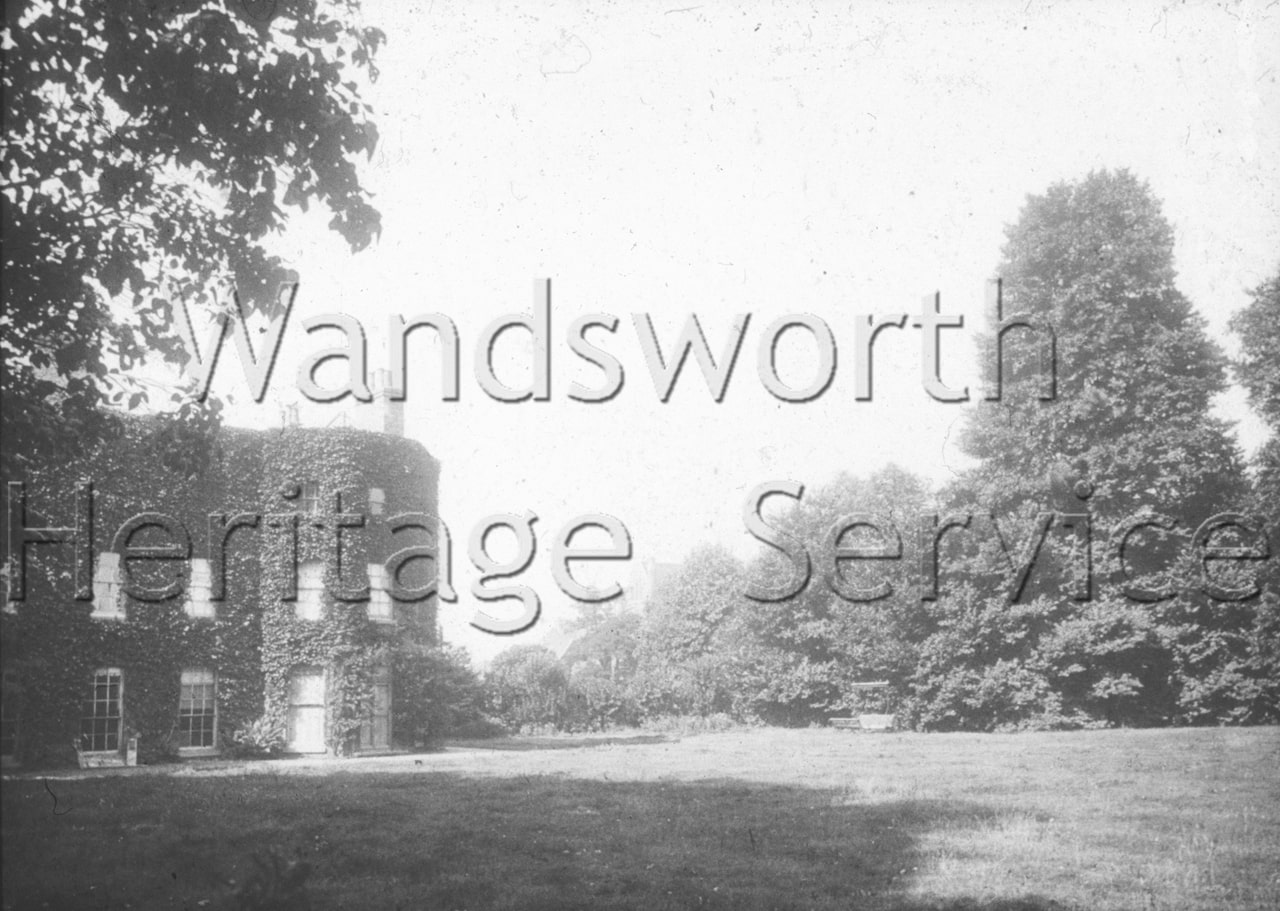
The reputation of the Macmillan home as "the place to be invited if you wanted to get published" continued for many years: from 1878-1881 Thomas Hardy brought his wife Emma to live at No 1 Arundel Terrace, on Trinity Road in nearby Wandsworth in an attempt to get himself more noticed by literary London. Hardy visited Knapdale several times, where he met other writers including Matthew Arnold and Tennyson — he was at a garden party at Knapdale when a thunderstorm hit, and the guests had to take shelter, an incident he used in The Laodicean.
Margaret Macmillan wrote a memoir of her father’s life at this time:
"The family’s day started with prayers at eight o’clock, followed by breakfast and then ‘the departure for the station, bag in hand. A short cut to Balham station led across a field belonging to a neighbour, and my sister and I often stood and watched him at the garden gate. I can see him now, his broad figure of average height, the shoulders a little rounded, and a rather peculiar walk, the toes turned outwards. Always a leisurely walk, for he gave himself plenty of time to catch the train."
[Sarah Harkness: "A Little Corner of Victorian London". I have just bought her Literature for the People: How the Pioneering Macmillan Brothers Built a Pubishing Powerhouse (2024), which I'm very much looking forward to reading — as soon as I've got July's Chronicles out of the way.]
The Hardys make several references to Macmillan or Knapdale in these years. We've already seen that Thomas used a thunderstorm that occurred during one garden party in The Laodicean, the novel he wrote when living on Trinity Road.
They also record that on 16 June 1878, a Sunday evening, Alexander told Thomas and Emma of a (very Hardy-esque) spooky story about a woman in a red cloak who passed for a witch on Craignputtock Moore. He'd heard it from Thomas Carlyle's wife, the Scottish writer Jane Welsh Carlyle, apparently from personal experience.
It was at Knapdale that Hardy met (and seems to have bonded with) "Darwin's Bulldog" Thomas Henry Huxley:
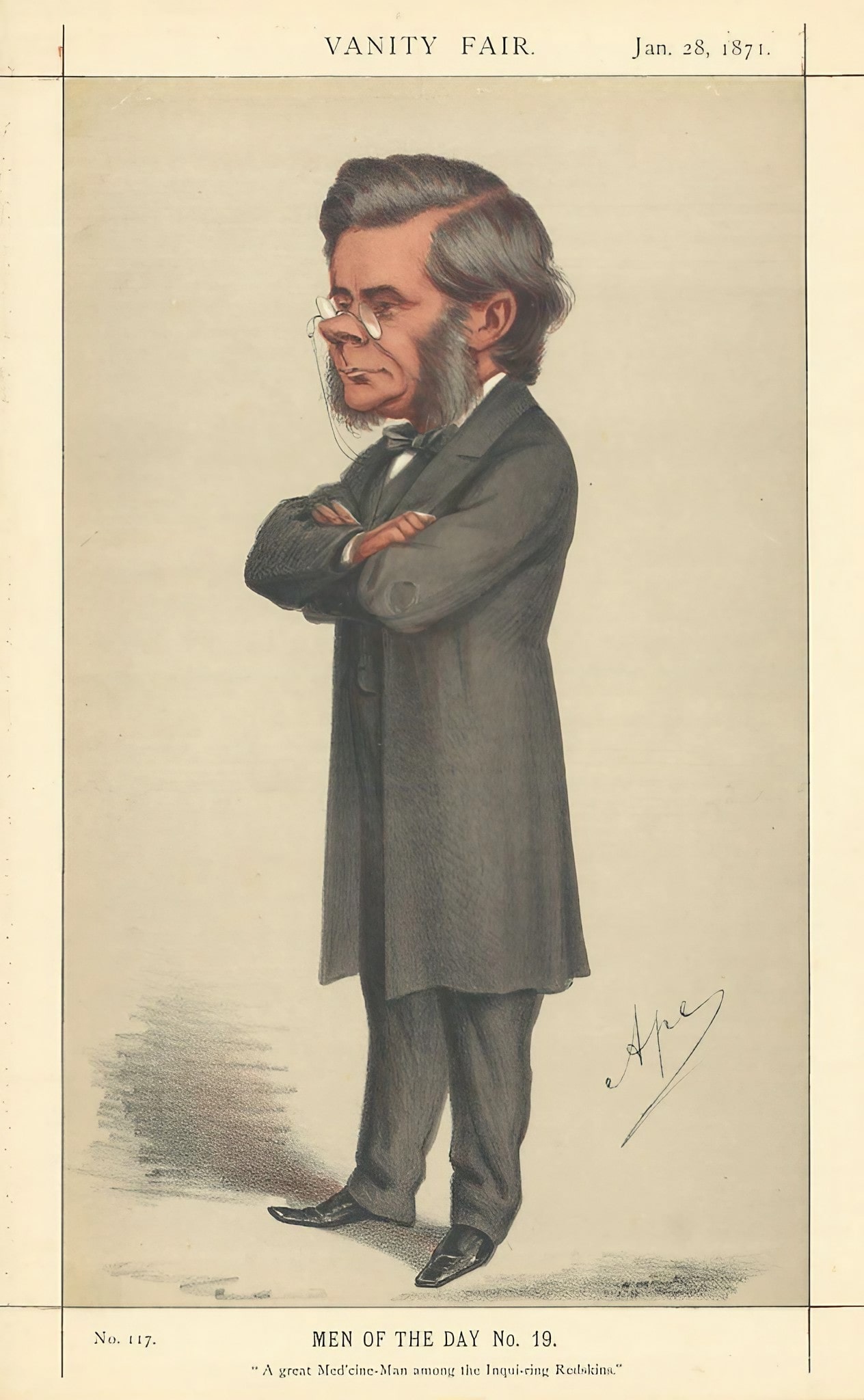
Thomas Henry Huxley: "A great Med'cine-Man among the Inqui-ring Redskins" by "Ape", Vanity Fair (28 January 1871).
We sat down by daylight, and as we dined the moon brightened the trees in the garden, and shone under them into the room. For Huxley, Hardy had a liking which grew with knowledge of him — though that was never great — speaking of him as a man who united a fearless mind with the warmest of hearts and the most modest of manners.
Finally, we must mention once again the Macmillans' role in Thomas Hardy's near-fatal illness. This started in October 1880:
23 October 1880
Thomas Hardy falls seriously ill
On returning to his home in Trinity Road, the author Thomas Hardy falls seriously ill. He won't be able to walk outdoors again for seven months — until May 1881, when he sets off alone and ecstatic across Wandsworth Common. He is just 40 years of age.
Thomas was in great and persistent pain.
Emma had sent for a surgeon who lived opposite. The surgeon returned on successive days and pronounced that Hardy was bleeding internally. An operation was required, but it would be very risky.
Mrs Hardy called for advice on their friend the publisher Alexander Macmillan (who lived at Knapdale, an impressive house near Tooting Bec Common). The Macmillans' doctor agreed with the earlier diagnosis.
I'm sure I've written more about Hardy's illness, and the slow progress of his eventual recovery, but for the moment I really can't remember where.
Thomas and Emily Hardy on and around Wandsworth Common
I've written about their experiences a number of times already, including here:
— October 2021: Thomas Hardy falls dangerously ill (23 October 1880).
— January 2022: "A January Night (1879)" (poem).
— February 2022: "On the first of February 1880 Hardy observed a man skating by himself on the pond by Trinity-Church Schools at Upper Tooting".
— March 2022: Thomas and Emma Hardy move to Arundel Terrace, Trinity Road (22 March 1878).
— May 2022: Thomas is often troubled at night by "a monster whose body had four million heads and eight million eyes" (19 May 1880).
— June 2022: Hardy is on the train up to Town: "In railway carriage a too statuesque girl; but her features were absolutely perfect" (27 June 1879).
But there are still some more stories to tell.
For example, thanks to the brilliant research skills of Sarah Vey I can now tell you where on Bolingbroke Grove (and with whom) the Hardys stayed the night before they moved into "The Larches". (Thanks, Sarah!) But I'll probably keep you in suspense until its anniversary month, which is March.
Plus there's Thomas's ecstatic walk over Wandsworth Common in May 1872, his first after recovering from his desperate illness.
Oh, and I really must tell you my theory about Thomas Hardy and Kate Webster, the only woman to be executed at Wandsworth Gaol.
Of the last of these, and much else, more next month.
Trinity Road and Holy Trinity Church
The name "Trinity Road" is a relative late-comer. I'm not sure when the road between Upper Tooting and Wandsworth was first called that, but probably around 1860 as it derives from Holy Trinity Church, just outside the Battersea-Wandsworth boundary within Streatham parish.
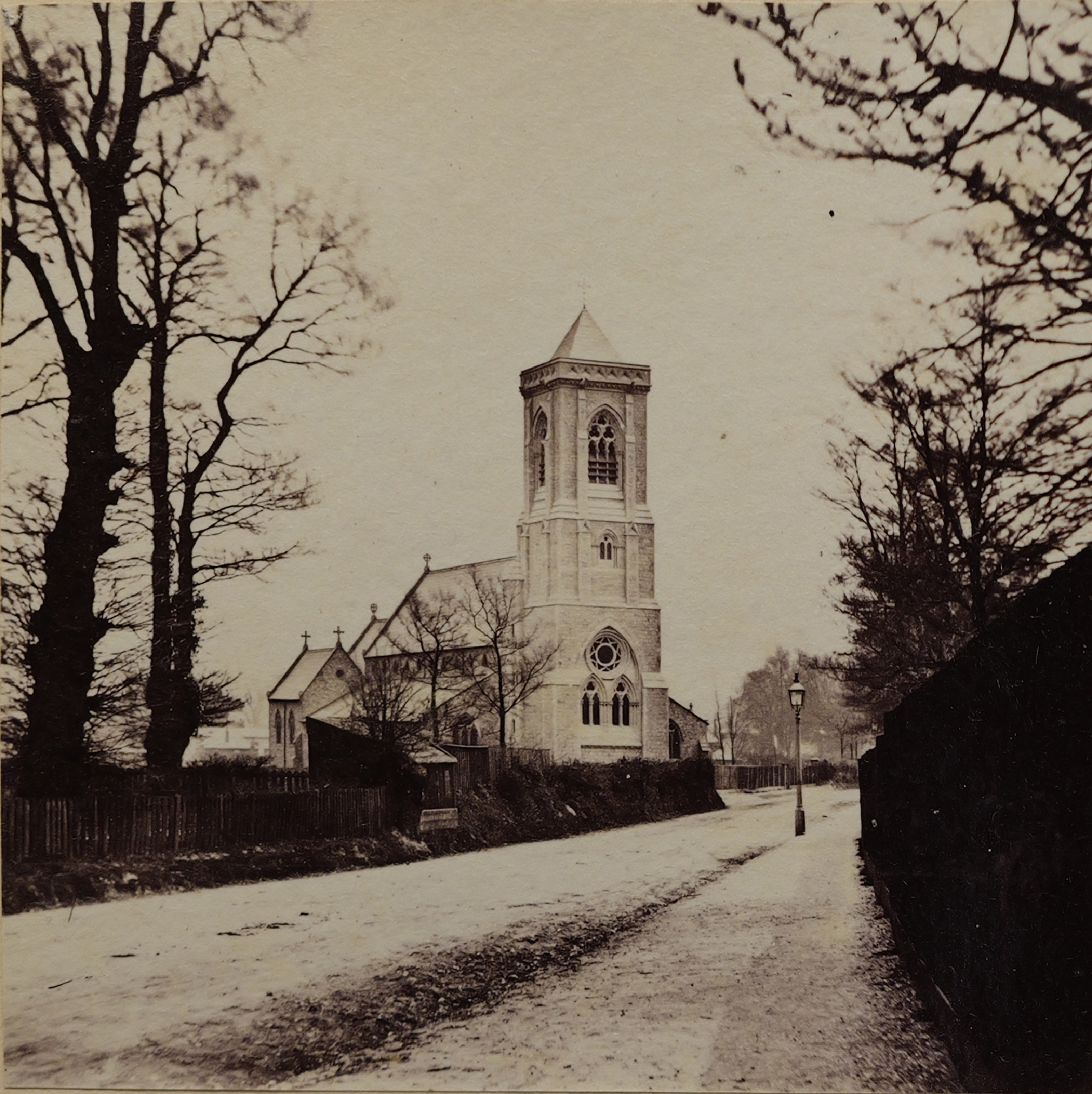
A remarkable early photograph of Holy Trinity Church, Trinity Road, by local young photographer Geoffrey Bevington c.1864.
Holy Trinity Chuch, consecrated 26 June 1855, was half-way between the Hardys and the Macmillans. It was here that the Macmillans worshipped. Did the Hardys ever attend church here (or indeed somewhere else)? I'd very much like to know.
Was Knapdale once called "Broadwaters"?
I have followed Sarah Harkness in declaring that Knapdale was previously called "The Elms". However I have also come across an entry by local historian Graham Gower in his excellent Balham Heritage Trail (Streatham Society, 2010) that refers to the house as "Broadwaters". Perhaps it was renamed several times? ("The Elms" is such a Victorian villa name. I wonder why? I can think of four or five in our area, including one on Bolingbroke Grove and two near St Anne's Church).

So whatever happened to Knapdale?
In 1912, the great historian of London, Walter Besant, foretold the death of Knapdale, "a fine old seat", in his tour of Wandsworth, Tooting, and Streatham:
. . . then comes Tooting Bec Road, or till recently Streatham Lane, leading to Tooting Common. In this road are two fine old seats, "Streatham Elms" and" Knapdale," but the demand for building sites has taken the land up to their very back doors, and before long they will probably give way to the prevailing straight rows of two- and three-storied houses.
[Walter Besant, Survey of London: London South of the Thames (1912).]
Yet, strangely, Knapdale is still there, behind a high wall and a screen of trees. So well concealed, in fact, that for years I waited almost opposite for a number 19 or 49 bus to carry me back to my home near the prison and never suspected its existence.
It's best seen from the top of a bus, or a Google aerial shot, as here:
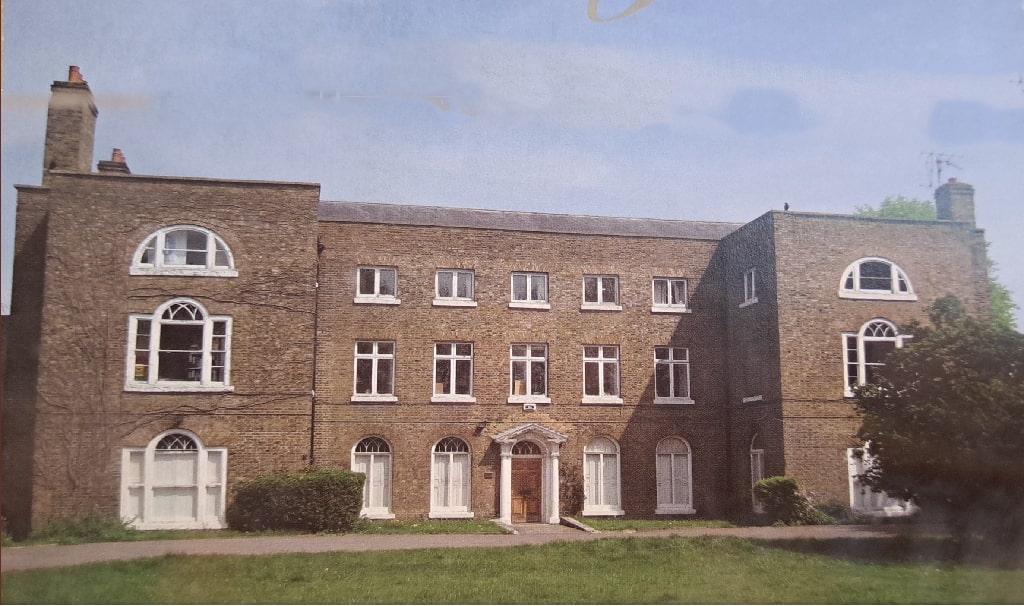
Knapdale much spruced up and freed of its ivy overcoat. Presumably a fairly recent photograph. Notice the square projecting bays, venetian windows and lunettes. (Pevsner complains about the replacement glazing.)
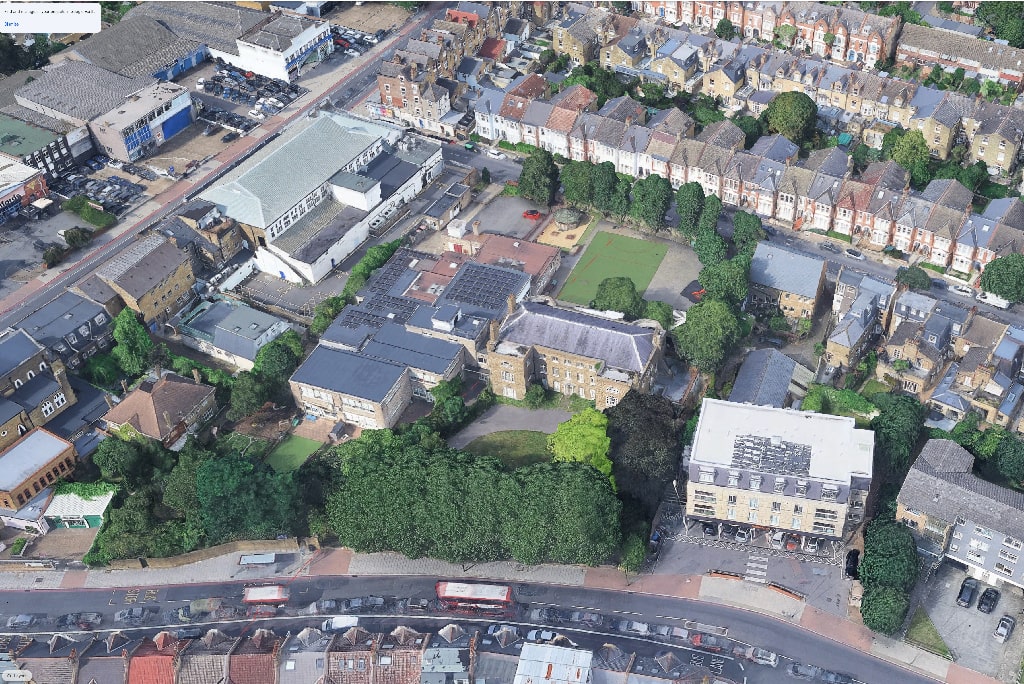
Spot Knapdale today. View across Tooting Bec Road.
Here's another aerial view, showing that the projecting bays at the front are rectangular, but polygonal at the rear.
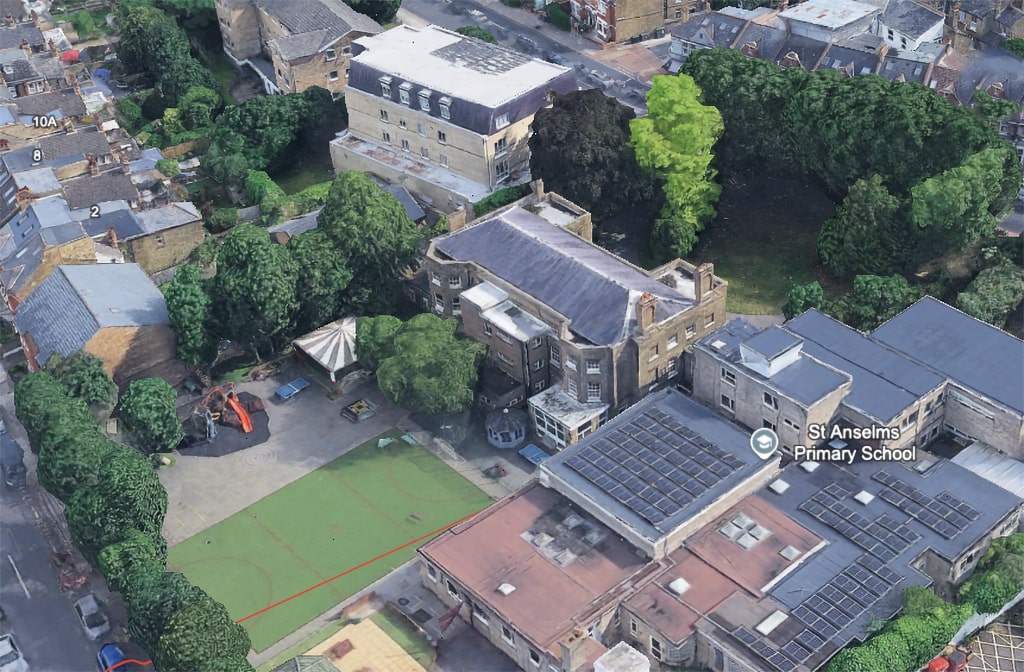
St Ansem's Primary School. View of the rear of the former Knapdale, across Louisville Road.
It is currently St Anselm's Primary School. (It was once a convent school but never La Retraite, as Pevsner states). Having been used as a school for many years, I expect (but don't know) that there are few interior features left from the Macmillan era. [I have greatly benefited from a discussion with Peter Farrow on this. Thanks, Peter!]
Peter Farrow emailed to ask whether much if anything remained of the interior. I replied that I imagine there's very little, given its history (including latterly as a school).
Cherry and Pevsner (The Buildings of England: London 2: South), I noted, are very obscure. There's nothing in the following description, which must be Knapdale, about the interior. They write:
UPPER TOOTING. The oldest house is LA RETRAITE (convent school), in Tooting Bec Road, with a dignified C18 front, five-bay centre with projecting wings with Venetian windows below lunettes, the glazing all unfortunately altered.
At first I wondered whether they were referring to Knapdale at all, since La Retraite is in Atkins Road, quite a way away.
The description certainly fits one of the photos I included — the front view, from Tooting Bec Road — the one where the house is named as originally "Broadwaters", and Google Street views. The other views, where the house is draped in ivy, are very different — e.g. no Venetian windows or lunettes. Aerial views confirm that these are views of the back. The projecting wings are square in the front, and curved in the rear.
So are C&P in error? In short, yes. Although acquired and used by the local Catholic Church, the former Knapdale was never anything to do with La Retraite school.
See the Historic England listing for St Anselm's school here.
Thanks, Peter.
[Incidentally, while I think of it, and on a completely different topic, Cherry and Pevsner are also wrong in asserting that the architect of the Surrey Pauper Lunatic Asylum, now called Springfield Hospital, was [forename?] Lappidge, a builder responsible for minor alterations, and not William Moseley, the principal architect. This has led to a large new road in "Springfield Village", or "London Square", or whatever the development has been branded, being called Lappidge Drive. So even the brilliant and indispensable Cherry and Pevsner can make mistakes!]
Oh, bother. Just as I was about to stop writing, I suddenly remembered this Punch cartoon that reflects (facetiously) on a central theme of The Laodicean (one of Hardy's least-read novels) — the emergence of the independent, educated, free-spirited New Woman:
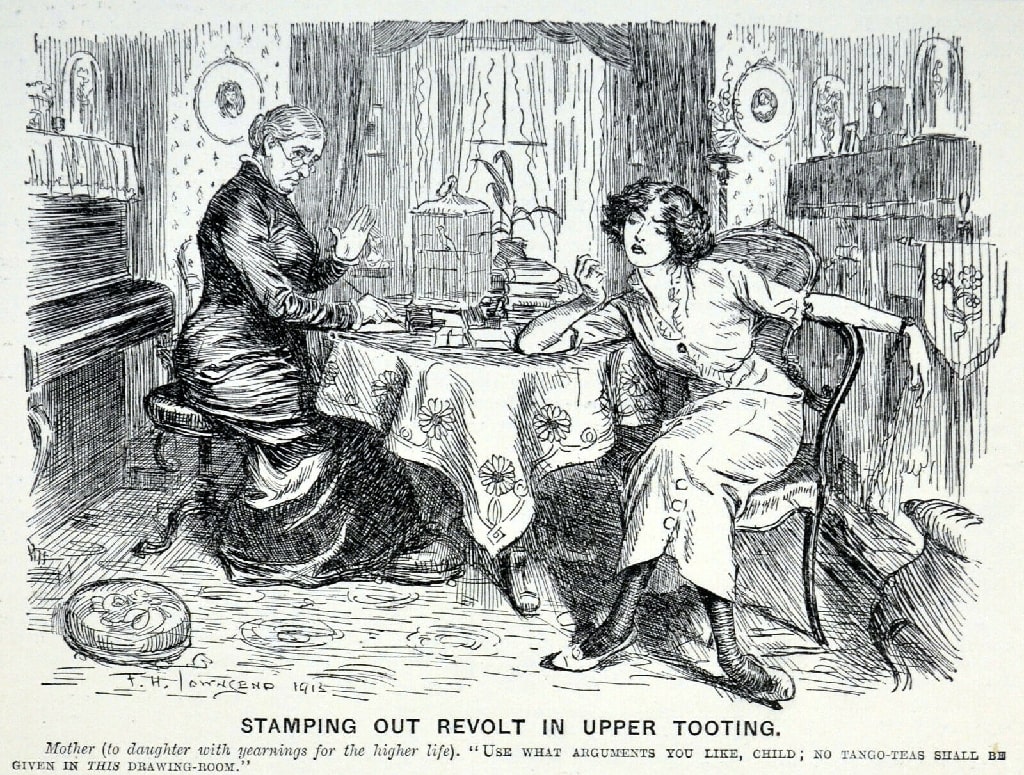
Frederick Henry Townsend, "Stamping Out Revolt in Upper Tooting", Punch, 6 September 1913.
SO many more stories still to tell. But that's all for now, folks.
Send me an email if you enjoyed this post / want to comment on something you've seen on the site / would like to know more — or just want to be kept in touch.
If you would like to receive notifications of new Chronicles, let me know . . .
Philip Boys ("History Boys")
July 2025
— Friends of Wandsworth Common
— Wandsworth Historical Society