— Index / Links - Edward Thomas.
— Talk Draft 1.
— Talk - Notes.
— Homes....
— Helen Thomas, On Storm's Wing [text part-OCRd].
As a teenager, Helen, nee Noble (her father was the journalist and literary critic James Ashcroft Noble, lived close to the Common. Their first home, from 1893, was on St Ann's Hill (then called The Grove), and later, from 9 December 1895, no.6 Patten Road. In these years, Helen and her sister Mary attended Wimbledon High School.
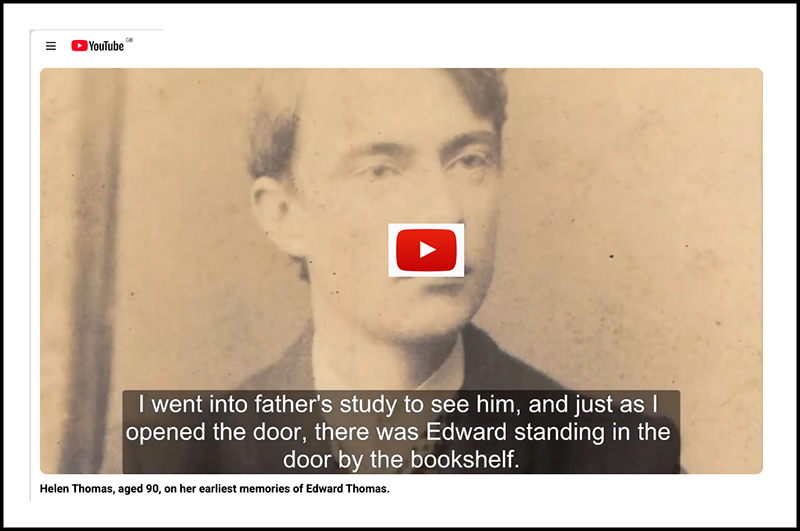
Here's how Helen, aged 90, Helen recollected meeting Edward:
* This was "The ", published when Edward was only 19, which includes several references to Wandsworth Common. here for example is an entry in the last chapter, a natiure diary: [Helen's father suggests they walk together.] She had been out walking with Edward Thomas a number of times. At least at first, this was with parental consent - indeed, with her father's active encouragement.I went into father's study to see him, and just as I opened the door, there was Edward standing by the bookshelf — very tall, very good-looking, and very shy and reserved. We shook hands, and I remember very well indeed that he shook my hand very firmly and hard, and I liked that. I thought, well, yes, you look rather shy and timid, but you don't shake hands like one.
I stayed and listened to father and Edward talking, then left. He came several times after that, and every time he came I was attracted by him. I went into the study to join in the talk, which was all about books of course, and writing. At that time he had written a book about nature — a nature diary * — and it was obvious from what he told my father how interested he was in wildlife, and how he used to do tremendous walks in the country round London, which was then great open country but is suburbs now.
Father one day said, "Here's Helen, longing for the country — why don't you take her on one of your walks?" So Edward took me, more than once, and that was how it all began.
We went to Morden, I think it was — anyway, one of those places which are now suburbs but were completely open country in those days, all hedges and lanes and fields and no houses.
We did this several times, you see, and we got to know each other and got more and more intimate.
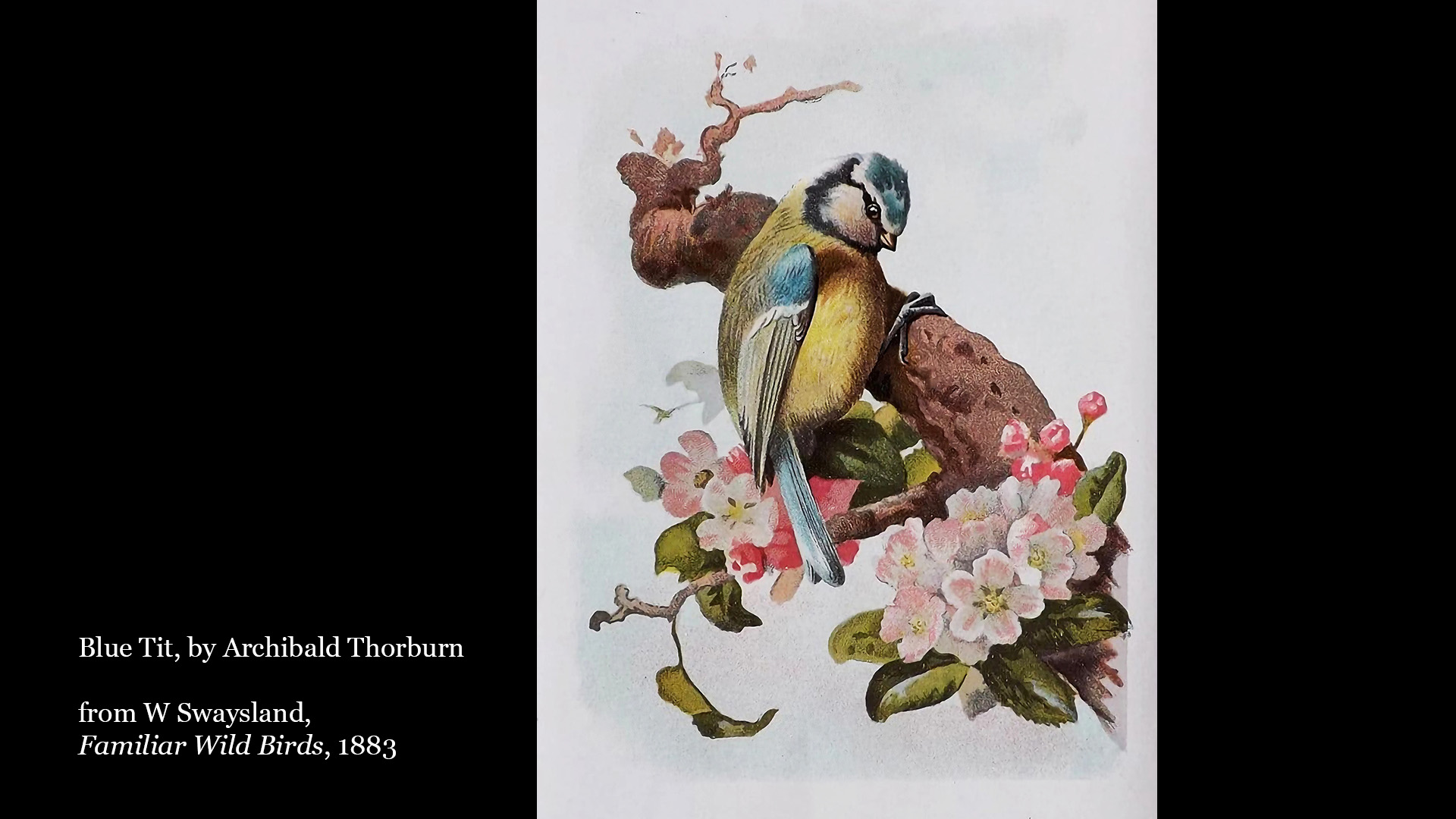
>dward taught me — mostly about books, but also all about nature. I remember very well him lending me a book about birds, with lots of illustrations. There was one particularly — a picture of a blue tit — and I had never seen a blue tit, and I couldn't believe that such a brilliant bird was an English bird. It surprised me very much to find it was a common little wild bird.
He did tease me about my awful ignorance of birds and flowers and everything, but I had never been in the country, so I enjoyed these walks tremendously. I remember being very pleased that my shoes got coated in mud and my skirt got covered with bits of grass and things, because we scrambled about in hedges. I came home feeling very countrified and happy.
Father was delighted — though he didn't live very long after that. He was very fond of Edward, and he was delighted that we were being so friendly. He had no idea then that we should marry.
But this changed when her father died, and her mother became.... Eventually, theirs too was a kind of forbidden love.
And like ? and ?, Helen and Edward greatly enjoyed the Arthurian legends . . . Lancelot and Guinevere.
Forbidden love - not adulterous, as in the story of Paolo and Francesca, but forbidden love all the same - they were young, Edward was only ? and He;en a little older. [He didn't go up to Oxforduntil....] Helen's mother had . . . love of
There was no definite moment when friendship became love, but a natural merging into love as we became closer, friends. At this time we both knew that the friendship between us was the happiest thing in our lives, but we did not regard the future. We were content with the present.
But I remember one evening very well. It was in the spring and nearing Edward's birthday, March 3rd. We were walking on the Common, very happy, talking of what we had been reading, what doing, what thinking, walking as usual hand in hand.
In a space of silence, when thought and emotion went to and fro between us too full even for speech, I felt that wonderful experience of the first stirring of desire, though at this time it seemed half-maternal tenderness for his big, strong body, and his lovely face, and his hand holding mine, which now held his more firmly — mingled with something new and strange that I did not understand.
I remember how, with that emotion Aooding my being, my heart beat too fast, and my face burned, and I could have fainted with the pain and the joy of it. For it affected me as later I was affected by the first flutter of my baby in my womb.
When we reached the place for good night I could not let him go as he had always done before, but put hands round his head and drew it down to mine and kissed his mouth and looked close into his eyes. And he returned my kiss and my look, and then turned to go. But as I turned to go, too, he caught me in his arms and pressed me to him and kissed my mouth and my eyes and my neck; blindly and fiercely he kissed me, and I abandoned myself to him, not responding but just yielding myself to his kisses.
When I was in my bed I could not sleep, but lay trembling half with fear, half with wonder, at what I had awakened in him. I had not known that love could be like that — so fierce, so rough, so greedy.
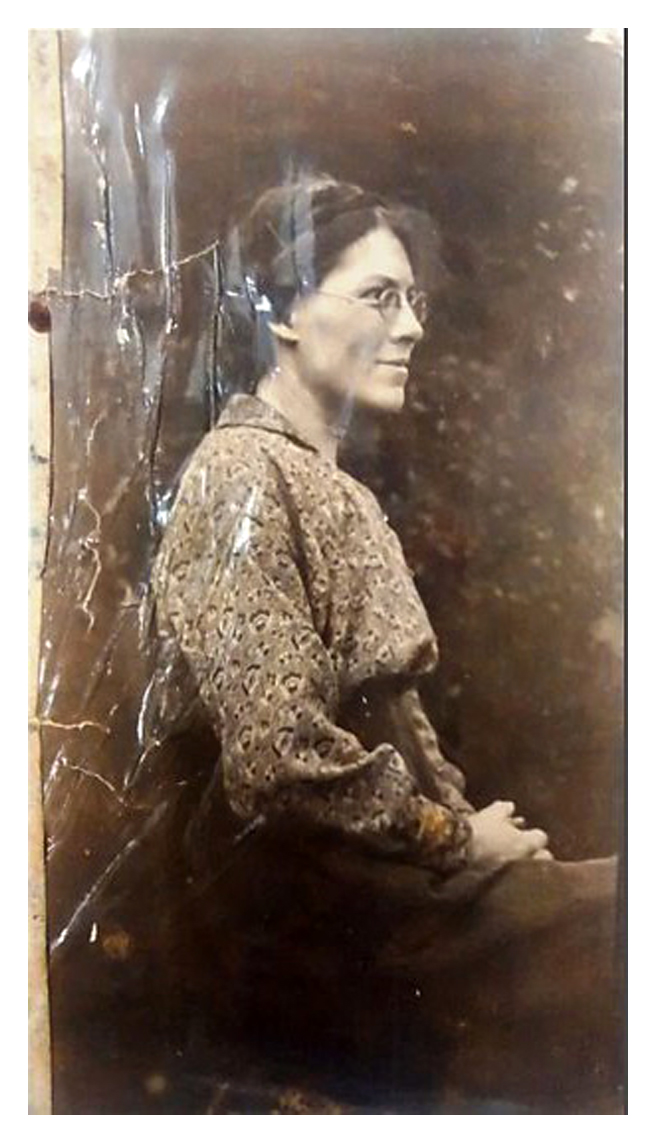
[I found this online somewhere and enlarged it a little. I have since come across a better version, which I will add.]
Edward Thomas married Helen Berenice Noble, 20 June 1899; there were three children: Mervyn, born 1900, Bronwen 1904, and Helen Elizabeth Myfanwy 1910.
[ADD NOTES]
Helen Noble, daughter of the literary critic James Ashcroft Noble who helped ET as a young man — "Helen had been born in Liverpool in 1877, and the family returned to Wandsworth in 1893 after a previous stay, Helen attending Wimbledon High School" [check] —
"after a previous stay"? I think her family was living in St Ann's Hill when she first met a teenage ET — moved [December 1897] to Patten Road (in the Toast Rack) — Helen and Edward met frequently on Wandsworth Common — and walked together over Clapham Common, Wimbledon Common, Richmond Park, to Merton etc — she became pregnant — they married while he was still a student at Lincoln College, Oxford — they pushed a pram on the Common —
There are fine photographs of the family made by Dorrett and Martin — they lived in a semi-slum in Atheldene Rd off Garratt Lane — then moved out of London etc — though often returned
Helen wrote fine memoirs of their life together, and people they had known (WH Davis, DH Lawrence, Ivor Gurney, Rupert Brook, Eleanor Farjeon, Robert Frost among them). But above all it's a wonderful evocation of herself.
[I'm perplexed. I KNOW I heard Helen speak about the house she lived in [The Grove], "near Wandsworth Common" - it was the very first line of her reminiscence. But where is it?
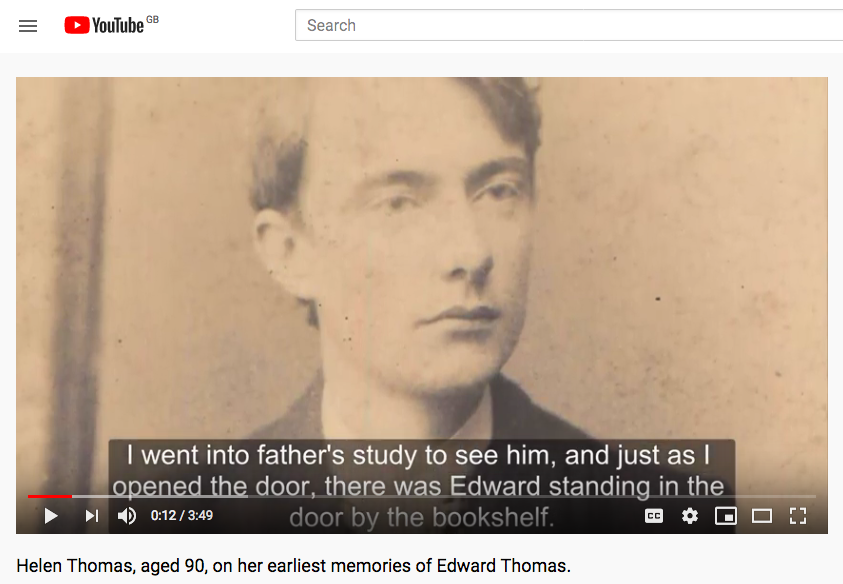
Helen Thomas speaking in 1967, aged 90, about her earliest memories of Edward Thomas. As featured in Cardiff University Special Collections and Archives' Edward Thomas 100 exhibition: http://edwardthomas100.weebly.com/
[Grrr...I'm SURE I've heard a version of this which starts a little earlier, in which she sets the scene by saying words to the effect, when we moved to London we lived first in a small house near Wandsworth Common..." But where is this recording?
Transcript of https://www.youtube.com/watch?v=qC5vyHcZAkc
I went into father's study to see him, and just as I opened the door, there was Edward standing in the door by the bookshelf. Very tall, very good looking, and very shy and reserved, and we shook hands. And I remember very well indeed that he shook my hand very firmly and hard, and I liked that. I thought, "Well, yes...you look rather shy and timid, but you don;t shake hands as if you are at all flabby.And I stayed there and listened to father and Edward talking, and then left them.
And he came several times, and every time that he camer, I was attracted by him, and I went into the study to join the talk, which was all about books, of course, and writing. And Edward at the time was, he had written a book about, a sort of nature diary, and it was obvious that he'd told my father how interested he was in wildlife, and how he used to go on tremendous walks in the country around London, which was then greatly more than it is now.
And father one day said, "Here's Helen, who's longing for the country, why don't you take her on one of your walks?" So Edward said he would, and I was very keen. And so that was how it all began.
We went to Morden, I think it was, one of those places that are now suburbs of London but they were completely country in those days. And it was all hedges and lans and fields, no houses, except for the villages. And we did this several times, you see. And we got to know each other and we got more and more intimate.
And Edward talked to me mostly about books, but also about nature, and I remember very well his telling me, oh, he lent me a book about birds, and in it was an illustration of a bird, lots of illustrations of birds, but one particularly, the picture of the blue tit, and I'd never seen a blue tit as far as I knew, and I couldn't believe that such a brilliant bird was an English bird. And it surprised me very much to find it was a common little wild bird, and Edward I remember was very amused at my awful ignorance of birds and flowers and everything, but I'd never been in the country you see.
So I enjoyed these walks tremendously and I remember being very pleased that myt shoes got covered with mud, and my skirts got covered with bits of grass and burrs and things because we scrambled about in hedges. Father was simply delighted, but he didn't live very long after that. But he was very fond of Edward and he was delighted that Edward and I were being so friendly, though he'd no idea then that we should marry.
Helen recollects meeting Edward, from On Storm's Wing:
[19]
I remember so well that very first meeting. We lived then in a little new villa in a row, in a new road quite near Wandsworth Common. The front room was the dining-room, and the piano was there; the back room at the end of the passage looking on to the tiny garden, which was kept full of flowers, was my father's study. This was lined with books, and in the middle of the room was his knee-hole writing-table.
... [20] Both my sisters were clever, and had carried everything before them at school. I hated school, where my sisters' brilliance threw into sharp relief my own incapacity, and I had begged to leave and be at home with my father, whom I adored.I remember that afternoon. We knew the strange boy was coming. Our Unitarian minister had asked my father to look at some of his work and see if it was any good, and Father had thought so highly of it that we had already nicknamed the boy 'The Genius'. Perhaps we had been told he was shy; anyway we left the study and went into the dining-room, and when he came he was shown straight in to Father, who was waiting for him. We girls were playing The Mikado on the piano and singing, and between whiles laughing and talking of the boy and wondering what he would be like, and I think
[21]
feeling a slight, amused prejudice against him for being shy and serious and clever. Soon, when we thought Father had had enough of him to himself, we thought we should like to sec him, but my two sisters drew back at the door; so I went alone.
I opened the door, feeling silly, and giggling, because of the rather extravagant things we had been saying about him: and just inside the door, standing by the bookshelves with an open book in his hand, he stood, so that I came upon him sooner than I had expected. This made me laugh the more, or feel inclined to laugh, had not his face, into which I looked, immediately changed my mood.
My father introduced us and our eyes met — the boy's solemn grey eyes rather over-shadowed by drooping lids with long lashes. He did not smile, but looked very steadily at me and I at him as he took my hand with a very hard and long grip. I remember feeling pleasure in that first touch and thinking "I like him; I like the way he shakes hands and the straight, intense look in his eyes."
After I came in, the talk lagged, my father doing his best to keep things going, but Edward was too shy and constrained by my presence to be able to talk. And soon he went, refusing to stay to tea to meet my sisters.
I can't remember if he dwelt much in my thoughts after the first meeting, but I do remember that though I thought him shy and awkward and silent I liked him and wanted to see him again.
"Adlestrop" by Edward Thomas read by Helen Thomas (nb she was with ET).
Helen Thomas made this recording at her home in Eastbury, near Lambourn, Berkshire on April 8, 1964, nearly 50 years after it was written.
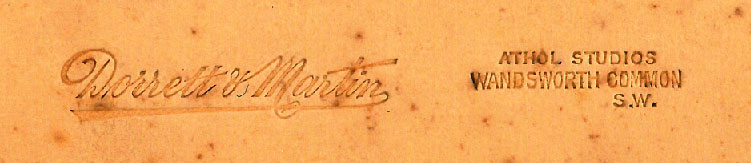
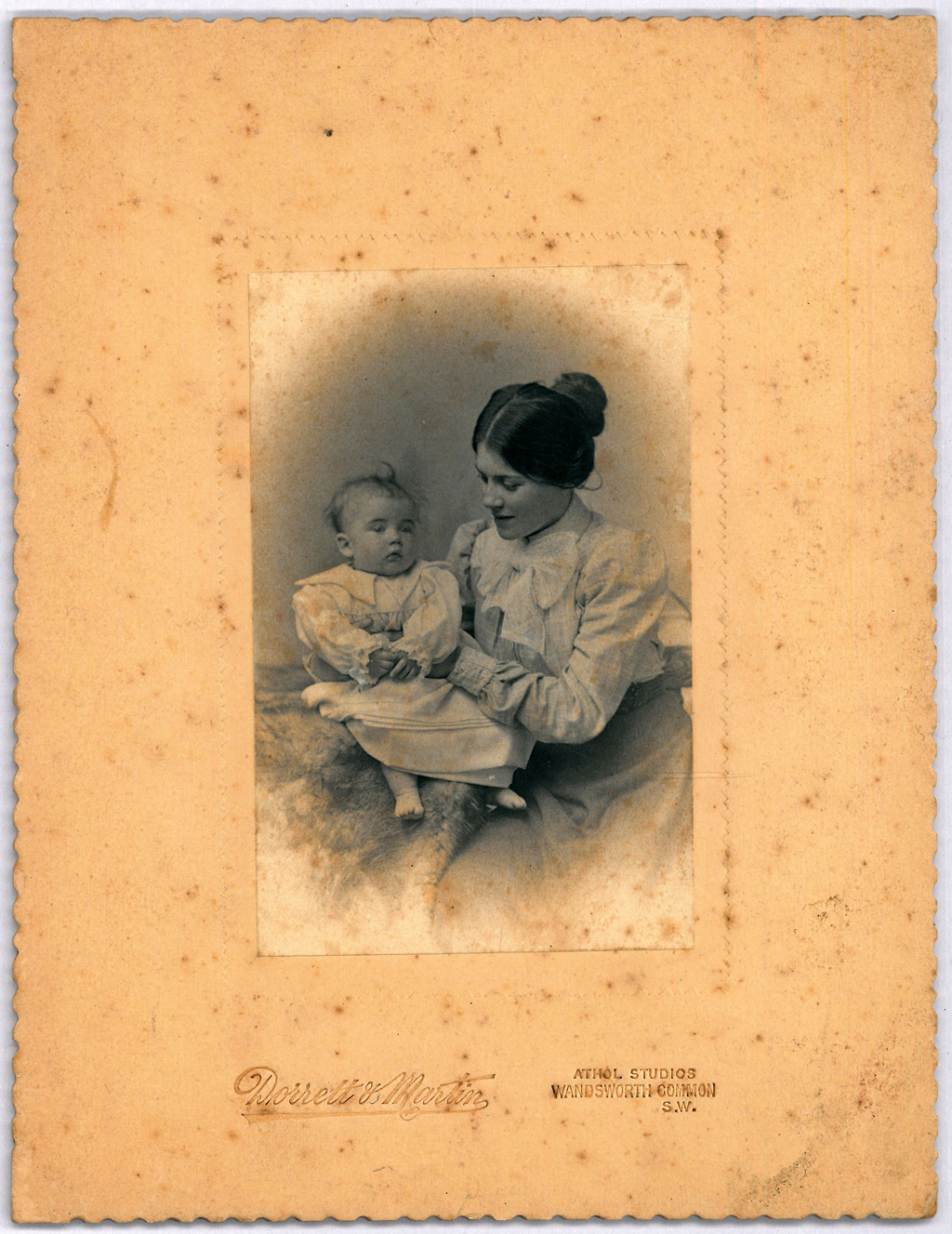
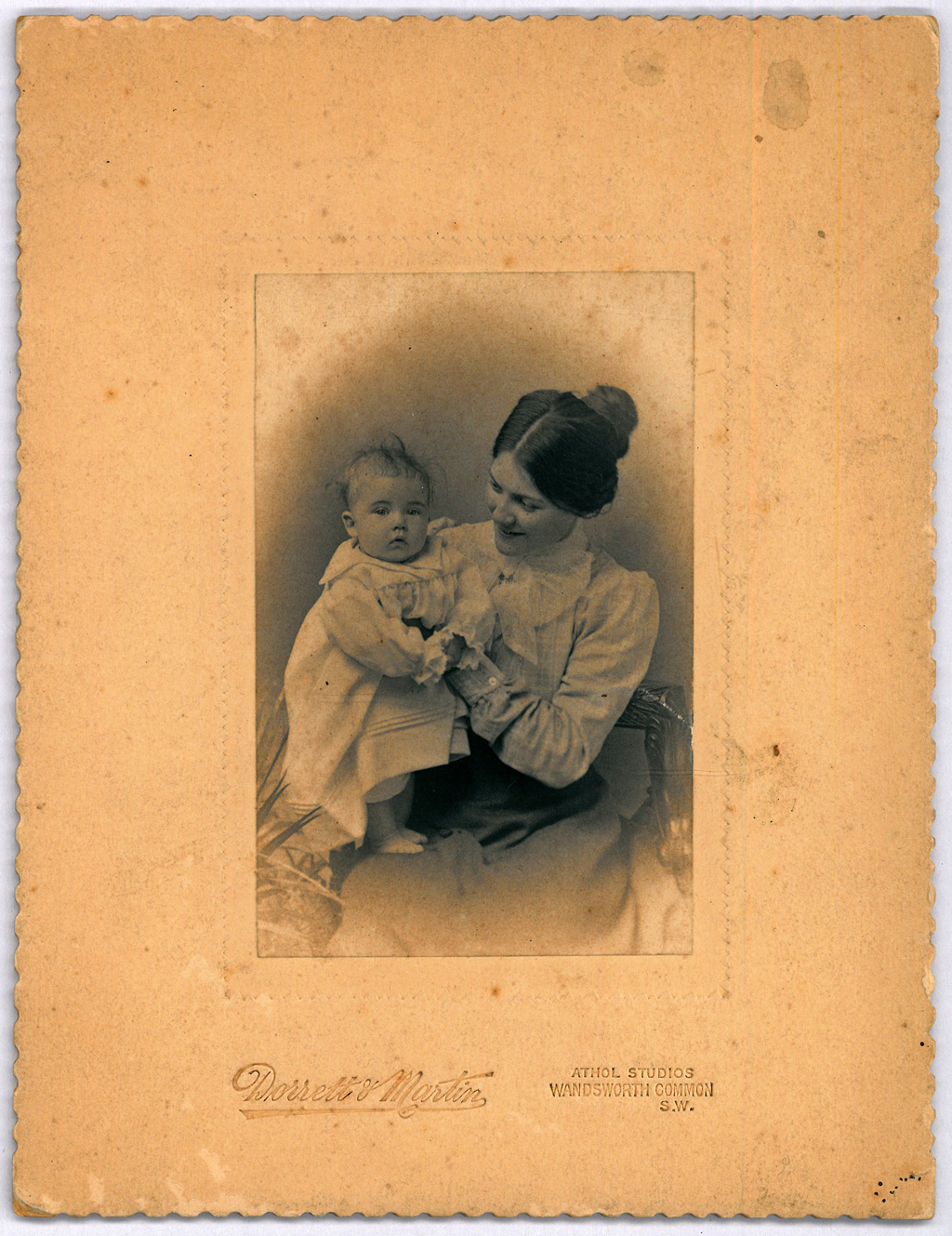
Thomas was survived by his wife, Helen, their son (Philip) Merfyn and their two daughters (Rachel Mary) Bronwen and (Helen Elizabeth) Myfanwy. After the war, Thomas's widow, Helen, wrote about her courtship and early married life with Edward in the autobiography As it Was (1926); later she added a second volume, World Without End (1931). Myfanwy later said that the books had been written by her mother as a form of therapy to help lift herself from the deep depression into which she had fallen following Thomas's death.
Helen's short memoir My Memory of W.H. Davies was published in 1973, after her own death. In 1988, Helen's writings were gathered into a book published under the title Under Storm's Wing, which included As It Was and World Without End as well as a selection of other short works by Helen and her daughter Myfanwy and six letters sent by Robert Frost to her husband.[15]
Wikipedia: Edward Thomas (poet):
— Poetry Archive: "Old Man
— Poetry Archive: "Aspens
— Poetry Archive: "Tall Nettles"
— Poetry Archive: "Lights Out
— YouTube: Helen Thomas reads "Adlestrop"
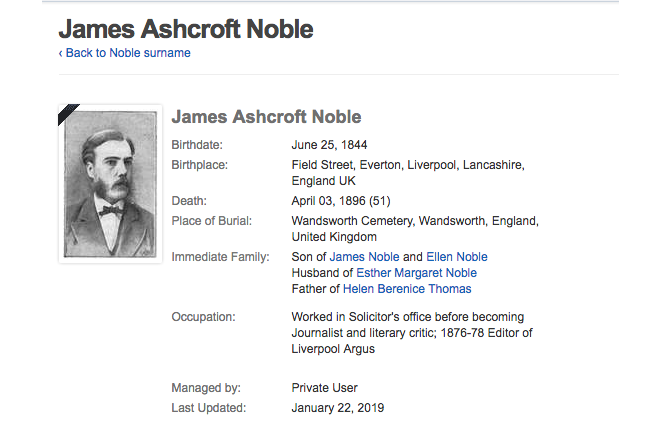
A few notes from an excellent synoptic essay on JAN by Kedrun Laurie:
— 1844, born Everton, Liverpool
— journalist, editor, living Liverpool and near Southport — writes for Liverpool Mercury, from 1876 edits new paper, the Liverpool Argus
— become regular writer for the Spectator
— drawn to Unitarianism, and New England Transcendentalists
— greatly admired George Eliot, but also an aesthete, deeply involved with defending Dante Gabriel Rossetti's poetry against accusations of immorality — Rosetti grateful
— 1881, moves to Battersea [PB: i.e. near Rossetti and Co — address?]
— 1883?, ill-health drives him back to NE.
— signs a petition against the harshness of Wilde's prison sentence
— 1893, returns to London [? The Grove = St Annes Hill ? Nicosia Rd? 6 Patten Rd?]
— 1894?, meets Edward Thomas, introduced by minister of local Unitarian chapel [PB: corner of ? Rd and East Hill, knocked down for Trinity Rd underpass] — "seeing him as a nature writer in the New England tradition of Thoreau" — is encouraging and arranges early publication in the New Age
— year? moves to 6 Patten Rd
— 1897, ET dedicates his first book, The Woodland Life, to JAN and Helen.
"Kedrun Laurie is — formerly a curator of the Geffrye Museum, London, her doctoral thesis "If I had Wings": country writers and the claims of conservation" (King's College London, 2003) examined in some detail the influence of James Ashcroft Noble on Edward Thomas."
Margaret Keeping: Publishing my Edward Thomas.
Publishing my Edward Thomas
Edward Thomas, the poet who died in the First World War, is the subject of this blog and of my novel, A Conscious Englishman. It is about Thomas, his wife Helen, Robert Frost, Eleanor Farjeon and others of the period, and about nature, place and poetry.
'Margaret Keeping's inhabitation of Edward, Robert, Helen and their world is tender and subtle — a lovely novel', Robert Macfarlane.
Sunday, March 24, 2013
Edward Thomas and Three Women: Helen Thomas
Helen is the one who matters: her devotion and loyalty to Edward Thomas must move all but the stoniest heart.
Helen's Story
Helen Noble, the daughter of the journalist, James Ashcroft Noble, was born in Liverpool on 11th July 1877. Noble, who found work writing for The Spectator, moved the family to London in 1880.
After an education at Wintersdorf School in Southport, she became a nursery governess in Rotherfield. She was quite 'bohemian' in dress and in the circles she moved in.
She met Edward through her father who encouraged his writing and their getting to know each other.
Helen became pregnant with Merfyn while Edward was an undergraduate at Oxford .( See my blogs on Oxford.) In 1896, they married and times were very hard financially. Bronwen was born and became quite ill with their poor living conditions, as Edward struggled to make a living by his writing.
Helen taught kindergarden children at Bedales, a progressive co-educational boarding school in Steep where they had moved. They had a third child, Myfanwy, who became a writer.
Under Storm's Wing.
Helen Thomas — using Helen's words.
The problem with Helen is of course also the bonus — she had written her account of her life with Edward in the moving and still widely read works, As It Was and World Without End, 1926 and 1931 collected as Under Storm's Wing.
(I was interested to read that the major Thomas scholar Edna Longley came to Thomas's poetry after reading Helen's work.)
Helen's daughter, Myfanwy, claims the books were written as a form of therapy to lift the depression which settled over her after the death of her husband. Helen was dedicated to keeping Edward's name and work to the fore, but she also developed a wide circle of friends in the arts, especially music and ballet. She recorded and introduced Edward's poems at the age of 88, and died in 1967.
'Under Storm's Wing' was a way of keeping Edward alive for her, and it is an intelligent, passionate work; in it Helen often belittles her intellect and wisdom, sadly, something she had probably evolved under Edward's frequent unkindness.
I depended heavily on 'Under Storm's Wing' and decided to have Helen in the first person — the voice I give her is not that of Helen in her book — it needs to have that sense of happening in the present which Jude Morgan referred to in his commentary on 'The Secret Life of William Shakespeare'.
But I chose to have her write a memoir, 'Half a Kiss, Half a Tear' and to open and close it with scenes and phrases taken very closely from Under Storm's Wing. Here is an extract set in Leddington:
We'd been in Leddington for ten days and I'd scarcely talked to Edward alone in all that time. I suggested that we Thomases go out together and leave Mr and Mrs Chandler in peace as they had a great deal to do before he left for his regiment. Edwy was cheerful and seemed happy to be with us that day.
We passed through the orchard where the tree branches were propped to support the fruit. We gave the bee-hives a wide berth and headed for Ludstock brook where Myfanwy could paddle. Merfyn and Bronnie were simply glad to have us all together.
Sometimes I felt I was no more to Edward than his children's mother. We were never alone here. At mealtimes the Chandlers and the children were with us, and for so much of the rest Edward and Robert, and sometimes the other two poets who lived nearby, went walking together discussing poetry. Well, I trusted they knew how lucky they were to have the best critic and reviewer in England with them.
I was glad to see Edward happy again, after the horrors of the year before, of course I was. Only - oh, I was disappointed with the holiday, but I didn't want to show it. Edward could be so cold if I importuned him like that.
My mind was full of uncertainties. I could generally accept life and its changes without too much fuss. I'd had to the year before, when Edwy was so wretched and scarcely ever at home. I'd wanted him, longed for him. The loneliness ate my heart away, and yet I'd fear him coming, because I always hoped for too much. I'd have the house gleaming and a lovely meal and the garden free of weeds and so of course expect everything to be happy. And then I would, over and over again, be disappointed and shocked by real life, the real life we were living. By his dark moods. The truth was, he had friends who could work those sorts of wonders for him; their homes were opened to him, beautiful homes, which he described to me in letters, lovely houses by the sea or in the mountains. No wonder it was good for him to get away from me and our plain cottage life.
Still, in spring he had come home to stay and he was happier, although money was always an anxiety. We had the holiday boarders from Bedales and somehow we managed. We had worked together on the garden, planting things for the future: an apple tree a friend had given him for his birthday, some asparagus crowns.
But now the war and the idea of going to America with the Frosts.Edward saying that there would be no market for his kind of writing in England — we had to talk about it. He would vacillate to and fro about America. I could foresee that % but not the outcome. Could he even be thinking of leaving us behind?
We arrived at the brook, poor panting Rags wading in first and lapping away. We sat on the bank amongst the willow and alder trees and talked. When Edward's mood was so light and untroubled I was loathe to risk breaking it with my questions, but I had to.
'This plan about America, Edwy - tell me what you're thinking.'
Helen's voice: She wrote many hundreds of letters and if I tried to emulate her voice it is the voice of the letters, not because they were contemporary rather than retrospective (after all 'Half a kiss, half a tear' is meant to be a memoir) but because they are less polished, more spontaneous and so more easy to contemporary ears than Helen's prose in Under Storm's Wing. Sometimes it is rather too fulsome and I do try to capture that from time to time. But mostly it is sincere, vivid and moving and I know I can't attempt to equal it . Look at this on their final parting:
Edward Thomas"I sit and stare stupidly at his luggage by the walls. He takes a book out of his pocket. 'You see, your Shakespeare's Sonnets is already where it will always be. Shall I read you some?'; He reads one or two to me. His face is grey and his mouth trembles, but his voice is quiet and steady. And soon I slip to the floor and sit between his knees, and while he reads his hand falls over my shoulder and I hold it with mine.
'Shall I undress you by this lovely fire and carry you upstairs in my khaki overcoat?' So he undoes my things, and I slip out of them; then he takes the pins out of my hair, and we laugh at ourselves for behaving as we often do, like young lovers.
Helen Thomas I hide my face on his knee and all my tears so long kept back come convulsively. I cannot stop crying. My body is torn with terrible sobs. I am engulfed in this despair like a drowning man by the sea. My mind is incapable of thought.
So we lay, all night, sometimes talking of our love and all that had been, and of the children, and what had been amiss and what right. We knew the best was that there had never been untruth between us. We knew all of each other, and it was right. So talking and crying and loving in each other's arms we fell asleep as the cold reflected light of the snow crept through the frost-covered windows."
Here is part of a letter to Robert thanking him for succeeding in getting Edward's poems published in America. It was written near the time Edward was killed:
High Beech
March 2.
Late at night
[1917]
Dear Robert
What a bit of luck to get your letter at all. I thought all the mails had gone down in the Laconia, but evidently not. I'm so excited & happy about your splendid news, & I've already written to the dear man & told him, & to John Freeman to find out about those 'insists'. I feel sure it will be all right. I'm not at all sure that Edward Eastaway will consent to be Edward Thomas, but I will add my 'insists' to yours & hope for the best. Also I like the idea of your preface & feel sure he will too. It's all very good news & you sound as pleased & you knew we would be.
By now you will have heard from him. He's at Arras & expecting a hot time presently. I don't suppose I can tell you much about him may I. He's at present at head quarters as adjutant to a ruddy Colonel whose one subject is horse racing & jockeys & such & with whom our man gets on so well that the he's longing to be back at his battery, he's afraid the Colonel has taken a fancy to him & will keep him. It will probably mean promotion, but Edward wants the real thing & wont be happy till he gets it & what is one to do with such a poet. In a pause in the shooting he turns his wonderful field glasses on to a hovering kestrel & sees him descend & pounce & bring up a mouse. Twice he saw that & says "I suppose the mice are travelling now". What a soldier. Oh he's just fine, full of satisfaction in his work, & his letters free from care & responsibility but keen to have a share in the great stage when it begins where he is.
At first after we'd said 'Goodbye' & we knew what suffering was, & what we meant to each other, I did not live really, but just somehow or other did my work, but with my ears strained all the time for his step or his coo-ee in case he came back. But the one can only wait & hope & not let panic take a hold of one, his happy letters & the knowledge that all is so well between us, are making life life again, & the Spring helps too & the feeling that the end is near-must come soon, & that that end will be-if it is at all-a beginning again for us with such knowledge of each other as nothing can ever obliterate, nothing can ever, that is what we know & what makes life possible now.
I must tell you that [the] last evening we were talking of people of ourselves of friends & of his work & all he'd like done. And he said "Outside you& the children & my mother, Robert Frost comes next." And I know he loves you.
She enclosed one of these photographs taken by Merfyn, probably the High Beech.
At Steep 1916
People don't like it because they say he is too much a soldier here, & not at his best. But I send it thinking that you know him so well you'll be able to read him into it, if he is not there to you — ..
Edward will be 39 tomorrow March 3rd, & we are hoping our parcels of apples& cake & sweets & such like luxuries will get to him on the day. Our letters take a week to reach him. Yours not much longer I expect.
Two weeks later.
I've kept & kept this letter & just have not had the opportunity to add to it. You've heard by now I expect from Edward & perhaps from Mr. Ingpen too. Eastaway will not be Thomas & thats that he says, but all about the 'insists' you'll have heard from others. Edwards letters are still full of interest & life & satisfaction in his work. He's back on his battery now in the thick of it as he wanted to be, firing 400 rounds a day from his gun, listening to the men talking, & getting on well with his fellow officers.
He's had other times of depression & home sickness. He says "I cannot think of ever being home again, & dare not think of never being there again" & in a letter to Merfyn he says "I want to have six months of it, & then I want to be at home. I wish I knew I was coming back." Oh if only I knew that too!
Poem: It has to be this, which I think was a valediction to Helen and shows as much love as Edward was capable of showing.
And You Helen
And you, Helen, what should I give you?
So many things I would give you
Had I an infinite great store
Offered me and I stood before
To choose. I would give you youth,
All kinds of loveliness and truth,
A clear eye as good as mine,
Lands, waters, flowers, wine,
As many children as your heart
Might wish for, a far better art
Than mine can be, all you have lost
Upon the travelling waters tossed,
Or given to me. If I could choose
Freely in that great treasure-house
Anything from any shelf,
I would give you back yourself,
And power to discriminate
What you want and want it not too late,
Many fair days free from care
And heart to enjoy both foul and fair,
And myself, too, if I could find
Where it lay hidden and it proved kind.
Episode 1 Don't forget! I was interviewed as part of this but whether or not — it will be marvellous. Matthew hugely insightful and Robert MacFarlane reading Thomas's poems.
1/3 Matthew Oates follows in the footsteps of the writer Edward Thomas.
First broadcast: 29 Mar 2013
Image for Episode 1
Next Friday 15:30 BBC Radio 4
Posted by Margaret Keeping at 2:11 PM Email ThisBlogThis!Share to TwitterShare to FacebookShare to Pinterest
7 comments:
Lucy, March 26, 2013
Really enjoying your blog Margaret, I'm learning more and more about my great-grandparents and their family. I find the social history of that time fascinating and humbling; here I am living my comfortable life, virtually in parallel, 100 years later. Like you, I'm looking forward to the "In Pursuit of Spring" programme, but don't want to hear my voice!
Lucy
Margaret Keeping, March 26, 2013
Thank you Lucy. I'm so glad you are on the Fellowship Committee — a fresh empathic voice with a unique point of view as 'family'.
About the broadcast — not sure whether I'm hoping or dreading inclusion. I know I was tongue-tied at Matthew's perfectly reasonable question, 'What does Edward Thomas mean to you?' Just didn't know where to start, and of course have thought of great responses answers since! You will be fine.
Peter Collier, April 12, 2013
I have written a short article about Edward Thomas for a forthcoming issue of Trowbridge Civic Society newsletter. I mention The Pursusit of Spring, Broughton Gifford, Tellisford and Dillybrooke Farm, places which are near to the town. By chance I discovered that a person is putting hundreds of photos of Trowbridge on Flickr and there are several of the Royal Garrison Artillery. Do you think that any of the officers in the photograph I have linked to below might be Thomas?
Also, is there mention of Trowbridge in your novel?
Peter Collier
http://www.flickr.com/photos/93838966@N02/8539427765/sizes/k/in/set-72157632943754506/
Margaret Keeping, April 12, 2013
Hello Peter,
Thank you for the picture of officers at Trowbridge.
How interesting.
There is a further picture of Thomas in uniform and he does look like the chap second from the left on the bottom row of the picture — but I can't be sure. I'll try to send to Richard Emeny of the ET Fellowship.
Yes I have mentioned Trowbridge in my novel as he was stationed and trained there. If I had your email I could send you the extract — or I guess you could buy the book.
Best wishes
Margaret
Peter Collier, April 12, 2013
Thanks. I do intend to buy the book. I recently read "Now all roads lead to France" and Thomas has been one of my favourite poets for a long time. It would be fascinating if the photograph did show Thomas as I haven't seen it elsewhere. There are one or two other photographs in that collection, but one is 1917, probably after Thomas left and the other is of a football team!
My email address is pcollier@blueyonder.co.uk
Peter Collier