Last modified: 3 October 2026
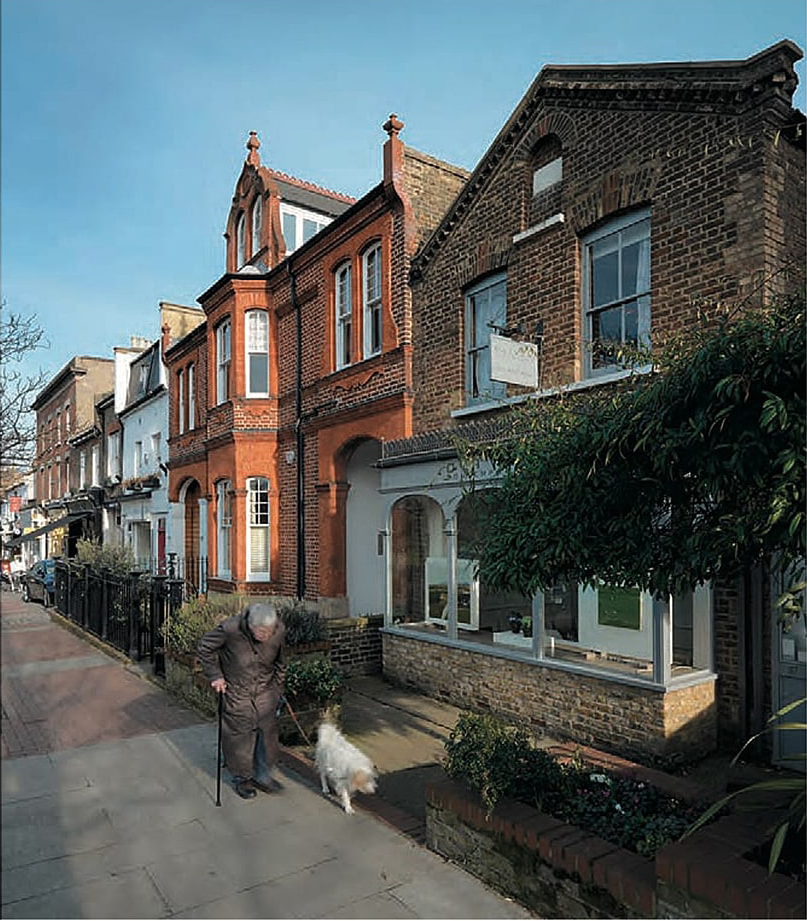
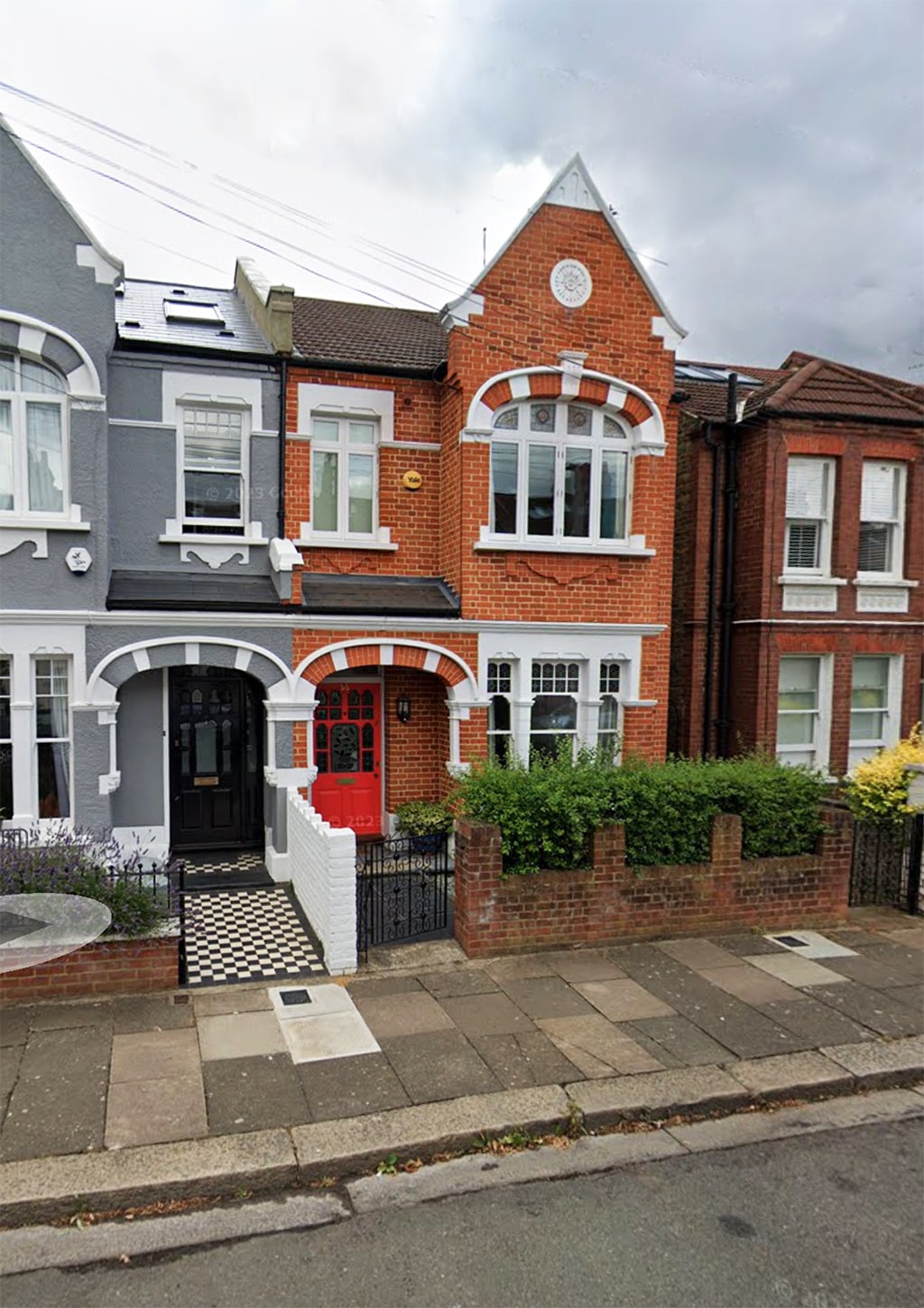
"434. Bellevue Road in 2013: No. 16 in red brick, No. 17 (Churzee Cottage) to the right" | Survey of London: Battersea, Ch.19.
In the previous episode, Chris Allies spoke about Paul Martin's origins in France, his early life in Battersea, his training as a wood-engraver, and his pioneering "snapshot" street views and night photography that eventually made Paul a world-recognised artist — hence his presence in many galleries and archives throughout the world, such as the V&A, MoMA in New York, Getty Museum in California, and the largest depository of them all, the Gernsheim Collection in Texas — I've added links in the footnotes.
This is where I take over, to talk about Paul Martin's partnership with Harry Dorrett, the studio they set up together on Bellevue Road, and their many images of Wandsworth Common.
And that brings us here, to 16 Bellevue Road — the fine building where the Martin and Dorrett studio stood, founded in 1899. The studio was established after most of Paul Martin's famous photographs had been taken, but it is closely associated with the next chapter in his remarkable career.
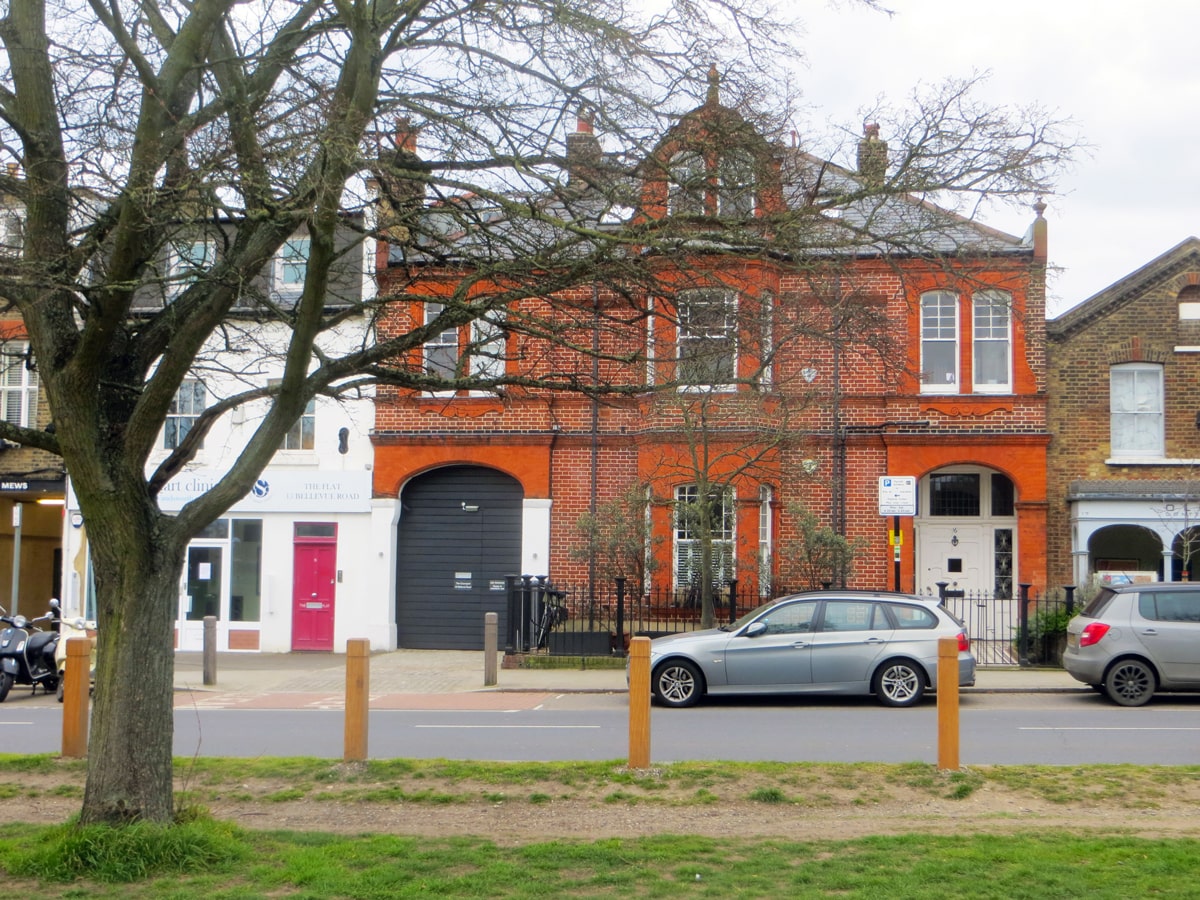
Athol House, 16 Bellevue Road. This was Dorrett & Martin's studio from 1899 to c.1932.
[A brief word on this (to my eyes rather lovely) "rubbed" red-brick house that greatly enhances the Bellevue Road parade. "Rubbed brick" refers to a soft, fine-grained brick that has been smoothed with an abrasive to create fine, precise joints. They're typically softer, allowing them to be cut, carved, or shaped with great accuracy to fit together with very thin mortar joints. It refers to a soft, fine-grained brick that is soft enough to be cut, carved, or rubbed to precise dimensions. ]
Athol House was built in 1887 in the grounds of Churzee Cottage (1866) next door. (See the cartouche on the gable at the top of the house.) According to Keith Bailey, doyen of building studies in Battersea and Wandsworth, Bedford-born "excavator" and master-bricklayer Leonard Bottoms (and his brother Noah) are known to have built 55 houses in North Battersea between 1877 and 1882. However, the brothers dissolved their partnership in 1885, after which Leonard built Athol House, 16 Bellevue Road, for his own use.
[A descendant, Dave Bottoms, contacted me in 2021 enquiring after the house, but also sending information that Leonard engaged in projects all over the country but came to grief over a tender for work in York "when he failed to cope with the excessive mud around the river Ouse". Leonard returned to Bedfordshire and became a successful tenant farmer. He died in 1902.]
But Leonard's bankruptcy turned out to be a boon for local photography. Around 1892 or 1893, the property passed to the society photographer Frederick Kingsbury, who had his main studio in Knightsbridge.
One of Fred's most famous photographs is this, a rather dolorous Constance Wilde, Oscar Wilde's wife.
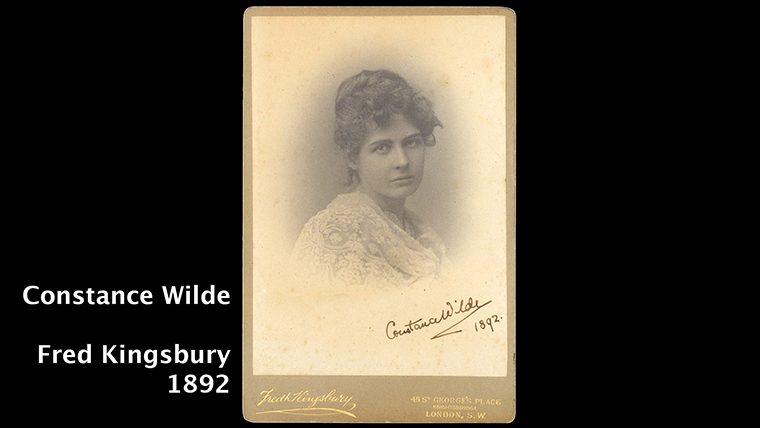
The photograph says it was made in Fred Kingsbury's studio in Knightsbridge, but I used to wonder whether actually she came to the studio here while Oscar was incarcerated in the Wandsworth Prison, only a few hundred yards away across the Common. Sadly, no — that was a couple of years later (July—November 1895), and this photo is clearly marked 1892. Shame.
[There are a number of fine Fred Kingsbury photographs in the National Portrait Gallery.]
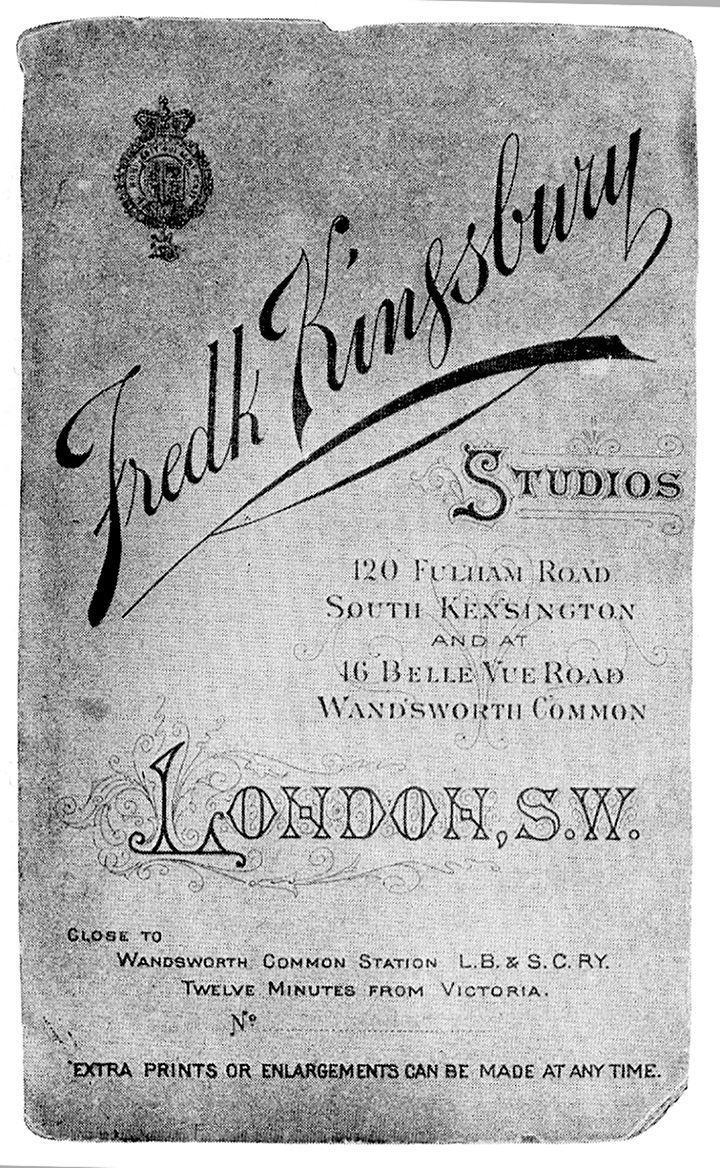
The decorative reverse (or "backmark") of Fred Kingsbury's cabinet card or carte de visite. He has a studio in Fulham and another at "16 Belle Vue Road, Wandsworth Common, London S.W." Notice the encouraging "Close to Wandsworth Common, L.B. & S.C. Ry.* Twelve Minutes from Victoria."
In 1899 Fred Kingsbury passed the Bellevue Road studio on to Dorrett and Martin. It remained a studio at least until the 1920s. Here is Paul and Harry's exquisitely designed and hand-lettered backmark:
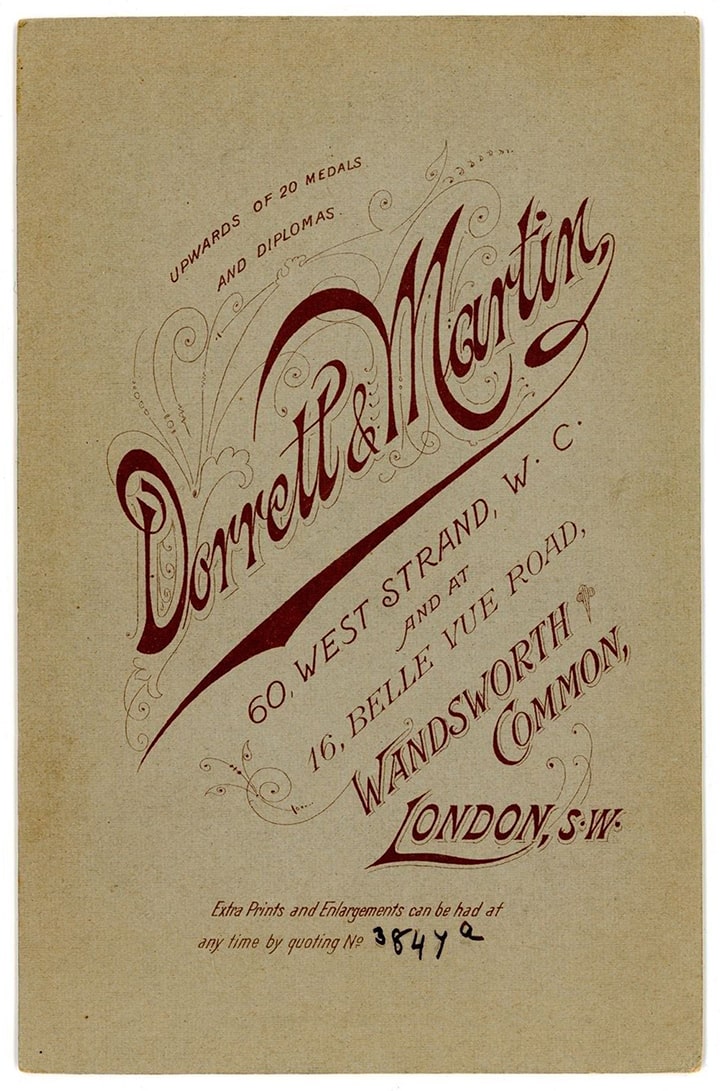
The superbly stylish back of one of Dorrett and Martin's cabinet cards, with the proud claim "upwards of 20 medals and diplomas."
Here's a view of the exterior of their studio by J.M. of Vauxhall, not Dorrett and Martin:
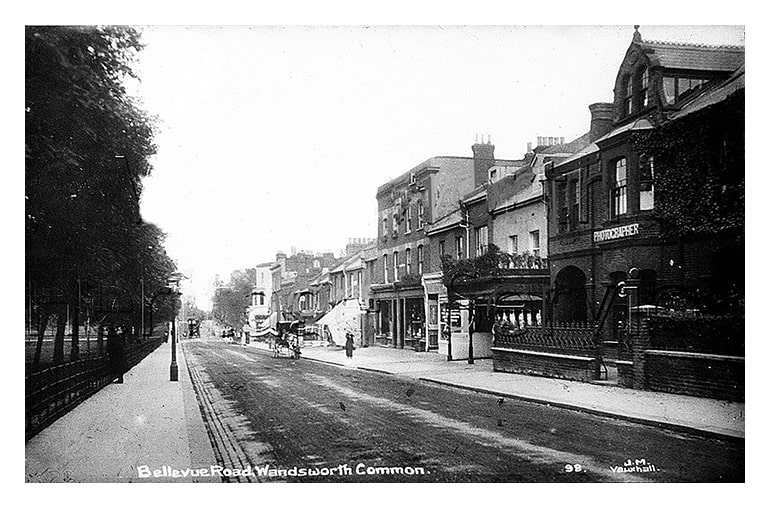
"Bellevue Road, Wandsworth Common", unknown date — by J.M. of Vauxhall.
Paul and Harry occupied the building only during day — I'm not sure who, if anyone, lived above the studio, or whether all the rooms were used for stock, production and despatch (but probably the latter). The last references I've come across in adverts for the studio are from 1932.
And after D&M closed their studio? At some point, until about 1950, no.16 became the Rendezvous Restaurant (Mrs Maud Ustrell, proprietress), a boarding house/restaurant (Sebastian & Clara Bach), then briefly a dancing school, and later a guest house. It is now divided into private residences. (Info. from Stephen Midlane — thanks, Stephen!)
[Incidentally, why "Athol" House? Was this Leonard Bottoms' original name for it, or Fred Kingsbury's, or Dorrett and Martin's?]
Do you know where this was taken?

This is the photograph that got me interested in Paul Martin. When I first stumbled upon it on some random website, it was attributed to a completely different photographer. But I managed to track it down at the V&A.
It's Wandsworth Common. We're standing on the Scope, looking towards the Surrey Tavern (now Brinkley's Kitchen) — that's the lit-up building, the bright one. Bellevue is off to the left, and you can just make out St Mary Magdalene Church on the right-hand side. The photograph was taken in 1896 — just before Martin set up his studio on Bellevue Road.
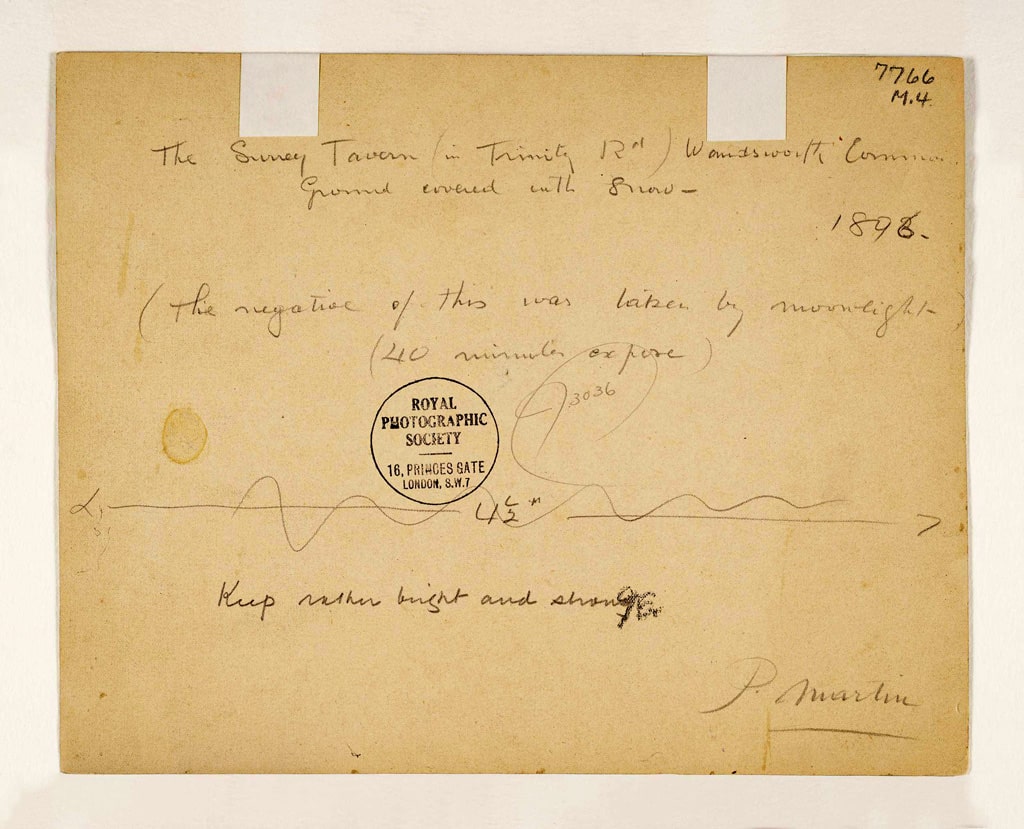
The note on the back reads: "The Surrey Tavern, Trinity Road, Wandsworth Common. Ground covered with snow, 1896. The negative of this was taken by moonlight — 40 minutes exposure." There are also printing instructions: "Keep rather bright and strong — P. Martin."
[Chris tells me that when Paul set up his camera for night scenes in winter, and removed the lens cap, it was often so cold during the long exposures that he would go for a walk. If vehicles with bright headlights came by, he would replace the lens cap until they'd passed.]
The photograph is full of wonderful details. Of course, this part of the Common is overgrown now. You've got that lovely Japanese-looking tree, the silver birch on the right, and that gorgeous light in the centre. It's a terrific picture, isn't it?
Around this time, Paul won acclaim and awards for his pioneering night photography. mainly of sites in central London. Perhaps this success helped convince him to cease working as an engraver — newspapers could now print photographs without the need to engrave impressions, so he was no longer needed — and to turn fully professional and open a studio.
This next photograph might be familiar — the one with the two children and the sheep. I'm showing it for a couple of reasons. If you look on the extreme right-hand side, you can see the studio building again — that's Bellevue Road. The names Dorrett and Martin are painted on the window.
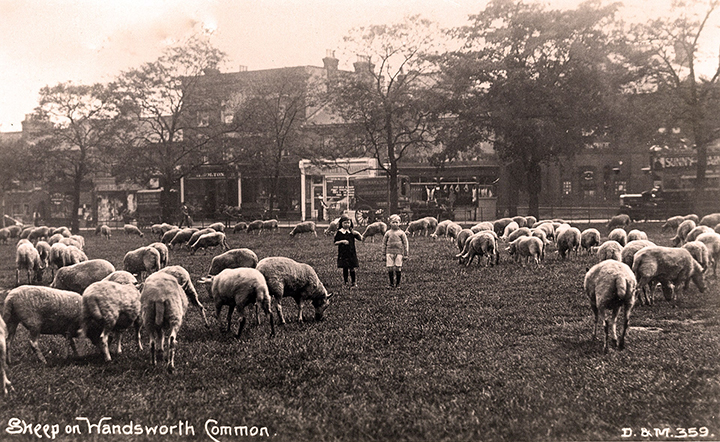

Nearly all of their postcards have beautiful hand-lettered titles and credits — really elegant — and a little D&M monogram. Given his background as an engraver, I'm sure these must be by Paul Martin's own hand. This postcard is numbered "359," meaning there were at least 358 others! I've only ever managed to find about 20, but I'm always looking. If you find any, do let me know!
[There is perhaps a nod to Albrecht Durer in the "D&M" monogram — which the engraver Paul will certainly have known, of course.]
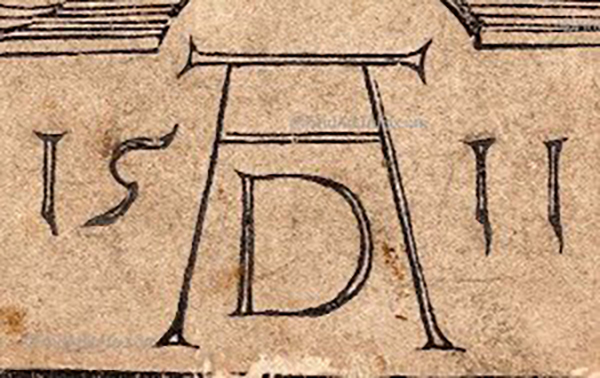
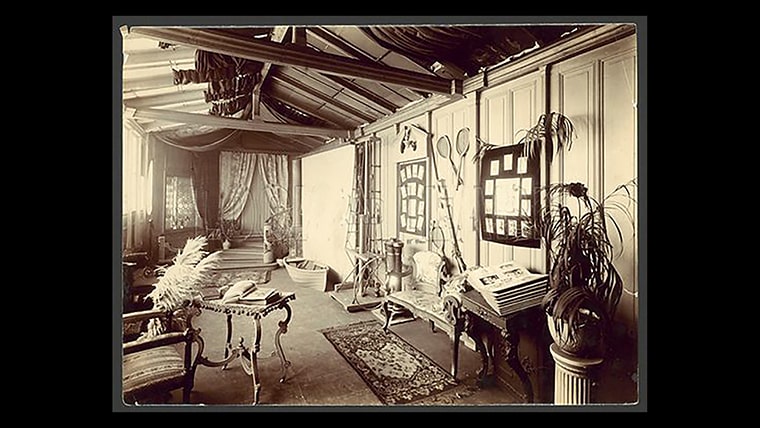
Dorrett and Martin's studio. The Bridgeman archive presumes that this is "in Croydon". But it must surely be our 16 Bellevue Road.
Notice the studio is top-lit by windows, with ruched blinds. And if you look closely, you can see all sorts of props and odds and ends they'd use for their portraits — a canoe, tennis rackets, aspidistras on classical columns, fancy rugs and chairs.
16 April 1864 . . . born Herbeuville, France, near the border with Germany
1869 (age 5) . . . Paris, France
1870—18716 (6, 7) is exposed to the effects of the Franco-Prussian siege of Paris, and then the Paris Commune
1872 (8) . . . Paul's family move to Grove Road, off Falcon Road (now called Este Road) in Battersea, London. His father is the manager of a factory making bone stays for corset.
He describes the area then as mostly market gardens, stretching all the way to Price's Candle Works on the Thames — this was still before many houses had been built. He attends Mr Smeeton's Private School, then Sir Walter St John's School ("Sinjuns") in Battersea High Street.
1881 (17) . . . 4 Khyber Road, Battersea
1891 (27) . . . Aliwal Road, Clapham Junction — "Engraver on wood". A note adds "Sculp." The road leads on to the Common.
In the 1880s and 1890s, Harry Dorrett, who was about ten years younger than Paul, was living in Comyn Road, the next road along from Aliwal.
1899 [1 April] . . . Dorrett and Martin open their studio at 16 Bellevue Road. This is the start of Paul's career as a professional photographer.
1900 (36) . . . Marries Clara Emily Ackary (b. Finch) in Hackney. The couple move to Tennyson Road. [?]
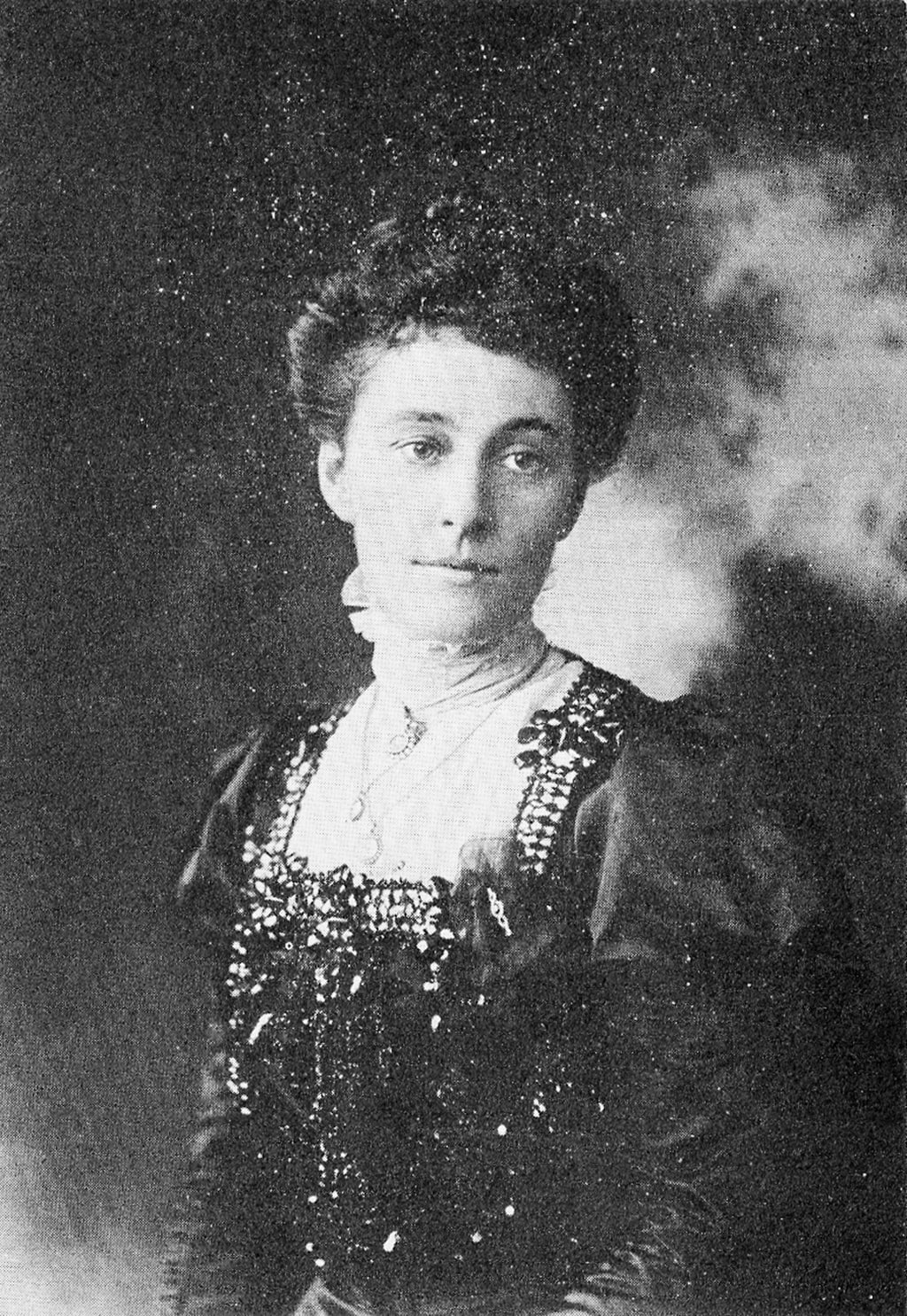
Formal portrait of Clara Martin, presumably by Paul, taken in the Bellevue Road studio. Unknown date
They will go on to have two sons, Albert (b.1902) and Ernest (b.1903), both born in Balham. [There's a gorgeous photograph of the two boys, illuminated as if by a fire in a grate - in fact, a concealed electric light. Find and add.]
1901 (37) . . . "St Ives", Tunley Road, Upper Tooting SW17 — "Photographer, Employer"
1911 (47) . . . 55 Hosack Road, Upper Tooting SW17
1921 (57) . . . 55 Hosack Road, SW17 — "Photographer, Employer"
1939 (75) . . . 5 Hosack Road, Upper Tooting SW17 — he is described as a "Retired Clerk" [!]
7 July 1944 (80) . . . death 55 Hosack Road, Upper Tooting SW17
[I have started an outline family tree on Ancestry: Paul Augustus Martin. Suggestions and additions very welcome. I would like to thank Stephen Midlane for providing many of these addresses — thanks, Stephen!]
But here's Martin as a much younger man, around 1895 — extrêmement français, with his camera.
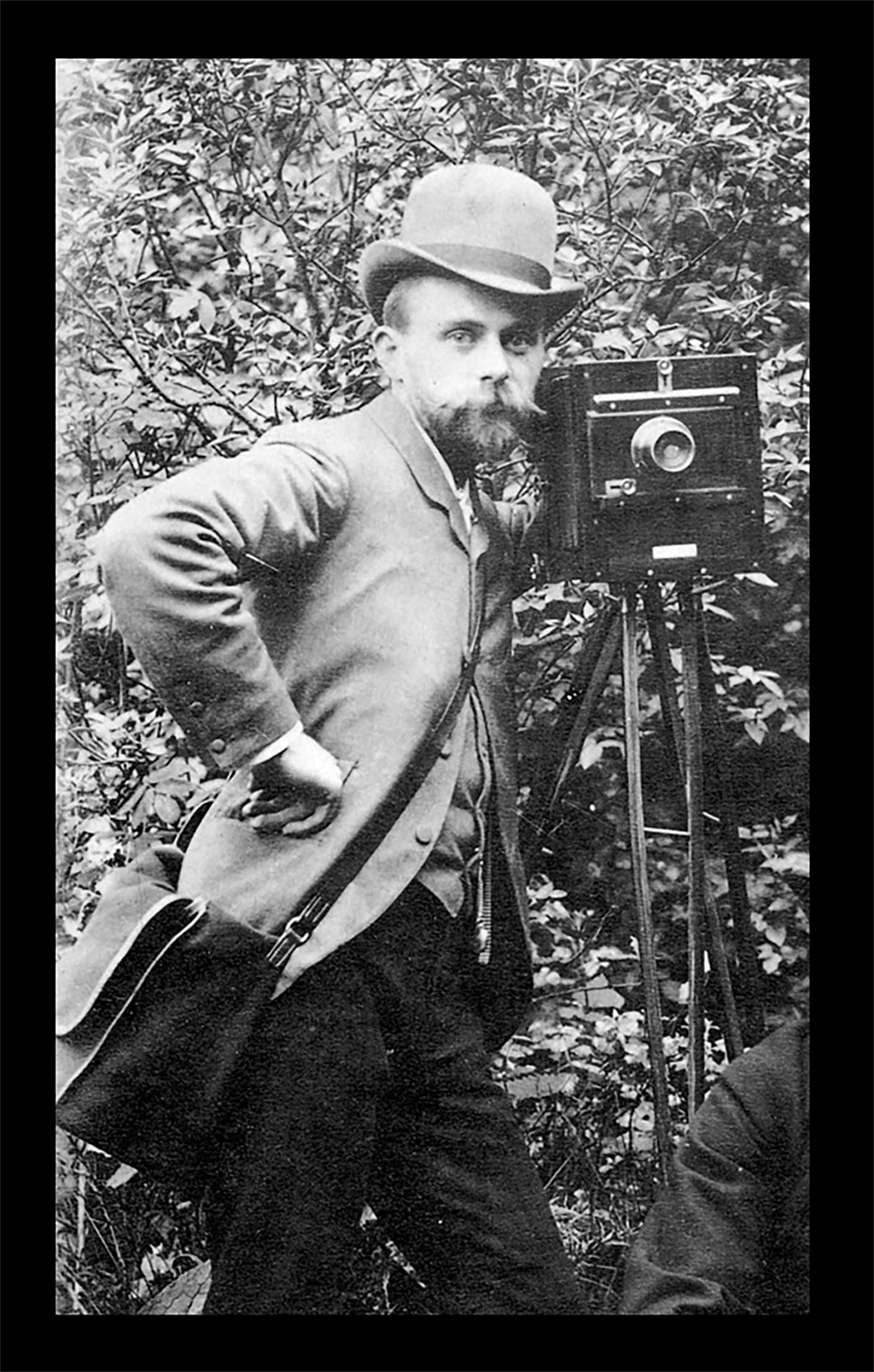
Paul Martin, with camera.
But this is only part of the image, which has been heavily cropped. Here's the complete view:
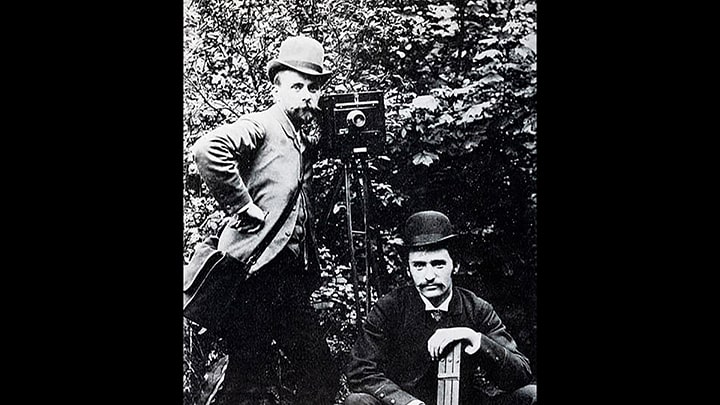
Who is Paul's companion? Is it Harry Dorrett?
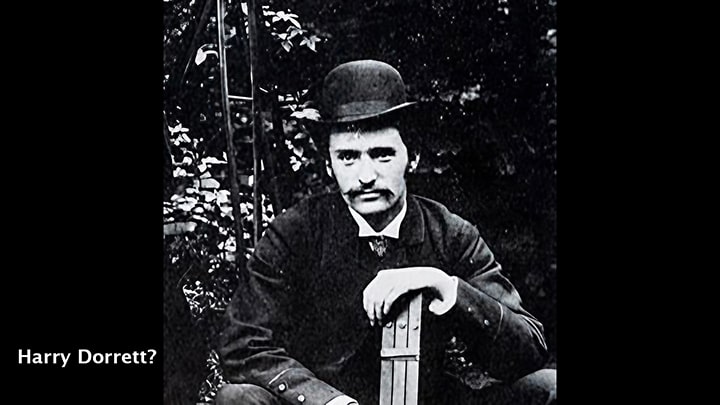
How wonderful to be looking at two people from 120 years ago, looking right back at you.
This next portrait is an enigma:
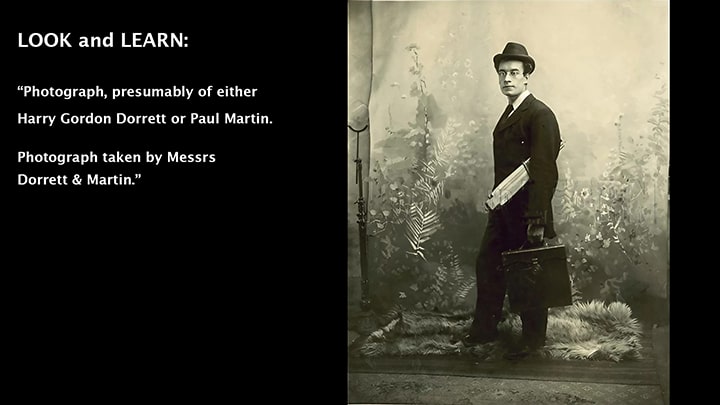
Is it Paul?
Is it Harry?
Whichever it is (and it may be neither), he appears to be carrying a Facile camera. But do say if you know better.
And finally in this section, here's a nice example of Paul Martin's playfulness. It appears to be a double portrait, but in fact it's Paul playing cards — with himself. He had a great sense of humour, which is evident in many of his photographs.
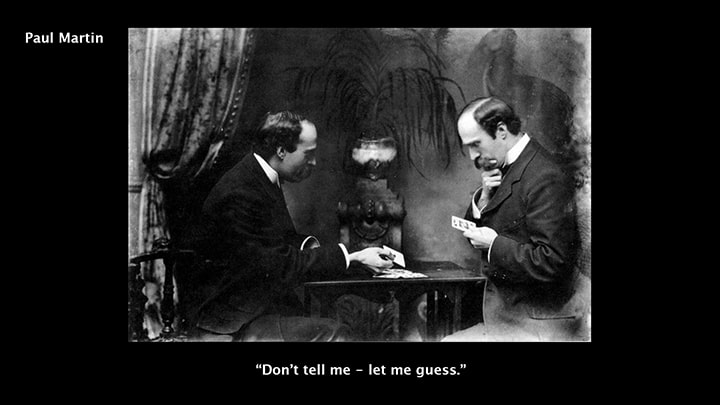
It seems Paul and Harry's original intention had been to take photographs for newspapers, and I have found several examples in national and local newspapers. But it must have been difficult to get commissions, and there were too many freelancers producing images taken on spec.
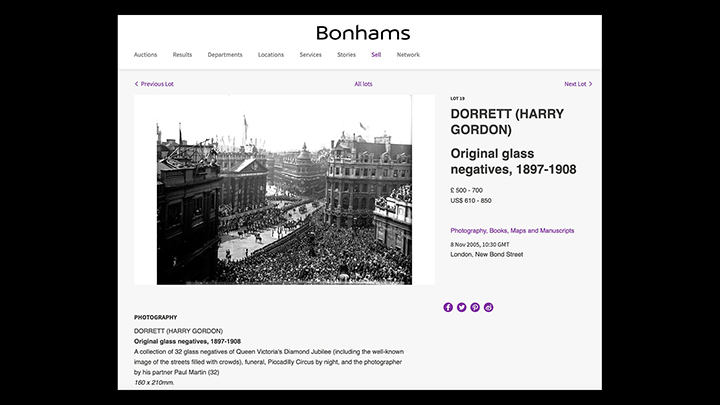
Paul Martin's partner Harry Dorrett is less celebrated than Paul, but was clearly a formidably accomplished photographer. It's possible he was more at home taking pictures of mass events, such as this.
In the early 1900s, Dorrett and Martin appear to have shifted their attention almost entirely to studio work. Here they did all the usual things you'd expect — individual portraits, mothers and babies, family groups. You can see Bellevue Road written on the prints, with that same lovely calligraphy. But that cannot have been enough. Chris has already spoken about some of their inventive product lines — such as button badges, lockets, stamp photographs. It was not glamorous work.
They advertised their novelty services in local press up and down the country, as here. (Notice the advert gives an address in the Strand, not Bellevue Road. But I suspect this may not have been a studio at all, just a mailing address to lend credibility.)
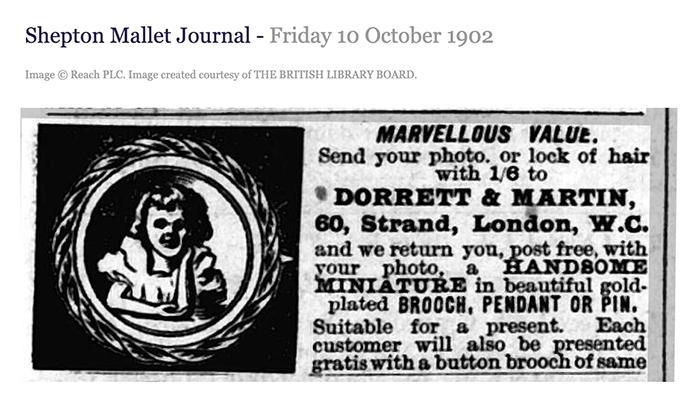
"MARVELLOUS VALUE. Send your photo or lock of hair with 1/6 to DORRETT & MARTIN, 60, Strand, London, W.C. and we return you, post free, with your photo, a HANDSOME MINIATURE in beautiful gold-plated BROOCH, PENDANT OR PIN.
Suitable for a present. Each customer will also be presented gratis with a button brooch of same."
A curiously unappealing mock-up of the brooch, don't you think — particularly for an image associated with the skilled engraver Paul?
Dorrett and Martin seem to have pioneered button badges — the same method is still used today.
Here are a few examples of their work. These are all football clubs, but they also made political badges in the run-up to elections. They look remarkably modern, don't they? These date from 1904 and fetch quite high prices today.
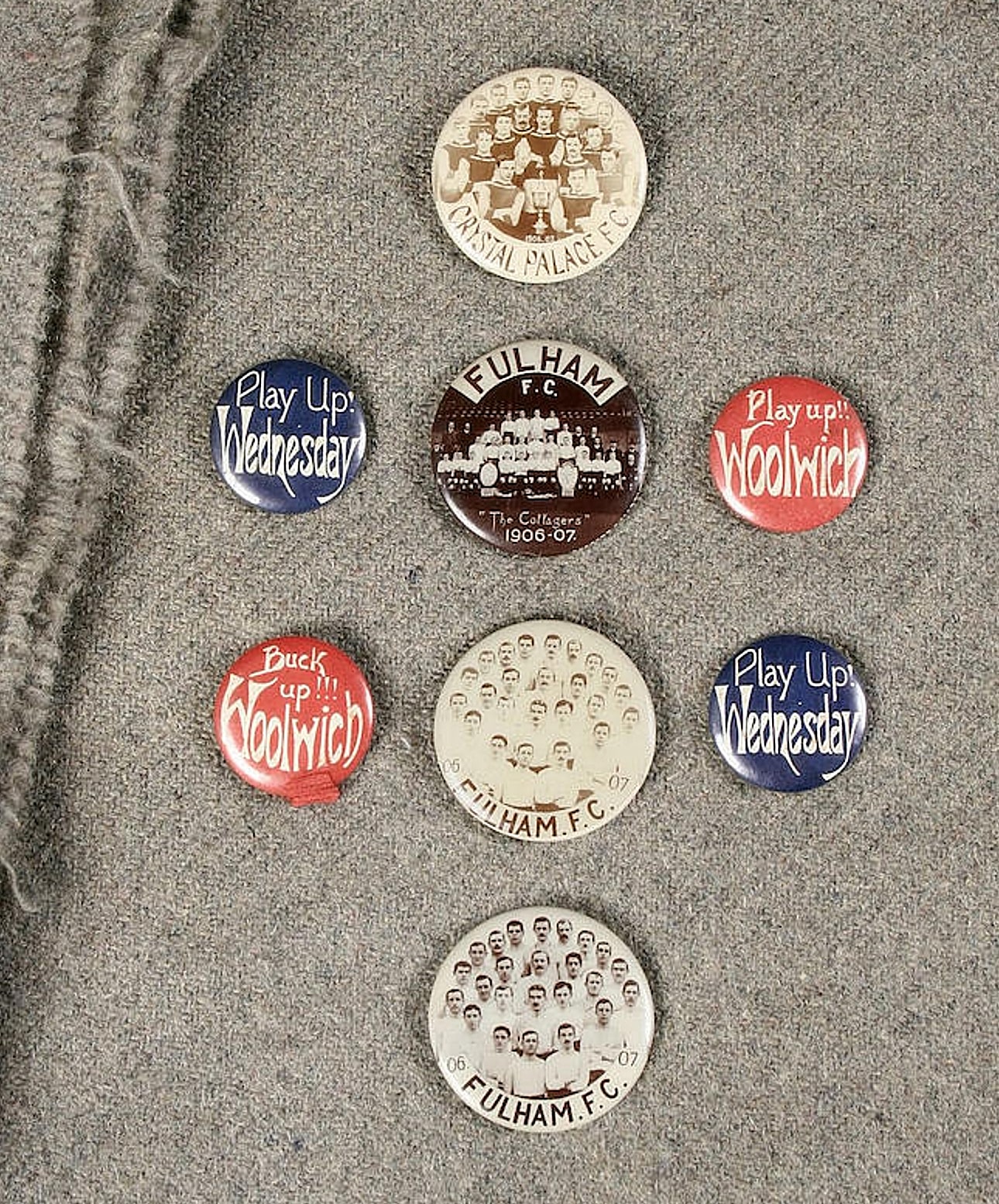
There must have been a lot of repetitive work involved. How much of this was carried out by local workers I don't know, but periodically D nd M advertised for a new apprentices (always, so far as I can tell, a "young Lady") who was promised training in photography:
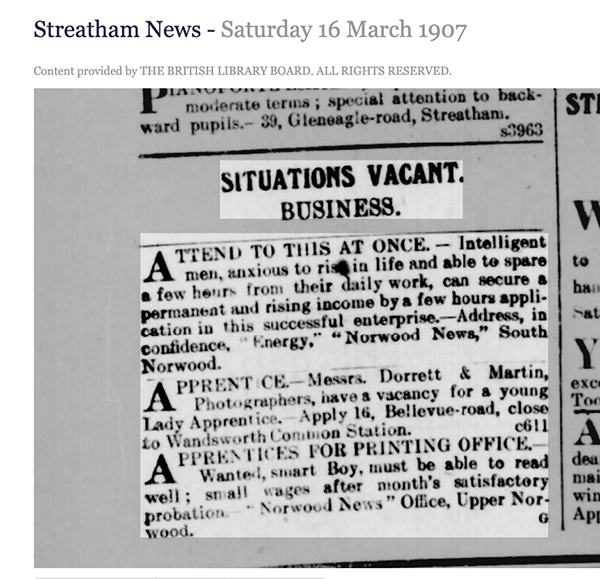
Streatham News, 15 March 1907
Dorrett and Martin (and presumably their apprentices too) took many fine photographs of local people and views. (Of course it's now impossible to know who took which photograph.)
Take this family group, which I think is a cracker of a photograph. Notice the unusual composition, and its beautiful contrasts — dark, light, dark, light:
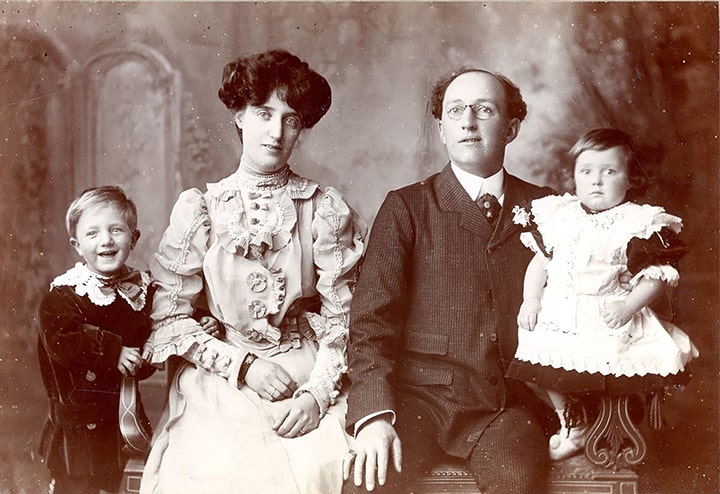
[I love the fact that Dorrett and Martin, like other local photographers (such as Henry Morris at Battersea Rise, New Wandsworth) are taking and making images of local people. We really should try to identify all local photographers and collect as many examples of their work as we can.]
And here we have Helen Thomas — wife of poet Edward Thomas. (She was a fine writer too, by the way.) This is their son, Merfyn, when he was less than a year old, around 1901. Edward was away at Oxford University, so she probably went to the local photographer — Dorrett & Martin — who were just nearby. (She had been living on Patten Road.)

Helen Thomas, wife of poet Edward Thomas, and their son Merfyn, photographed in D&M's "Athol Studios". Merfyn was born in 1900, so presumably this was taken in late 1900/early 1901.
And here's a small portrait of Mervyn:
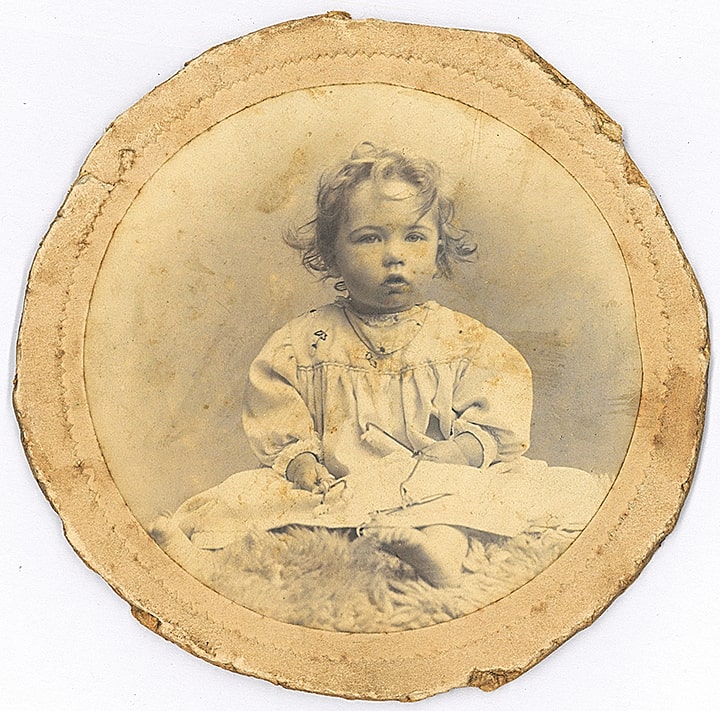
Merfyn Thomas | Dorrett and Martin
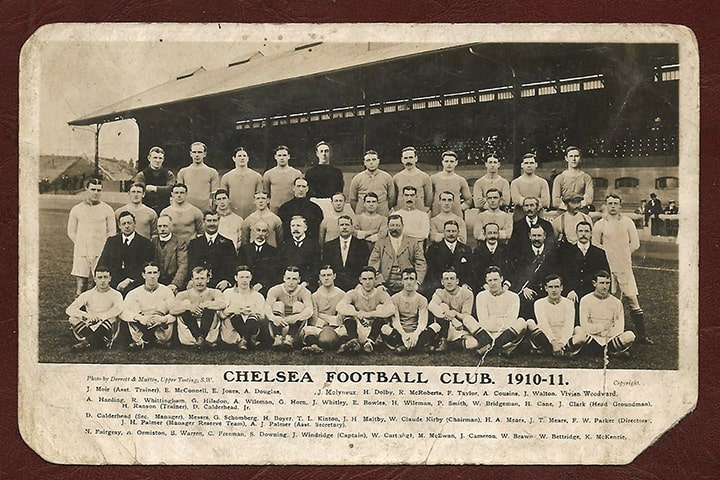
They clearly made money photographing sports teams too — Aston Villa, Chelsea, and others.
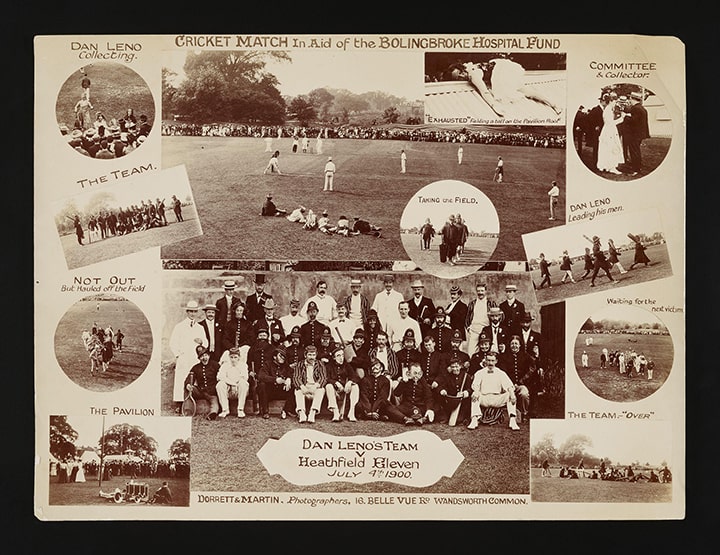
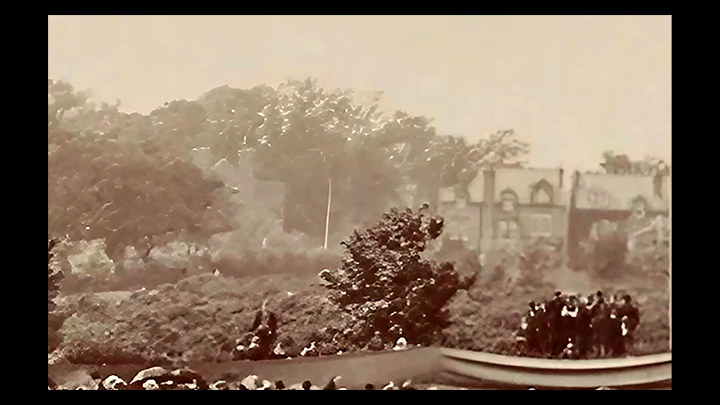
Continuing the sporting theme — one of their most famous series is from a charity cricket match on Wandsworth Common, July 4th, 1894. Dan Leno, the great music hall comedian, brought a team of fellow performers to play the Heathfield XI, raising money for Bolingbroke Hospital.
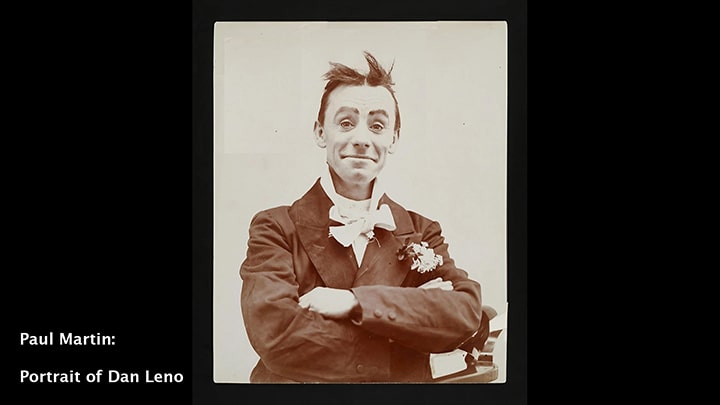
Portrait of Dan Leno by Paul Martin. V&A.
The photos are wonderful — lively, funny, and technically sophisticated. Some are complex composites — vignettes and overlays arranged together to tell the story of the day. Really clever stuff.
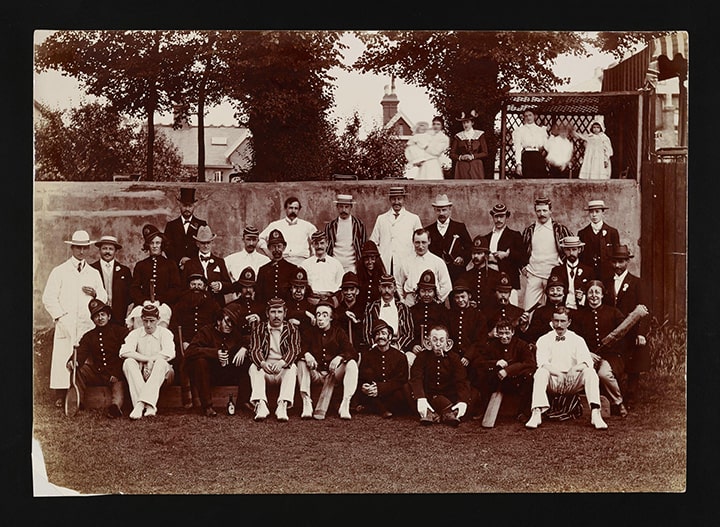
Some of the constituent photographs survive; for example, this wonderful team photograph:
Incidentally, let's look in the far background of the top image.
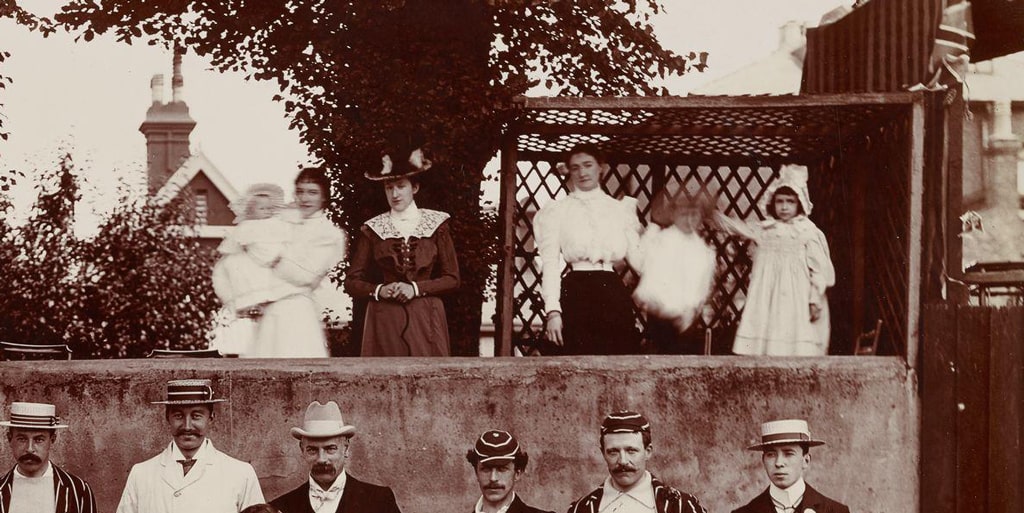
Onlookers standing in the gardens of Brodrick Road. I wonder if they paid their entrance fees?
I'm often as interested by the backgrounds of these old photographs as the immediate subject matter. For example, let's look beyond Dano Leno's players on what we now call Trinity Fields and see the far distance. Clearly today's Scope is much more wooded, and beyond you can just about see the backs of houses in Routh Road.
Now, let's move on to Dorrett and Martin's views of Wandsworth Common. Postcards were hugely popular in the first decades of the twentieth century ‐ they were the emails or texts of the Edwardian England. I'm not sure exactly how many postal collections and deliveries there were a day around here, but it may have been four or five — in some parts of London, there were up to twelve postal deliveries a day, and I assume collections must have been just as frequent.
Hence there was scope for masses of local-interest cards. And Dorrett & Martin produced hundreds of them.
[A number of local companies produced cards too, notably John's, S.S., Card House, and J.M. of Vauxhall. The Friends of Wandsworth Common and the Wandsworth Society have recently acquired an immense archive of more than a thousand local views collected by the indefatigable local historian Ron Elam, who so memorably used to display his enormous collection on a trestle table on Bellevue Road from the 1980s onwards. These should be made generally available by the Friends quite soon.]
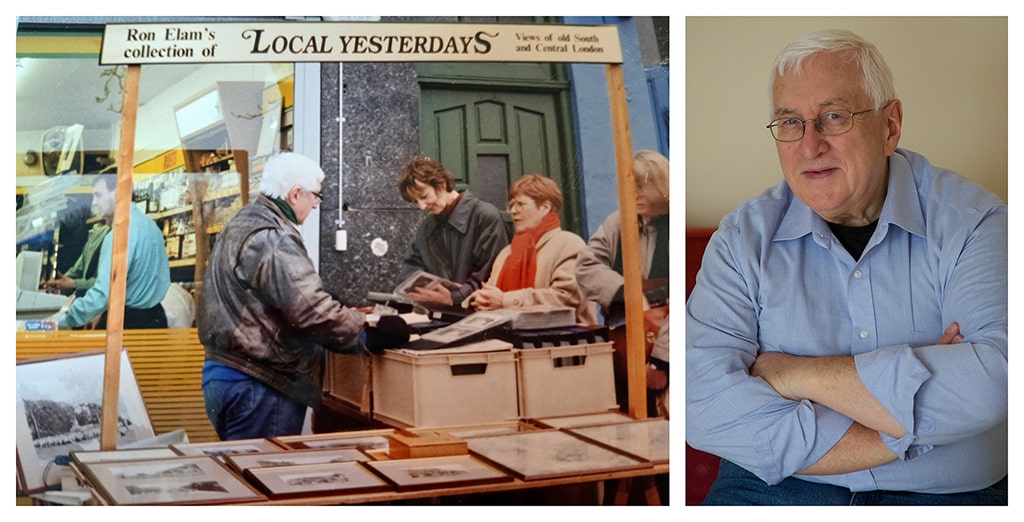
Ron Elam. Local Yesterdays: his stall on Bellevue Road (unknown date), and a portrait. (Ron Elam Collection)
The stall was sited at different locations. Can someone identify this one - is the doorway no. 12a, to the right of the small supermarket at no.12, which today is Rasons Local?
I could go on and on, but it's probably best at this time to simply show a sample of D&M's postcards featuring Wandsworth Common, most of which are from the Ron Elam Collection. I'm sure you'll love them.
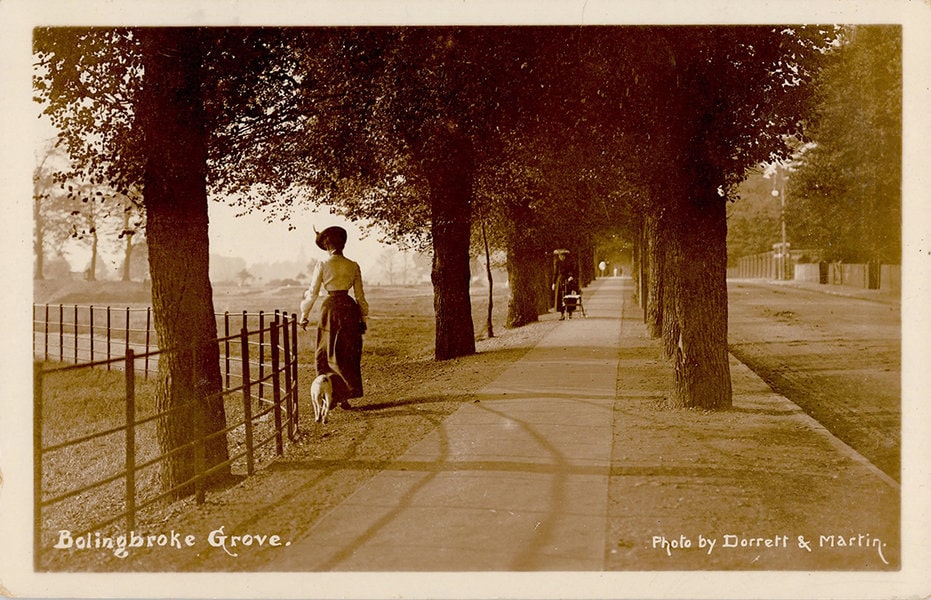
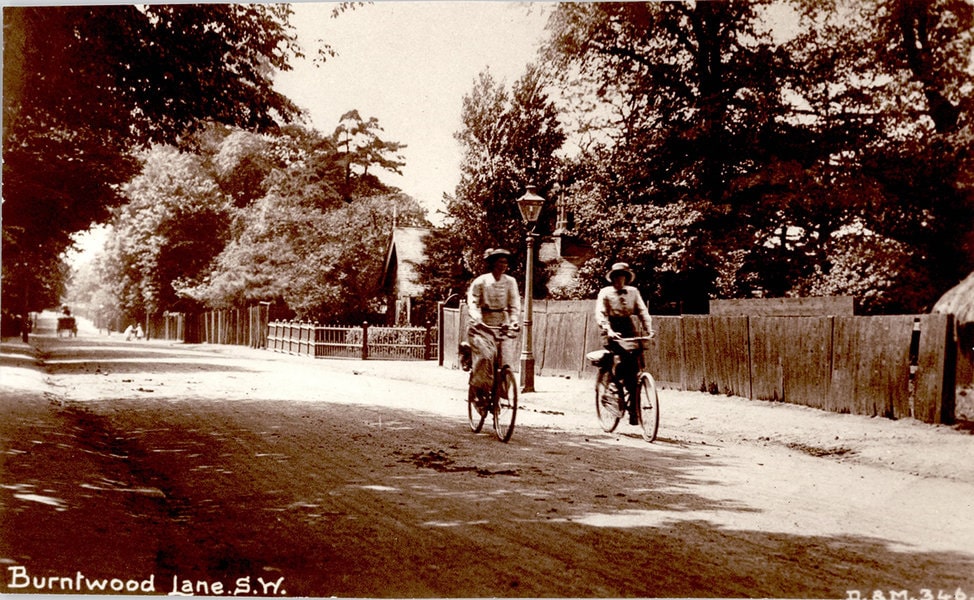
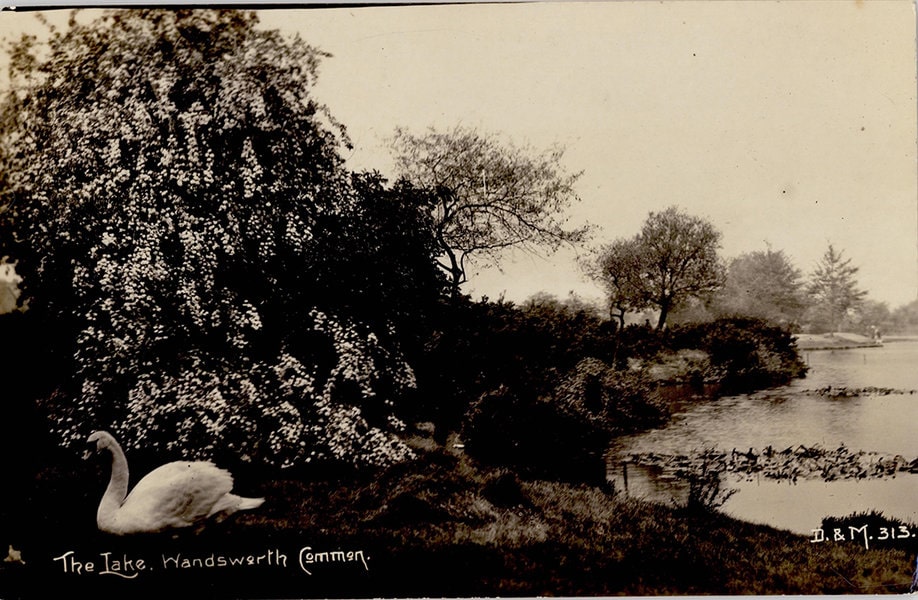
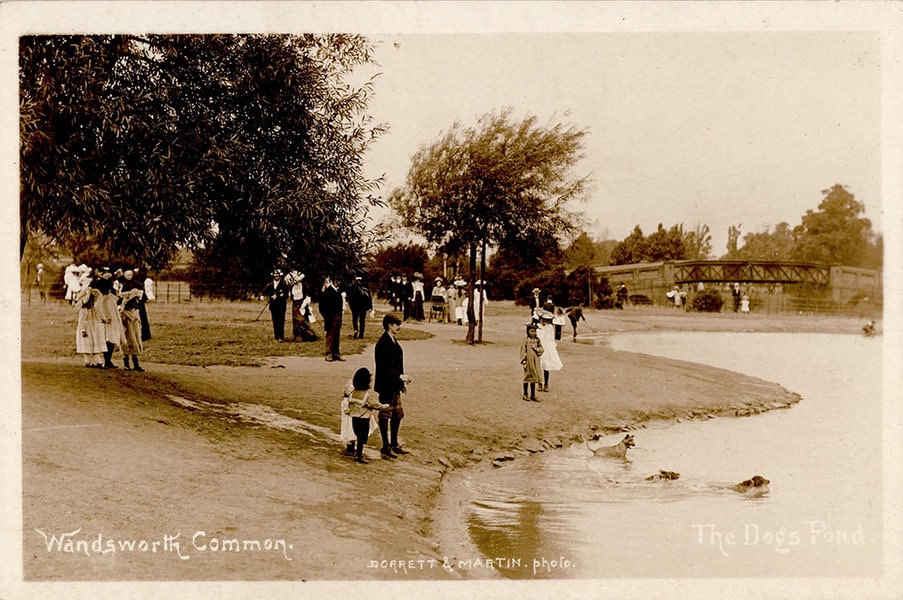
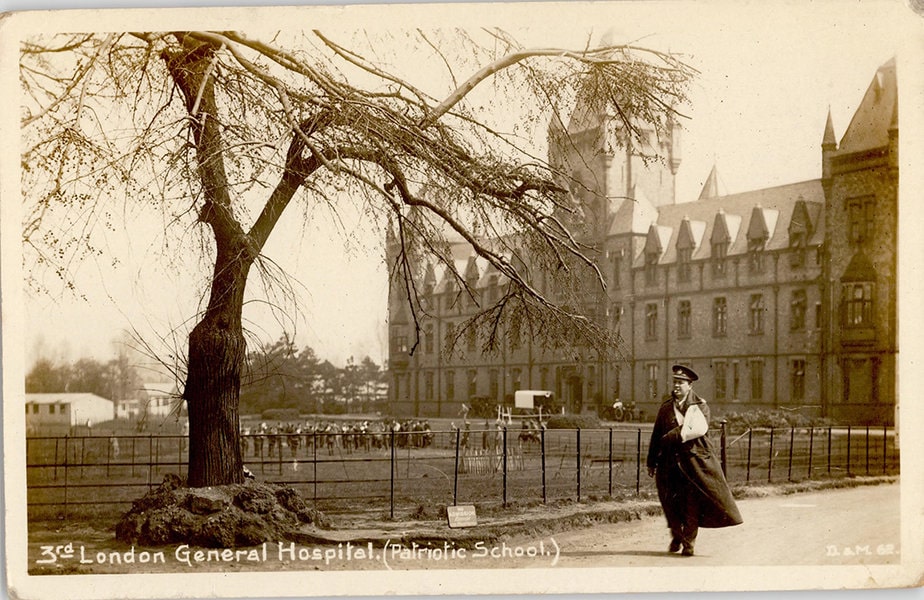
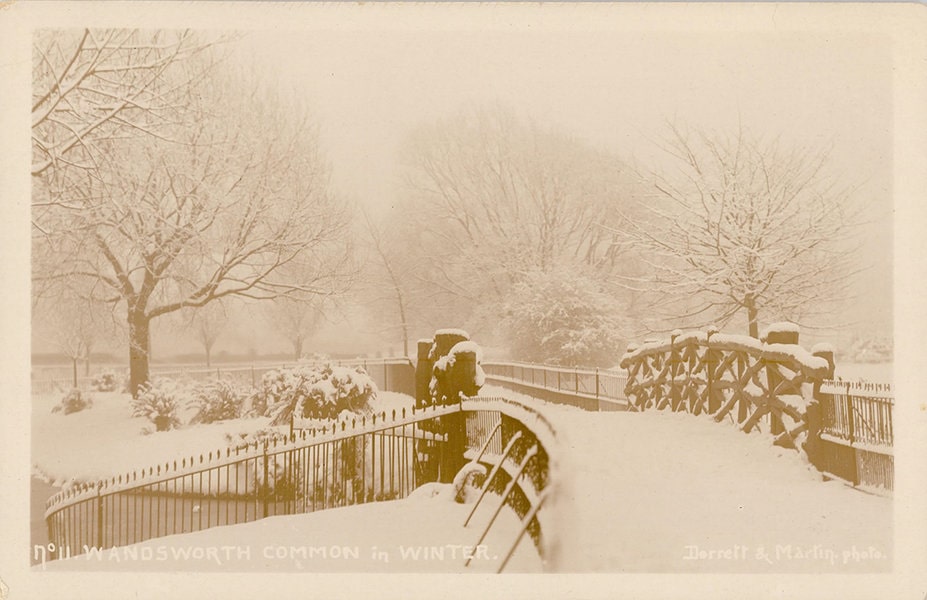
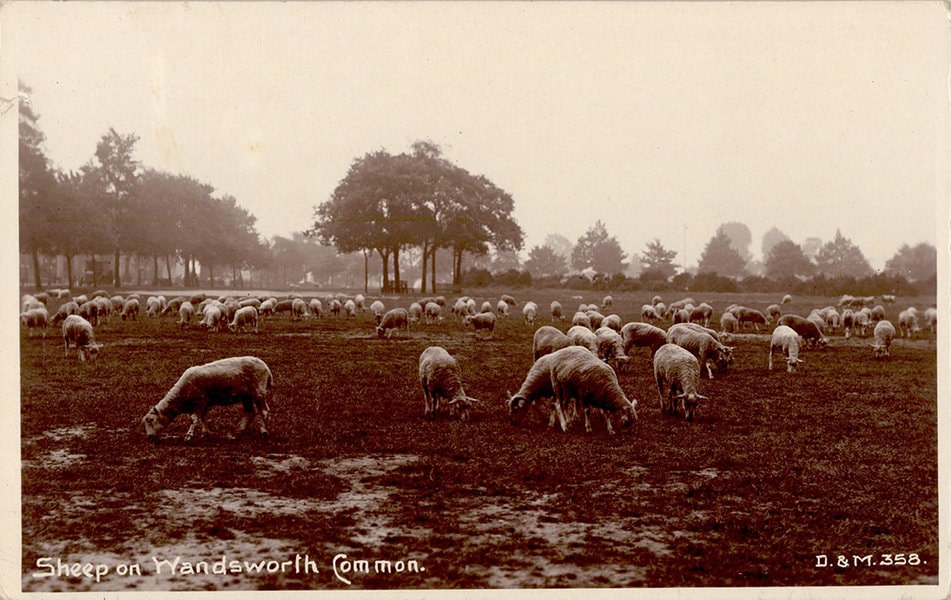
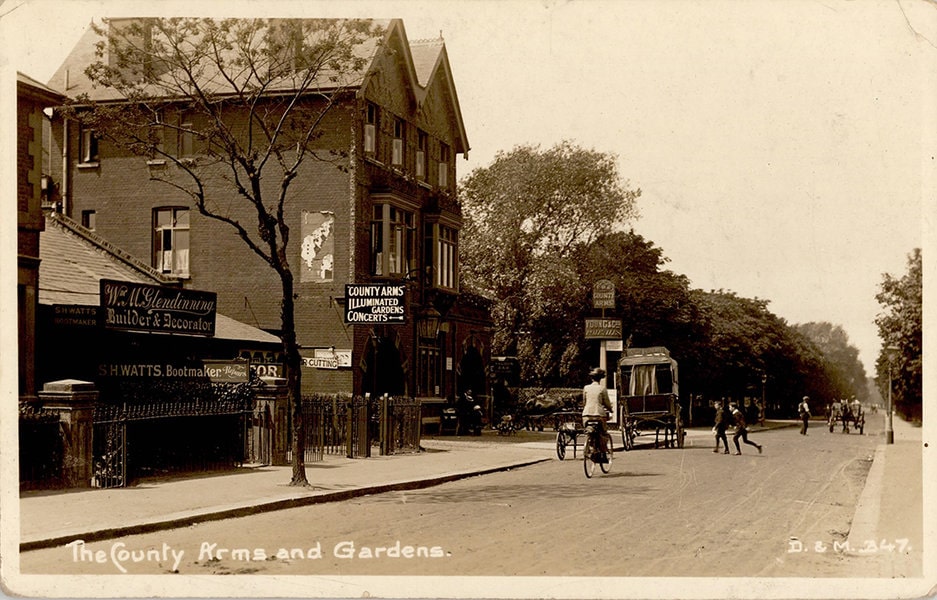
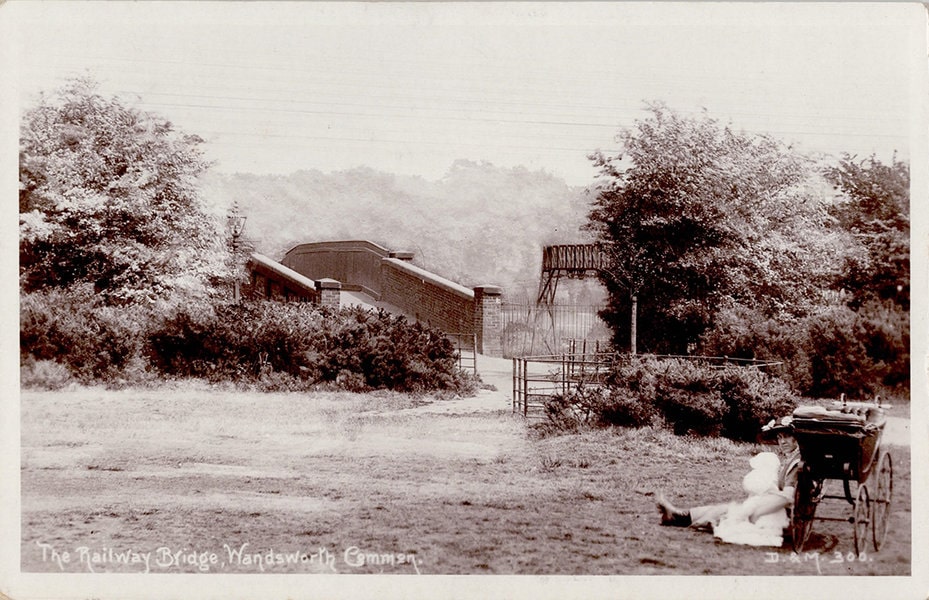
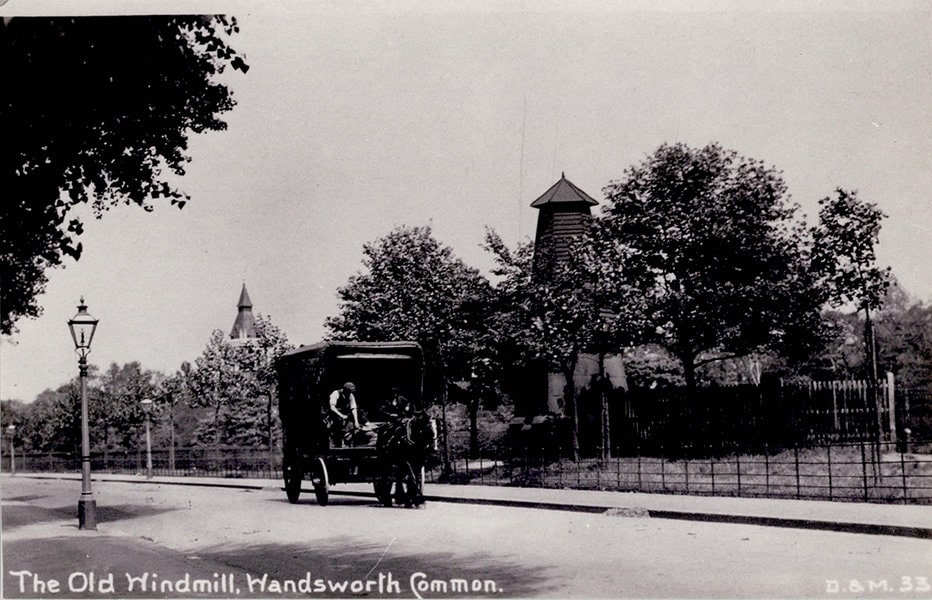
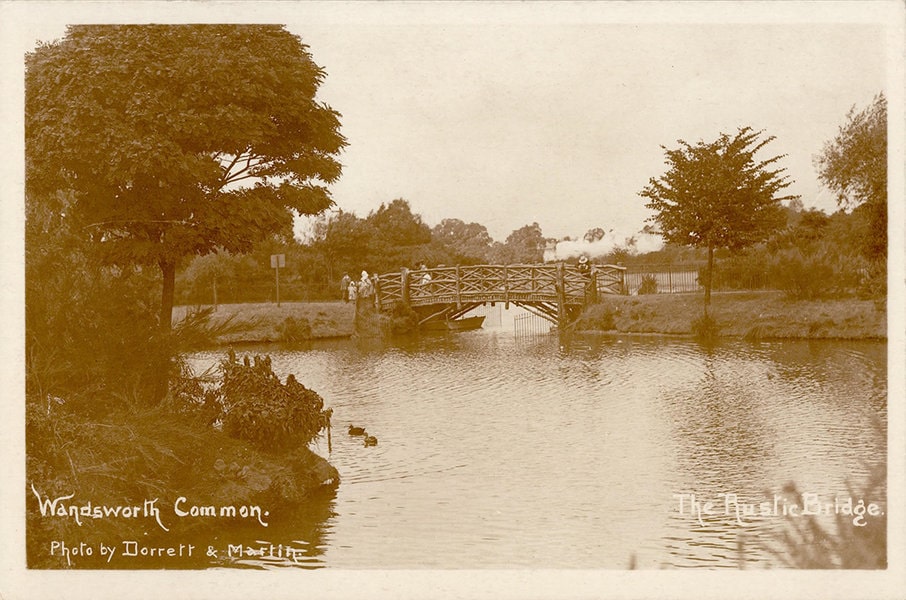
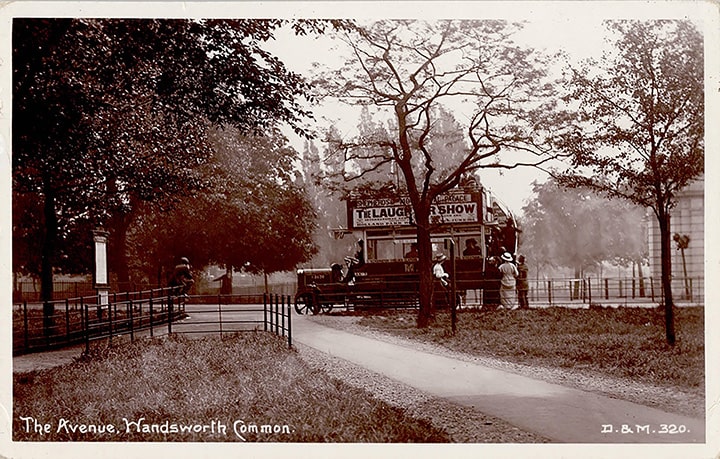
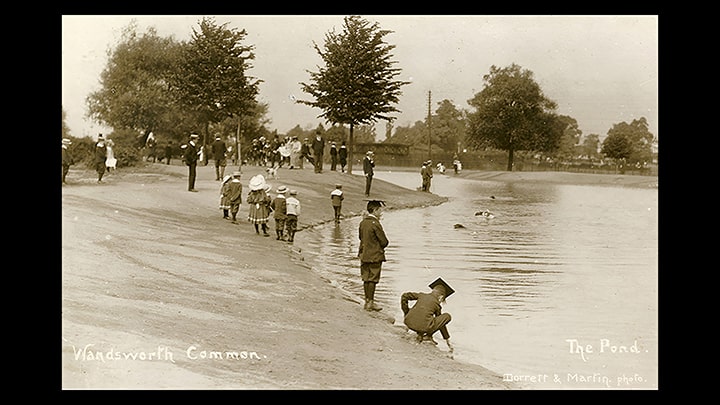
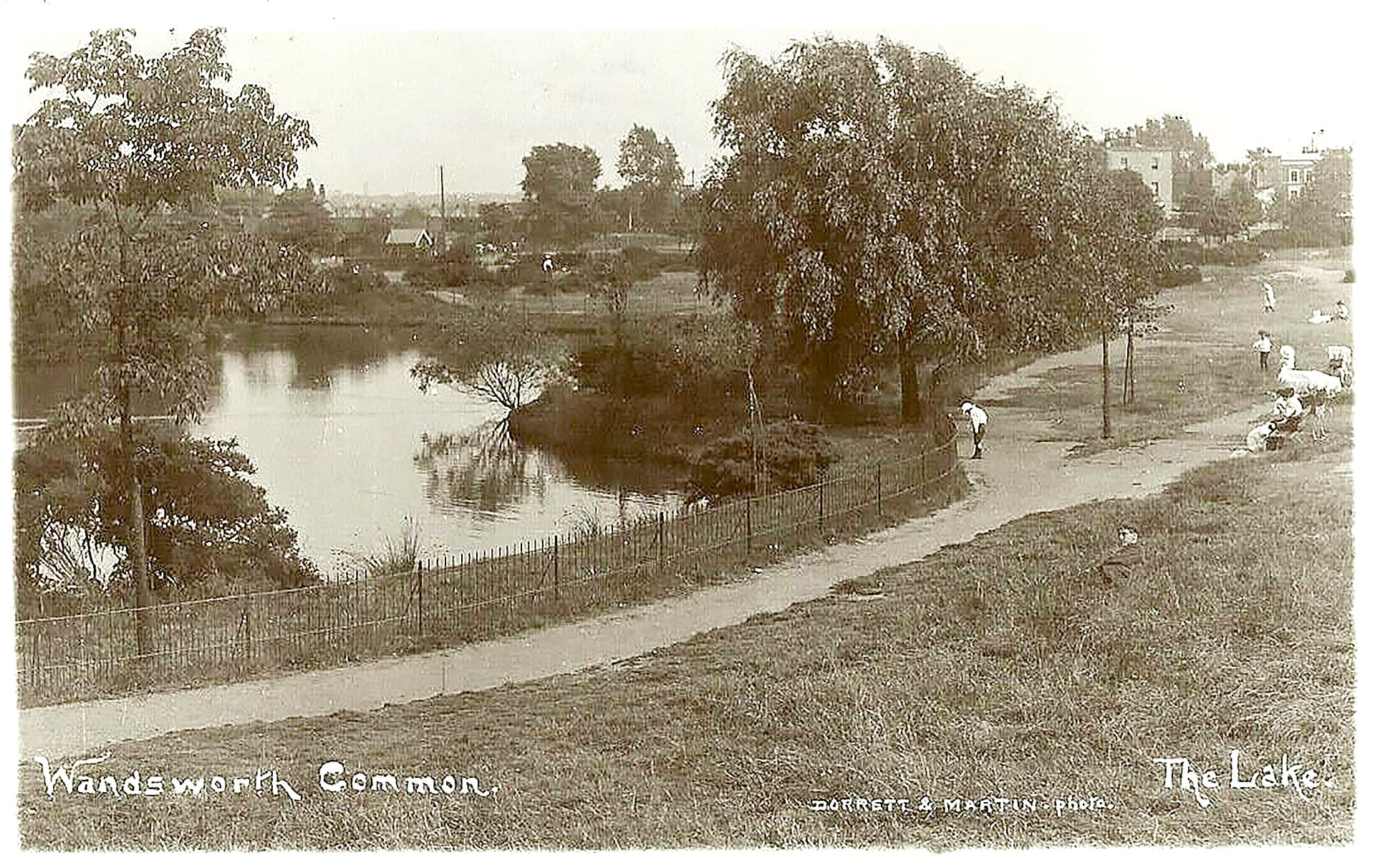
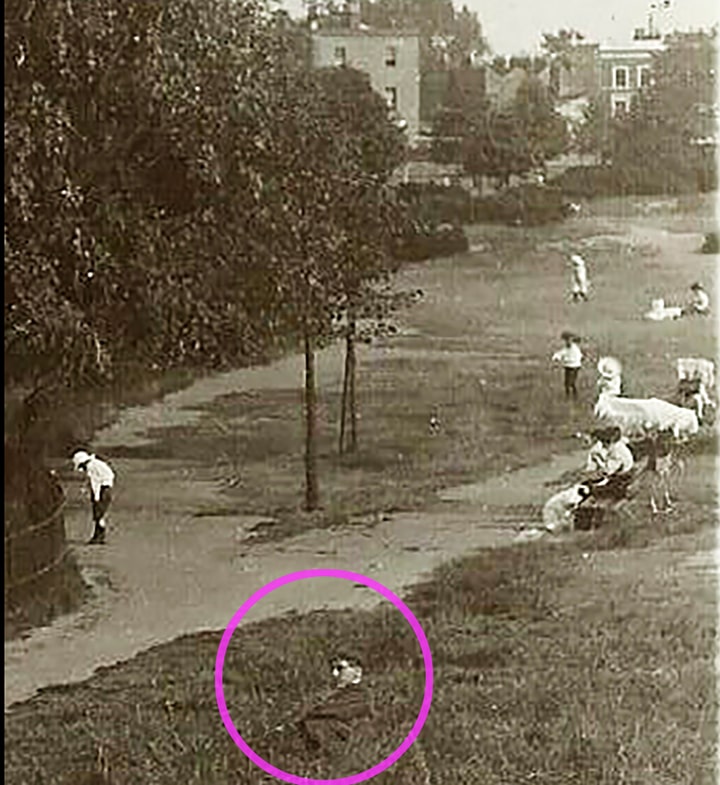
Lake (with hidden, reclining man). A view towards the Hope pub at the foot of Bellevue Road.
This is possibly my favourite.
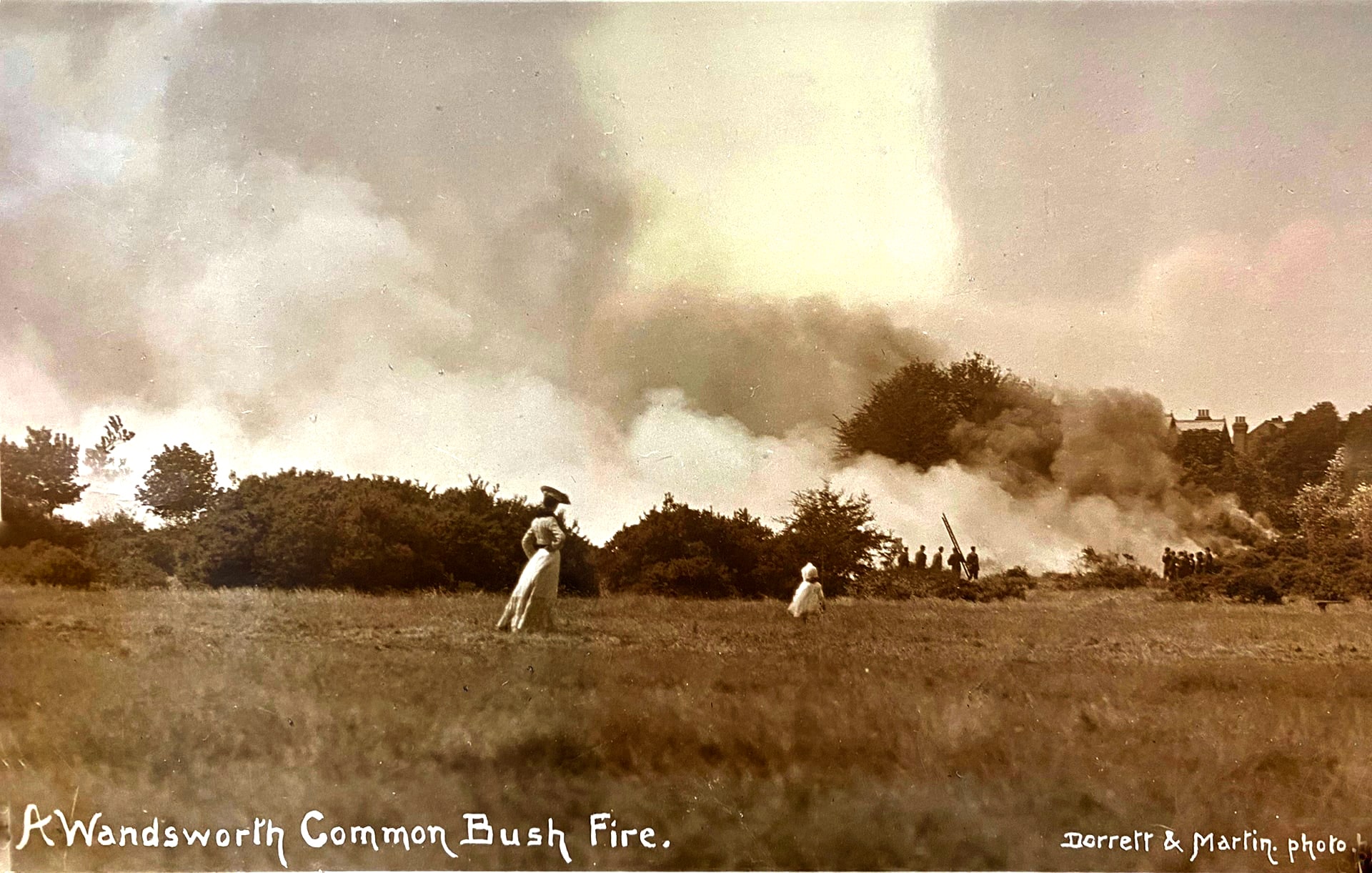
"A Wandsworth Common Bush Fire"
It shows people gathering around what looks like a gorse fire on the Common — a frequent occurrence. It's so beautifully arranged that we suspect D & M must have staged it. The woman and child either side of the mid-line, silhouetted in front of the light/dark/mid-tones of the smoke, the gorse, and the rough grass. Her large dark hat breaking into the bright smoke, the firefighters clustered in the background. Just perfect. You may even be able to identify the houses behind — Routh Road, is it, or Baskerville Road?
Another of my favourites shows a group of boys (and a small dog) by the lake.
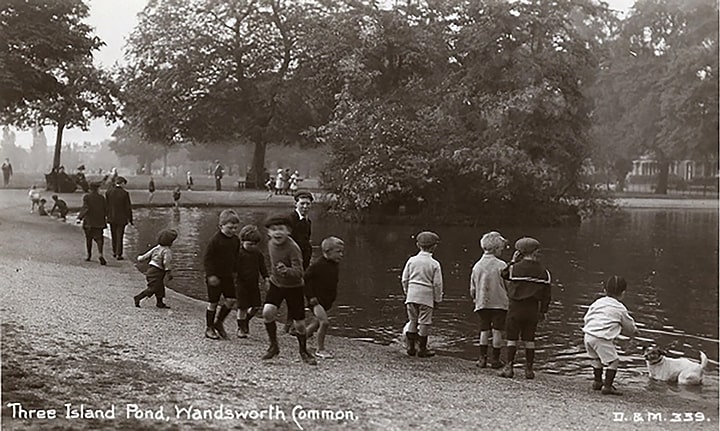
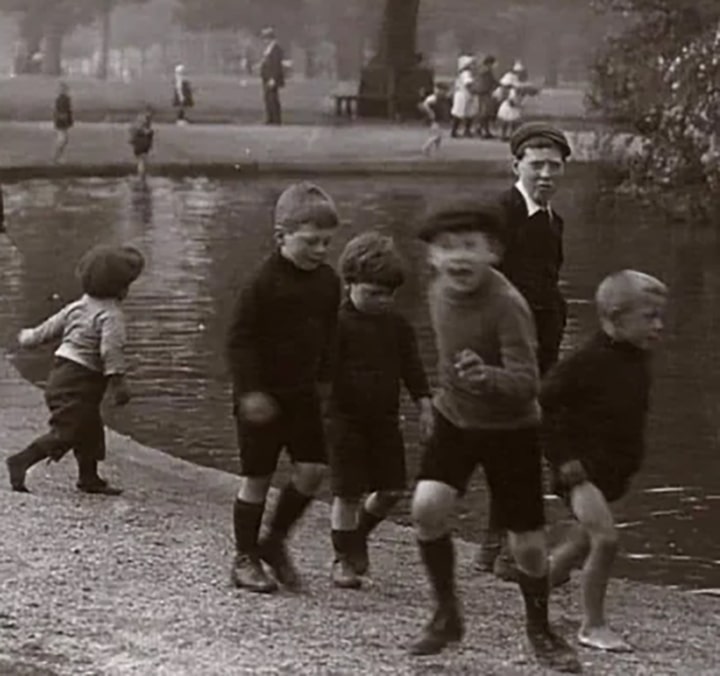
One (his face blurred by motion) is running joyfully, the other (in sharper focus) is looking on critically. This just has to be a Paul Martin.
And finally, this — such a sense of humour again. Is it one man or two? And if one, is it Paul or Harry? It's almost a metaphor for Dorrett & Martin themselves.
In October 2023, Chris Allies and I spoke to the Friends of Wandsworth Common about Paul Martin and Harry Dorrett: "Pioneers of Photography on and around Wandsworth Common"). You can view John Crossland's video of the event here. There's also a rough transcript of the interesting Q&A that followed here.
Some sources for you:
— Wikipedia: Paul Martin.
— Paul Martin, Victorian Snapshots, Country Life, 1939.
— Roy Flukinger, Larry J. Schaaf, Standish Meacham, Paul Martin: Victorian Photographer, University of Texas Press, 1977.
— Bill Jay, Victorian Candid Camera: Paul Martin 1864—1944 (introduction by Cecil Beaton), David &Charles, 1973. Cecil Beaton's Introduction is the best assessment of Paul Martin's work that I know of.
— V&A: Paul Martin.
— MoMA (New York): Paul Martin.
— Getty Museum: Paul Martin.
— Helmut and Alison Gernsheim Collection at the Harry Ransom Centre, The University of Texas at Austin: Paul Martin and Paul Martin Photography Collection (1281 photographs, but none, so far as I can see, shown on the website — very frustrating).
— Croydon Camera Club: Biography of H.G. Dorrett.
SO many more photographs to show, and stories still to tell. But that's all for now, folks.
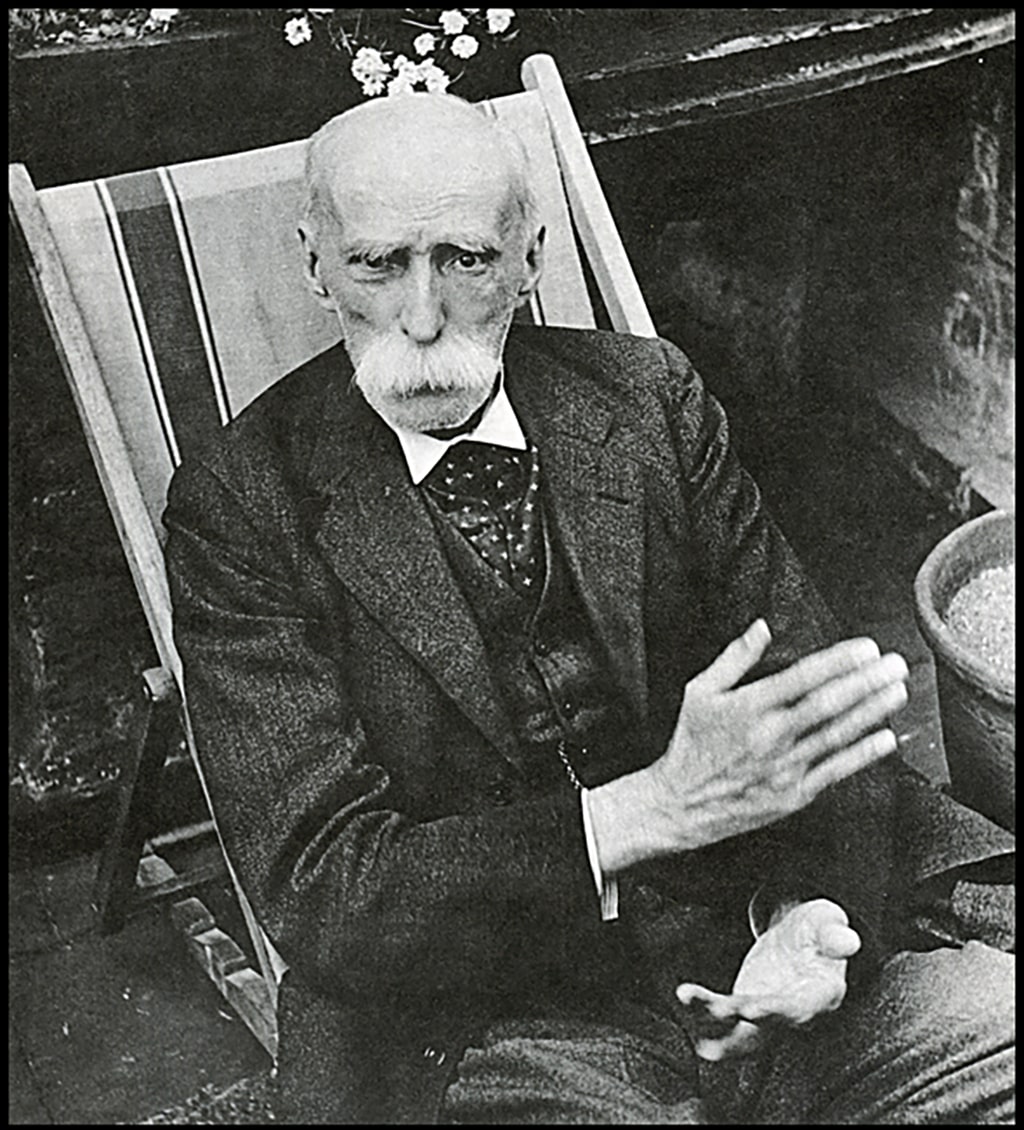
A smashing portrait of Paul in his garden at 55 Hosack Road taken in 1943 by Karl Hutton.
SO many more stories still to tell. But that's all for now, folks.
Send me an email if you enjoyed this post / want to comment on something you've seen on the site / would like to know more — or just want to be kept in touch.
If you would like to receive notifications of new Chronicles, let me know . . .
Philip Boys ("History Boys")
November 2025
— Friends of Wandsworth Common
— Wandsworth Historical Society