Last modified: 3 October 2026
Having spent so much time and space throughout November looking for possible connections between Jane Austen and Wandsworth Common, there was little opportunity to write about anything else. What follows is some of the "anything else".
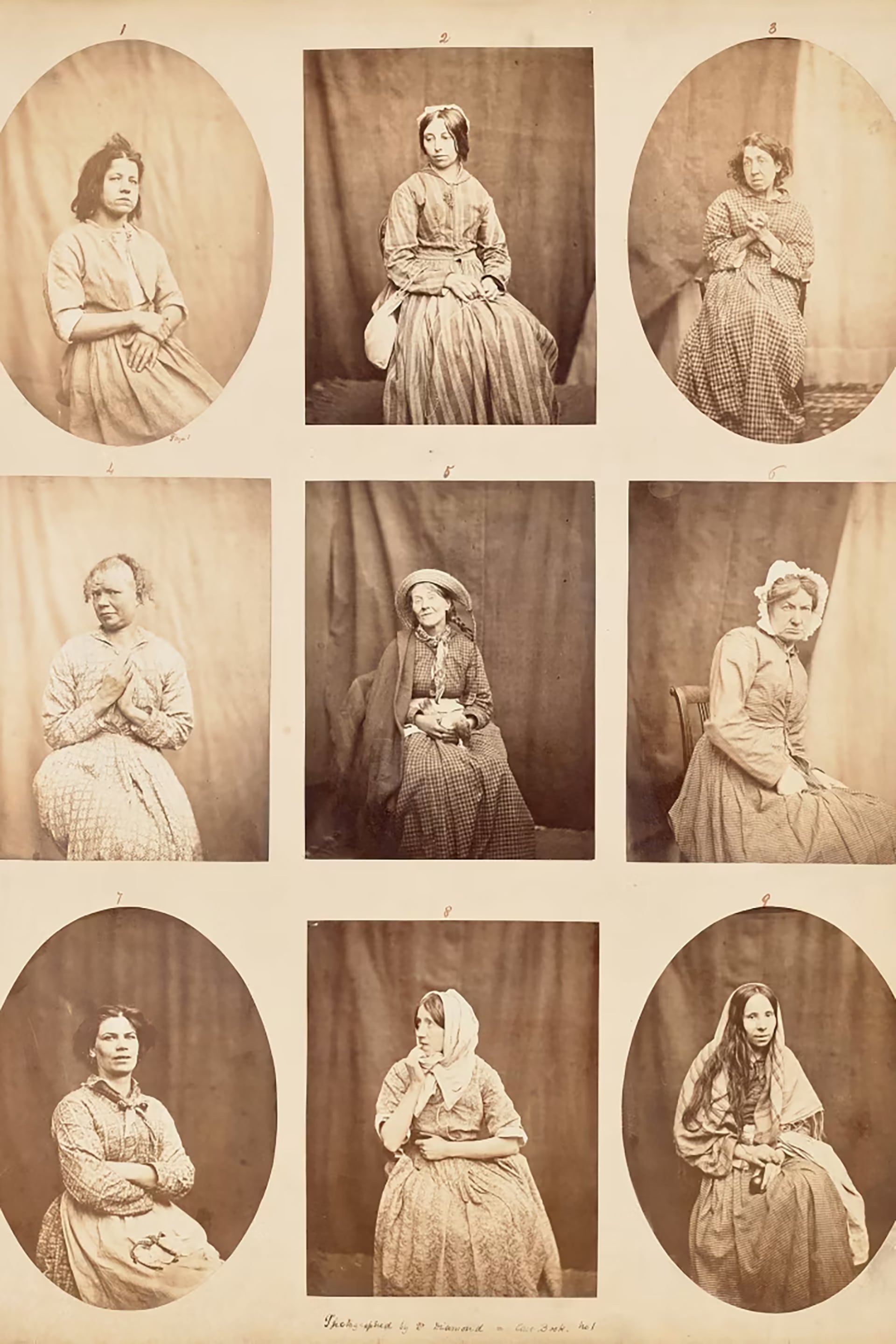
Readers may wish to bid for a remarkable collection of photographs from the early 1850s by Hugh Welch Diamond, once the "Superintendent of Women" at the Surrey Pauper Lunatic Asylum (later Springfield Mental Hospital). These are coming up for auction at Christie's on 10 December 2025. The estimate is £100,000—£200,000. Good luck, I hope you win. If you do, invite me round to see them.
— Christie's: (images, with a very good introductory article by Mark Wiltshire )
— British Photographic History: Auction, Hugh Welch Diamond and early photography, London, 10 December 2025
— I was emailed by Nigel Black about a substantial article by Clive Cookson on the forthcoming auction in the Financial Times, 15 November 2025 — thanks, Nigel!
I've given some talks about HWP's photographs and the history of the Surrey Pauper Lunatic Asylum (the ancestor of Springfield Hospital) that you may find interesting, for example,
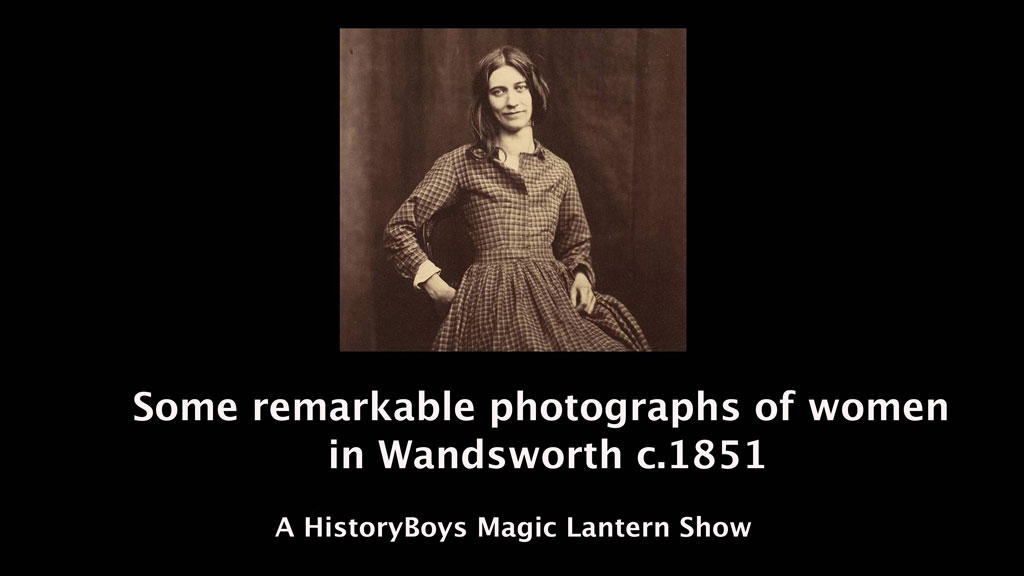
I can't find a video of this talk, so perhaps one wasn't made. I might reconstruct it sometime.

I was rather pleased with this talk — thanks, John (Crossland) for videoing it in May 2024.
While looking around the Christie's website, I noticed an intriguing auction, which also has connections (of sorts) with Wandsworth Common. Watch this (rather stylish) video to get an idea of what's going to come under the hammer:

Absolutely fabulous, don't you think? It was put together by the Stern family of bankers in Paris in the nineteenth century. Yes, it's not immediately obvious what the connection might be with Wandsworth Common, but Sydney Stern, Lord Wandsworth — did you know there was once a "Lord Wandsworth"? — and his brother Edward were also members of this family.
Both Stern brothers were great local philanthropists. One of Lord Wandsworth's properties became the Home for Aged Jews (now called Nightingale House) on Nightingale Lane.
[He also set up the school for deaf children next door. This, I think, was initially housed in no. 101 — later a centre for questioning women and children who entered the country during World War Two, and for recruiting and training women spies in World War Two. (See also the item on Paul McCue, below.)]
In 1912, when the London County Council was struggling to find the money to buy the "Extension" (today's Cricket Field, Tennis Courts, Bowling Green and Cafe) from the Patriotic Fund, Sydney's brother Edward stepped in. A great cricket enthusiast, he pledged he would fund any shortfall should subscriptions fail to meet the asking price.
[— On Edward Stern's support for Wandsworth Common, see e.g. Chronicles: June 2022, and South Western Star, 14 June 1912).]
Sydney Stern was a tireless but frequently unsuccessful candidate for the Liberal Party in elections for the Mid-Surrey constituency (which included Wandsworth Common) in 1880 and 1884,
[There's an interesting account of various speeches made in Battersea and Wandsworth by and on behalf of Sydney Stern in 1884 in the South London Press, 21 June 1884 here. Venues included Wandsworth Town Hall, Bolingbroke Hall on Northcote Road, Battersea's Lammas Hall, and an open-air rally, addressed by John Buckmaster, at "the Green, Queen's Road". (I wonder where this was?)]
He was unsuccessful in our area, and later in Tiverton in 1885, and Ipswich in 1886. But he was finally elected for Stowmarket in a by-election in 1891, a seat he held in the general election the following year.
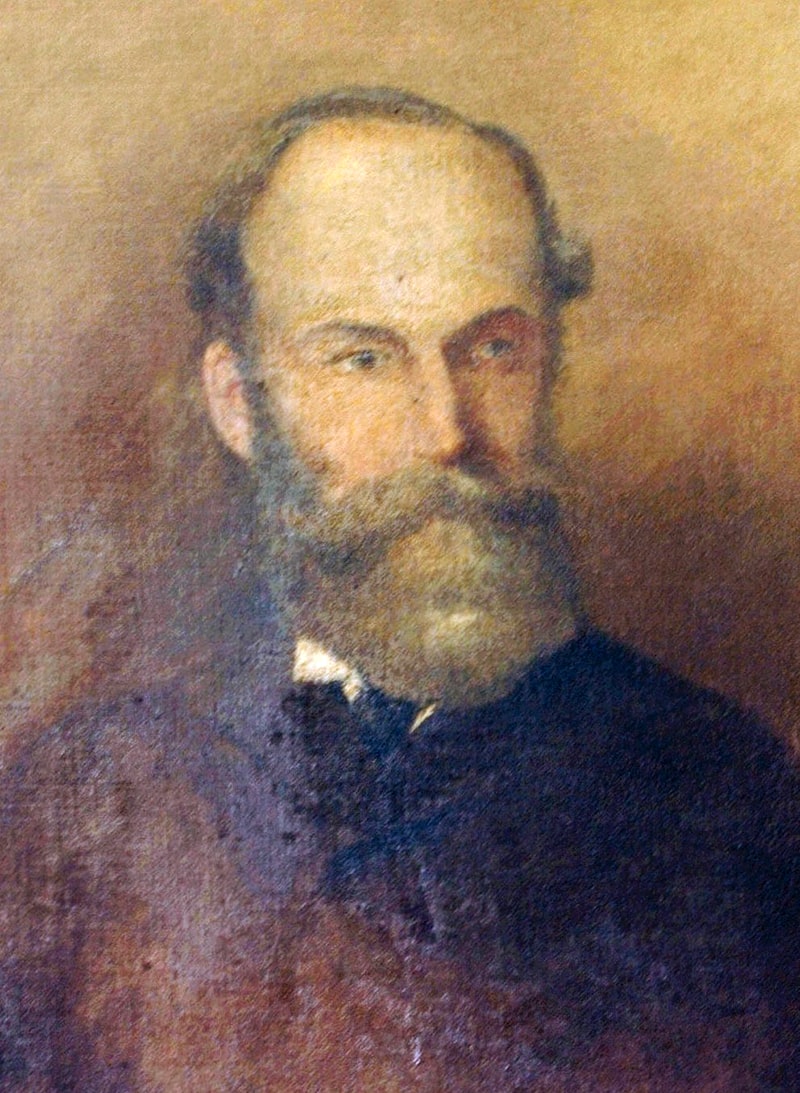
Sydney James Stern, 1st Baron Wandsworth (1844-1912)>
In July 1895, thanks to his political and financial support for Gladstone and the Liberal Party, Sydney Stern was raised to the peerage as Baron Wandsworth, of Wandsworth in the County of London.
[Sydney Stern, Lord Wandsworth] was a Justice of the Peace for Surrey and London, and served as vice-president of the London and Counties Radical Union. He was appointed the Honorary Colonel of the 4th Volunteer Battalion, East Surrey Regiment, on 16 February 1889. He provided the land for the battalion's new drill hall at 27 St John's Hill, Clapham Junction, opened in 1902.
[Wikipedia: Sydney Stern, 1st Baron Wandsworth.]
Thinking about Lord Wandsworth's Drill Hall brought to mind how my father, a keen .22 shooter, used to take me to the rifle range there in the 1950s. He would even let me take a few shots myself. It was all very exciting.
— Wikipedia: Stern family (includes a comprehensive family tree).
— Wikipedia: St John's Drill Hall.
— Wikipedia: East Surrey Regiment.
Talk by by military historian Paul McCue to the Wandsworth Society, 26 November 2025
I was very sorry to miss this talk, but fortunately the wonderful John Crosland videoed it — thanks, John!.
Paul McCue, "World War Two and the Royal Victoria Patriotic Building".
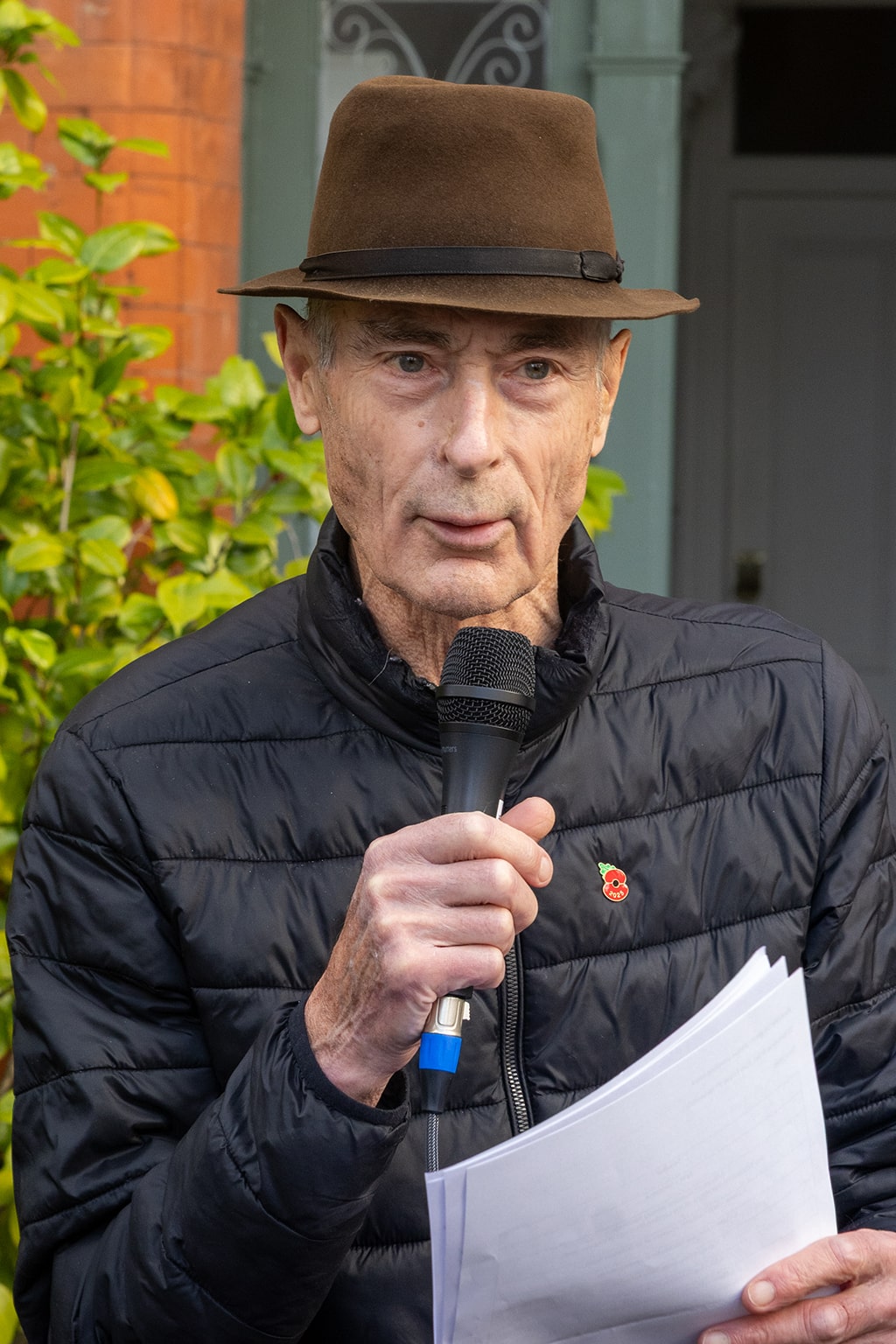
William Garforth speaking outside 16 Bellevue Road, 7 November 2025 | Photo: Lewis More O'Ferrall
I am very grateful to Will for sending me the text of the talk he gave at the inauguration of the plaque to photographers Paul Martin and Harry Dorrett on the wall of his home at 16 Bellevue Road. It's a really illuminating read about what many people (me included) think is the finest building on Bellevue. Thanks, Will!
For more on Paul, Harry and 16 Bellevue Road, see November 2025 Part 1 and Part 2.
Published 1 December 2025 by mudlark121 in London Radical Histories, based on "the excellent research of Gillian Hawtin, and her pamphlet "Battle for the Green", published in 1993. Gillian's father George and cousin Henry had been involved in the campaign to save the Green".
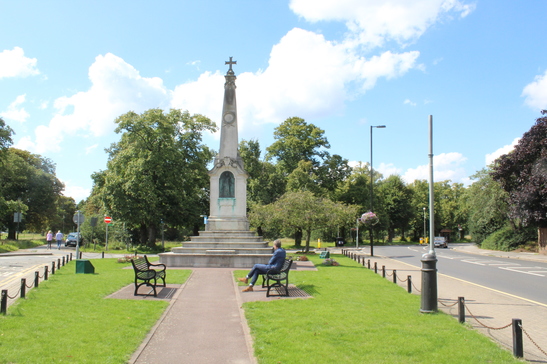
Following on from a previous post detailing the long and intricate campaign that preserved Wimbledon Common from enclosure in the 1860s, a reminder that not all campaigns to save open space from that era were successful.
Wimbledon Green was a small piece of land, possibly roughly triangular, which stood next to, and may at some earlier point have become detached from, Wimbledon Common. In 1901—1902 it became the focus of a plan to build on it, which faced vocal and violent local opposition. However, the campaign to keep the Green open and public ultimately failed . . .
[PastTense: Link.]
For a current aerial view of the triangle of land the article refers to, see here.
I would like to thank Stephen Midlane for sending me these links — thanks, Stephen!
A Talk by me, Philip Boys ("History Boys"), for the Friends of Wandsworth Common, Tuesday 27th January 2026 at Naturescope, Wandsworth Common.
The Falcon Brook — our very own hidden river that flows from far away Knight's Hill through Balham to the Thames in Battersea, running beneath Northcote Road, St John's Road and Falcon Road.
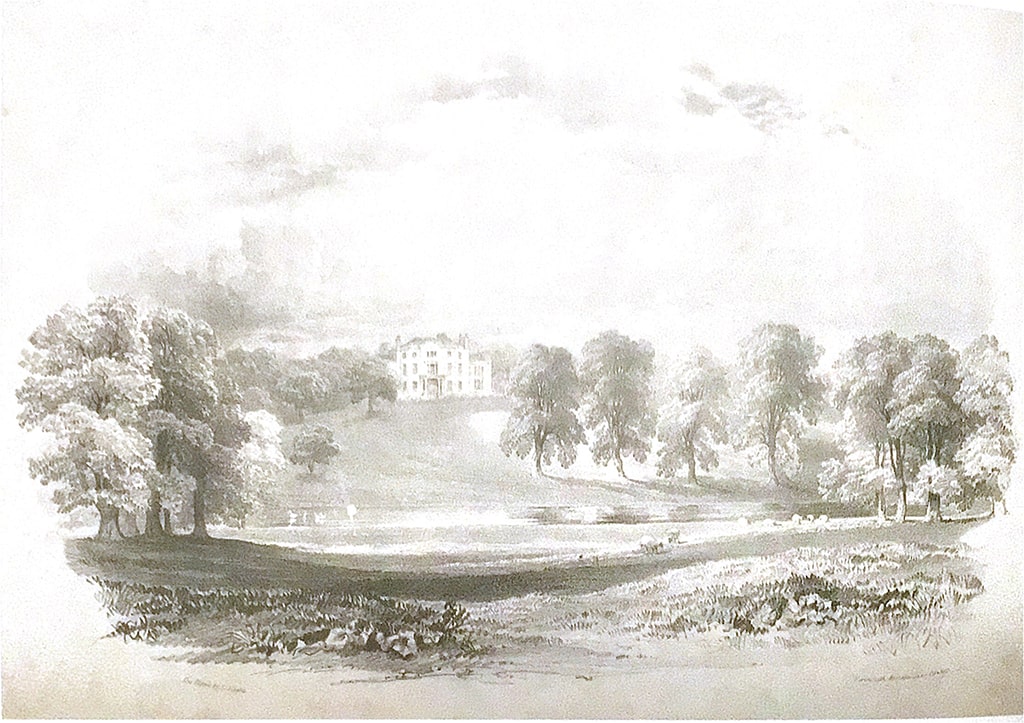
View of Bolingbroke House, on the edge of the Common, seen from across the Falcon Brook.
In the late eighteenth century, the Falcon Brook's beauty was prized, and the "Five Houses" and William Wilberforce's "Broomfield House" (later called Broomwood House) were built on its banks, with extensive gardens. Ornamental lakes were created at intervals for swimming, fishing and boating. But by the middle of the nineteenth century it had become the "York Sewer"). It was then progressively buried deep underground in a large pipe, typically with roads on top. In places, you can still hear its flow &mash; a plea to be released?
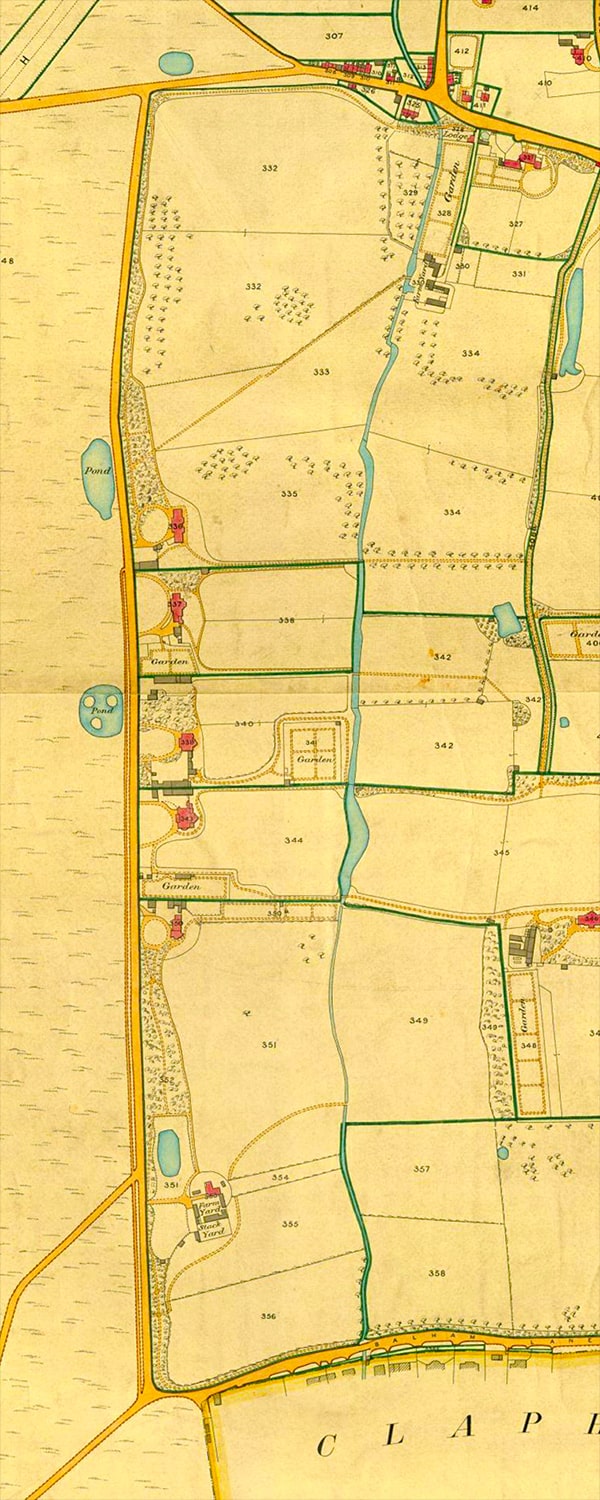
The Falcon Brook, with pools, shown on the Tithe Map of Battersea c.1841. This is the stretch between Nightingale Lane at the bottom and today's Battersea Rise at the top. Bolingbroke Grove is on the left, parallel to the Brook.
If you'd like to attend, please let the Friends' Heritage Group Chair Stephen Midlane know.
A little later in the year, Sara Vey and I hope to talk about our ongoing study of Geoffrey Bevington's fabulous photographs, collected in an album after his death at the age of 34 in 1872 and now in the V&A. Sarah has done a remarkable job of identifying many of the places and people in the otherwise elusive photographs.
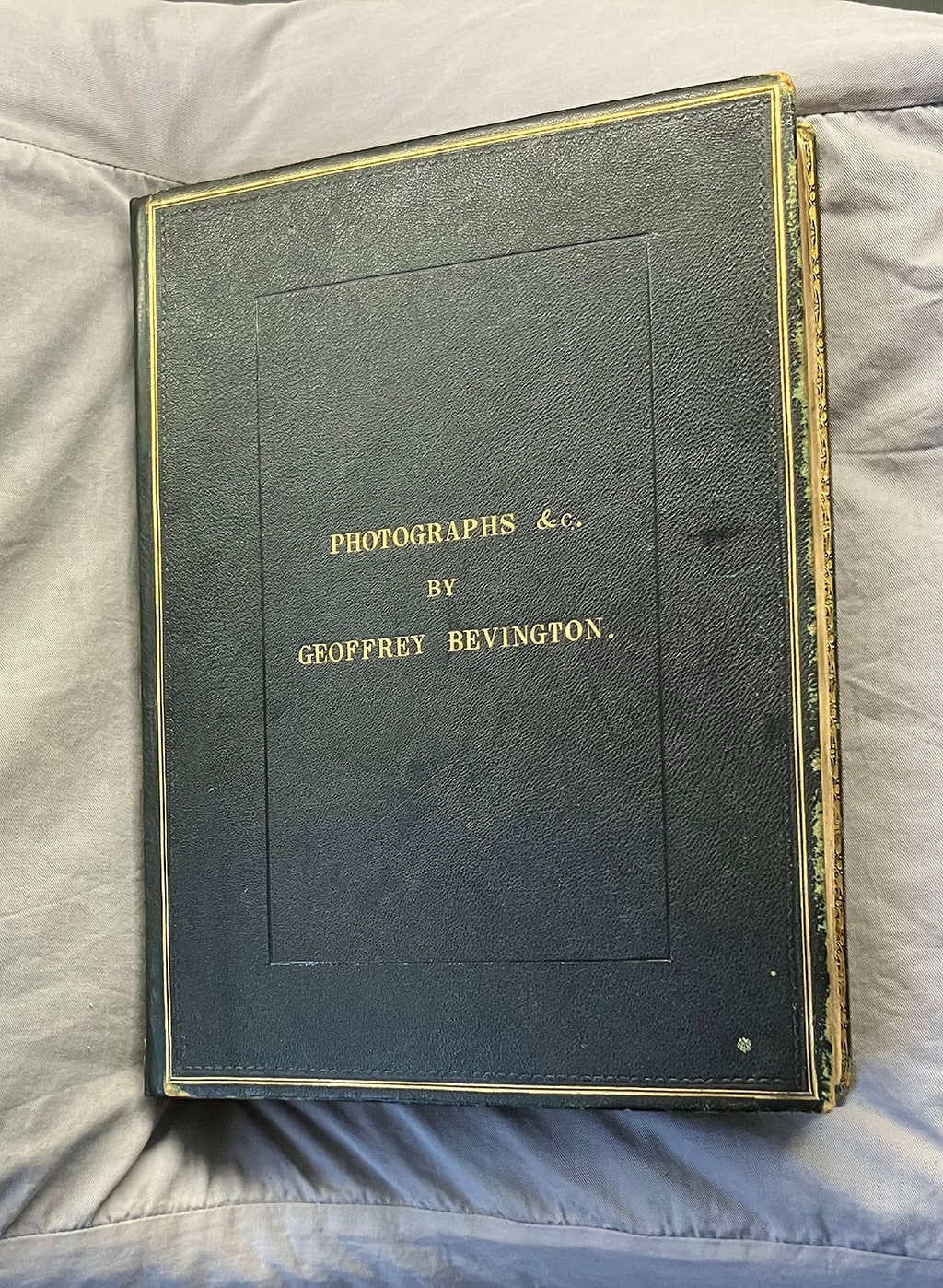
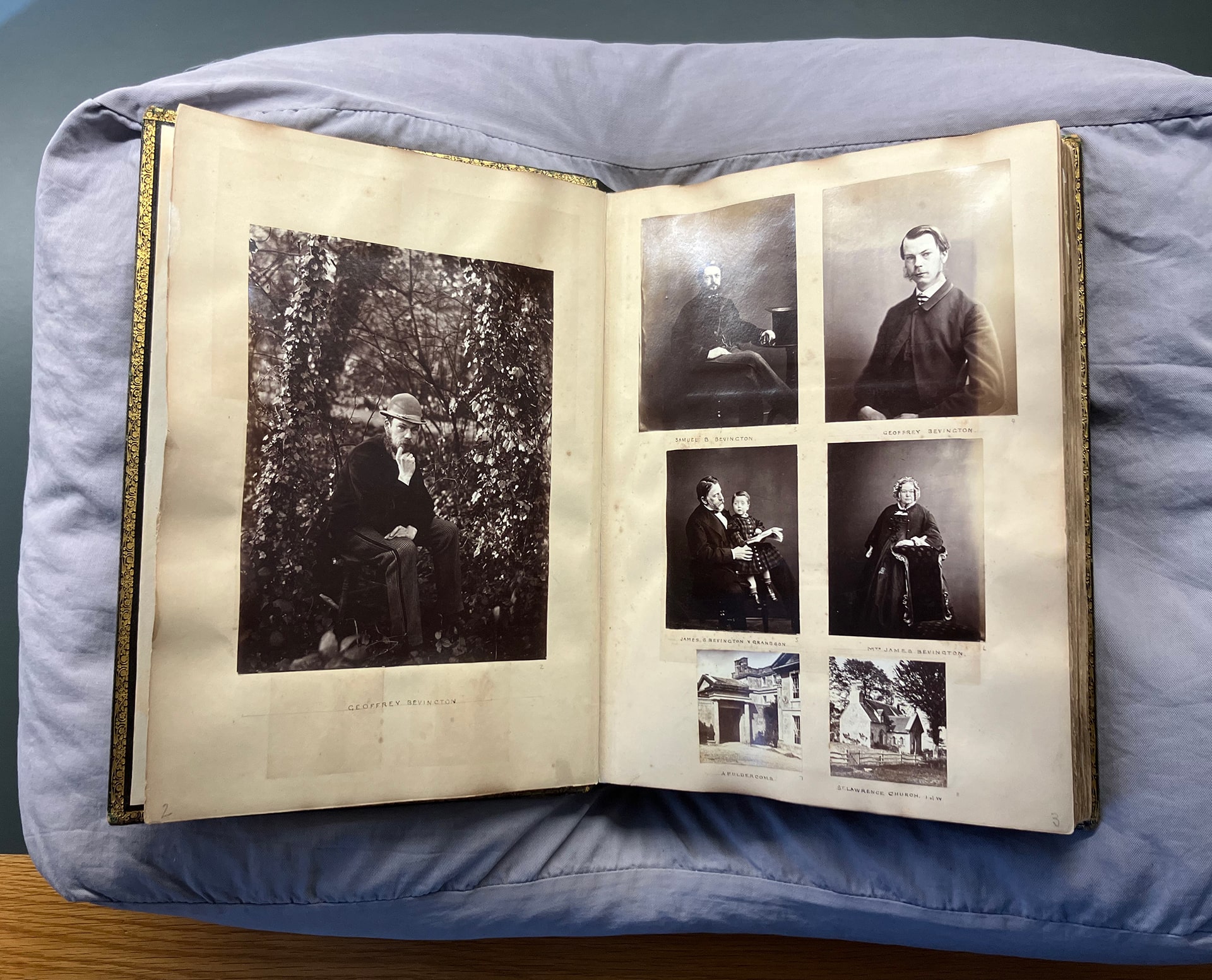
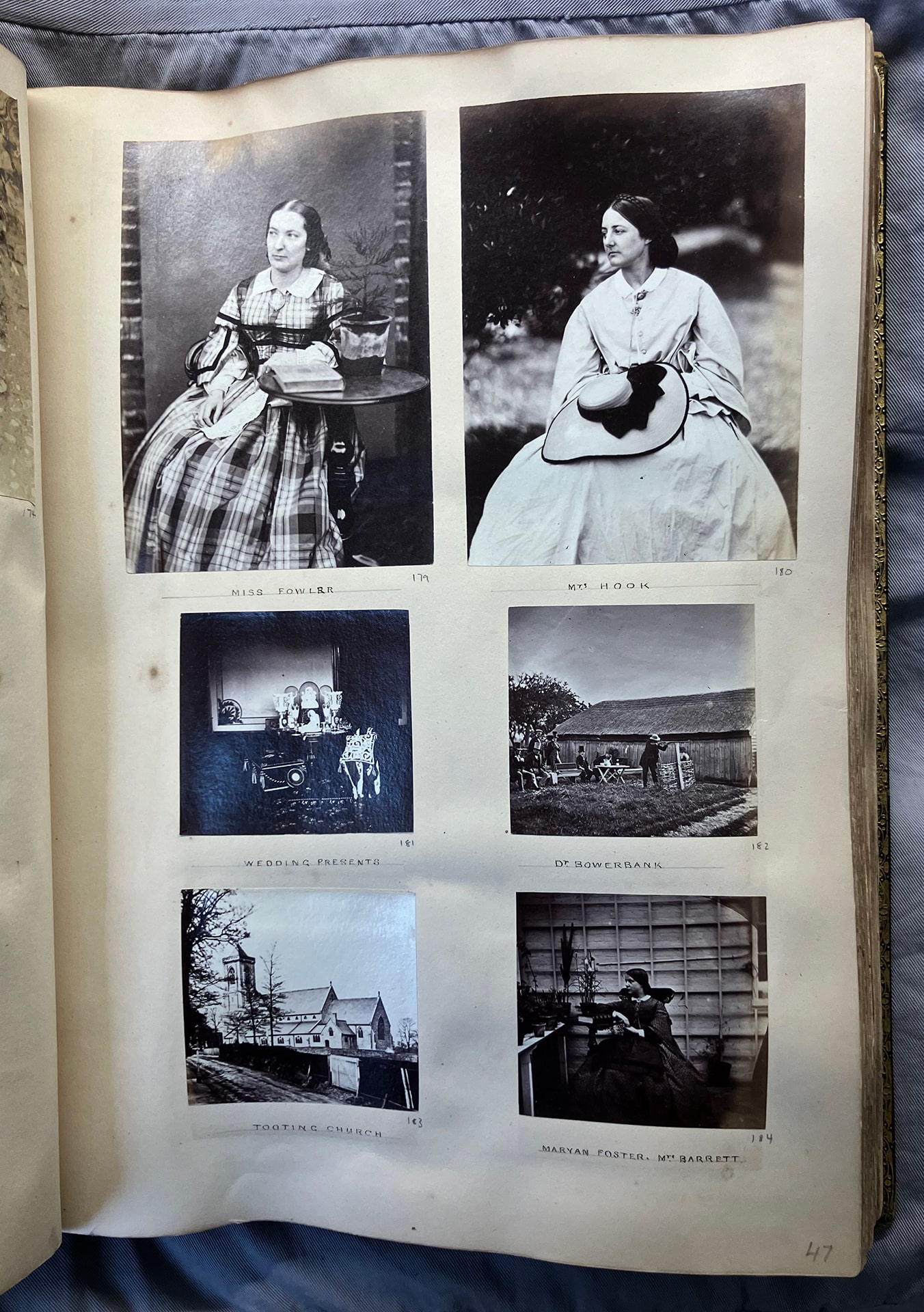
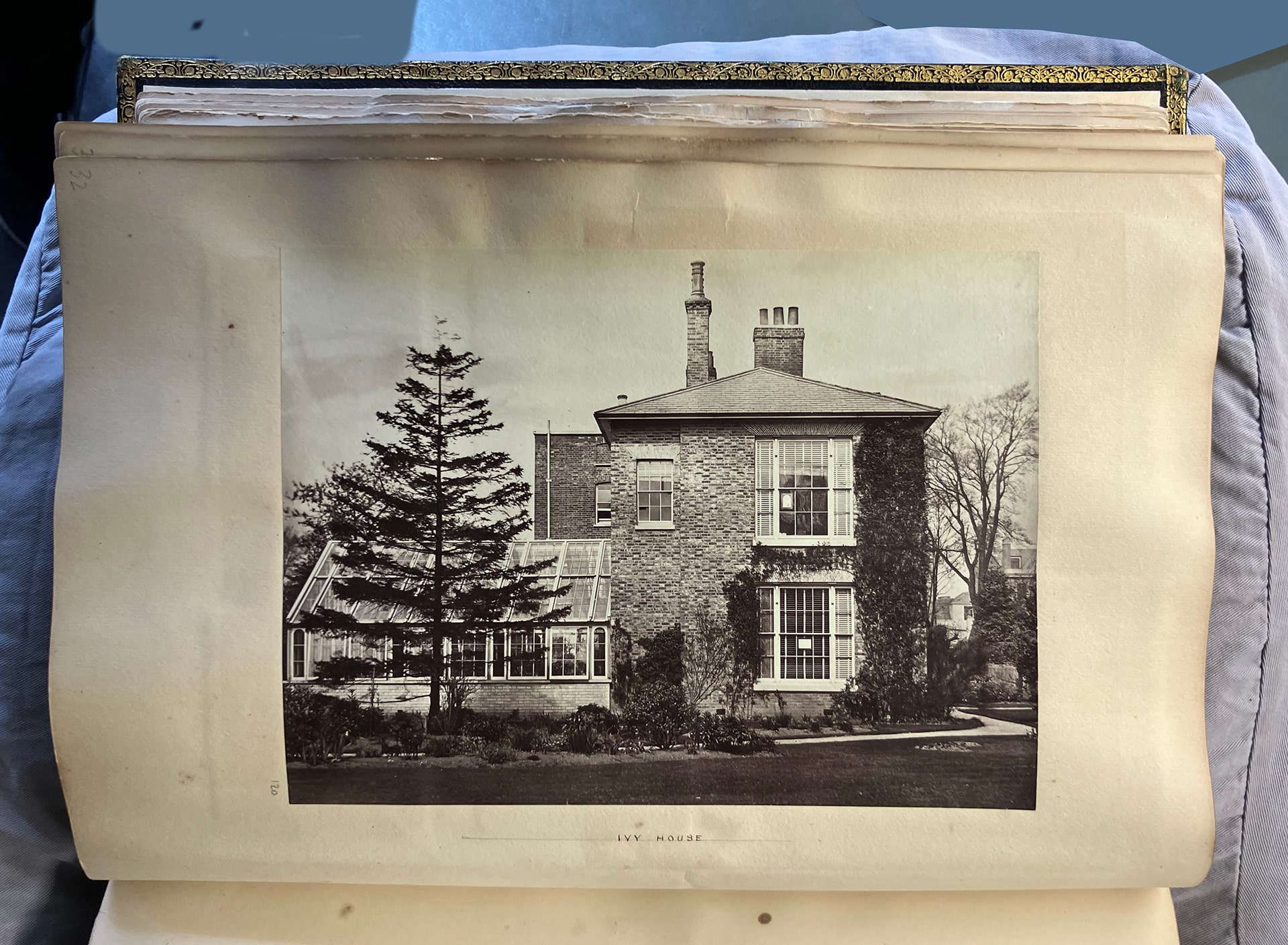
I first spoke about Geoffrey's photographs in 2021, after I'd taken some rather indistinct snaps of the whole album. But we've made some progress since then, with the aid of Tim Wren's superb high resolution images.
If you can't bear the suspense, you can view the original talk I gave to the Friends of Wandsworth Common here: In Search of Geofrey Bevington and Ivy House (26 November 2021). Crikey, doesn't time fly.
SO many more stories still to tell. But that's all for now, folks.
Send me an email if you enjoyed this post / want to comment on something you've seen on the site / would like to know more — or just want to be kept in touch.
If you would like to receive notifications of new Chronicles, let me know . . .
Philip Boys ("History Boys")
December 2025
— Friends of Wandsworth Common
— Wandsworth Historical Society
