
— Index / Links — Edward Thomas.
— Talk — Notes.
— Titles . . . .
— Talk Draft 1.
— Homes 1 . . . .
— Homes 2 . . . .
— Helen Thomas, On Storm's Wing [text part-OCRd].
— Halbrake / St John's Hill House School.
— Sir Walter St John's / Battersea Grammar School.
— Chronicles so far [contents with links].
— Chronicles — all text so far [all text].
Philip Edward Thomas was born on 3 March 1878 — almost but not quite 150 years ago. He was the first child of Mary Elizabeth Townsend and Philip Henry Thomas, an ambitious Clerk rising up in the Civil Service. All four of his grandparents had been brought up in Wales, though his mother had been born in Headingley, Yorkshire.
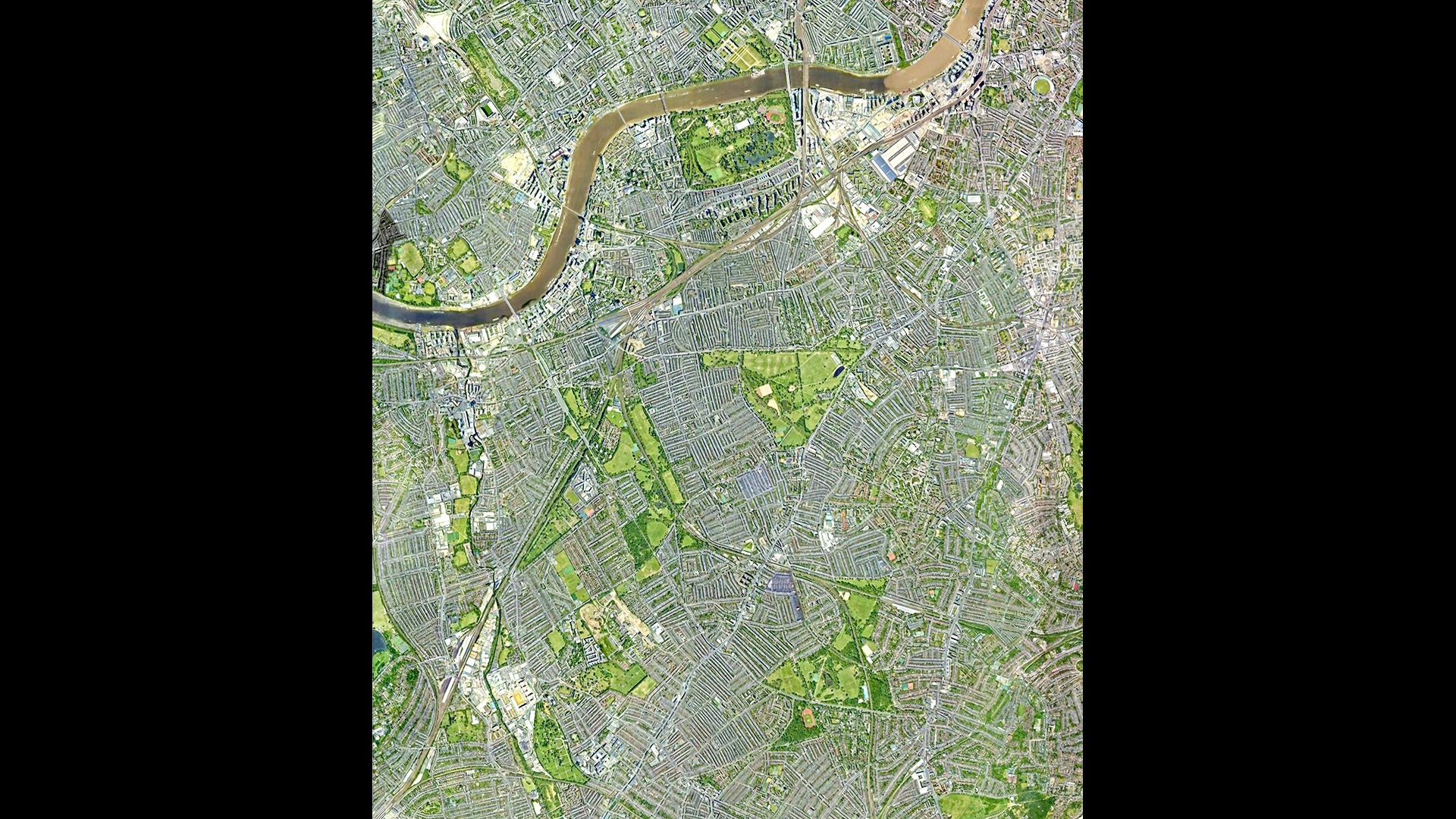
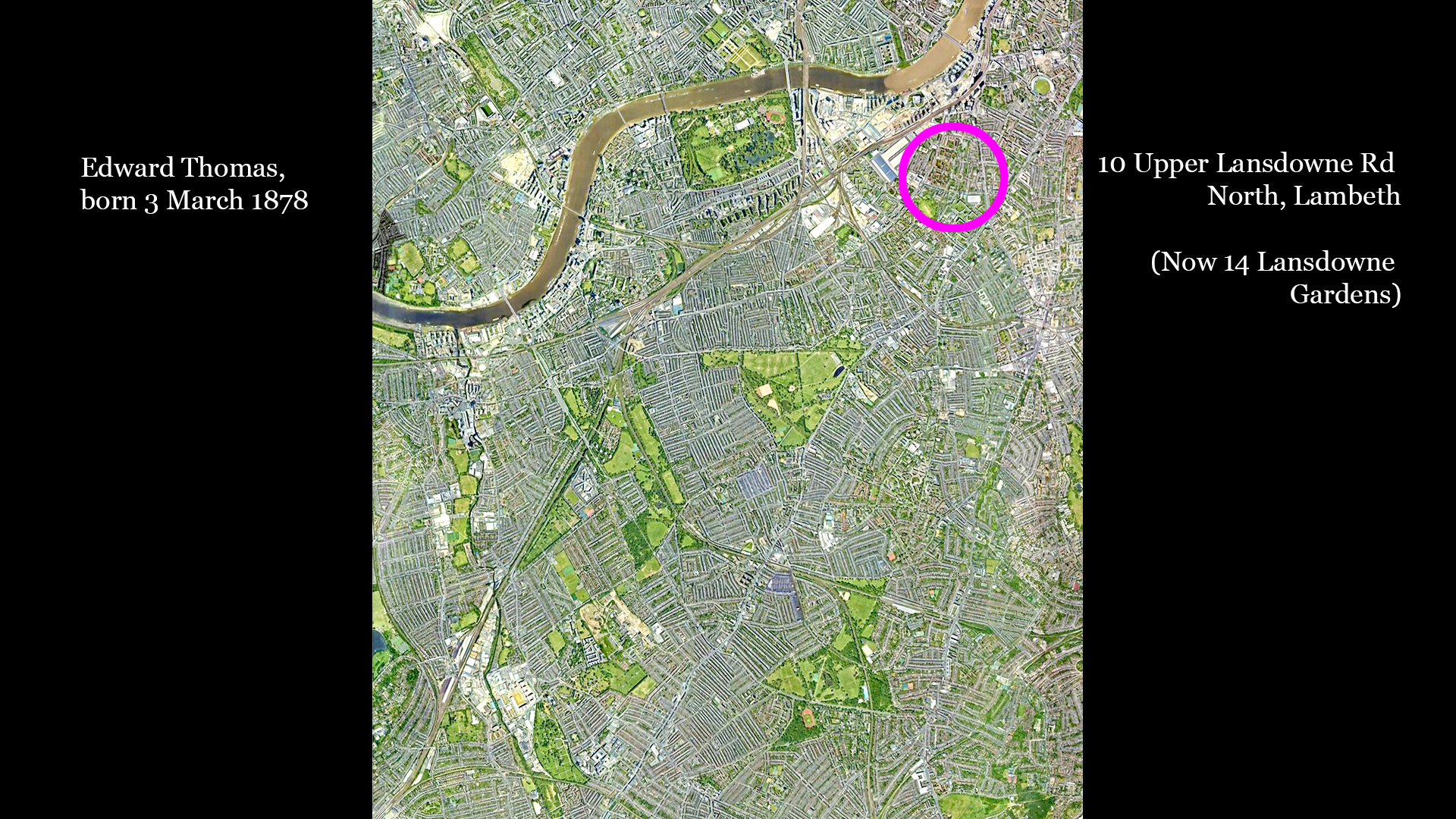
The couple married in Lambeth in 1877. Their first child, Philip Edward Thomas, was born a year later, on 3 March 1878, at 10 Upper Lansdowne Road, Lambeth — not far from the border with Battersea.
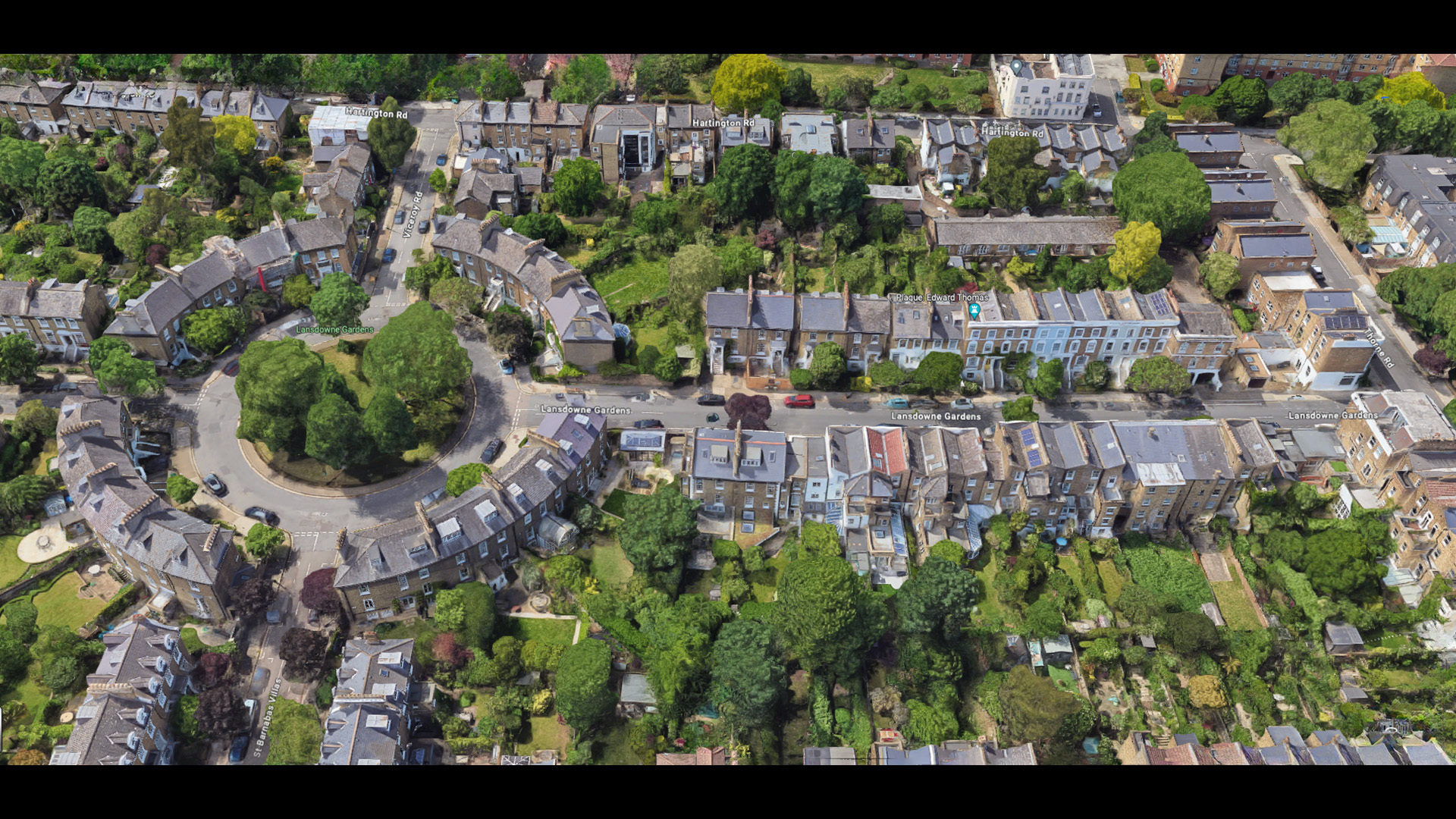
Here's an aerial view today:
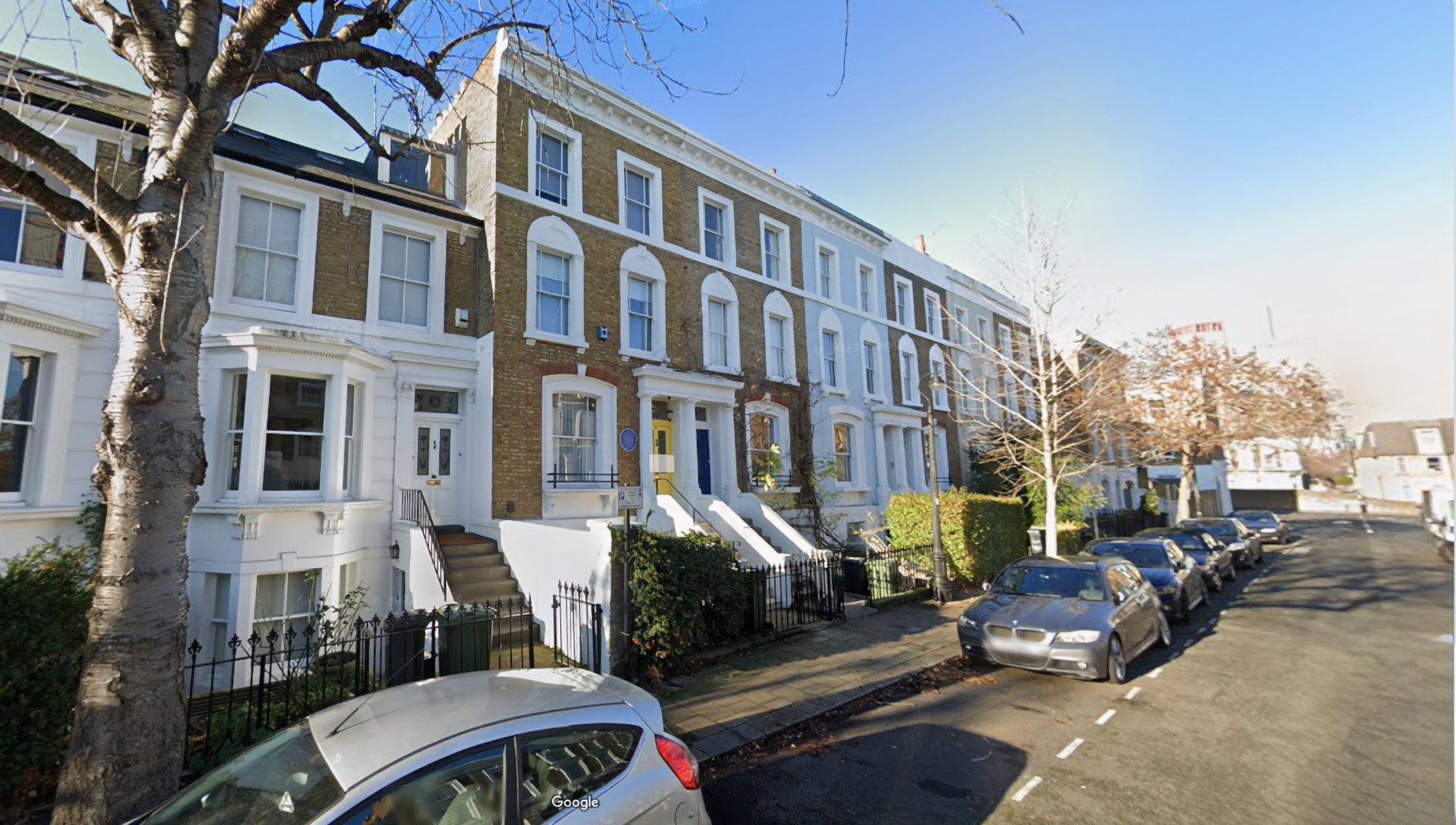
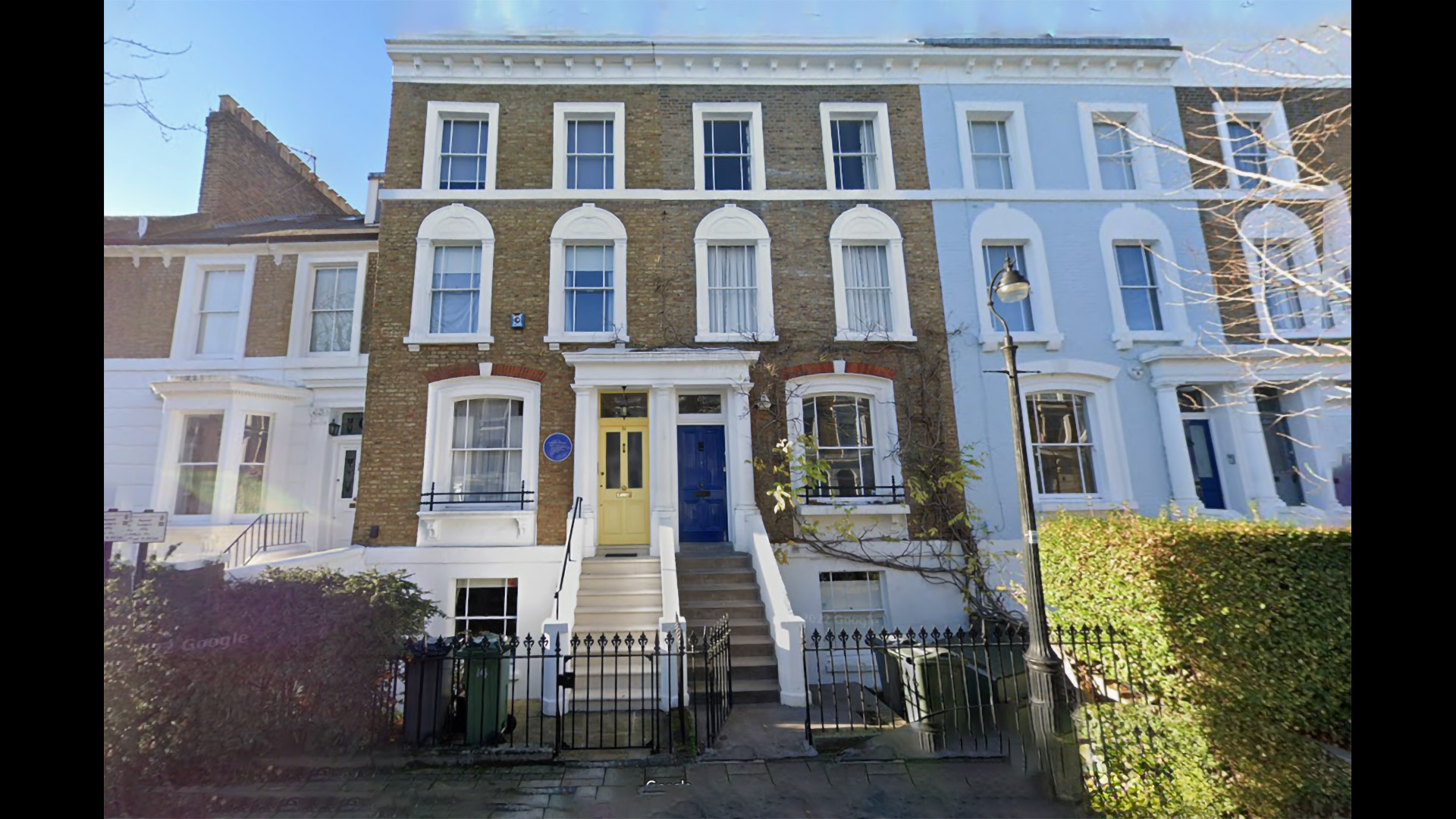
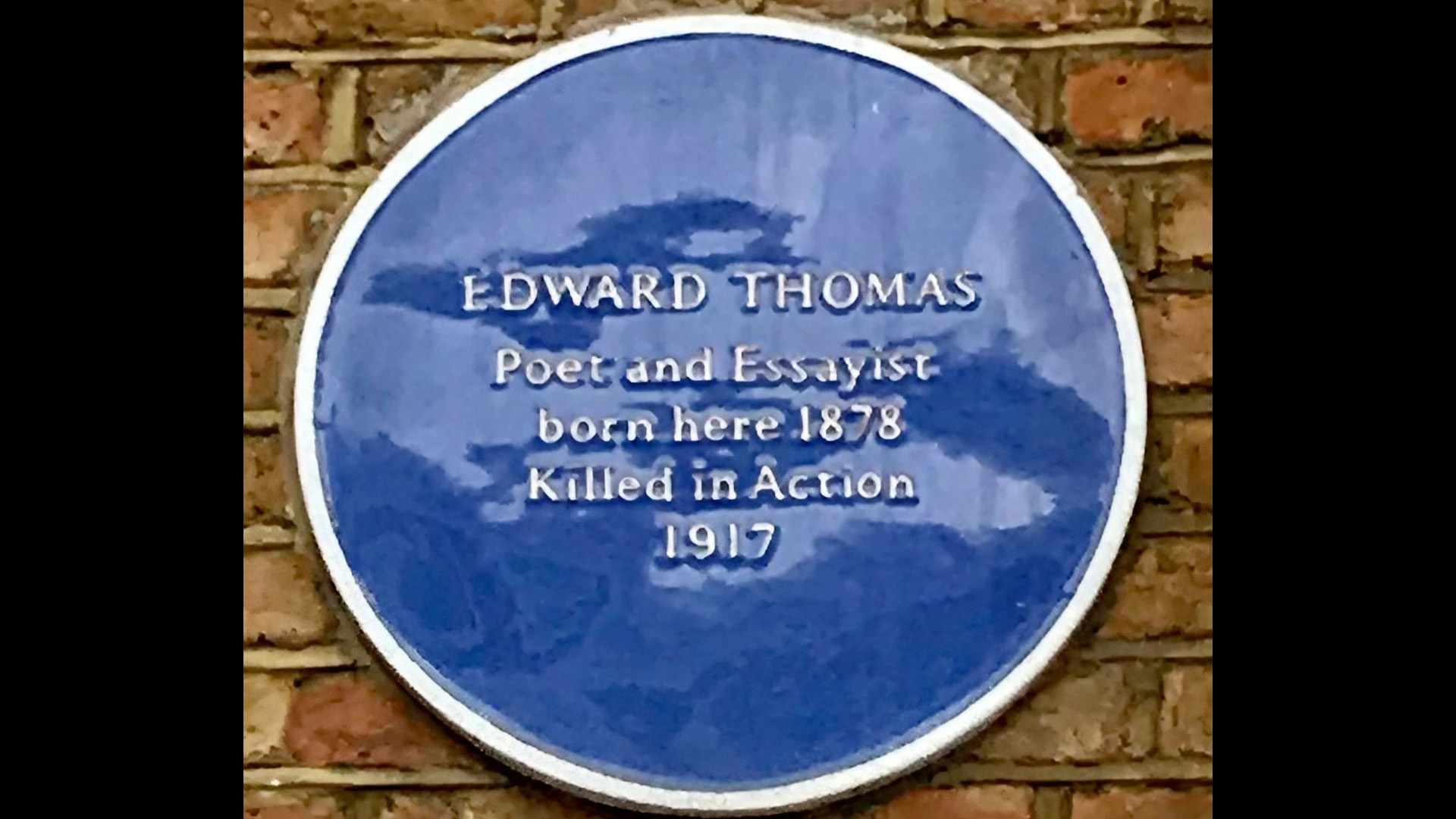
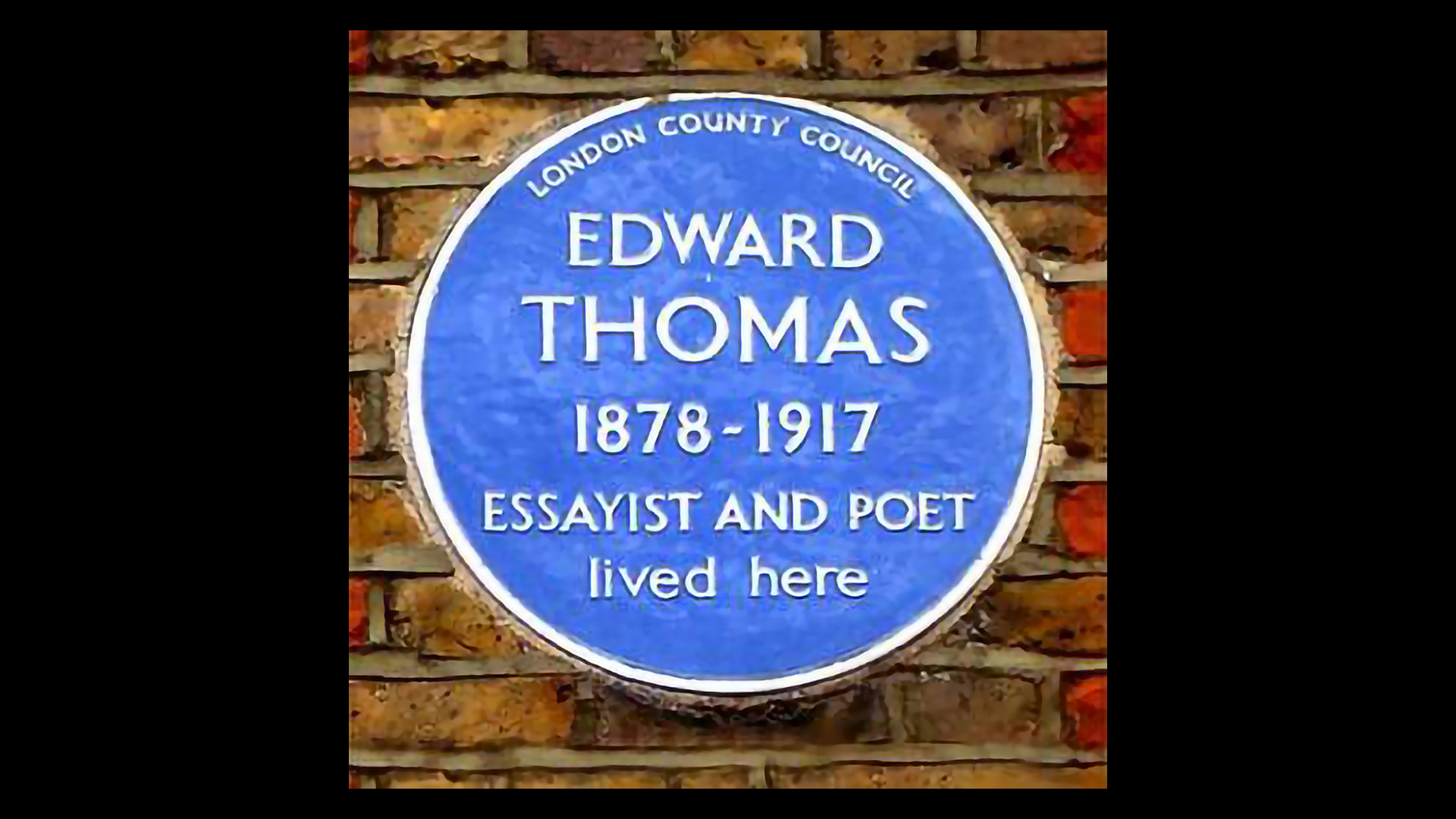
Today there's a plaque on 14 Lansdowne Gardens. An unusual style. It doesn't look in any way "official" — it's not LCC, English Heritage, or the Vauxhall Society. I suppose it was placed there by someone who owned the house and was tickled to learn it was associated with Edward Thomas?
A brother — Ernest — was born. When Edward Thomas was just two, the family moved to Wakehurst Road in Battersea, very close to Northcote Road.
(So far as I know Edward was rarely called "Philip", except in official documents. He was often called by its Welsh form "Edwy".)
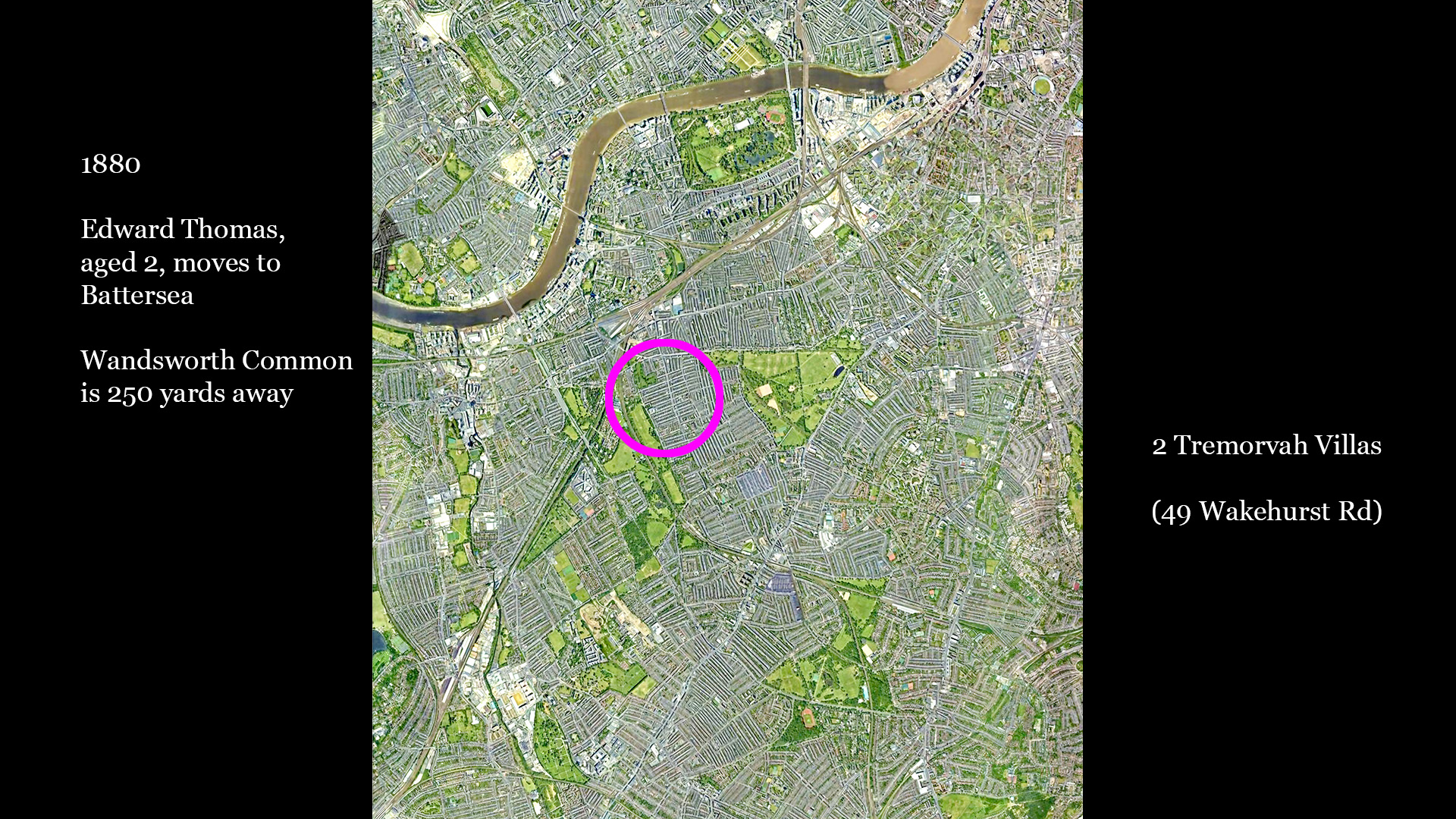
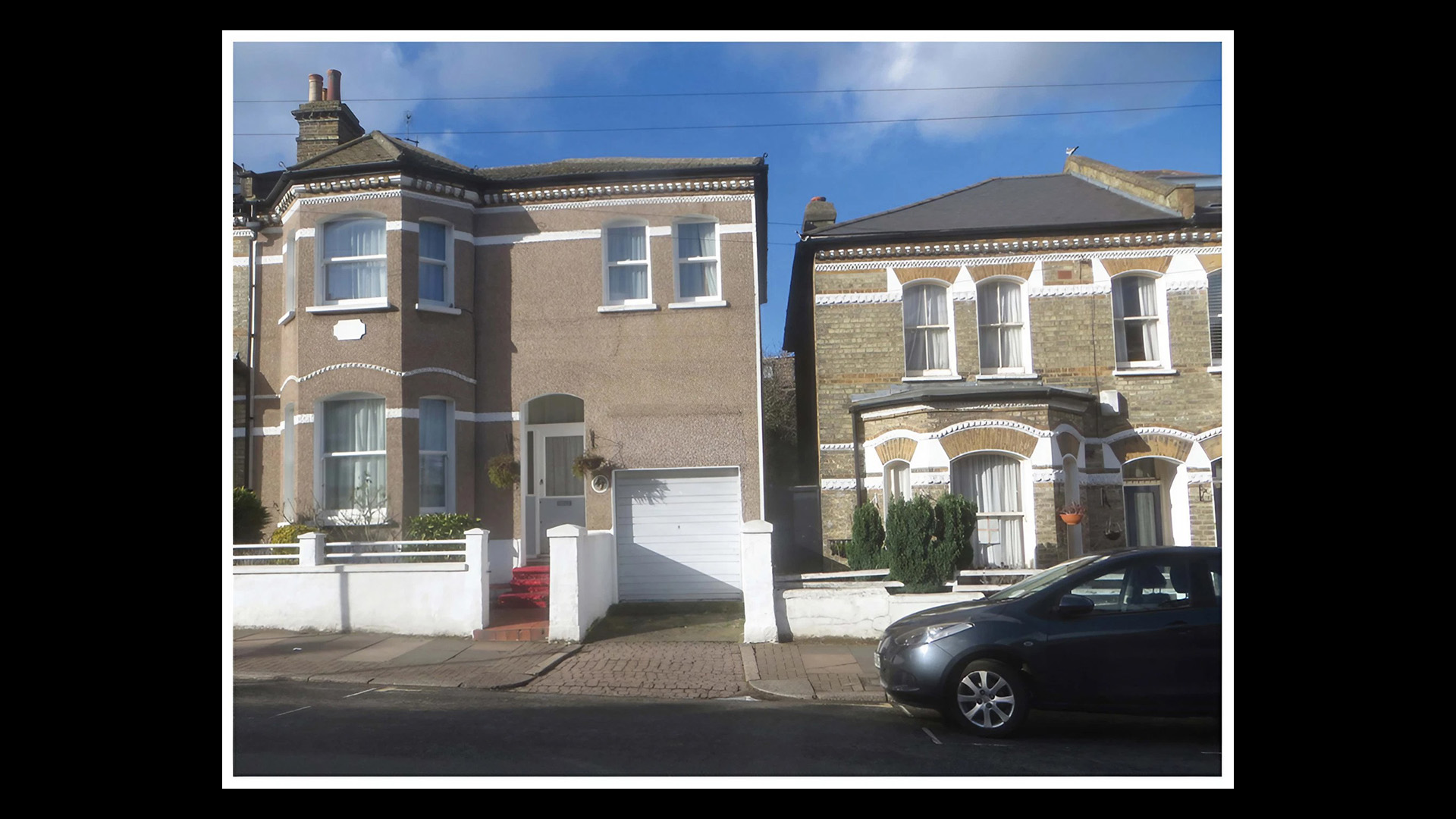
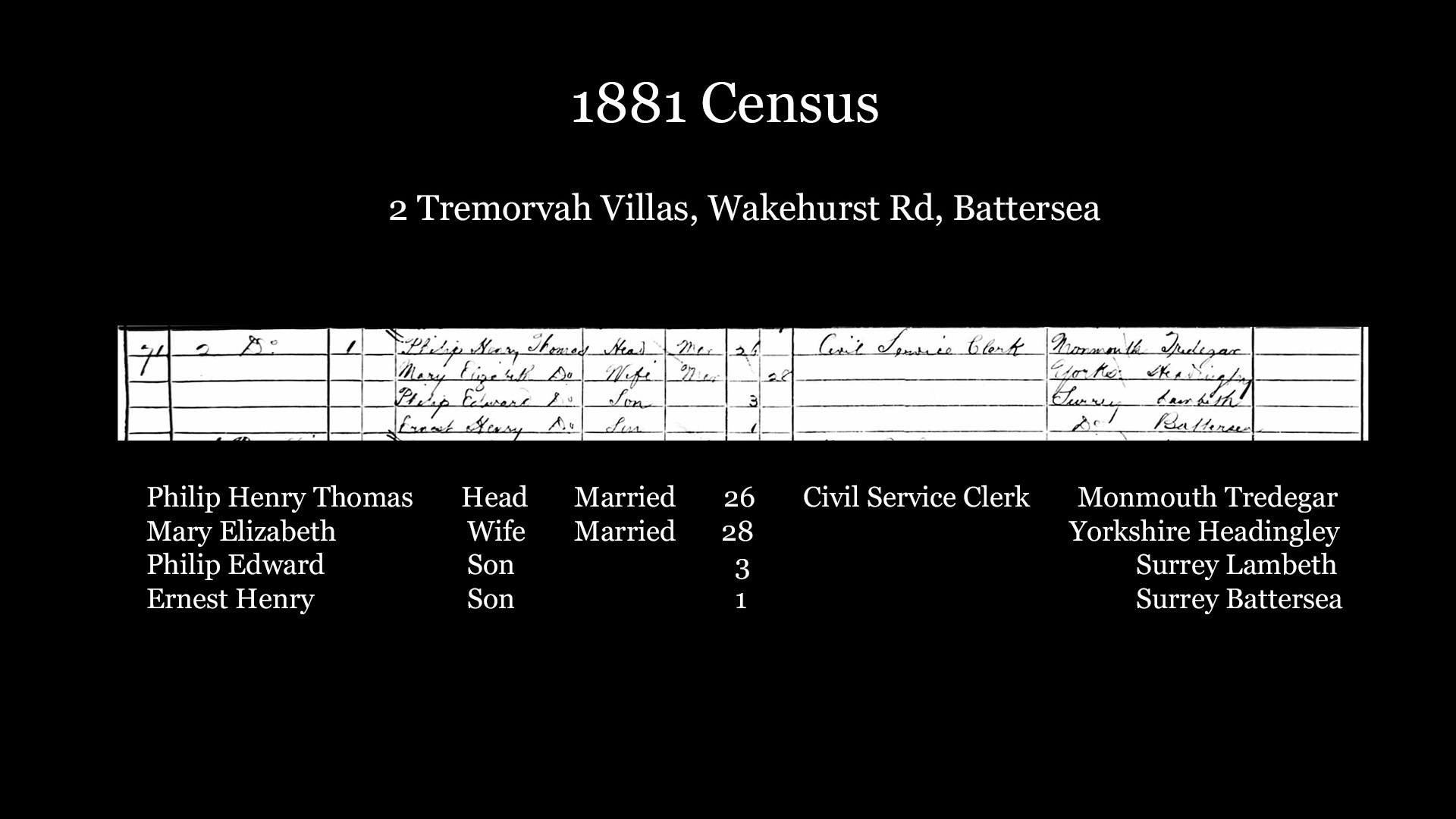
Here they are the following year, in March 1881:
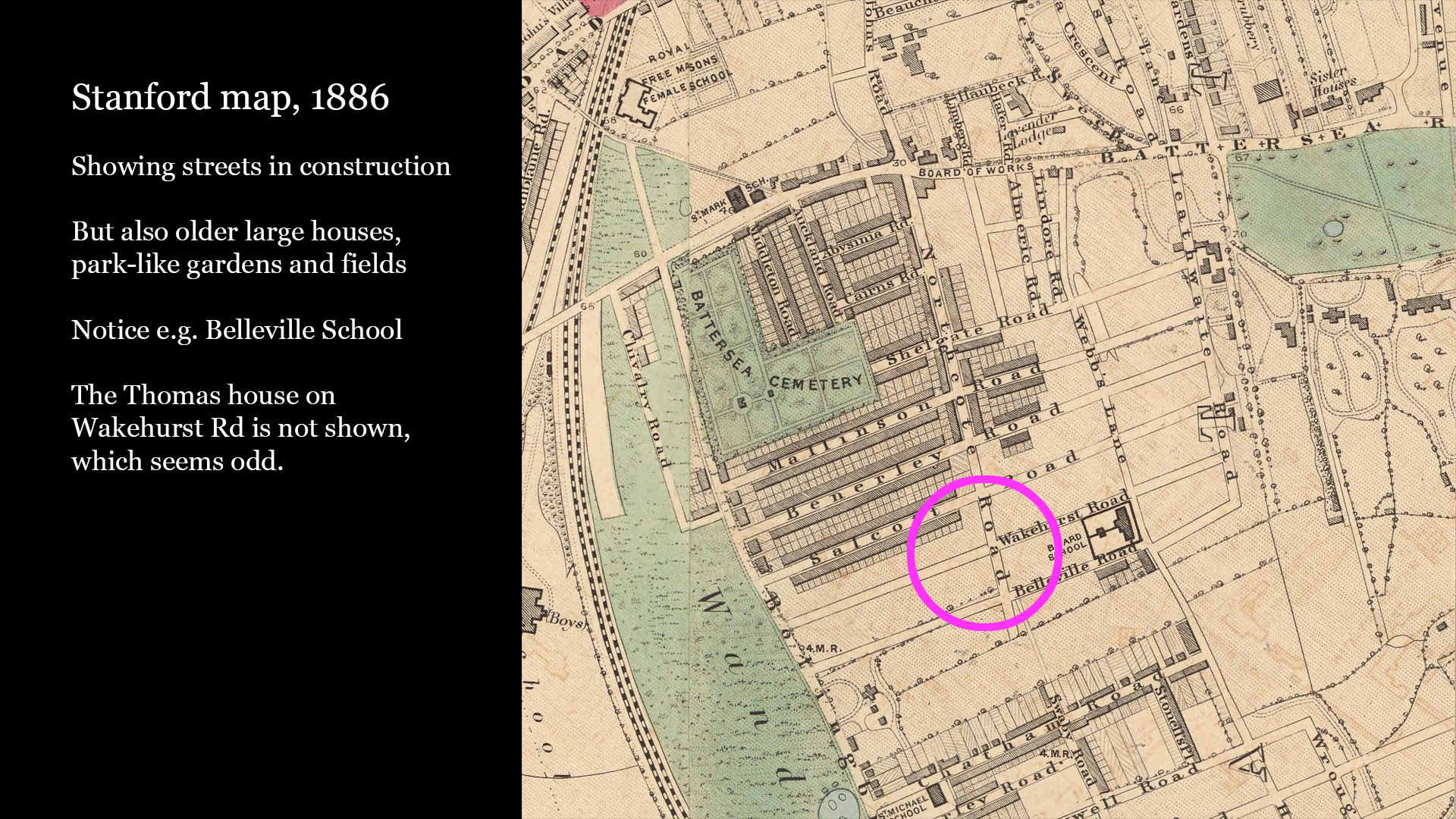
This Stanford map, from 1886 [apparently], shows the area, and suggests how similar but also different it was from today. There are a lot of fields, and a number of large houses with parklike grounds.
But the openness of the recent past is changing. Streets are being planned out, even if they're not actually built on yet. It looks as though a tide of houses is flowing southward between Battersea Rise, Bolingbroke Grove and Northcote Road — oddly clustered around the cemetery,
Strangely, the Thomas's house on Wakehurst Road, which they've already lived in for 6 years at this point, is not shown.
Our street like three or four others parallel to it was in two halves, running straight up the opposite sides of a slight valley, along the bottom of which ran the principal street of mixed shops and private houses.
Our house was low down in the half which ran up westwards to Bolingbroke Grove, the eastern boundary of Wandsworth Common. These little semi-detached one-storied pale brick houses in unbroken lines on both sides of the street had each, even then when they were new, something distinguishing them and preventing monotony.
The people in them made them different. In addition, some were beginning to be draped in creepers. Some gates stood open, some were shut. One had bushes in the garden, another had flowers, another nothing but dark trodden gravel.
The house above ours, in the next pair, was presumably meant for a doctor, and possessed a coach house which looked almost as if it belonged to us. That was our outward distinction.
[Childhood, p.23.]
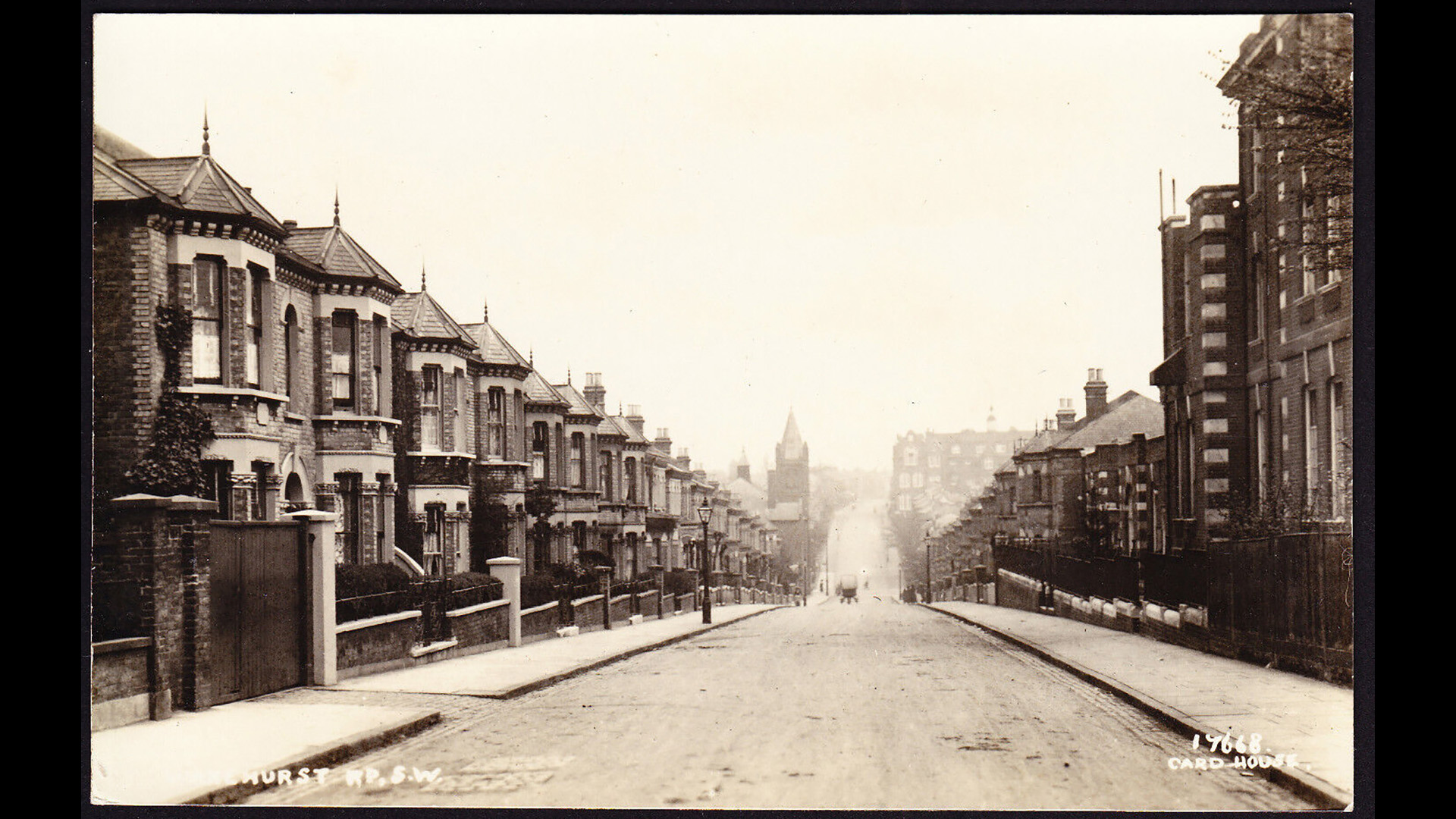
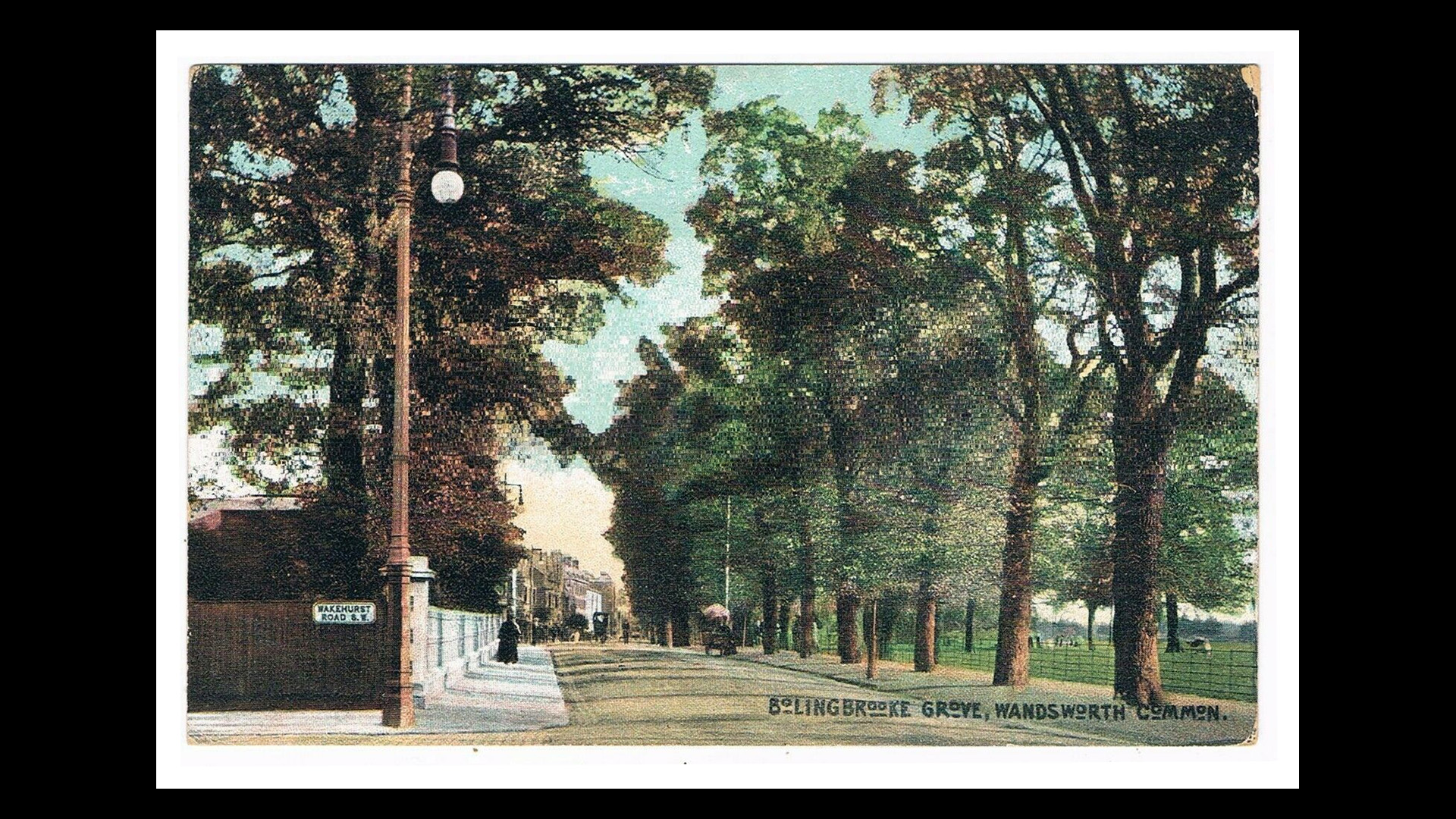
Here's an evocative view of Wakehurst Road. It was probably taken twenty or 30 years later, probably about 1910, but is likely to appear much as it was when Edward Thomas lived there:
[The Bolingbroke Hospital buildings on the right are of course more recent.]
Here's another view:
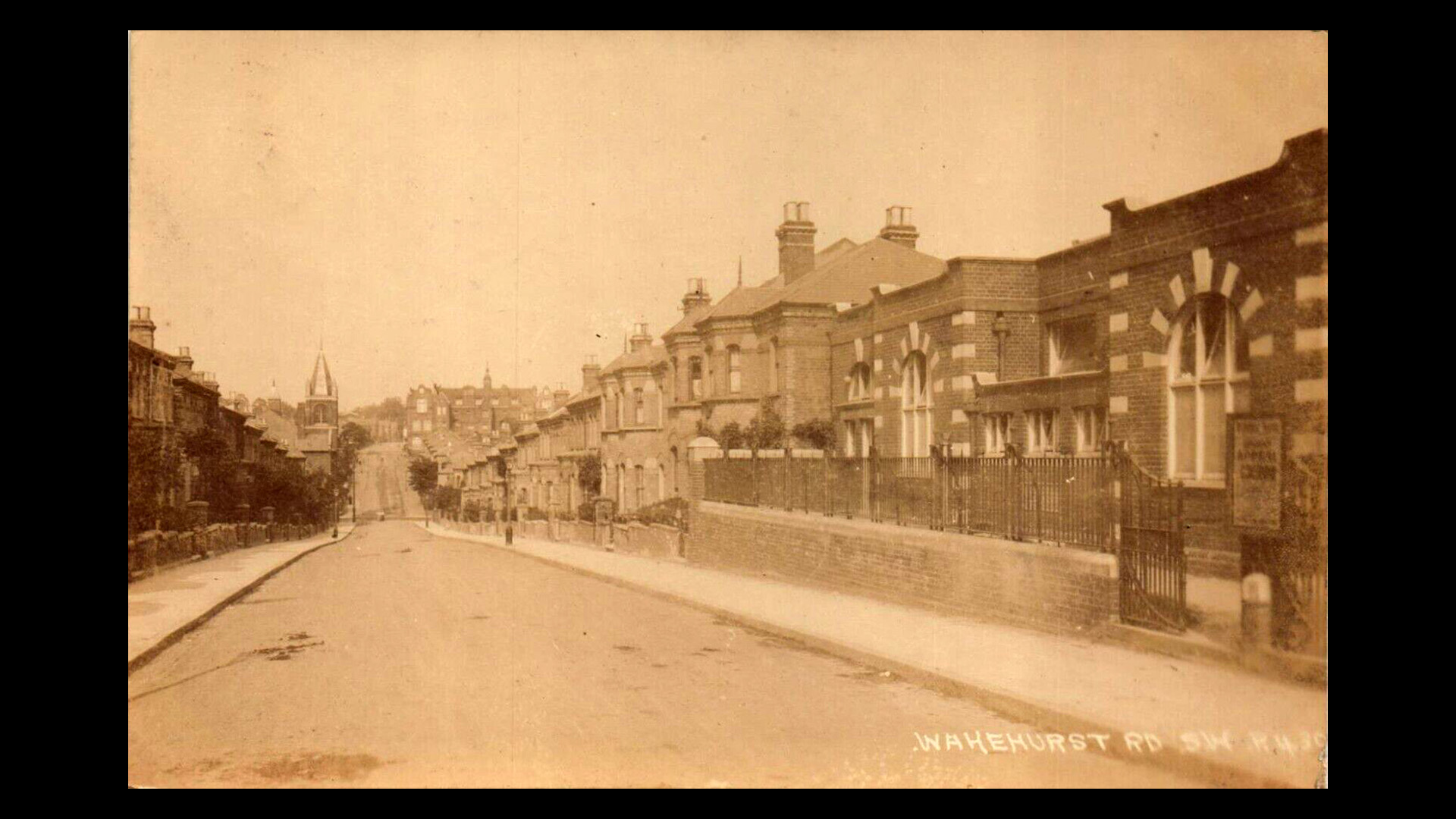
Notice in the distance, top right, Belleville School.
In about 1882 or 1883, Edward went to a fairly new Board School, Belleville Road, in plain sight of his home up Wakehurst Road — it was in the opposite direction from the Common, and therefore in a sense its diametrical opposite. The freedoms associated with the Common were all denied him and all other children. Compulsory attendance, regular times, bells, supervision and control by adults, formal rules and restrictions, rote learning by endless repetition . . .
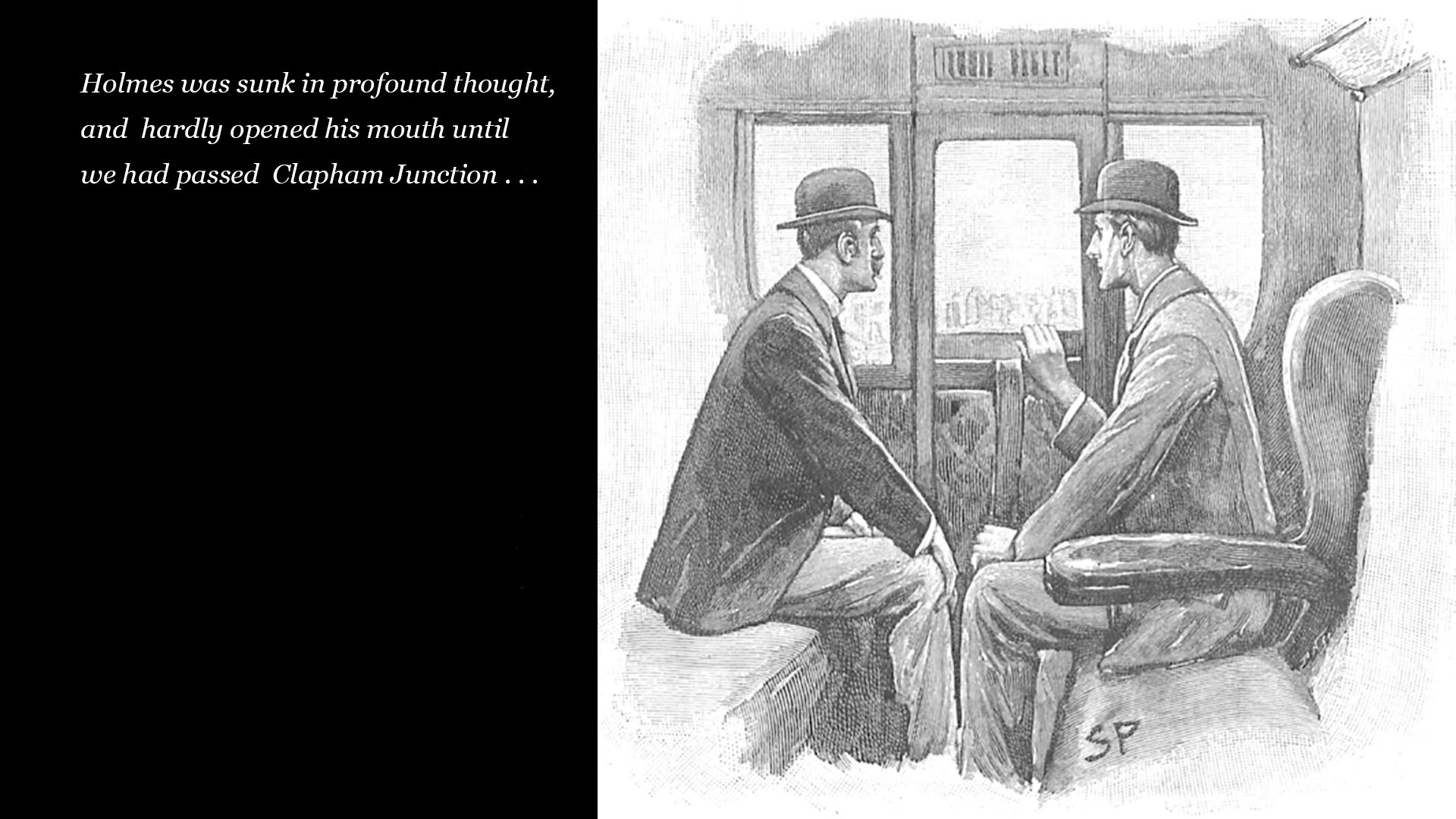
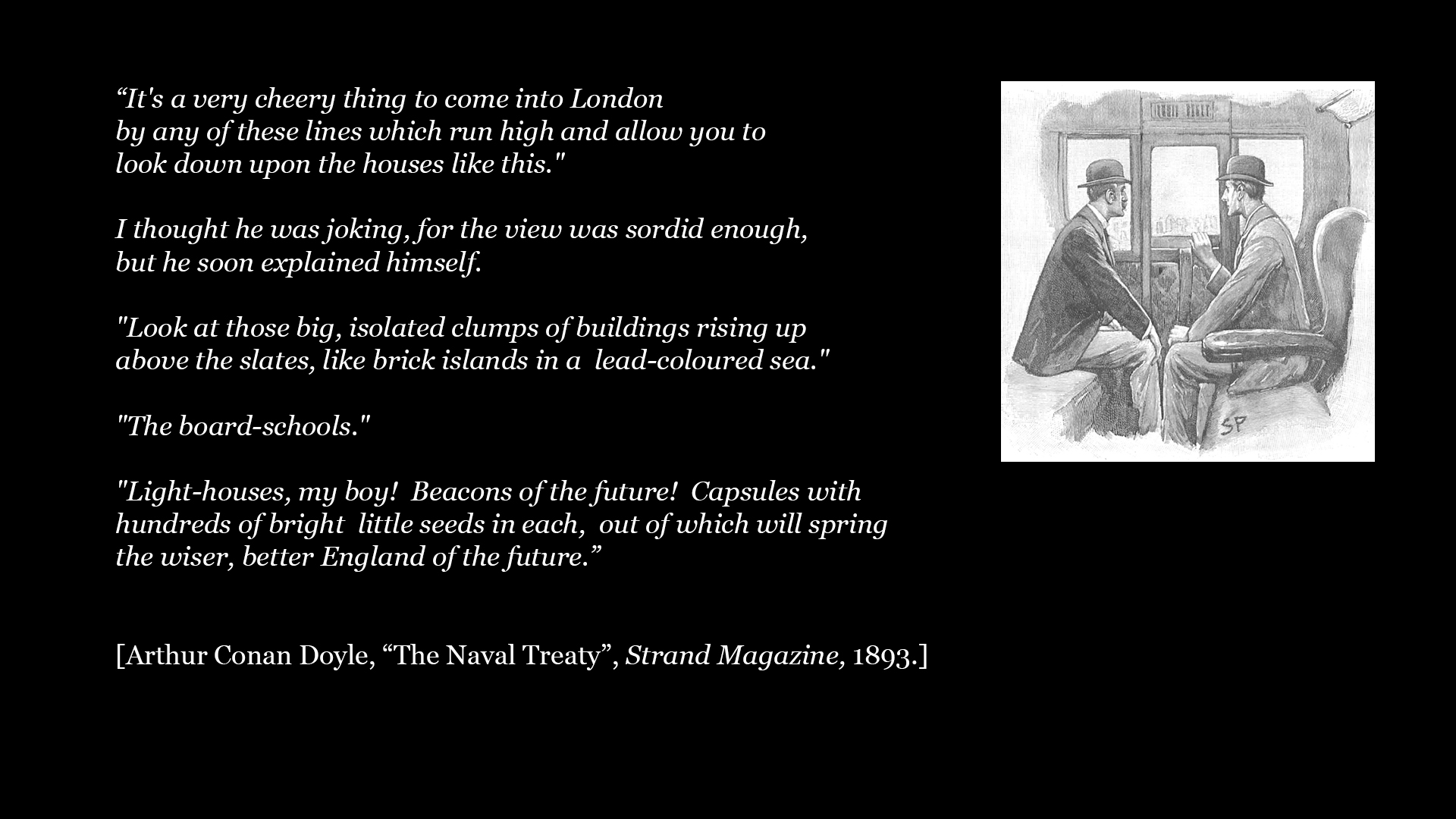
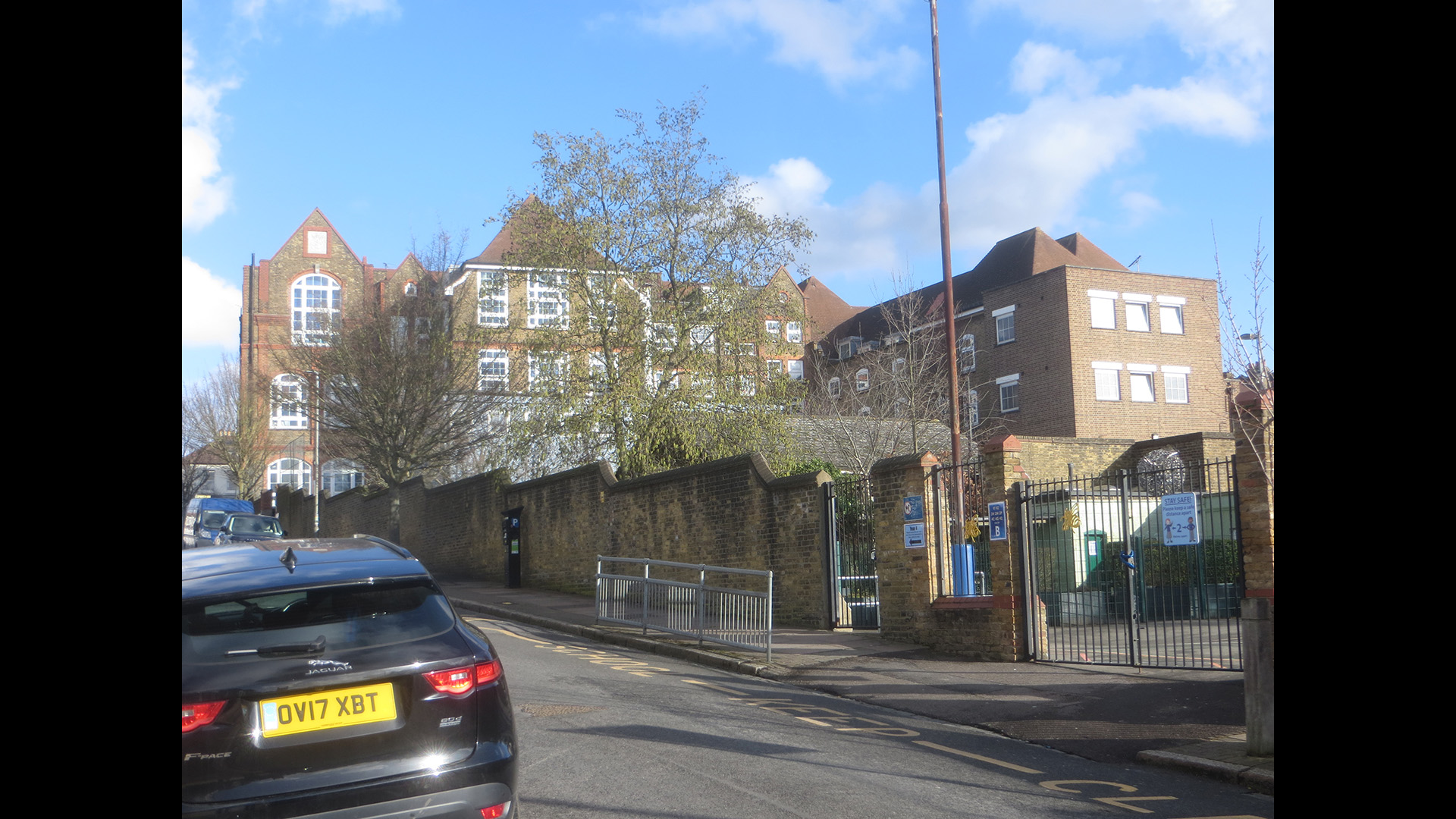
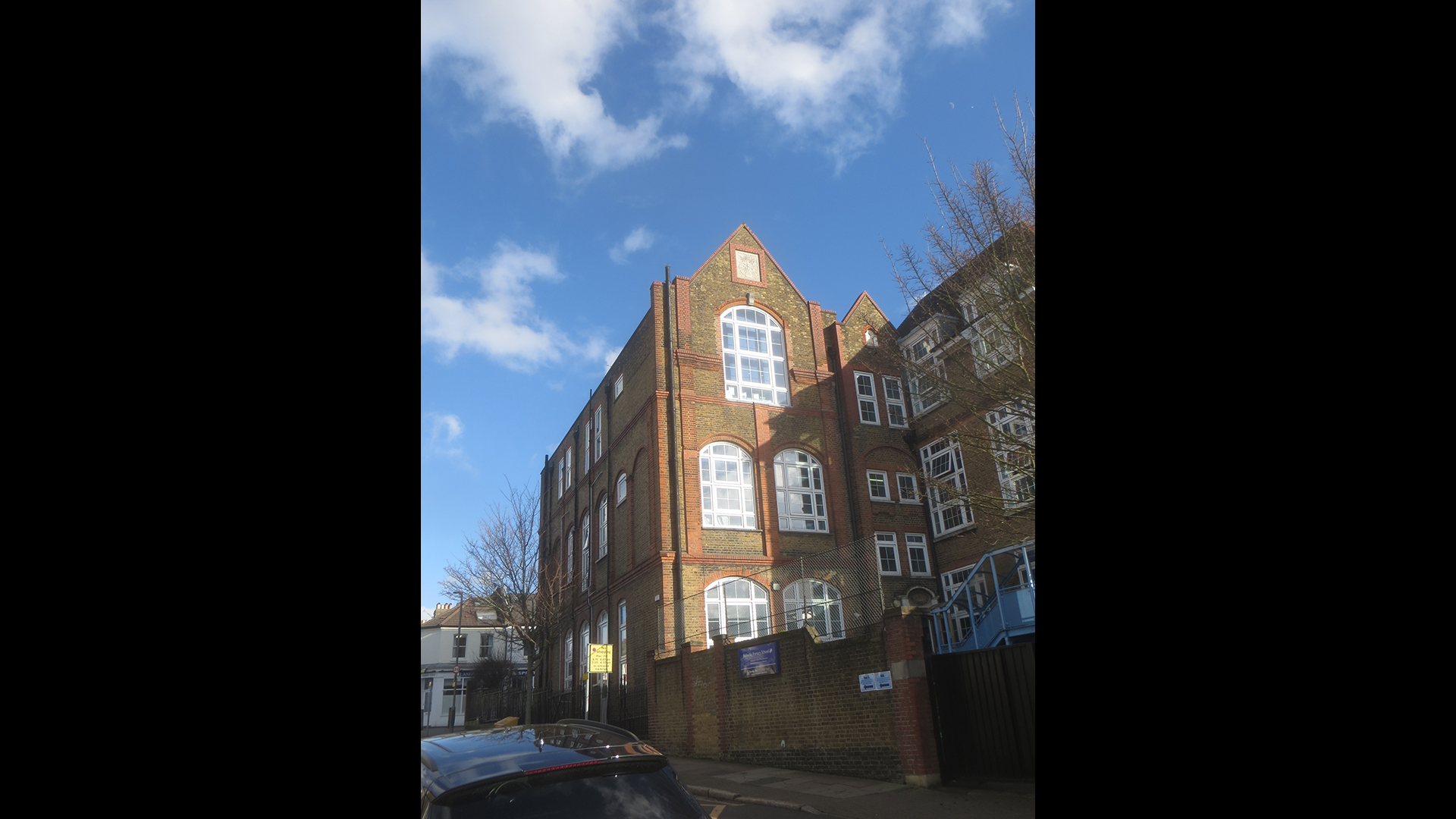
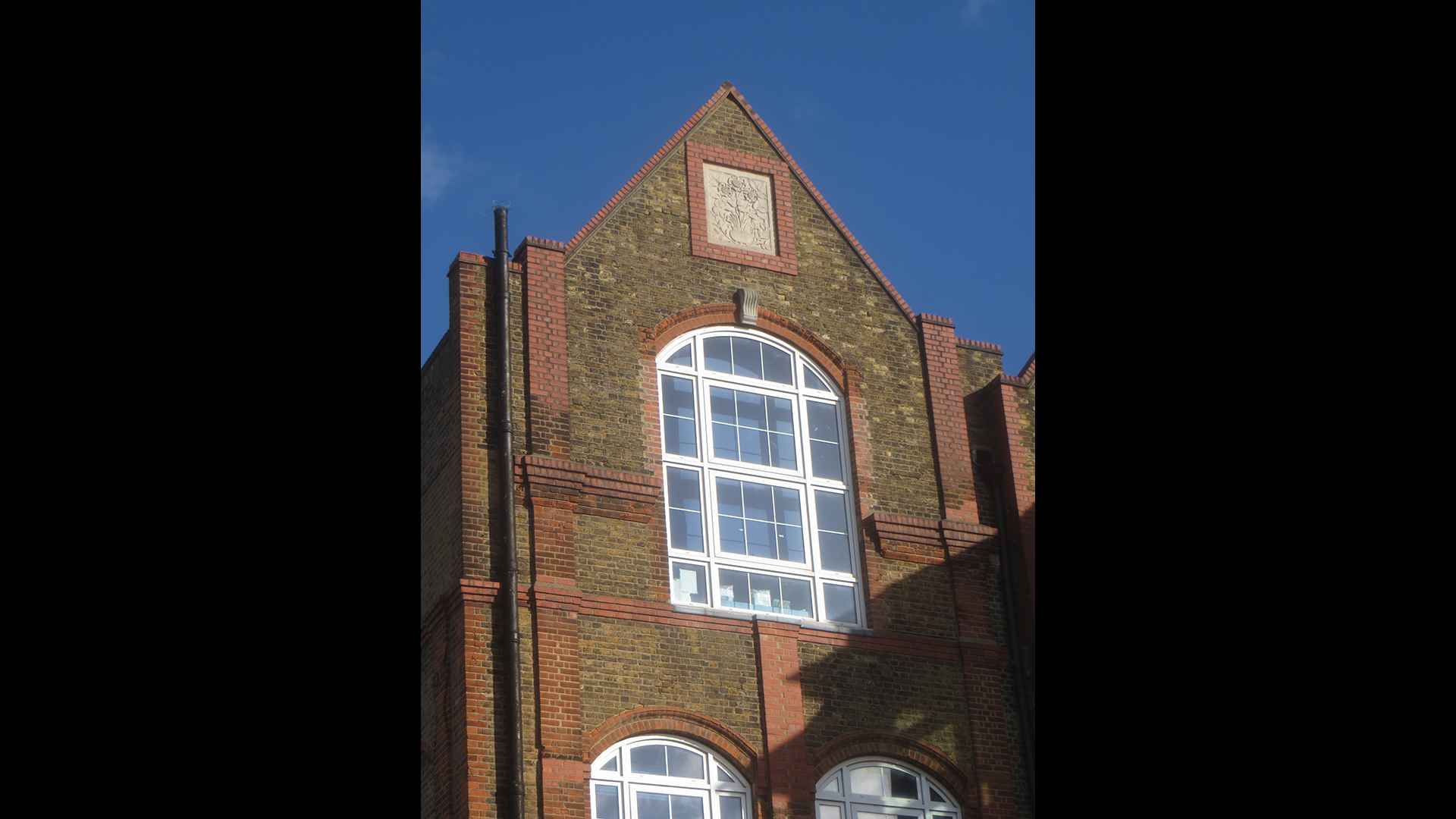
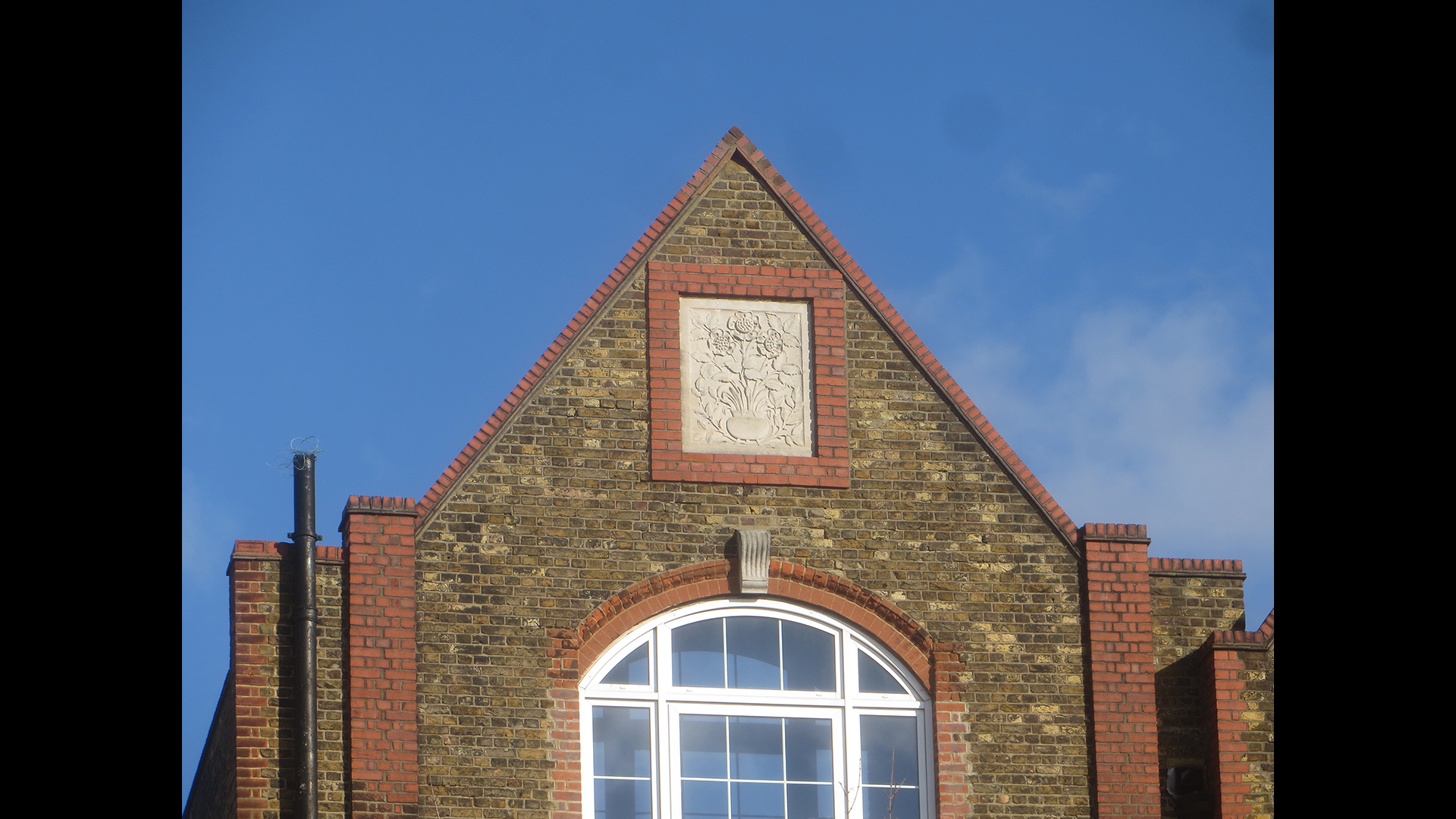
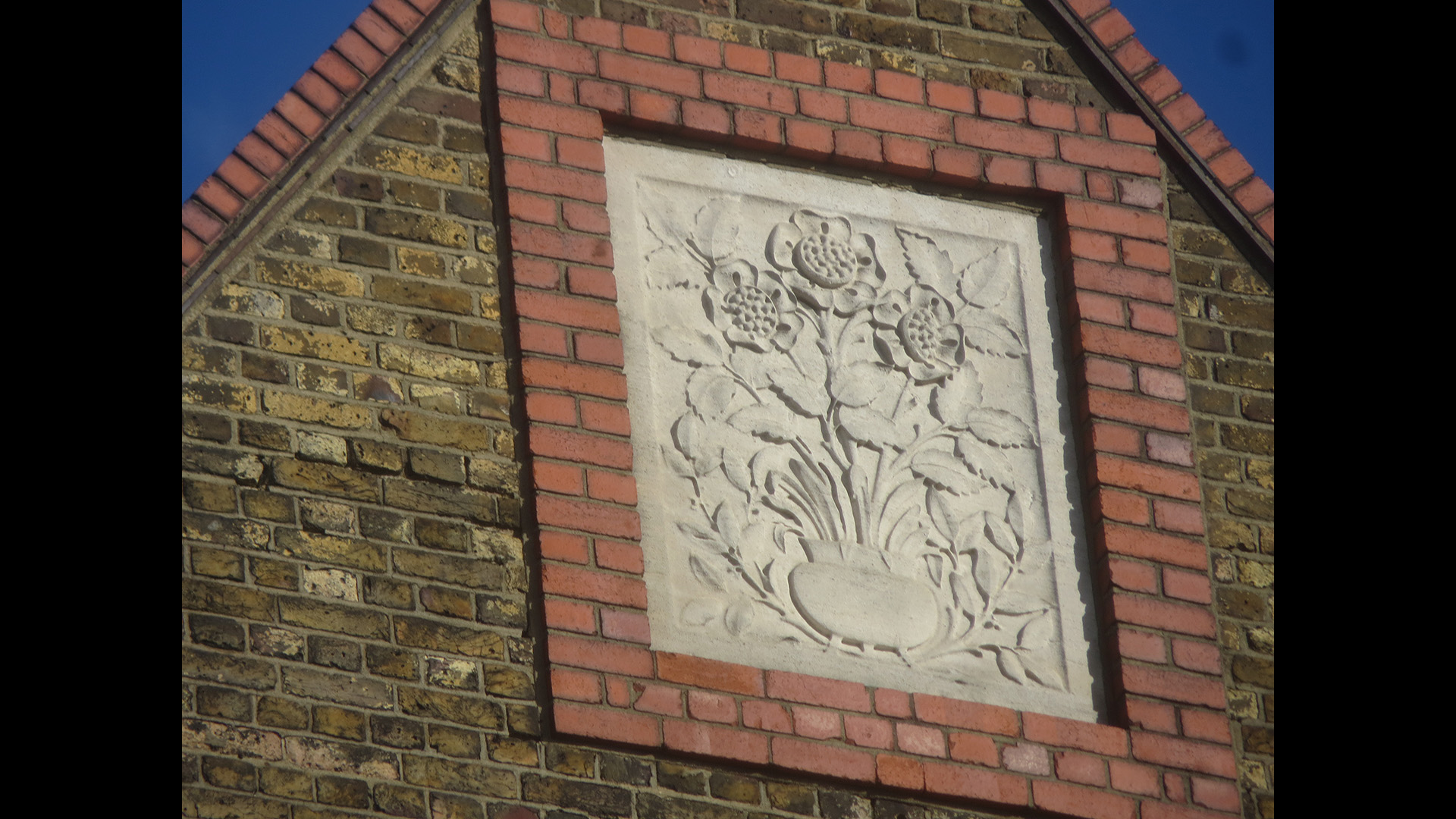
"Then I entered the lowest class of a large suburban board school . . . "
These "Board Schools" — typically "triple-deckers" built by the London Board School — were still very new, the product of the 1870 Education Act wherever private, charity and church provision was insufficient or too costly.
They promised to transform young people, and indeed create a whole new world.
[Sherlock Holmes — "Beacons of Light.]
Belleville Road School opened in ????.
[Board Schools were nearly always named after the road they were situated on. I believe the renaming of schools only took place after the second world war. Hence, Beatrix Potter School, which I entered in 1954, was simply "Magdalen Road", and Earlsfield, was "Tranmere Road". "Belleville" and "Honeywell were blessed with road names that already sounded distinctive and rather lovely, so they stayed almost the same.]
Edward started in a mixed-sex infant class, with a female head and teachers. And then at about age 8 (I suppose) moves into an emphatically all-male environment (even within the same building) — boys and masters only.
[Just as it was when I was at school.]
He describes his class-mates, his teachers, the building and the classrooms, the big windows, the daily rituals, the smells:
When I think of school I smell carbolic soap. I see the caretaker by the wall of one room ringing the bell. I deposit my weekly fourpence on the master's desk. I go round, as a privilege, filling the scores of inkpots from a tin with a long thin spout. I join in the one-verse hymn before and after lessons. I see large light bare rooms with a map or two, and boys in long parallel desks facing a master; for we were soon separated from the girls. We repeated aloud "Witney on the Windrush manufactures Blankets". We learned the names of the tributaries of the Thames for ever and ever.
[Do you remember filling the inkwells? Do you remember the double curved spout?]
"What I most enjoyed was doing maps of Great Britain and Ireland, inking in the coast lines with red, and marking the mountain ranges with thin parallel strokes arranged herringbone fashion. I never tired of the indentations of the western coasts, especially of Scotland. The line of the Hebrides I think I actually loved."
One day, he will instruct his fellow-soldiers how to read maps.
He mentions the smell again, and his effortless achievements:
We were huddled close together in great lofty rooms with big windows and big maps and on Mondays a smell of carbolic soap. Addition, subtraction, multiplication, parsing, were easy to me, and I did them pretty well. Sometimes things were tediously easy to me, sometimes I took a pleasure in overcoming what looked hard and of course in earning praise, reward, a superior position.
Edward returns time and again to his feelings about children, particular girls. Of his young classmates at Belleville, her writes:
There were some boys and more girls whom I desired and sometimes struggled to sit next; and at least two whom I avoided. One a poor dirty girl without eyelashes who came from an old hovel at the top of one of the poorer and older streets, and has lent a certain disrelish ever since to the name of "Lizzie’; the other was a boy whom I had seen charging at his desk with his head lowered, like a bull.
[Childhood, pp.14-15.]
["one of the poorer and older streets" — possibly Chatham Road?]
He continues:
Their faces are invisible to me all except one: I can say only that some were fat and the eyes narrow, and that some girls had dark hair, others fair.
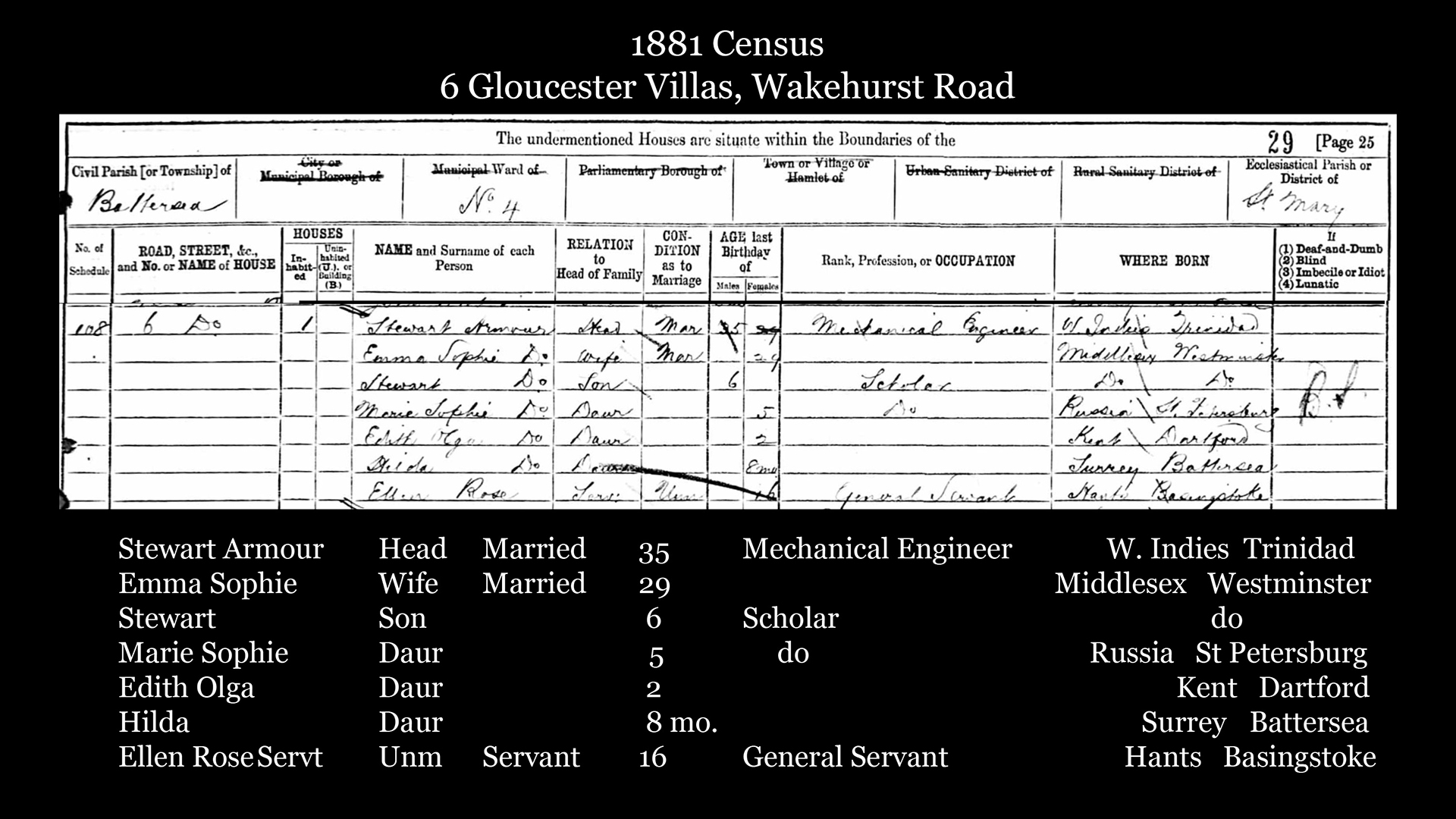
The one that I can see has black curly hair, dark eyes and cherry lips; and she is smiling: her name was Tottie Armour. We picked sorrel leaves and ate them among the gorse bushes on Wandsworth Common.
A railway ran across the Common in a deep bushy cutting, and this I supposed to be a natural valley and somehow peopled it with unseen foxes. The long mounds of earth now overgrown with grass and gorse heaped up at my side of the cutting from which they had been taken were "hills" to us, who wore steep yellow paths by running up and down them.
"The one that I can see has black curly hair, dark eyes and cherry lips; and she is smiling: her name was Tottie Armour. We picked sorrel leaves and ate them among the gorse bushes on Wandsworth Common."
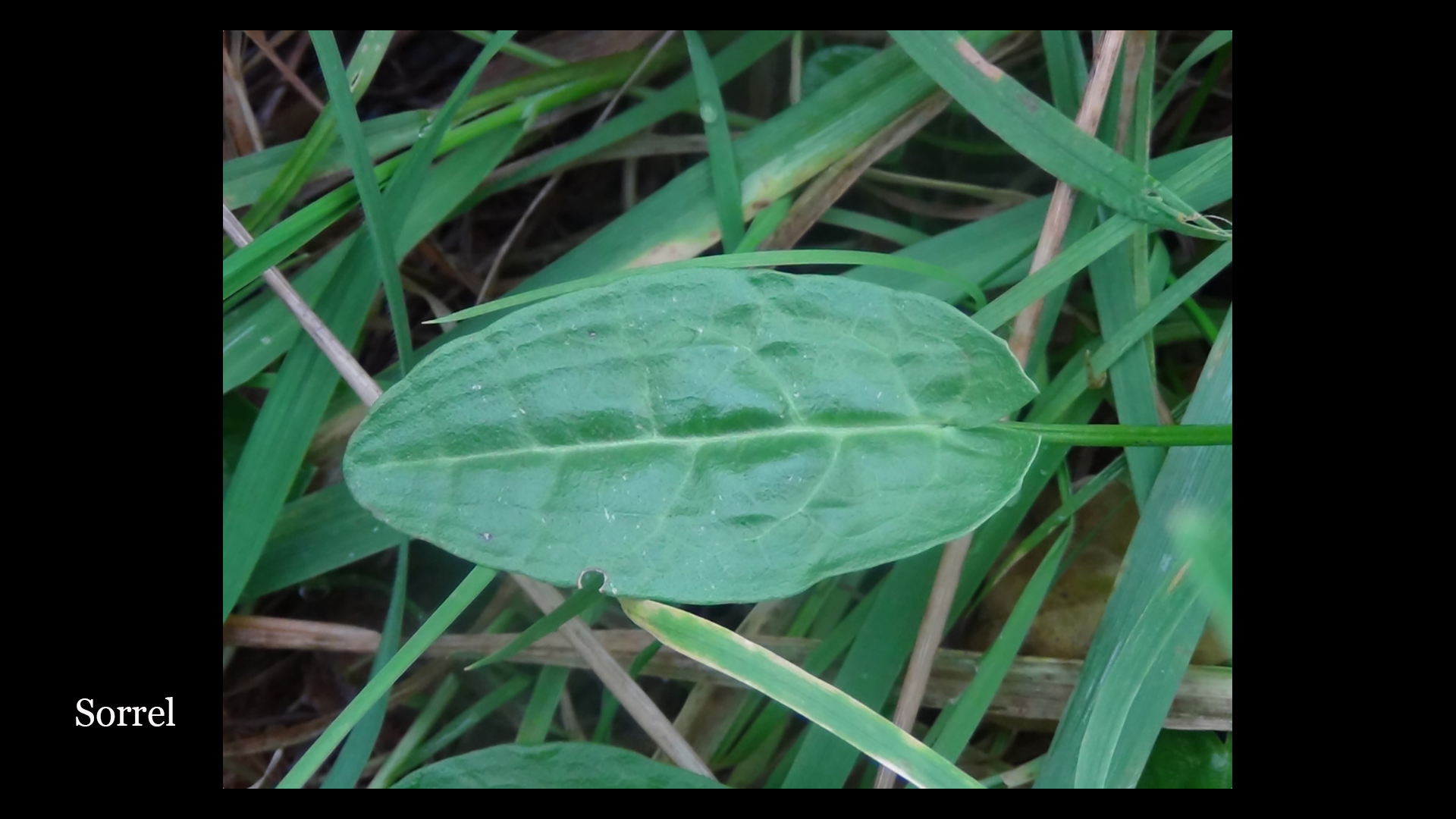
I must admit I became rather obsessed with Tottie.
"Tottie Armour" — what do you think "Tottie" was an affectionate name for?
I assumed at first that Edward had made her up. But no. Here is her family in the 1881 Census — on Wakehurst Road!
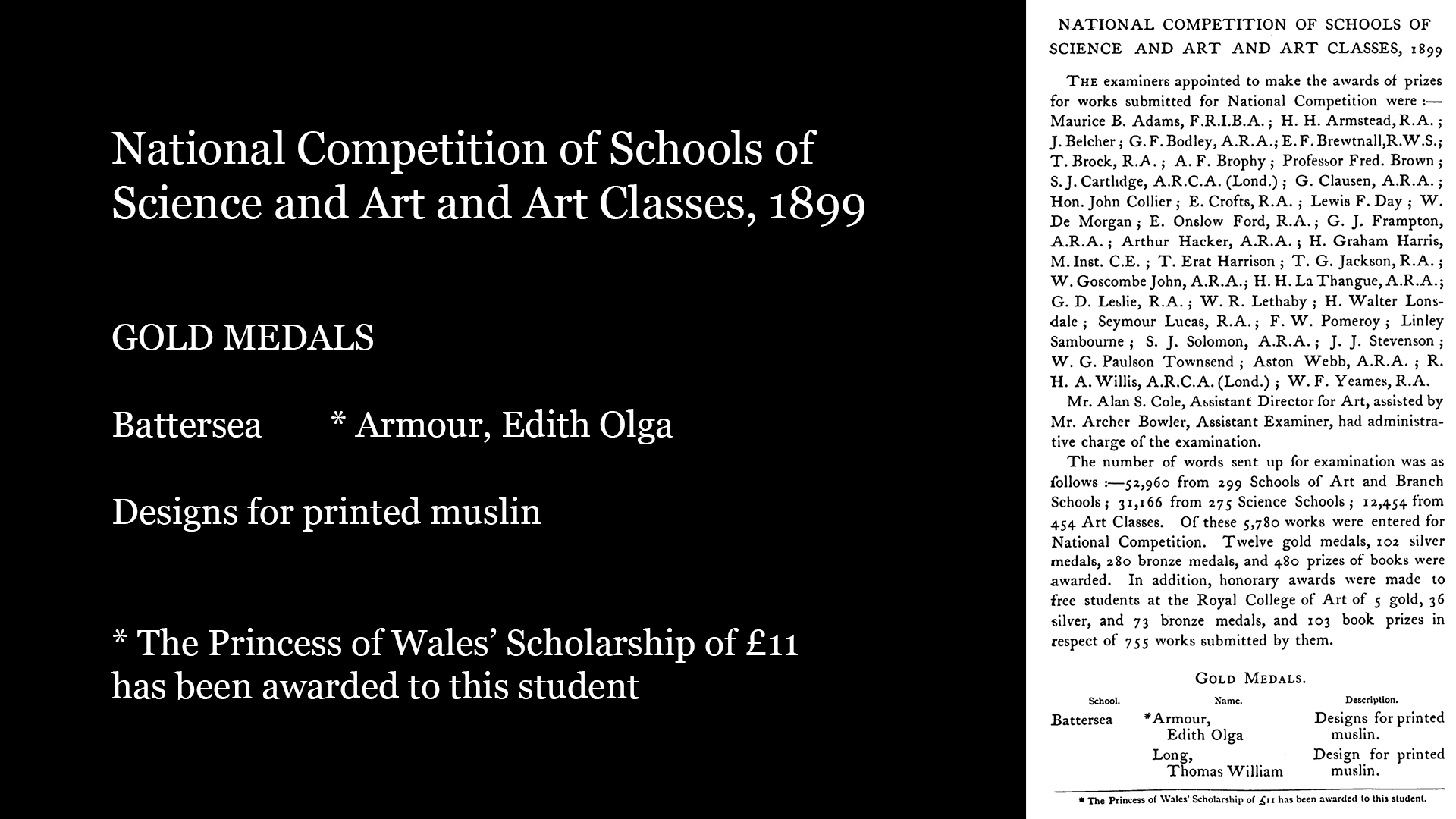
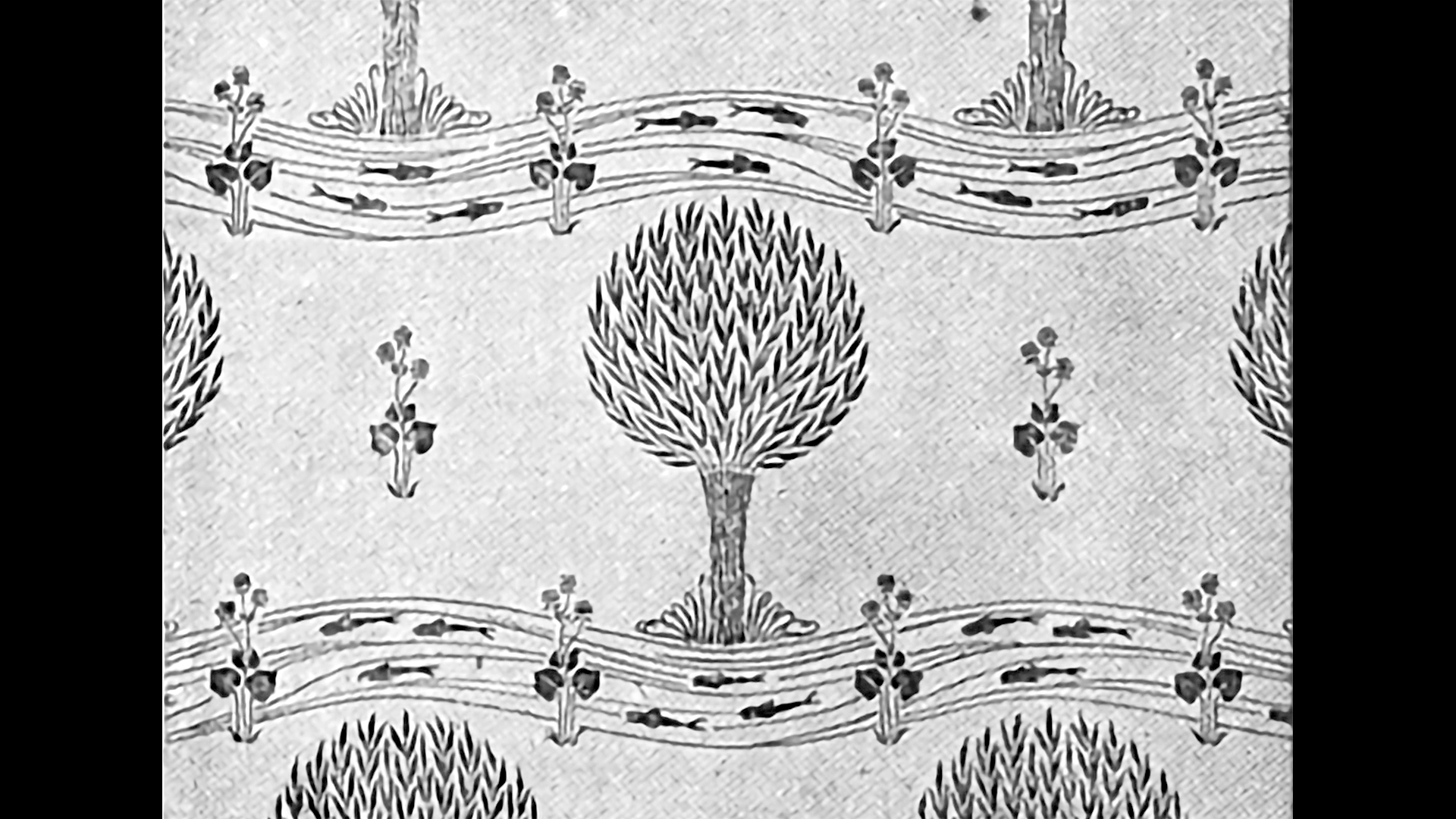
I found Tottie — Edith Olga Armour — again in 1899. She has just won a prestigious gold medal in the National Competition of Schools of Science and Art for design for printed muslin. There is a substantial publication recording the fact, in which her name is mentioned a number of times. There is even a photograph of her winning work.

So whatever happened to Tottie Armour?
If you do an internet search, you'll come across a small collection of her work, shown in colour, on the website of the Museum of Applied Arts, Budapest:

Notice the use of natural forms (as by William Morris's protegee and close associate, the designer John Henry Dearle, who was living nearby in Balham or on the other side of the Common at exactly this time.)
I know a bit more about Tottie, but of that another time, perhaps.
[According to Benedict Mackay: "Thomas graduated from the Infants to the Junior section in 1886, staying till early 1888. His father, solicitous for his elder son's future, then moved him to the private St John's Hill House School, from where he went, aged 12, to Battersea Grammar School and, at 15, to St Paul's, London."]
But the most important feature of this house in Edward Thomas's life story lies in the opposite direction — in its proximity to Wandsworth Common, a couple of hundred yards away, as we shall see later.
A little later, there's another girl, Mabel Looms, who he associates with the Common.
Here's a wonderful recollection of Christmas Day on Wandsworth Common more than a century ago, featuring a sword and Mabel Looms (who lived on Broomwood Road).
Whose recollections? Where did he live? Which school did he and Mabel attend?
To add to the festive fun, I've interspersed the text with some wonderful images of swords, all by the same (local) artist.
Who painted the images? And which stories do they depict?
ONE CHRISTMAS MORNINGI woke up and felt a long lean smooth straight cold thing with straps at my bedside. It had a handle, and pulling that with one hand I brought out what I discovered to be a sword, while in the other hand was a scabbard.

The daylight came upon me still unsheathing and sheathing the sword, trying hard for the hundredth time to put it back the wrong way. As soon as I could I fastened the belt round my waist so that the sword hung on the right instead of the left side and went out alone.
The streets were empty. I was proud though without spectators. Once or twice the weapon caught between my legs. I marched up the street, crossed the road separating it from the Common and turned to the left between the elm-trees of Bolingbroke Grove, having the road upon my left, the Common upon my right.

At the top of one of the streets parallel to ours, but at that time divided from it by that big private meadow with the pond and elm-trees, I stopped and looked down. For there lived Mabel Looms, a schoolfellow whom I adored. She had had a Christmas card from me that morning.
The street was empty. I walked backwards and forwards along the Grove past the top of the street, waiting, sufficiently proud not to be overcome by long disappointment. How many times since have I waited thus for somebody, with a dog's patience. There began to be others in the streets.


At last Mabel came up towards the Common, in the company of some elders. Without a sign I continued walking backwards and forwards. They turned to their left at the top, away from our street. I turned in the opposite direction homeward, pleased with my swinging sword and believing that the passers-by admired it.

At home they knew well where I had been.
My attachment to Mabel lasted for several years and more than once after it had been broken I attempted to renew it. She was a perfect loving friend. I thought her beautiful. Her hair was light brown, her face round rather than a long face.

A year or two later, "I exchanged the Board-school when I was ten for a private school". Changing schools disrupted many of his social relationships. For a while he doesn't see Mabel.
[It's not entirely clear which school this was. Most biographers don't say, and the few that do say it was "St John's Hill House" seems their choice. Well, possibly. Such a school certainly existed at this time.
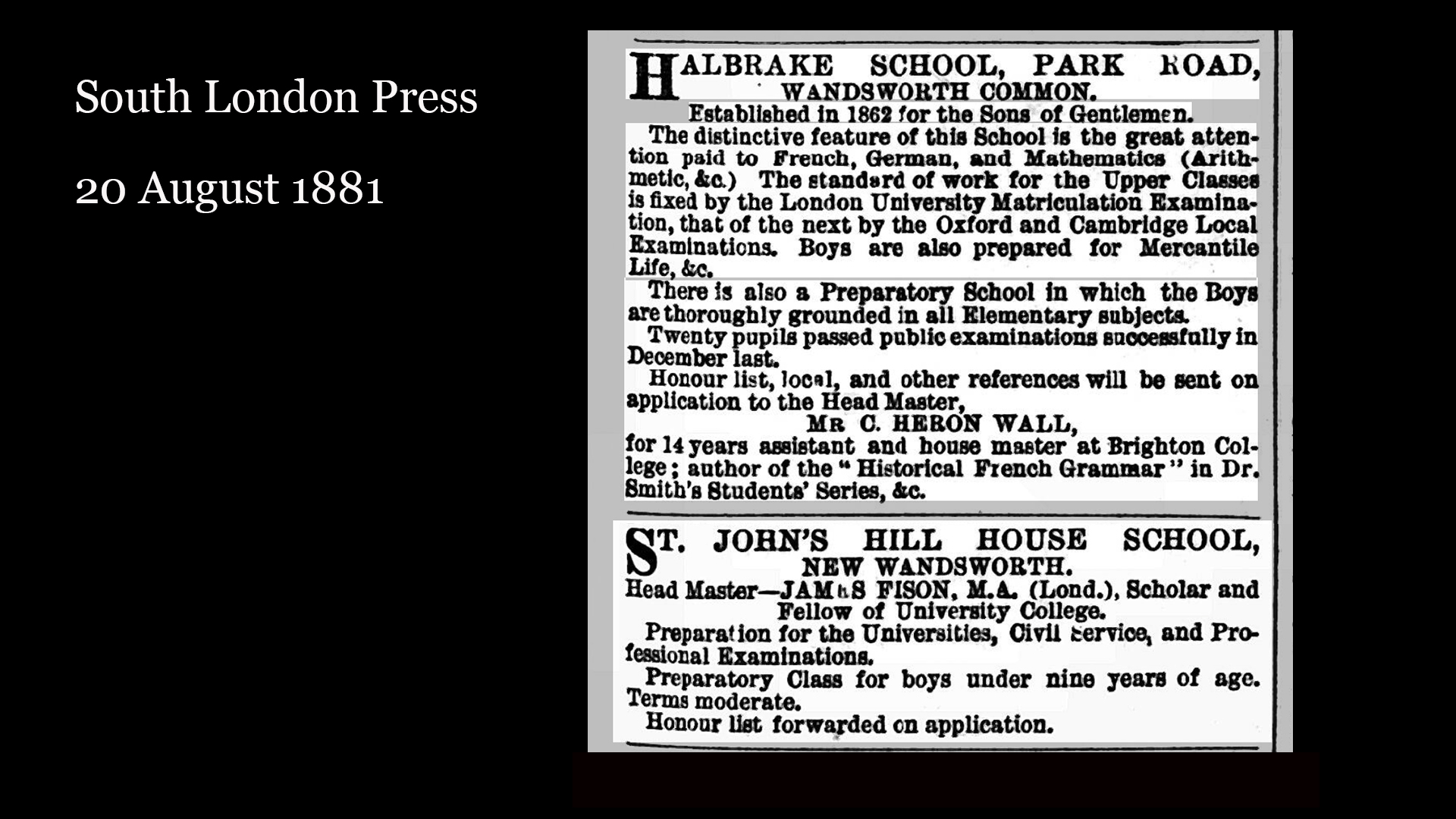
But I'm not so sure it wasn't Halbrake House, on Park Road (now Elsynge Road), which is where Henry Morton Stanley sent his ward Kalulu, the former young slave he brought over from Africa, in the 1870s.
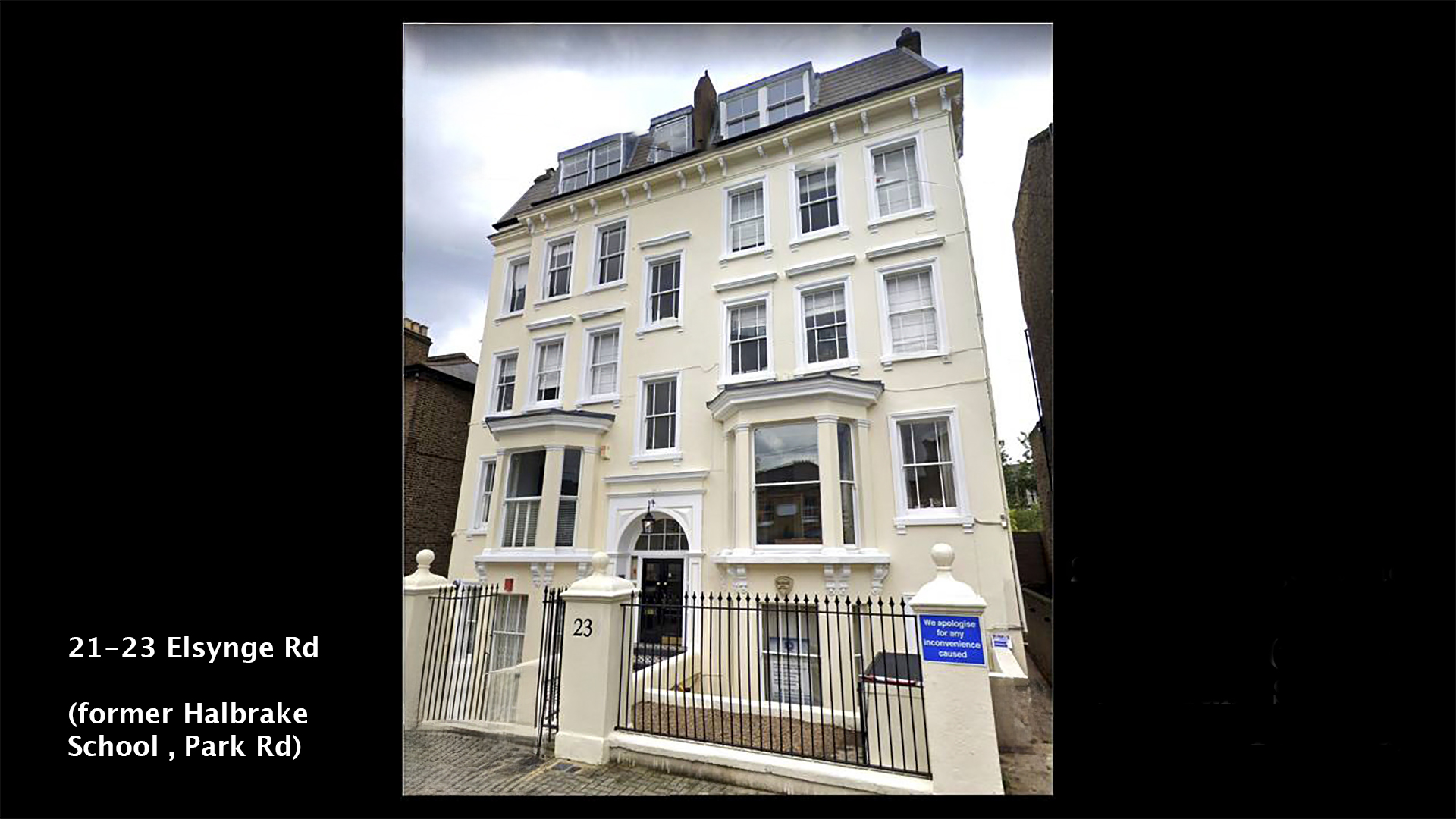
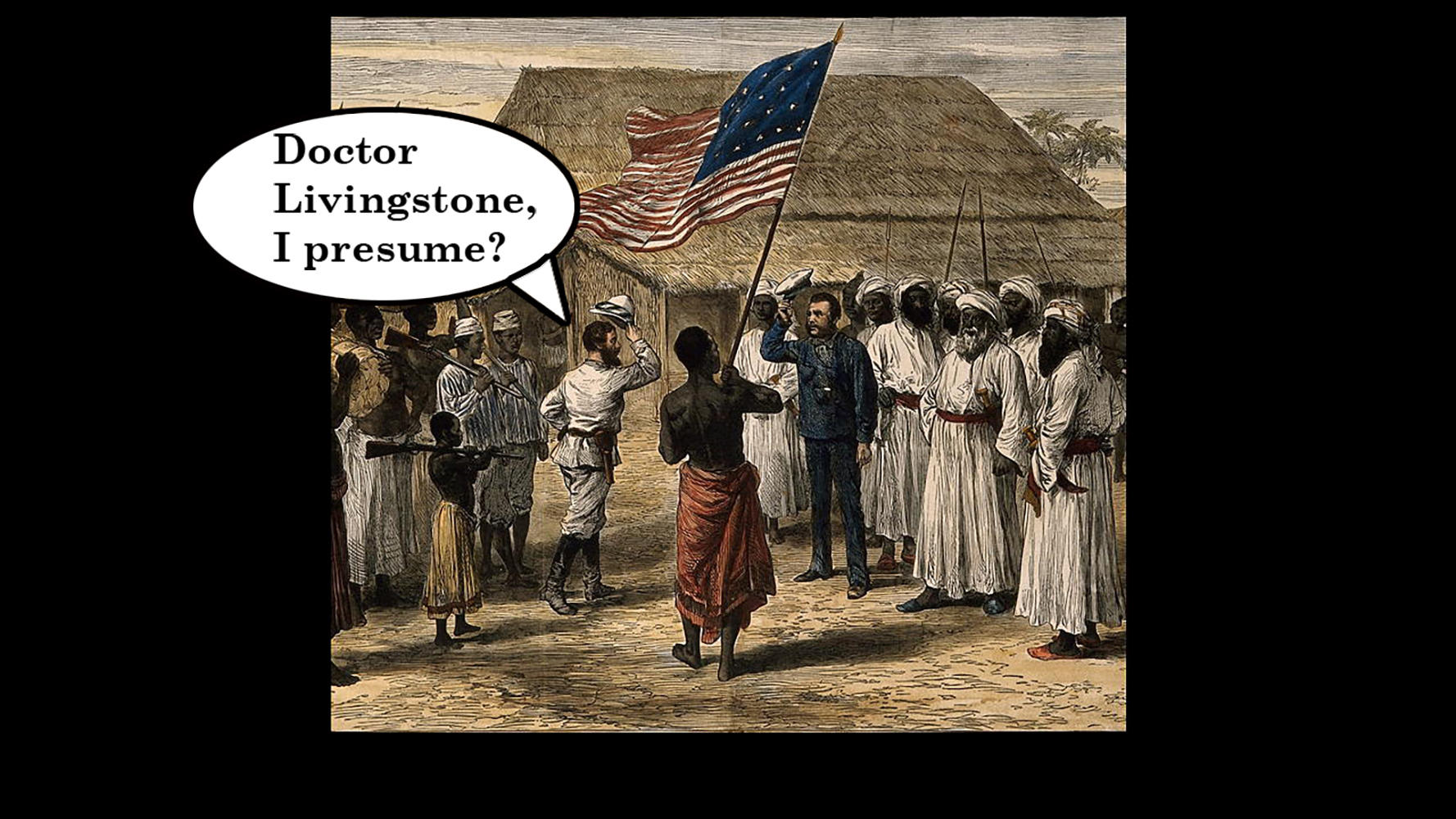
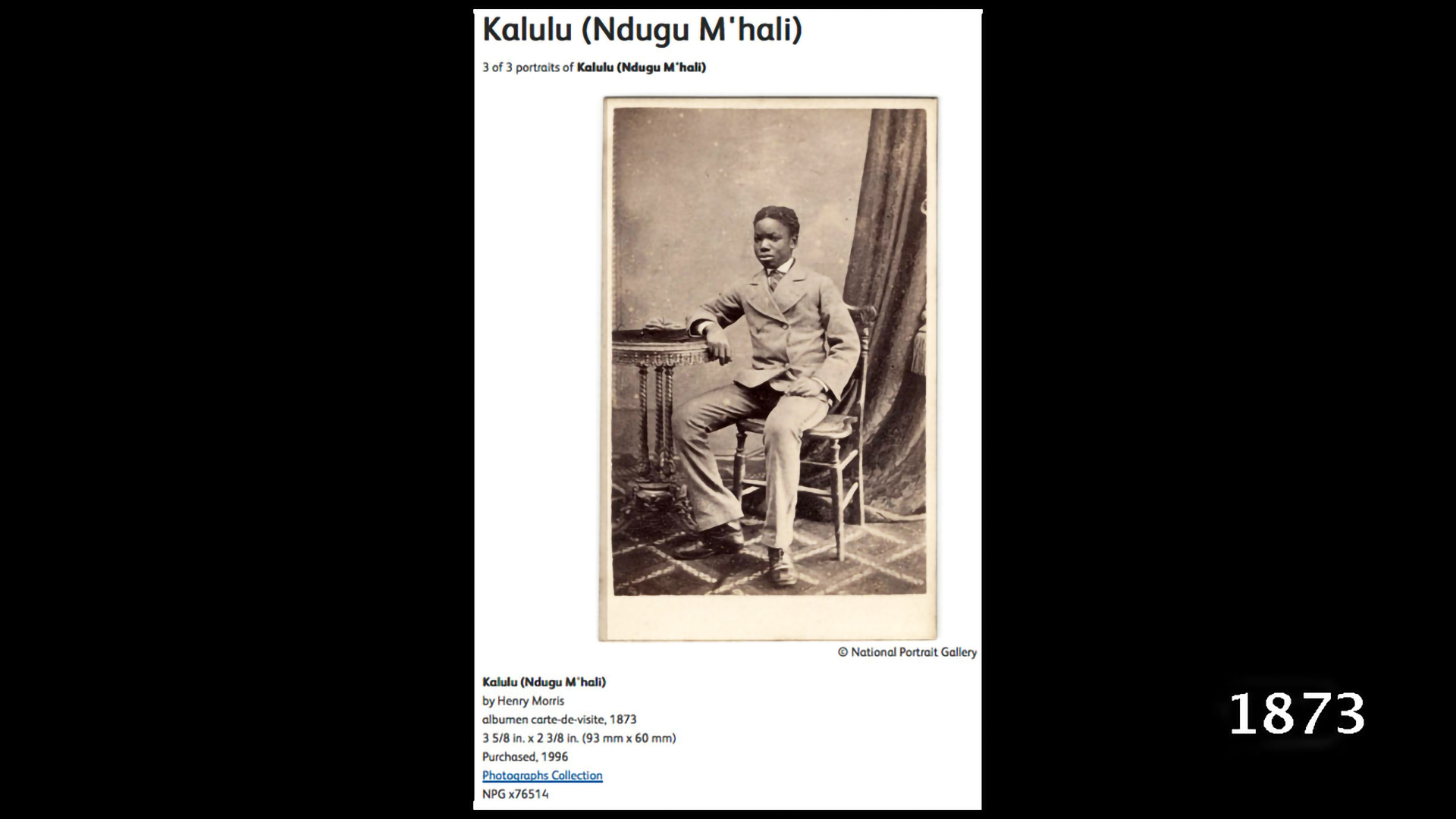
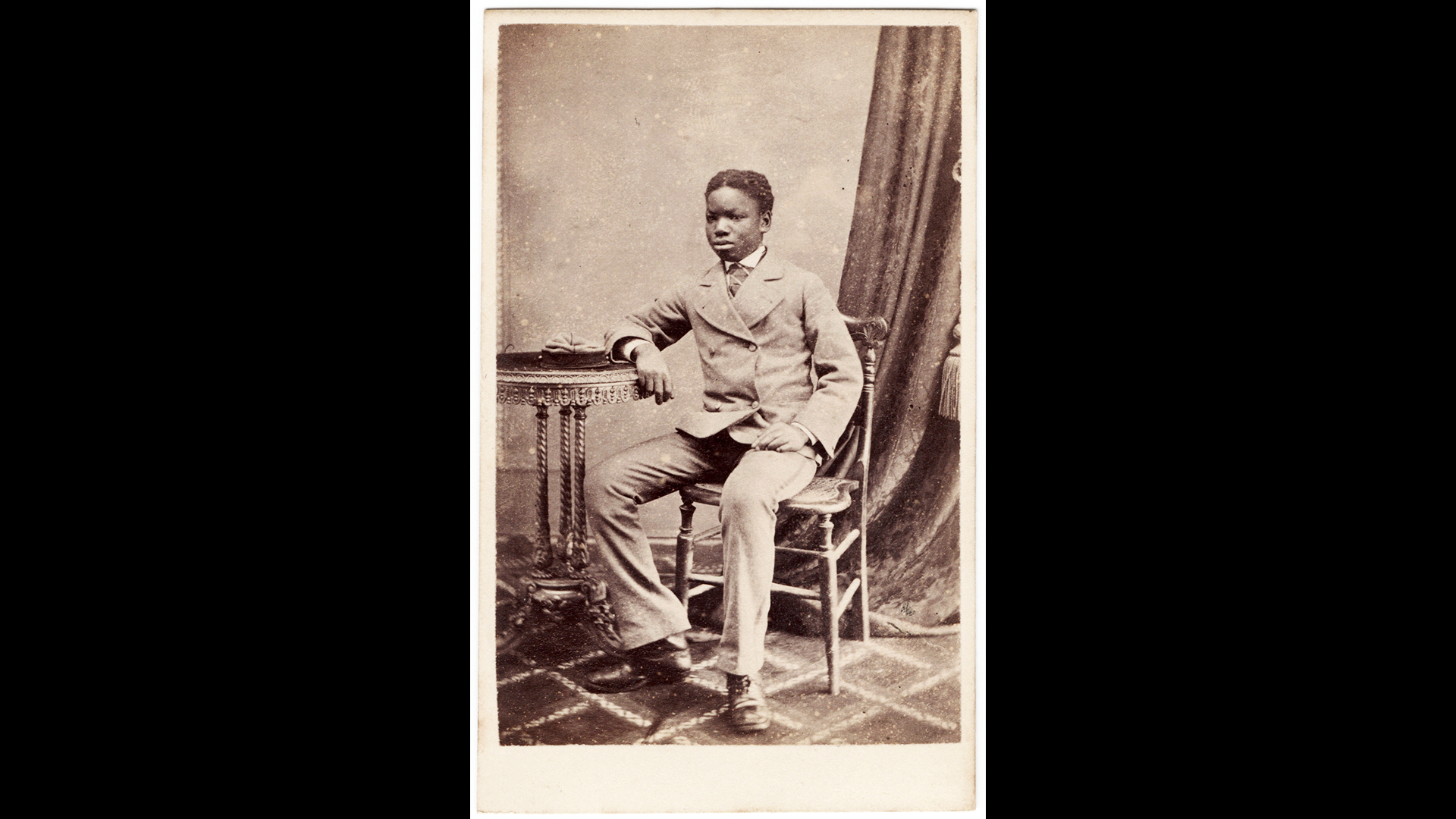
Here there were fifty or sixty boys of from ten to seventeen years of age, perhaps half of them boarders. They were the sons of tradesmen, professional men, moderately well-to-do clerks, and men of small independent means.
My companions were now boys exclusively. I had no sisters; my girl cousins I saw but two or three times in all my childhood; none of my friends had sisters of their own age; my father and mother had but a few close acquaintances, who rarely came to the house and hardly ever brought their children, boys or girls, with them.
Mabel and I had forsaken one another. If we met we smiled without words, without stopping.

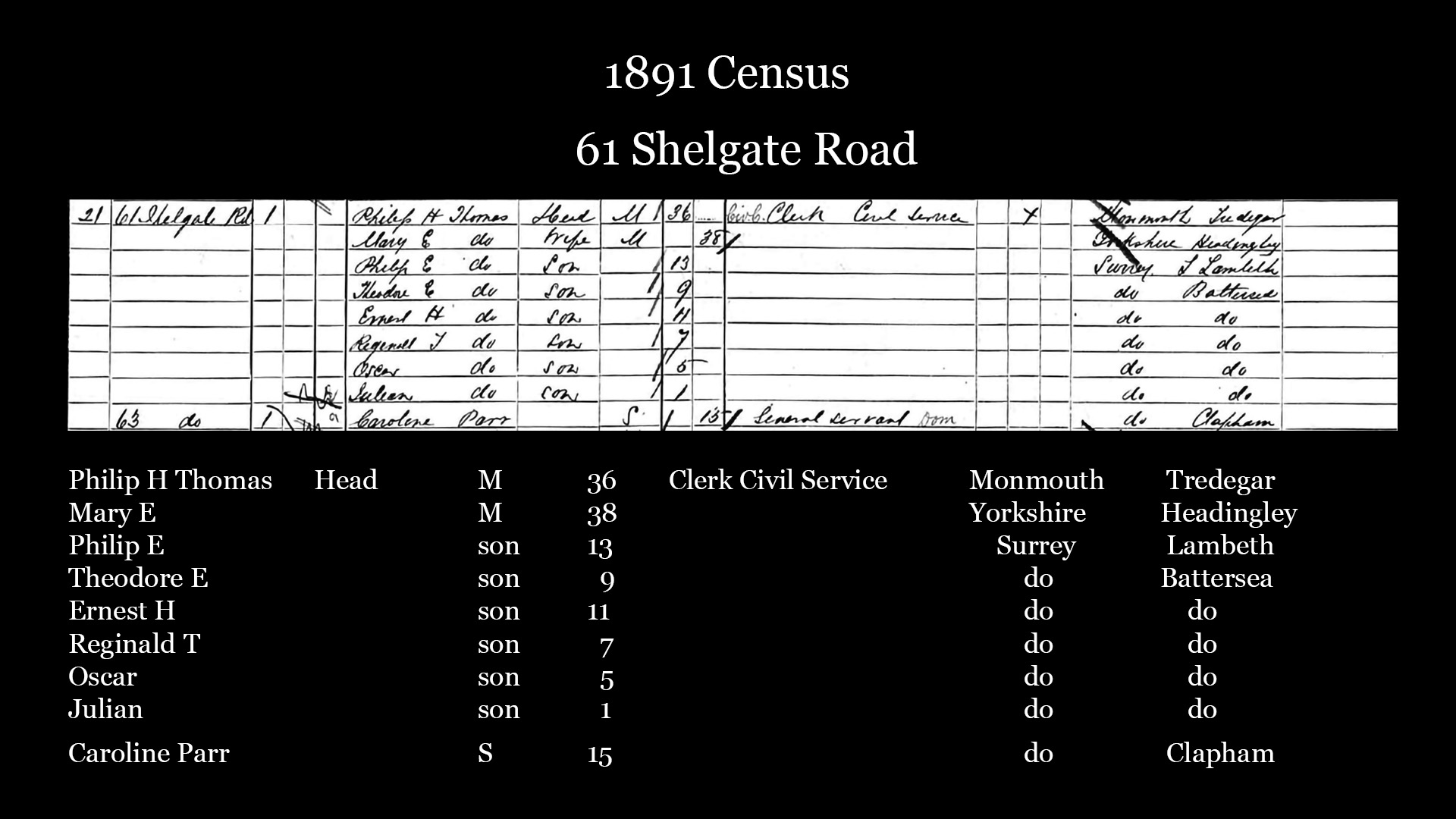
It was also around this time that he moved from Wakehurst Road to Shelgate Road.
While we were at this house [Wakehurst Road] my mother presented me with four brothers at intervals of two years, but, as I have no recollection of them during that period beyond the fact that on certain dim occasions . . . one or other was present, I say nothing about them. Being thus seven in family we moved to a large house in one of the roads parallel to the old one. [Childhood, p.60.]
[HoWC: Childhood — complete text.]
["four brothers" implies his second brother (Ernest) had already been born. But his birth is shown as Battersea. Why the apparent anomaly?]
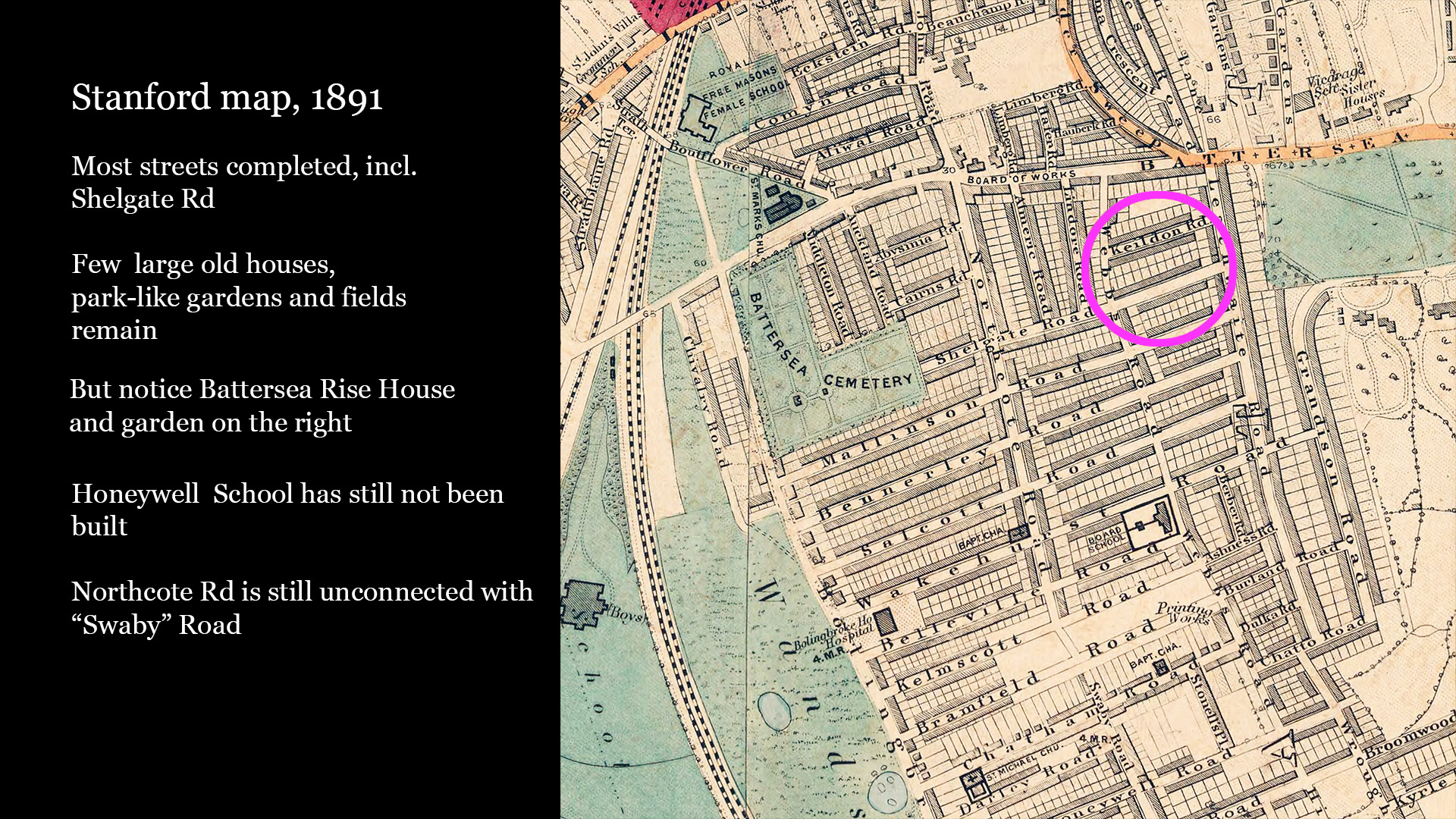
Notice how much more built-up the area is, in the space of just a few years. Presumably the number of young children must have been growing rapidly — hence Honeywell School would open almost next door to Belleville that year, 1891.
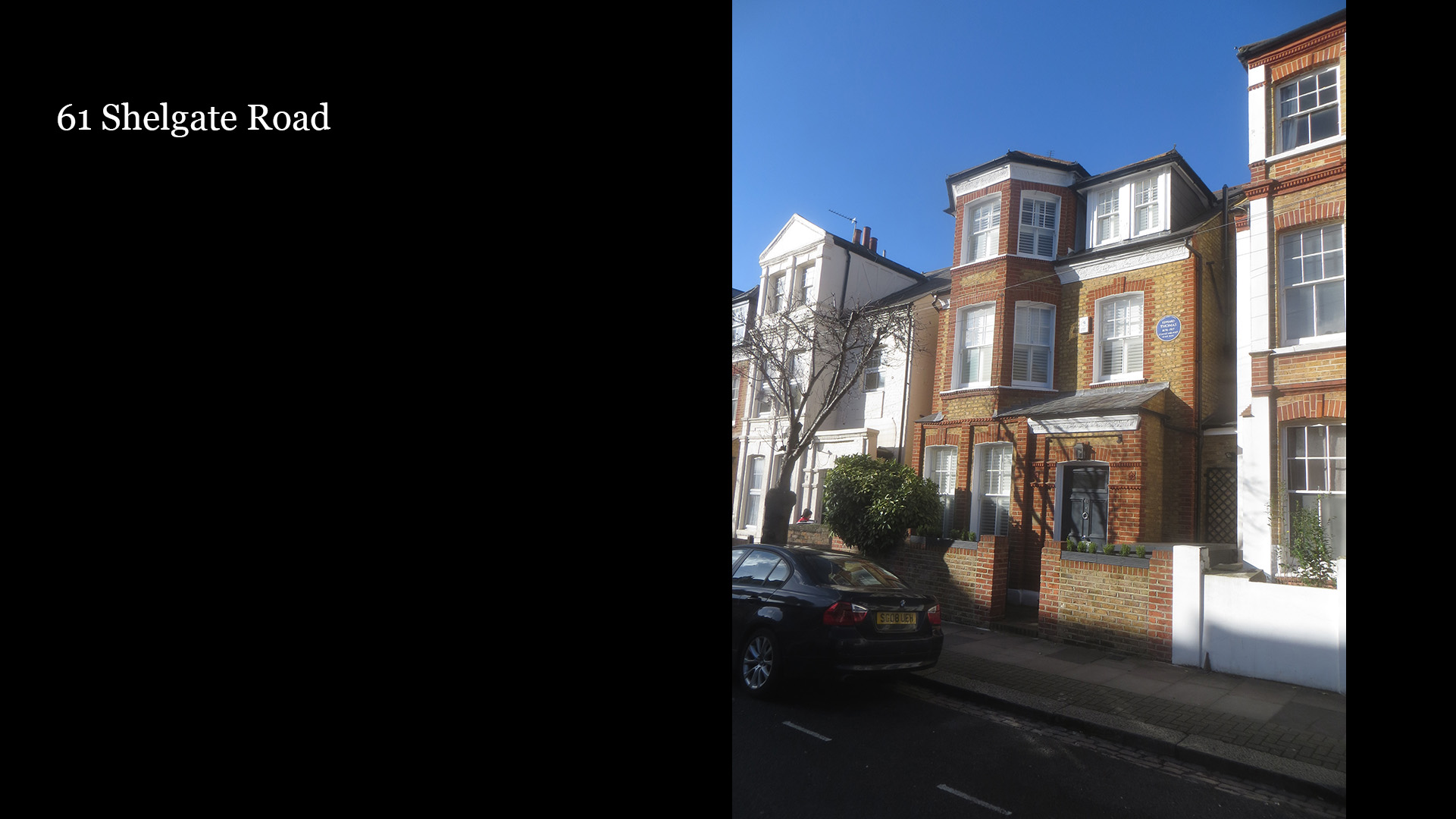
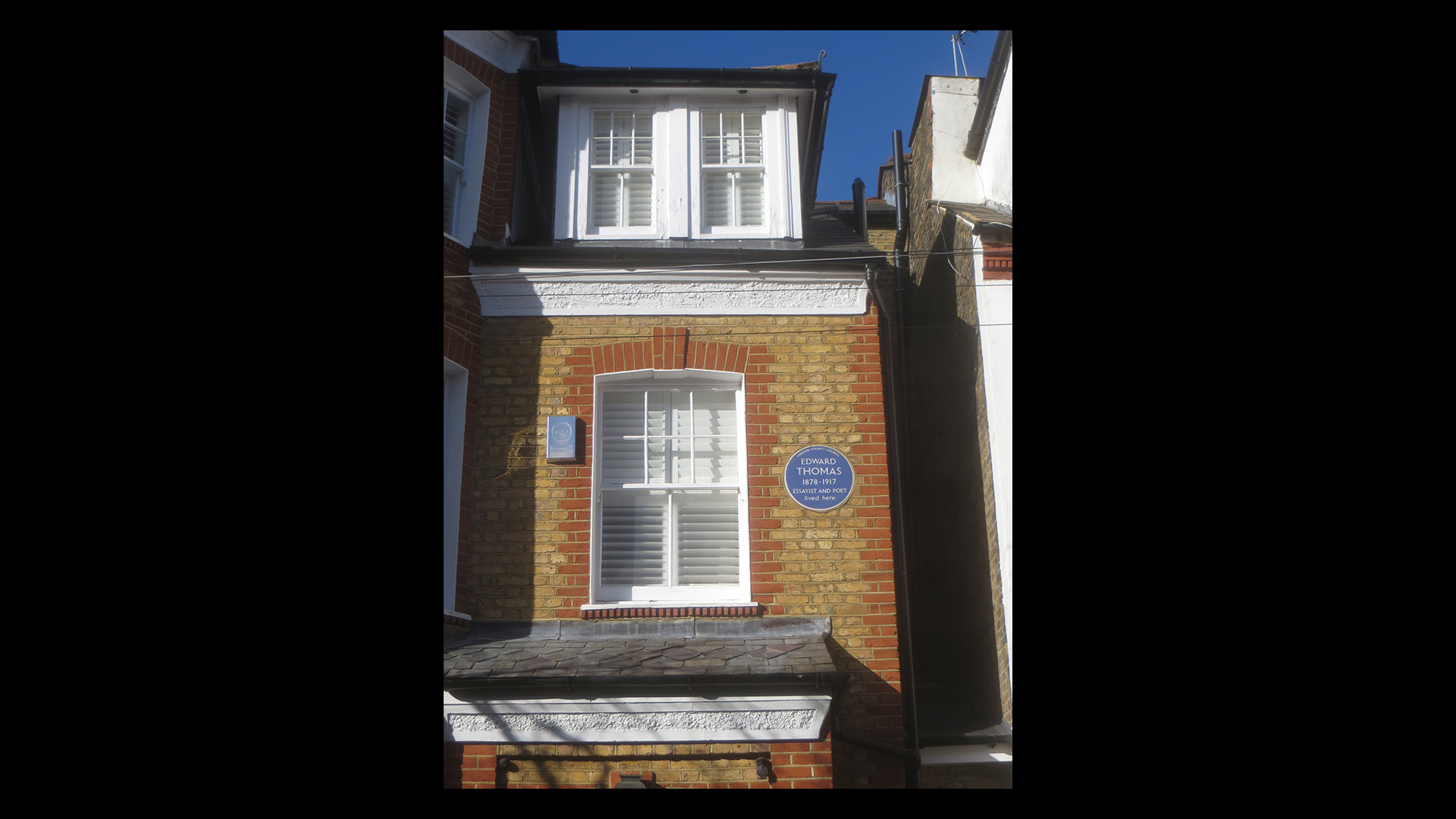
In comparison with the Wakehurst Road house, Edward Thomas writes very little about their new house, though he admits that "the new house had also a charm. Its size allowed an empty room for us to play in, and a box-room."
On the first few days after the move I went several times most of the way down from school to the old house before realising my mistake. Whether I had regrets for it or not, it began almost at once to have a dreamy charm too faint to be describable. It was a visible piece of the past, a skeleton, a hollow shell that did without us.
[Children, pp.61-61.]
[Much the same thing happened to me. I grew up behind Wandsworth Prison, in the Officers Quarters, around a Green. At age 8, I moved few hundred yards to a block of new flats on Heathfield Road — still part of the prison estate, but on Heathfield Road. Returning from Beatrix Potter School, I'd often walk past the new house and turn into the Quarters, before "realising my mistake". ]
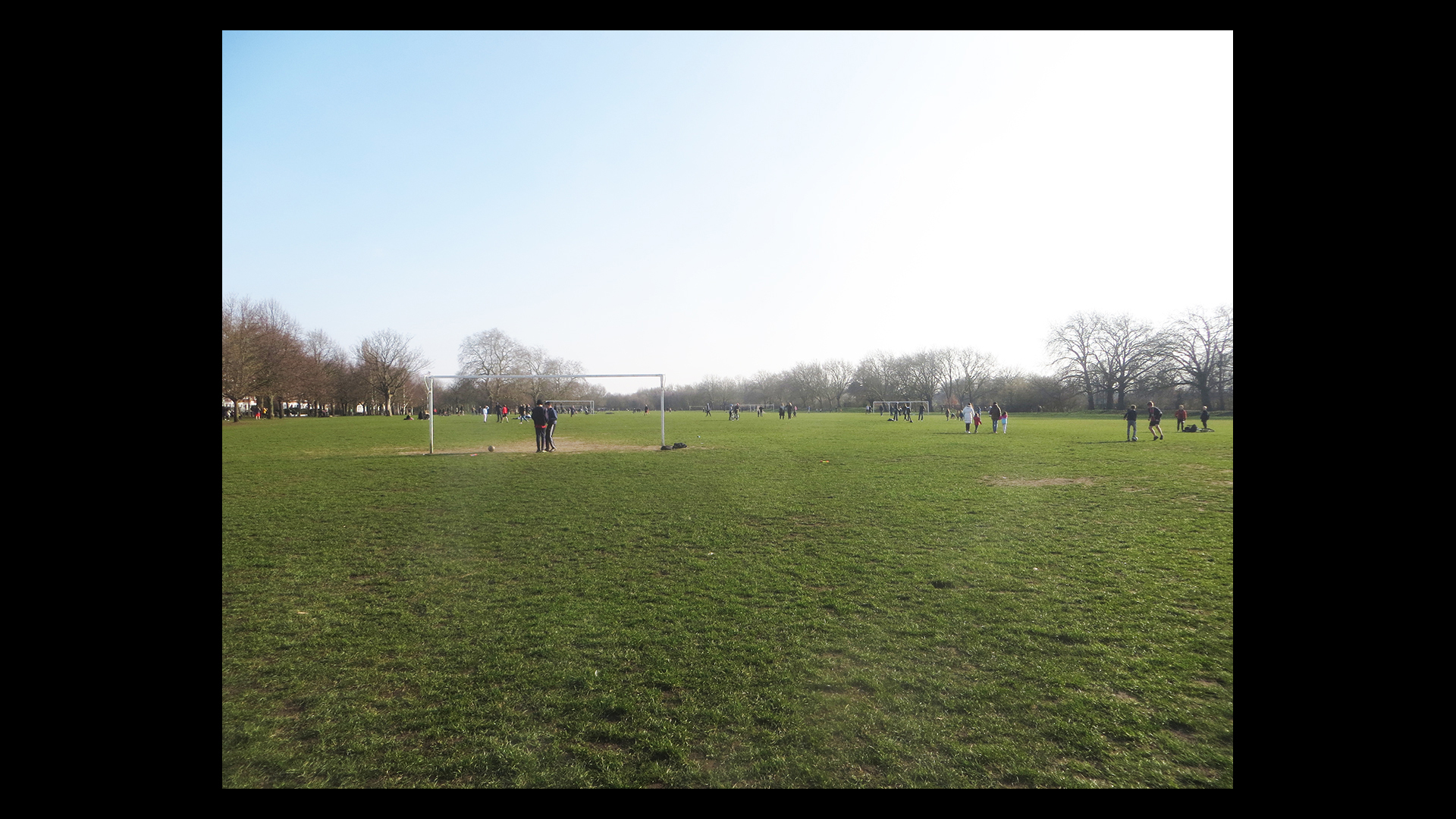
I would to conclude this part of the talk by discussing how the Common was used by children such as Edward.
Unlike today, very young children were allowed — one might say encouraged, but generally in fact ordered to "go out to play". A walk to the Common would have been nothing, even for a very young child. (As indeed it was for me in the 1950s.)
Crucially, unlike now, the Common was a parent-free (and largely adult-free) zone.
I'm going to concentrate on a few places, particularly the ponds, including fishing. And on fights [?]
Lots of postcards of the pond etc. Slightly later, but probably conveying much of the spirit of the place.
Find where he talks about hills.
Where's the best place to put the Robinson crusoe/pond story?
Pic of railway bridge = CatsBack Bridge
A moment ago we were talking about eating sorrel leaves among the gorse bushes on Wandsworth Common with Tottie Armour.
The passage continues:
A railway ran across the Common in a deep bushy cutting, and this I supposed to be a natural valley and somehow peopled it with unseen foxes. The long mounds of earth now overgrown with grass and gorse heaped up at my side of the cutting from which they had been taken were "hills" to us, who wore steep yellow paths by running up and down them.
[Pic of hills.]
Some evocative photos of the "hills" or "bumps" today by Lewis More-O'Ferrall - thanks, Lewis!
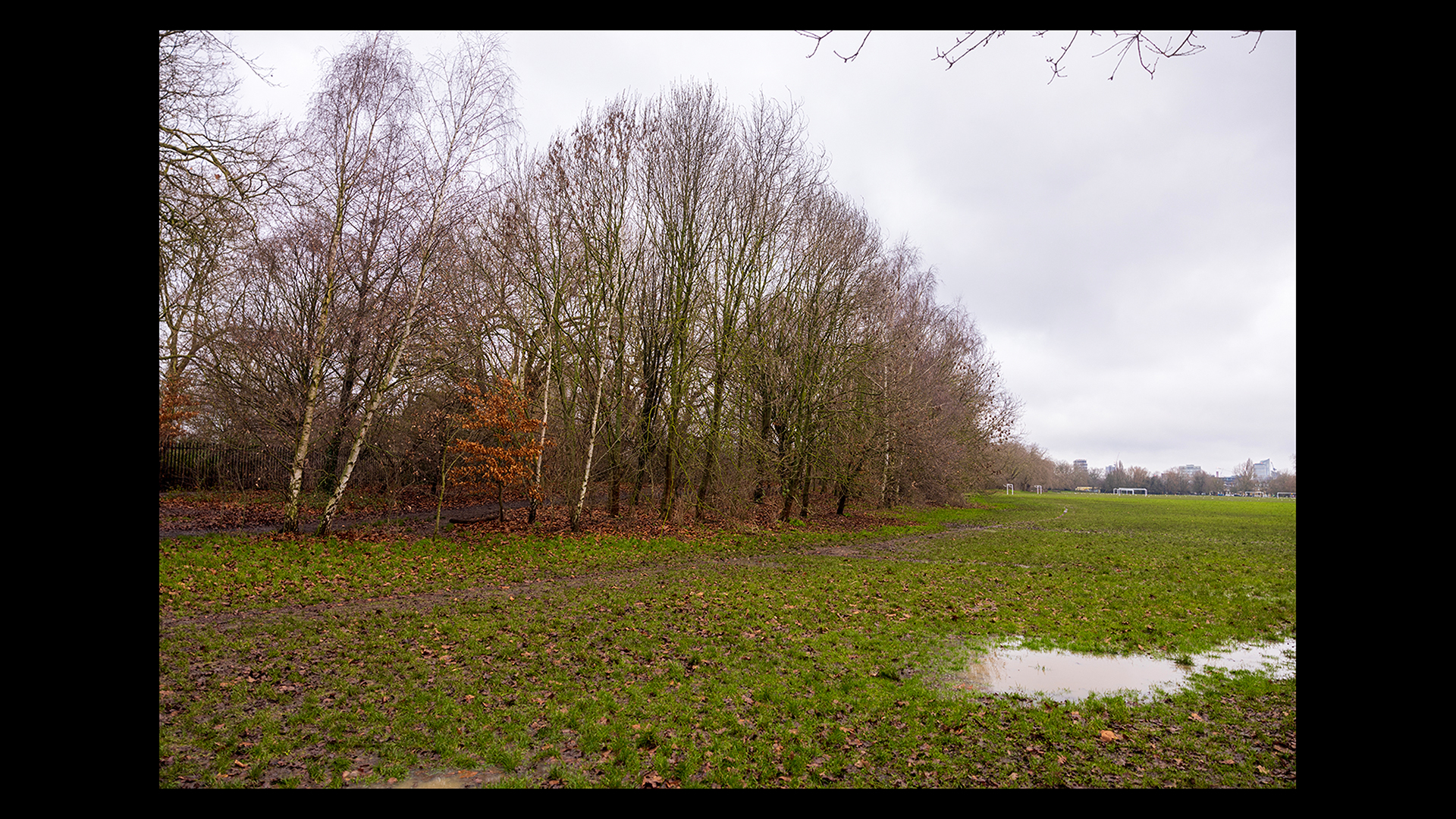
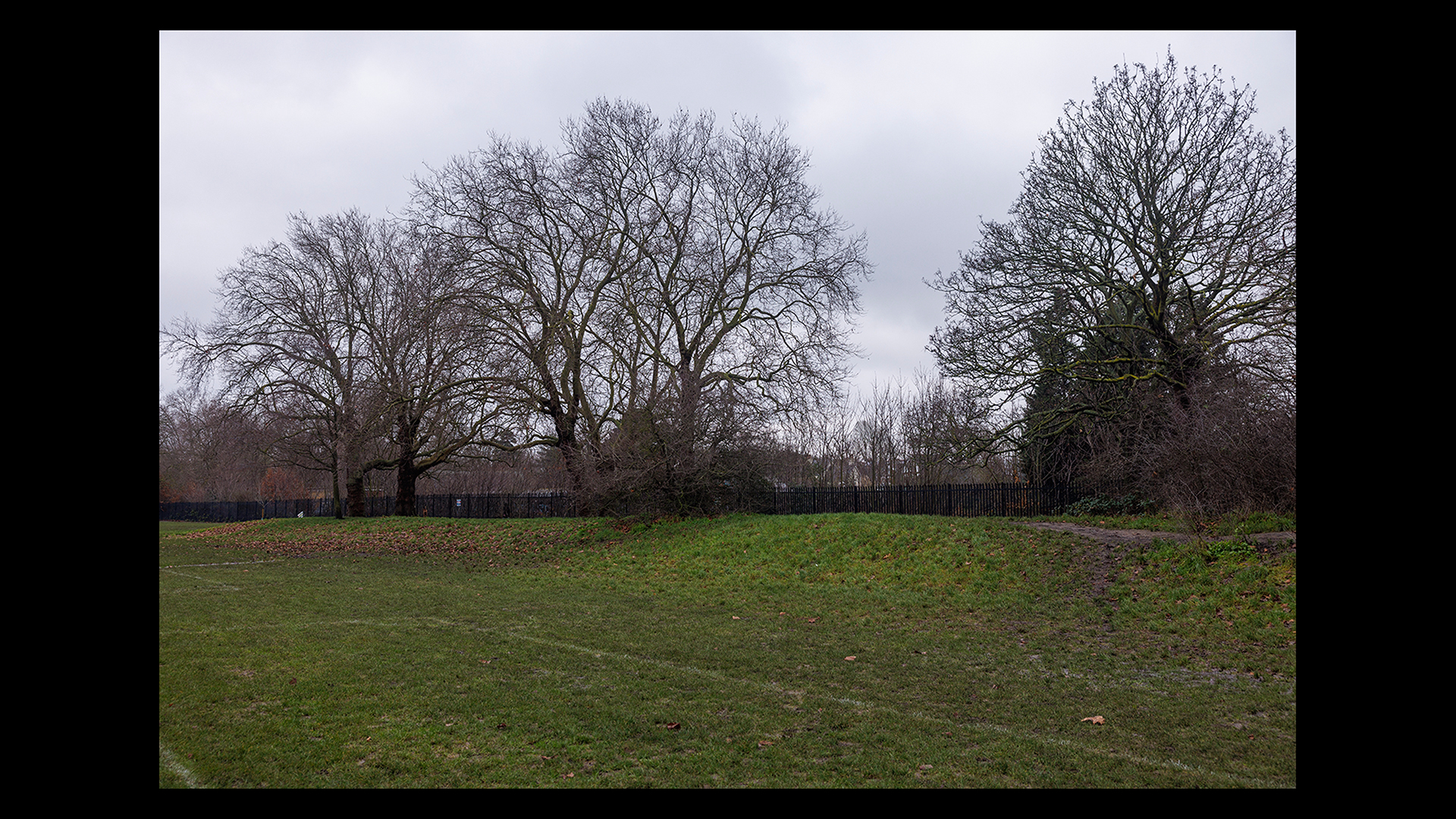
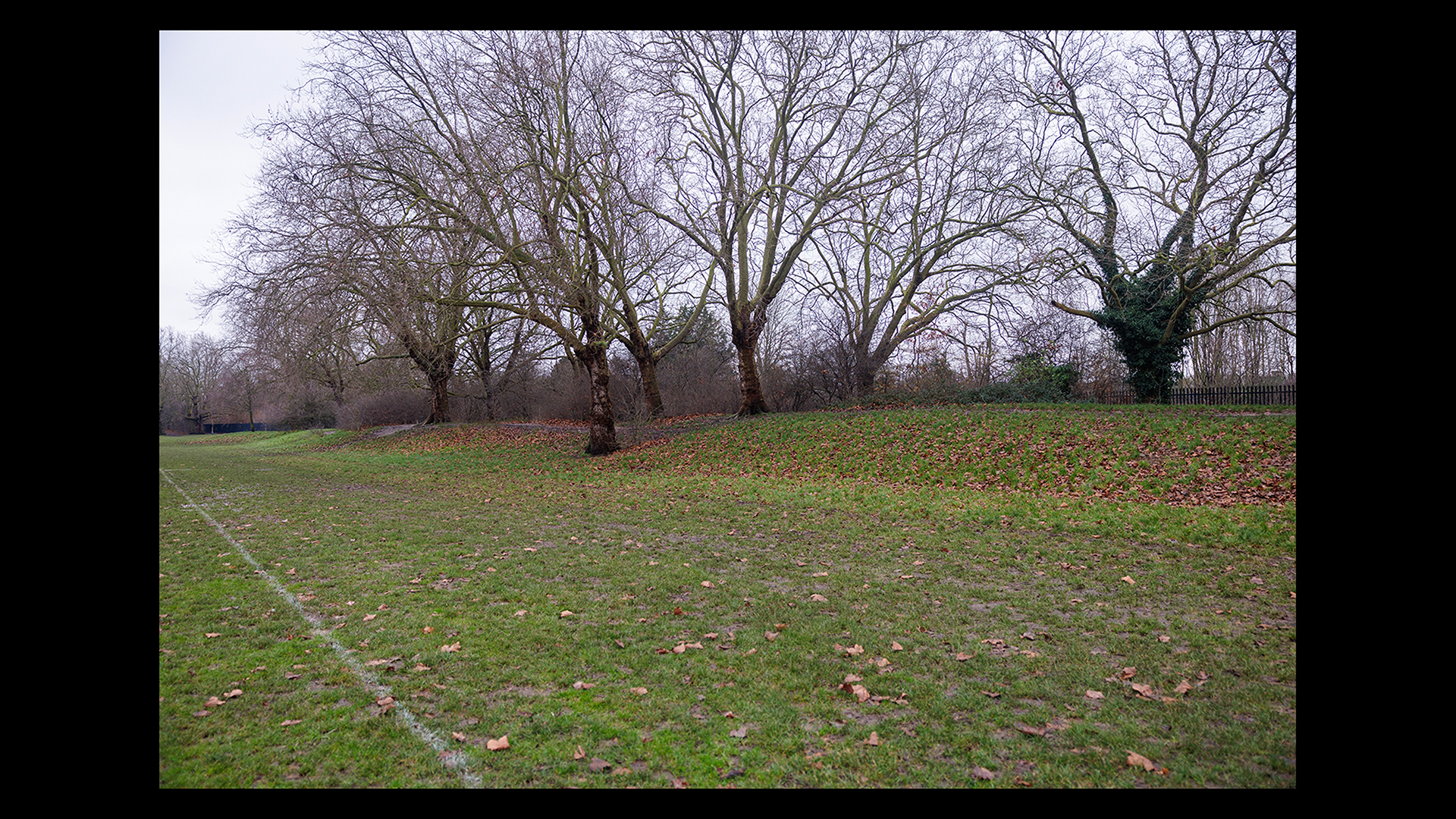
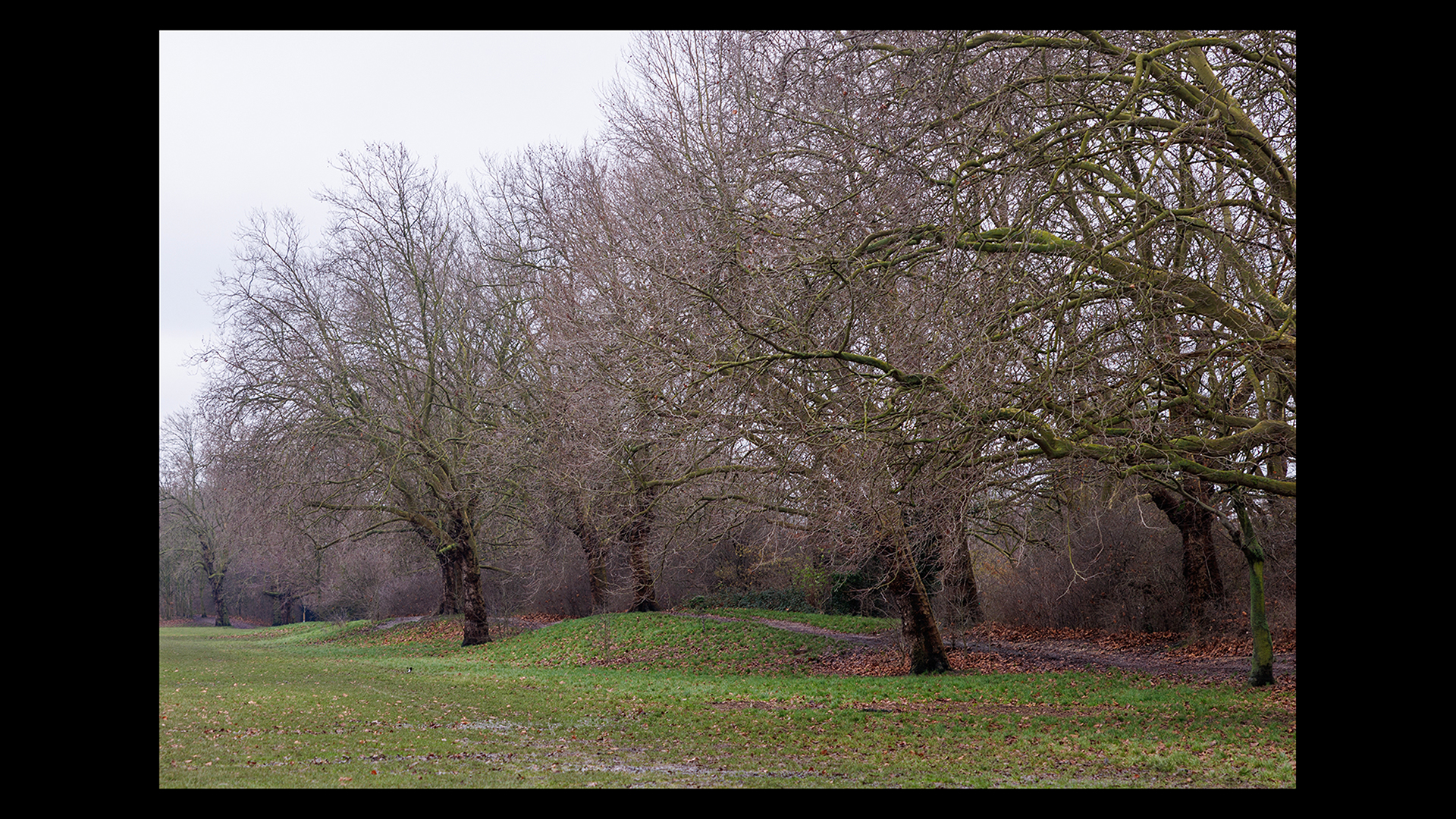
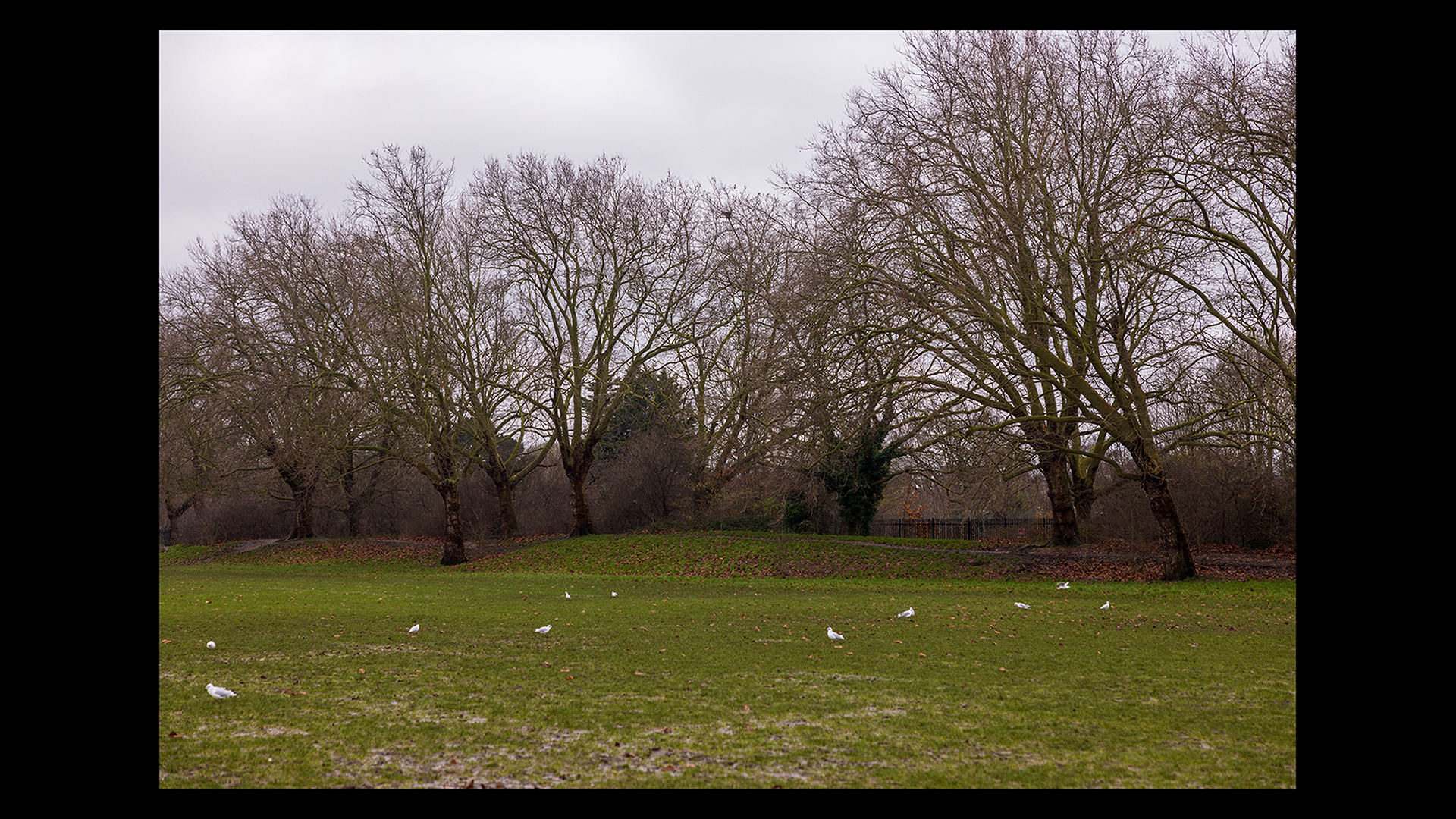
As the Friends' oral history project Common Memories showed, every generation that grew up round here remembers playing on these "hills" or "mounds" or "bumps".
I love the idea that we played where he played. Or our children or grandchildren played. What we see, he saw. Or something sufficiently like it that we can share the experience.
-------->As you can see in this OS map, the flatness etc had already been largely achieved by 1893. Edward describes the Common as flat by nature, flatter by recent art'. [In Pursuit of Spring, p.35]
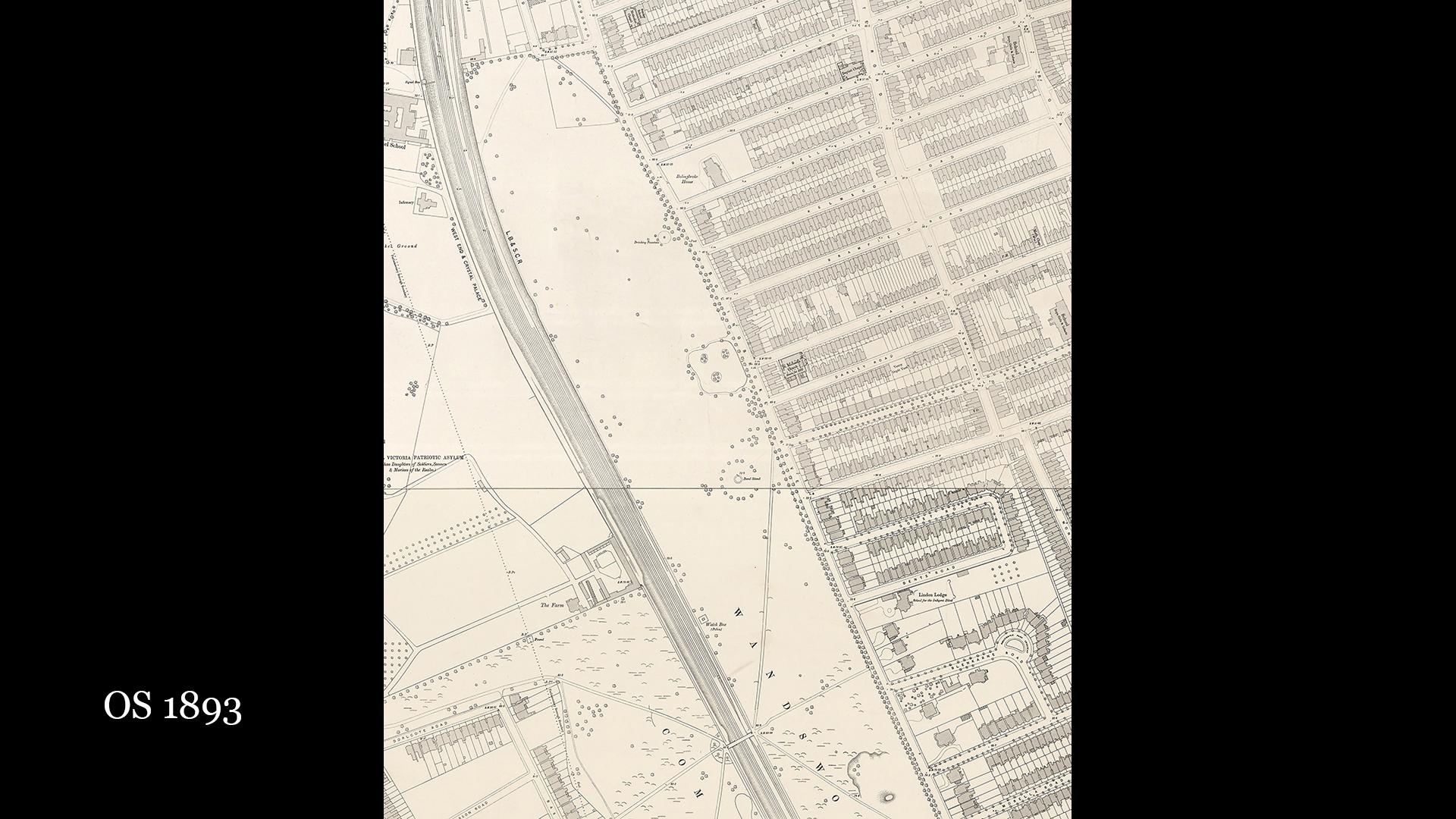
The Common . . . offered many temptations to more irregular [39] games and aimless rovings. For it was an uneven piece of never-cultivated gravelly land.
Several ponds of irregular shape and size, varying with the rainfall, had been hollowed out, perhaps by old gravel diggings. It was marshy in other places. Hawthorn and gorse clustered tall and dense in great and in little thickets. Tall elms and poplars stood about irregularly. And the level spaces suitable for cricket, football and tennis were not many.
With this variety the Common, even though the railway ran through it parallel to Bolingbroke Grove and only two or three hundred yards away from it, was large enough to provide us with many surprises and discoveries for years.
We could spend a day on it without thinking it small or having to retrace our steps. We wandered about it with or without our hoops. For any kind of hiding and hunting games the thickets were excellent. We played the other games in the open spaces.
[The different ponds — find a map to show. ? Start with the Crusoe/pond story?]
"The gravelly shore of the Long Pond on Wandsworth Common was confused in my mind with the sea sand where Robinson Crusoe saw the cannibals' footprints."

(Click on image to enlarge)

Edward Thomas's "Long Pond" is our Lake, created around 1872 and enlarged in stages. Here it is about 1893. Notice today's island in the northern lobe is a wooded peninsula; a channel has not yet been dug yet to separate it off.
(Click on image to enlarge)
[Maps showing "lake" before the island had been created.
]
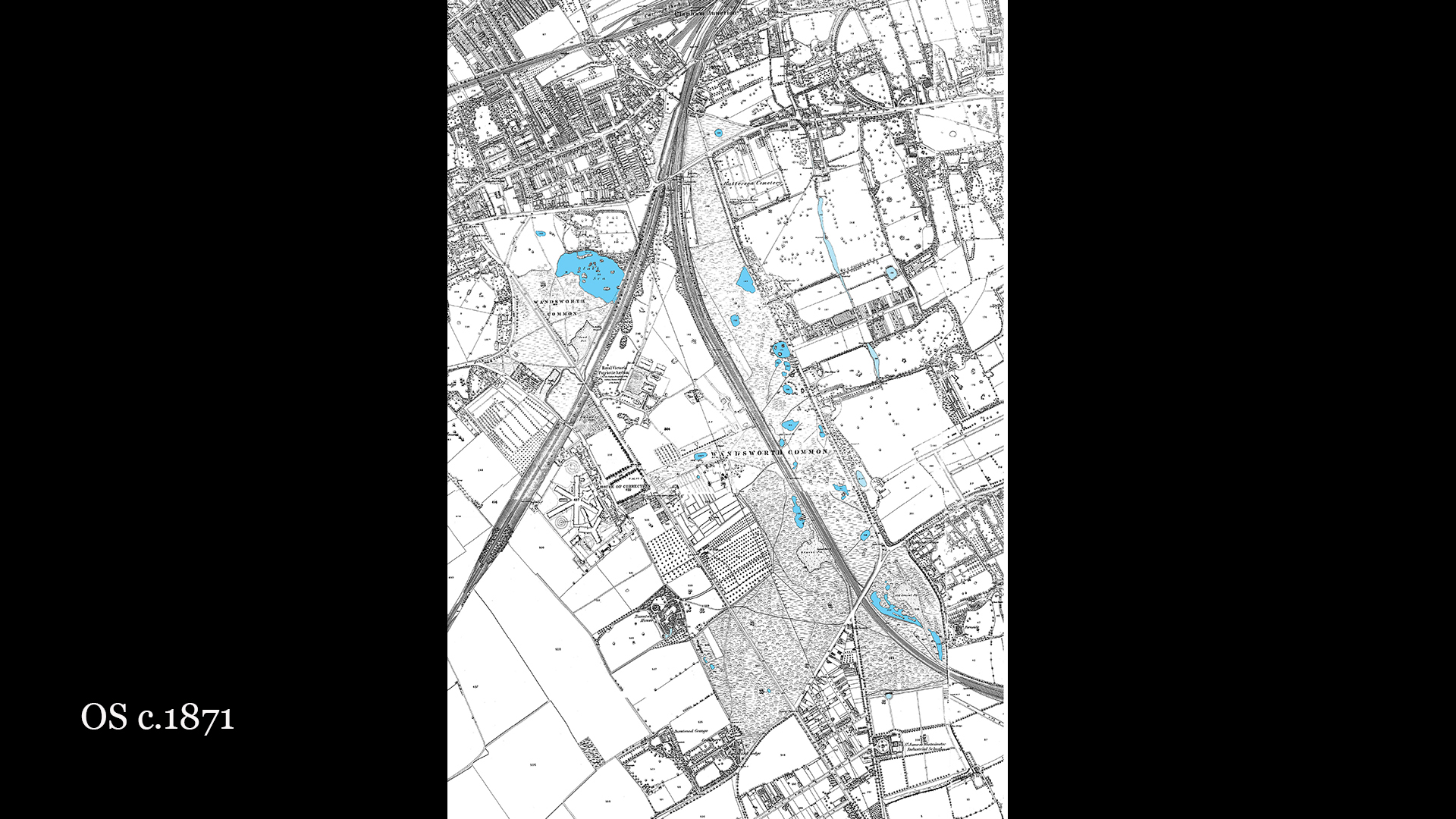
OS 1873 (6-inch)
(Click on image to enlarge)
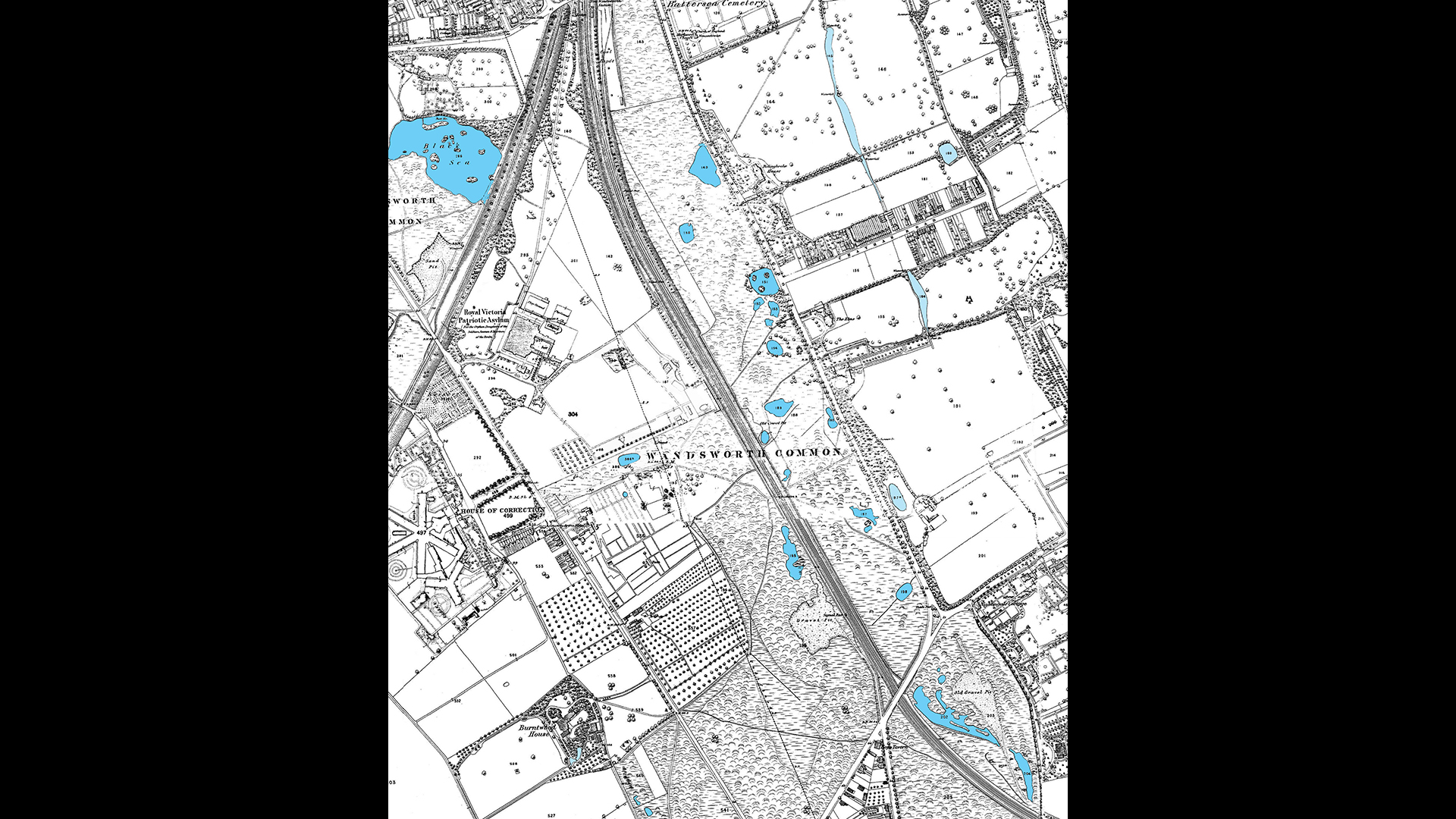
OS 1873 (6-inch)
(Click on image to enlarge)
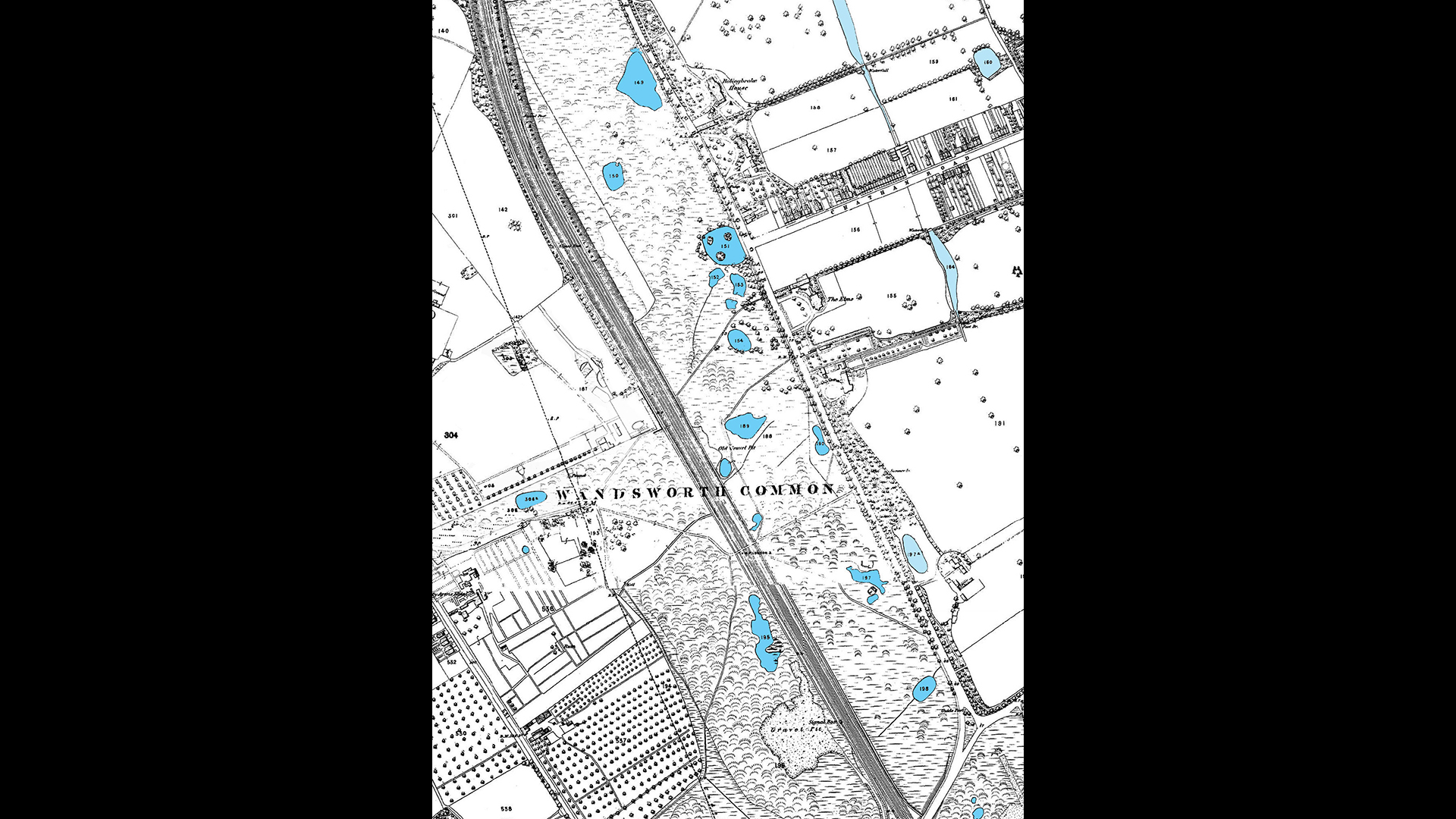
OS 1873 (6-inch)
(Click on image to enlarge)
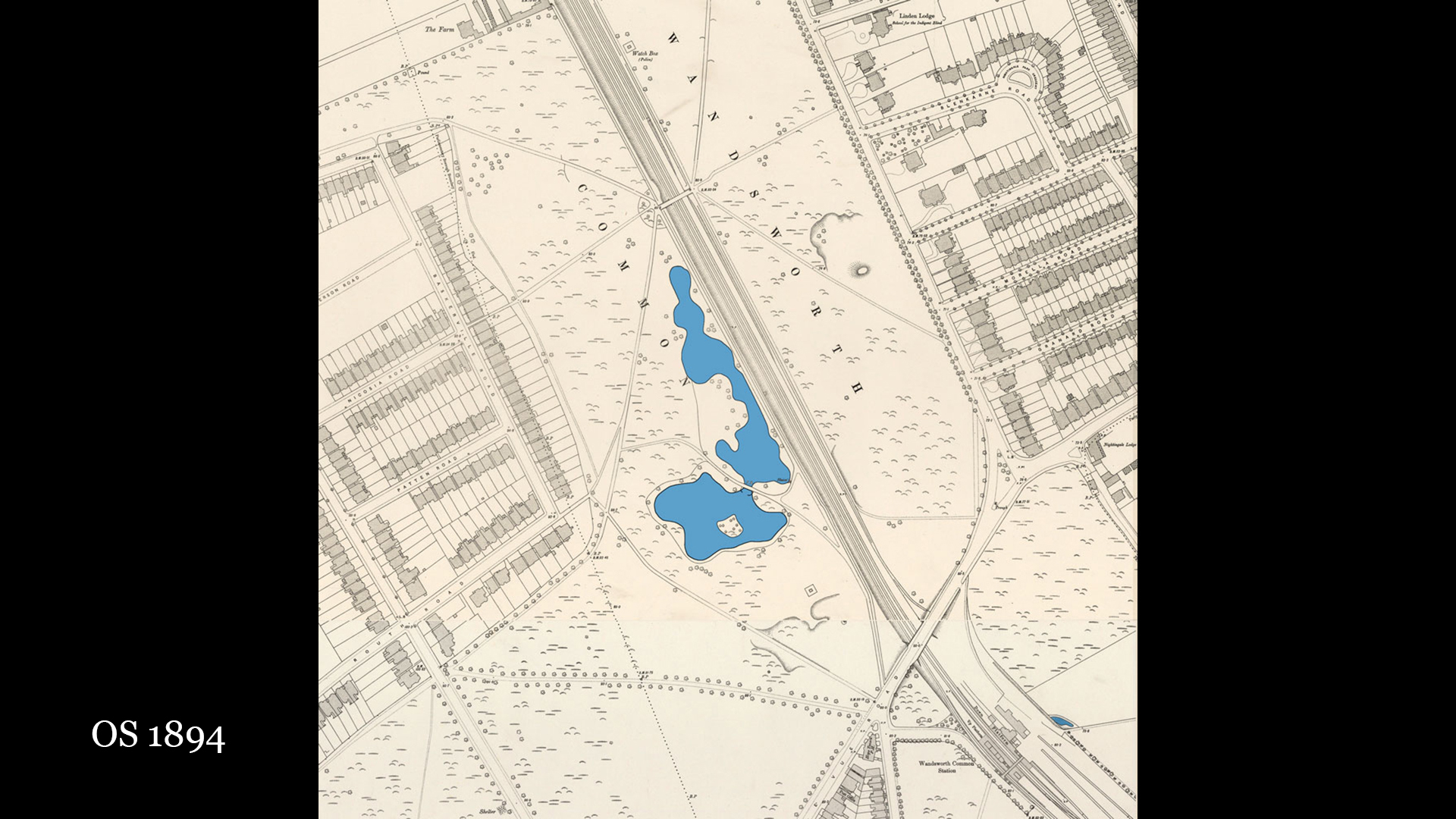
OS 1894 (60-inch)
(Click on image to enlarge)
The ponds were for paddling in. One of them, a shallow irregular one, weedy and rushy-margined, lying then in some broken ground between the Three Island and the railway, was full of effets [eft, newt] and frogs.
[The dark side . . . ]
Bigger boys would torture the frogs, by cuffing, skinning or crushing them alive. The sharp penknives sank through the skin and the soft bone into the wood of the seat which was the operating table. The seat and the earth under and about it would be strewn with fragments, pale bellies slit up, and complete frogs seeming to be munching their own insides. At that time I could [40] not have done it myself, but my horror lacked pity and turned into a kind of half-shrinking, half-gloating curiosity.
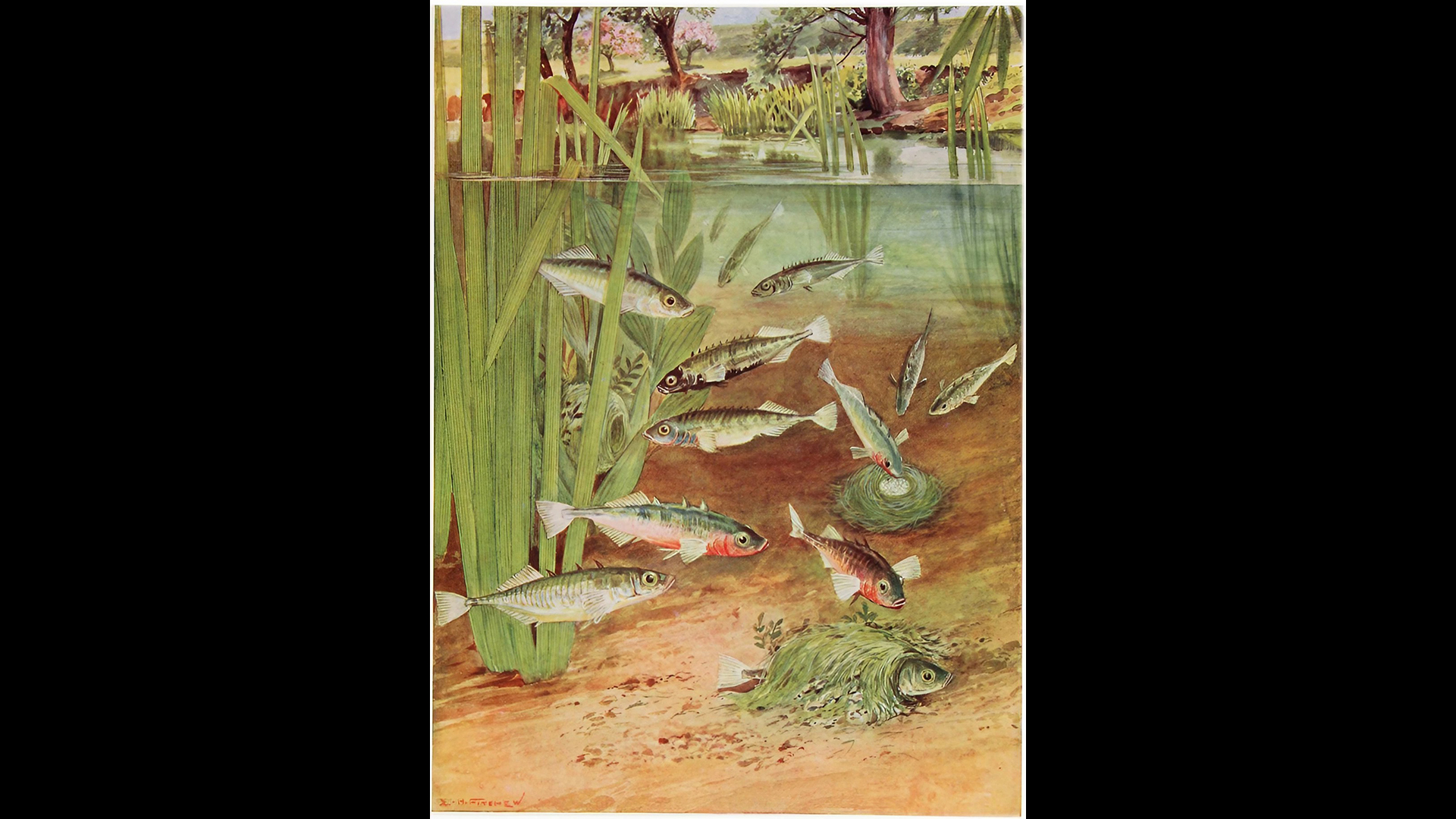
I fished for sticklebacks and gudgeon in the long pond on the far side of the railway, which owed its name of "Backaruffs" or "Pack of Roughs", so I always thought, to the poor ill-dressed boys who used to swarm to it from Battersea on Saturdays and bank holidays. I fished with a worm either tied on the cotton line or impaled on a bent pin, and put my stickleback or my rare lovely spotted gudgeon in a glass jam-jar.
(Click on image to enlarge)
Once at least I did as I had seen others do, hauling a heavy fruit basket out into the pond and dragging it in full of weed and mud and the little "blood worms" that breed in mud, and sticklebacks, even a red-throated one, but never a gudgeon.
[I've read another account of dragging for fish on the Common - this was George Tones, "Youthful Times in 1930s Battersea", Wandsworth Historian no 96.
[NB George Tones remembers dragging see George Tones, "Youthful Times in 1930s Battersea", Wandsworth Historian no 96.]
The lovely hot summer days seemed to go on forever, and we would go around in groups of boys and girls together. On summer evenings we would walk up Plough Road hill to Wandsworth Common, fill some lemonade bottles with water, buy some sherbet and make our own lemonade. Then we would sit around in a circle telling stories and singing.
Otherwise, on summer days, we would get a sack and go 'dragging' up on Clapham Common; two of us would hold the four corners of the sack and drag it in the pond. We would catch tiddlers and put them in jam jars.
On a really hot day we would take our clothes off and go swimming naked in the pond. One day the keeper caught us, and we had to grab our clothes and run across the common as fast as we could.
[George Tones, "Youthful Times in 1930s Battersea", Wandsworth Historian no 96. [George_Tones_memoir_wc_fishing_swims_naked_etc_WH96_2013.pdf] ]

(Click on image to enlarge)
The gudgeon was so attractive, partly for its looks, perhaps chiefly for its comparative size, that many times I willingly paid a halfpenny for one and let it be believed that I had caught it. Even when dead it was hard to part with, so smooth and pure was it. I liked even its smell, yet never dreamed of eating it.

(Click on image to enlarge)
There were carp, too, in this pond and in the roundish Box Pond that lay half-way between the top of our street and the railway.
By the longer pond I once saw a carp many times as big as a gudgeon in the possession of a rough: he had torn its head off to make it fit his jar. Much larger ones were talked about, caught in the Box Pond by the elder brothers of one boy. I saw them fishing there once or twice without a motion of the float in [41] the motionless water. Once I tried there myself all alone. My expectations were huge: that I failed completely only increased my respect for the sacred pond.

(Click on image to enlarge)
You might like to see some recent photos of carp in the lake:

(Click on image to enlarge)

(Click on image to enlarge)
(Click on image to enlarge)
(Click on image to enlarge)
Edward Thomas meets James Ashcroft Noble . . . and Helen.
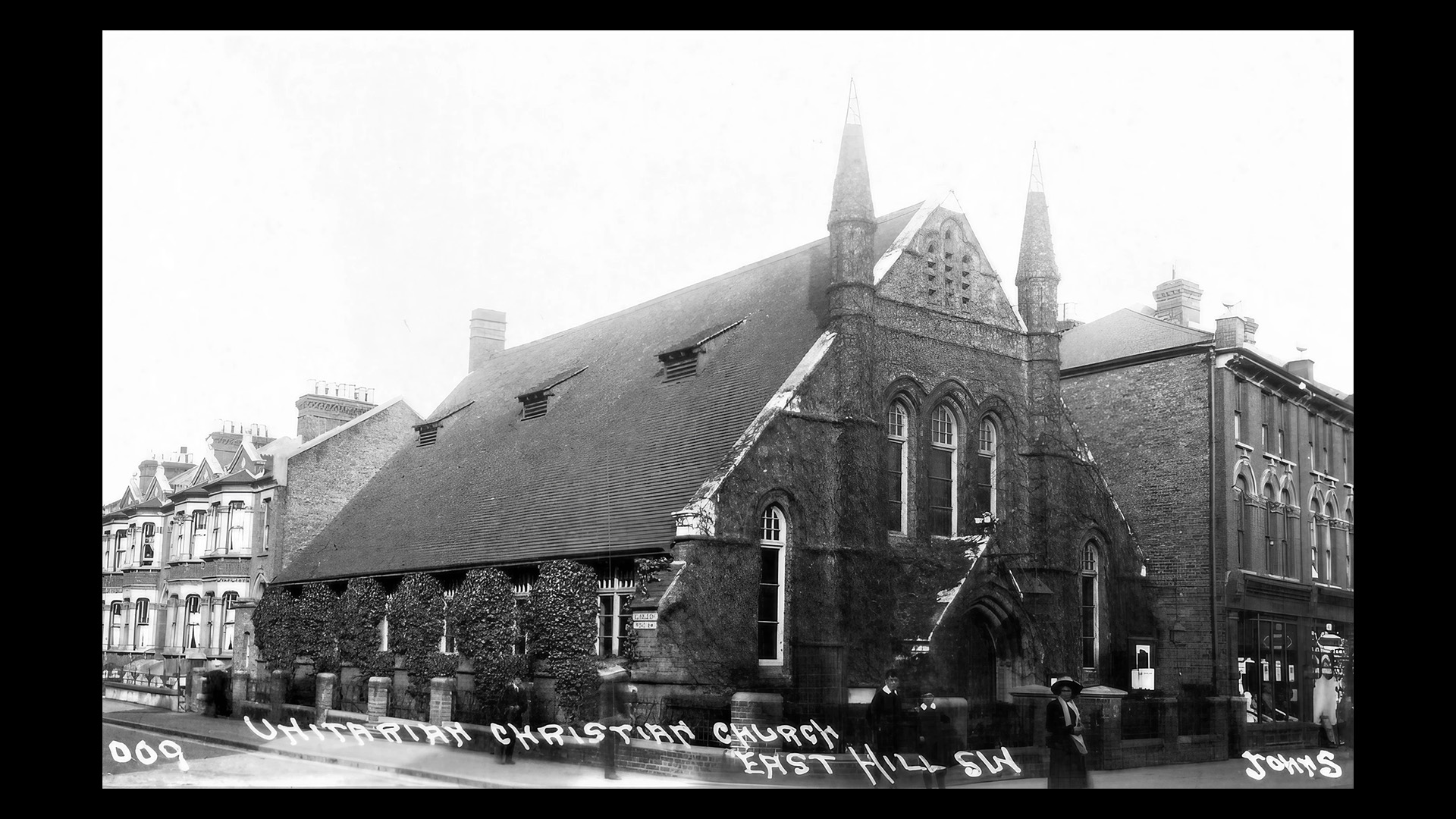
Unitarian Church, East Hill, where Edward Thomas met the literary critic and poet James Ashcroft Noble. Dates?
(Click on image to enlarge)
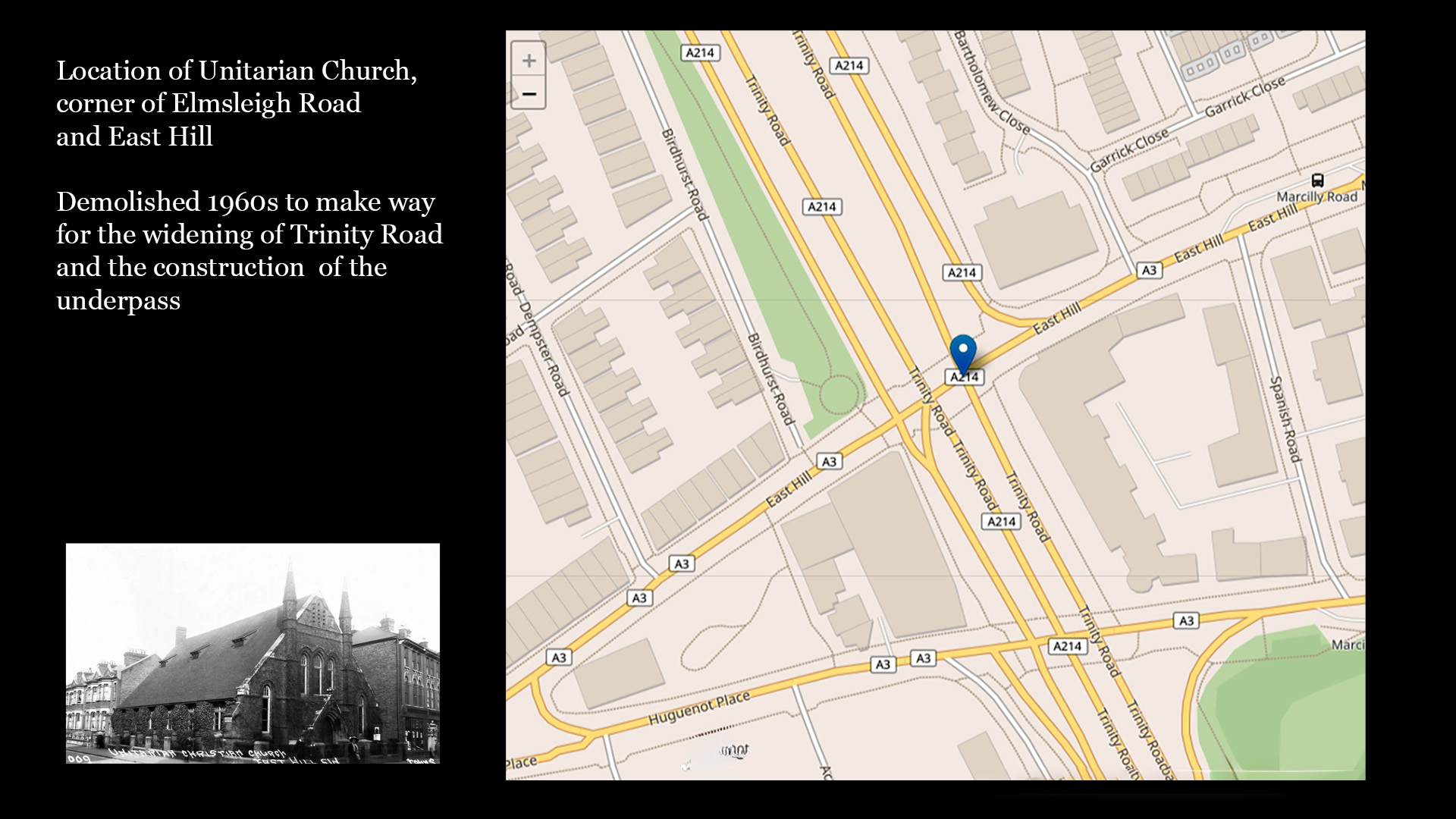
Unitarian Church, East Hill, where Edward Thomas met the literary critic and poet James Ashcroft Noble. Dates?
(Click on image to enlarge)
Edward hated the place. And hated Sundays.
[Childhood, pp232-33.]
School was not an affliction, but church or chapel or Sunday school was. At an early age I did not go regularly, nor I think did my parents. They were sober reverent people without a creed, though their disbelief in Hell and the Devil almost amounted to a creed. My father and I made merry over the Devil and the folly of believing in him as we supposed many did.
He used to try different chapels or different preachers, sometimes taking me with him, more especially when he had become an almost weekly attendant at a Unitarian Chapel. Here from the prickly silence of two hundred or three hundred people I gradually came to feel a mild poison steadily creeping into me on all sides. I never made a friend of any of the boys who attended there. A deathly solemnity filled the chapel.
After the service couples walked to and fro or gathered into knots on the pavement outside. The deathly solemnity was strong enough to cling about the people even there in the sunlight: some of them it accompanied to their one o'clock roast beef or mutton. But at first the Sunday-school was my particular allowance. I liked singing and liked the melodies of "Jerusalem the Golden" and "Fair waved the golden corn', and I liked going with all the rest for the annual treat somewhere in Surrey, where I could run about in a wood, become fond of another
[32]
girl or two (I remember one with a very deep but I think also husky voice), eat bread and butter, watercress and slices of cake and drink tea. The confinement in the schoolroom was not quite a positive ill. It was regular, it was inevitable, and until later on there was usually nothing in particular of which it deprived me except liberty.
But Sunday was a bad day and this was the worst part of it. That deathly solemnity, whether we respected it or not, was equally thick in the schoolroom. I became accustomed to making a sort of drug of boredom. I did not rebel, but taking this poison became fairly oblivious to the good or evil that befell Jesus Christ, or Servetus, or myself.
Moreover, I did positively loathe with continuous loathing the trailing with one or more of my brothers along the Sunday streets, in our stiff Sunday clothes and our Sunday hats. I hated these clothes and hats and I felt also that they made me ridiculous in the eyes of others. If the hat was blown off by the wind it was some relief: and I could then stamp on the thing and put it down to the wind and mud. What wonder that I made no friends under this Upas-tree.
The majority of the children came from homes poorer or less refined than mine, and with the exception of one or two girls whom I thought pretty I looked down on them though ever so lightly. The few boys whose parents knew ours, if they never visited one another, never became our friends. Some suspiciousness existed between us which our best clothing did not
[On Servetus, see Wikipedia: Michael Servetus. He participated in the Protestant Reformation, and later rejected the Trinity doctrine and mainstream Catholic Christology. After being condemned by Catholic authorities in France, he fled to Calvinist Geneva where he was denounced by John Calvin himself and burned at the stake for heresy by order of the city's governing council.] i.e. ET is being ironic.]
[33]
permit us to destroy. Chapel and Sunday-school were to me cruel ceremonious punishments for the freedom of Monday to Saturday. I have still a profound quiet detestation of Sunday in whatever part of England or Wales it overtakes me, but most of all in London. I think I began learning to hate crowds and societies, and grown-up people, and black clothes, and silk hats and neatly folded umbrellas and shining walking-sticks, and everything that seemed a circling part of that deathly solemnity as I was not. Nevertheless, I may have looked decidedly a part of it with my shy bored silence, my fear of disagreement or quarrel in public, and my thin long narrow face that always shrank and chilled and stiffened into solemnity under the gaze of grown-up people, strangers, and numbers.
There was, however, always one good thing about Sunday, and that was the biscuits, two large oval ones or one of these and two small round ones, which I found on a bedside chair upon awaking. The crumbs of these biscuits among the sheets became a nuisance; for we got up later on Sundays than weekdays.
[HoWC: Childhood — complete Text.]
Edward meets his mentor, James Ashcroft Noble . . . and Helen.
For some reason it's proving difficult to identify all of the homes and moving dates for the Noble family.
The main home we're concerned with is 6 Patten Road, i what is now called the "Toast Rack" but was then called "College Park" — an allusion to Magdalen College, which owned the area as a speculative development very much wit the middle class in mind.
The Nobles, who were born in the north-west, near Liverpool, appear to have moved backwards and forwards between there and London, driven partly by the JAN's work as a writer and editor, and partly by his oor health. (It was believed the south was rather better, though in fact he died hre in ??? at the age of just 52 ? and is buried in Magdalen Road Cemetery (his wife, ? , was buried there in ?
James was . . . .
His daughter Helen Berenice Noble was born in Liverpool in July 1877 and attended Wimbledon High School when the family moved back to London in 1893, after a previous stay of two years. They later lived initially at 15 The Grove in Wandsworth, which later became 37 St Ann's Hill. The house was part of a section called Agincourt Villas, which was destroyed in July 1944 by a flying bomb. This was where Helen and Edward first met." [Richard Purcher, "Edward and Helen Thomas in Battersea and Wandsworth", ET Fellowship Newsletter 67, 2016
Also
[Berenice — a curious choice of name. See e.g. https://www.britannica.com/biography/Berenice-Roman-aristocrat]
" — the Noble family left Southport for Liverpool in 1892. [17] It seems that it was the following year they moved to London. [18] Their first London house was 15 The Grove, Wandsworth (now St Ann's Hill), 'a little new villa in a row'. [19] The terrace was called Agincourt Villas: it consisted of 22 houses, probably those for which a local builder submitted plans in 1892. [20] Number 15 was eventually renumbered as number 37, and appears to have been destroyed by a V1 flying bomb on the 16th-17th July 1944. 15
The Grove was where Edward Thomas made his first visit to Noble, while, in Helen's telling vignette, she and her sisters, typically for a group of aesthetic girls, were singing extracts from Gilbert and Sullivan's 'The Mikado' (1885) around the piano. [21] On 9 December 1895 the Nobles moved to a bigger house in Wandsworth, 6 Patten Road, just across the Common from the Thomas home in Shelgate Road. [22]"[ET Fellowship Newsletter 53, Jan 2005]
Helen Berenice Noble born 11 July 1877 [so a little older than ET].
JAN: Vaariously described as a journalist, essayist, poet, proprietor of the Liberal magazine ?,? In London c.1882-1883 — if so, where? Nicosia Road? Why here?
"The Noble family was from Liverpool. It was Ashcroft Noble and Helen’s birthplace, but since 1883, when a two year-long attempt to live in London had been terminated by Noble’s ill-health, they had lived just up the coast from Liverpool itself, in or near Southport." Kedrun Laurie, Schooling]
1892 — The Noble family left Southport for Liverpool, and shortly after to London.
1893 — moved to London — 15 The Grove (now St Ann's Hill) — where ET first visited JAN.
Moved again — to Patten Rd = 9 December 1895.
OS-1893-1894-ALL-600dpi-part-edited.psd
[The Grove was renamed St Ann's Hill [with no "e"] — it runs in a slight curve between Earlsfield Road and East Hill, past St Anne's [Anne with an "e"] Church. [The former St Ann's Hill was renamed St Ann's Crescent, as it is today.]]
"Their first London house was 15 The Grove, Wandsworth (now St Ann's Hill), 'a little new villa in a row'. The terrace was called Agincourt Villas: it consisted of 22 houses, probably those for which a local builder submitted plans in 1892. [20]
Number 15 was eventually renumbered as number 37, and appears to have been destroyed by a V1 flying bomb on the 16th-17th July 1944. "
The Grove was where Edward Thomas made his first visit to Noble, while, in Helen's telling vignette, she and her sisters, typically for a group of aesthetic girls, were singing extracts from Gilbert and Sullivan's 'The Mikado' (1885) around the piano. [21]
On 9 December 1895 the Nobles moved to a bigger house in Wandsworth, 6 Patten Road, just across the Common from the Thomas home in Shelgate Road."[ET Fellowship Newsletter 53, Jan 2005 [ET Fellowship Newsletter 53, Jan 2005]
]Helen attended Wimbledon High School for Girls — a relatively new Girls' Day School Trust establishment, opened 1880.
Admitted May 1893, age 15.
Left July 1894, age 17.
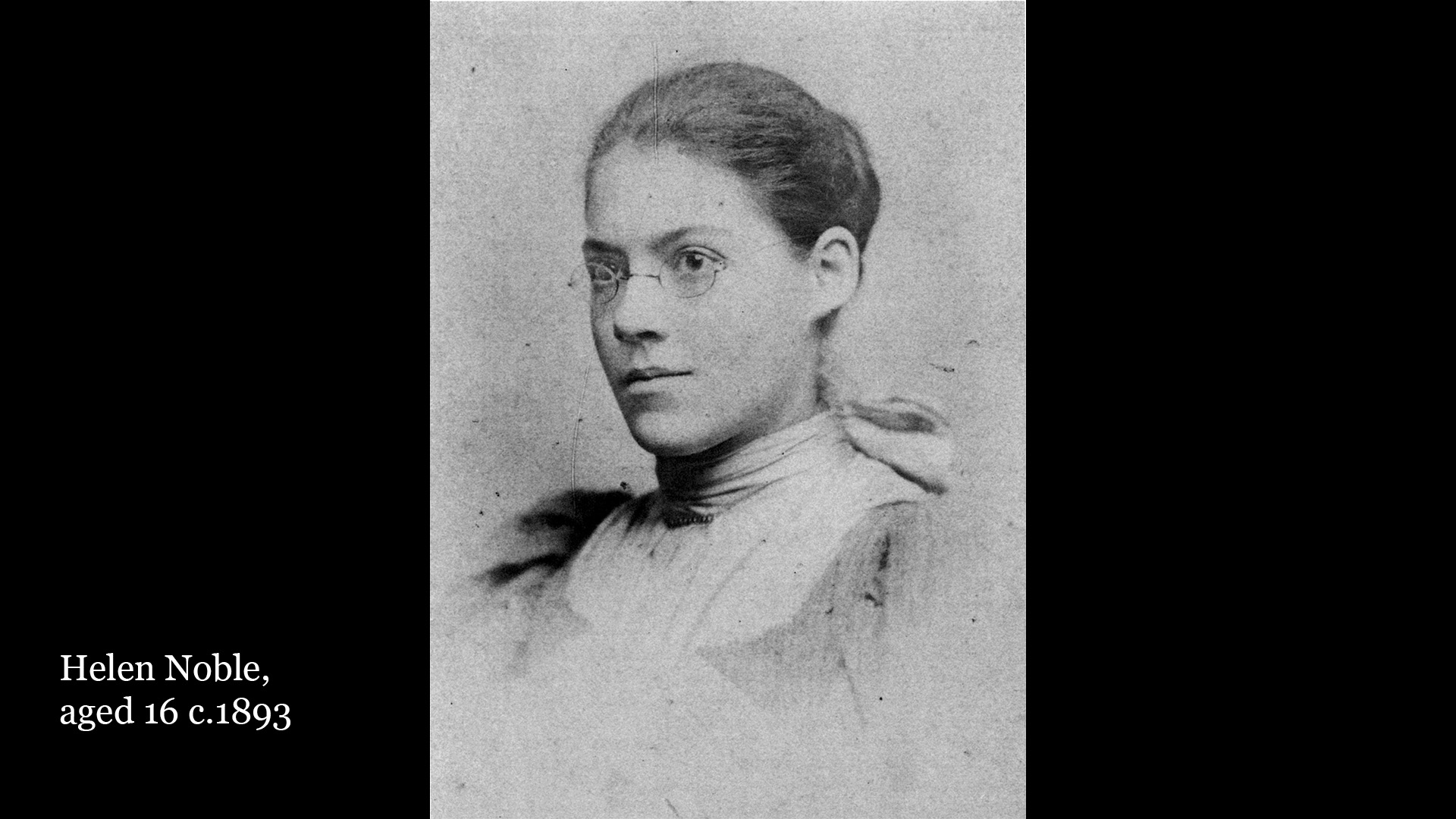
Helen Noble, aged 16, c.1893.
JAN to ET [Letter 19 November 1895, i.e. just before the Nobles moved to Patten Road]:
"I think that when you get to know my Helen she might make a very nice friend for you. She is a few months older than you, but she is in many ways younger than her years, and she loves Nature and beautiful things just as you do, though in some ways she is not so clever as the others." [Kedrun Laurie, Schooling . . . ]
(Click on image to enlarge)
9 December 1895 the Nobles moved to a bigger house in Wandsworth, 6 Patten Road, just across the Common from the Thomas home in Shelgate Road. Helen was not "academic", and was probably useful in looking after the new home.
[Which may have fitted nicely / conveniently with the theory of the [New Aesthetes] that women were home-makers and educator of children, albeit of a higher order than servants? [have a look at Kedrun Laurie, Schooling.] Hence Helen went on to be a governess/companion, and then a [?kindergarten teacher at her children's school, Bedales.]
They started walking together, often covering great distances.
5 Nicosia Road
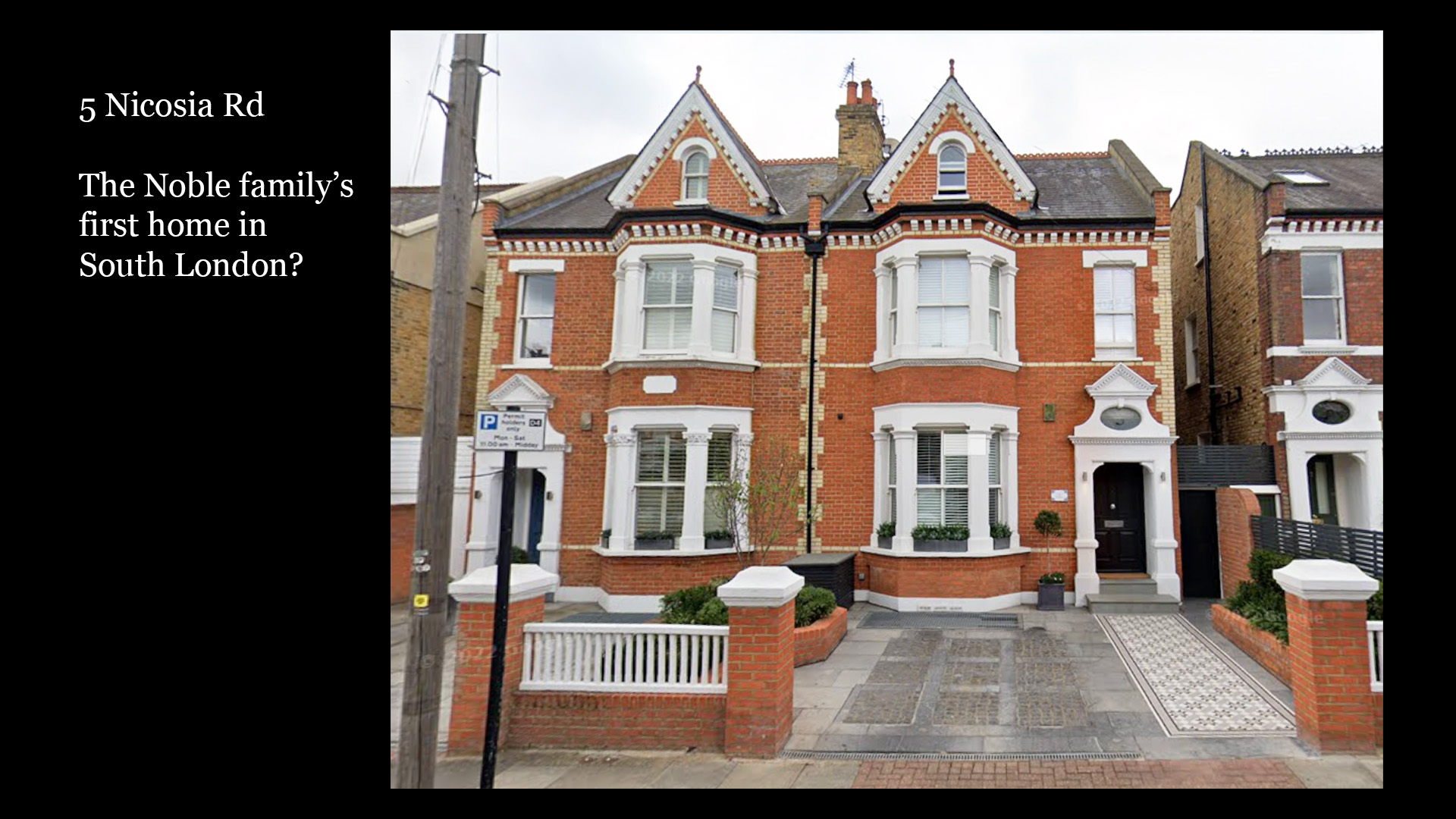
5 Nicosia Road today
(Click on image to enlarge)
6 Patten Road
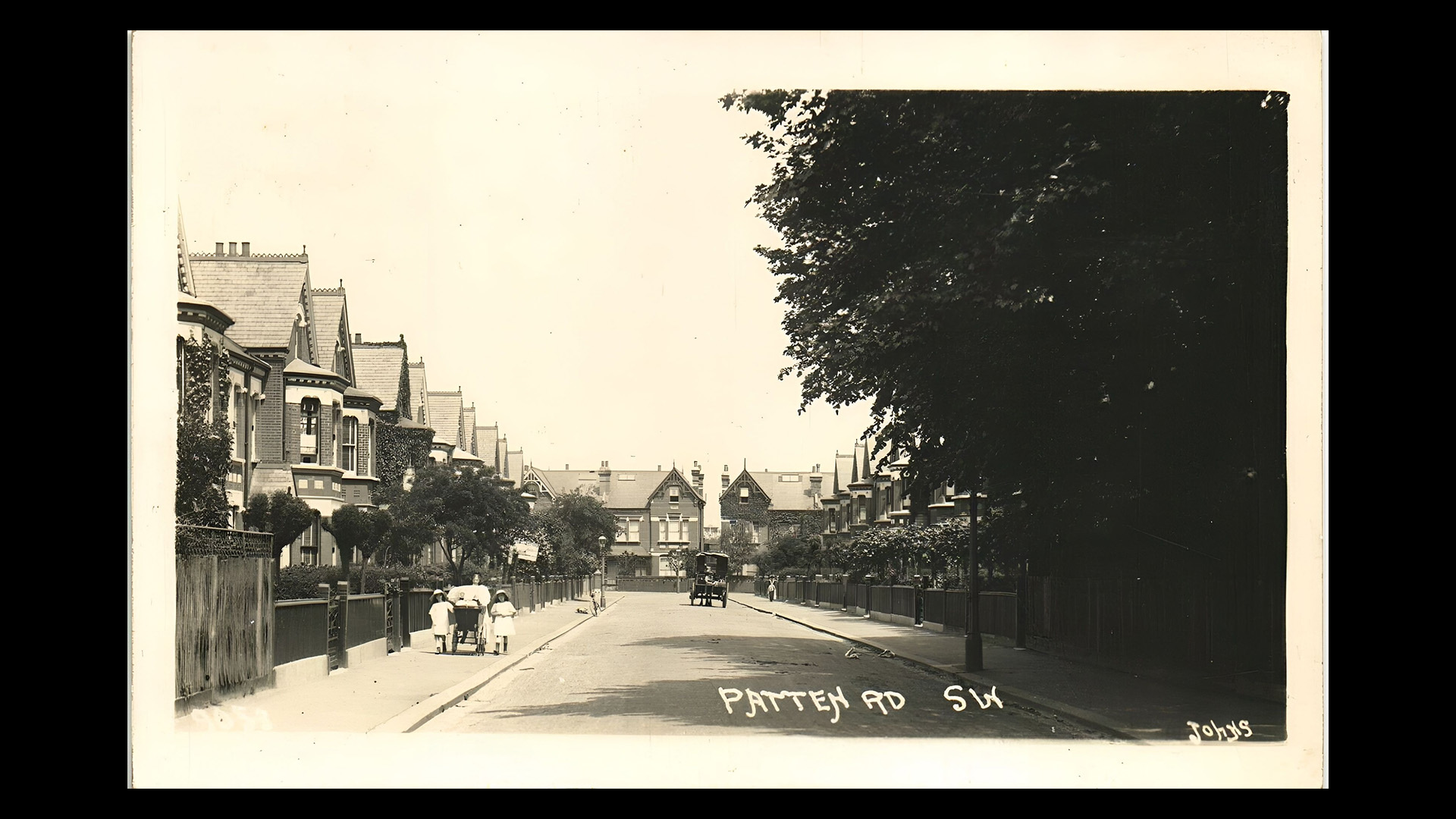
Patten Road c.1910
(Click on image to enlarge)
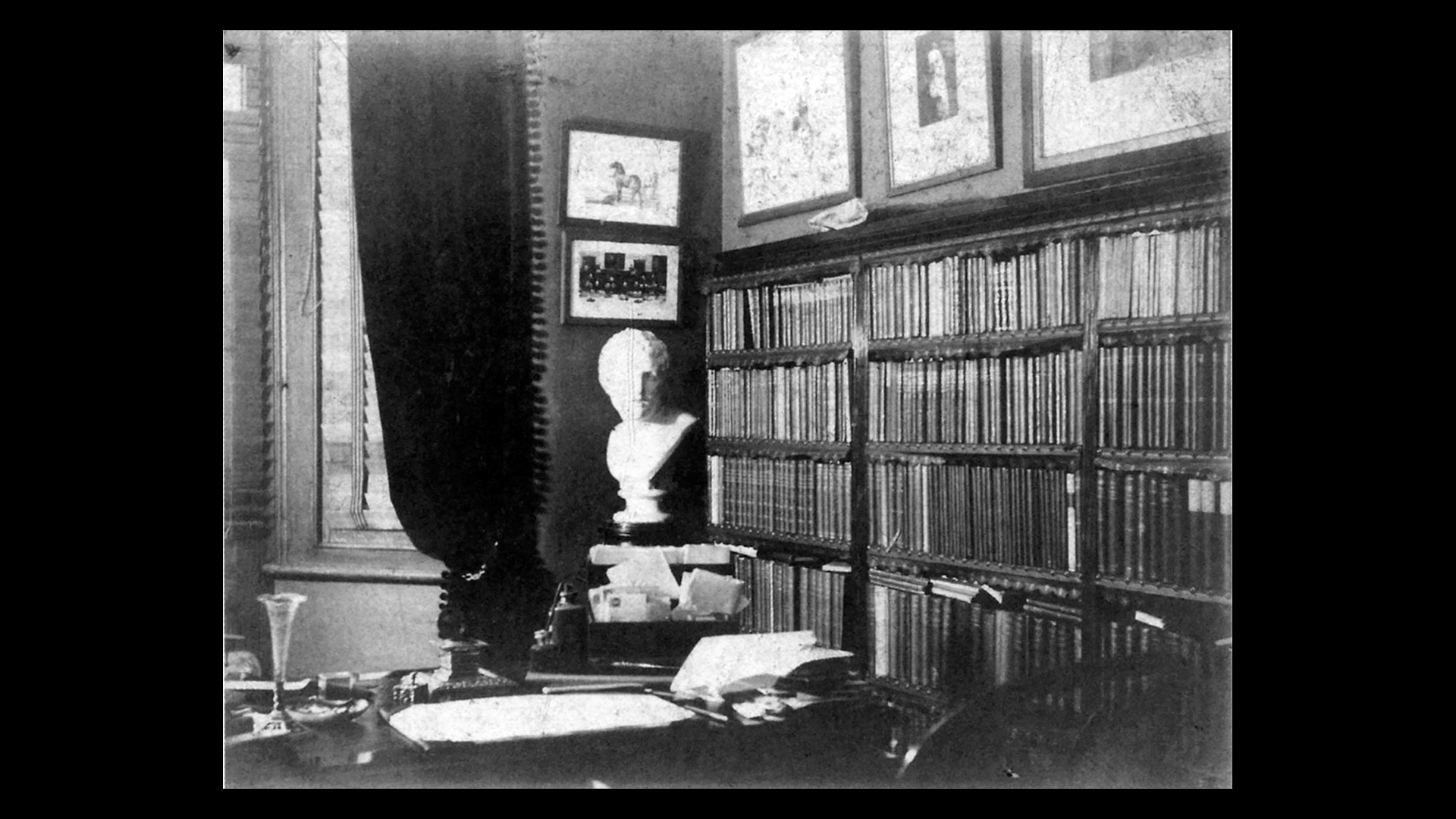
James Ashcroft Noble's library at 6 Patten Road
(Click on image to enlarge)
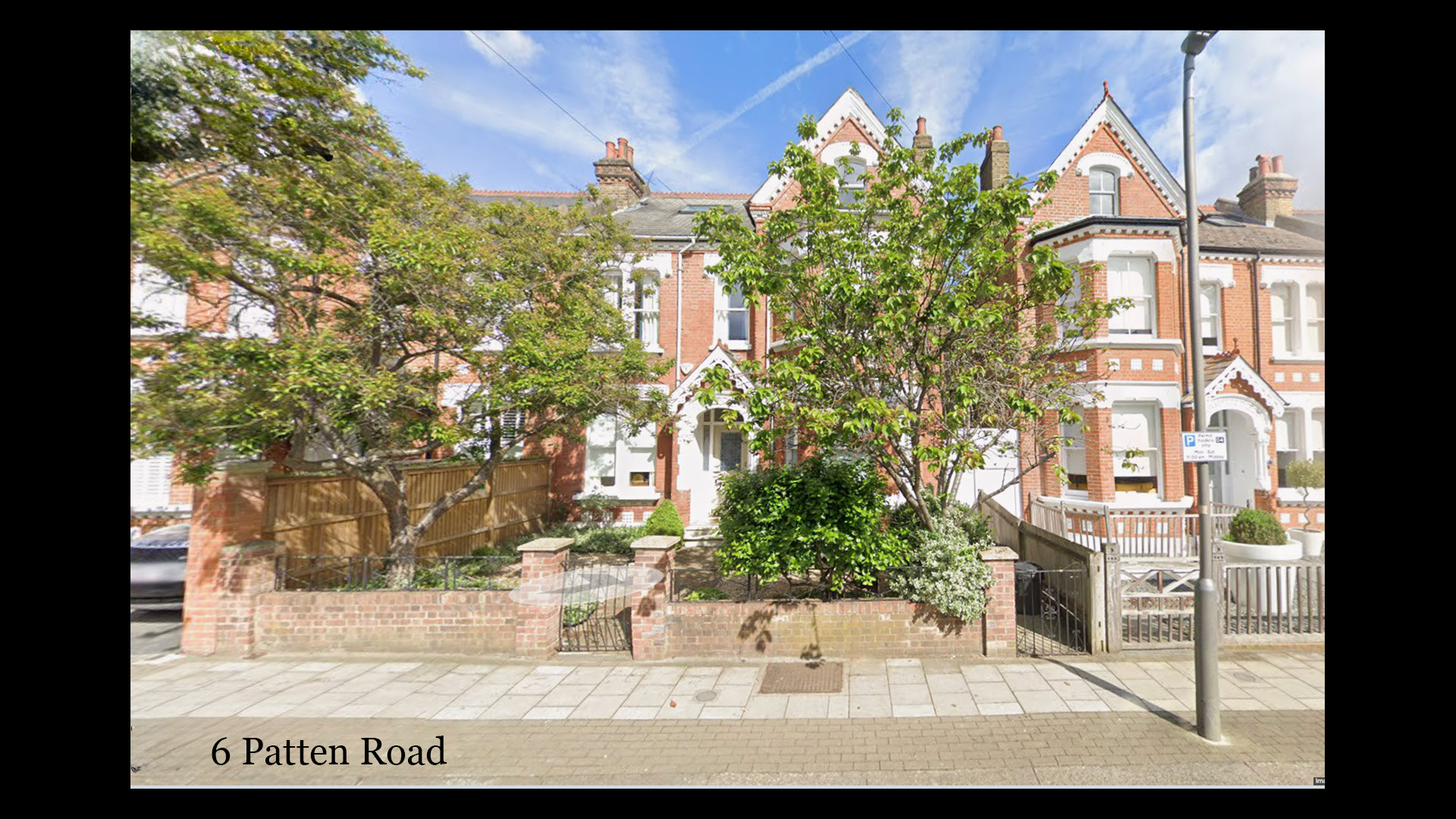
6 Patten Road today
(Click on image to enlarge)
117 Atheldene Road
Helen and Edward, and their baby Merfyn, find a cheap flat near Garratt Lane.
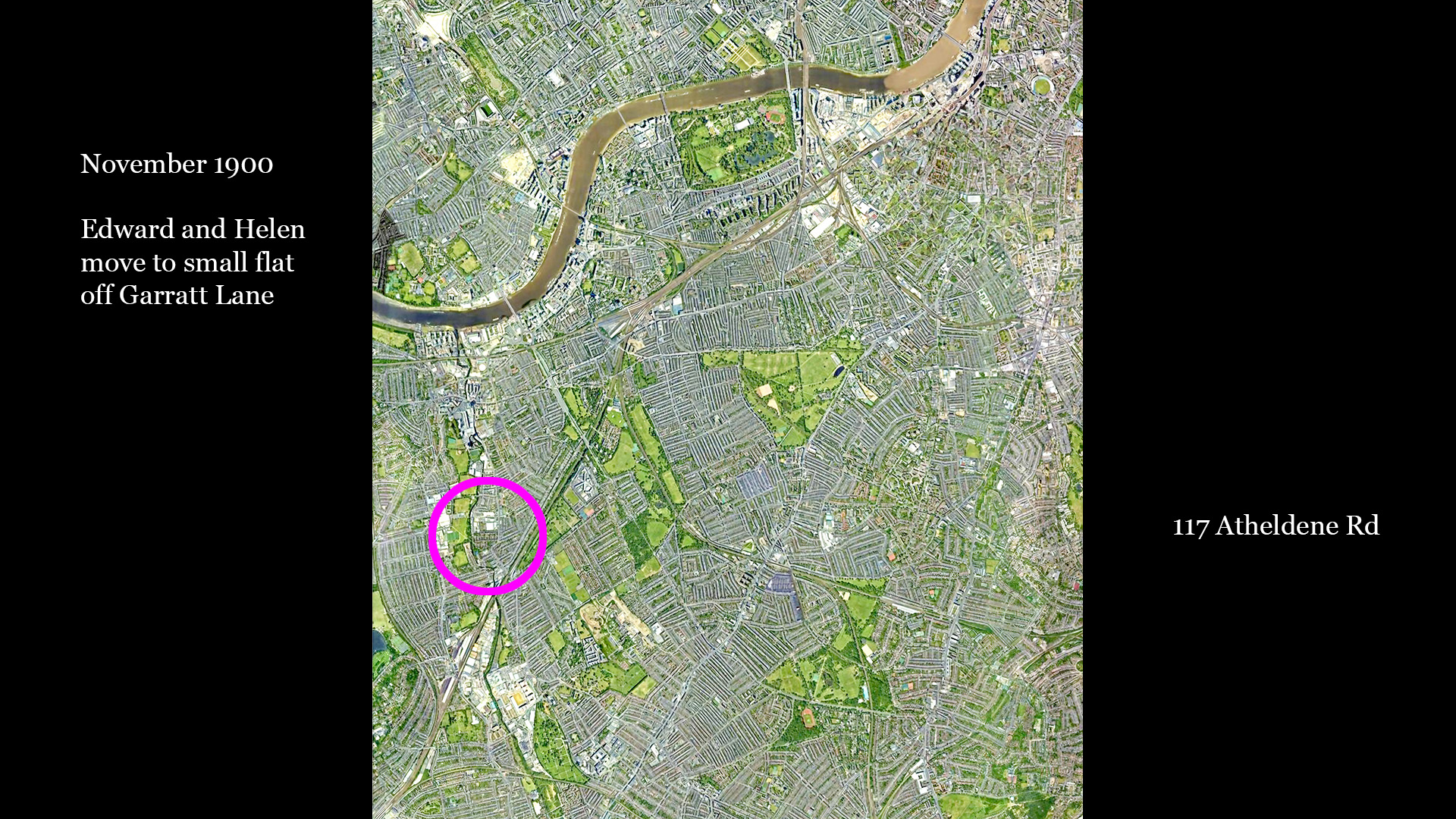
(Click on image to enlarge)
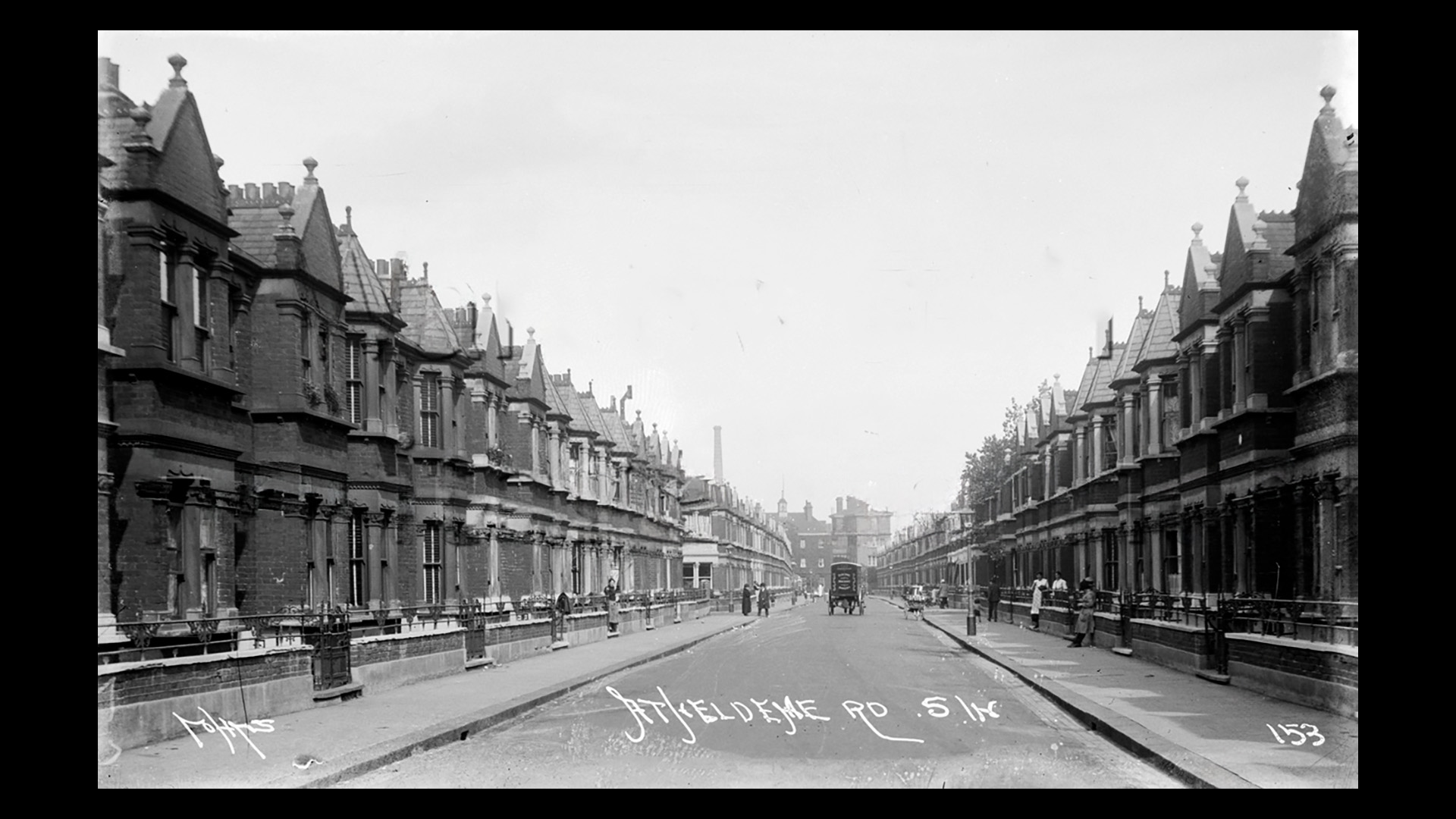
(Click on image to enlarge)
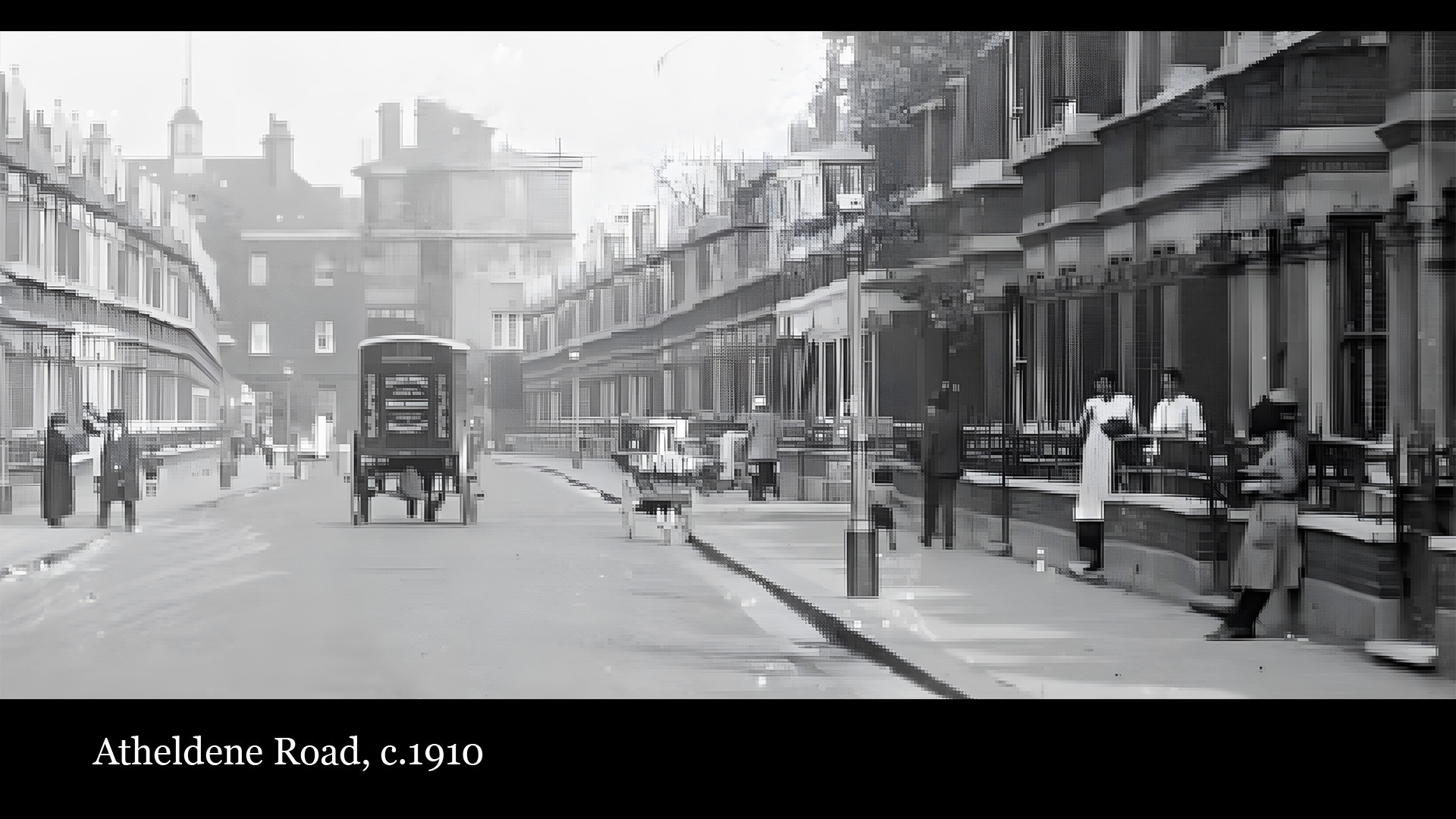
It was a very much poorer area than either Edward or Helen had been used to.
Notice the absence of front gardens or street trees. he houses were divided into two, up and down. Within a hundred yards or so, there was the immense Wandsworth and Clapham Union Workhouse, on Swaffield Road, and numerous factories between Garratt Lane and the the Wandle — many of them contributing to the infamous smells of the area.
But not, it seems, the odour-free Harrison Barber knackers yard, the largest in London, where 25,000 old horses a year were brought to be slaughtered. (This was on the site of the Henry Prince Estate near the remarkable zig-zag on Garratt Lane.)
Also Wardley Street, with its numerous carters, costermongers and rag-and-bone men, and horses kept in the back gardens — which Charles Booth described in 1905 as one of the worst slums in London".
(Click on image to enlarge)
Last of the London Hrse . . .
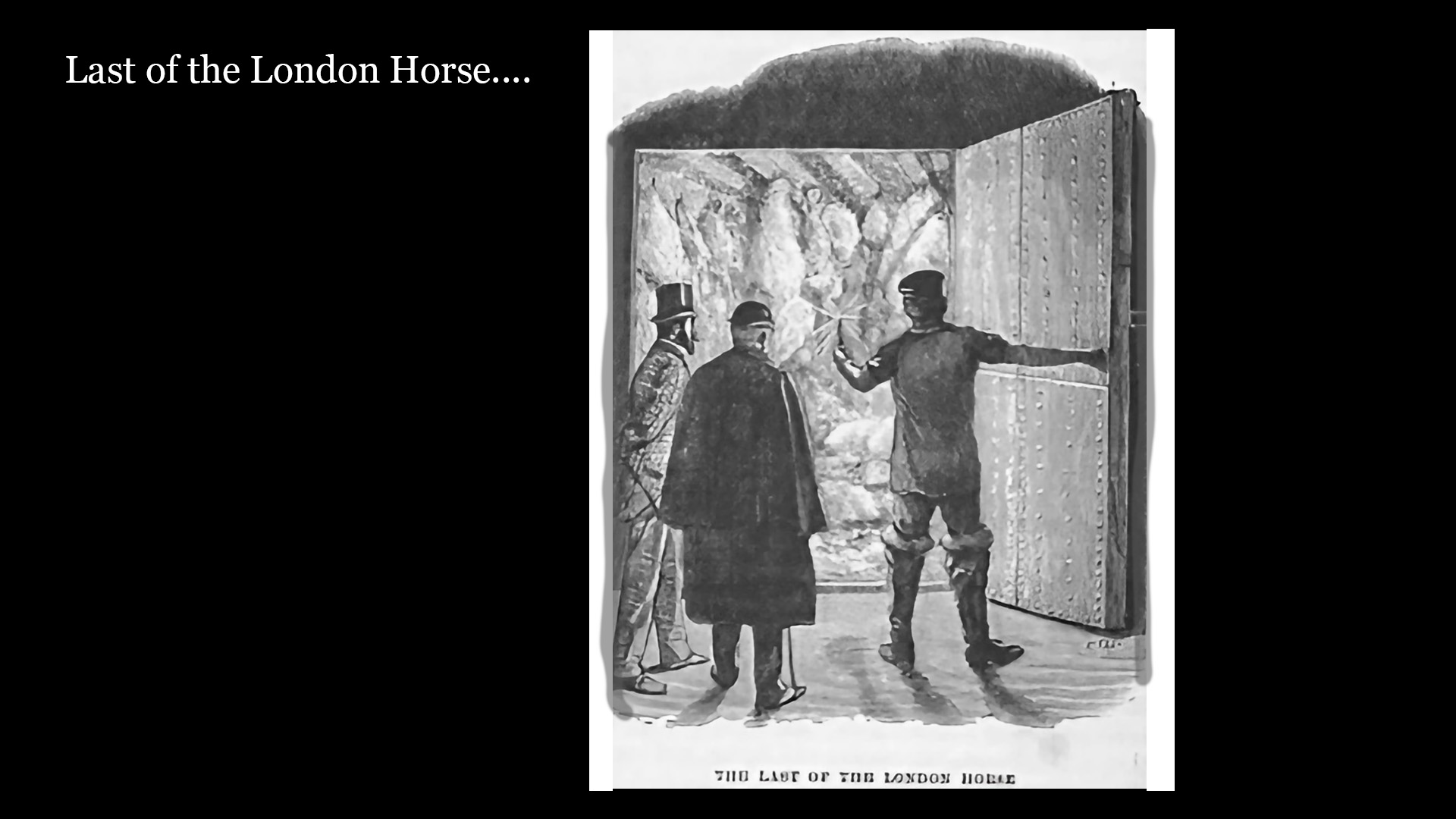
(Click on image to enlarge)
They don't last long here.
Here's how Helen described the place:
[Abbreviate or summarise.]
[80]
party wrote to me congratulating me, and the friend I had met before Merfyn’s birth undertook the duties of a godfather, and presented the baby with a Bible inscribed with flippant verses. The occasion was unique, I suppose, and a good opportunity for the display of wit and philosophy, and I enjoyed reading about it in dward’s letters after the event. As was natural, his work suffered a good deal during this last term and it was no surprise to Edward, though a bitter disappointment to his father, when he got only a second-class degree. This, and the natural antagonism of their natures, made life at his home — when he returned from Oxford — no longer possible. Even I, to whom outside circumstances mattered little, had begun to feel the strain of living in that uncongenial atmosphere. It was not long before an open break occurred between Edward and his father, and we looked about for somewhere else to live.
We were very poor. The £250 which we had been depending on was almost gone, and the essays Edward contributed to one or two literary weeklies had earned only about £80 during
the year. But Edward with his tall graceful figure and handsome sensitive face, wearing the elegantly negligent and for him very becoming style of dress of the young aesthete of day, did not at all look the part of the impecunious husband and father, and Mr Thomas’s puritanism rose almost in hatred against his son.
Edward on his side did nothing to placate his father’s anger and intolerance, and refused to consider going into the Civil Service, and only answered his father’s bitter anger with sneers at those very qualities which Mr Thomas most prided himself upon.
With Mrs Thomas it was different. She was no doubt troubled by this new phase in her son, and his circumstances must have been a continual source of anxiety to her, but she had always a far wider outlook on life than her husband, and a generous tolerance and sympathy for the young, which she now extended during this difficult time for Edward. Indeed there was a spiritual understanding between these two which though never expressed, and by his mother hardly recognized, was never violated, but was sustained
[81]
growing intensity to the end of Edward’s life.
As I could not go house-hunting it fell to Edward to find a new home for us. He found, in a new street in what was obviously doomed to become a slum, a half-house of whichmthe rent was seven and sixpence a week, and to this we moved.
It had a good sitting-room which, very much to the builder's surprise, we chose to have distempered a warm grey; a bed-room which just held our bed, the child’s cot and a chest of drawers; and a little kitchen with steps leading from it to a tiny squalid back-yard, used by the downstairs people for keeping ramshackle rabbit hutches and hanging out washing which was always wet and never clean.
There was a notice printed in the rent book which at first puzzled me — "Broken
windows must be repaired by the tenant," but we had not been there a week before we understood the significance of this regulation.
The downstairs people frightened me rather because of their way of moving out in the middle of the night. Very seldom did the downstairs tenants stay longer than a
fortnight, because, as I heard later, they could not be sued for rent under a fortnight’s tenancy. Sometimes they were quiet, but more often noisy, quarrelsome, rough men and women and pale dirty children, often with a poor frightened dog tied up to a barrel in the back yard. All were terribly poor and degraded.
Here we lived for a few months. During that time Edward was out a great deal looking for work, going from one editor's office to another, sending in his card; sometimes being received courteously and sometimes not; sometimes given a book to review or the half-promise to accept an article. He returned trom these dreadful expeditions tired and depressed and angry, hating himself for his failure, hating the polite indifference of
some of the people, hating more the sympathetic interest Which others, who refused him work, put into their voices. But a few there were who were not indifferent to the reserved, shy, sensitive young man, who looked so proudly careless of their favour, and who refused to ingratiate himself, but whose heart was full of angry humiliation and despair. One stands
[82]
out among the rest as coming out to meet Edward with friendly understanding from which the hint of patronage was entirely absent. He was the literary editor of a great daily newspaper whose literary page was written by men of distinction, and earned for its editor a great name in journalism. This man was attracted to Edward by the very qualities which others had found so disconcerting, and divined by his sympathetic understanding of Edward’s austere sincerity the intellectual power in him. He became our friend and benefactor.
The work which he gave Edward was the mainstay of our life for many years, and Edward made, on that page, a name for himself as a critic of belles lettres, and particularly of contemporary verse. His name was H.W. Nevinson.
[Is this the husband of the suffragist ? Nevinson and father of Christopher Nevinson?]
How anxiously I waited for Edward’s homecoming on these days, and how with the first glance at his face I knew what the day had been. If it had been a bad one there was no need of words, and none were uttered. I could do nothing, for if I said one word which would betray that I knew what he had endured and was enduring, his anger and despair and weariness would break out in angry bitter words which would freeze my heart and afterwards freeze his for having uttered them.
So as he ate the evening meal in silence, I talked quietly about the doings of the day, of the baby, of the walk we had been: and soon in our pretty room he would lie back in his big Oxford chair by the fire, smoking his pipe, while I sat on a stool near and sewed; and gradually the weariness would 20 out of his face, and the hard thin line of his mouth would relax to its lovely curve, and he would speak of an essay that had been suggested to him by something he had seen in London, or of a notable volume of poems that Nevinson had promised he should review for the Daily Chronicle. Then I would slip from my stool to the floor between his knees, and he would put out his hand and rest it on my neck, and I would know that the cloud had passed.
But sometimes when his spirit had been more than usually affected by the too great strain that his circumstances put upon it, the cloud did not pass, and my chatter ran dry in the arid
[83]
silence. After a ghastly hour or two with the supper still uneaten on the kitchen table he would say: ‘Go to bed, I’m not coming,’ and I would know that he would sit up all night, and in the morning would be deeper in despair than ever — or he would go out and walk till morning, and perhaps from the silence of night and from the natural sounds of early dawn, and from the peace of solitude and the beauty of intangible things he would find healing and calm. I did not sleep on these nights but took my baby into bed with me, and in suckling him and holding him close, hope and comfort came to me again.
Some days Edward would be at home all day writing and reading, happy and eager with the impulse for creative work which gave him greater satisfaction that anything else. If the weather was fine he would break off his work in the afternoon and putting Merfyn in his pram we would set out for Wimbledon or Richmond Park, somewhere where we could sit on grass and look at trees and clouds and hear birds. There the baby would play himself to sleep while Edward read a book for review, or aloud to me, and we would return in the evening laden with flowers and branches of leaves or berries for our room. Some of the days at home were idle and hopeless — no commissioned work to do, and no impulse for original work ~and on these days the squalid surroundings obtruded upon our spirits, and the harsh voices of the other tenants and the crying of children sounded inhuman like the sounds of hell. One of these days I remember very well. I had not got into the routine of housework and looking after the baby, and I asked Edward to peel the potatoes for the mid-day meal. This he angrily refused to do. But at dinner he praised my cooking, and I, still hurt by his unkindness, could not restrain a few tears at the welcome change of mood. Seeing my distress he jumped up from his chair, ran down the stairs into the street, and returned in two minutes with a bottle of cheap wine. Never was so homely a meal turned into such a joyous banquet. Even the baby sitting in his high chair joined in, for Edward dipping his finger in the wine let Merfyn suck 1€, and
[84]
though he looked more surprised than pleased at the taste, he grinned at the joke when he saw us laughing.
Often we were quite reckless with money. Once when a cheque was bigger than we had expected we bought a beautiful and costly brass lamp made in the William Morris workshops. At other times we were so poor that when Edward was out tor several successive days I lived on the remains of a Christmas pudding Mrs Thomas had given us. But I was strong and healthy, and both my baby whom I was nursing and I flourished.
It was a queer hand-to-mouth way of living, but when we had enough money we entertained our friends and had many evenings of lively talk with beer and pipes as the inevitable accompaniment. In this way I met some of the Oxford friends who had written to me, especially three or four whose friend-ship for Edward lasted all his life, and was extended to me after his death. These young men brought others with them. and I looked forward to these evenings when our room was full of eager talkers and lively wits who were all about our own age, and all enthusiastic adventurers into life.
When we had not enough money for anything else we lived on bread and cheese and tea. I remember having only nine-pence one Saturday to buy provisions for the weckend. It is the only time in my life [have bought a pennyworth of butter
.Yet little by little Edward’s work was increasing, and before we left London he had published his first volume of essays for which he got a small sum on account of royalties. This volume still sells a few copies a year.
[Under Storm's Wing, pp.80-84.]
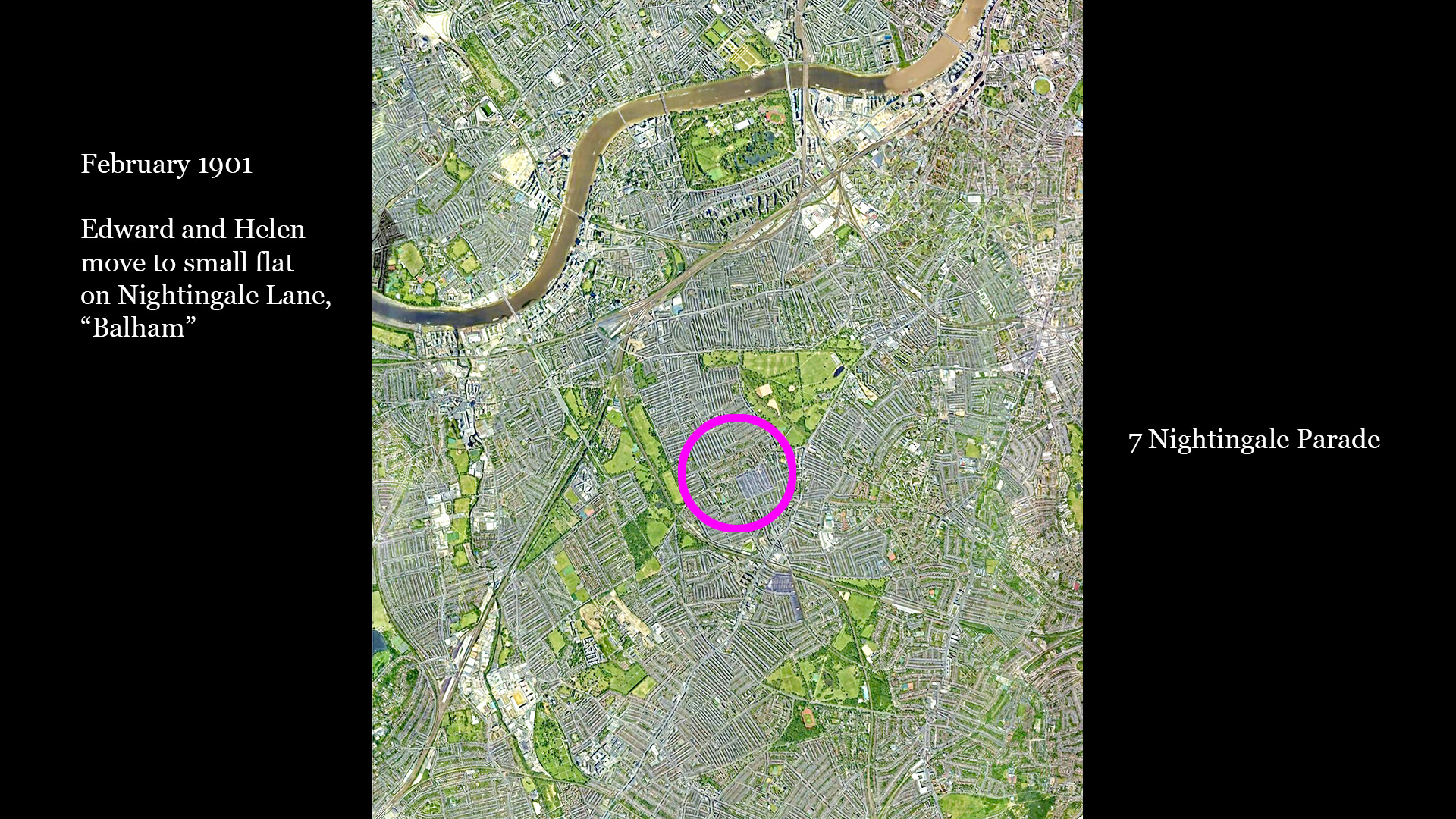
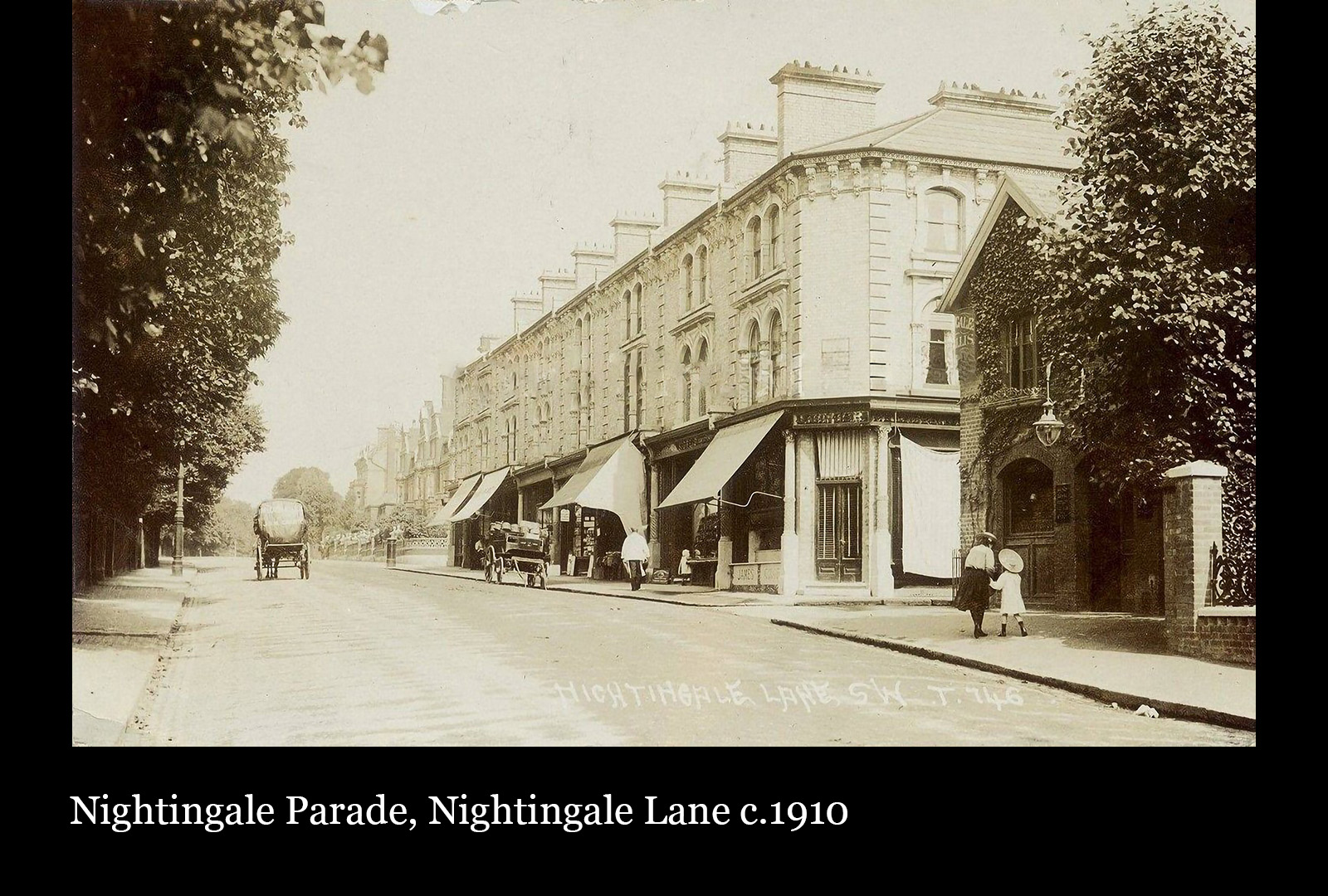
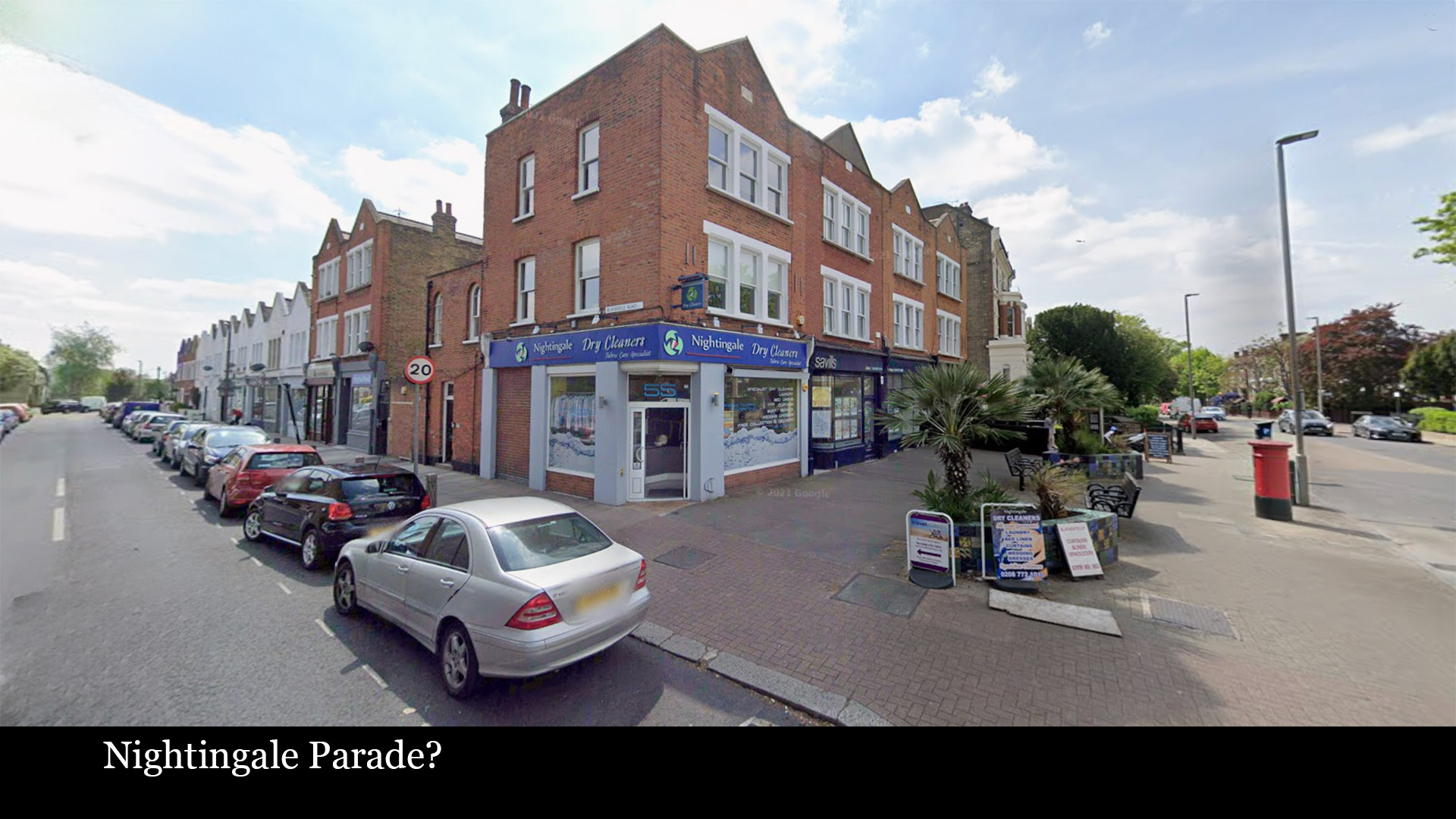
7 Nightingale Parade, Nightingale Lane
[A much more agreeable area, of course. Very close to Edward's parents — had there been some sort of reconciliation between Edward and his father?]
[Helen seems not to mention Nightingale Parade. After which they move away permanently — first to Kent, then ? Sussex and Hampshire?]
(Click on image to enlarge)
(Click on image to enlarge)
Nightingale Parade, Nightingale Lane, c.1910
(Click on image to enlarge)
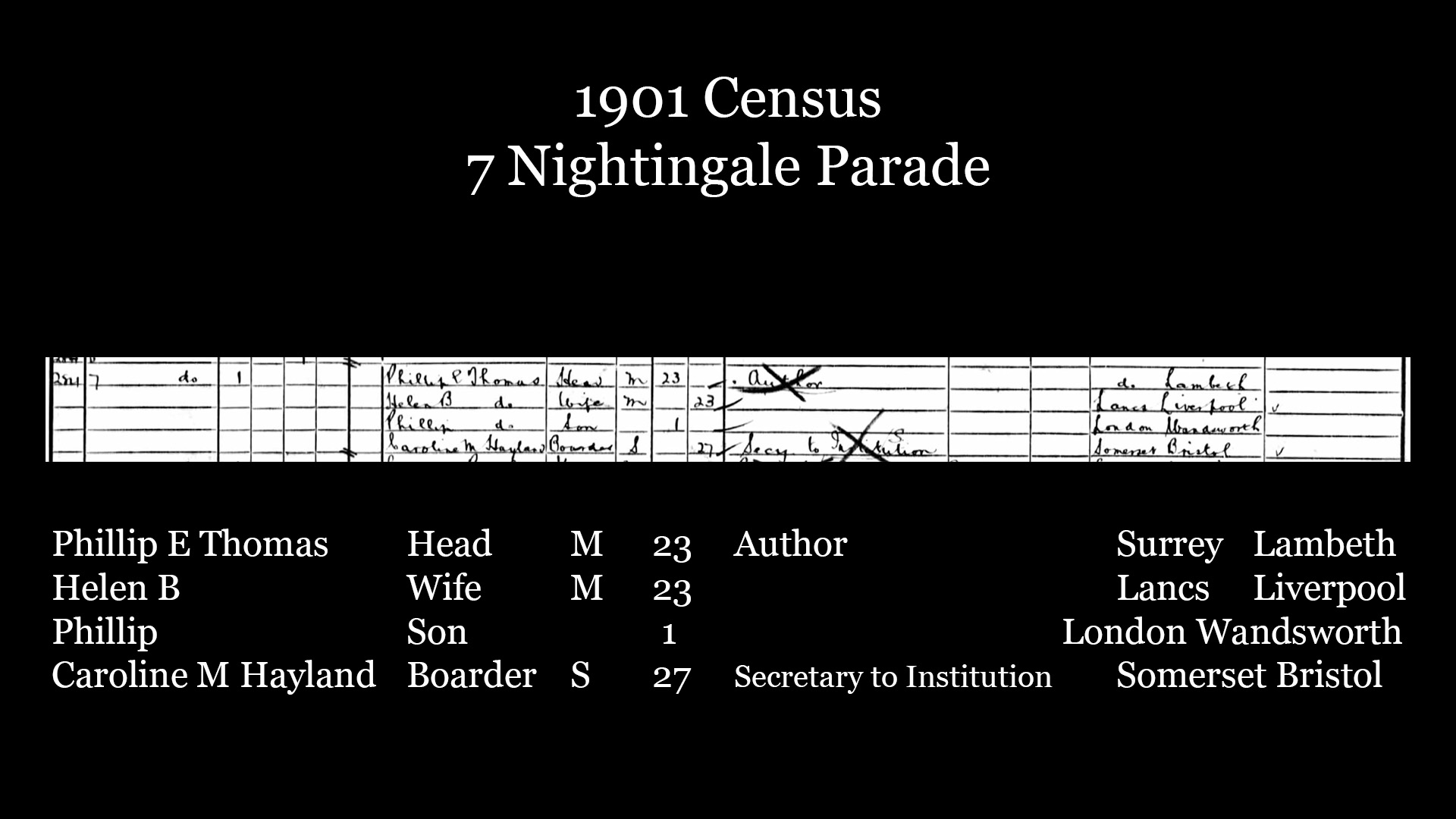
1901 Census
7 Nightingale Parade
(Click on image to enlarge)
(Click on image to enlarge)
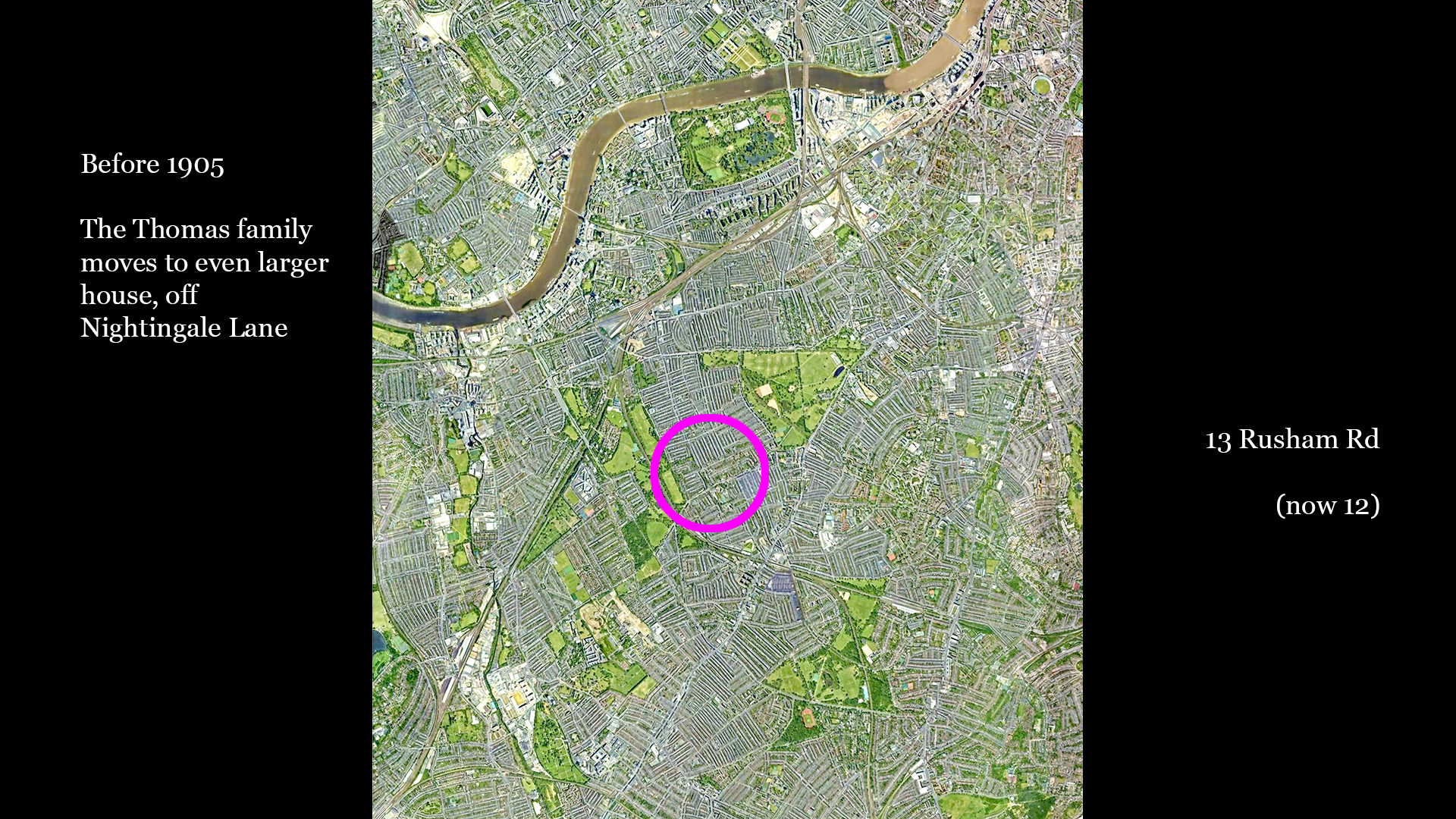
It was from Rusham Road that he set out in Pursuit of Spring (published 1914):
10 am, 21 March 1913: Edward Thomas set off to cycle from Wandsworth Common to Nether Stowey, in the Quantock Hills of North Somerset.
Why Nether Stowey? Because Coleridge had lived there in the late 1790s, and there Edward Thomas would see "the native soil of "Kubla Khan," "Christabel," and "The Ancient Mariner," where Coleridge "on honey-dew hath fed and drunk the milk of Paradise."
I had planned to start on March 21, and rather late than early, to give the road time for drying. The light arrived bravely and innocently enough at sunrise; too bravely, for by eight o'clock it was already abashed by a shower. There could be no doubt that either I must wait for a better day, or at the next convenient fine interval I must pretend to be deceived and set out prepared for all things.
So at ten I started, with maps and sufficient clothes to replace what my waterproof could not protect from rain.
The suburban by-streets already looked rideable; but they were false prophets: the main roads were very different. For example, the surface between the west end of Nightingale Lane and the top of Burntwood Lane was fit only for fancy cycling — in and out among a thousand lakes a yard wide and three inches deep. These should either have been stocked with gold-fish and aquatic plants or drained, but some time had been allowed to pass without either course being adopted.
It may be that all the draining forces of the neighbourhood had been directed to emptying the ornamental pond on Wandsworth Common. Empty it was, and the sodden bed did not improve the look of the common — flat by nature, flatter by recent art.
The gorse was in bloom amidst a patchwork of turf, gravel, and puddle. Terriers raced about or trifled. A flock of starlings bathed together in a puddle until scared by the dogs.
A tall, stern, bald man without a hat strode earnestly in a straight line across the grass and water, as if pleasure had become a duty. He was alone on the common. In all the other residences, that form walls round the common almost on every side, hot-cross buns had proved more alluring than the rain and the south-west wind.
The scene was, in fact, one more likely to be pleasing in a picture than in itself. It was tame: it was at once artificial and artless, and touched with beauty only by the strong wind and by the subdued brightness due to the rain. Its breadth and variety were sufficient for it to respond — something as Exmoor or Mousehold Heath or Cefn Bryn in Gower would have responded — to the cloudily shattered light, the threats and the deceptions, and the great sweep of the wind.
But there was no one painting [36] those cold expanses of not quite lusty grass, the hard, dull gravel, the shining puddles, the dark gold-flecked gorse, the stiff, scanty trees with black bark and sharp green buds, the comparatively venerable elms of Bolingbroke Grove, the backs and fronts of houses of no value save to their owners, and the tall chimney-stacks northwards.
Perhaps only a solitary artist, or some coldish sort of gnome or angel, could have thoroughly enjoyed this moment. That it was waiting for such a one I am certain; I am almost equally certain that he could create a vogue in scenes like this one, which are only about a thousandth part as unpleasant as a cold bath, and possess, furthermore, elements of divinity lacking both to the cold bath and to the ensuing bun.
[bun?]
It is easier to like the blackbird's shrubbery, the lawn, the big elm, or oak, and the few dozen fruit trees, of the one or two larger and older houses surviving — for example, at the top of Burntwood Lane. The almond, the mulberry, the apple trees in these gardens have a menaced or actually caged loveliness, as of a creature detained from some world far from ours, if they are not, as in some cases they are, the lost angels of ruined paradises.
["the lost angels of ruined paradises" !]
The journey continues:
Burntwood Lane, leading down from a residential district to an industrial district, is no longer [37] as pretty as its name. Also, when it seems to be aiming at the country, it turns into a street of maisonettes, with a vista of houses terminated by the two tall red chimneys of the Wimbledon Electricity Works. But it has its character.
The Lunatic Asylum helps it with broad, cultivated squares, elms, and rooks' nests, and the voices of cows and pigs behind the railings that line it on the left hand from top to bottom.
On the right, playfields waiting to be built all over give it a lesser advantage. How sorry are the unprotected elms on that side! They will never be old. Man, child, and dog, walking in and out of them, climbing them, kicking and cutting them, have made them as little like trees as it is possible for them to be while they yet live.
They have one hour of prettiness, when the leaf-buds are as big as peas on the little side sprays low down. Then on a Saturday — or on a Sunday, when the path is darkened by adults in their best clothes — the children come and pick the sprays in bunches instead of primroses. For there are no primroses, no celandines, no dandelions outside the fences in Burntwood Lane.
1913-03-21-ET-sets off-In-Pursuit-of-Spring-1914.pdf [local chapter only]
Edward-Thomas-In-Pursuit-of-Spring-1914-complete.pdf [complete]
And it was also from Rusham Road that he left for France in 1916[?]
Back to the top of this page . . .
Philip Boys ("HistoryBoys")
